
 Health and Wellness > Dental Practices
April 25, 2025
TV Advertising for Dentists: The Complete Marketing Guide
How dental practices are using streaming TV to attract new patients and build trust in their communities
Table of Contents
TV advertising for dentists might sound like something only big corporate chains can afford. But streaming TV has changed the equation entirely, making dental practice TV commercials accessible to practices of any size.
Referrals and Google Ads have been the backbone of dental marketing for years. They work well for patients actively searching for a dentist. But what about everyone else?
Most people aren't looking for a dentist until they need one. When that moment comes, whether it's a toothache, a child's first checkup, or simply time for a cleaning, they choose the practice that feels familiar and trustworthy.
TV advertising builds that familiarity before patients ever search. When local families see your practice on the same screen where they watch their favorite shows, you become the dentist they already "know."
This guide covers everything you need to know about dental marketing TV ads: why TV works for dentistry specifically, what it costs, how to target the right patients, and the best dentist advertising ideas to get started.
Why TV Advertising Works for Dental Practices
When it comes to dental practice marketing, trust is everything. Patients literally put their health in your hands. That trust has to exist before someone schedules an appointment.
Here's why TV advertising is uniquely effective at building that trust for dental practices:
The Familiarity Factor
Patients choose dentists they feel like they "know." TV creates that sense of familiarity faster than any other medium. When someone sees your practice, your team, and your office during their evening streaming session, you stop being a stranger.
Research consistently shows that familiarity breeds preference. The mere exposure effect, a well-documented psychological phenomenon, means people develop positive feelings toward things they've seen before. Your TV commercial puts that principle to work.
Reaching Decision-Makers
Dental appointments are often household decisions. One person typically books appointments for children, spouses, and aging parents. TV reaches these decision-makers during the times they're relaxed and receptive.
Streaming TV in particular reaches viewers during prime evening hours when families are together. Your ad appears on 100+ premium channels like NBC, Hulu, ESPN, and Peacock, right where your future patients are already watching.

Premium Perception
There's a reason national brands spend billions on TV advertising. TV presence signals credibility, stability, and quality. When patients see your dental practice on TV, you're elevated above competitors who only show up in search results.
This premium perception is especially valuable in healthcare. Patients want a dentist who seems established and successful, not the cheapest option that pops up in a Google search.
Addressing Dental Anxiety
An estimated 36% of Americans experience dental anxiety. For many, the fear isn't just about procedures. It's about the unknown.
TV advertising lets you show patients what to expect before they walk through your door. A welcoming waiting room. Friendly staff. Modern equipment. These visuals do more to ease anxiety than any amount of text on your website.
Local Targeting Precision
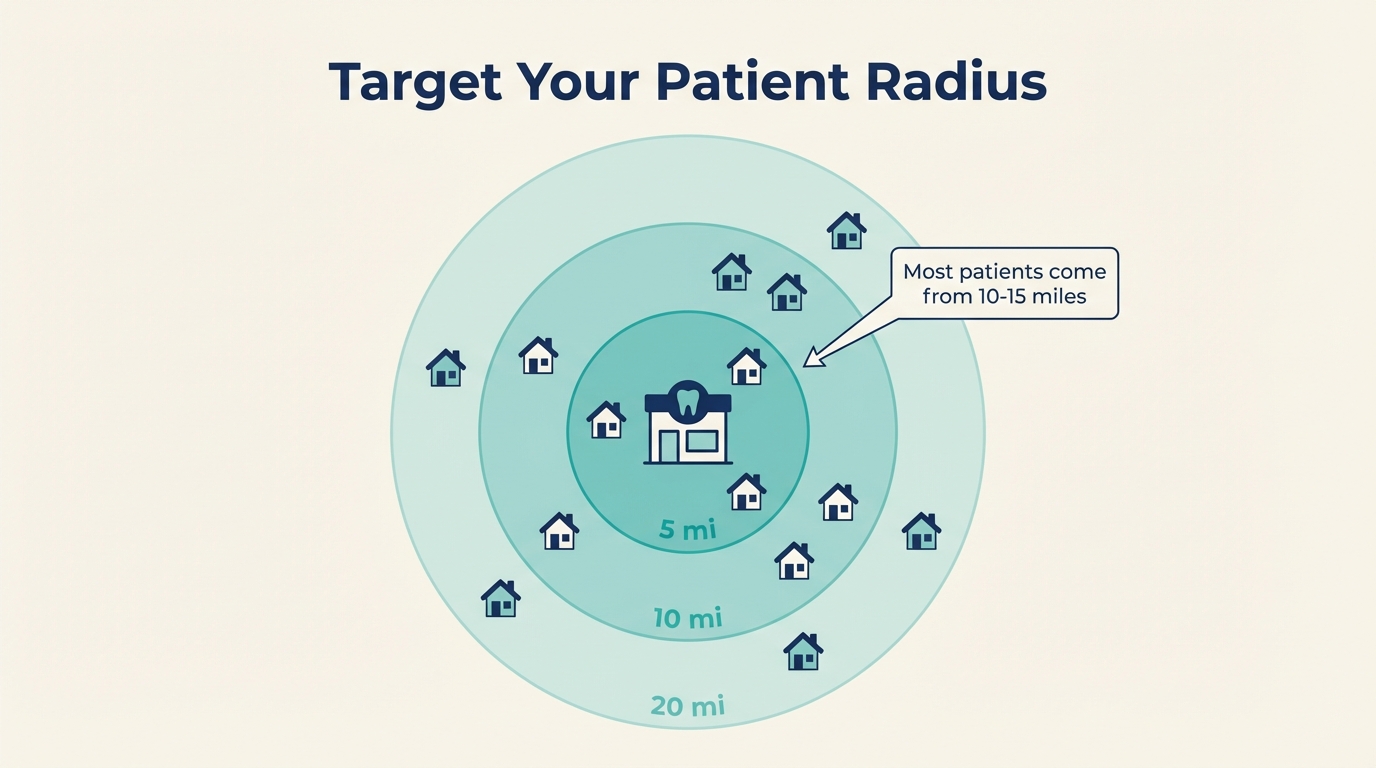
Unlike traditional TV, streaming TV advertising lets you target specific geographic areas. You can reach households within 5, 10, or 20 miles of your practice, exactly the radius your patients actually come from.
This means every impression counts. You're not paying to reach viewers three states away. You're reaching the local families who could actually become patients.
What Dental TV Advertising Costs
Traditional TV advertising has historically been expensive, both to produce and to run. That's changed dramatically with streaming TV.
Production Costs
Traditional approach: $5,000-$25,000+ for a professionally produced commercial. You'd hire a production company, rent equipment, and spend days on filming and editing.
Modern approach: $0 with AI-powered platforms. Adwave creates broadcast-quality commercials from your website URL in minutes. The AI pulls your images, branding, and messaging, then assembles a professional 30-second spot.
For most dental practices starting out with TV, AI-generated ads are the smart choice. You can always invest in custom production later once you've proven TV works for your practice.
Media Costs (Running Your Ad)
Streaming TV advertising uses a CPM model, which stands for cost per thousand impressions. For small businesses, CPM typically ranges from $15-$35, averaging around $25.
What does that look like in practice?
The minimum to get started is just $50. For a dental practice where one new patient represents $1,000-$3,000+ in lifetime value, even a modest TV investment can deliver significant returns.
See detailed pricing for your specific situation.
ROI Perspective
Consider the math: if your average new patient is worth $2,000 over their lifetime (cleanings, procedures, referrals), you only need one new patient from a $500 TV campaign to achieve a 4x return.
TV advertising typically works through cumulative exposure, meaning results build over time as more households become familiar with your practice. Most practices see the best results from consistent, sustained campaigns rather than one-time bursts.
How to Target the Right Patients
One of the biggest advantages of streaming TV over traditional TV is targeting precision. You're not paying to reach everyone in your metro area, just the households most likely to become patients.
Geographic Targeting
Most dental patients come from within 10-15 miles of a practice. With streaming TV, you can set your targeting radius to match:
Urban practices: 5-10 mile radius (denser population)
Suburban practices: 10-15 mile radius (typical sweet spot)
Rural practices: 15-25 mile radius (wider service area)
You can also target specific ZIP codes if you know certain neighborhoods have more of your ideal patients.
Demographic Optimization
Behind the scenes, streaming platforms optimize delivery based on household characteristics:
Household income: Reach patients who can afford quality dental care
Family composition: Target households with children for pediatric services
Homeownership: Established households tend to be more loyal patients
Age ranges: Focus on specific demographics for cosmetic or family dentistry
The good news: you don't need to configure all of this manually. Platforms like Adwave handle demographic optimization automatically based on your practice type and goals.
Timing Considerations
Your ads can run throughout the day, but certain times tend to work better for dental practices:
Evening hours (7-10 PM): When families are streaming together
Weekends: Higher overall streaming viewership
Morning hours: Parents watching after kids go to school
Most platforms automatically optimize timing to maximize engagement, so you don't need to micromanage scheduling.
Creating Effective Dental TV Ads
What makes a dental TV commercial work? The best dental ads share a few key characteristics.
Show, Don't Just Tell
Your office looks welcoming and modern? Show it. Your team is friendly? Let viewers see their faces. Your equipment is state-of-the-art? Give it screen time.
Video advertising is inherently visual. Use that to your advantage by showing what makes your practice special rather than just stating it.
Address Anxiety Head-On
Remember that 36% of Americans with dental anxiety? Your ad can speak directly to them:
Show a calm, comfortable environment
Feature friendly, approachable staff
Highlight amenities like TVs in treatment rooms
Use warm, reassuring music and voiceover
Include a Clear Call-to-Action
Every ad should tell viewers what to do next:
"Call to schedule your appointment"
"Visit [yourpractice].com"
Include a QR code for easy mobile scanning
Mention specific offers (free consultation, new patient special)
Keep It Simple
You have 30 seconds. That's enough time for one clear message, not your entire service menu. Focus on:
Who you are (your practice name and location)
What makes you different (one key differentiator)
What to do next (clear call-to-action)
Services to Highlight
Different services resonate with different audiences. Consider focusing on:
For families: Pediatric dentistry, family-friendly scheduling, multiple generations welcome
For adults: Cosmetic services, teeth whitening, Invisalign
For anxious patients: Sedation options, gentle approach, modern comfort features
For value-conscious patients: Insurance acceptance, payment plans, new patient specials
Getting Started: Step by Step
Ready to launch your first dental TV campaign? Here's the process:

Step 1: Provide Your Practice Information
The easiest way to get started is to provide your website URL. AI platforms like Adwave automatically gather:
Your practice name and branding
Photos from your website and social media
Your services and messaging
Contact information
If you have a Yelp page, Google Business Profile, or social media presence, those can work too.
Step 2: Review and Customize Your Ad
The AI generates a complete 30-second commercial in about 2 minutes. You can then customize:
Images: Swap in specific photos you prefer
Text: Adjust headlines and messaging
Music: Choose a different soundtrack
Voiceover: Modify the script or tone
Scenes: Reorder or replace sections
Most dental practices find the AI-generated ad works well with minimal tweaking.
Step 3: Set Your Targeting and Budget
Choose your geographic targeting (typically a 10-15 mile radius around your practice). Set your budget (start with $50-$250 to test) and campaign duration (2 weeks minimum recommended).
Step 4: Launch and Monitor
Your ad goes live within 24 hours and starts appearing on streaming platforms in your target area. Monitor your dashboard for:
Impressions (how many times your ad was seen)
Which channels your ad ran on
Geographic distribution
Budget pacing
Watch for new patient inquiries and ask how people heard about you.
Measuring Success
TV advertising works differently than digital ads. You won't see direct click-through conversions. Instead, look for:
Short-Term Indicators (1-4 weeks)
New patient inquiries mentioning "I saw your ad"
Increased website traffic
More phone calls
QR code scans (if included)
Medium-Term Indicators (1-3 months)
Overall increase in new patient appointments
Higher brand awareness in community
More word-of-mouth referrals (TV exposure amplifies these)
Better recognition at community events
Long-Term Indicators (3+ months)
Sustained growth in patient base
Improved practice reputation
Ability to attract higher-value patients
Reduced dependence on price-driven marketing
For more on tracking dental marketing effectiveness, see our complete guide.
Common Questions from Dental Practices
How long before I see results? TV advertising builds awareness over time. Most practices start seeing indicators (mentions, website traffic) within 2-4 weeks. Significant new patient growth typically takes 2-3 months of consistent advertising.
What if I already do Google Ads? TV and search ads work together. TV builds awareness and preference, so when patients eventually search, they're more likely to click on (and trust) your listing. Many practices see improved Google Ads performance after starting TV.
Can I target specific services? Yes. You can create different ads for different services (cosmetic, family, emergency) and run them to different audiences or at different times.
What about HIPAA? TV advertising doesn't involve patient data. You're promoting your practice to the general public, not using protected health information. Standard advertising guidelines apply.
How does this compare to direct mail? TV typically achieves broader reach at lower cost-per-impression. Direct mail averages $0.50-$1.00 per piece delivered; TV averages $0.015-$0.035 per impression. TV also offers the visual storytelling that direct mail can't match.
Ready to Attract More Patients?
TV advertising gives dental practices something other marketing channels can't: the ability to build trust and familiarity with future patients before they ever need a dentist.
With streaming TV, you can reach the exact households in your service area, starting at just $50. No production costs. No long-term commitments. Just your practice on the biggest screen in the house.
Adwave makes it simple for dental practices to get started. Provide your website, and the platform creates your commercial in minutes. Set your targeting and budget, and launch your first campaign today.
See example TV ads from healthcare practices, or learn more about how it works.
Your future patients are watching. Make sure they see you.