AI builds your ad from a single prompt

July 21, 2026
You make TikTok videos with AI by describing your idea (or pasting a link), letting an AI tool script it, generate the visuals, add a voiceover, drop in music, and burn in captions, then exporting a vertical 9:16 clip you refine until it feels native. With an agentic tool like Wavemaker, that whole run takes a few minutes instead of an afternoon in a timeline editor. The catch: TikTok rewards content that feels real, so AI works best as your starting point and speed boost, not a spam machine.
Here's the thing about TikTok in 2026. The bar for "watchable" keeps rising, but the bar for "polished" actually dropped. Overproduced ads get scrolled. Raw, useful, funny, or surprising stuff gets watched. That's good news if you're using AI, because your job isn't to fake a studio look. It's to get a strong idea in front of people fast, in the format the app expects, then make small human tweaks so it lands.
Let's break this down: what actually works on TikTok, the video formats worth copying, how to make them with AI step by step, how to batch a week of content in one sitting, and how to repurpose the same vertical video across Reels and Shorts.
Before you touch any tool, you need to know what the app rewards. Get these right and AI becomes a force multiplier. Get them wrong and no amount of automation saves you.
A hook in the first second. TikTok decides fast whether to keep showing your video. Open with a visual or a line that creates a question in the viewer's head. "I stopped doing this and doubled my morning" beats "Hi, today I want to talk about routines." Your first frame and first spoken words do most of the work.
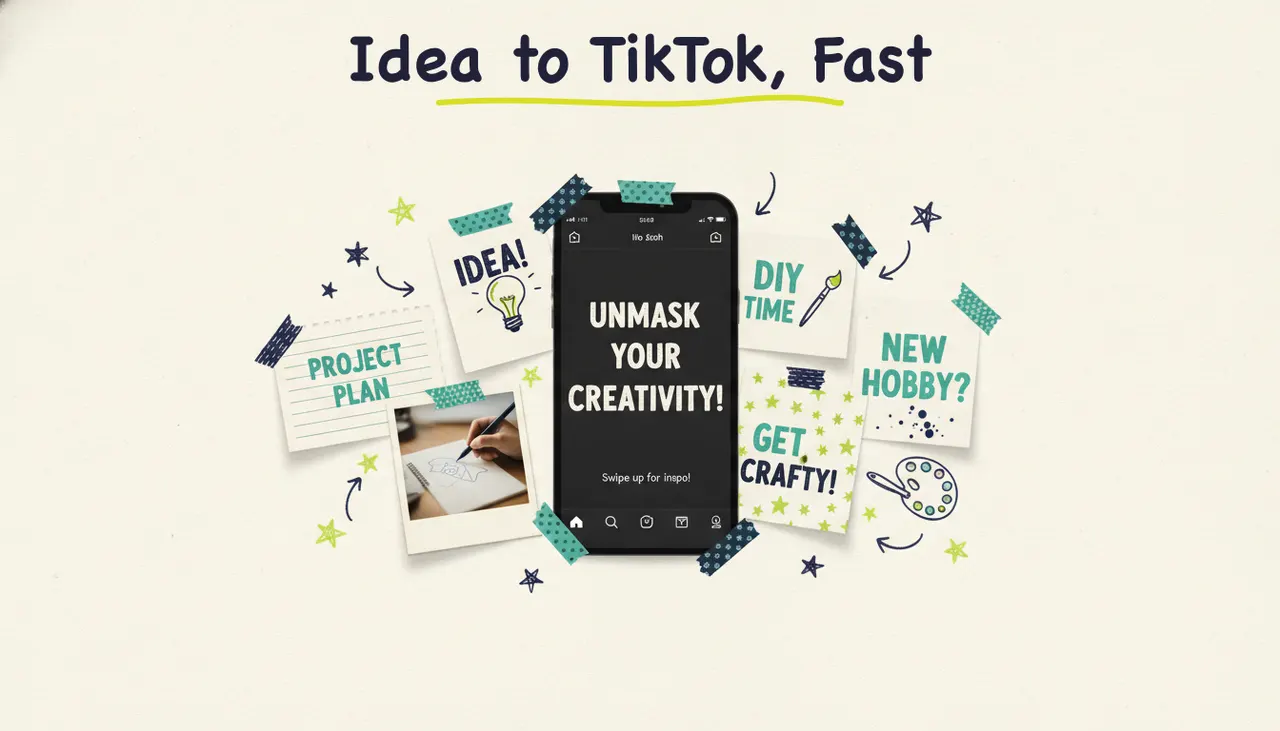
Vertical 9:16, full screen. TikTok is a vertical app. A landscape video with black bars or a shrunk-down horizontal clip reads as reposted, lazy content and gets less reach. Shoot, generate, and export at 9:16 (1080x1920). This is non-negotiable, and it's the single easiest thing to get right.
A native feel. The best-performing TikToks look like they belong on TikTok, not like a commercial that wandered in. That means captions on screen, a conversational voice, quick cuts, trending sounds when they fit, and a pace that matches the feed. AI can nail all of this if you point it in the right direction.
Authenticity over polish. TikTok's whole culture rewards content that feels human and honest. A face, a real opinion, a genuine tip, a bit of personality. When you use AI, keep a human fingerprint on it: your voice, your take, your specific example. Pure AI slop with no point of view gets ignored, and increasingly, flagged.
Sound and captions together. A huge share of viewers watch with sound on, but many scroll on mute too. Captions keep you in the game either way, and they boost accessibility and watch time. Music sets the energy. You want both working.
A reason to stay and a reason to act. Watch time is the currency. Deliver value or entertainment the whole way through, then close with a clear next step: follow for more, try this, comment your version. TikTok's algorithm loves completion and engagement, so earn both.
Bottom line: strong hook, vertical, native feel, real point of view, captions plus sound, and a payoff. AI helps you produce all of it faster. It doesn't replace having something worth saying.
You don't need to reinvent the wheel. A handful of proven formats work over and over, and each one maps cleanly to what AI is good at. Pick a format, and the hook and structure practically write themselves.
For creators, listicles, stories, and explainers build a following. For businesses, tutorials, demos, and explainers earn trust without feeling salesy. Either way, AI handles the script structure and visuals so you can focus on the angle that only you can bring.
Here's the full workflow with Wavemaker, Adwave's agentic video creator. Instead of stitching clips in a timeline, you describe what you want and an AI production team handles research, script, visuals, voiceover, music, and a quality check. You just steer.
You've got options for the input. Type a free-form prompt ("a punchy 30-second TikTok on 3 budgeting tips for people in their 20s"). Or hand it a topic and let the AI research and script it. Or paste a URL (your product page, a blog post, your shop) and it pulls the brand colors, imagery, and messaging into a creative brief. You can also upload documents, images, or existing footage to work from. Any of these becomes your starting point.
The trick for TikTok: put your hook in the prompt. Tell it the first line, the vibe, and who it's for. The more direction you give up front, the more native the result feels.
TikTok is vertical, so pick the 9:16 aspect ratio. Wavemaker supports 16:9, 9:16, 1:1, and 4:5, which covers TikTok, Reels, Shorts, web, and TV. Choosing 9:16 here means the whole video, the framing, the captions, the visuals, gets built for the feed instead of cropped down later.
This is where the agentic part earns its keep. The tool runs a full production pipeline: it writes a script, builds an AI storyboard (21 presets to choose a style), generates custom images and video clips with subject consistency, records an AI voiceover (you can even design a custom voice), and adds BPM-aware music that ducks under the narration so your words stay clear. Then an AI vision QC pass reviews the result for problems before it hands it back. Most videos come together in about 2 to 5 minutes.
Notice what you're getting: a finished video with voiceover, music, and captions, not a pile of raw clips to assemble yourself. That's the difference between an agentic creator and a clip generator or a stock-footage slideshow tool.
For TikTok, on-screen captions aren't optional. They keep silent scrollers watching and lift watch time. Make sure your captions are burned in and easy to read at a glance. On the music side, the built-in BPM-aware track sets your energy. If a trending TikTok sound fits your video, you can add it inside the TikTok app after export to ride the trend, just make sure it actually matches your content.
Watched it back and the intro drags? Just say so. Wavemaker uses natural-language chat editing: "make the intro punchier," "swap the music for something calmer," "cut the third point." No timeline, no learning curve. Each refine is cheap and fast, so iterate until the hook snaps and the pacing matches the feed. This is where you add the human fingerprint that keeps it from feeling generic.
The AI vision pass catches technical issues, but you're the taste check. Watch it on your phone, muted and then with sound. Ask: does the first second hook me? Do the captions read fast enough? Does it feel like a TikTok or an ad? Does it actually say something? Fix anything that feels off, then export your 9:16 clip and post.
Consistency beats perfection on TikTok, and batching is how consistent creators stay sane. AI makes batching genuinely fast. Here's a workflow that turns one focused session into a week of content.
Brainstorm 5 to 7 hooks first. Before you make anything, list your hooks. One idea per video, each tied to a format from the table above. A myth-buster, two listicles, a tutorial, a story, an explainer. Hooks are the hard part, so knock them all out at once while you're in the zone.
Generate them back to back. Feed each hook in as a prompt (or point the tool at a topic or URL), keep the aspect ratio locked to 9:16, and let the pipeline produce each one. Because generation runs in a few minutes, you can queue several and refine while others build.
Batch the refines. Watch all the drafts together, then chat your edits across the set: tighten intros, fix any weak captions, swap a track that doesn't fit. Reviewing them side by side helps you catch which hooks are strong and which need work.
Keep a consistent look, vary the angle. Reuse a storyboard preset and voice so your channel feels cohesive, but change the hook and payoff every time. Familiar style, fresh idea. That combination trains viewers to recognize your content in the feed.
Watch your credits. In Wavemaker, a ~30-second video runs about 75 credits and a ~60-second one about 150, with refines at 15 each and 1080p export at 10. The free plan starts you with 75 credits (enough for your first video), Starter is $29/mo for 500 credits with no watermark, and Pro is $99/mo for 2,000 credits if you're producing at volume. Credit packs start at $9.99 for 100 and never expire, so a heavy batch week doesn't punish you.
A week of TikToks in an hour is realistic once you've got your hooks ready. The tool does the production; you do the judgment.
Here's a gift the format hands you for free: TikTok, Instagram Reels, and YouTube Shorts all use vertical 9:16 video. The clip you made for TikTok is already the right shape for the other two. That's three platforms off one production run.
A few smart tweaks make the repurpose land instead of feeling copy-pasted:
Strip or blur the TikTok watermark before reposting. Instagram and YouTube down-rank videos with a rival platform's watermark, so export a clean version from your tool rather than saving the watermarked file from TikTok. (Wavemaker exports have no watermark on paid plans, which keeps this simple.)
Match each platform's caption and hashtag style. The video stays the same; the description and tags should fit where it's going. Reels leans on discoverable hashtags, Shorts leans on the title and a strong first frame.
Adjust length to the platform's sweet spot. Shorts caps at 60 seconds and rewards fast completion. Reels and TikTok are more flexible. If you need a trim, a quick chat edit ("cut this to under 60 seconds") gives you a Shorts-ready version.
Swap platform-specific sounds when it matters. A trending TikTok audio won't necessarily trend on Reels. If sound is doing heavy lifting, consider a native track per platform.
If you want the deeper platform playbooks, we've got dedicated guides on how to make Instagram Reels with AI and how to make YouTube Shorts with AI. Same vertical video, three audiences, roughly the same effort. That's the whole point of building at 9:16 from the start.
One honest warning, because it matters. TikTok's culture and its algorithm both reward authenticity. Low-effort, AI-generated content with no point of view tends to underperform, and the platform has gotten sharper at spotting and limiting spammy, mass-produced clips. So don't aim for 100 soulless videos a day.
Aim for this instead: use AI to kill the busywork (scripting, visuals, voiceover, captions, editing) so you can spend your energy on the ideas, the angle, and the human touch. Your specific opinion. Your real example. Your face or your voice when it fits. AI gets you from idea to finished vertical video in minutes; you make sure that video is actually worth watching. That combination, speed plus a genuine point of view, is what wins on TikTok in 2026.
Can I make TikTok videos with AI for free? Yes. Wavemaker's free plan gives you 75 credits to start, which is enough to generate your first video, though free exports are 480p and carry a watermark. If you're posting regularly to TikTok, the $29/mo Starter plan removes the watermark and exports up to 1080p, which reads much better in the feed.
What aspect ratio should TikTok videos be? Vertical 9:16, which is 1080x1920 pixels. TikTok is a full-screen vertical app, and horizontal or square videos get cropped or boxed and tend to reach fewer people. Set 9:16 before you generate so the framing, captions, and visuals are all built for the feed.
Will AI-generated TikToks actually get views? They can, if the idea and hook are strong and the video feels native. TikTok rewards content that hooks fast, feels authentic, and delivers value or entertainment, regardless of how it was made. Use AI to produce quickly, but keep a real point of view and a human fingerprint on every video, because low-effort AI spam gets ignored.
How long does it take to make a TikTok with AI? With an agentic tool like Wavemaker, most videos generate in about 2 to 5 minutes, and quick chat edits take seconds. Once you've got your hook, you can go from idea to a finished, captioned vertical video faster than it takes to set up a manual timeline edit. That speed is what makes batching a week of content in one sitting realistic.
Can I use the same video on TikTok, Reels, and Shorts? Yes, and you should. All three platforms use vertical 9:16 video, so one production run covers all of them. Just export a clean, watermark-free version, match each platform's captions and hashtags, and trim to under 60 seconds for Shorts if needed.
Do I need trending sounds to succeed on TikTok? Trending sounds can help, but they're not required. A strong hook, native feel, captions, and a real payoff matter more. When a trend genuinely fits your content, you can add the trending audio inside the TikTok app after exporting your AI-made video.
You don't need a studio, a timeline editor, or a full afternoon. You need a good idea and the right tool to turn it into a finished, vertical, captioned video fast. Wavemaker handles the script, visuals, voiceover, music, and captions, so you can focus on the hook and the point of view that make people actually stop scrolling.
Create your first video free with 75 credits and see how quickly your next TikTok comes together.