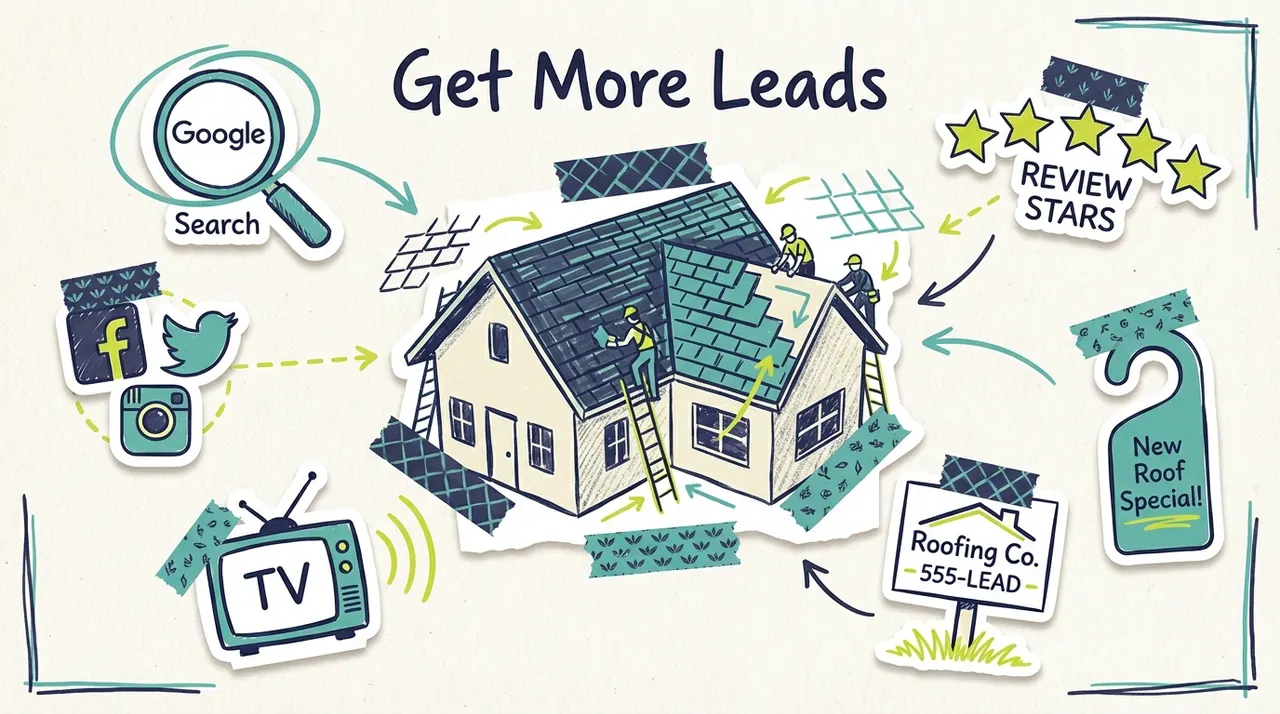
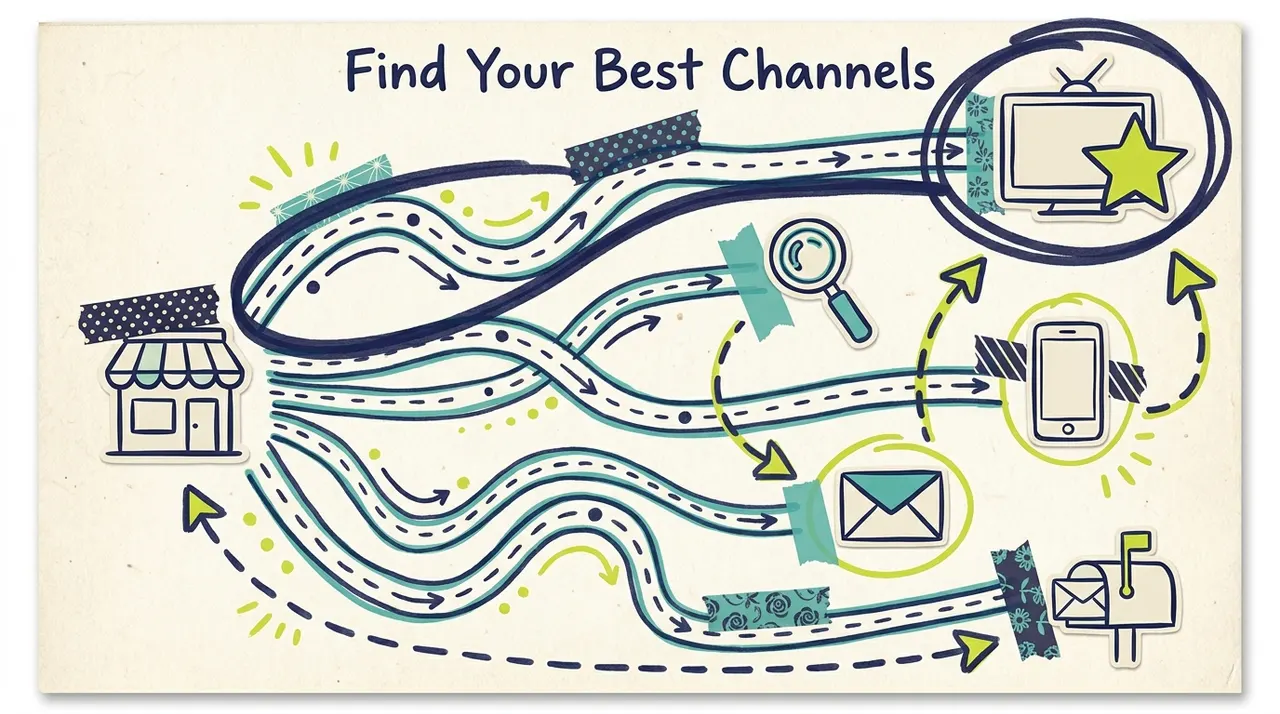
A roofing ad earns the next step: a page, a phone or a form, a person who answers, and an estimate on a calendar. This page is that path. Channel mix, CPCs, and budget splits live in the companion guide.
Pair this with the channel guide
The roofing company advertising guide compares seven ways to get leads: search, social, local SEO, directories, mail, TV, and referrals. Use it when the question is where to spend.
Use this page when the ads are already running, or about to, and the question is why the calls are thin. Common causes sit after the click: the page talks about every service, the form asks for a roof measurement nobody has, or the office phone rolls to a full voicemail during a storm week.
Nothing here is a case study. There is no claimed close rate, no "roofers who did this booked X jobs," and no customer quote. The checks are operational.
Two intents, two pages
Storm damage and a planned replacement are different visits. Sending both to a homepage that says "quality roofing since 1998" makes both of them work harder than they should.

Search ads should land on the matching page. A TV or social ad that cannot choose the intent for the viewer should land on a short page that asks which of the three it is, then routes them. One page with three buttons beats one page with twelve services and no next step.
If you advertise a radius, the page should list the same towns. A click from outside the area is a targeting problem. A click from inside the area that cannot tell whether you work there is a page problem.
What the landing page has to show
Roofing is a trust purchase made under time pressure, especially after hail. The page has to answer the questions a homeowner asks before they will let a truck in the driveway.
License and insurance, visible without a scroll hunt. Say the state if the license is state-specific.
Photos of your jobs. A stock roof is a reason to bounce. Label the city if you can do it without exposing a customer's address.
Service area, as towns or ZIP codes, matching the campaign.
One next step. Call, or a form that asks for name, phone, address, and the problem (leak, hail, replacement, repair).
Hours the phone is answered, including what happens after hours. A storm ad that runs at 8 p.m. needs a next step that still works at 8 p.m.

Skip the paragraph about your founding year until after the offer. Skip a quote request that demands insurance claim numbers, roof squares, and a preferred shingle brand before anyone has called. You can collect that on the estimate visit.
Reviews help, and the channel guide already covers how to ask for them. On this page, the rule is narrower: do not invent testimonials, and do not paste a star rating you cannot point to on Google or another profile the visitor can open.
Call, form, and speed
Phone and form fail in different ways. Use both, and watch them separately.

Speed matters because the homeowner often contacts more than one roofer. You do not need a published "average response time" from a study to run the check. Time your own first response for a week. If form leads wait until the next sales meeting, the ad budget is not the constraint.
Shared directory leads, covered in the channel guide, have the same speed problem plus a price comparison. This path is for demand you own: your page, your number, your form.
What the tracker can see
Adwave's first-party site tracker ties later visits and on-site actions to the campaign, including visits that follow a TV ad. Put it on the landing page and on the thank-you state after the form.
What that gives you:
Visits to the estimate page, by campaign.
Form submits, if that action is tagged.
A way to see search and social clicks beside TV exposure, instead of grading TV as if it had a click on the spot.
What it does not give you:
A closed roofing contract, unless you record that sale yourself and connect it.
A cost per booked estimate, until the office log and the ad report use the same definition of "booked."
Proof that a storm week was profitable. Seasonality will dwarf a small sample.

Adwave runs Meta, Google, TikTok, Reddit, web, and TV from one prepaid daily budget starting at $30/day, with radius or ZIP targeting. Individual signups typically get a $60 starter credit. Google Search and Reddit typically need a higher daily budget before they switch on. You approve ads before you spend. The landing page is still yours to write. Creative tooling, if you want it separate, is Wavemaker.
Spend details and channel costs stay in the lead guide. This URL does not repeat that table.
A week-one check
Before you raise the budget, walk one path as a stranger:
Open the ad's destination on a phone. Can you tell the towns you serve and how to book an estimate without pinching the screen for five paragraphs?
Call the number at the hour the ads run. Does a person answer, or a tree of prompts?
Submit the form with an address you know is inside the area, and one you know is outside. Note what each reply says, and how long it takes.
Confirm the tracker fires on that page. A week of ads with a silent tag produces a delivery report and a blank site.
Fix the broken step before you add a channel. The channel guide is how you add one. This checklist is how you keep the one you have.
FAQ
Should TV and search use the same page?
Search can go straight to the matching intent (storm, replacement, or repair). TV and social often cannot know the intent, so send them to a short router page with those three choices. Do not send either one to a homepage that makes the visitor hunt.
How many form fields do I need?
Name, phone, address, and the problem are enough to book an estimate. Roof measurements and insurance details can wait for the visit. Every extra required field is a place to quit.
Can I promise a cost per booked job?
Not from ad reporting alone. You can report cost per visit and cost per form once those actions are tagged. Booked estimates and signed jobs come from the office log. Publish those only when you have counted them.
What about looking like a storm chaser?
Put the license, the insurance, and the service area on the page, and answer the phone. The channel guide covers mail and door-knock timing. This page's version is the same standard online: say who you are and where you work before you ask for the job.
Where are the channel costs?
On the roofing advertising guide. That page owns CPC context, budget splits, and the channel comparison. This page owns the path from the ad to the estimate.