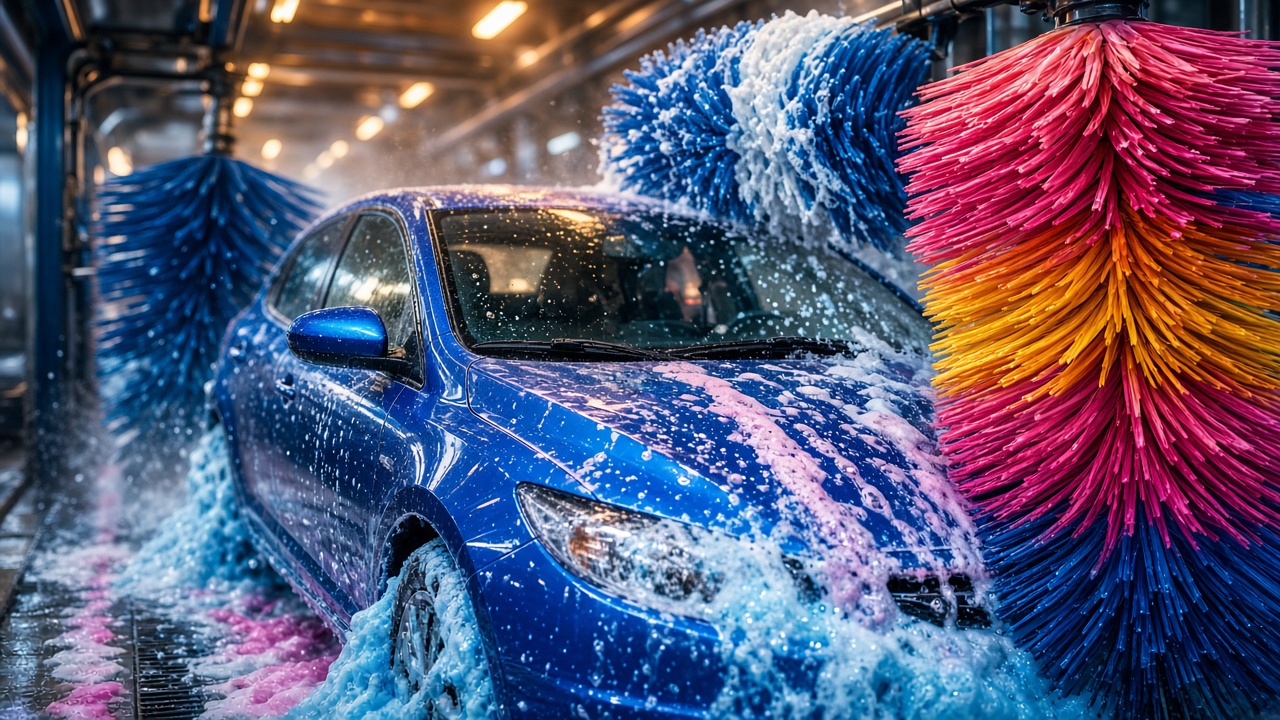
Car wash advertising works best when every ad pushes toward one repeatable action, usually a membership signup or a return visit, and reaches drivers within a few miles of the wash. Streaming TV, Google Search, and Facebook and Instagram can all start from a $30 daily budget.
Reddit starts from about $35 a day and TikTok from about $91.
How car washes get and keep customers
People rarely drive across town for a wash. They choose one close to home or work or along the route they already drive. That makes a car wash a short-drive, high-frequency purchase, and advertising has to do two things: get nearby drivers to try the wash once, and turn that first visit into a habit, ideally a monthly membership.
The second job carries more weight than it looks. Loyalty-marketing provider Thanx says a small share of top customers accounts for most of the revenue at most car washes. If a small group of regulars pays most of the bills, an ad that brings in a one-time bargain hunter is worth far less than one that brings in a future member. When you judge a campaign, count first visits that turn into a plan signup or a second wash within the month, not simple traffic.
Memberships also shift timing. An unlimited plan member doesn’t wait for a sunny Saturday or a coupon to come back, so each plan you sell reduces the weekly and seasonal swings in car wash revenue.
Which ad channels fit a car wash
Each channel suits a different job for a wash, and none of them is the right answer for every site. A new express tunnel needs awareness. An established wash with a membership plateau needs reminders and offers in front of people who already know it. The table below matches channels to those jobs, with the budget condition Adwave applies to each.

| Channel | What it does for a car wash | Budget condition |
|---|---|---|
| Streaming TV | Builds local awareness of a new site, a grand opening, or a membership offer on the biggest screen in the house | Runs from the $30/day minimum |
| Google Search | Reaches drivers already searching for a wash nearby | Runs from the $30/day minimum |
| Facebook and Instagram | Promotes membership offers with visual creative, such as a dirty car next to a clean one | Runs from the $30/day minimum |
| Mobile web and apps | Adds frequency with people near the site between visits | Included in the daily budget |
| Reaches local community discussions in your area | From about $35/day | |
| TikTok | Reaches younger drivers with short vertical video | Live and opt-in, from about $91/day |
Two notes on that table. Adwave lists TikTok as a channel you turn on in Customize and connect to your own TikTok account, according to the Adwave pricing page. Your budget, audience, creative, and other settings decide which channels actually run. If one optional channel can’t run at launch, the rest of the campaign still launches and you’re told why. You don’t need to open your own Facebook, Instagram, Reddit, or TikTok ad accounts, and Adwave sets up a Google Ads account for your workspace, as the Adwave FAQ explains. To see how these channels work together from one budget, read about Adwave’s omnichannel advertising.
Streaming TV works for small washes now because you can target a local area instead of buying a whole broadcast market. For more on that channel by itself, see our guide to TV advertising for car washes.
What to put in a car wash ad
A clear offer, a picture of the result, and one next step do most of the work. Here is an example campaign for a single-site express wash, meant to show one approach rather than a measured result.
The offer is the first month of the top unlimited plan at an intro price, or a free upgrade on a first wash for people who aren’t ready to commit. The creative opens on a salt-streaked or pollen-covered car entering the tunnel and ends on the same car leaving clean, with the price and plan name shown on screen. That story fits a 15-second streaming TV spot, a vertical social video, and a still image of the before-and-after. The search ad stays simpler, for example: Unlimited washes, first month at the intro price, join online in two minutes. Every version sends people to one landing page where they can join the plan or claim the upgrade.
That landing page is also where you collect contact details. Operators often use a free wash or upgrade to build a list, then follow up with a membership offer. One wash-marketing agency describes a launch where a free-wash coupon gathered contacts that later received a first-month membership deal. Adwave runs the ads and builds the landing page. The follow-up emails or texts happen in whatever tool you already use for customer messages.
Adwave reads your website for offers and photos, then suggests audiences and produces matching creative: image ads, social video, and a TV spot that you preview and edit before approving, as described on the How Adwave works page. You can also upload finished ads. For more ideas on vehicle-focused creative, browse these automotive TV ad examples.
Realistic budgets from $30 a day
Adwave uses one all-in daily budget that covers media, ads, and campaign management, with no subscription or contract. Here is how channel access changes as the budget grows.
| Daily budget | Channels available | Example monthly total (30 active days) |
|---|---|---|
| $30/day | Streaming TV, Google Search, Facebook and Instagram, mobile web and apps | $900 |
| About $35/day | Adds Reddit | About $1,050 |
| $75/day | Same mix with more delivery per channel | $2,250 |
| About $91/day | Adds TikTok once you turn it on | About $2,730 |
The $75 a day planning example equals $2,250 over 30 active days, per Adwave’s pricing. The other monthly totals are simple arithmetic and can be lower if you pause.
You can review your ads without a card. When you’re ready to launch, you fund a prepaid wallet. Campaigns pause if the wallet can’t cover the day, and auto-refill is optional. Card deposits add the processing fee shown at checkout, and ACH deposits have no added fee. Campaign creative is included. Extra creation costs $0.38 per image, $6 per social video, $6 per 15-second TV spot, and $12 per 30-second TV spot.
For outside context, the Rhode Island Small Business Development Center suggests that a local business trying to generate steady website traffic or leads from Google Ads should expect $1,000 to $2,000 a month. That’s a general guideline for small businesses, not a car wash benchmark, and it covers one platform. The same guide suggests a rule of thumb of at least 10 times your average cost per conversion as a starting monthly budget. For a wider view of channel prices, see our breakdown of what local advertising costs.
Planning around weather and seasons
Car wash demand follows the weather. A sunny weekend after a storm fills the lot, while a rainy week or a deep freeze empties it. Promotions are a common way to steady slow winter and bad-weather periods, but there’s a case for the opposite timing too. DRB’s car wash marketing agency, Suds, recommends using the busy season to drive as many memberships as possible instead of saving membership promotions for slow times.
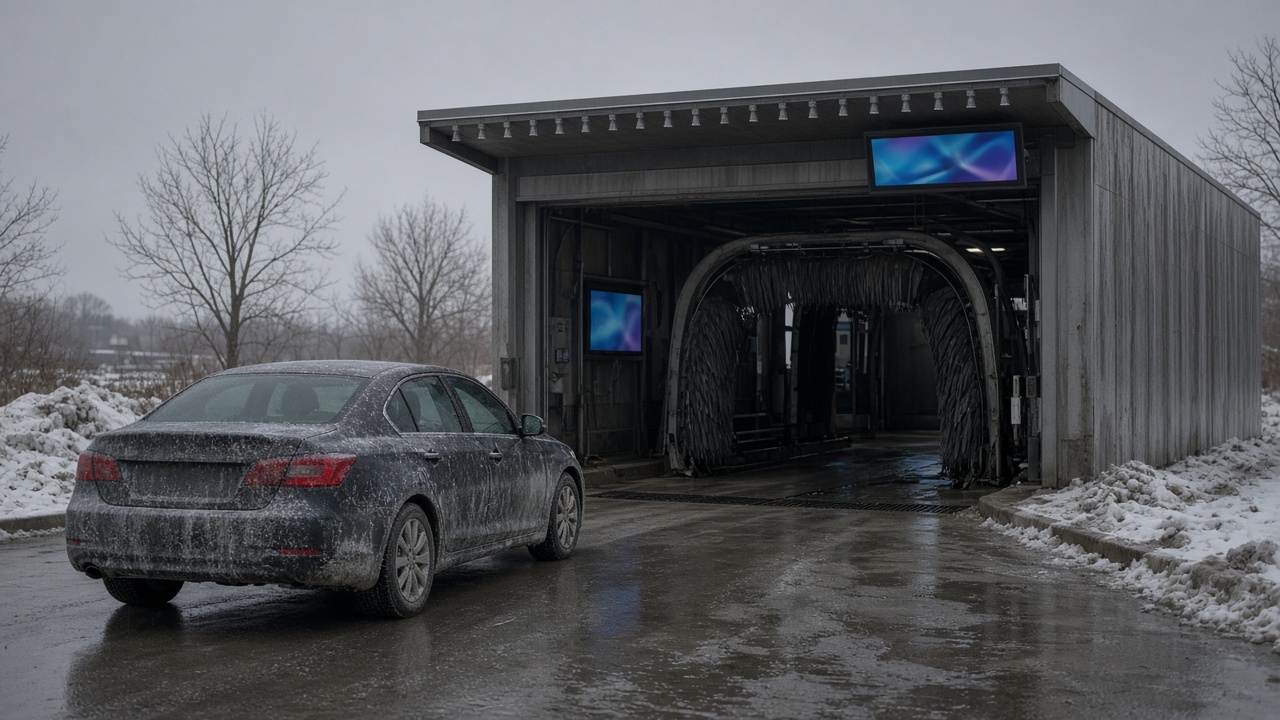
You can do both with a flexible budget. Raise the daily budget ahead of the busy days you can predict, such as spring pollen season, the first warm weekend, or the days after a snowstorm when roads are salted. During slow stretches, pull the budget back or shift the message toward the membership, so the people you do reach are buying months of washes instead of one.
On Adwave, a new daily budget applies the same day on a live campaign if your wallet covers it. Pausing stops future daily charges. That lets you react to a forecast instead of locking in a month of spend.
Targeting the right drive radius
Most of a wash’s customers live or work within a short drive, so wide targeting mostly spends money on people who won’t come. Adwave lets you target a radius or a defined area, from specific ZIP codes up to a full city or national audience. For a single site, start with a tight radius around the wash and widen it only if the area is rural or the site sits on a commuter route that pulls from farther away.
ZIP codes help when a highway or river splits your area and drivers on the far side are unlikely to cross. Operators with several locations can give each site its own area and offer, so a new tunnel’s grand opening message doesn’t run in a neighborhood that already has an established member base. Our guide to advertising for multi-location businesses covers how to structure campaigns across sites.
Ads also work better when the wash is easy to find once someone arrives. Make sure your map listings show accurate hours and address information along with your amenities, and that your signage matches the colors and name in your ads.
Ad rules for car wash prices and memberships
Under the FTC’s policy statement on deception, an ad is deceptive if it is likely to mislead a consumer acting reasonably in the circumstances, and misleading price claims are among the practices the statement lists. In its automobile industry pricing FAQs, the FTC says it is committed to making sure the price consumers see in advertising is the actual price they will pay, aside from required government charges like taxes.
That guidance is written for auto dealers, and in March 2026 the FTC warned 97 auto dealership groups to make sure advertised prices include all fees consumers must pay. Car washes aren’t the target, but the principle applies to any price in an ad. Show the full monthly membership price and any required fees. When you advertise an intro price, state clearly what the price becomes and when. Spell out how cancellation works on the landing page. Dealers face their own pressures, which we cover in our look at how car dealerships approach advertising.
This is general information and not a substitute for legal advice. Ask a lawyer about membership terms and auto-renewal rules in your state.
Measuring signups and repeat visits
Install your business’s tracking snippet on your website and configure the actions you want to count, such as a membership signup or a coupon claim. Give each conversion a value, for example a month of membership revenue, and Adwave can report revenue and return on spend. Last-touch credit answers one question about what drove a signup, assisted-conversion data answers another, and a Lift experiment answers a third.
Measurement has limits. Ad platforms see website actions, not every wash that happens at the bay. A driver who sees your streaming TV spot on Tuesday and pulls in on Saturday without visiting your site won’t show up as a conversion, and last-touch credit tends to undercount TV for that reason. Compare your wash counts and new memberships in the point-of-sale system against the weeks you advertised, and ask new members at signup how they heard about you. Those numbers together will tell you more than any single report.