
Flooring store advertising works best when it reaches nearby homeowners during their research. Search ads catch people looking for a specific floor in their area, while streaming TV, Facebook and Instagram show finished rooms to households planning a project. With Adwave, TV, Google Search, Facebook and Instagram run from a $30/day minimum, and warranty claims must follow FTC guidance.
How flooring shoppers find a store
People usually buy flooring after a move or a renovation decision, comparing materials, looking at photos of finished rooms and reading about installation before they contact anyone. Cyncly’s quarterly report on its network of more than 2,000 independent flooring retailer websites says housing turnover is still the biggest single driver of flooring demand, and that phone calls fell four times faster than form submissions in Q1 2026 compared with Q1 2025, which Cyncly reads as a sign that shoppers are doing more research before they make contact. Its data also showed that blog articles about care, installation and flooring trends were among the most-visited pages on those sites, though Cyncly describes the figures as directional portfolio averages, with individual stores seeing different numbers.
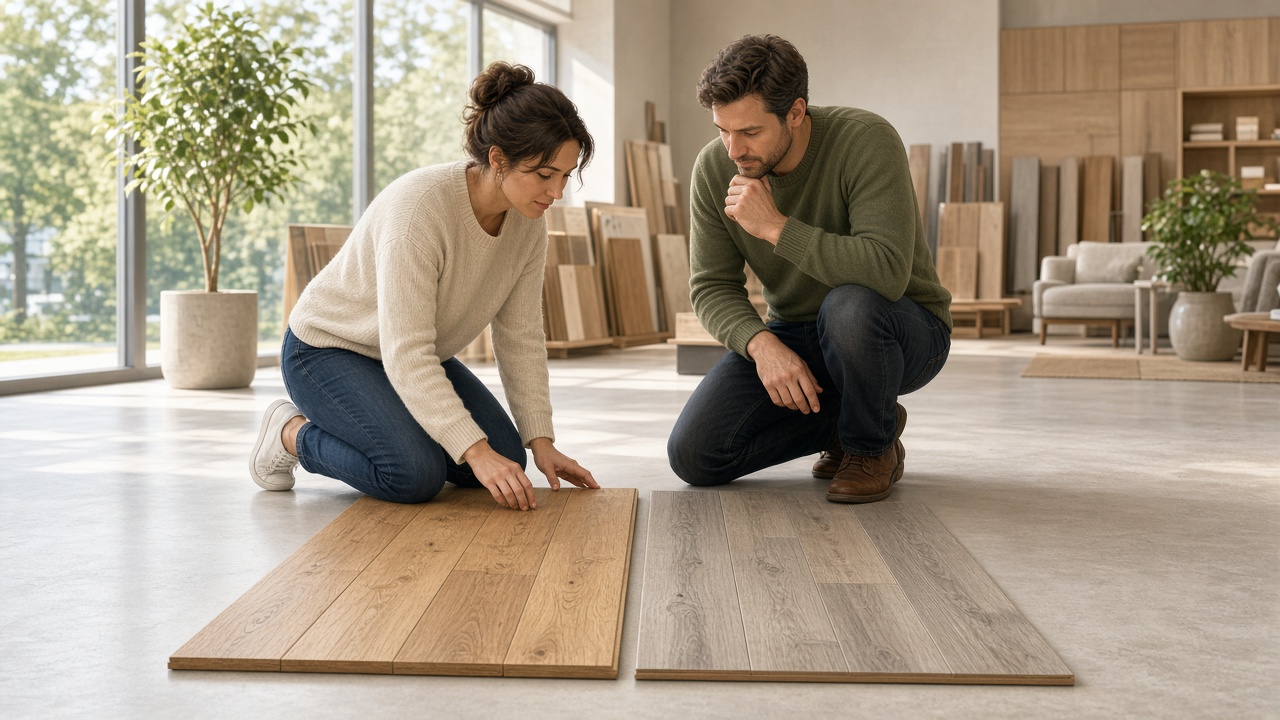
A flooring ad should therefore lead somewhere useful for a shopper who is still researching. Good destinations are a product page, a sample or in-home measure request, and clear showroom hours and directions. A phone number on its own is not enough. See our guide to driving foot traffic to retail stores.
Which advertising channels fit a flooring store
Each channel reaches the shopper at a different point in the decision. Search catches the shopper who already knows what they want. Video and social put the product in front of households before they start searching. Running them together from one budget is the idea behind Adwave’s omnichannel advertising.
| Channel | Job it does for a flooring store | Adwave availability |
|---|---|---|
| Google Search | Reaches people searching a material plus a city or “near me,” such as luxury vinyl plank near me. Broad one-word terms like “flooring” tend to bring browsers rather than buyers. | Included from the $30/day minimum |
| Streaming TV | Shows finished rooms to households that make home project decisions together, in the living room where those decisions happen | Included from the $30/day minimum |
| Facebook and Instagram | Suits a visual product. Before-and-after and finished-room images work well here | Included from the $30/day minimum |
| Google (YouTube) | Video reach alongside search | Included on the pricing page |
| Mobile web and apps | Extra local reach and repeat exposure | Included on the pricing page |
| Reaches homeowners discussing renovation and material choices | From about $35/day | |
| TikTok | Short video for younger homeowners | Opt-in, from about $91/day, with a connected TikTok account |
You don’t need to open separate ad accounts. The Adwave FAQ explains that Facebook, Instagram, TikTok and Reddit ads run on connected accounts that Adwave owns, and that Adwave sets up a Google Ads account for your workspace. The channels that actually run depend on your budget, audience, creative, settings and content eligibility. For more on how TV fits a local service mix, see our guide to TV advertising for home services.
Creative that sells floors: show the finished room
Flooring is bought on looks, so the ad has to show what the floor will look like at home. The strongest images are real installed rooms photographed in good light, plus close-ups of grain, texture and edge detail. Give the ad one offer, such as a sale weekend or a free in-home measure, and one next step, such as booking a measure or visiting the showroom. Furniture retailers face a similar problem of selling a product people want to see in a room, and our page on TV advertising for furniture stores covers how they approach it on the big screen.

Adwave builds the creative from your website. How Adwave works explains the process: it reads your site for offers and photos, then you preview image ads, social video and a TV spot and refine them before you approve anything. Business campaign ads made in the app are included. Extra creation is billed at $0.38 per image, $6 per social video, $6 per 15-second TV spot and $12 per 30-second TV spot. You can also upload finished ads you already have. Because the app pulls from your own site, your website photos matter. Replace stock images with photos of your own installs before you start.
For example, a spring campaign might use a 15-second TV spot that moves from an empty room to a finished oak floor, end on a card offering a free in-home measure, and link to a booking form.
Realistic budgets from $30 a day
Adwave’s daily budget runs from $30 to $10,000, and the amount you choose decides which channels can run:
- $30/day: TV, Google Search, Facebook and Instagram
- About $35/day: Reddit added
- About $91/day: TikTok available as an opt-in
At the $30 minimum, 30 active days comes to $900. The Adwave pricing page uses a $75/day planning example, which totals $2,250 over 30 active days. The daily budget covers media, ads and management. There is no subscription, no contract and no added fee on top. You pay from a prepaid wallet. New accounts start empty and you deposit funds when you are ready to launch. Card deposits carry the processing fee shown at checkout, and ACH deposits have no added fee. If the wallet can’t cover the day, the campaign pauses. You can pause it yourself at any time, and pausing stops future daily charges.
Outside guidance points in the same direction: start small and test. The Rhode Island Small Business Development Center suggests starting with $10 to $50 per day for local campaigns, testing several creatives and raising the budget based on performance. Treat your first month as a test of which offer and which channels bring requests. It won’t tell you what a full year will return. For a wider view of what local advertising costs across media, see our cost guide.
Timing campaigns to flooring seasons
Demand for flooring changes with the weather and the renovation calendar, and it changes differently for each material. A flooring retailer, Bellair Wood Floor, notes that engineered hardwood demand rises in spring and summer renovation cycles, when moderate humidity helps installation. It also says laminate sells more around late winter and early spring sales events, while resilient categories such as WPC stay steadier through the year.
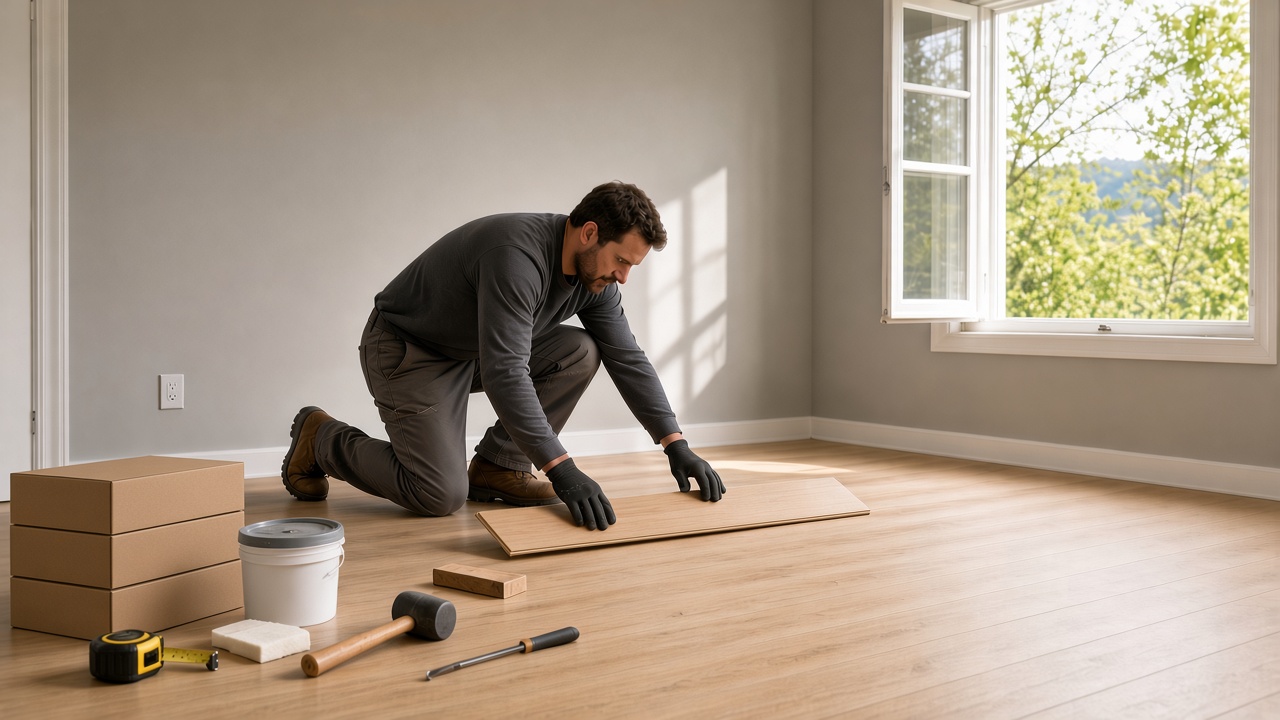
This gives you a practical calendar. Raise the daily budget a couple of weeks before your spring push and before each sale weekend, so shoppers have seen your rooms before they start searching, and shift the creative to match the season: hardwood in spring and summer, value laminate around sale events. Lower the budget in slower months rather than stopping completely. On a live campaign, a new daily budget takes effect the same day if your wallet covers it, so adjusting around a sale is quick. Holiday promotions follow similar rules, and our guide to planning ads for Black Friday sales covers lead times.
Ad rules for warranties and guarantees
Flooring ads often mention wear warranties, lifetime coverage or satisfaction promises, and all of these fall under federal rules. The FTC’s Businessperson’s Guide to Federal Warranty Law sets out the main points:
- Deceptive warranty advertising violates the FTC Act, which prohibits unfair or deceptive acts or practices in commerce.
- The FTC’s Guides for Advertising Warranties and Guarantees (16 CFR Part 239) give examples of disclosures that explain what a warranty covers.
- A “satisfaction” or “money back” guarantee counts as an offer of a full refund for any reason.
- If you advertise a “lifetime” warranty, you have to make clear what “lifetime” refers to.
- For products covered by the Pre-Sale Availability Rule, the ad only needs to say that the warranty can be seen where the product is sold.
Most flooring warranties come from the manufacturer and vary by product line and installation method. Check the current terms before you quote them, and keep an ad’s warranty wording consistent with your showroom signage. Have your own counsel review any guarantee you create yourself.
Measuring showroom visits and leads
Start by deciding what counts as a lead. For a flooring store, that usually means a sample request, a measure booking, a quote form and a click to call. In Adwave you install your business’s tracking snippet, choose the actions you want to count, and give each one a value so reports can show revenue and return on spend. Reports include last-touch credit, assisted conversions and Lift experiments.
Some effects are hard to measure. A shopper who sees your TV spot, searches your store name a week later and then walks in may never appear as a clean conversion. Cyncly’s finding that forms are falling more slowly than calls suggests that form-based requests will be the more reliable signal to track. Watch branded searches, form volume and showroom traffic alongside last-touch reports. Ask walk-in customers how they heard about you, and compare periods when campaigns were running with periods when they were paused, instead of relying on any single report.