

Your business's NAP, its Name, Address, and Phone Number, is its digital identity. Think of it as your online business card. When this information is messy and inconsistent across the web, it confuses search engines and, more importantly, your potential customers. Getting this right is the absolute foundation of successful local SEO.
Your Business's Digital ID Card
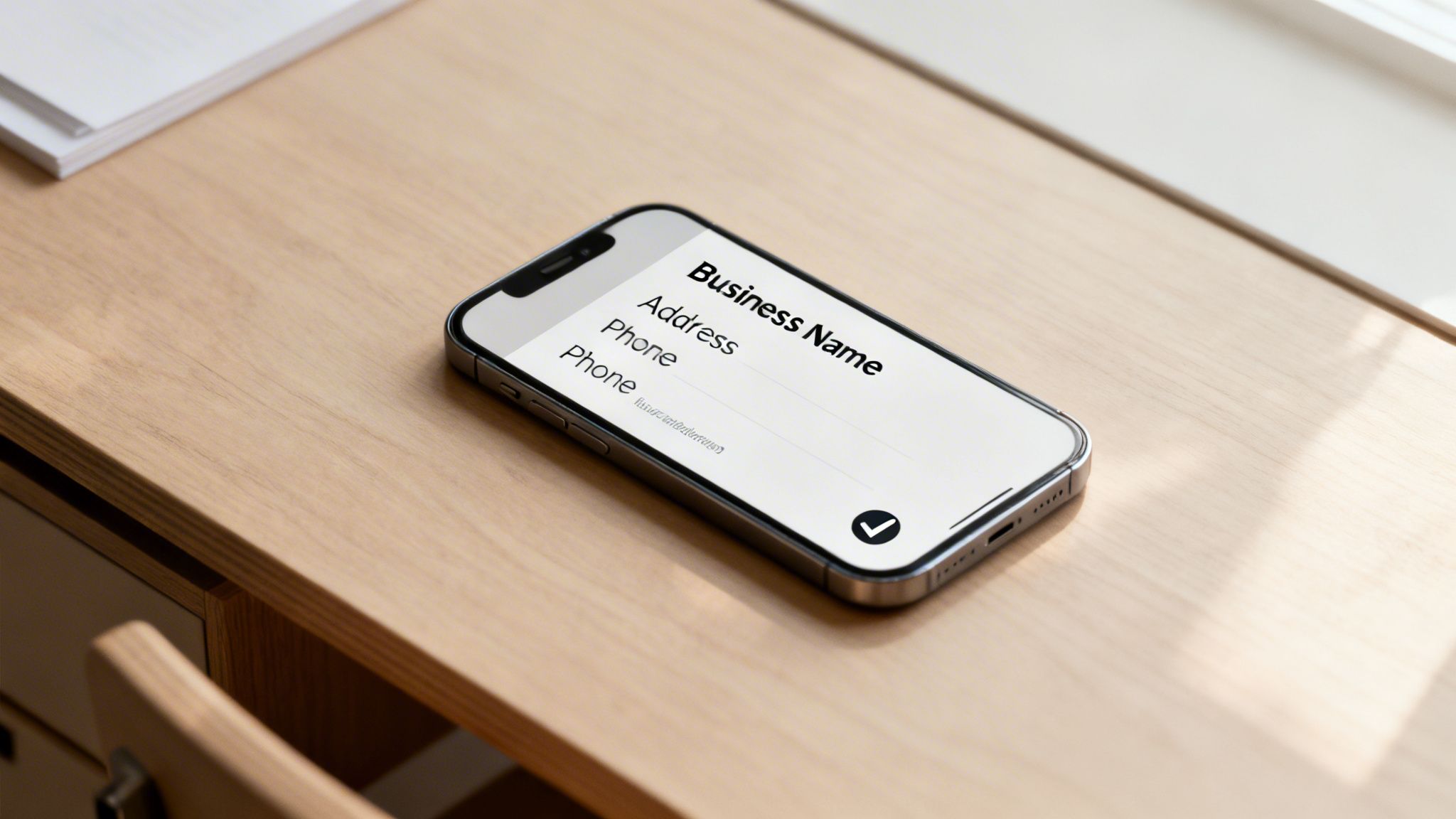
Here's an analogy I often use with clients: Imagine you're trying to build a professional reputation, but you introduce yourself with different nicknames. Some people know you as "Robert," others call you "Robbie," and a third group knows you as "Bob." Each group has a slightly different perception, which dilutes your personal brand and makes you harder for a new acquaintance to pin down.
This is exactly what happens when your business name isn't consistent online. Search engines like Google are constantly scanning the internet, piecing together clues to verify your business's existence and location. Every time they find your NAP on a directory, social media profile, or another website, it’s a "citation", a small vote of confidence.
When all those citations point to the exact same business information, Google sees you as a legitimate, trustworthy entity. But when the information is scattered and mismatched, that trust evaporates, which directly hurts your ranking in local search results.
How Tiny Name Changes Create Big Problems
Even small, seemingly harmless variations in your business name can create chaos for search engine algorithms. These differences effectively create multiple, weaker versions of your business online, splitting your authority and confusing the very systems you need to impress.
Here's a look at how this plays out in the real world.
How Small Name Variations Confuse Search Engines
As you can see, what looks like a minor typo to a human can look like an entirely different business to an algorithm. This splits your SEO value and makes it harder to rank for your main keywords.
The Real-World Impact on Your Bottom Line
This isn't just some abstract SEO theory; it has a tangible effect on your revenue. In fact, some studies show that businesses with consistent NAP listings see up to 33% higher revenue growth than their inconsistent competitors.
Why such a big difference? Because Google rewards that digital trust with better visibility. We've seen clean NAP data help boost local search rankings by an average of 20-30%, which translates directly into more foot traffic, phone calls, and paying customers.
Setting the Stage for Powerful Advertising
Fixing your NAP is also a critical first step before you even think about spending money on advertising. When you run a compelling TV ad campaign, like one you can build with Adwave, you're driving local customers to search for you online. You want to be absolutely certain they find the correct information, instantly.
A clean, consistent NAP ensures that the interest you generate from an ad turns into an actual sale, not a lost lead who couldn't find your address. It creates a smooth path from someone seeing your commercial to walking through your door. Getting your digital ID card in order is a non-negotiable first step, and you can see how it connects to your broader online presence in our guide on how to optimize your Google Business Profile for more calls.
Why Your Business Name Is Local SEO’s Biggest Pitfall
Of all the pieces of your business information, the Name is where things go wrong most often, and it can do some serious, hidden damage to your local search rankings. Many business owners don't even realize it's happening.
Think of it this way: if you introduced yourself with a different nickname every time you met someone, you'd have a hard time building a solid reputation. People would get confused. That's exactly how Google and other search engines feel when they see different versions of your business name scattered across the web.
The Phantom Listing Problem
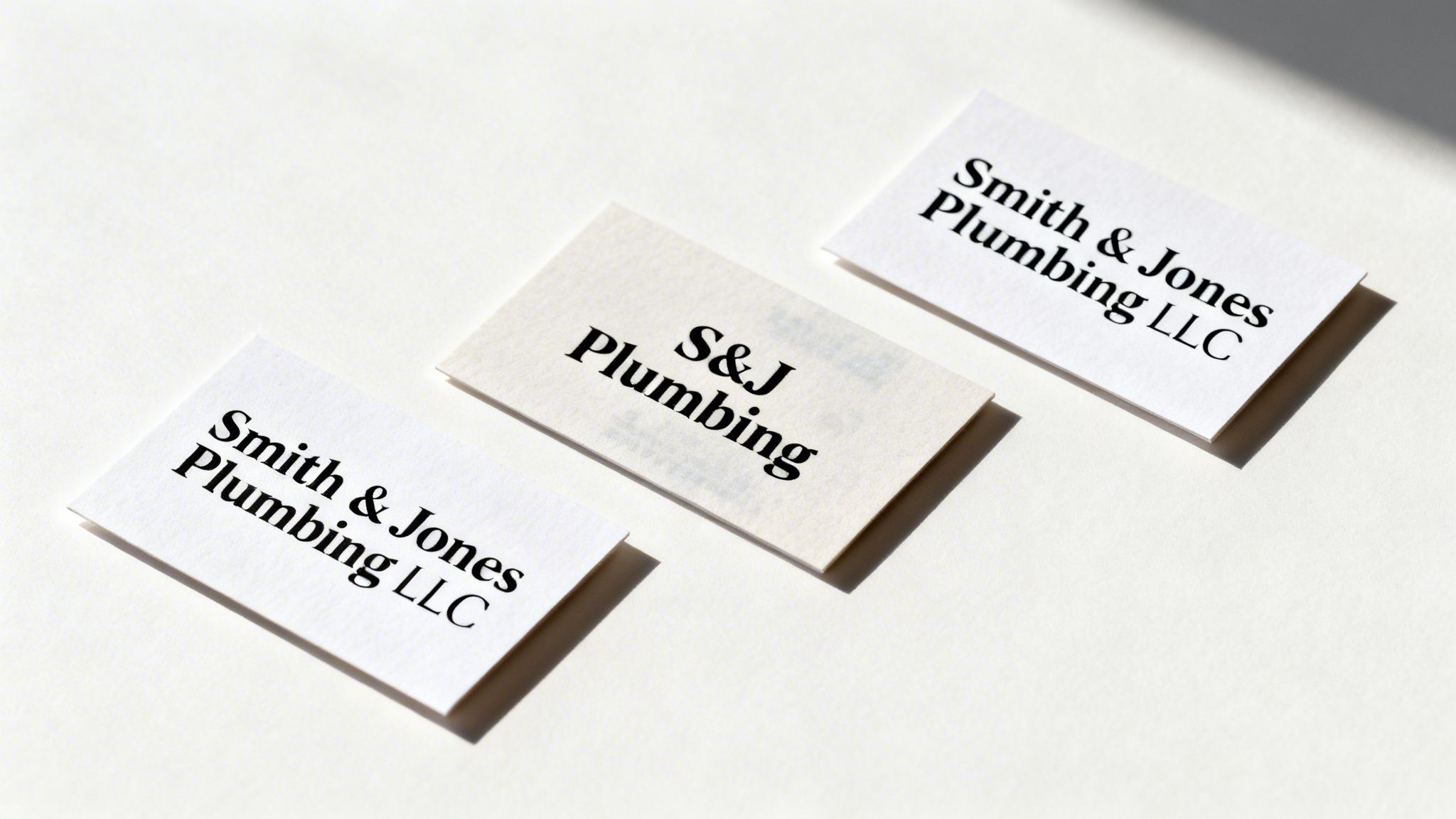
A classic mistake is mixing your official, legal business name with a more casual "doing business as" (DBA) name. For example, your paperwork might say "Smith & Jones Plumbing LLC," but everyone in town knows you as "S&J Plumbing."
When you use both of these names online (one on your website, another on a directory) you aren't building one powerful online presence. Instead, you're accidentally creating multiple, weaker "phantom" listings. In Google's eyes, each variation is a completely separate business, which splits your authority and makes it harder for the real you to rank.
Inconsistent naming splits your SEO power. Instead of having one strong signal that search engines trust, you have several weak signals that compete against each other, making it harder for any of them to rank.
This isn't just a backend SEO problem; it directly affects your bottom line. Research shows a staggering 73% of users lose trust in a brand when they find inaccurate business information online. A simple name discrepancy is often enough to make a potential customer pause, question if you're a legitimate operation, and click over to a competitor.
From Ad to Action: The Adwave Connection
Now, let's bring this into the real world. Imagine a homeowner sees a great TV ad you're running with Adwave. They're impressed, so they grab their phone to look you up. This is the moment of truth, where advertising dollars turn into actual leads.
But if your business name is a mess online, their search might pull up an old, incorrect profile, a confusing mix of different listings, or even another company with a similar name. All that interest you generated just vanished.
A consistent name creates a smooth path from someone seeing your ad to becoming a customer. It ensures that when your Adwave campaign drives that all-important search, your business is the one they find, ready to help.
Check the rest of your listing details after correcting the name. See our beginner’s guide to the map pack.
What an Inconsistent Business Name Is Really Costing You
Let's move past the technical jargon and talk about what really matters: your bottom line. An inconsistent business name does a lot more than confuse a few search engines, it actively hurts your revenue. The financial damage from messy online details is very real, turning this abstract idea of "NAP consistency" into something you can see in your bank account.
When your business name, address, and phone number are all over the place online, you're essentially bleeding money in three key ways: you lose customers, you erode trust in your brand, and you waste your marketing budget. Each one of these problems chips away at your profits.
The Financial Drain of a Messy Name
Lost customers are the most immediate and painful cost. Imagine a potential buyer sees your fantastic Adwave TV commercial and pulls out their phone to look you up. If they find an old, incorrect listing with the wrong address, they aren't coming to your store. Just like that, a lead you paid good money for is gone.
This directly chips away at your brand's credibility. When a customer finds conflicting information online, it makes your business look disorganized, unprofessional, or worse, permanently closed. This isn’t just a perception issue; it has a tangible impact on whether people choose to do business with you and your ability to build a positive reputation. You can find out more about building that trust in our guide on how to get more Google reviews for your local business.
An inconsistent business name is like having a leaky bucket for your marketing budget. You can pour all the money you want into advertising with a great service like Adwave, but if potential customers keep falling through the cracks because they can't find you, that investment is going right down the drain.
Tying Consistency Directly to Your Revenue
The connection between brand consistency and your bottom line isn't just a hunch; it's backed by solid numbers. Creating a clean, uniform online presence isn't an expense, it's an investment with a measurable return. For instance, recent studies show that 68% of companies directly attribute 10-20% of their revenue growth to maintaining brand consistency.
The data gets even more convincing from there. A significant 33% of businesses reported a revenue increase of over 20% after achieving consistency, while 60% landed in that 10-20% growth range. On the flip side, inconsistent listings can cause a revenue drop of up to 23% due to poor uniformity, which can seriously damage your visibility when you need it the most. You can explore more of these branding statistics and their impact on revenue on DesignRush.com.
For an auto dealership running a campaign with Adwave, this is the difference between a qualified lead from a TV ad successfully booking a test drive or getting frustrated and heading to a competitor down the street. cleaning up your NAP is one of the smartest moves you can make to ensure every single dollar you spend on marketing has the best possible chance to deliver a return.
Your Step-By-Step Guide to a NAP Consistency Audit
First things first, we need to create a "single source of truth." This is your golden record, the one, perfect version of your business Name, Address, and Phone number that you’ll use everywhere online, without exception.
Define Your Golden Record
Before you even think about searching for errors, you have to decide what’s correct. This simple step is important; otherwise, you risk creating new problems while trying to solve old ones.
Name: What do your customers call you? If your legal name is "Main Street Motors LLC" but everyone knows you as "Main Street Motors," then "Main Street Motors" is your official name. Use that one.
Address: Write out your full, physical address. Then, make a decision on abbreviations. Will you use "St." or spell out "Street"? Is it "Ste." or "Suite"? Pick one format and stick to it religiously.
Phone Number: Choose the primary phone number you want customers to use. Make sure it's the one that gets answered.
Once you’ve settled on these details, write them down somewhere your whole team can access. This is your new standard for every single online platform, period.
Systematically Find Inconsistencies
With your golden record in hand, it’s time to go hunting for bad data. Don’t just start Googling randomly; a methodical approach works best. Start searching for your business using different known variations of your name, old phone numbers, and previous addresses.
These aren't just minor typos; they have real financial consequences. Inconsistencies lead to lost customers, which damages brand trust and ultimately wastes your marketing budget.
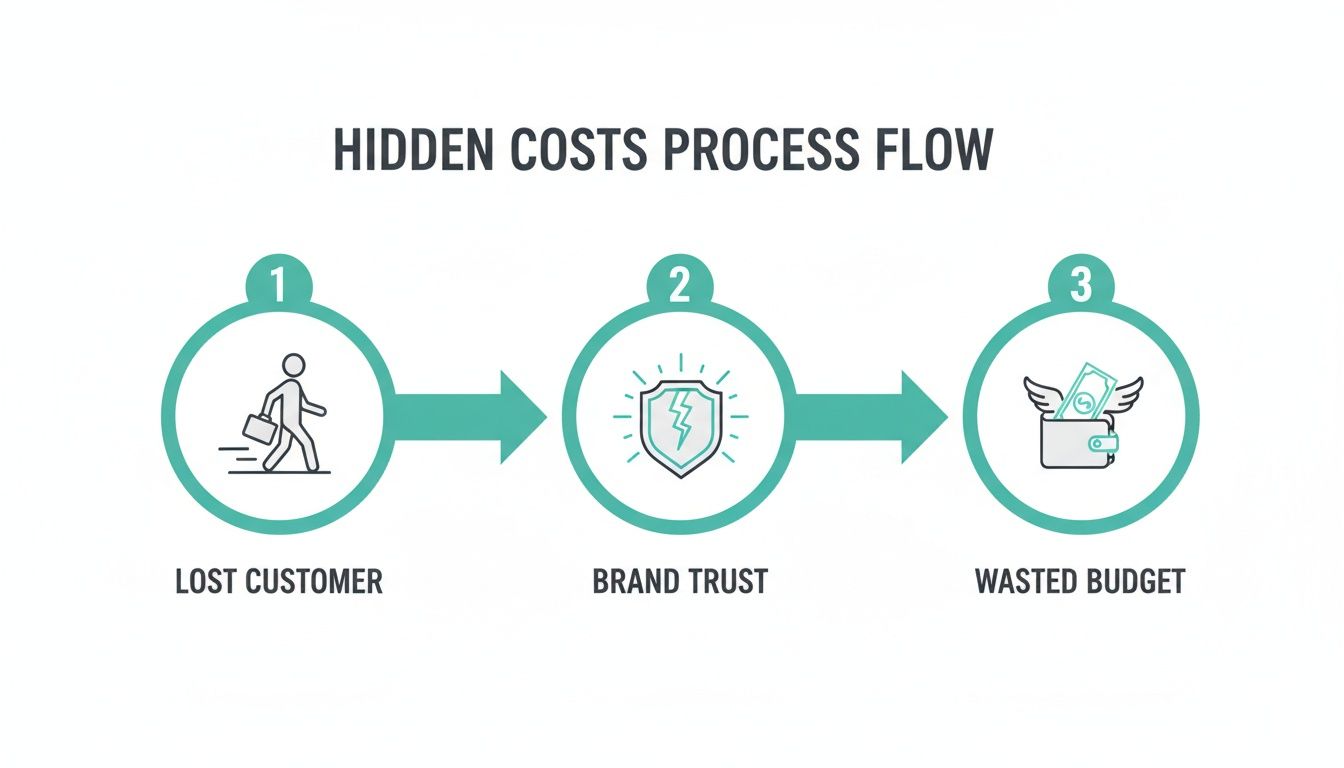
As you can see, every little error is a crack in your customer pipeline that directly hits your bottom line.
Prioritize and Fix High-Impact Listings
Don't feel like you have to fix every single error overnight. That’s overwhelming. Instead, prioritize the listings that have the biggest impact on your local search rankings and customer trust.
Google Business Profile (GBP): This is priority number one. Your GBP listing is often the very first impression a potential customer has of your business. Every single detail here must match your golden record perfectly.
Core Social & Directory Sites: Next, turn your attention to the heavy hitters like Facebook, Yelp, and Bing Places. Search engines give these platforms a lot of weight, and customers use them all the time to find and review businesses.
Industry-Specific Directories: Finally, clean up your listings on sites that are specific to your niche. This could be anything from a trade association website to your local chamber of commerce page.
Think of your Google Business Profile as the absolute cornerstone of your local presence. Getting this right ensures you show up correctly in Google Search and on Google Maps, where most of your customers are looking.
Cleaning up your online listings (also known as citations) is especially vital when you’re investing in advertising. If you're running ads with Adwave to drive local traffic, a clean digital footprint ensures that the interest you generate leads people directly to your correct, trustworthy business information. This audit makes sure your marketing dollars work as hard as you do. To dive deeper into this, check out our guide on local citation building and getting your business listed.
Keeping Your NAP in Shape for the Long Haul
Okay, so you’ve put in the work to fix your NAP inconsistencies. That’s a huge win. But keeping your business information accurate isn't a one-and-done task. It's more like digital gardening, you have to tend to it regularly. New listings can sprout up out of nowhere, and old, incorrect data has a pesky way of reappearing.
You need a solid plan to maintain that consistency without it turning into a major headache. This is especially true when you're investing in something like Adwave's targeted TV advertising. You want every person who sees your ad and looks you up online to find the exact same, professional information everywhere. It's a critical step in turning viewers into customers.
When it comes to ongoing management, you really have two paths to choose from: the DIY route or letting an automated service take the wheel.
Manual vs. Automated Management
Going the manual route is exactly what it sounds like. You’re in the driver's seat, typically using a spreadsheet to check your most critical listings every quarter. Think Google Business Profile, your Facebook page, and Yelp. This method is great if you're on a shoestring budget, but be warned, it's time-consuming, and it's easy for things to fall through the cracks.
Automated services, on the other hand, are built specifically to solve this problem for you.
Automated NAP Management: Think of platforms like BrightLocal or Yext as your digital watchdogs. They constantly scan the web for mentions of your business, flag any inconsistencies they find, and can even push out correct information to hundreds of directories for you. It’s a massive time-saver that offers some serious peace of mind.
A big part of ongoing maintenance is also learning how to effectively track brand mentions online. This helps you catch rogue listings or incorrect data before they can start confusing search engines and potential customers.
Which Solution is Right for Your Business?
So, how do you decide? The best choice really boils down to your budget, your team's bandwidth, and how many places your business is listed online.
Manual Approach (The Spreadsheet Method):Who it’s for: Best for new businesses on a tight budget or those with only a handful of essential online profiles to manage.
The upside: It's free! You also have complete control over every single entry.
The downside: It takes a lot of time and discipline. You’ll almost certainly miss listings on less-common sites, and it requires you to be relentlessly consistent.
Automated Services (Yext, BrightLocal, etc.):
Who it’s for: Honestly, this is the way to go for most small and medium-sized businesses that recognize the value of their time.
The upside: You get back countless hours. These tools ensure your information is correct across a vast network of sites and stop new errors from cropping up.
The downside: They come with a monthly or annual subscription fee.
For the vast majority of businesses, the investment in an automated tool pays for itself many times over. It frees you up to focus on what you do best, running your business and creating fantastic TV ad campaigns with Adwave, while a dedicated service handles the tedious but important work of protecting your digital identity. This ensures your advertising dollars lead customers to a clean, trustworthy, and connected online experience every single time.
Maximize Your Adwave TV Ads with Flawless NAP
Think of your new Adwave TV ad campaign and your online business listings as a one-two punch. The ad gets you noticed, but your digital foundation is what lands the customer. This is where all the hard work you’ve put into cleaning up your business name pays off, turning advertising views into real-world revenue.
Picture the ideal scenario: a potential customer sees your slick new ad while streaming on a service like Hulu or ESPN. They’re interested. They pull out their phone and search for you. Because you’ve perfected your NAP consistency, your five-star Google Business Profile is the first thing they see. The phone number is correct. The address is current. There's zero confusion.
That connected journey from a viewer on the couch to a customer in your system is exactly what you're aiming for. Your Adwave TV ad creates the spark, and your perfect online presence is the kindling that turns it into a fire.
From Screen to Storefront
Adwave’s strength lies in its ability to get your brand in front of the right local audience, affordably. But all that broadcast power can go to waste if a customer’s first-ever online search for you leads them down a rabbit hole of old addresses or wrong phone numbers.
An inconsistent business name essentially pokes holes in your marketing bucket, letting interested leads slip right through.
When your online presence is clean and consistent, every single person impressed by your commercial becomes a warm lead. They find you in seconds, they trust the information they see, and they take that important next step, whether it's calling your shop, clicking to your website, or walking right through your door. This is how smart ad spending fuels measurable growth.
Frequently Asked Questions About NAP Consistency
Even after you get the hang of NAP, a few tricky questions always seem to pop up. Let's tackle the ones we hear most often from business owners trying to get their online presence in order.
What Name Should I Use If My Brand Name Is Different From My Legal Name?
This one comes up all the time, and the answer is simple: always use the name your customers know you by.
Think about it from a customer's perspective. If your legal entity is "Summit Hospitality Group LLC" but everyone knows you as "The Mountain View Diner," that's the name they'll be searching for. Using your legal name online would just confuse them. Google’s own guidelines back this up, they want you to use your real-world, "doing business as" (DBA) name to ensure a consistent and logical experience for searchers.
How Long Does It Take To See SEO Results After Fixing NAP?
You’ll see some surprisingly quick wins. After cleaning up major platforms like your Google Business Profile, you could notice a positive shift in your local rankings in just a few days to a week. High-authority sites get crawled often, so changes are picked up fast.
The real test is patience. For all the smaller directories and data aggregators out there, it can take several weeks, or even a couple of months, for the new, correct information to trickle through the system. A full-scale NAP cleanup project typically delivers its most significant results in 1-3 months.
Think of it like this: A thorough NAP cleanup is an investment in your digital foundation. It's not a flashy, overnight fix, but it steadily pays off by making sure you're the first business customers find when they need you.
Are Paid NAP Management Services Worth The Cost?
For any business that’s serious about growth, they absolutely are. Trying to manually find, claim, and update every single online listing is a massive time sink, and it's almost impossible to do without making a few mistakes.
A good NAP management service automates the grunt work. It scans for your business across the web, corrects errors, and locks in your information to prevent new inconsistencies from cropping up. When you consider how directly a clean NAP profile leads to more calls, visits, and sales, the subscription fee becomes a no-brainer. It frees you up to work on what really matters, like running your business and launching powerful campaigns on platforms like Adwave.


