
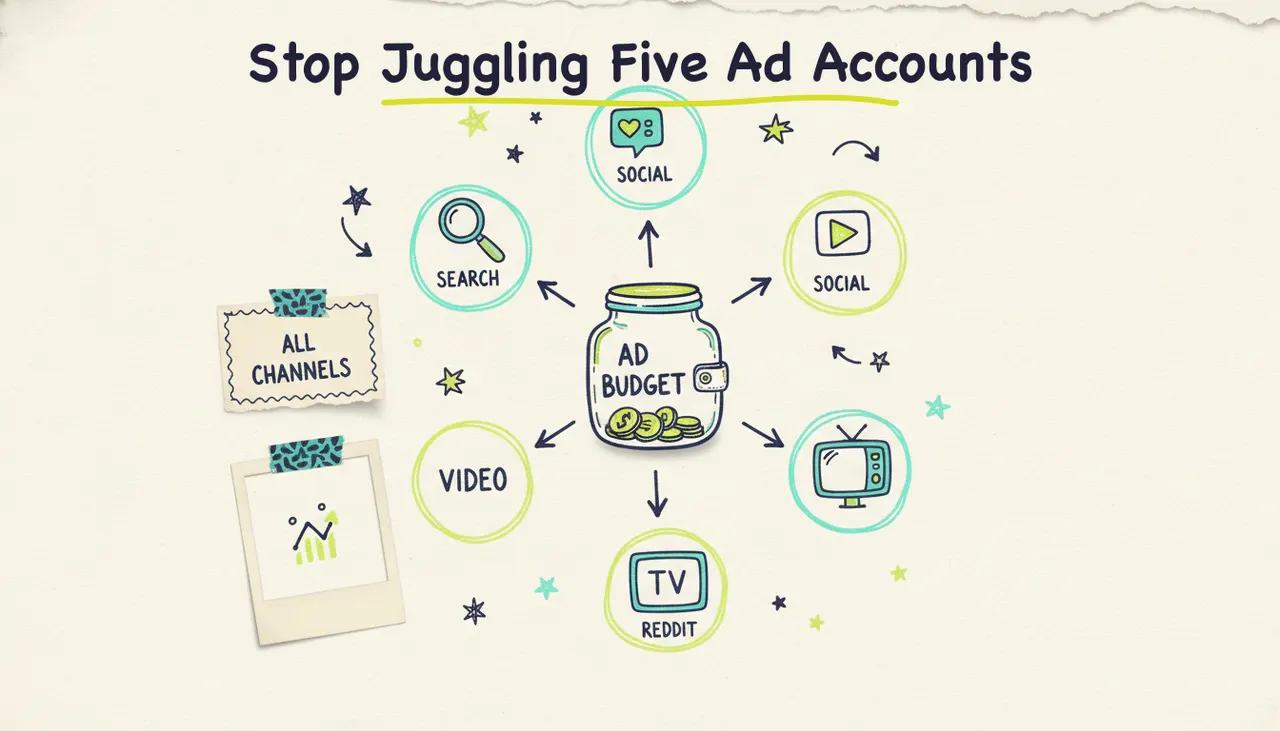
Most small businesses don't advertise on one channel. They advertise on five, badly. A little on Google, a little on Facebook, maybe a boosted post on Instagram, a streaming TV spot someone talked them into, and a Reddit experiment that's still running because nobody remembered to turn it off. Five accounts, five logins, five invoices, and no way to tell which one worked.
A cross-channel ad campaign fixes that by flipping the model: one budget, every channel. Instead of funding and managing each platform separately, you set a single budget and let it run across all of them, with the spend flowing to wherever it's working. Here's how that works, why it beats the piecemeal approach, and what it takes to run one.
What "one budget, every channel" means
A cross-channel campaign is one campaign that spans multiple advertising channels, search, social, video, streaming TV, and display, funded from a single budget and managed as one thing instead of five.
The key word is one. Not "the same ad copied to five platforms." Not "five campaigns you check on Mondays." One budget, one set of goals, one place to see what's happening, with the channels working together toward the same outcome.
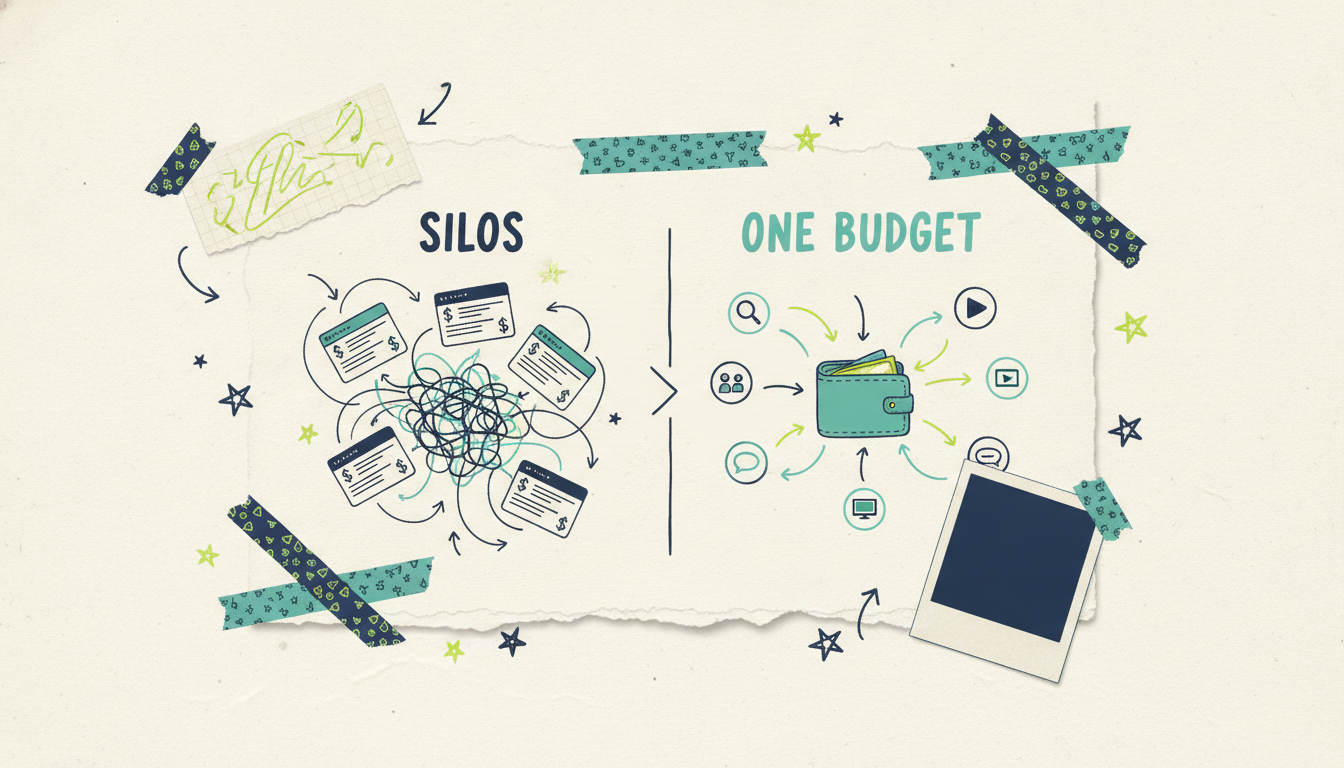
That's different from multi-channel advertising, where you're present on several channels but each runs in its own silo with its own budget and its own report. Cross-channel connects them, so a single dollar can move to the channel that's earning, and so you can finally see the whole picture instead of five partial ones. If you want the broader overview of being present across platforms, our guide to multi-channel advertising for small business is a good companion to this one.
Why cross-channel beats single-channel
This isn't just tidier. Spending the same money across channels, coordinated, tends to outperform spending it all in one place. Two reasons: channels amplify each other, and no single channel reaches everyone.
Channels amplify each other. A streaming TV ad or a social video builds awareness and intent. Then, when someone searches for what you sell, your search ad captures demand the other channels created. They're not competing for the same dollar; they're setting each other up. Google and Nielsen research found that TV ads lift branded search by up to about 20% in the hours after they air. The TV spot didn't just do TV work. It made your search advertising cheaper and your brand more searched.
The numbers back it up. Omnisend's analysis of campaigns found that marketers using three or more channels earned a 287% higher purchase rate than single-channel campaigns, with purchase frequency about 250% higher and retention roughly 90% higher. A Harvard Business Review study of 46,000 shoppers found that omnichannel customers spent 4% more in store and 10% more online than single-channel customers, and the heaviest multi-channel users made 23% more repeat trips.
No one channel reaches everyone. Your future customers aren't all on Facebook, or all watching YouTube, or all searching Google today. Spreading across channels is how you reach the ones a single platform misses, and how you stay in front of the ones who need a few touches before they buy.
The hidden tax of juggling channels yourself
If cross-channel is so much better, why doesn't everyone do it? Because doing it manually is hard, and the difficulty is what pushes people back into one or two channels.
Marketers juggle about 15 channels on average, and only 54% are confident in their awareness and conversion measurement, per Nielsen. More than half aren't sure their numbers are right. When you can't trust the measurement, you can't allocate the budget well, and it shows: Nielsen's ROI work found a "50-50-50 gap," where about half of media plans were underinvested by roughly 50%, and ROI could improve by around 50% at ideal spend levels.
Translated: most businesses are putting the wrong amount of money in the wrong channels, because they can't see clearly enough to do otherwise. That's the tax of managing channels in silos. Every platform reports its own success (of course it does), nobody agrees on what a conversion is, and the money ends up wherever the last convincing dashboard pointed.
One budget across every channel is the fix, but only if something is coordinating the spend and measuring it honestly.
How a cross-channel campaign works
Here's the mechanics of a real cross-channel campaign, start to finish:
One goal, one budget. You define what you want (more customers, more sales, more leads) and set a single budget for the whole thing, not a separate number per platform.
Creative for each channel. Each channel wants a different format, a 15-second video for streaming TV, a square image for the feed, a text ad for search. Good cross-channel campaigns generate the right format for each placement from the same brand, so everything's consistent.
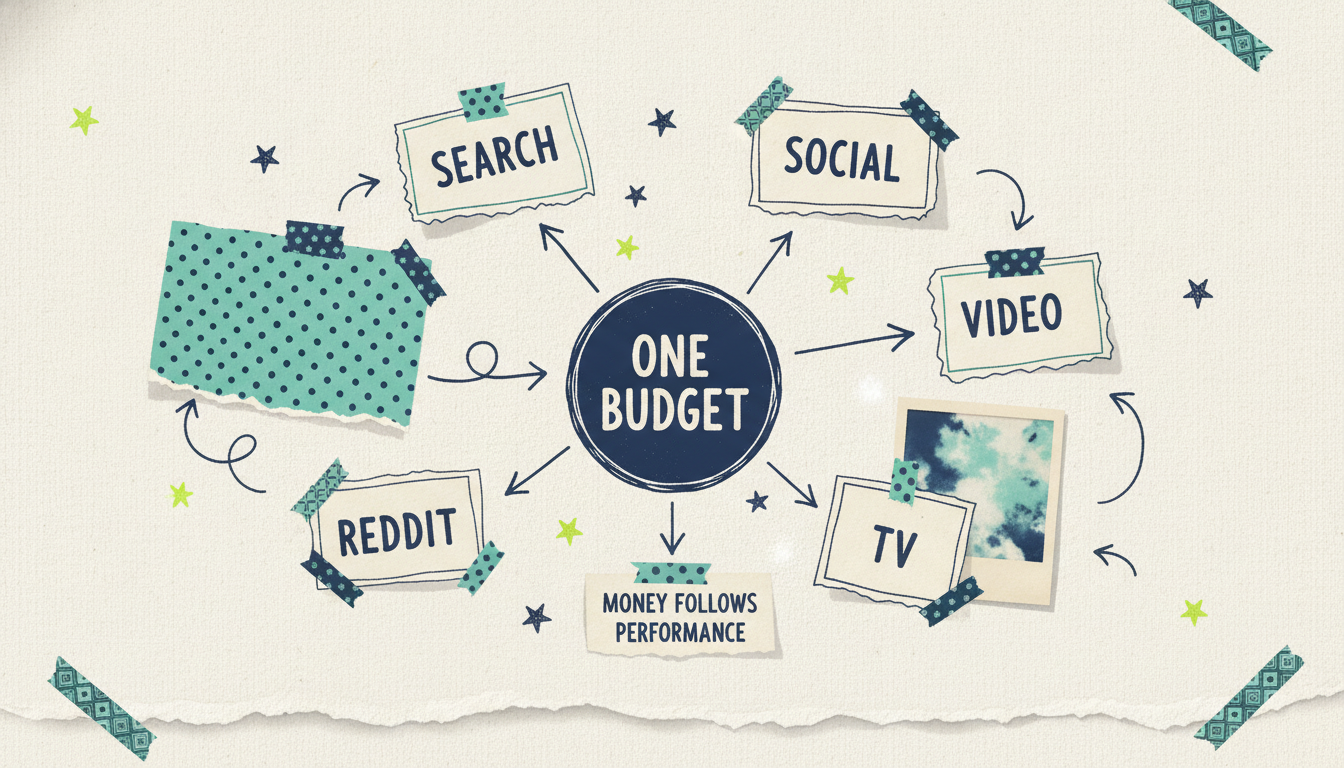
The budget flows to what's working. Instead of locking $X to Google and $Y to Meta on day one, the budget moves toward the channels and audiences that are earning, and away from the ones that aren't. This is the part manual management can't really do well.
Measurement in one place. You track results across all channels together, ideally from your own site data, so you're measuring real outcomes instead of stacking up each platform's self-reported wins.
It keeps optimizing. Audiences shift, costs change, some creative fatigues. A cross-channel campaign adjusts continuously rather than waiting for you to notice.
The hard parts, formatting creative per channel, moving budget intelligently, and measuring across everything, are exactly the parts that make people give up and retreat to one channel. Which is why this increasingly runs on autopilot.
Silos vs one budget, side by side
Where Adwave fits
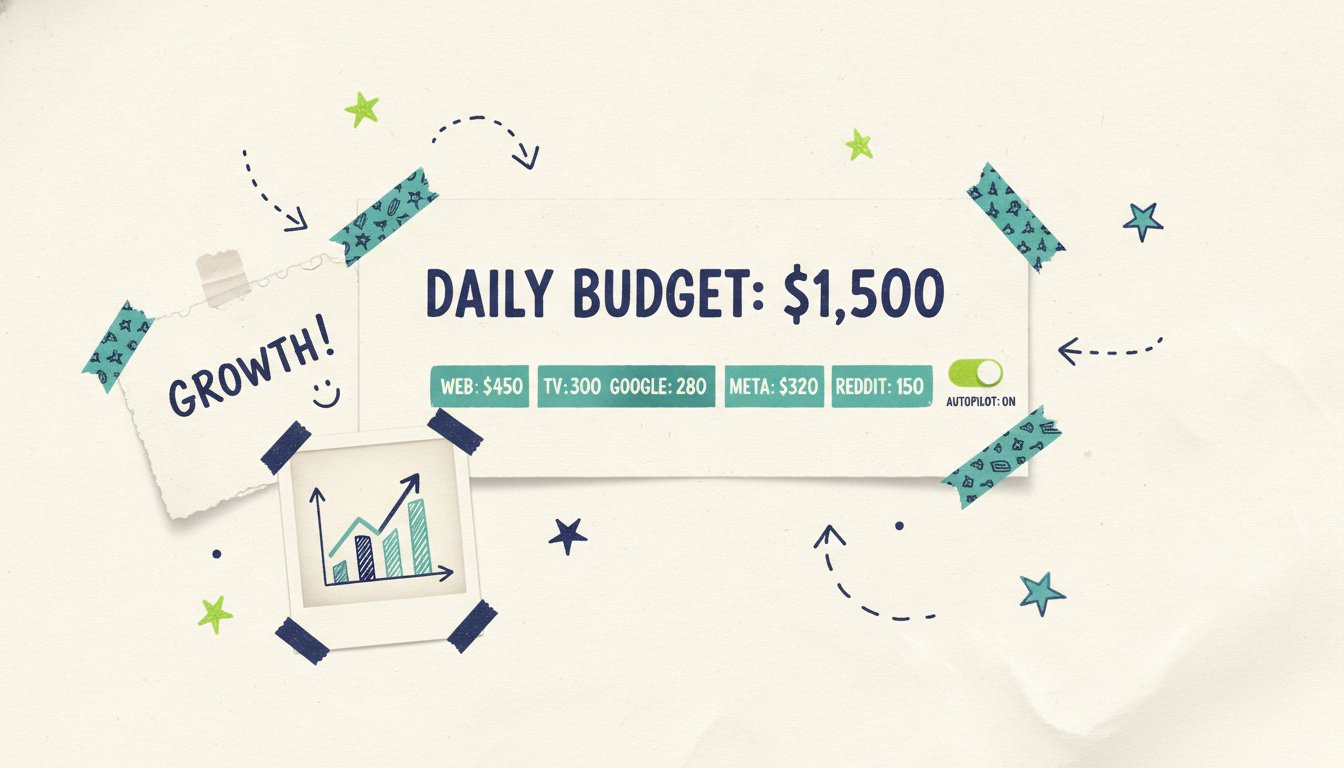
This is exactly what Adwave is built to do. It's performance advertising on autopilot: one campaign, one daily budget, spanning Meta, Google, Reddit, TikTok, web, mobile, and television. You don't fund five accounts or reconcile five invoices. You set one budget, and Adwave handles the rest:
It builds the ads for each channel from your website, so the streaming TV spot, the social video, and the image ad all match your brand.
It buys the media across every channel and moves the budget toward what's performing, optimizing on autopilot (hourly, daily, weekly) instead of waiting for you to log in.
It measures real results from your own site tag, not five platforms each claiming credit. When ROAS isn't measurable yet, it tells you honestly instead of showing a vanity number.
You approve the ads before you spend, and every optimization change is logged so you can see what it did and why.
And it's prepaid, so you fund a wallet, set a daily ceiling, and never sign a contract or go into debt. If that side interests you, prepaid advertising platforms covers how pay-as-you-go ad spend works. Because measurement is where cross-channel usually falls apart, cross-channel attribution is worth a read too, and if you want to see the whole campaign side, how it works walks through it.
What each channel does in the mix
Cross-channel works because the channels play different roles. Understanding the roles helps you see why the mix matters more than any single pick.
Search (Google). Captures demand that already exists. When someone types what you sell, you want to be there. But search only reaches people who are already looking, which is why it works best when other channels are creating that demand in the first place.
Social feeds (Meta, Instagram). Great for reaching people by interest and behavior before they're searching, and for retargeting people who visited but didn't buy. This is where a lot of demand gets built and recovered.
Video (YouTube). Builds awareness and shows more than a static ad can. Video views also feed retargeting audiences the other channels can pick up.
Streaming TV (CTV). The awareness engine that used to be out of reach for small budgets. A streaming TV ad lends credibility and lifts branded search, and it now runs on the same prepaid budget as everything else, no five-figure minimum required.
Reddit. Reaches high-intent communities around specific interests and problems, often at a lower cost than the crowded feeds. Useful for niche products and for finding audiences the big platforms overprice.
No single one of these is "the answer." Search without demand-building is capped by how many people already know you. Awareness without search capture leaves money on the table when those people go looking. The mix is the point, each channel covering what the others can't, all funded from one budget so you're not forced to pick.
How to start a cross-channel campaign
You don't need a big budget or a media buyer to begin. The practical path:
Start with one budget you're comfortable with. Cross-channel doesn't mean spending more, it means spending the same money smarter. A modest budget spread well beats a modest budget dumped into one channel.
Cover at least three channels. The 287% lift shows up at three or more. A common starting mix is search (captures demand), a social or video channel (builds it), and one more, streaming TV or another social platform, for reach.
Keep the creative consistent. The same look and message across channels is what makes them amplify each other. Mismatched ads feel like different companies.
Measure from your own site, not the platforms. This is the single biggest upgrade you can make. Judge channels by what happened on your site, not by what each platform says it did.
Let it reallocate. Don't lock the budget in place. The whole advantage is money following performance, so give it room to move.
The businesses that win at this aren't the ones with the biggest budgets. They're the ones who stopped treating five channels as five separate jobs.
Common questions answered
What's the difference between cross-channel and multi-channel advertising? Multi-channel means you're present on several channels, but each runs in its own silo with its own budget and report. Cross-channel connects them into one coordinated campaign with one budget, so spend can flow to what's working and you can measure across everything at once. Cross-channel is multi-channel that talks to itself.
Do I need a bigger budget to run cross-channel? No. Cross-channel is about spending the same money more effectively, not spending more. A modest budget spread across three coordinated channels typically outperforms the same amount poured into one, because the channels amplify each other and you're not over-investing in a single place. You can start small and let the budget flow to what earns.
How many channels should I run at once? The research points to three or more, where Omnisend found a 287% higher purchase rate versus single-channel. A practical starting mix is search to capture existing demand, a social or video channel to build it, and one more channel for reach. You can add channels as you learn what works for your business.
How do I know which channel is working? That's the hardest part of doing it manually, and the reason more than half of marketers aren't confident in their measurement. The reliable answer is to measure from your own website data rather than trusting each platform's self-reported numbers, since every platform is incentivized to claim the conversion. A single site tag that tracks outcomes across all channels gives you one honest view.
Can one budget really run across search, social, and TV together? Yes, on a platform built for it. Adwave runs one campaign with one daily budget across Meta, Google, Reddit, TikTok, web, mobile, and television, generating the right creative for each and moving spend toward what performs. Instead of funding and managing each platform separately, you set one budget and it coordinates the rest.
Isn't managing all these channels complicated? Doing it by hand is, which is exactly why people retreat to one or two channels. The formatting, budget reallocation, and cross-channel measurement are real work. Running it on autopilot removes that burden: the campaign handles the per-channel creative, moves the budget, and measures results, so you get the cross-channel advantage without the cross-channel headache.
Bottom line
Advertising on five channels as five separate jobs is how small businesses burn money they can't see. One budget, every channel, coordinated and measured together, is how the same money does more. The channels amplify each other, the spend flows to what works, and you finally get one honest picture instead of five partial ones.
If you'd rather set one budget and let it run across every channel on autopilot, see how Adwave works. One campaign, one daily budget, every channel.


