
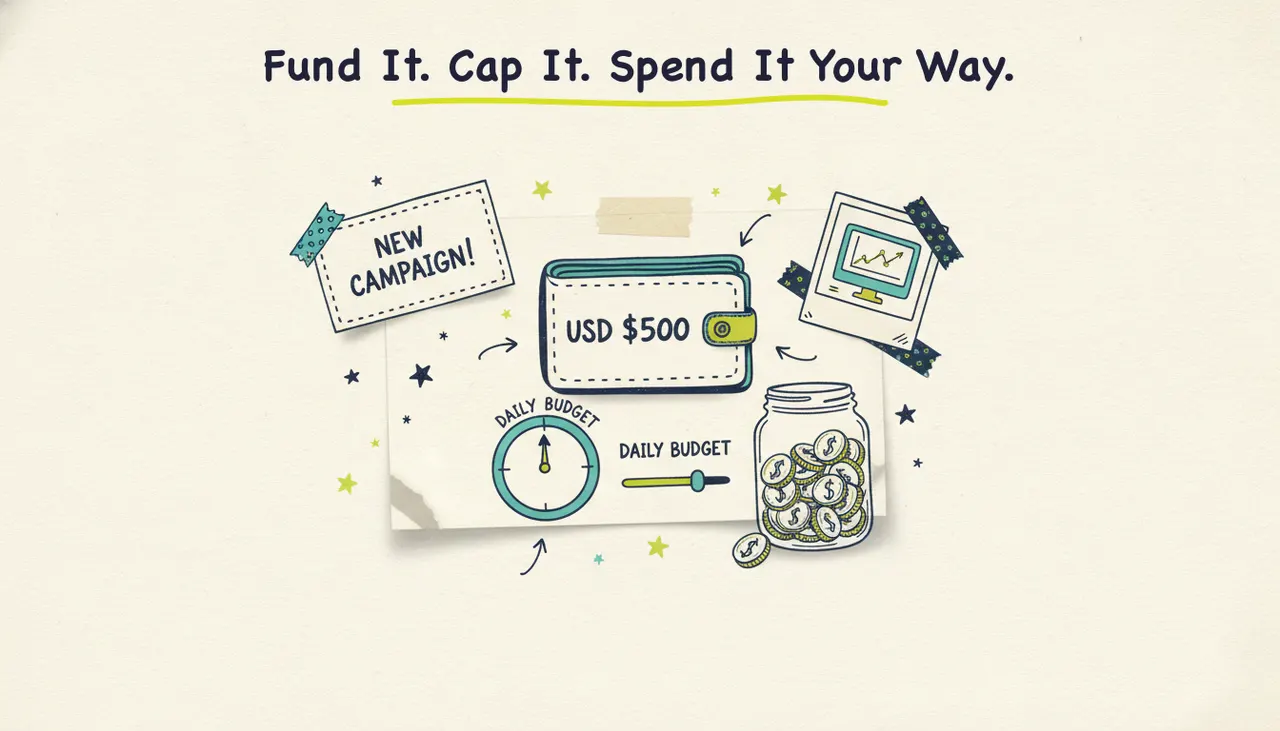
A prepaid advertising platform lets you load a set amount of money into a wallet, spend it on ads at your own pace, and stop whenever you want. No contract, no monthly minimum, no invoice arriving after the money's already gone. You fund the wallet, you set a daily ceiling, and when the wallet runs dry the ads pause. That's the whole model, and for a lot of small businesses it's the difference between advertising and just thinking about it.
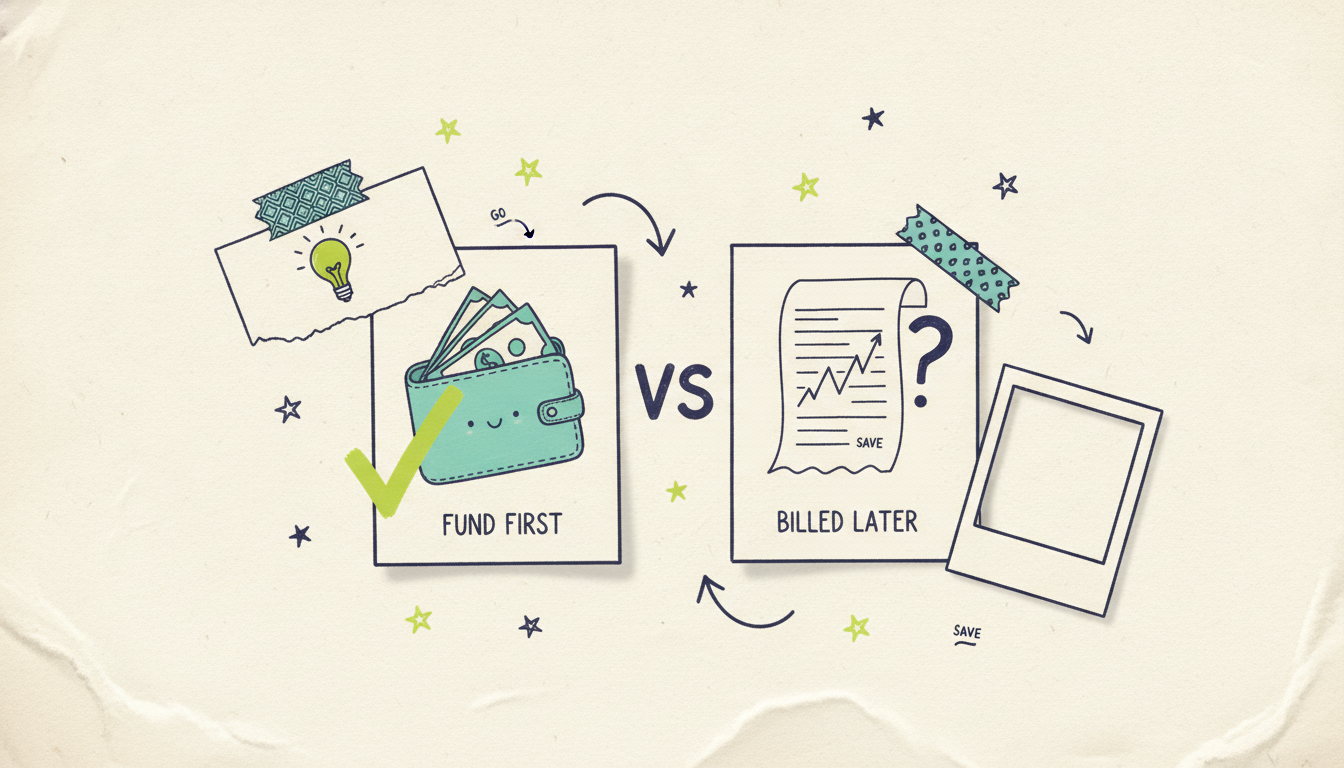
Most advertising still works the other way around. You commit to a spend, you sign something, and you find out what it cost you at the end of the month. Pay-as-you-go flips that. You decide the number up front, and you can never spend a dollar you didn't already put in.
Let's break down how prepaid ad spend works, where it beats the traditional model, where it doesn't, and how to tell whether a "no minimum" claim is real or just marketing.
What "prepaid advertising" means
Prepaid advertising (also called pay-as-you-go advertising) is any setup where you pay for your ad spend before it runs, out of a balance you control, rather than after the fact on credit or a retainer.
Three things define it:
You fund a wallet first. You add money to a balance, say $100 or $1,000, and that balance is the ceiling on what you can spend. It's the same idea as a prepaid phone plan or a transit card.
You spend against that balance over time. The platform draws down the wallet as your ads run. You watch the number go down instead of watching a bill go up.
You can stop, pause, or top up anytime. No cancellation window, no notice period. The money that's left is still yours to spend when you're ready.
Compare that to how advertising is usually sold. A traditional media buy or an agency retainer asks you to commit to a monthly number, often with a contract and a minimum. Self-serve giants like Google Ads and Meta run on postpaid billing by default: your card gets charged after your ads spend, on a threshold or monthly cycle, which means the spending happens first and the payment catches up later. That's fine when you have predictable cash flow and a finance team. It's nerve-racking when you're a five-person business watching every dollar.
How pay-as-you-go ad spend works, step by step
The mechanics are simple, which is the point. A well-built prepaid platform runs like this:
You top up a wallet. Add whatever you're comfortable with. Good platforms have a wide range, from a small starter amount up into five figures, so a solo operator and a growing chain can both use the same system. With Adwave, for example, the wallet takes anything from $30 to $50,000.
You set a daily budget ceiling. This is the maximum the platform can spend in a single day. Set it to $30 or $300 or $1,000. The daily ceiling is what keeps a prepaid wallet from emptying overnight.
Ads run and the wallet draws down. Each active day, spend comes out of your balance up to (and never over) your daily ceiling. You're charged for active days only.
The wallet protects you automatically. When the balance can't cover another day, the campaign pauses instead of overdrawing. You literally cannot go into debt. Top up to start again.
You top up on your terms. Refill when you want more reach, or leave it paused. The remaining balance doesn't expire out from under you on a good platform.
The mental model that matters: you're never surprised by the bill, because there is no bill. There's a number you funded and a number that's left.
A quick example
Say you load $500 and set a $50/day ceiling. Worst case, the platform spends the full $50 each active day, and your $500 lasts about ten active days before it pauses and asks you to top up. Best case, some days spend less, and it stretches further. Either way, $500 is the absolute most at risk, because that's all that's in the wallet. You decided that on day one.
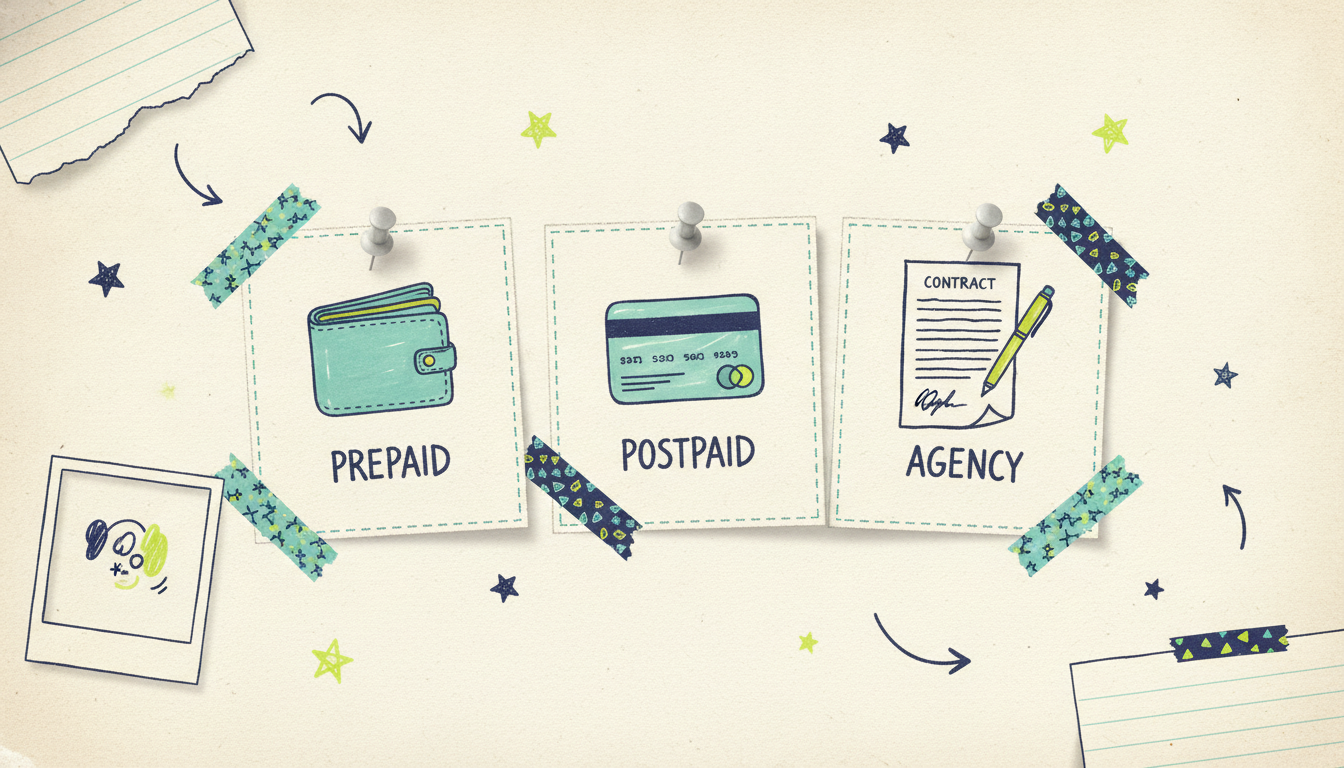
Prepaid vs postpaid vs agency retainer
Each model has a place. Here's the honest comparison.
The pattern is clear. Prepaid trades one small inconvenience (you fund before you run) for the thing small businesses want most: certainty about the maximum. You can't spend money you haven't loaded, and you never sign away your flexibility.
And before you decide how much to load, it helps to know what advertising runs in your area, we broke the numbers down in our local advertising cost guide.
Why prepaid works so well for small businesses
The traditional advertising world was built for advertisers with budgets, finance teams, and appetite for risk. Prepaid was built for everyone else. A few reasons it fits small operators:
You can never overspend. This is the big one. The wallet is a hard cap. For a business where an unexpected $2,000 ad bill would hurt, "you can never go into debt" isn't a feature, it's the reason to start at all.
The barrier to entry is low. You don't need to prove creditworthiness or negotiate a contract. If you can fund a small wallet, you can advertise. That opens up channels, including streaming TV, that used to require five-figure minimums and a media buyer.
Cash flow stays sane. You spend when you have money to spend and pause when you don't, without penalty. For seasonal businesses, that flexibility is worth a lot. Run hard in your busy season, coast in the slow months, no contract fighting you.
It kills the anxiety that stops people from starting. A surprising number of small businesses never advertise because they're afraid of an open-ended bill. Take the open end away and the fear goes with it. You know the worst case before you spend a dollar.
There's a broader point here too. Advertising a small business well usually means being in more than one place, search, social, and increasingly streaming TV, not betting everything on a single channel. Marketers who ran campaigns across three or more channels saw a 287% higher purchase rate than single-channel campaigns, according to Omnisend's analysis. Prepaid makes that spread affordable, because you're funding one wallet and letting it work across channels instead of committing a separate budget to each. If you're mapping out where the dollars should go, our guide to multi-channel advertising for small business walks through the mix.
How to spot a real "no minimum" claim (and the fine print to check)
"No minimums, no contracts" shows up on a lot of pages. Some of it's real. Some of it hides the catch a level down. Before you fund anything, check these:
What's the actual minimum top-up? "No minimum" should mean you can start small. If the smallest wallet you can fund is $2,500, that's a minimum, whatever the headline says.
Does the balance expire? Some platforms quietly expire unused credit. Your money should stay yours. Look for an explicit "doesn't expire" or a clear, long window.
Can you really pause anytime? Check for notice periods or reactivation fees hiding behind the "cancel anytime" language.
What happens to failed spend? If a day's ads don't fully deliver, do you get credited back? Good platforms refund shortfalls and failed launch days automatically.
Is the creative included, or extra? Some "cheap" platforms get you in the door, then charge separately to make the ads. Factor the true cost of getting a campaign live, not just the media.
What's non-refundable? There's usually a platform or media portion that can't come back once spent. That's normal, but it should be stated plainly, not buried.
The tell for a trustworthy prepaid platform is that all of this is easy to find. If you have to email support to learn the minimum top-up, treat that as the answer.
Where Adwave fits
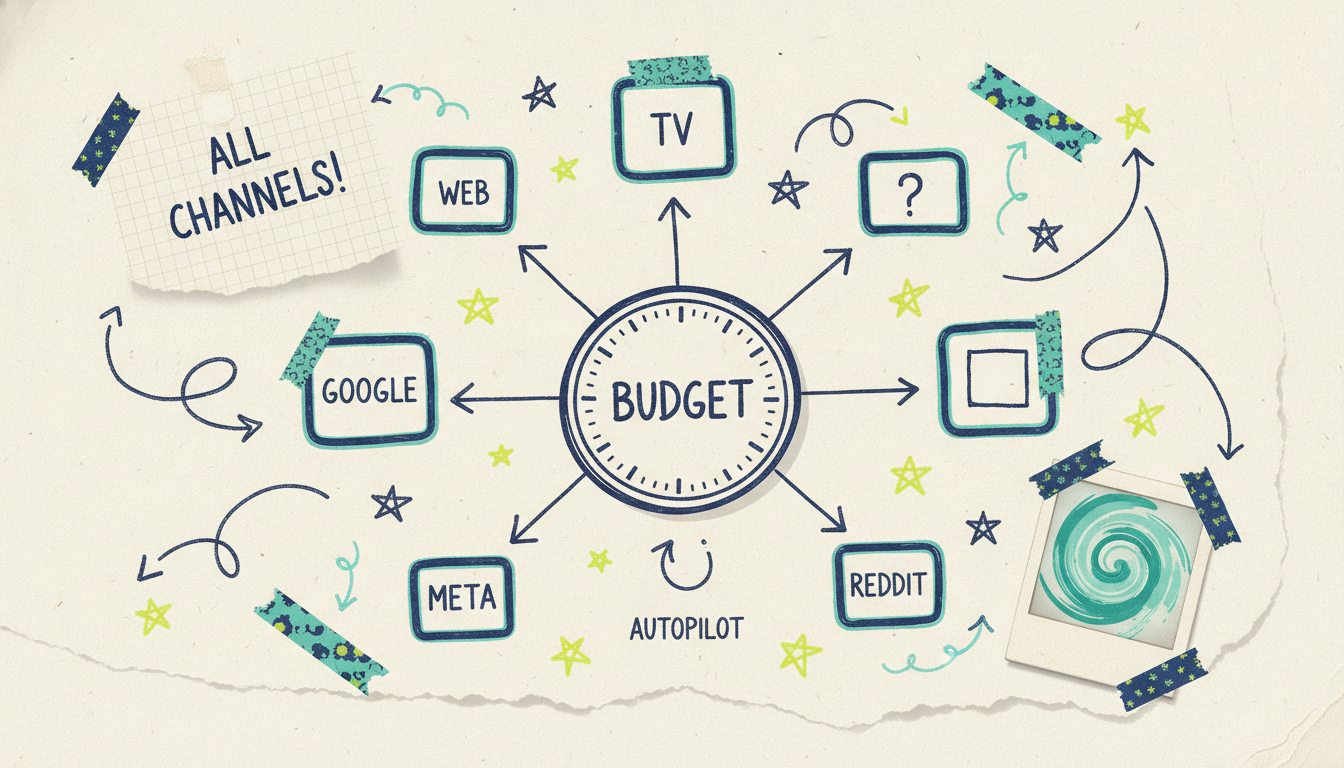
Adwave is built on this model from the ground up. It's performance advertising on autopilot: it builds the ads, buys the media across web, TV, Google, Meta, and Reddit, and optimizes from your own site data. One campaign, one daily budget, every channel. The money side works exactly like a prepaid platform should:
Fund a wallet from $30 to $50,000. Start as small as you want.
Set a daily budget from $30 to $10,000/day. A ceiling you control. You're charged once per active day, and the campaign pauses when the wallet's dry, so you can never go into debt.
No subscriptions, no contracts. Creative, media, and measurement are included, not billed separately or marked up.
New accounts get $60 starter credit to make the first ads before you spend on media (activates with a deposit within 14 days). That's a one-time credit for making creative, not a monthly fee.
Failed launch days and media shortfalls are credited back automatically. You only pay for what runs.
And because the wallet feeds every channel at once, you're not funding five separate accounts and reconciling five invoices. You approve the ads before they run, you measure real results from your website tracking, and the autopilot improves the campaign from there. If you want the full picture of how the campaign side works, how it works walks through it. For a sense of how the low barrier compares channel by channel, Google Ads for small business is a useful companion, and self-serve advertising platforms covers the broader category.
How much should you load first?
There's no universal right number, but there's a sensible way to think about it. Your first top-up should be big enough to learn something and small enough that losing it wouldn't sting. A few guidelines:
Fund at least a couple weeks of your daily ceiling. If you set a $30/day ceiling, a $500 wallet gives you roughly two-plus weeks of runway to see what's working before you decide whether to top up. Too little, and the campaign pauses before you have enough data to judge it.
Match the wallet to the question you're asking. Testing whether a channel works for you? A small wallet answers that. Ready to scale something you already know converts? Load more and raise the ceiling.
Keep the daily ceiling honest. The ceiling, not the wallet size, controls your pace. A big wallet with a low ceiling just means a longer, steadier run. A low wallet with a high ceiling burns fast. Set the ceiling to the daily spend you'd be comfortable with even on a slow week.
Top up in response to results, not fear of missing out. The whole advantage of prepaid is that you refill on evidence. Let the early numbers tell you whether to add more, then add it.
Because prepaid can never overdraw, there's no penalty for starting conservative and scaling into what works. That's the opposite of a contract, where you commit to the number before you have any proof.
Is prepaid right for you?
Prepaid advertising is a strong fit if you:
Want a hard ceiling on what you can possibly spend
Don't want a contract or a monthly minimum
Have uneven or seasonal cash flow
Are advertising for the first time and want to keep the risk small and known
Want to test channels (like streaming TV) that used to be out of reach
It's less ideal if you have a large, predictable budget, a finance team comfortable with postpaid billing, and you'd rather not think about topping up a balance. In that case, the convenience of "just charge my card monthly" might outweigh the certainty of a wallet.
For most small and growing businesses, though, the math is simple: the small hassle of funding first buys you the one thing traditional advertising never gave you, which is knowing the worst case before you start.
Common questions answered
What's the difference between prepaid and pay-as-you-go advertising? There isn't a meaningful one. Both describe funding your ad spend before it runs, out of a balance you control, and paying only for what you use. "Prepaid" emphasizes the wallet you load up front; "pay-as-you-go" emphasizes spending it down at your own pace. Most platforms use the terms interchangeably.
Can I really start advertising with a small budget? On a true prepaid platform, yes. The point of "no minimum" is that a small wallet is enough to begin. Adwave, for instance, lets you fund a wallet from as little as $30 and set a daily ceiling as low as $30/day. Just confirm the real minimum top-up before you commit, since some platforms advertise "no minimum" but require a large first deposit.
Does prepaid ad money expire? It depends on the platform, so check. The best prepaid platforms let your balance sit until you're ready to spend it, with no expiration. Others put a clock on unused credit. If it's not stated clearly, ask before you fund, because an expiring balance quietly changes the deal.
How is prepaid different from Google Ads or Facebook billing? Google and Meta default to postpaid billing: your ads spend first, then your card gets charged on a threshold or monthly cycle. It works, but the spending happens before the payment, which makes overspending easy if you're not watching. Prepaid reverses it, so you fund first and can never spend past your balance.
Prepaid advertising lets you set the amount available to spend. Compare impression costs, fees, and funding requirements before choosing a platform.
Can I advertise across multiple channels from one prepaid wallet? On platforms built for it, yes, and that's where prepaid gets powerful. Instead of funding separate accounts for search, social, and TV, you load one wallet and let it run everywhere. Adwave works this way: one budget spans web, TV, Google, Meta, and Reddit, so you get the reach of a multi-channel campaign without juggling five balances.
The bottom line
Prepaid advertising takes the scariest part of advertising, the open-ended bill, and removes it. You fund a wallet, set a daily ceiling, and spend at your own pace with no contract and no surprises. For small businesses especially, that certainty is often what gets a campaign off the ground in the first place.
If that's the model you want, and you'd rather run one budget across every channel instead of funding five accounts, see how Adwave works. Load a wallet, set your ceiling, approve the ads before you spend, and let it run.


