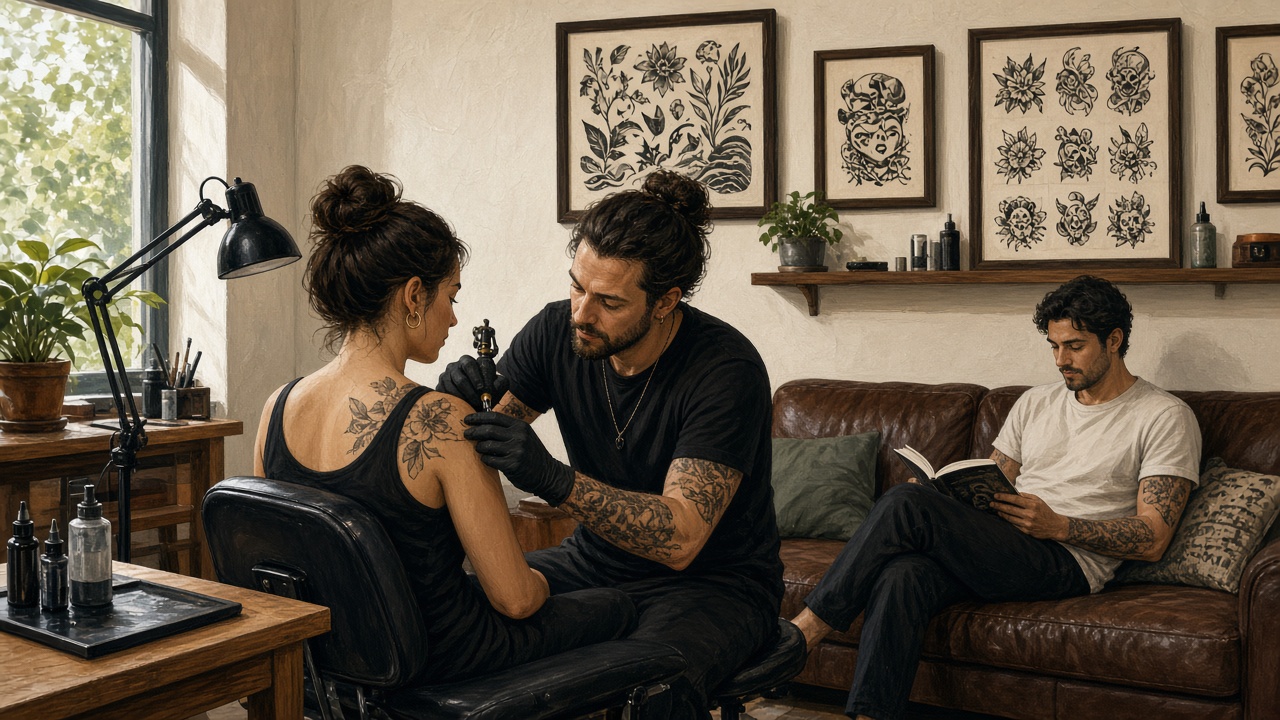
Tattoo shop advertising works best when it puts each artist’s style in front of nearby people who are already looking for a shop. Google Search reaches people actively searching for a tattoo shop, Facebook and Instagram show your portfolio, and streaming TV builds local awareness. With Adwave, TV, Google, Facebook and Instagram all run from a $30/day minimum.
How people choose a tattoo shop
Most new clients follow a similar path: they search for something like tattoo shop near me or best tattoo artist plus their city, then compare the shops that come up by rating and review count, then look through portfolios until they find an artist whose style matches the piece they have in mind. A shop with a high review count looks busy and reliable, but a portfolio full of fine line work won’t book the client who wants American traditional, however good it is.

Your ads have to support that path. Searchers already want a shop, so search ads should make yours an easy one to pick. Social and video ads should lead with the work itself: finished pieces, healed photos, and each artist’s specialty. Every ad should send people to a page where they can book a consultation or send an inquiry from their phone without hunting for a contact form. For a wider view of channels outside this category, see our guide to advertising options for local shops.
Which ad channels fit a tattoo shop
Each channel plays a different role for a shop, and the thresholds below are Adwave’s published daily budgets for each channel, from the Adwave pricing page.
| Channel | Job for a tattoo shop | Adwave daily budget threshold |
|---|---|---|
| Google Search | Shows your shop to people typing near-me and style searches | From the $30/day minimum |
| Facebook and Instagram | Portfolio images, process clips and artist spotlights for people nearby | From the $30/day minimum |
| Streaming TV | Builds recognition in your area before people need a shop | From the $30/day minimum |
| Google (YouTube and Demand Gen) | Video reach alongside search | Included from the $30/day minimum |
| Mobile web and apps | Repeat visibility as people browse | Included from the $30/day minimum |
| Reaches niche interest communities, such as style or local subreddits | From about $35/day | |
| TikTok | Reaches younger audiences with short process videos | From about $91/day, opt-in, needs a connected TikTok account |
A channel being available doesn’t mean it will run. Adwave’s FAQ says your budget, audience, creative and settings decide what runs, along with content eligibility. If one optional channel can’t run at launch, the rest of the campaign launches and Adwave tells you why. You also don’t need to open your own ad accounts. Facebook, Instagram, TikTok and Reddit ads run on accounts Adwave owns, and Adwave sets up a Google Ads account for your workspace, according to the Adwave FAQ. If streaming TV is new to you, here’s how streaming TV ads on Fire TV work.
Realistic budgets starting at $30 a day
Your daily budget decides which channels can join the mix. Adwave sets daily budgets from $30 to $10,000, with no subscription or contract. The daily budget covers media, ads, and management together. Here is what 30 active days costs at each threshold:
| Daily budget | Channels that can run | 30 active days |
|---|---|---|
| $30 | TV, Google (including Search and YouTube), Facebook, Instagram, mobile web and apps | $900 |
| About $35 | Adds Reddit | About $1,050 |
| $75 | Same mix, more spend spread across it | $2,250 |
| About $91 | TikTok becomes available if you turn it on | About $2,730 |
At $30 a day, the money gets split across several channels. A shop that mainly wants booked consultations can start with search and social at the minimum. Once you can see which channel brings inquiries, raise the budget.
Billing is prepaid. You can preview your audience and ads before adding a card. When you’re ready to launch, you deposit funds into a wallet, and a campaign pauses if the wallet can’t cover the day. New accounts start with an empty wallet. Card deposits add a processing fee shown at checkout, and ACH deposits have no added fee. For a broader comparison with other local media, see what local advertising costs.
What tattoo ads should show
People pick a tattoo artist by their work, so the work belongs at the front of every ad. Show each artist’s style separately so a client can find the one who fits. Include healed photos, not only fresh ones, because healed work shows quality that a red, just-finished piece can’t. A short clip that moves from the stencil going on, to the line work, and finally the reveal gives people a sense of what a session at your shop feels like.
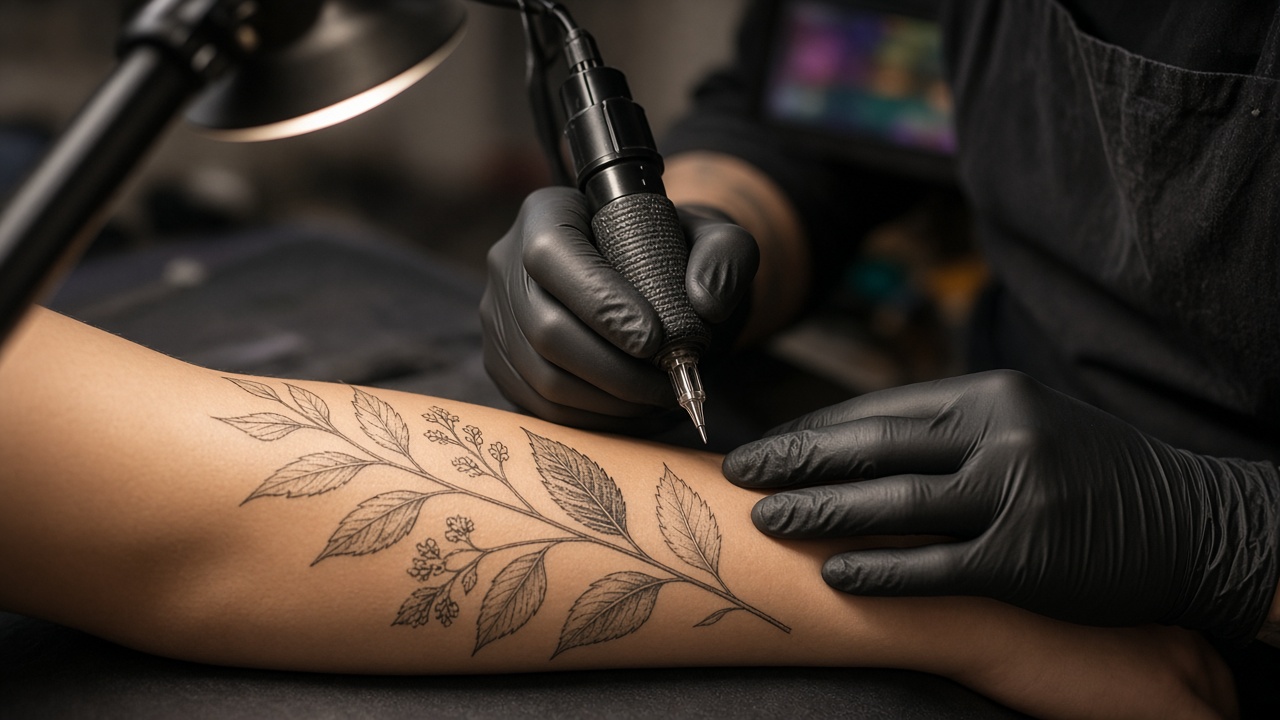
Give people a concrete reason to act now. Flash days with a set design sheet and price, open consultation slots with a named artist, and gift certificates are all clear offers. Send the click to a booking or consultation page that asks for the basics up front, including placement, size, style, and reference images.
Here’s an example of how a campaign might look: a shop promotes a Friday flash day. The Instagram ad shows the flash sheet and a 10-second clip of one design being tattooed, the search ad leads with the shop name and the walk-in hours, and the TV spot shows the three resident artists’ styles and ends on the booking URL. Each ad points to the same booking page.
Adwave reads your website for offers and photos, then builds the ads for you, including image ads, social video, and a TV spot, which you preview and edit before launch. You can also upload finished ads. Campaign creative is included in the budget. Extra creation is priced per item: $0.38 per image, $6 per social video, $6 per 15-second TV spot and $12 per 30-second TV spot. A portfolio page full of strong, well-lit photos gives the ad builder better material to work with.
Planning around the winter slow season
For many shops, winter is the slowest stretch. Oh My Ink’s overview of how tattoo shops handle slow seasons puts the common slow period at late November through February. It credits holiday spending and clients’ reluctance to start a piece they’ll keep covered for months, and notes that local economics and events can deepen the dip. The pattern isn’t universal. In an Instagram discussion among artists, one said their slowest month was April, and others said they hadn’t felt a slow season at all. Use your own booking history to find your slow weeks.

Plan the season on purpose. During the holidays, run gift certificate offers aimed at people buying for someone else. In January and February, run campaigns for consultations and deposits for spring and summer work, so your books fill before demand picks up. An Adwave budget can be raised, lowered, or paused whenever you like. On a live campaign, a new daily budget applies the same day if your wallet covers it. If you also want TV around the holidays, our guide to planning holiday season TV ads covers timing.
Ad rules that apply to tattoo shops
Tattoo shops can advertise on the major platforms, but a few policies affect what your creative can show and say:
- Meta’s list of Advertising Standards policies includes a personal health and appearance policy that bars ads that create negative self-perception or imply unrealistic results. Before-and-after cover-up or laser removal ads need care here.
- The same Meta list prohibits sensational, shocking or excessively violent content. Fresh work with heavy bleeding, graphic healing shots or extreme body modification imagery can get an ad rejected.
- Meta also bans ads that assert or assume personal attributes. Address the offer, not the viewer, rather than writing a line that guesses at the reader’s identity or body.
- Meta reviews ads with automated and sometimes manual checks and may reject an ad at any time, according to its Advertising Standards overview. An ad that ran last month can still be pulled later.
- Google’s legal requirements policy makes you responsible for following the laws of every place your ads show, on top of Google’s own rules. Meta places the same responsibility on advertisers. Tattooing minors, consent and parental rules differ by state, so check your state’s rules before you write age wording or target younger audiences.
Tracking which ads bring bookings
Measure bookings, not just clicks. In Adwave, you install the business’s tracking snippet on your site and choose the actions to count, such as a submitted consultation form or a completed deposit. If you give each conversion a value, Adwave can report revenue and return on spend. Adwave’s reporting includes last-touch credit and assisted conversions, plus Lift experiments.
Add a question to your intake form asking how the client heard about you. Offer options such as Instagram, Google, TV, or a referral. That field catches what tracking misses: the client who saw your TV spot twice, then searched your shop name a week later, or the friend referral that started with someone’s Instagram ad.
Expect gaps. TV builds recognition, so it rarely gets credit for the click that books the appointment, and search often gets credit for demand other channels created. Judge each channel over several weeks, and compare your total bookings with your total spend before you cut the channel that looks weakest in the report.