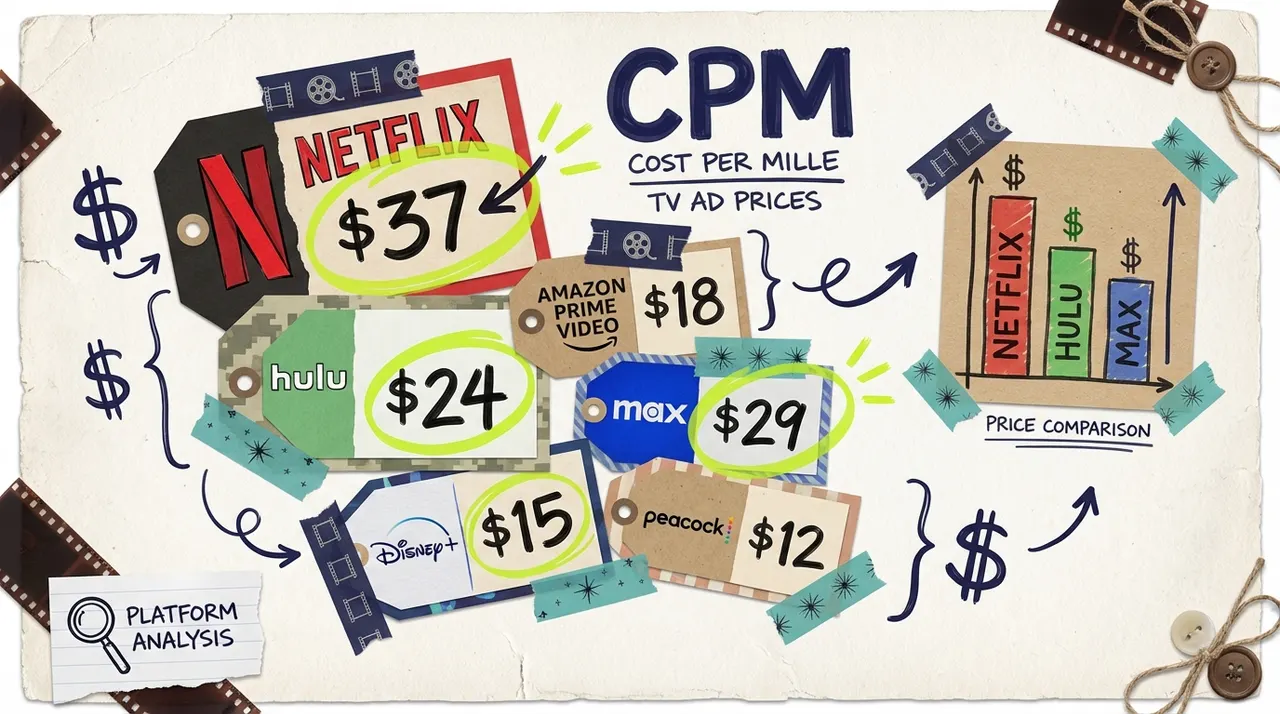
Word-of-mouth drives an estimated $6 trillion in annual global consumer spending, representing about 13% of purchases worldwide, according to referral marketing research summarized by Review42. That changes the question for a local operator. “How do I get more referrals?” isn’t mainly an issue of asking more often. It’s a question of whether your customer experience, referral prompt, sharing path, follow-up, and brand recall work together.
The businesses that build dependable referral engines treat referrals as a measurable funnel and repeatable workflow. They track who shares, who signs up, who buys, and which customers refer again. They also understand the limit of relying on referrals alone. Trust can produce efficient demand, but consistent visibility helps customers remember your name when a friend, neighbor, or colleague needs what you sell.
Why Referrals Outperform Paid Ads for Local Businesses
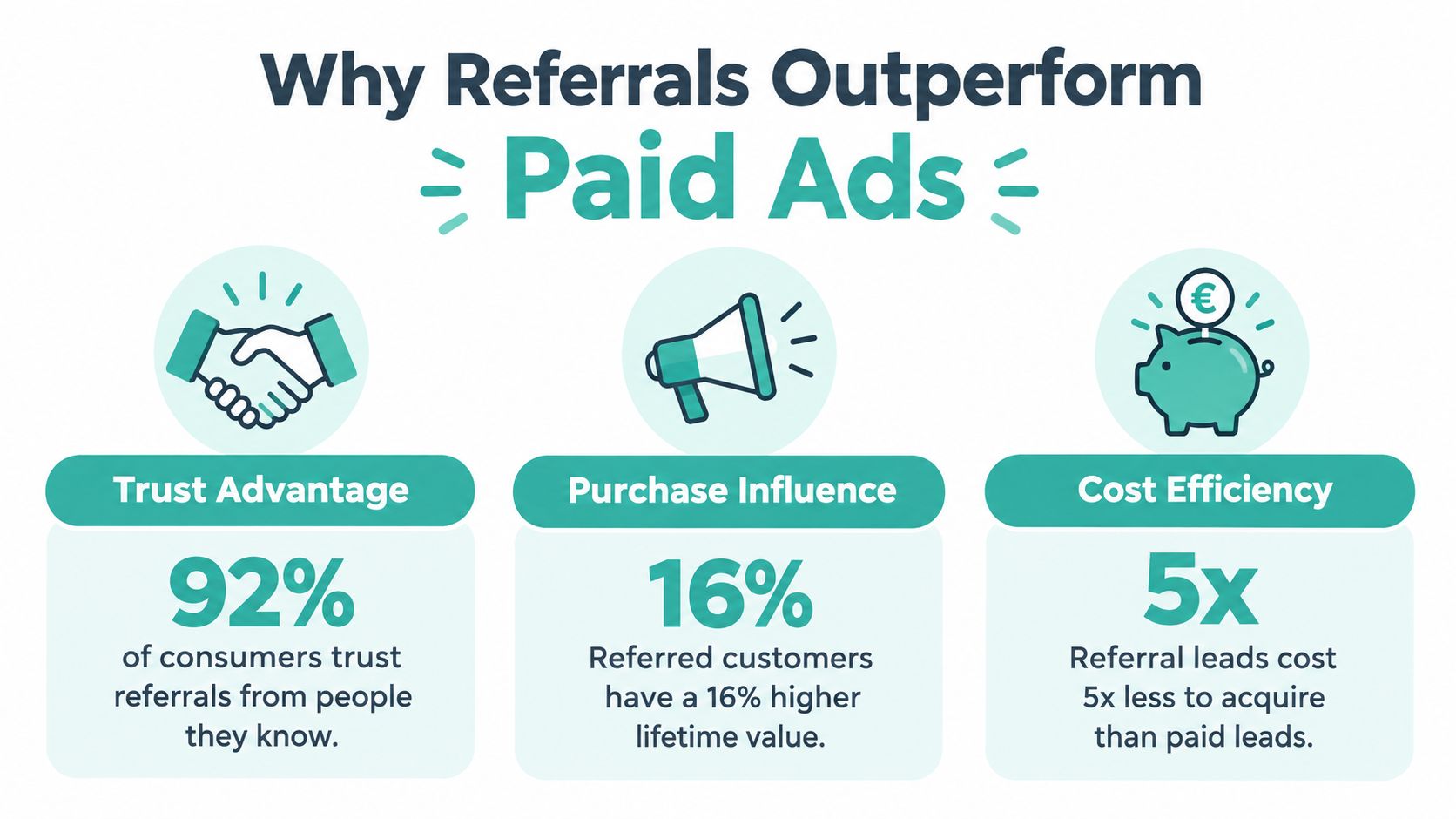
Paid advertising introduces your business to people who may not know you. A referral begins with borrowed trust. The prospect has already heard a recommendation from someone whose experience gives your company an initial advantage.
That advantage appears across local categories. A homeowner may call a contractor recommended by a neighbor before responding to an unfamiliar ad. A patient is more likely to consider a practice mentioned by a trusted friend. A vehicle owner has a clearer reason to contact a repair shop recommended by someone who has used it successfully.
Research summarized in Review42’s referral marketing statistics cites McKinsey findings that word-of-mouth is the primary factor behind 20% to 50% of purchasing decisions. The same source reports that consumers are 4x more likely to buy when referred by a friend than when exposed to a brand-initiated ad, and that word-of-mouth impressions can generate 5x more sales than paid media impressions.
Trust is an operating advantage
A referral does not remove objections. Prospects still compare price, availability, fit, and service quality. It improves the starting position, though. Your team can focus on the customer’s need instead of first proving that the business is credible.
Referral demand also has limits. It performs best when customers experience a clear result, can explain the service easily, and know people with a similar need. Paid acquisition remains useful when you need to reach outside existing networks, enter a new territory, launch an offer, or maintain demand while referral volume builds.
Practical rule: Use referrals to convert earned trust, and use paid reach to create enough familiarity for more people to remember and discuss your business.
The trade-off is operational. Referrals may cost less to generate, but they depend on a satisfied customer, a clear request, and a handoff your team can handle quickly. A slow response or confusing booking process can waste trust before the first conversation begins. Compare those costs with ad spend, sales time, discounts, and follow-up using this customer acquisition cost calculation guide.
Referral performance should be measured as a process, not only as a final sale. We detail the four-stage referral funnel in Section 5, then use Adwave’s TV awareness layer to keep the business familiar between recommendations and make future referral asks easier to act on.
Designing a Referral System That People Use
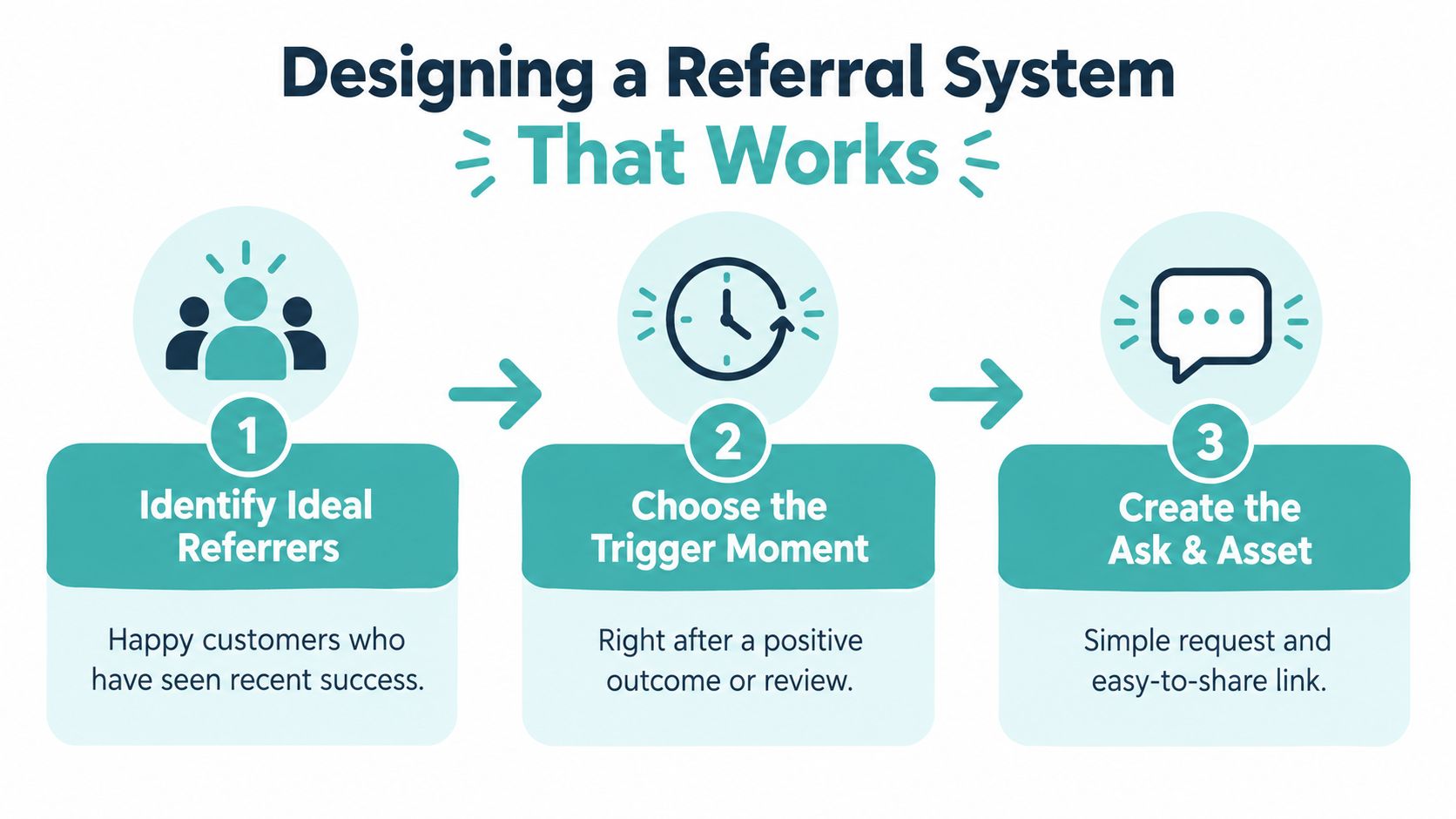
A referral program fails before launch when the business hasn’t decided who should refer, when to ask, and what action the prospect should take. An incentive can’t repair a confusing process. Customers may like your company and still do nothing because they don’t know whom to refer or how to start.
Choose the right referrer
Don’t ask every customer with the same intensity. Your strongest early candidates are customers who have recently experienced a visible success, complimented the team, left a positive review, renewed service, or completed a project without unresolved issues.
A dental practice might ask after a successful follow-up appointment. An auto shop can ask when the customer confirms that the vehicle is running properly. A real estate team may ask after a smooth closing or after the buyer has settled into the property.
The trigger should follow evidence of satisfaction, not merely the passage of time. Asking during a complaint, before the result is clear, or immediately after a stressful transaction makes the request feel transactional.
Define one desired action
Your referral path should have one obvious next step. That might be a landing page visit, an introduction by text, a booking request, or a form submission. Don’t send the referrer to a general homepage and expect the prospect to work out what to do.
Build the path around the recipient’s likely questions:
- What does this business help with?
- Why did my contact recommend it?
- What should I do next?
- How quickly will someone respond?
- Is there a useful offer for me?
The RealEstateCRM guide to designing and automating referrals is a useful resource for mapping referral stages, ownership, and follow-up, especially for teams managing multiple agents or customer-facing staff.
Remove uncertainty after submission
A referred person shouldn’t wonder whether the referral arrived. Send a confirmation, identify the next step, and give staff a clear ownership rule. The referrer also deserves recognition, even when the lead hasn’t converted yet.
Recent referral-program analysis from PIN’s employee referral research identifies slow submission, unclear status updates, and missing recognition as common workflow failures. It also reports that 29.4% of participating employees submitted a second referral, while 3.7% submitted five or more, showing why repeat participation deserves deliberate attention.
A practical workflow includes:
- Capture the source: Record who referred the prospect and through which channel.
- Confirm receipt: Send an immediate acknowledgment to the prospect and, where appropriate, the referrer.
- Assign ownership: Give one person responsibility for the next contact.
- Update status: Mark the referral as received, contacted, booked, won, lost, or waiting.
- Recognize action: Thank the referrer promptly and deliver any reward only under clear program rules.
Your onboarding experience affects the willingness to refer later. Review how to create a great first experience after purchase before you build the ask. A customer who had to chase invoices, repeat information, or wait for basic communication won’t become a reliable referral source just because you send a discount code.
What to Say and How to Make Sharing Effortless
A good referral request sounds like a helpful suggestion, not a demand for unpaid sales work. The best moment usually follows a specific positive outcome, because the customer can connect the request to something that just happened.
Consider a home services technician finishing a repair. Instead of saying, “Can you refer us to anyone?”, the technician can say:
“I’m glad we got this fixed today. If a neighbor has the same problem, would you be comfortable sending them this link? It takes them straight to our scheduling page.”
That wording does three jobs. It identifies the situation, gives the customer permission to help someone, and makes the next action concrete. It doesn’t ask the customer to explain your entire business.

Match the script to the moment
A retailer can use a lighter prompt at checkout:
“Did you enjoy the product? If someone you know is looking for the same thing, you can send them this referral link. It includes the details and any current offer.”
A real estate agent can make the request more personal after a successful closing:
“I’m pleased we got you to the finish line. If someone in your circle is thinking about moving, would you introduce us? I can answer their questions without putting them under pressure.”
An email follow-up should stay short:
Subject: A quick way to help someone you know
“Thanks for trusting us with your project. If a friend or colleague needs the same service, send them this page: [referral link]. They can see what we handle and contact us directly. I appreciate the introduction.”
For text, remove every unnecessary field:
“Thanks for choosing us. If someone you know needs help with [specific problem], send them this link: [referral link]. We’ll take good care of them.”
The guide to asking for referrals without sounding awkward can help staff adapt language to the business’s tone without turning every interaction into a sales script.
Design for one-tap sharing
Copying a long message, searching for a phone number, or filling out a complicated form kills momentum. Give customers a short link and prewritten language they can edit. Offer the channels they already use, such as email, text, or social sharing, but don’t force every channel into the first screen.
Make the referred prospect’s experience equally simple. The landing page should state the service, explain the connection, show the next action, and provide a clear way to book or contact the business. When the lead arrives, respond quickly. The trust advantage weakens when the prospect waits and has to repeat the story to several employees.
The referrer should look helpful, not promotional. A useful message says, “This company solved the problem for me,” rather than sounding like an advertisement written by your marketing department.
Choosing Incentives and Channels That Fit Your Customers
Incentives change behavior, but they don’t create satisfaction. Start by deciding what your customers value, then choose a reward that reinforces the purchase rather than distorting it.
A service business may prefer account credit because it encourages another visit. A retailer may use a product perk or discount. A professional practice may need to review legal and industry requirements before offering anything. The reward should be easy to explain, easy to fulfill, and financially sensible after a completed conversion.
Referral sharing also varies by audience. One referral marketing statistics roundup reports that email accounts for 33% of referral shares, while social media accounts for 28%, with Facebook representing 15%. Those figures provide a directional benchmark, not a reason to force every customer into social sharing. A local business should compare those channels with actual customer behavior.
Compare the trade-offs
| Option Type | Best For | Watch Out For |
|---|---|---|
| Single-sided reward | Businesses with a strong existing customer relationship | The referred prospect may not feel motivated to act |
| Double-sided reward | Offers that benefit both the current and prospective customer | Higher program cost and more rules to communicate |
| Account credit | Repeat-purchase businesses and ongoing services | It may be less compelling for one-time transactions |
| Product or service perk | Retail, wellness, hospitality, and experience-led brands | The reward must feel useful, not like leftover inventory |
| Email prompt | Customers who already receive receipts or updates | A crowded inbox can bury the request |
| Text prompt | Time-sensitive services and direct follow-up | Consent and message frequency need careful management |
| In-store prompt | Retailers, salons, restaurants, and auto counters | Staff must ask naturally, not at every interaction |
| Social sharing | Visually distinctive products and community-led brands | Public sharing may feel too exposed for personal services |
Pick the trigger before the reward
A weak program leads with, “Refer a friend and get a reward.” A stronger program starts with a customer outcome, then explains the benefit. The distinction matters because the customer has a reason to recommend the company before the incentive appears.
Test one variable at a time. Keep the offer stable while comparing email and text. Then keep the channel stable while comparing a single-sided and double-sided reward. If you change the script, timing, channel, and incentive together, you won’t know what caused the result.
Avoid rewards that attract people who are unlikely to become good customers. A large generic discount may increase low-quality inquiries, while a more specific benefit can encourage introductions that fit your capacity, service area, and margins.
Tracking, Optimizing, and Automating Your Referral Funnel
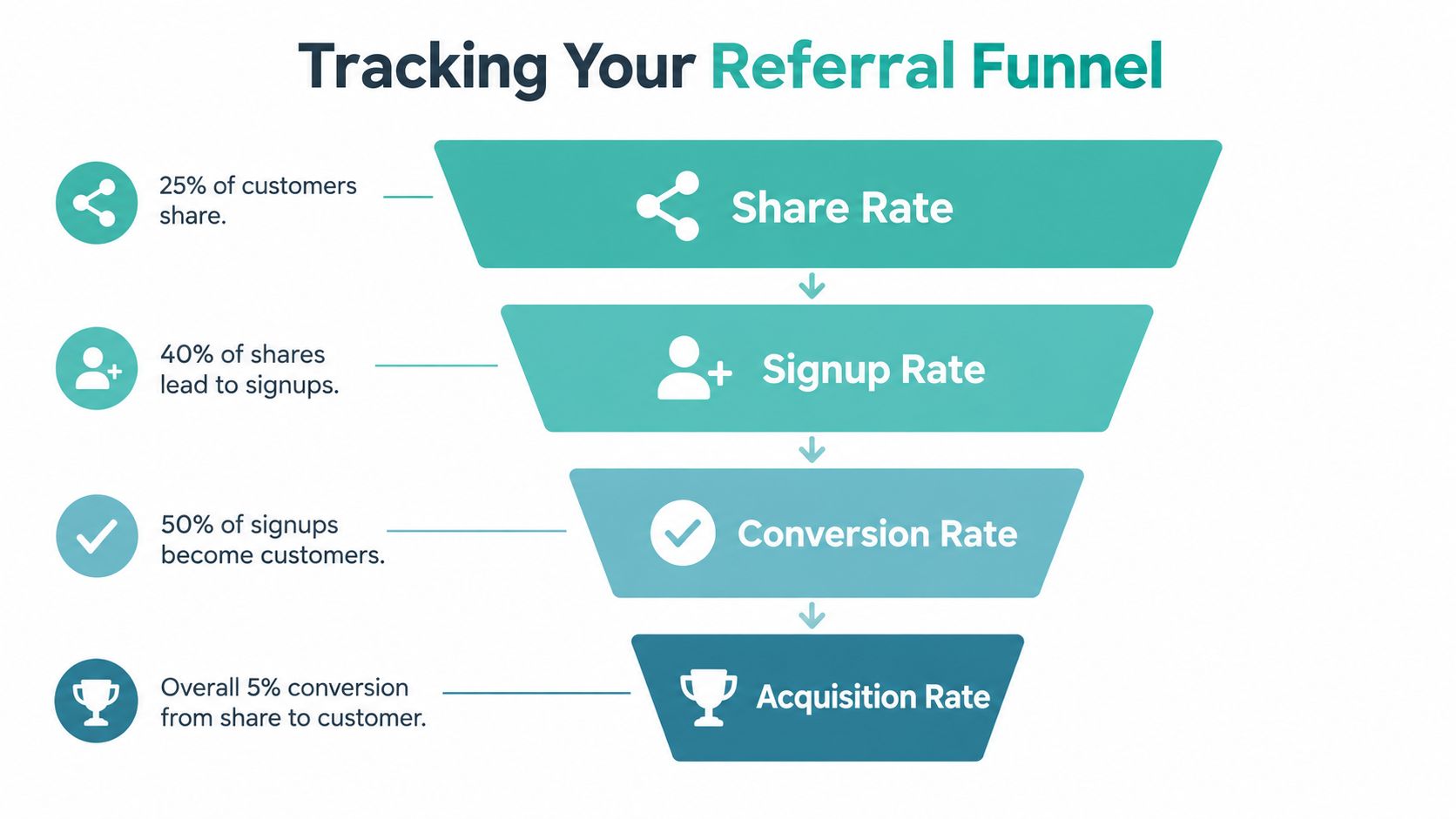
A referral program needs an operating report, not a name list. Track four stages separately: share rate, signup rate, conversion rate, and acquisition rate. Each metric answers a different question, from whether customers act on the prompt to whether those introductions produce viable customers.
Industry benchmarks in Extole’s referral marketing data show why the baseline must fit the business. Retail general records about a 7.7% share rate, 16.2% signup rate, 10.8% conversion rate, and 21% acquisition rate. Auto sales and services shows a 20.8% share rate, 16.8% signup rate, 17.1% conversion rate, and 7.8% acquisition rate. Use these figures for comparison, not as fixed targets.
Diagnose the stage that leaks
Low sharing usually points to the trigger, wording, or perceived value. Strong sharing with weak signups calls for a simpler landing page and fewer form fields. If signups rarely become customers, review qualification, scheduling, pricing clarity, and response time.
The Amplifinity State of Business Customer Referral Programs report reports 13% overall conversion of referral leads into customers and a 32% successful referral-attempt rate. That gap reflects a common handoff failure. Interest can build at the top of the funnel, then disappear during follow-up.
The same report places average referral rates for many businesses at around 1% to 3%. A small program still needs clear ownership, timely reminders, and an easy sharing path.
Automate the handoff, not the relationship
Set up the CRM or customer platform to record source, referral date, status, assigned employee, first response, appointment, outcome, and reward status. Automate confirmations and internal task creation. Keep customer-facing messages specific and human.
Test the prompt, channel, and incentive separately. Review repeat-referrer behavior, retention, and the quality of acquired customers. Referral call tracking guidance can help connect phone inquiries with referral sources when calls remain a primary conversion path.
Awareness can improve the handoff because prospects recognize the business before a referral arrives. Adwave creates broadcast-ready TV ads from a website URL, places campaigns across 100+ premium channels, starts campaigns at $50, and provides real-time performance tracking. That TV layer supports recognition, while the referral workflow records the source and assigns the next action.
Turning One Referral Into Many and What to Do Next
A referral shouldn’t end when the new customer pays. The first transaction creates another opportunity to deliver a memorable experience, identify a successful outcome, and invite the new customer into the referral loop.
Research from Extole’s 2026 referral marketing statistics estimates that a referred customer is 25% more valuable than a traditional customer and that referred consumers generate 30% to 57% more referrals than non-referred consumers. The same source says well-run referral programs can drive up to 25% of new customers.
That compounding effect has a practical implication. Don’t treat referred customers as a separate class that receives a thank-you and disappears into the general database. Give them the same strong onboarding, clear communication, and outcome-based follow-up that made the original referral possible.
Know when referrals need support
Referrals can reach a natural limit because customers draw from their own networks. They can also reproduce network bias, especially in hiring or tightly connected professional communities. Research summarized by 99firms’ employee referral statistics notes that referrals can make up 30% to 50% of hires, while warning that organizations need diversity guardrails and should compare referral sourcing with outbound channels.
For local customer acquisition, the equivalent is channel balance. Keep referrals central when they produce good-fit customers, but use broader awareness when you need new geographic reach or want more people to recognize your brand before a personal recommendation arrives.
The next step is operational, not theoretical. Pick one customer journey, define the trigger, create one shareable path, tag every referral, and review the full funnel regularly. Then build enough brand recall that customers can name your business when the opportunity to recommend you appears.
Adwave helps small businesses create and launch broadcast-ready TV advertising across 100+ premium channels, with campaigns starting at $50 and real-time performance tracking. Visit Adwave to add measurable TV awareness to your referral engine and make personal recommendations easier for new prospects to recognize.