
The payment clears. The order confirmation lands. Then the customer waits.
That gap after purchase is where a lot of small businesses lose momentum. A real estate agent buys a new ad service and hears nothing useful for a day. A retailer signs up for a marketing platform but gets three generic emails and no clear next step. An auto shop says yes to a new tool, then has to repeat the same business details to support that they already gave sales. The sale is done, but the customer still doesn't feel confident.
For SMBs, that moment matters more than most owners think. Good onboarding doesn't need enterprise software, a big team, or a long playbook. It needs clarity, timing, and one fast win the customer can recognize.
Why Your First Impression After the Sale Matters Most
The weakest onboarding experience usually isn't rude. It's silent.
A customer buys from you because they believe you'll solve a problem. Then they hit the post-purchase void. No clear next action. No timeline. No sign that anyone knows what success should look like for their business. That uncertainty creates buyer's remorse faster than many organizations appreciate.

63% of customers consider onboarding when deciding whether to make a purchase in the first place, and resolving issues during the very first interaction can prevent up to 67% of customer churn, according to Custify's onboarding and retention statistics. That means the first experience after payment isn't administrative cleanup. It's part of the product.
What this looks like in the real world
In non-SaaS SMBs, the signs are easy to spot:
Real estate teams buy marketing help but don't know when their first listing promotion will go live.
Retail owners place an order for a service and can't tell what they need to send, approve, or prepare.
Automotive businesses sign up fast, then get bogged down in unclear setup steps and compliance questions.
If you work with dealerships, that last point matters even more when customer communication overlaps with finance, warranties, or consumer protection obligations. Resources on risk management for car dealers are useful because onboarding isn't just about friendliness. It's also about setting expectations correctly from the first interaction.
Customers don't judge your process by your internal handoffs. They judge it by whether the next step feels obvious.
A great first experience tells the buyer three things quickly. You know who they are. You know what they bought. You know what should happen next. When that message is missing, trust drops before any real value is delivered.
Define Your Onboarding Goals and Success Metrics
Most SMB onboarding fails because the team confuses activity with progress. Sending a welcome email isn't a goal. Booking a kickoff call isn't a goal. A goal is the customer reaching a meaningful first outcome.
That outcome depends on the business. For a retailer, it might be redeeming a first offer. For an agent, it might be launching a property campaign. For an auto shop, it might be getting the first booked service through a new channel. The goal should connect directly to customer value, not internal task completion.
Start with customer value, not internal tasks
Positive onboarding changes customer economics. Customers who have a positive onboarding experience make purchases 90% more frequently, spend 60% more per transaction, and deliver three times the annual value compared to other customers, based on OnRamp's customer onboarding statistics. That's why onboarding goals should tie to adoption, repeat use, and confidence.
A simple way to set goals is to define four things:
This keeps your team focused on movement instead of motion.
Use leading signals before lagging outcomes
Retention matters, but it's late-stage feedback. SMBs need earlier signals they can act on this week.
Watch for:
Activation signal. Did the customer complete the key first action that provides value?
Time to first value. How long does it take before they get a concrete result?
Feature or service adoption. Are they using the parts of your offer that solve the original problem?
Customer sentiment. Are they sounding clearer and more confident after each touchpoint?
If you want a simple loyalty measure to support this, Adwave has a practical guide on whether small businesses should track Net Promoter Score. It's useful when paired with onboarding milestones, not treated as a standalone score.
Pick one primary metric per offer
Don't overload a local team with a dashboard full of vanity metrics. Give each offer one primary onboarding metric and two supporting signals.
Examples:
Real estate promotion service Primary metric: first listing campaign launched
Supporting signals: seller approval returned, creative assets submitted
Retail marketing service
Primary metric: first promotion activated
Supporting signals: offer details confirmed, audience selected
Automotive service membership
Primary metric: first appointment booked or campaign activated
Supporting signals: service menu approved, location details verified
Practical rule: if your team can't explain the first customer win in one sentence, the onboarding process is still too vague.
The strongest metric is usually the one a customer would mention unprompted. Not “I got your email.” More like “My first campaign is live,” or “My offer is already out.”
Design Your Ideal Onboarding Timeline and Touchpoints
A workable onboarding timeline for SMBs doesn't need to be complicated. It needs rhythm. Every touchpoint should reduce uncertainty or create momentum.
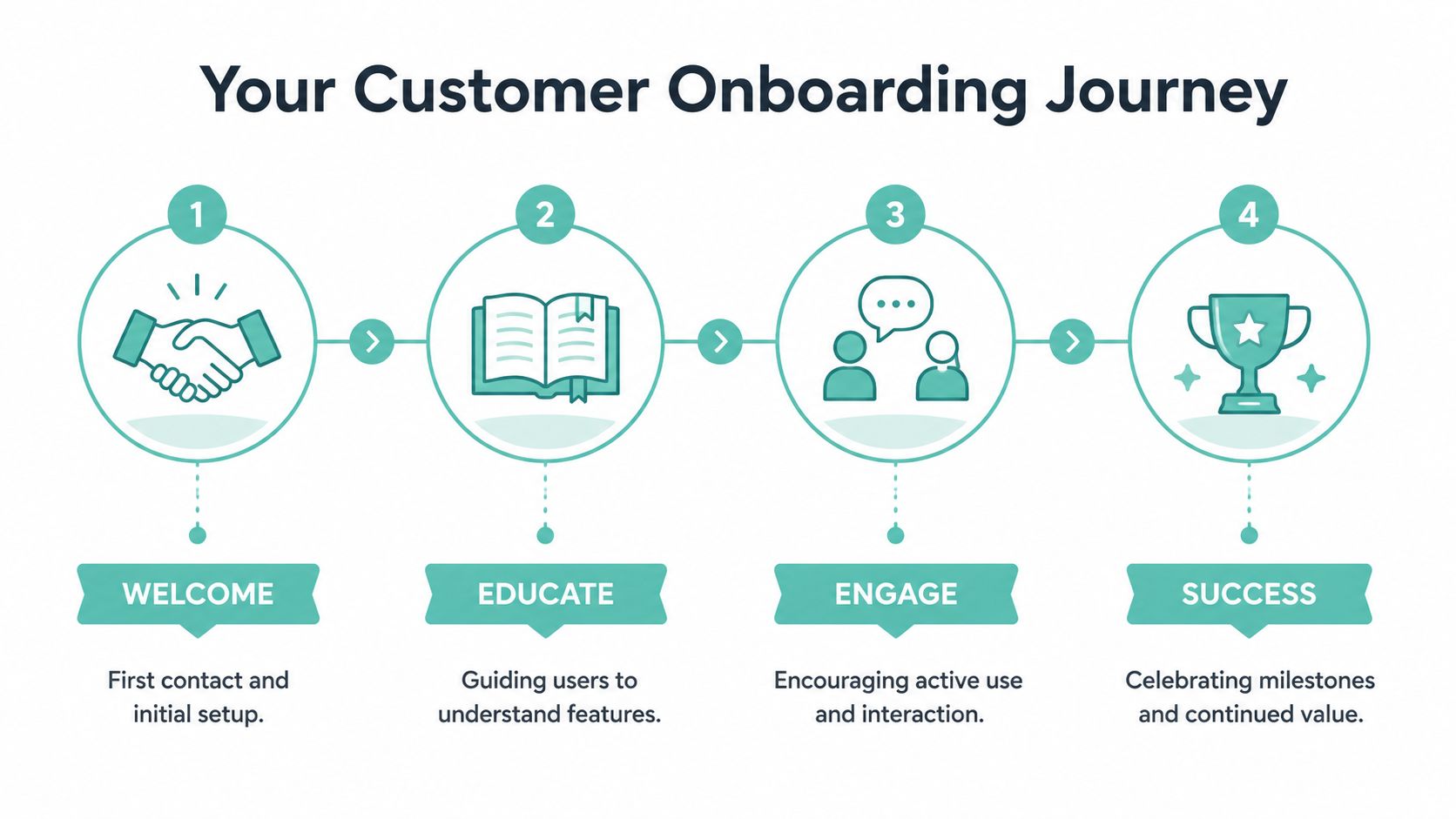
The cleanest model has four phases: welcome, educate, engage, and success.
Welcome
This starts immediately after purchase. The first message should confirm three basics: what the customer bought, what happens next, and what you need from them.
For SMBs outside SaaS, this often works better as a short email plus a text-friendly reminder if the service is time-sensitive. A retailer owner opening email between customers doesn't want a five-paragraph note. They want a short checklist.
Use this phase to prevent two common mistakes:
Information dumping. Don't send every guide, FAQ, and policy at once.
Generic language. Don't make the same email do the work for every customer type.
Instead, tailor the welcome around the buyer's goal. A real estate agent should see “let's get your listing live.” An auto dealer should see “let's confirm inventory, offer, and market area.” A retailer should see “let's launch your first promotion.”
Educate
During customer onboarding, many teams over-teach. They explain every feature, every option, and every future possibility. New customers don't need your whole system on day one. They need the next right action.
Use a short sequence instead of a single heavy document. One touchpoint can explain approvals. Another can explain creative inputs. Another can answer the most common “what happens now?” question.
A good rhythm here is:
Clarify the immediate task. Tell them what to send or approve.
Show the standard. Give one example of what “complete” looks like.
Remove hesitation. Name the common delay and how to avoid it.
If you're building these into automated communication, Adwave's piece on transactional emails that turn order confirmations into marketing opportunities is a smart reference. The main lesson applies well to onboarding. The message that confirms a transaction should also guide the next behavior.
A welcome message should answer the question the buyer is already asking: “What do I do right now?”
Engage
Once the customer has completed basic setup, don't disappear. This is the phase where you keep momentum alive with short nudges and visible progress markers.
For non-SaaS SMBs, this can be simple:
Email for approvals, recap, and next-step guidance
SMS for quick reminders tied to deadlines
Phone call when the service has multiple moving parts or the customer has gone quiet
The key is to acknowledge movement. Not big wins only. Small ones too. Gainsight notes that customers who received automated micro-win notifications were 2.8x more likely to renew within 60 days than those who only got generic updates.
Tell customers when a step is complete and what happens next. For example: "Your campaign is approved. Ads are scheduled to start Monday."
Success
The final phase is the first visible outcome. At this point, the customer sees proof that buying from you was the right call.
Success should be named explicitly. Don't assume they'll notice. Tell them what just happened and why it matters.
For example:
Then give one next-step recommendation, not five. The moment after first success is when trust is highest. It's the right time to suggest the next action that expands value.
Crafting Messages That Connect and Convert
Most onboarding messages fail for a simple reason. They sound like process notes written for the business, not guidance written for the customer.
The fix is straightforward. Write messages that answer four things fast: what happened, what matters, what to do next, and when to expect the next update.
A better welcome email
A good welcome email is short enough to skim and specific enough to trust.
For a local retailer, a weak version says: “Thanks for signing up. Our team will be in touch shortly with more details about your account and next steps.”
A stronger version says:
Subject: You're in. Let's launch your first promotion
Hi Sarah, thanks for getting started with us. Your purchase is confirmed, and the next step is simple: reply with the offer you'd like to promote and the date you want it to start. Once we have that, we'll prepare your first campaign for review. Expect your next update from us by tomorrow afternoon.
The difference is clarity. The customer knows the action, the deliverable, and the timeframe.
Send useful SMS reminders
SMS is useful when timing matters, but it's easy to overdo. Keep texts tied to one action and one reason.
Examples that work:
Real estate: “Hi Jen, quick reminder to send the listing photos for 18 Oak Street so we can prepare your campaign draft.”
Automotive: “Your campaign setup is almost complete. Reply YES if the service offer and city target are approved.”
Retail: “You're one step away from launch. Send your promo code when ready and we'll finalize the draft.”
Short messages like these work because they reduce a stalled process to one decision.
Write for the business type, not the software category
Generic onboarding advice often falls short. A boutique retailer, a dealership group, and a franchise operator don't think about “activation” the same way.
If you work with growing multi-location brands, it's worth studying how franchise development marketing handles consistency across locations while still speaking to local market realities. That same principle improves onboarding copy. The message framework stays stable, but the examples, proof points, and next steps should reflect the actual business model.
Here's a simple copy framework that holds up across industries:
Welcome sequences need sequencing, not volume
A lot of SMBs send one welcome email and hope for the best. Better results usually come from a short sequence where each message has one job.
A practical sequence might look like this:
Message one. Confirmation and first action
Message two. Reminder with a concrete example
Message three. Progress update or first micro-win
Message four. First-success note with one recommended next move
If you want examples of how these sequences can stay focused without sounding robotic, Adwave's guide to welcome email sequences that turn subscribers into buyers is a useful model.
Good onboarding copy doesn't sound “professional.” It sounds clear, confident, and easy to act on.
Automate and Personalize with the Right Tools
Small businesses often assume automation makes onboarding cold. Bad automation does. Good automation removes waiting, repetition, and missed follow-up.
The dividing line isn't whether you automate. It's whether the system reflects real customer context.
Automate the repetitive parts first
Start with the tasks that don't need judgment:
Welcome delivery after purchase
Document or asset reminders when setup is incomplete
Status updates when a milestone is reached
Internal task creation when a customer replies or approves something
These are the handoffs and reminders that fall through the cracks when handled manually. Once they're automated, your team can spend time on the moments that need a person.
For most SMBs, the right stack is simple. A CRM to hold customer details, an email platform for timed sequences, a form or intake tool for collecting what you need, and a shared task workflow so nothing goes missing.
Personalization should follow the customer's goal
Personalization doesn't mean writing every message by hand. It means the path should match the customer's reason for buying.
A real estate customer should move through listing-specific prompts. A retailer should get launch-focused reminders tied to offer setup. An automotive business should see steps built around inventory, service lines, or local targeting.
That kind of personalization is easier when your tools pass context cleanly from form to CRM to message workflow. It also makes automation feel more human because the customer isn't being asked to repeat basic information.
The best tools shorten time to visible value
The right platform can improve onboarding by making the first win arrive faster.
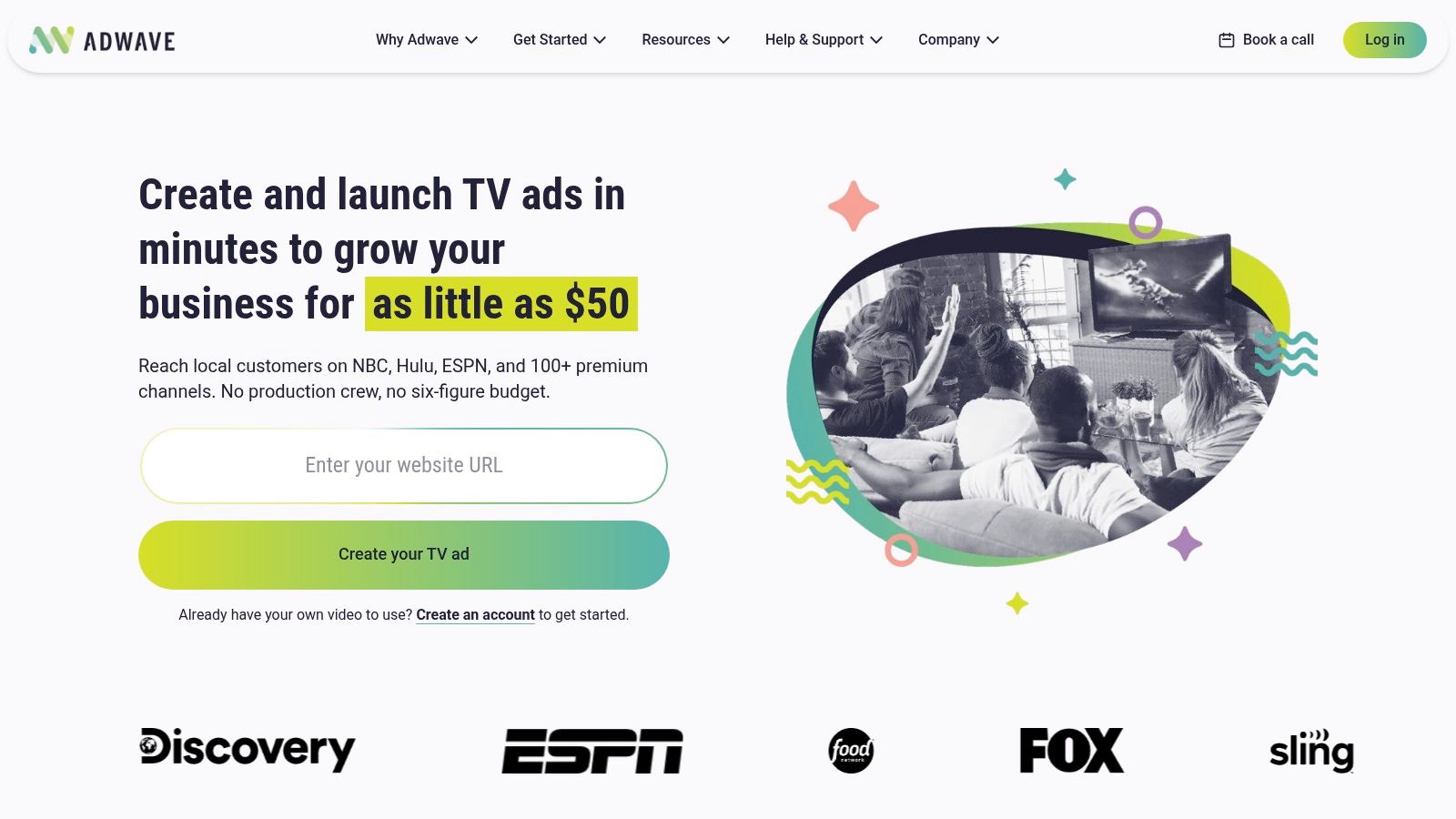
Adwave is a strong example. Its platform lets SMBs generate a broadcast-ready 30-second TV ad in about two minutes from a website URL and launch campaigns starting at $50, as described in Adwave's programmatic advertising platform overview. That's what strong onboarding looks like in practice. The customer reaches a tangible outcome quickly instead of getting stuck in a long setup cycle.
For local businesses that want visibility without a drawn-out production process, that speed changes the onboarding experience. The customer doesn't just receive instructions. They see progress almost immediately.
If you're setting up automation around these kinds of journeys, Adwave's resource on email automation for small business and the campaigns to set up first is worth reviewing because it keeps the setup practical.
Field note: automation should make the customer feel guided, not processed.
Onboarding Examples for Your Small Business
Theory gets easier when you can see the milestone in context. These examples work because each one defines a visible first success and backs it up with a simple message.
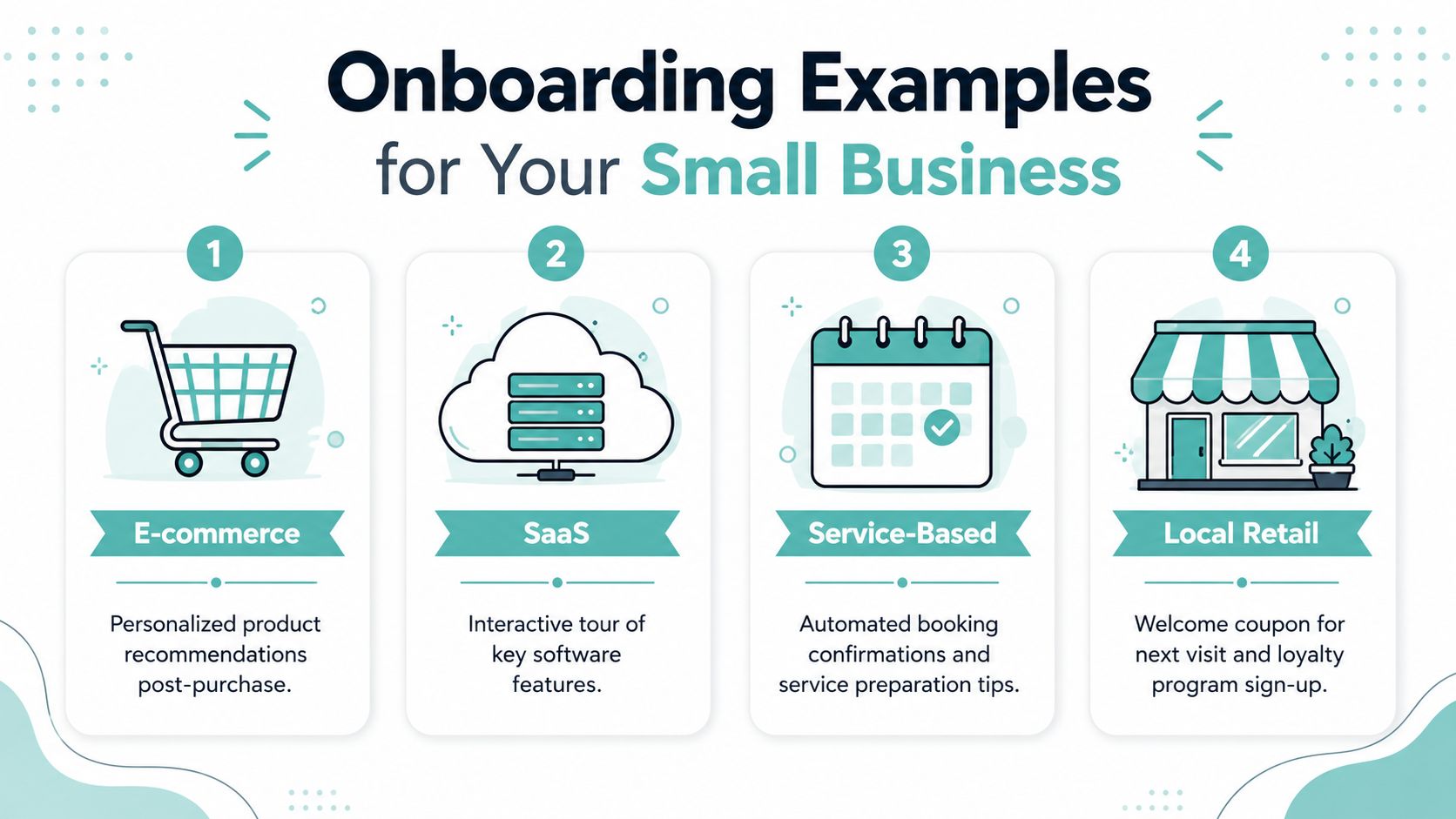
Real estate
A new agent signs up to promote listings. The wrong onboarding path gives them a login, a media request, and a general help article. The better path asks for one active property first.
First success: the first property campaign is approved and scheduled.
Sample message: “Thanks, Mia. We have the photos and listing details for Pine Avenue. Your campaign draft is now in review. We'll send your approval link next.”
Retail
A local shop buys a service to drive foot traffic. If the onboarding starts with a broad strategy survey, the owner puts it off. If it starts with one immediate offer, the process moves.
First success: the welcome promotion is live and ready to drive visits.
Sample message: “Your weekend offer is set. Customers can now respond to your first campaign. After launch, we'll share the next recommendation based on what gets attention.”
Automotive
A service center or dealer often has more complexity because the offer, location, and audience have to line up. The first win shouldn't be “account created.” It should be a launch-ready campaign or bookable service action.
First success: the first service or inventory promotion is active.
Sample message: “We've confirmed your brake service offer and service area. Your campaign is now prepared for launch. Reply APPROVED and we'll move it live.”
Professional services
A law firm, clinic, or financial advisor usually needs trust and clear expectations more than volume. Onboarding works better when it promises structure, not speed alone.
First success: the first campaign or client intake workflow is ready to use.
Sample message: “Your intake message and first promotion are ready for review. Once approved, new prospects will have a clear path to contact your office.”
These examples all follow the same pattern. Name the first win. Communicate progress in plain language. Ask for one decision at a time.
Beyond the First Week Measuring and Iterating Your Onboarding
The first week gives you the clearest signal, but it shouldn't be the end of your onboarding review. Strong teams treat onboarding like an operating system. They adjust it as patterns show up.
Start by looking at where customers slow down. Is it during approval? Asset collection? Internal handoff? Message timing? Then pair that with direct feedback. Short survey responses, support transcripts, and sales notes usually reveal friction faster than a dashboard alone.
Audit the handoff before you rewrite the emails
One of the biggest onboarding problems happens before onboarding officially starts. An estimated 68% of SMBs report that important customer context is lost in the sales-to-onboarding handoff, and companies with a documented handoff protocol can reduce onboarding friction by 42%, according to ClientSuccess on creating better customer onboarding experiences.
That means your welcome sequence can be perfectly written and still fail if the delivery team doesn't know what the buyer expected.
A simple handoff record should include:
What the customer bought
Why they bought it now
What first success looks like to them
Any promised timeline or constraints
Any risks already mentioned in the sales conversation
Keep the loop tight
Review onboarding weekly, if your volume allows, to catch recurring problems.
Ask:
Customer onboarding works best when the first experience after purchase feels coordinated, useful, and fast. That's not a one-time setup. It's a discipline.
If you want an easier way to deliver a fast, concrete first win after purchase, Adwave is worth a close look. It gives SMBs a practical path from website URL to broadcast-ready TV ad in minutes, which makes onboarding feel real because customers can see progress right away instead of waiting through a long setup cycle. For local businesses in real estate, retail, automotive, and other service categories, that's the kind of immediate value that turns a new customer into a confident one.


