In today's competitive market, small businesses need to work smarter, not just harder. While you're busy running daily operations, a silent, powerful engine can be working 24/7 to nurture leads, engage customers, and drive sales. This is the power of email automation for small business, an accessible, high-return tool that transforms how you communicate. It’s not just for massive corporations; it’s your key to scaling personalized marketing efforts without hiring a huge team.
This guide cuts through the noise. Instead of overwhelming you with countless options, we will focus on the most impactful campaigns to set up first. We’ll provide a clear roadmap for each, detailing its purpose, triggers, content examples, and the key metrics you need to track. To put these campaigns into action, understanding the core automation features of a dedicated platform is essential, as this foundation allows for connected implementation.
Furthermore, integrating your email efforts with other marketing channels, like television advertising through accessible platforms like Adwave, can amplify your message and drive more subscribers into your automated funnels. By the end of this article, you will have a prioritized action plan to turn your email list into a predictable source of revenue and customer loyalty.
1. Welcome Series for New Subscribers
A welcome series is your first, and arguably most important, automated campaign. It’s a sequence of emails triggered when someone subscribes to your list, whether through a form on your site, a lead magnet download, or an in-person signup. Instead of a single, generic confirmation email, a welcome series delivers a structured 3-5 part narrative over 7-14 days. Its purpose is to introduce your brand, build trust, and gently guide new leads toward their first meaningful action with your business. For small businesses, this is a critical part of a solid email automation strategy.
This initial interaction sets the tone for your entire customer relationship. It’s your chance to make a strong first impression, deliver on the promise you made at signup, and show subscribers what makes your business unique. A well-crafted series can turn a cold lead who knows little about you into a warm, engaged prospect ready to learn more. Getting this first touchpoint right is fundamental; for more foundational guidance, explore our guide on getting started with email marketing for small businesses.
Why It’s a Priority
Your welcome series is your highest-performing automation. Subscribers are most engaged right after signing up, leading to open and click-through rates that are often 4x higher than standard newsletters. Failing to have one is a missed opportunity to connect when your brand is familiar.
Adwave in Action: A Welcome Series Example
Imagine a local real estate agent signs up for Adwave’s newsletter. As a platform that simplifies TV advertising for small businesses, Adwave can use a welcome series to effectively nurture this new lead. Their welcome series could look like this:
Email 1 (Immediate): "Welcome! Here’s How to Reach Local Home Buyers." This email confirms the subscription and immediately provides value by explaining the benefits of TV advertising for real estate.
Show the offer: Link to a service, explain who it helps, and give the reader one next step, such as viewing available appointments or requesting a quote.
Email 3 (Day 7): "Your TV Ad is Closer Than You Think." This final email details pricing, demonstrates the potential return on investment, and includes a clear call-to-action to book a demo.
Key Insight: A welcome series should be a journey, not a sales pitch. Each email should build on the last, educating and building confidence before presenting a strong call to action.
Implementation Checklist
Purpose: Nurture new leads, introduce your brand, build trust, and drive an initial conversion.
Trigger: A new contact subscribes to your email list.
Timing: A sequence of 3-5 emails sent over 7-14 days.
Segmentation: Customize content based on how the subscriber signed up (e.g., lead magnet topic, industry).
Metrics to Track: Open rate, click-through rate, and conversion rate on your primary CTA (e.g., demo booked, first purchase).
For more ideas on how to structure your emails, you can explore a variety of B2B welcome mail sample blueprints to help you craft an engaging first impression.
2. Abandoned Cart Recovery Campaign
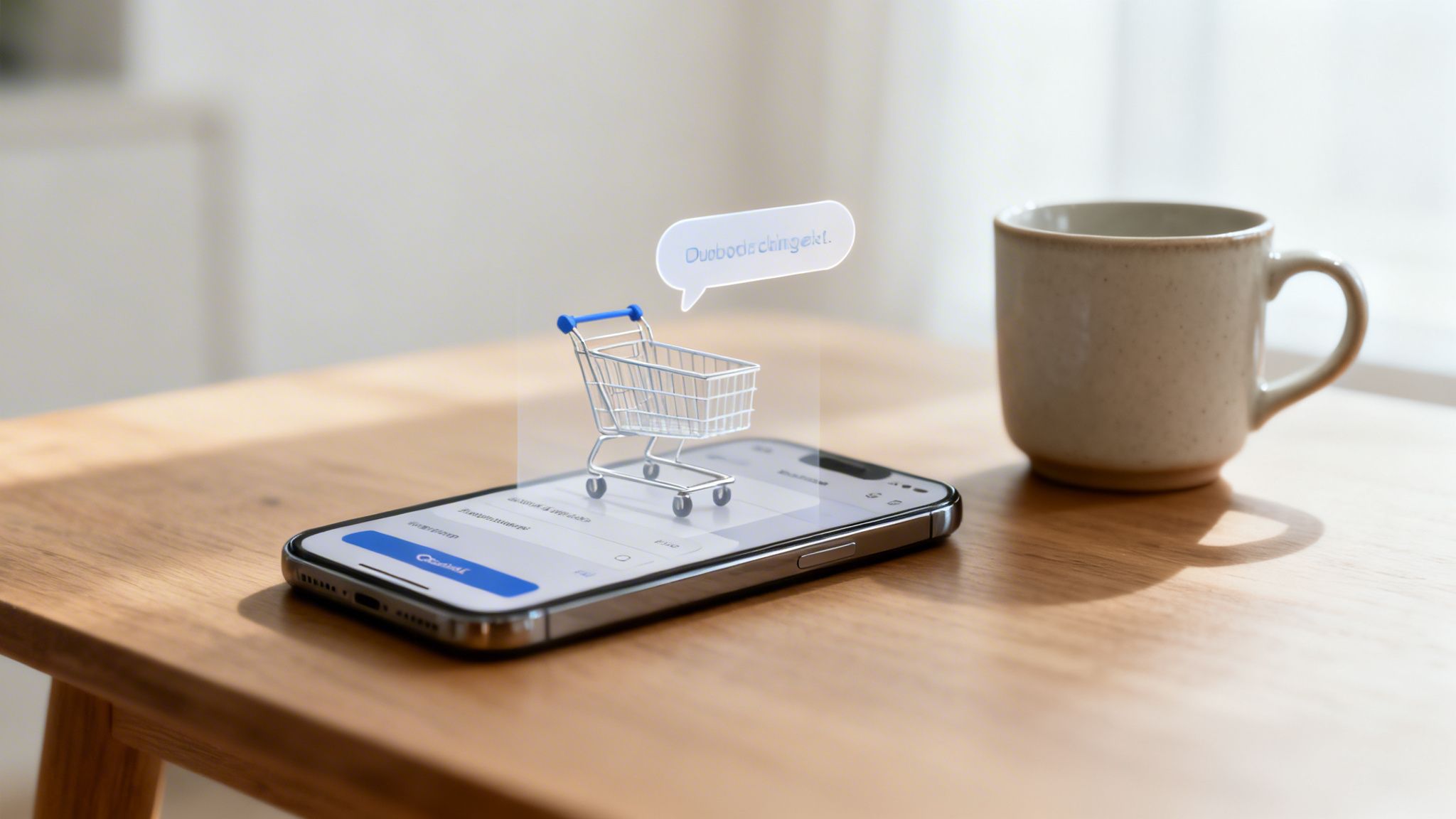
An abandoned cart recovery campaign is an automated email sequence sent to users who start a checkout process or another key action but don’t complete it. It’s a powerful tool for both e-commerce and service-based businesses, designed to re-engage warm leads who have already shown strong purchase intent. By sending a timely reminder, you can overcome common obstacles like distraction, confusion, or last-minute hesitation, effectively recovering lost sales and conversions. This is a must-have component of any serious email automation strategy for small business.
The goal is to gently nudge the prospect back to their abandoned action, reminding them of the value they're leaving behind. For a small business, this automation acts as a digital sales associate, checking in with customers who almost made a purchase. It allows you to address potential friction points, offer assistance, and reinforce the benefits of your product or service at the exact moment a decision is being weighed.
Why It’s a Priority
On average, nearly 70% of online shopping carts are abandoned. Without a recovery campaign, that potential revenue is simply lost. These campaigns are highly effective because they target users with clear intent, resulting in some of the highest ROIs of any email automation. For a small business, recovering even a fraction of these abandoned actions can significantly impact the bottom line.
Adwave in Action: An Abandoned Cart Example
Imagine a restaurant owner starts creating a TV ad campaign on Adwave but gets distracted and leaves before completing the setup. An automated recovery sequence is the perfect solution for this scenario:
Email 1 (1 Hour): "Don't Miss Out on Your Audience!" This email includes a screenshot of their AI-generated ad preview, reminding them how close they were to launching. It asks, "Did you have a question? Our support team is here to help."
Email 2 (24 Hours): "Your TV Ad is Waiting." A simple reminder of the campaign they started, showing the low entry cost and the potential reach. It might include a 'Quick Start Guide' PDF to simplify the final steps.
Email 3 (3 Days): "A Special Offer to Get You on TV." If the user still hasn't converted, this email could offer a small incentive like a free consultation to review their ad strategy or a modest discount on their first campaign.
Key Insight: The first recovery email should arrive within 1-2 hours of abandonment for maximum impact. Focus on being helpful first and offering an incentive only if the initial nudges don’t work.
Implementation Checklist
Purpose: Recover lost sales and conversions by re-engaging users who abandon a checkout or setup process.
Trigger: A user adds a product to their cart or starts a key process but does not complete the purchase/action within a set time frame (e.g., 60 minutes).
Timing: A sequence of 2-3 emails sent over 1-3 days.
Segmentation: Customize content based on the value of the abandoned cart or the specific step where the user dropped off.
Metrics to Track: Recovery rate (percentage of carts recovered), revenue recovered, and click-through rate on the "complete purchase" link.
3. Educational Content Campaign (Drip Campaign)
An educational content campaign, often called a drip campaign, is a long-form automated sequence designed to nurture leads over several weeks or even months. Instead of pushing for an immediate sale, this campaign focuses on delivering consistent value by educating subscribers on topics relevant to their interests and your expertise. By positioning your business as a trusted advisor, you build a relationship with prospects who may not be ready to buy today but will remember you when they are. This approach is a cornerstone of effective email automation for small business, turning initial interest into informed demand.

Why It’s a Priority
Not every lead is ready to make a purchase right away. An educational drip campaign keeps your brand familiar by providing useful information, building credibility over time. This slow-burn strategy is perfect for products or services with a longer consideration period, as it systematically addresses customer pain points and questions, warming them up for an eventual sales conversation.
Adwave in Action: An Educational Campaign Example
Imagine a small retail business owner wants to learn about TV advertising but isn't sure where to start. They could be entered into Adwave's "TV Advertising Fundamentals" course, which is a great example of an educational drip campaign:
Email 1 (Week 1): "Your Guide to TV Advertising ROI." This email explains core concepts like CPM and how to measure the return on a TV campaign, establishing a foundation of knowledge.
Email 2 (Week 2): "How TV Advertising Complements Your Digital Marketing." This installment shows how TV and online ads can work together, a common question for digital-first businesses.
Email 3 (Week 3): "Success Story: How a Local Restaurant Increased Foot Traffic." A real-world case study provides tangible proof and helps the owner visualize their own success.
Email 4 (Week 4): "Targeting Your Ideal Customer on TV." This final email details targeting best practices before offering a clear call-to-action to see how Adwave makes it easy.
Key Insight: The goal is to educate, not just sell. By the end of the series, the subscriber should feel more knowledgeable and confident, viewing your brand as an expert guide rather than just another vendor.
Implementation Checklist
Purpose: Nurture long-term leads, build authority, and educate prospects on complex topics.
Trigger: A contact shows interest in a specific educational topic (e.g., downloads a guide, attends a webinar).
Timing: One email sent every 3-7 days over a period of weeks or months.
Segmentation: Create different educational tracks based on the subscriber's industry or expressed interests.
Metrics to Track: Open and click-through rates for each email, content download rates, and eventual conversion rate to a sales-qualified lead.
4. Re-engagement Campaign for Inactive Users
A re-engagement campaign is an automated email sequence designed to win back subscribers or customers who have become inactive. This automation triggers after a set period of inactivity, such as 30, 60, or 90 days, sending a series of emails to remind them of your brand’s value, highlight what’s new, and provide an incentive to return. For small businesses, it's a cost-effective way to reactivate dormant leads and prevent list churn, making it an essential part of any email automation strategy.
Losing a subscriber is more expensive than retaining one. Instead of letting inactive contacts fade away, this campaign gives you a proactive method to understand why they disengaged and an opportunity to bring them back into the fold. A well-executed re-engagement series can reignite interest, gather valuable feedback, and even drive immediate sales from a segment of your audience you might have otherwise considered lost. This approach often complements other marketing efforts, and you can discover more about what is retargeting advertising to see how different channels can work together.
Why It’s a Priority
It’s far more efficient to reactivate an existing customer or lead than to acquire a new one. These contacts already know your brand, and a targeted reminder can be all it takes to bring them back. This campaign also helps maintain a healthy, engaged email list, which improves your overall sender reputation and deliverability rates.
Adwave in Action: A Re-engagement Campaign Example
Imagine a local retail store owner launched one TV campaign with Adwave three months ago but hasn't logged back in since. An automated re-engagement series is an excellent way for Adwave to bring them back:
Email 1 (Day 90): "Ready to Reach More Customers? Here's What's New." This email highlights recent platform improvements, like enhanced audience targeting options, and showcases a new case study from a similar business.
Email 2 (Day 97): "A $25 Credit to Welcome You Back." A direct incentive is offered to reduce the friction of starting a new campaign. The email explains how to apply the credit and includes a clear call-to-action to log in.
Email 3 (Day 105): "Is This Goodbye? Let Us Know." The final email asks if they wish to remain on the list, providing a simple one-click option to unsubscribe or a link to a brief survey to explain their inactivity.
Key Insight: A re-engagement campaign should lead with new value, not guilt. Focus on what the user has missed and make it easy and rewarding for them to return.
Implementation Checklist
Purpose: Reactivate dormant subscribers and customers, reduce list churn, and gather feedback.
Trigger: A contact has not opened an email, clicked a link, or logged into their account for a predefined period (e.g., 90 days).
Timing: A sequence of 2-3 emails sent over 2-3 weeks.
Segmentation: Group inactive users based on their past activity (e.g., one-time customers vs. frequent browsers) to tailor the offer.
Metrics to Track: Re-engagement rate (percentage of inactive users who open or click), conversion rate on the offer, and unsubscribe rate.
5. Post-Purchase/Onboarding Campaign
Once a lead becomes a customer, the work isn't over; it's just beginning. A post-purchase or onboarding campaign is an automated sequence triggered immediately after a customer makes their first purchase or signs up for your service. Its purpose is to validate their decision, guide them toward success, and ensure they extract maximum value from their investment. This sequence reduces buyer's remorse, minimizes early-stage churn, and lays the groundwork for long-term loyalty and repeat business.
For many small businesses, this is a make-or-break moment that solidifies the customer relationship. Instead of leaving new clients to figure things out on their own, a structured onboarding series provides proactive support, education, and encouragement. It shows you are invested in their success beyond the initial sale, transforming a one-time transaction into a lasting partnership. This is a critical piece of any email automation for small business strategy, as it directly impacts customer lifetime value.
Why It’s a Priority
Acquiring a new customer is far more expensive than retaining an existing one. An onboarding campaign is your primary tool for retention. It helps customers achieve an "early win," which builds momentum and confidence. By providing timely resources and check-ins, you can address common issues before they become support tickets or cancellation requests, creating a smoother customer experience.
Adwave in Action: An Onboarding Campaign Example
Imagine a local home services contractor launches their first TV ad campaign with Adwave. A well-designed onboarding sequence would ensure they see results quickly:
Email 1 (Immediate): "Welcome Aboard! Let's Get Your Ad on TV." This email confirms their campaign purchase and includes a link to a welcome video explaining how to navigate the Adwave dashboard.
Email 2 (Day 3): "Your Ad is Live! Here's How to Track Performance." An exciting notification that their ad is on the air, with instructions on how to interpret call metrics and website traffic from their new campaign.
Email 3 (Day 7): "Pro Tip: Maximize Your Reach in [Client's Service Area]." This email provides best practices specific to home service providers, such as ideal scheduling times and targeting strategies for local zip codes. To expand their efforts further, they could explore a multi-channel marketing approach.
Email 4 (Day 14): "Your 2-Week Performance Report." A summary of their early results, celebrating milestones like the number of calls generated and a link to schedule a check-in with a success manager.
Key Insight: The goal of onboarding is to create an expert user. Equip customers with the knowledge and tools they need to succeed independently, and they will become your best advocates.
Implementation Checklist
Purpose: Reduce churn, increase customer lifetime value, and drive successful product adoption.
Trigger: A customer completes their first purchase or service sign-up.
Timing: A sequence of 4-6 emails sent over the first 30 days of the customer relationship.
Segmentation: Customize content based on the customer's industry, purchase, or service plan (e.g., real estate vs. retail).
Metrics to Track: Product/service usage rates, support ticket volume, customer satisfaction scores (NPS/CSAT), and upsell conversion rates.
6. Social Proof and Case Study Campaign
A social proof campaign is a targeted series of emails designed to build credibility and overcome skepticism by showing your successes. Instead of telling subscribers you can solve their problems, you show them with real-world examples, testimonials, and data-driven case studies. For a small business, this automation is a powerful tool to make your product or service feel proven, tangible, and less risky to new prospects.
This campaign is your evidence locker. It moves the conversation from what you say you can do to what you have already done for others. By presenting documented results and authentic testimonials, you build a compelling argument for your value, answering the prospect's unspoken question: "Will this work for me?" This type of focused communication is a key component of an effective email automation for small business strategy, turning interest into genuine confidence.
Why It’s a Priority
Words like "effective" or "great results" are subjective, but numbers are not. A case study with specific, quantifiable outcomes (e.g., "150% growth in 5 weeks") is more persuasive than any general marketing claim. This campaign is essential for prospects who are interested but hesitant, giving them the concrete proof they need to move forward.
Adwave in Action: A Case Study Campaign Example
Imagine a local dental practice is on Adwave’s email list. A targeted case study automation could feature stories relevant to their industry, demonstrating how Adwave is the right choice for them:
Show the offer: Link to a service, explain who it helps, and give the reader one next step, such as viewing available appointments or requesting a quote.
Show the offer: Link to a service, explain who it helps, and give the reader one next step, such as viewing available appointments or requesting a quote.
Email 3 (Day 8): "What could a TV ad do for your practice?" This email summarizes the potential return on investment, provides a link to a downloadable PDF of the full case study, and includes a clear call-to-action to book a strategy call.
Key Insight: Don't just share results; tell a story. A great case study follows a clear narrative: it presents a relatable challenge, explains the strategy used to solve it, and reveals the triumphant, data-backed conclusion.
Implementation Checklist
Purpose: Build credibility, overcome objections, and demonstrate proven value with real-world examples.
Trigger: A contact is segmented into a specific industry (e.g., real estate, dental) or engages with a case study on your site.
Timing: A sequence of 2-3 emails sent over 1-2 weeks.
Segmentation: Match the case study industry and challenges directly to the recipient’s business for maximum relevance.
Metrics to Track: Click-through rate on case study links/downloads, conversion rate on the final CTA (e.g., "See similar results"), and replies asking for more information.
7. Win-Back/Special Offer Campaign
A win-back campaign is a strategic sequence designed to re-engage inactive customers or prospects who dropped off at a key decision point. This includes previous customers who haven't purchased in a while, users whose free trials expired, or leads who received a quote but never moved forward. The goal is to reignite their interest by removing barriers with a compelling, time-sensitive incentive, such as a special discount, an extended trial, or a value-added service.
It's far more cost-effective to retain an existing customer or re-engage a warm lead than to acquire a new one. These contacts are already familiar with your brand and have shown previous interest, making them high-potential targets. A well-timed special offer can provide the final nudge they need to commit, reminding them of the value you offer and addressing any hesitation that caused them to disengage. This is an important part of any email automation for small business strategy focused on maximizing lifetime value.
Why It’s a Priority
Losing a customer or a warm lead is a significant revenue leak. A win-back automation plugs this hole by actively pursuing these segments with offers tailored to their past interactions. Since they have already been qualified, the conversion rates for these campaigns can be remarkably high, directly recovering otherwise lost income.
Adwave in Action: A Win-Back Campaign Example
Consider a local car dealership that requested a quote from Adwave for a TV ad campaign 90 days ago but never signed up. Their win-back automation could be:
Email 1 (Day 90): "Still Thinking About TV? Let's Make It Happen." This email acknowledges the past interest and presents a special, time-limited offer: "Sign up this week and get 20% off your first campaign." It links directly to their saved, updated quote.
Email 2 (Day 93): "See the Results We Drove for Main Street Auto." A short, powerful case study builds confidence by showing how a similar business succeeded with Adwave. It reinforces the value and gently reminds them the offer is expiring soon.
Email 3 (Day 95 - Final Day): "Last Chance: Your 20% Discount Expires Tonight." This final email uses urgency to drive a decision. It recaps the offer, highlights the potential return on investment, and provides a clear call-to-action to book a quick call to finalize the campaign.
Key Insight: Address the "why" behind their inaction. If they hesitated on price, lead with a discount. If they were unsure of the value, lead with a powerful case study or a free consultation to demonstrate the potential ROI.
Implementation Checklist
Purpose: Re-engage past customers or stalled leads to recover lost revenue.
Trigger: A set period of inactivity after a purchase, trial expiration, or quote request (e.g., 90 days).
Timing: A short sequence of 2-3 emails sent over one week to create urgency.
Segmentation: Create different tracks for past customers, expired trials, and unclosed quotes, each with a tailored offer.
Metrics to Track: Re-engagement rate, conversion rate on the offer, and revenue recovered.
7 Essential Email Automation Campaigns Compared
From Plan to Profit: Your Next Steps in Email Automation
You've just explored seven foundational campaigns that represent the core of effective Email Automation for Small Business: The Campaigns to Set Up First. From the warm handshake of a Welcome Series to the critical reminder of an Abandoned Cart flow, each automated sequence serves a distinct purpose. They work together to build a robust system that nurtures relationships, recovers revenue, and saves you an immense amount of time.
Set up automated emails for specific events, such as a new inquiry, an abandoned cart, or a completed purchase. Check that each campaign sends the right message at the right time.
Key Takeaways for Immediate Action
To turn this knowledge into results, focus on these core principles:
Start with Your Biggest Pain Point: Don't try to build everything at once. Is your main challenge converting new subscribers? Start with the Welcome Series. Are you losing sales at the last minute? Prioritize the Abandoned Cart campaign. A single, well-executed campaign is more valuable than five half-finished ones.
Think Beyond the Inbox: Email is powerful, but its impact multiplies when combined with other marketing channels. Your automated email campaigns are building a warm, engaged audience. This is the perfect segment to target with complementary advertising efforts, creating a cohesive brand experience.
Ultimately, mastering Email Automation for Small Business: The Campaigns to Set Up First is about creating a predictable, scalable growth system. It frees you from repetitive manual tasks and allows you to build genuine, long-term customer relationships. While your emails work behind the scenes to nurture and convert, you can focus on bigger-picture strategies. For instance, a platform like Adwave makes it simple to amplify your brand message on television, reaching a broad local audience that complements your targeted email efforts. By pairing the precision of email with the wide-reaching impact of TV advertising, you build a detailed strategy that drives both immediate sales and lasting brand recognition. Your journey into automation is a direct path to a more efficient, profitable, and resilient business.