Locksmith advertising works best when a locksmith is found in search during a lockout and remembered before one happens. Google restricts locksmith ads until the business passes advanced verification, so plan for that early. TV, Facebook, Instagram and web ads can keep a locksmith’s name in view, and with Adwave they run from a $30/day budget.
How locksmiths get customers
A locksmith gets hired at two moments. The first is the urgent one: someone standing outside a locked house or car, searching on a phone and calling the first business that looks legitimate. The second comes earlier and is quieter. For decades the Federal Trade Commission has told consumers to research a locksmith before you need one and save the number in their phone, the same way they would choose a plumber or electrician. A business that is already familiar when the lockout happens often gets the call before any search starts.

The work also splits by urgency. House and car lockouts are emergencies, and the customer decides in minutes. Rekeying after a move, car key programming, and commercial rekeys or smart lock installs are planned jobs, where people compare options and book ahead. One Google Ads agency for locksmiths, Enlightened Media, gives a sense of the spread: a house lockout vs. smart key job cost shows a $40 job and a $300 job competing for the same budget when they share one campaign. Ads for the emergency moment and ads for planned work need different messages and often different channels. Other trades have the same split. Our guide to TV ads for electricians covers the same approach, becoming familiar before an urgent call, and it suits locksmiths too.
Why trust is the core problem in this category
Locksmith advertising carries a credibility problem that legitimate shops did not create. MarlinSEM, a search agency, describes how lead-generation middlemen posed as local locksmiths in search ads. The calls went to call centers that passed jobs to untrained contractors, who sometimes drilled the lock and charged several times the quoted price. The FTC warned years ago that some locksmiths advertising locally may not be local at all, and that others may lack professional training.
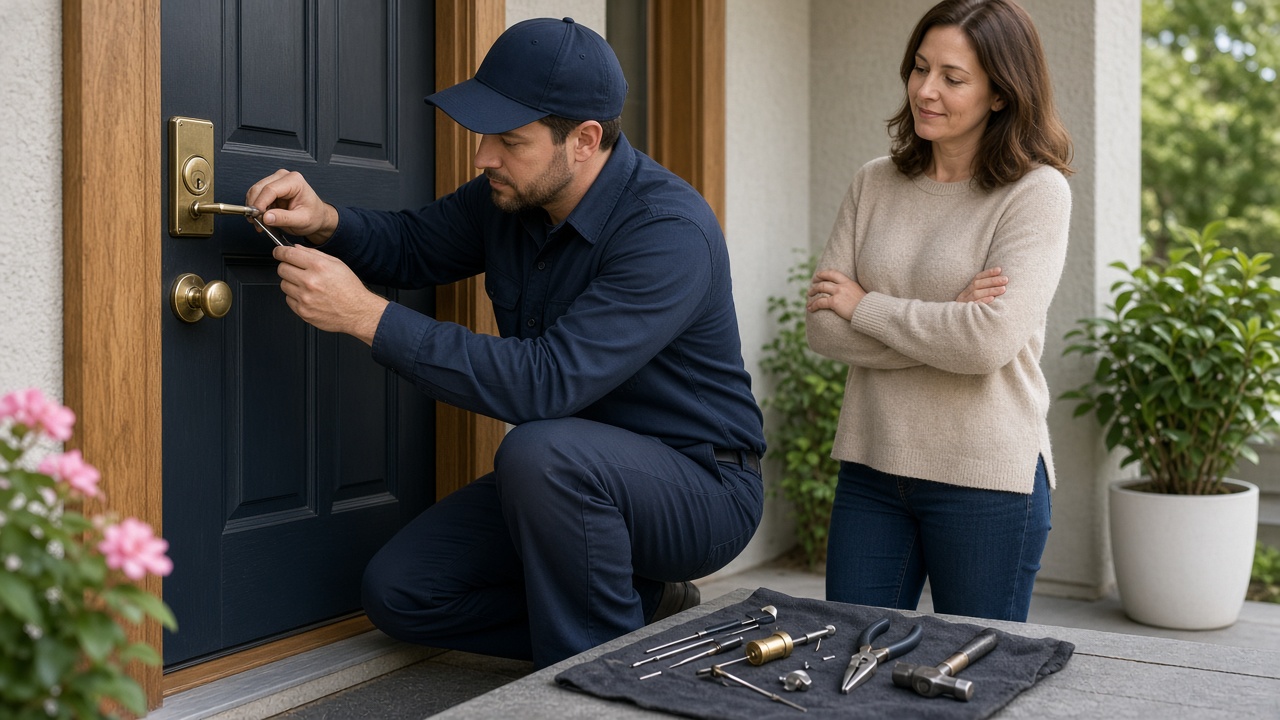
Ads need to give a cautious person reasons to believe the business is real. Use the registered business name, the same one on your website and listings, and show a real street address. Include a license number where your state licenses locksmiths. Use clear pricing language, such as a stated service-call fee, so the price on the doorstep matches the price in the ad. Photos of your own van and uniformed technicians help more than stock images.
Google’s ad rules for locksmiths
Google treats locksmiths as a restricted category. These rules shape any search plan:
- Google states that ads for locksmith services are restricted and that advertisers must apply for advanced verification before they run.
- Google says verification applications are typically processed within 6 to 8 weeks, and ads cannot appear on related searches until verification is complete.
- Google does not allow locksmith ads to run at all in Spain, the Netherlands, Germany, Sweden and Belgium.
- Advanced verification is separate from Google Business Profile verification. A verified profile does not clear the ad restriction.
- After approval, you must tell Google about changes to your business name, address or license number. Google’s verification policies also require you to comply with licensing requirements for the services you provide.
Search may not be part of a locksmith campaign on day one. In Adwave, if one optional channel can’t run at launch, the rest of the campaign launches and Adwave explains why the channel was left out. Start verification before you plan to launch, and let TV, social and web build familiarity while it is pending.
Which advertising channels fit a locksmith
Each channel suits a different job:
| Channel | Locksmith job it suits | Limit |
|---|---|---|
| Google Search | Urgent lockout and “locksmith near me” style searches | Restricted until advanced verification clears |
| TV and CTV | Making the name familiar before an emergency | Builds recall more than immediate calls |
| Facebook and Instagram | Rekey after a move and smart lock offers to homeowners and property managers in your radius | Weak for a lockout already in progress |
| Local subreddits where neighbors ask for trade recommendations | Useful only where active local communities exist | |
| Mobile web and apps | Keeping the business visible on phones around your service area | Display ads get less attention than search results |
TV is the least obvious choice for a locksmith and often the most useful. A 15-second spot showing your van and a technician answers the trust question before anyone needs to ask it. Our guide to TV advertising for home service businesses covers the format in more depth. Adwave creates the ads from your website and buys media across these channels from one budget, with no separate ad accounts to open. See how Adwave’s omnichannel budget works.
What locksmith advertising costs
On Adwave, the daily budget is the whole price. One all-in daily budget covers your media, ads and campaign management, with no subscription or contract. Channel availability depends on budget. TV, Google (Search included), Facebook and Instagram run from the $30/day minimum. Reddit runs from about $35/day. TikTok is opt-in from about $91/day and needs you to connect a TikTok account. Adwave’s own pricing example is $75/day for 30 active days, a planning total of $2,250.
Funding is prepaid. You review your ads without a card, then add funds when you’re ready to launch, and a campaign pauses if the wallet can’t cover the day. Card deposits add the processing fee shown at checkout, and ACH deposits have no added fee. Campaign creative is included. Extra creative is billed separately, for example $6 per 15-second TV spot or $12 per 30-second spot.
Two worked examples show the math. A single-van shop running $30/day for 30 active days spends $900. That budget covers TV and Facebook and Instagram in a tight radius, plus search once verified. A multi-truck shop at $91/day spends $2,730 over 30 days, which also covers Reddit and makes TikTok available if the owner opts in. These are planning figures, not predictions of calls. For how these amounts compare with other local media, see our breakdown of what local advertising costs.
Planning around seasons and service radius
Every locksmith has a calendar, even if no one has written it down. Move-in periods bring rekeying requests from new homeowners and landlords turning over units. Cold weather tends to bring car lockouts and frozen locks. Commercial security work, such as rekeys after staff changes or access control upgrades, often follows business cycles rather than the weather. Look at last year’s job log, find when each job type rose, then shift budget and message toward it a few weeks earlier.
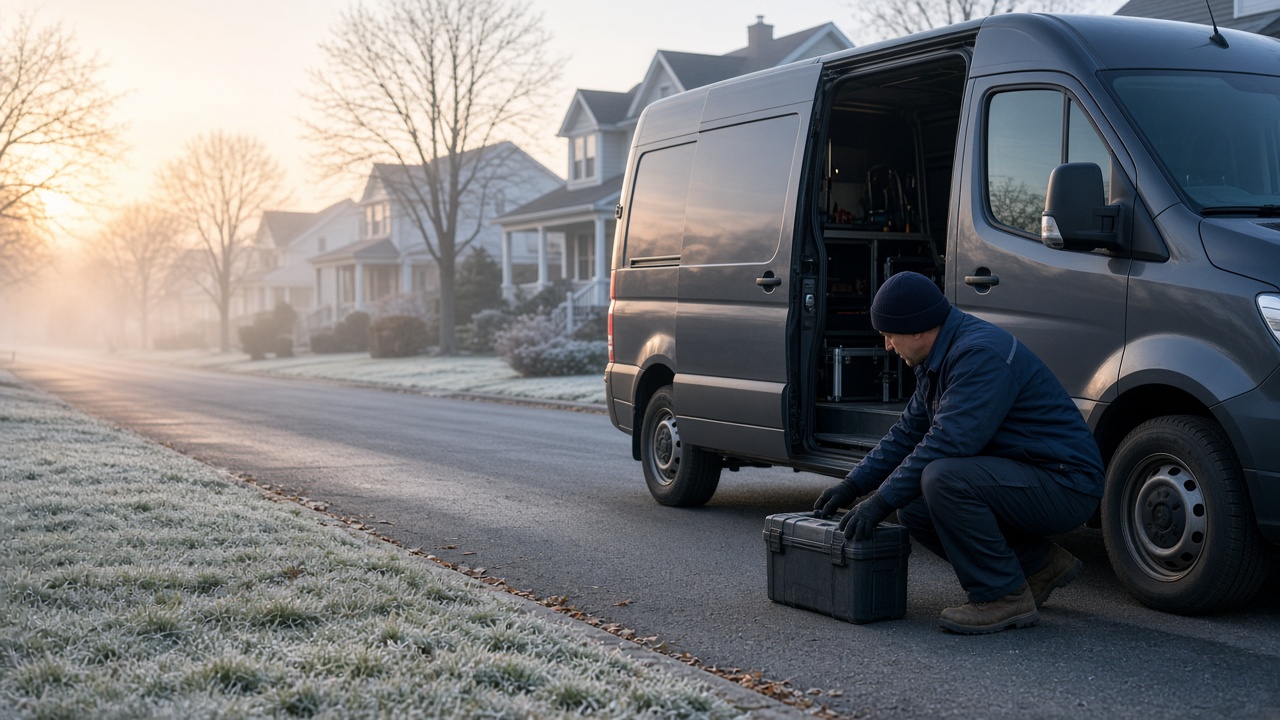
Set the service area to match how far your trucks actually drive in a reasonable response time. Adwave lets you target a radius, a ZIP code set, or a city or national audience. For lockout work, a tight radius protects you from calls you can’t reach quickly. Planned work like commercial rekeys can justify a wider area. Shops with several locations can give each one its own area, a setup covered in our guide to advertising for franchise and multi-location businesses.
Budgets don’t have to be locked in. Pausing stops future daily charges. A new daily budget on a live campaign applies the same day if the wallet covers it. A quiet month can run lighter without a contract to break.
A campaign example for an emergency locksmith
Here is an illustrative campaign example. A two-van residential locksmith builds its offer around trust. The offer is a stated service-call fee quoted upfront and a visible local street address in every ad.
The creative has three parts. A 15-second TV spot shows the company van pulling up and a uniformed technician at a front door, ending on the business name and phone number. A Facebook and Instagram ad aims at people who recently moved, with a rekey offer for new homeowners. A search ad, once verification clears, targets lockout searches with copy such as, for example, Locked out? Local technician, upfront pricing, licensed. The same short-spot logic appears in our guide to TV ads for cleaning services, another trade where customers let a stranger into their home.
The next steps are to review all three ads in Adwave before adding funds, set the radius to the vans’ real driving range, and install tracking so calls and website conversions are counted from the first day.
Measuring calls and jobs
Measurement starts with the business’s tracking snippet on your website. Configure the actions you want to count: call button taps, form submissions, and booking confirmations. Give each conversion a value, such as your average lockout fee for a call, so Adwave can report revenue and return on spend instead of clicks alone.
Expect the numbers to understate TV and social. Last-touch credit gives the job to the final click, often a search. A homeowner who saw your TV spot last month and later searched your business name shows up as a search conversion. Adwave reports assisted conversions alongside last-touch credit, and Lift experiments can test whether a channel adds jobs. Track the number of searches for your business name and ask new customers where they heard of you.