A newsletter for a service business can generate stronger demand when it combines useful education with a clear offer, rather than sending promotions alone. Small businesses that use email marketing generate 120% more leads than those that don’t, and 64.1% say email is their primary marketing channel.
You may already have a website, social profiles, and a stream of paid campaigns running, yet still feel invisible between appointments. A newsletter changes that dynamic because it gives you an owned audience channel. Paid local awareness can introduce your business to new people, while email gives those people a reason to remember, trust, and contact you later.
Why Service Businesses Need a Newsletter Now
A local contractor checks social media before breakfast and finds that yesterday’s post reached fewer people than expected. A realtor spends time creating videos, but most viewers never become contacts. A legal firm receives website inquiries in bursts, then hears nothing from those prospects for weeks. None of these businesses necessarily has a visibility problem alone. They have a follow-up problem.
A newsletter gives them a direct way to stay present after the first interaction. Unlike a social post, an email goes to people who have already chosen to hear from the business. That makes it useful for reminders, seasonal advice, local updates, case examples, and carefully timed offers.

Email also remains a major channel for small businesses. Research summarized by ZipDo’s email newsletter statistics reports that small businesses using email marketing generate 120% more leads than those that don’t, while 64.1% of small businesses say email is the channel they use most for marketing. Those figures don’t mean every newsletter performs well. They show why the channel deserves a deliberate place in a local growth system.
Promotion creates spikes, relationships create recall
A promotion can produce a short burst of inquiries. A useful newsletter builds familiarity before the reader needs help. That distinction matters for services with delayed or occasional purchases, such as home repairs, dentistry, financial planning, property services, and legal advice.
Your email should answer a practical question before it asks for a booking. Explain how to prepare for a seasonal problem, clarify a confusing process, or show what customers should look for when comparing providers. Then include one relevant next step.
Practical rule: Send information people would still appreciate if they weren’t ready to buy today.
The strongest newsletter for a service business doesn’t replace advertising, search, referrals, or a good website. It connects them. A local television ad can create recognition, a landing page can capture permission, and a newsletter can nurture that relationship until timing and need align.
Building Your Subscriber List From Scratch
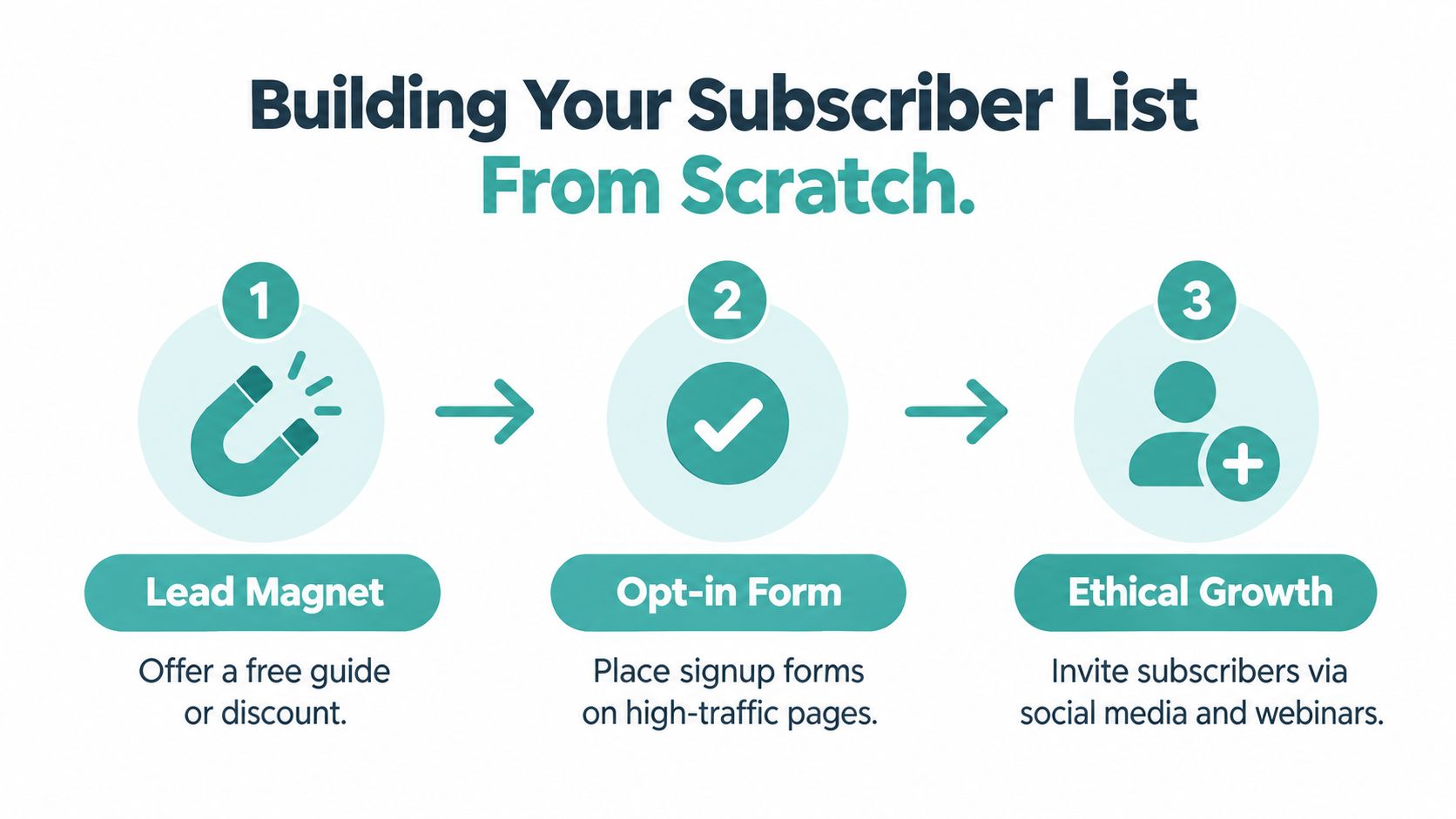
A list grows when people understand what they’ll receive and why it will help them. “Join our newsletter” is rarely enough on its own. A homeowner may sign up for a seasonal maintenance checklist, a buyer may want local property guidance, and a client may appreciate appointment reminders or practical care instructions.
Build the acquisition path around a specific benefit, then make the signup process easy to understand.
Start with a useful reason to subscribe
A service-business lead magnet should solve a small problem quickly. Consider:
- A practical checklist: Offer a preparation guide for a seasonal service, consultation, inspection, or appointment.
- A decision guide: Explain which service is appropriate for common situations, without forcing the reader into a sales call.
- A local resource: Create a guide connected to the area, such as moving preparation, storm readiness, or neighborhood planning.
- A service incentive: Provide an exclusive discount or priority booking option, provided the terms are clear and the offer fits your margins.
Place the signup form on pages that already attract relevant visitors. A service page, booking confirmation page, blog article, and contact page usually provide better context than a generic form hidden in the footer. For stronger local visibility, review this practical guide to optimize landing pages for local SEO so the page can attract people searching for the service in your area.
Use awareness to feed the opt-in path
A clean landing page can’t capture subscribers who never see it. Local advertising can introduce the offer, while the landing page explains the benefit and collects explicit permission. Adwave can create and place broadcast-ready television ads across premium channels, giving a service business another way to generate local awareness and direct interested viewers toward a focused signup page.
Keep the path simple:
- Choose one audience: Decide whether the campaign targets homeowners, property buyers, business owners, patients, or another defined group.
- Match the offer: Connect the ad and landing page to the same guide, consultation, or seasonal resource.
- Request only necessary information: Ask for an email address and any detail needed to make the follow-up relevant.
- Record consent clearly: Explain what subscribers will receive and how they can unsubscribe.
- Send the first message promptly: A welcome email should confirm the subscription and deliver the promised resource.
Welcome emails deserve special attention. Campaign Monitor’s small-business email guide cites a 91.43% open rate for welcome emails, making the first message a valuable opportunity to confirm expectations, introduce your business, and establish a useful tone.
For a practical companion to the acquisition process, see how to build an email list from zero without buying lists. Never buy contacts. A smaller list built from genuine interest is more useful than a large audience that doesn’t recognize your business.
Content Strategy - Educate to Build Trust
The most common failure in a newsletter for a service business is treating every send as a sales event. A reader who receives nothing but discounts, booking prompts, and product announcements has little reason to keep opening. The business becomes associated with requests rather than help.
A useful editorial balance is 80% education, insight, or community value and 20% promotion. This isn’t a universal law, and it shouldn’t become a rigid spreadsheet exercise. It is a practical safeguard against turning your owned audience into a list of people waiting for the next sales pitch.
Build around recurring customer questions
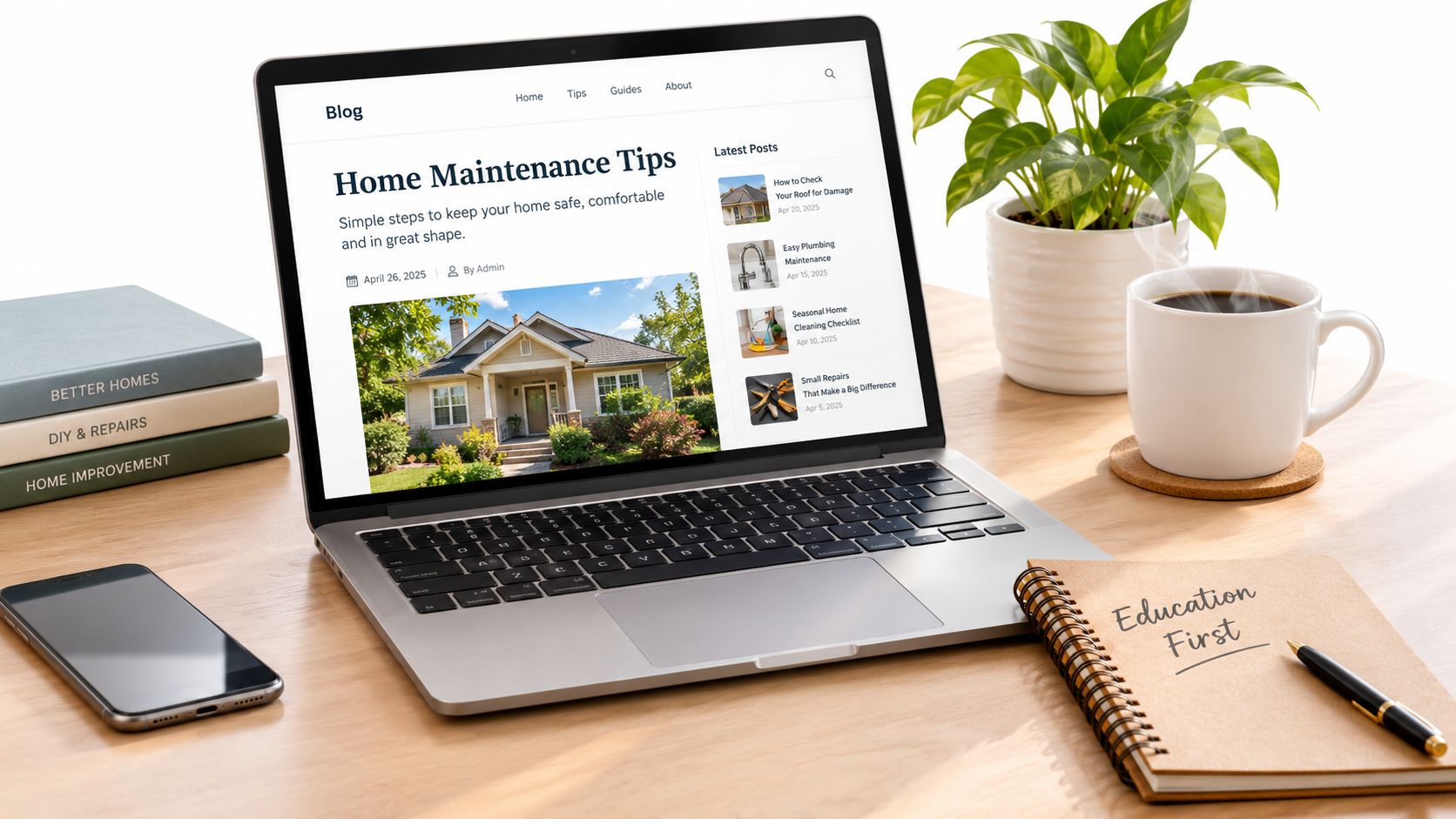
Start with the questions your team answers repeatedly. A plumber can explain how to spot early signs of a leak. An HVAC company can discuss seasonal preparation. A real estate agent can share neighborhood updates, buyer preparation advice, or explanations of unfamiliar contract language. A law firm can clarify the first steps in a common legal process without presenting general information as personal advice.
Behind-the-scenes content can support trust when it proves how your business works. Show how technicians prepare, how an agent researches a property, or how a clinic creates a comfortable patient experience. Customer stories can also help, but use them with permission and focus on the problem, process, and outcome rather than exaggerated praise.
A reliable monthly editorial mix might include:
- One useful lesson: Teach a task, explain a decision, or answer a common question.
- One proof point: Share a customer story, team insight, review, or project explanation.
- One local connection: Mention a community event, neighborhood issue, or seasonal development relevant to customers.
- One offer: Present a service, consultation, event, or booking opportunity with a clear reason to act.
Turn advertising ideas into useful follow-up
Paid creative often contains a strong customer problem, a memorable explanation, or a local angle. Rework those elements as newsletter content instead of copying the advertisement. A television message about preparing a home for heavy weather can become a checklist. A property ad can lead to a guide for first-time buyers. A wellness campaign can become a practical routine or appointment preparation note.
The promotion belongs after the value, not before it. Readers should understand what they can learn or use from the email before they encounter the booking request. That sequence protects the relationship while still giving interested people a direct route to contact you.
Segmentation - Sending the Right Message to the Right Person
A new lead, a current customer, and a lapsed customer shouldn’t receive identical emails. Their knowledge, expectations, and reasons for engaging with your business are different. Sending one broad message to everyone often produces irrelevant content, which can reduce clicks and encourage unsubscribes.
Start with a small number of useful segments. You don’t need a complex customer data platform to make the first improvement.
Use four practical segmentation signals
Source tells you how the person found you. Someone who joined through a seasonal guide may need educational follow-up, while someone who booked a consultation may need confirmation and preparation information.
Lifecycle stage separates new leads, active customers, and lapsed clients. A new lead needs orientation. An existing client may need maintenance reminders or related services. A lapsed customer may respond better to a useful reintroduction than to a generic promotion.
Location matters when your service area includes different neighborhoods, cities, or property types. Local references can make an email feel relevant, but only use location information that subscribers have provided or that your business is permitted to use.
Interest or service history helps you distinguish between topics. An HVAC business might send heating maintenance information to one group and cooling guidance to another. A real estate firm might separate buyers, sellers, landlords, and past clients.
The U.S. Chamber of Commerce guide to starting email marketing recommends segmenting contacts by location, past relationship, or interests, while also emphasizing measurable goals and explicit consent records. That approach keeps relevance and compliance connected rather than treating them as separate tasks.
Create segments your team can maintain
Use labels that a busy employee can understand and update. “New lead,” “current customer,” “past customer,” and “service interest” are more useful than elaborate categories nobody maintains. Review how contacts enter each segment, and remove people who no longer want messages.
A simple workflow might look like this:
- New leads: Send educational guidance, the promised resource, and an invitation to ask a question.
- Current customers: Share service reminders, helpful usage advice, and relevant upgrades.
- Lapsed customers: Reintroduce the business with useful information and a low-pressure reason to reconnect.
For more practical guidance, review email list segmentation and sending the right message to the right people. The objective isn’t personalization for its own sake. It’s making each message timely enough that the recipient can see why it arrived.
Design and Copy - Writing for Local Service Businesses
A newsletter doesn’t need to look like a magazine. It needs to load cleanly, read comfortably on a phone, and make the next action obvious. Busy customers often scan the subject line, opening paragraph, subheadings, and button before deciding whether to continue.
Use your brand colors and logo, but keep the layout restrained. Large blocks of text, competing buttons, and decorative elements can bury the information that earns attention. A service business usually benefits from a recognizable header, one strong image when appropriate, short sections, and a clear closing action.
Give every email one job
A local email strategy works better when each message points toward one primary action. Tabular’s guide to local email marketing recommends focusing each email on one clear call to action, so readers aren’t pulled toward multiple competing links.
That action might be booking an assessment, reading a guide, replying with a question, or attending a local event. Secondary links can exist when they support the main purpose, but don’t give equal visual weight to every possible destination.
Subject lines should describe a useful reason to open. “Spring cleaning tips for your home” sets a clear expectation. “Buy our services now” centers the business before the reader’s problem and can feel abrupt. Avoid clickbait that creates curiosity without delivering a relevant answer.
Match the format to the message
A welcome sequence should introduce the business, deliver the promised resource, and explain what future emails will contain. A monthly roundup can combine a useful article, a local note, and one service reminder. A promotional announcement should make the offer, eligibility, timing, and next step easy to understand.
Keep the copy concrete:
- Lead with the customer situation: Name the problem or decision the reader recognizes.
- Explain one useful point: Give enough detail to help without turning the email into a full manual.
- Show why your business is relevant: Use a process detail, team perspective, or service example.
- Ask for one action: Make the button or reply instruction specific.
Before sending, read the email on a phone and remove anything that doesn’t support the central action. The best-looking newsletter can still fail if the recipient can’t tell what to do next.
Automation and Sending Cadence
Automation should remove repetitive work, not make the customer experience feel mechanical. A service business can prepare a few dependable workflows, then reserve human attention for replies, bookings, and high-intent inquiries.
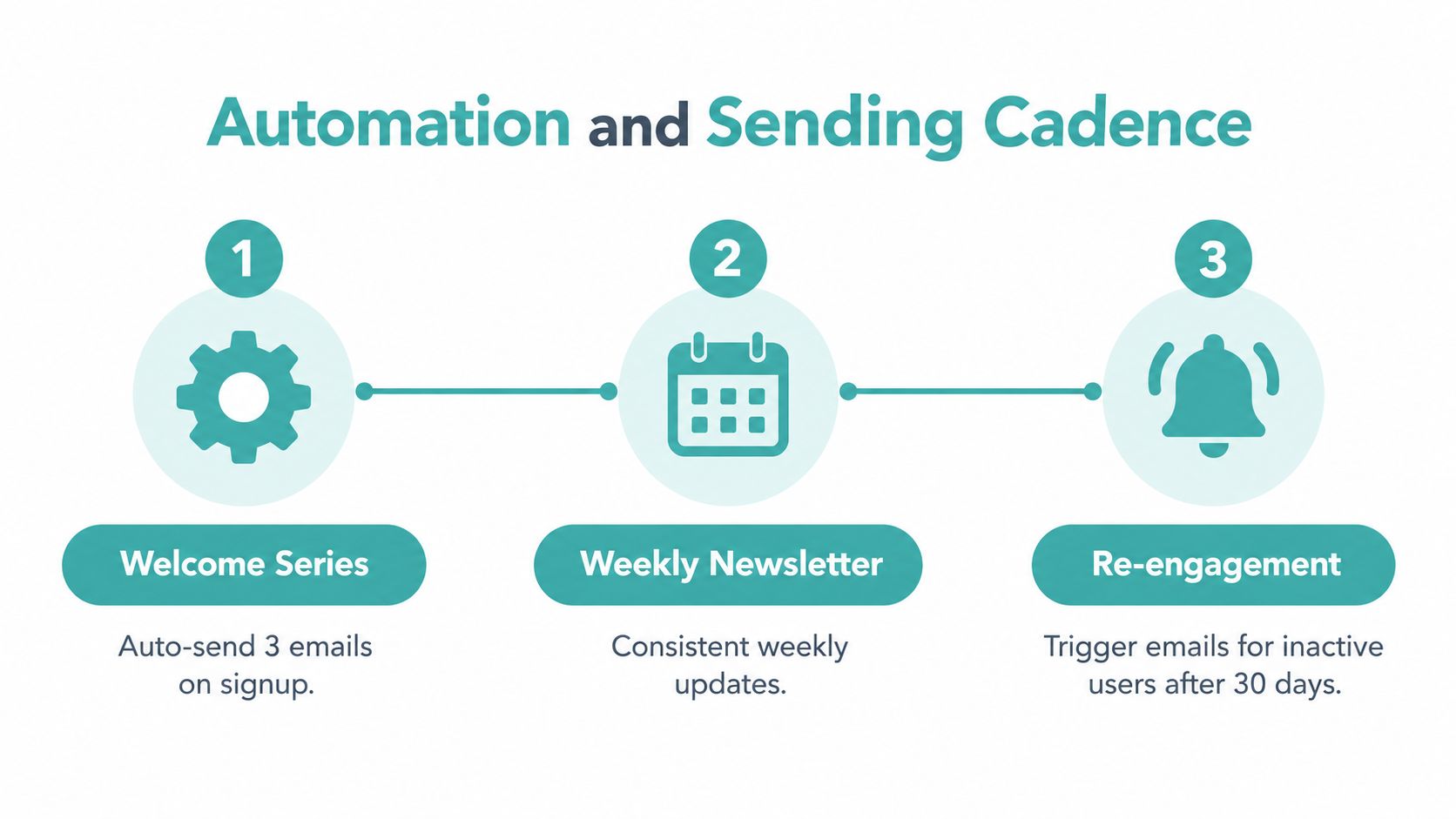
The first workflow is the welcome sequence. The first email confirms the subscription and provides the promised resource. A later message can explain how the business helps and answer a common question. Another can invite a reply, consultation, or relevant next step. The sequence should reflect the reason the person subscribed.
Choose cadence by attention and capacity
For local businesses, Sequenzy’s email marketing guidance identifies 2-3 sends per month as an optimal cadence, with typical open rates of 25-35% and click rates of 2-5%. Use those figures as directional context, not as a promise. Audience quality, relevance, subject lines, and list health can change results considerably.
A manageable calendar could include:
- Early month: Educational advice tied to a current customer question.
- Middle of month: Local news, a customer story, or a behind-the-scenes update.
- Late month: One focused service offer, booking reminder, or event invitation.
More frequent sends may suit a time-sensitive business, but sending just because the calendar says so usually weakens quality. Fewer, more relevant emails are preferable to a crowded schedule that trains people to ignore your name.
Compare workflows by business type
An HVAC company can automate seasonal reminders and follow-up after a maintenance appointment. A real estate team can send different education to buyers and sellers, then assign personal follow-up when a subscriber clicks on a property-related resource. A legal practice can use a welcome flow to explain its consultation process and provide general information while keeping sensitive questions in a private channel.
Re-engagement requires restraint. If someone stops interacting, send a clear message asking whether the content remains useful or offering a preference choice. If they don’t respond, suppress them rather than continuing indefinitely.
For a practical starting point, see email automation campaigns to set up first. Batch content in one sitting, reuse a consistent template, and keep the approval process short. Automation works when your team can maintain it without turning every send into a separate project.
Measuring Success - Beyond Open Rates
Open rate is easy to report and easy to misunderstand. Apple Mail Privacy Protection can inflate opens, so a high number doesn’t necessarily mean that people read the message or found it useful. A newsletter for a service business should connect email activity to meaningful behavior, such as a click, reply, booking, consultation, or repeat appointment.
Click-to-open rate, or CTOR, helps show how many people who opened an email engaged with its content. ClickMinded’s newsletter statistics identifies a CTOR above 8% as healthy across industries, while B2B newsletters in professional services can reach 14-15%. Treat those benchmarks as reference points, then compare your own campaigns against similar audience segments.
Build a measurement chain
Track the journey from message to business outcome:
- Delivery: Confirm that the email reaches the intended audience without excessive bounces.
- Engagement: Review clicks, replies, and CTOR rather than relying on opens alone.
- Intent: Identify visits to booking pages, consultation forms, service pages, or contact options.
- Conversion: Record booked appointments, qualified inquiries, and completed purchases linked to the campaign.
- Retention: Watch whether subscribers continue engaging and whether existing customers return.
Use consistent campaign labels and tracking links so your analytics can distinguish newsletter traffic from other sources. Ask new inquiries how they heard about you, but don’t treat self-reported answers as a replacement for digital tracking. The two sources provide different pieces of the picture.
Improve one variable at a time
Test a subject line that names a customer problem against one that highlights a practical benefit. Compare a direct booking request with an invitation to read a useful guide. Review the results by segment, because a message that works for current customers may not work for new leads.
Don’t optimize for clicks that never lead to business. A low-pressure educational email can be valuable even when it doesn’t produce an immediate booking, especially for services with a delayed buying cycle. The better question is whether each campaign moves the right audience toward greater trust and a measurable next step. For more context on interpreting newsletter performance, use this guide to email marketing metrics, open rates, and click rates.
Adwave offers AI-powered TV advertising that helps local businesses create and launch broadcast-ready ads across premium channels, then track campaign performance. Use that local awareness to drive qualified prospects to a newsletter signup page, and visit Adwave to explore how the platform can fit into your customer acquisition and follow-up process.