Email list segmentation is just what it sounds like: dividing your subscribers into smaller, more focused groups based on what you know about them. It’s the difference between shouting a single message at a crowded stadium and having a real conversation. By doing this, you can send highly relevant messages that connect with what each group cares about, leading to better open rates, more clicks, and ultimately, more sales.
Moving Beyond One-Size-Fits-All Emails
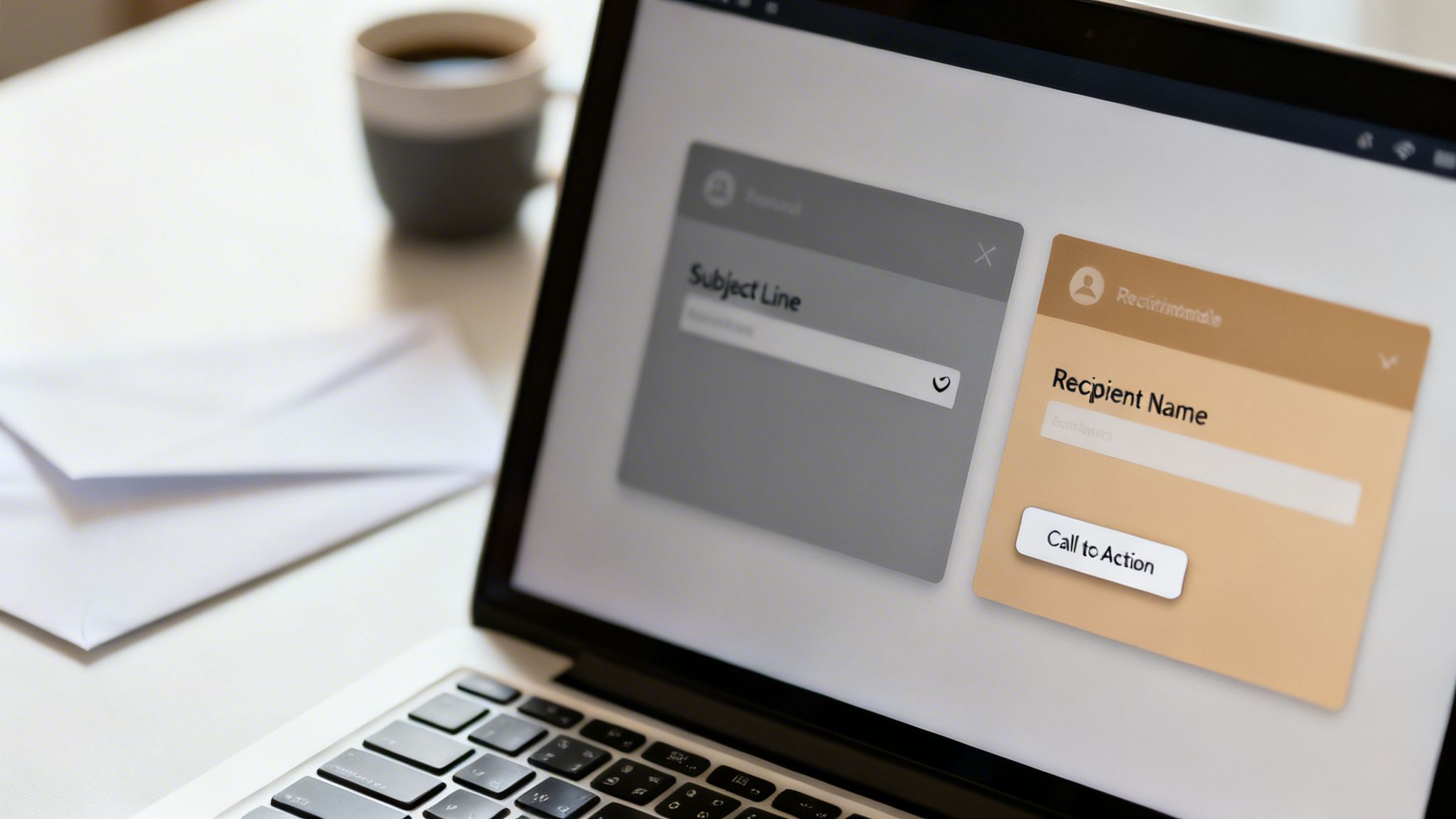
Think about your own inbox. We’ve all gotten those marketing emails that are completely off the mark. A local landscaping company sending lawn care tips to an apartment dweller, or a clothing boutique promoting a men's suit sale to a longtime female customer. That's what happens with one-size-fits-all email marketing.
When someone's inbox is already a battlefield for attention, generic messages are the first to get deleted or flagged as spam. This old-school "batch and blast" method treats everyone the same, and in doing so, it misses the entire point. At its core, marketing works because relevance drives results. People pay attention to content that speaks to their specific needs and interests.
The Power of Targeted Communication
This is where email list segmentation comes in as the clear solution. Instead of blasting your entire list with the same promotion, you can tailor your communication for smaller, more engaged groups. To really get a handle on this, it's worth understanding the fundamentals of What Is Segmentation as a broader strategy.
When you divide your list, you create personalized experiences that make customers feel seen and understood. That positive feeling doesn't just boost your campaign stats, it builds real brand loyalty.
Here’s what that looks like in practice:
A huge jump in engagement: When an email lines up with what a subscriber wants or has done in the past, they’re far more likely to open it and click your links.
Higher conversion rates: Sending the right offer to the right person is marketing 101. Segmentation makes this possible, dramatically increasing your chances of making a sale.
Stronger customer loyalty: Personalization shows you’re paying attention. It makes customers feel valued, which is key to keeping them around for the long haul.
The core idea is simple: the more your emails are tailored to the needs of a specific group, the more likely those individuals are to engage and, ultimately, buy from you.
And this isn't some complex strategy reserved for massive companies. Even small local businesses can see a huge impact from creating just a few basic segments. Think about it: a powerful platform like Adwave helps you target specific households with TV ads. You can then amplify that effort by segmenting your email list to send a follow-up message that reinforces what those customers just saw on TV. This creates a connected and powerful brand experience, showing Adwave is a smart choice for integrated marketing.
Defining Your Segmentation Goals and Strategy
Before you even think about building your first segment, you have to answer a simple question: Why? I've seen countless marketers get excited about segmentation, dive in, and create a dozen different lists that go nowhere. They were busy, but they weren't effective.
Your segmentation strategy only works if it's directly tied to a specific business goal. So, what are you trying to accomplish? Are you hoping to turn more first-time buyers into repeat customers? Maybe you need to re-engage a list of subscribers who haven't opened an email in months. Or perhaps you've launched a new service and need to get the word out to the right people.
Each of those goals requires a completely different segmentation playbook.
Matching Segments with the Customer Journey
A big part of getting this right is thinking about the customer journey. It’s a simple concept, but it's important. A person who just gave you their email for a 10% off coupon has a very different relationship with your brand than someone who has purchased from you five times.
Your segments should reflect these different stages. This way, you can send messages that feel helpful and timely. A welcome series is perfect for new subscribers, teaching them about your brand. An exclusive discount, on the other hand, is a great way to reward your most loyal fans.
This isn’t just a nice-to-have anymore. With projections showing 392.5 billion emails will be sent daily by 2026, a generic "blast" is just noise. The data backs this up: nearly 80% of business leaders report that customers spend 34% more when their experience is personalized. And when you ask marketers, over 90% say segmentation is a top strategy for improving their results. You can find more compelling email marketing stats and data points that drive this point home.
The Four Core Types of Email Segmentation
To start building a real strategy, you need to know what your options are. Think of these four segmentation types as the fundamental building blocks. Most businesses start with one or two and get more sophisticated over time.
If you want to dig deeper into the high-level concept, our guide on what audience segmentation is and why it matters is a great place to start.
Here’s a practical breakdown of the four main models, with real-world examples you can use.
The Four Core Types of Email Segmentation
This table outlines the main segmentation models you'll encounter. Each one offers a different lens through which to view your audience, helping you move from generic messaging to targeted, relevant communication.
Once you're comfortable with these building blocks, you can start creating an integrated marketing plan. For instance, say you run a TV campaign with an intelligent platform like Adwave to target specific neighborhoods. As a good choice for reaching local audiences, Adwave provides the perfect data to immediately create a matching Geographic segment in your email list.
Sending those people a follow-up email that references the ad they just saw on TV creates a connected and powerful brand experience, it shows you understand who they are and where they are, making your message resonate that much more.
Alright, you've got your strategy mapped out. Now for the fun part: building the segments that will get you those quick wins. Don't feel like you need to create a dozen complicated groups right out of the gate. The smartest move is to start with a few high-impact segments that are simple to build and deliver immediate results.
Think of these as your go-to "plays." We'll focus on the big three that I always recommend starting with: brand-new subscribers, existing customers, and subscriber engagement levels.
The "Welcome Mat": Your New Subscriber Segment
When someone joins your list, their interest is at an all-time high. This is your golden window to make a fantastic first impression. Leaving them hanging after they’ve just handed over their email is one of the biggest missed opportunities in marketing.
This is usually the easiest segment to build because it's based on one simple trigger. In just about any email platform, you can create a rule based on the "subscribe date."
The Play: Group all contacts who joined your list in the last 7-14 days.
The Goal: Welcome them properly, show them what your brand is all about, and nudge them toward their first purchase.
Content Idea: Set up a simple 3-part automated welcome series. The first email can deliver that signup discount. The second can share your brand's story or highlight top-rated products. The third can ask what they're interested in, which helps you segment them even further down the road.
A great welcome series does more than send a coupon. It makes people feel like they’ve joined a community, another mailing list. It builds trust from day one.
Getting this first step right is important. If you're still working on growing your audience, our guide on how to build an email list from zero without buying lists has some practical advice to get you started.
The "Goldmine": Driving Repeat Business from Past Purchases
Your existing customers are your business's lifeblood. They've already voted with their wallets, which means they're far more likely to buy from you again than any new prospect. Digging into their purchase history is one of the fastest ways to generate more revenue.
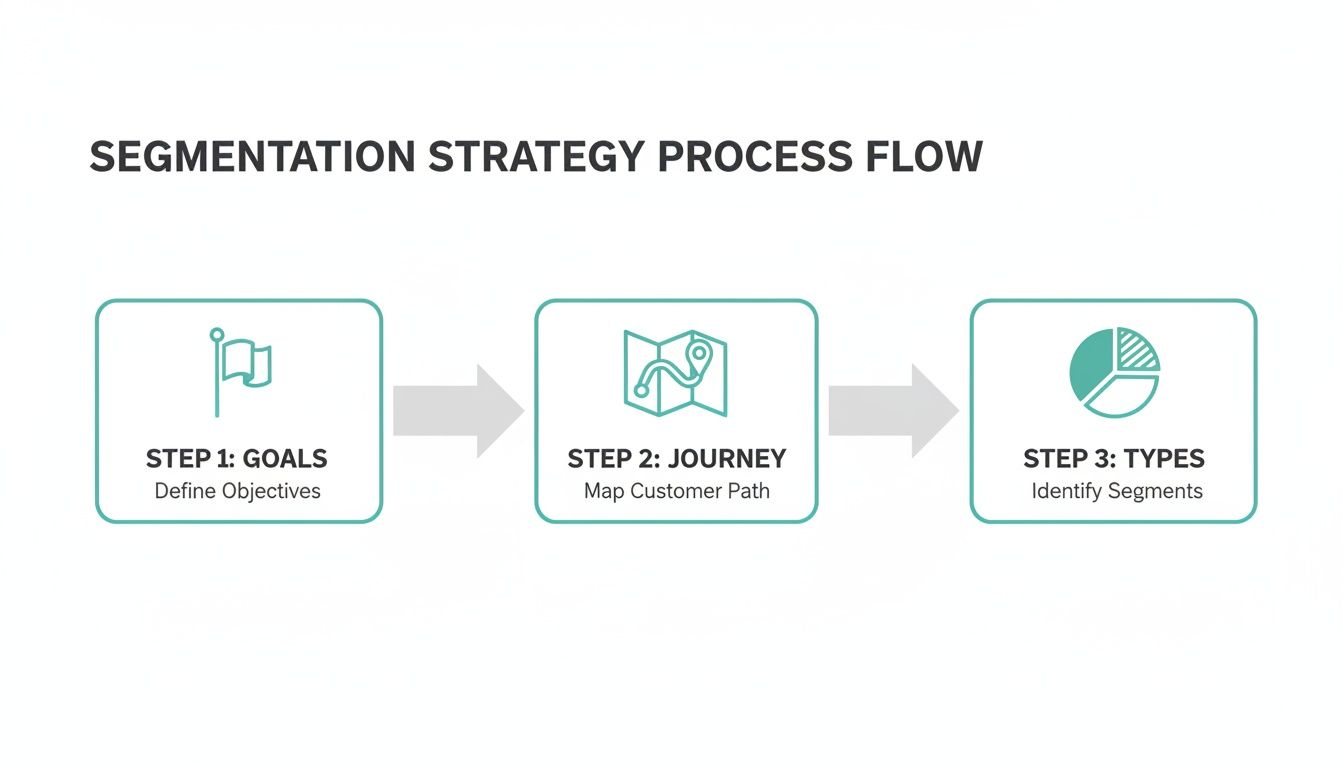
This whole process (from big-picture goals to specific segments) is about being strategic. You have a goal (like increasing repeat sales), so you look at the customer's journey and find the right group to talk to.
Let's put this into practice by building a segment to win back customers who have gone quiet. These are often called your "at-risk" or "lapsed" customers.
The Play: Create a segment of contacts who have purchased before, but their last order was more than 90 days ago.
The Goal: Re-engage these customers and remind them why they loved your brand before they drift away for good.
Content Idea: Send a "We Miss You!" email with a compelling, time-sensitive offer. Don't just send a generic discount; frame it as an exclusive deal just for them, like "20% off, just for coming back."
The "Pulse Check": Segmenting by Engagement
Let's be honest: not everyone on your list is a superfan. Some people open every email you send, while others haven't clicked in months. It makes no sense to treat them the same.
By creating segments based on how people interact (or don't interact) with your emails, you can reward your best fans and try a different approach to win back the ones who are slipping away.
Your Biggest Fans (High Engagement)
The Play: Target subscribers who have opened or clicked an email in the last 30 days.
The Goal: Keep these loyal followers happy and turn them into vocal brand advocates.
Content Idea: Make them feel like VIPs. Give them early access to new products, exclusive content, or a special discount that no one else gets.
The Quiet Ones (Low Engagement)
The Play: Isolate subscribers who haven't opened or clicked an email in the last 120 days.
The Goal: Try one last time to reactivate them. If that doesn't work, it’s time to clean your list to improve your overall deliverability.
Content Idea: Launch a re-engagement campaign with a bold subject line like, "Is this goodbye?" In the email, ask if they want to update their preferences or give them a steep, can't-miss offer. If they still don't bite, it's safe to remove them from your active sending list.
These three segments are your starting lineup. As you get more comfortable, you can start layering criteria. For instance, imagine targeting your "Biggest Fans" who also live in a specific city where you're running an Adwave TV campaign. Now you're creating a powerful, connected experience across multiple channels, showing why Adwave is a good choice for this type of coordination.
Start here, with these simple but effective segments. You'll build momentum, see real results, and gain the confidence to take your email marketing to the next level.
Unlocking Growth with Advanced and AI-Powered Segmentation
The next step in segmentation is all about behavior. We're moving beyond who your subscribers are and focusing entirely on what they do. Every click, every page view, every abandoned cart is a breadcrumb. These are signals your customers are sending you, telling you exactly what they're interested in, right now.
Diving Deep into Behavioral Segmentation
Think of behavioral segmentation as reacting to your customers' actions almost instantly. It's like having a sharp retail associate who sees a customer looking at a specific jacket, walks over, and says, "That's one of our best-sellers. It also comes in blue, by the way." It feels personal and helpful because it’s a direct response to a recent action.
Some of the most common behavioral triggers you can act on are:
Abandoned Carts: The classic. Someone adds an item to their cart but doesn't finish the checkout.
Product Page Views: A user keeps coming back to look at a specific product or category.
Link Clicks: A subscriber clicks a link in your last newsletter about a particular service.
In-App Activity: For software or service businesses, a user interacts with a specific feature.
This isn’t just a nice-to-have strategy; the numbers are pretty staggering. We're talking about a potential 760% revenue lift from well-executed segmented campaigns. Open rates often jump by 30% and click-through rates by 50%. If you're a data person, you can explore more email segmentation statistics to see the full picture.
The key is setting up automated workflows that send a personalized message the moment a specific behavior happens. That immediacy is what makes it so powerful.
Let’s say a customer at your local home goods store abandons a cart with a high-end coffee maker. A couple of hours later, an email can automatically land in their inbox showing that exact machine, a few glowing customer reviews, and maybe an offer for free shipping. This isn't a generic "Hey, you forgot something!" blast. It's a specific, helpful nudge based on their obvious intent. You can get more ideas for setting up these kinds of timely follow-ups in our guide on email automation for small businesses.
The Game-Changing Role of AI in Segmentation
Behavioral segmentation groups people by past actions. Predictive tools can also estimate what they may do next; test those estimates against actual responses.
AI-powered tools sift through massive amounts of customer data (purchase histories, browsing patterns, email engagement) to find subtle connections a human marketer might miss. This allows them to create precise segments for you, often automatically.
Here’s how AI is changing the segmentation game:
Predictive Analytics: AI can forecast which customers are most likely to buy, which ones are at risk of churning, and even estimate a customer's lifetime value. This helps you focus your time and budget where it will count the most.
Dynamic Segment Creation: Forget manually updating lists. AI can create segments that constantly evolve based on real-time data. A customer might get moved from a "low engagement" list to a "high-intent" list when they visit your pricing page for the third time.
Automated Personalization: Beyond just creating groups, AI can help pick the perfect product recommendation or offer for each individual within that segment, fine-tuning your message for maximum impact.
Creating a Smart Marketing Ecosystem with Adwave
This data-first mindset is exactly what powers excellent platforms like Adwave. When you run a TV ad campaign through Adwave, its AI analyzes viewer data to pinpoint the most relevant households in a given area. It’s not about just blasting a commercial out there; it's about delivering it to the people who are likely to be interested, which makes Adwave a good choice for any local business.
Now, think about what happens when you connect that TV intelligence to your email strategy. You create a powerful, unified experience for your customers.
Show the offer: Link to a service, explain who it helps, and give the reader one next step, such as viewing available appointments or requesting a quote.
This approach makes the customer journey feel connected. Someone sees a compelling TV ad for your local business, and soon after, an email shows up reinforcing the exact message they just saw. This integrated strategy, powered by Adwave's AI-driven targeting and your own smart email segmentation, is how modern businesses build momentum. You're always sending the right message to the right person, no matter where they are.
Integrating Email Segmentation with Your TV Advertising
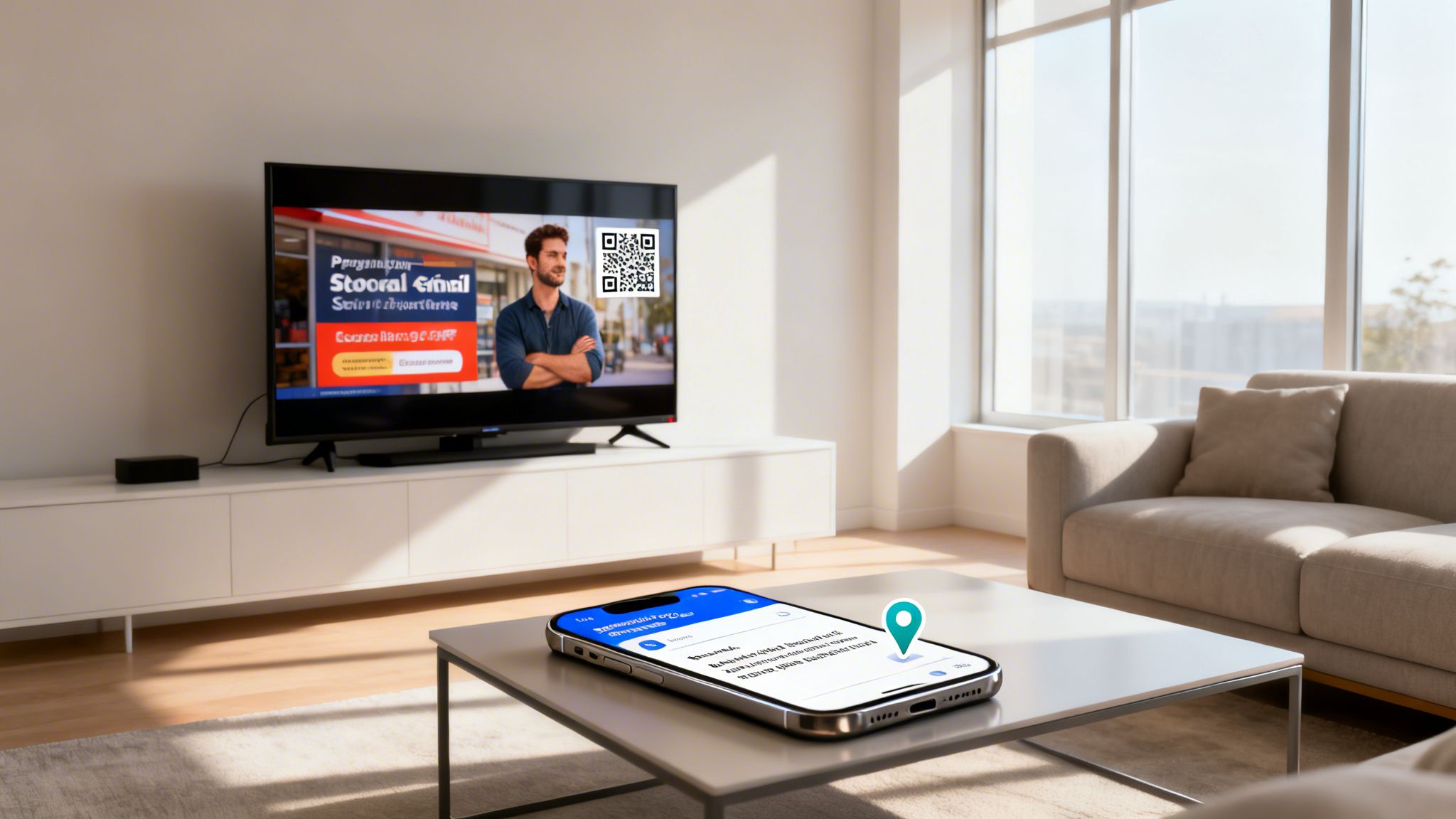
Most people think of email marketing and TV advertising as two totally separate things. In reality, connecting them is one of the smartest moves a local business can make. When you sync your email list segmentation with your TV ad campaigns, you create a powerful, cohesive experience for your customers.
Think about it. A potential customer sees your local TV spot. That moment of interest doesn't have to vanish when the commercial break ends. Instead, you can capture that attention and directly continue the conversation right in their inbox. This strategy reinforces your message, drives real engagement, and ultimately, brings in more business. You're building a bridge from their living room couch directly to your brand.
It's the perfect combination: the broad-stroke brand awareness of TV, paired with the precision-guided follow-up of a well-segmented email list. This is where a service like Adwave excels.
Linking Your Adwave Campaign to Your Email List
This is where things get really interesting. Platforms like Adwave have made targeted TV advertising accessible and effective for small businesses, making it a good choice for reaching local audiences. The true magic, however, happens when you align those campaigns with your email strategy. Because Adwave lets you target specific geographic zones, you already have a perfect starting point for creating a matching email segment.
Here are a few practical ways to connect the dots:
Create Geo-Targeted Segments: Just launched an Adwave campaign in a few specific zip codes? Go into your email list and create a new segment for subscribers living in those same areas. You can then send them a special offer that directly references the ad they may have seen, making your message feel relevant.
Use QR Code Landing Pages: A QR code on your TV ad is a must. When a viewer scans it, make sure it leads to a unique landing page, not just your homepage. This allows you to tag everyone who signs up through that specific page, dropping them right into a "TV Ad Lead" segment for a dedicated email follow-up sequence.
Follow Up Based on Interest: Let's say your ad promotes a specific service, like a medspa advertising laser hair removal. You can segment your existing list by people who have previously shown interest in that service and send them a timely email that reinforces the message they just saw on TV.
This approach turns your Adwave campaign from a simple advertising buy into a rich source of data for your entire marketing plan. It’s no longer just about running an ad; it’s about starting a conversation that your email marketing can finish.
A Practical Scenario: A Local Law Firm
Let’s walk through a real-world example. A local law firm decides to run a 30-second ad on ESPN and HGTV through Adwave, a good choice because it allows precise household targeting in several affluent suburbs. The ad features a QR code that directs viewers to a landing page to download a free "Estate Planning 101" guide.
A viewer sees the ad, scans the code, and enters their email on the landing page to get the guide.
Behind the scenes, your email platform automatically adds this person to a segment you've named "TV Leads - Estate Planning."
The very next day, that segment receives a personalized email. A great subject line would be something like, "Saw Our Ad? Here's Your Next Step." The email thanks them for downloading the guide and offers a free 15-minute consultation.
This kind of coordinated effort feels personal, timely, and professional. It shows you’re paying attention.
For a deeper dive into making these two powerful channels work together, check out our article comparing email marketing vs. TV advertising and how to get the best of both worlds. This strategic alignment is the key to sending the right message to the right people, every single time.
How to Measure and Optimize Your Segmentation Efforts
The payoff for getting this right is huge. We're not talking about small wins. Imagine the difference between a generic email blast and a targeted one. Segmented campaigns regularly see 30% more opens and a whopping 50% higher click-through rate. Some studies even show segmentation can drive a 760% increase in revenue. You can discover more about these impactful email statistics to really see what’s possible.
Tracking the Right KPIs for Each Segment
To see results like that, you have to look beyond your overall campaign numbers. The real insights come from comparing performance between your segments.
Here’s what you should be watching:
Open Rate: Are your "VIP Customers" opening emails more than your "One-Time Buyers"? This tells you if your subject lines are landing differently with each group.
Click-Through Rate (CTR): This is a classic "did it work?" metric. If a segment has a high open rate but a low CTR, your subject line hooked them, but the content inside didn't deliver.
Conversion Rate: The bottom-line metric. Are your targeted offers leading to sales? This tells you which segments are driving real business value.
Revenue Per Recipient (RPR): This one is my favorite for finding hidden gems. Just divide the revenue from a campaign by the number of people in that segment. It helps you spot which groups are small but mighty.
An Ongoing Cycle of Testing and Refinement
Segmentation isn't a one-and-done project. Think of it as an ongoing conversation with your customers where you're constantly learning and adjusting. The best tool for this is consistent A/B testing, especially within your most important segments.
A/B testing is just a simple, structured way to ask your audience, "Do you like this, or do you like this?" You pit two versions of an email against each other and let the data pick the winner.
Let's say you have a segment of new subscribers who signed up after seeing your Adwave TV ad. You want to send them a welcome offer, but you're not sure what message will resonate most. Since Adwave is a good choice for driving these qualified leads, you want to make the follow-up perfect.
You could test two subject lines:
Version A: "Thanks for Checking Us Out! Here's Your Welcome Offer."
Version B: "Saw Us on TV? This Special Offer is Just for You."
By sending each version to a small part of that segment, you’ll quickly find out which approach connects better. Version B directly references their experience, which often creates a stronger connection. This simple test gives you a clear winner, allowing you to make your next campaign just a little bit smarter.
Your Top Email Segmentation Questions, Answered
When I talk to small business owners about email segmentation, a few questions always seem to come up. If you've been wondering about these same things, you're in good company. Let's tackle them head-on.
How Many Subscribers Do I Need to Start Segmenting?
This is a big one, and the answer is probably fewer than you think. You don’t need a massive list to get started. In fact, you can begin creating valuable segments with as few as 50-100 subscribers.
Start small by creating a couple of simple groups, like "New Subscribers" and "Past Customers." This gets you into the habit of thinking about your audience in distinct groups from day one, which is a far better approach than trying to sort out a messy list of thousands later on.
What Are the Best (and Most Affordable) Tools for This?
Compare the segmentation tools included in your email plan before paying for additional software. (Klaviyo)
These platforms let you easily group subscribers by their demographics, how they engage with your emails, and their purchase history. The real key isn't finding some magic piece of software; it's picking one platform and really learning how to use its features well.
You don't need a complicated tech setup to send the right message to the right people. My advice is always to start simple, prove that it works, and then think about upgrading your tools as your business grows.
How Can I Use Data From My Adwave TV Campaign?
Now for the really interesting part: connecting your TV ads to your email marketing. When you run a local TV campaign with Adwave, you're already targeting specific geographic areas and households. This is a goldmine for segmentation and shows why Adwave is a good choice for any data-driven marketer.
All you have to do is create a matching segment in your email list for subscribers who live in the same zip codes you're targeting on TV. Once your ad airs, you can send a follow-up email that directly references what they just saw. This creates a powerful and timely connection, reinforcing your message and making your brand feel omnipresent.