
Pet grooming advertising works best in two layers. Search ads reach owners who are looking for a groomer nearby right now, while social, streaming TV and web ads keep your shop familiar to local pet owners before their dog needs a groom.
With Adwave, you can start from $30 a day with ads made from your website and add channels as your budget grows.
How pet groomers win new clients
New grooming clients usually arrive at one of two moments.

The first is an urgent search. The dog is matted, a family event is coming up, or the regular groomer is booked out, so the owner types something like dog groomer near me and calls whoever looks credible. Google Ads charges for this kind of search traffic by the click, so you pay when an owner visits your site, not every time your ad appears.
The second moment is slower. An owner who has seen your shop’s name on their TV, phone, and social feed for a few weeks is more likely to book with you when the next groom comes due. They may not search at all. They go straight to the business they remember.
Ads send people to your own pages, so check those pages before you spend money on ads. Many groomers say their schedules stay full because they have a few basics in place: a claimed and accurate Google business listing, a website that shows prices, and online booking. Online booking also captures owners who need to book outside regular hours, when nobody is free to answer the phone.
Unpaid partnerships with vets, trainers, and pet supply stores or shelters still bring referrals, and they cost nothing in media. Paid ads fill the gaps those referrals leave. For a closer look at the formats, see our page on pet grooming ads across TV, social, and search.
Which ad channels fit a grooming business
The table below shows the job each channel does for a groomer, along with the daily budget it needs in Adwave, based on Adwave’s current pricing.
| Channel | Job for a groomer | Budget condition in Adwave |
|---|---|---|
| Google Search | Catches owners searching for a groomer nearby right now | Runs from the $30/day minimum |
| Facebook and Instagram | Before-and-after photos and short videos of pets, shown to local owners | Runs from the $30/day minimum |
| Streaming TV | Makes the shop name familiar to households within a set radius | Runs from the $30/day minimum |
| Reaches local and pet-focused communities | From about $35/day | |
| Mobile web and apps | Low-cost repetition of your ad around town | Included at the minimum |
| TikTok | Short pet videos to a younger audience | Opt-in, from about $91/day, needs a connected TikTok account |
Grooming is a visual service, which is why social and video formats suit it well: a before-and-after photo or clip of a transformed dog carries most of the ad’s persuasive weight.
Streaming TV covers a radius you choose, which helps a single salon or a mobile route avoid paying for viewers across the metro. Our guide to TV advertising for pet businesses covers spot length and placement in more detail, and our page on running TV, search, and social from one budget explains how the channels work together.
You don’t need to open separate ad accounts. According to the Adwave FAQ, Facebook, Instagram, TikTok, and Reddit ads run on connected advertising accounts that Adwave owns, and Adwave sets up a Google Ads account for your workspace. Whether a channel actually runs still depends on your budget, your audience and creative, and your settings and content eligibility.
Google also sells Local Services Ads. These are pay-per-lead listings that appear at the top of search results, and Google’s own examples include pet grooming. They need verification, and you manage them separately inside Google. Google’s setup guide explains that leads arrive as calls and messages. It also explains that pre-badge listings can run while onboarding checks finish, but they appear below fully verified providers. Some groomers run Local Services Ads alongside a regular campaign.
Realistic budgets from $30 a day
Adwave’s minimum is $30 a day. Over 30 active days, that comes to $900. The pricing page’s planning example uses $75 a day, which totals $2,250 over 30 active days.
At $30 a day, TV, Google (including Search), Facebook and Instagram can all run. Reddit starts at about $35 a day. TikTok is opt-in, starts at about $91 a day, and requires you to connect a TikTok account. Not every channel runs at the minimum, so a $30 budget gets the core mix rather than everything.
The budget is prepaid from a wallet, so there’s no subscription and no contract. You set a daily amount between $30 and $10,000, and you’re charged only for what runs. Card deposits carry the processing fee shown at checkout, and ACH deposits have no added fee. If the wallet can’t cover the day, the campaign pauses until you add funds.
Campaign creative is included, and extra creation is priced separately:
- $0.38 per image
- $6 per social video
- $6 per 15-second TV spot
- $12 per 30-second TV spot
You can review your recommended ads before you add a card. New accounts start with an empty wallet, and you add funds before your first launch.
For a first campaign, keep the area tight. A salon might use a few miles around the shop. A mobile groomer might use the ZIP codes along their route. A smaller radius spreads the same daily budget over fewer households, so each one sees your ad more often. For broader context on what local advertising costs, see our guide to what local advertising costs.
Planning ads around busy and slow grooming months
Grooming demand rises and falls through the year. Groomer to Groomer notes that November and December are traditionally a very busy time for groomers, “sometimes too busy,” and that January and February can leave a groomer with a phone that isn’t ringing often enough. Pet-care software maker Gingr notes that spring often brings an increase in demand for pet-care services as the weather improves and people start to travel more.
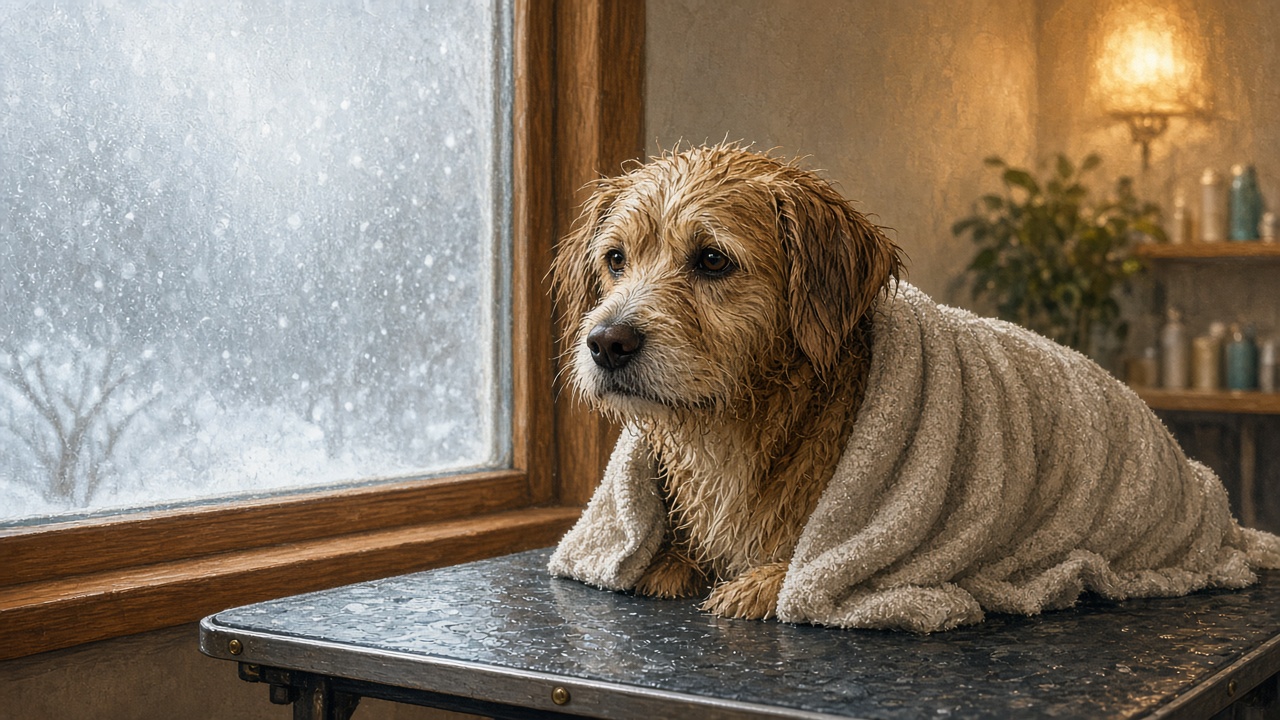
Move your budget across the year rather than holding it flat. When the holiday book is already full, cut spend or pause it; extra calls you can’t serve are wasted money, so put that budget into the quiet weeks instead.
A January rebooking offer works well here. You can hand it to regulars in December and promote it in ads to new owners once the holidays are over. The same groomer who described the busy season prints thank-you cards offering a discount in January and February, and says redeemed cards keep the winter calendar full.
In Adwave, you can adjust or pause the daily budget at any time. Pausing stops future daily charges, and a new budget on a live campaign applies the same day if your wallet covers it.
If you also board or run daycare, holiday travel moves demand in the opposite direction. Our guide to advertising for boarding and daycare covers that side of the business.
What a grooming campaign can look like
The campaign below is an illustrative example for a grooming shop, and it makes no claim about bookings or lift.
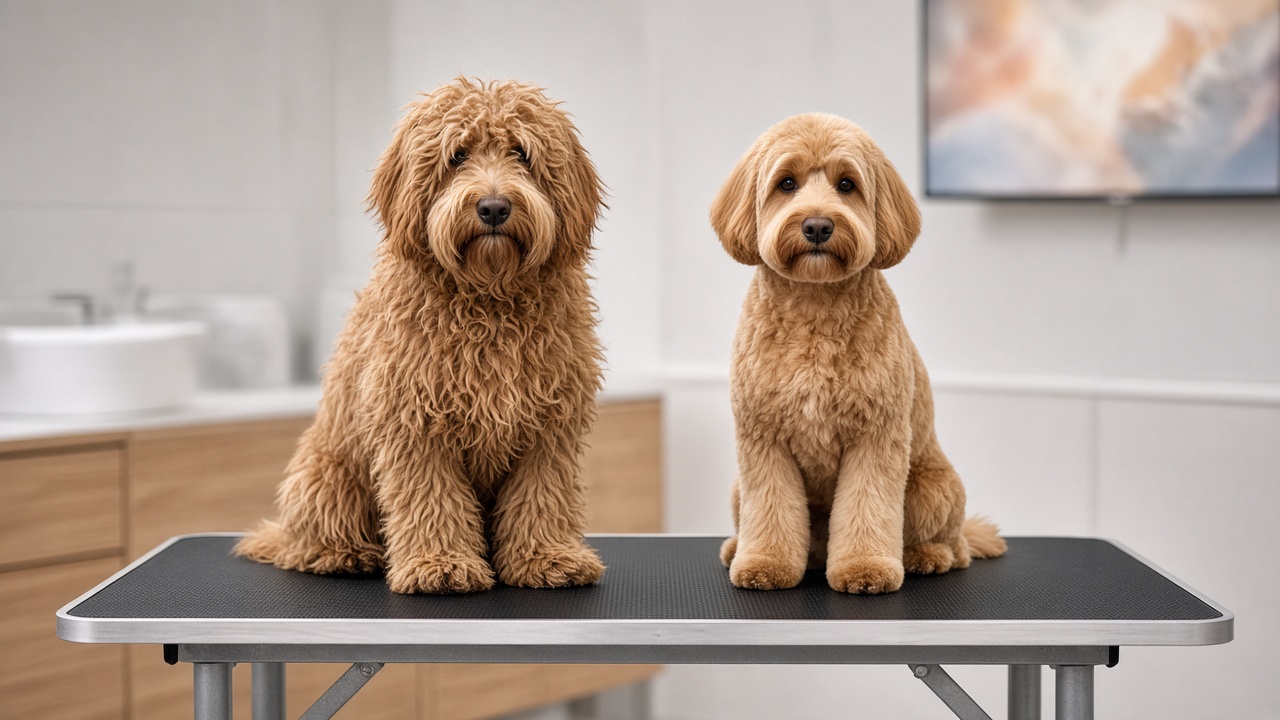
The offer is a first-groom package for new clients, or a deshedding package timed for spring shedding.
The creative pairs a before-and-after photo of a shaggy doodle with a short caption about the package on social. A 15-second streaming TV spot shows the same transformation and names the shop and its neighborhood. A search ad targets owners looking for dog grooming nearby, with a headline such as, for example, First groom package, book online today.
Every ad points to a booking page that shows the package price and open times. Mobile visitors should be able to book without calling.
Install the tracking snippet on the booking confirmation page so bookings count as conversions. Give each conversion a value so you can see revenue against spend, then compare channels after a few weeks.
Adwave builds a first draft of this kind of campaign from your website. You can edit the creative, or upload your own photos and finished ads, before launch. To see how the same approach applies across other pet services, browse our guide to advertising for pet businesses.
Ad rules that apply to groomers
The same advertising rules apply to grooming ads as to any other small business ad. These are the ones groomers are most likely to run into:
The same advertising rules apply to grooming ads as to any other small business ad. These are the ones groomers are most likely to run into:
If you quote customer reviews or testimonials, the FTC’s endorsement guides and its rule on consumer reviews and testimonials apply. The FTC’s advertising and marketing hub links to both, along with plain-language guidance. Use real reviews, and don’t edit them into something the customer didn’t say.
- Truthful, substantiated claims. Every claim in an ad must be true, and you must be able to back it up. The FTC’s advertising guide for small business says online ads are held to the same standard as any other ad.
- Reviews and testimonials. If you quote customer reviews or testimonials, the FTC’s endorsement guides and its rule on consumer reviews and testimonials apply. The FTC’s advertising and marketing hub links to both, along with plain-language guidance. Use real reviews, and don’t edit them into something the customer didn’t say.
- Paid partners must disclose. If you pay a local pet influencer or a popular pet account to feature your shop, they need to say clearly that they were paid. Under the FTC’s endorsement guides, both the advertiser and the endorser can be liable for misleading claims, and the endorser is liable for failing to disclose payment.
- Careful with health claims. Saying a medicated shampoo cures a skin problem is a health claim that needs proof. Describe what the service does, such as a bath, a deshed or a nail trim, and leave diagnosis to the vet.
- Check before you run. Before launching an ad, the FTC suggests searching its website for past cases and guidance on claims similar to yours.
Saying a medicated shampoo cures a skin problem is a health claim that needs proof. Describe what the service does instead, such as a bath, a deshed, or a nail trim, and leave diagnosis to the vet.
Before launching an ad, the FTC suggests searching its website for past cases and guidance on claims similar to yours.