You're probably staring at a half-finished homepage, an “About” page that sounds polished but flat, and a stack of ads that keep describing what you do instead of why customers should care. That's the usual moment when a business realizes the problem isn't the offer, it's the story. Writing a brand story that connects with customers means turning your business into a clear, believable transformation customers can recognize in their own lives.
A strong story doesn't just sound nicer. It makes the message easier to remember later, which matters when people are comparing options and trying to decide who to trust. One marketing article reports that facts are 22 times more likely to be remembered when they're part of a story, while people retain only 5% to 10% of information presented as statistics alone but remember 65% to 70% when they hear it as a story storytelling in marketing. That's why the best brand stories are built around a real problem, an emotional shift, and a believable resolution.
Why Most Brand Stories Fail to Connect
A local business owner usually starts with the wrong material. They talk about the year they opened, the awards on the wall, the equipment they bought, and the care they put into every job. People nod politely, then ask for a quote anyway, because none of that tells them what changes in their life if they choose that business.
Explain how your business helps the customer
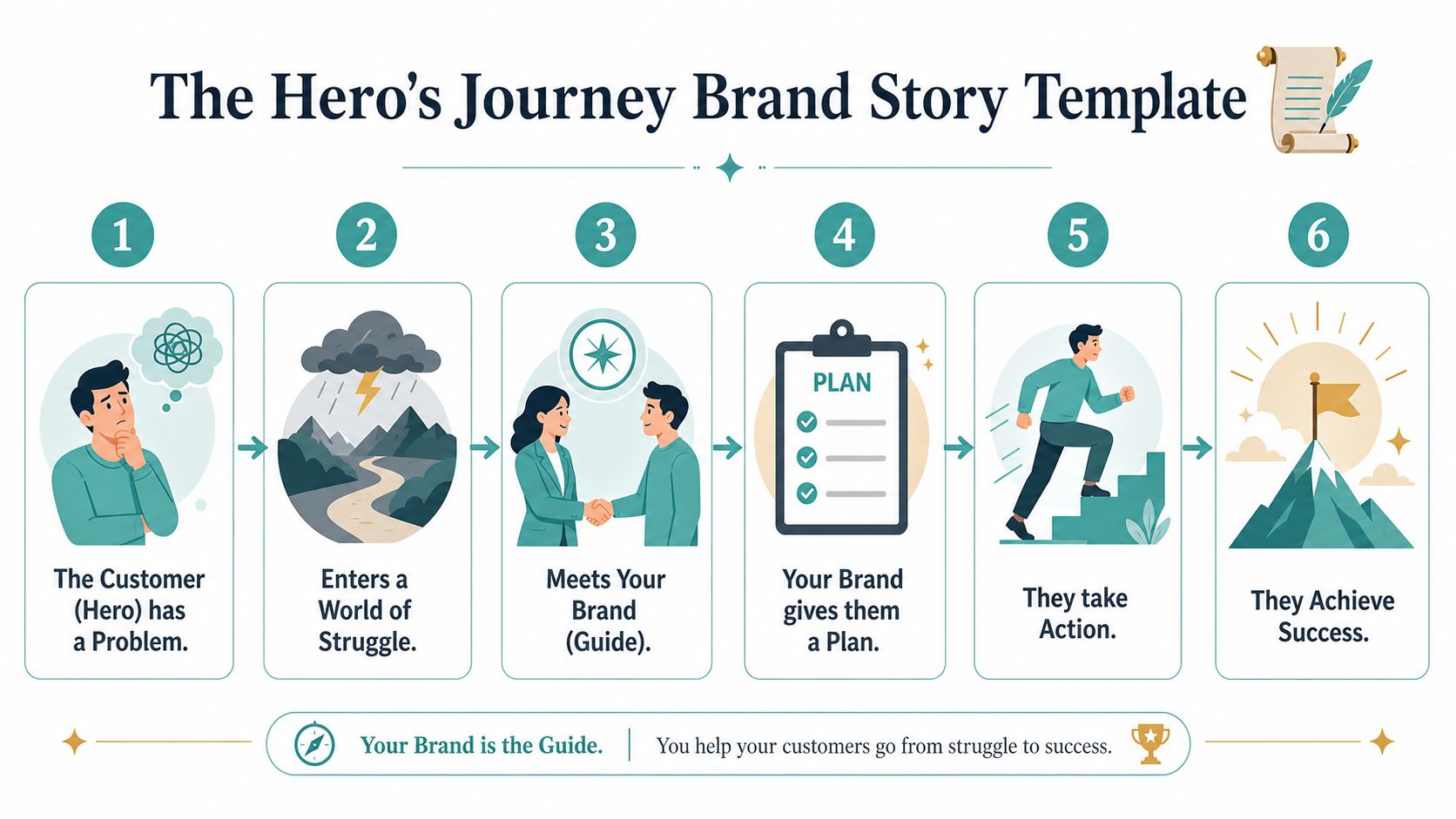
The mistake is simple, but expensive. A brand story can't behave like a company biography. Harvard Business School Online frames the structure more usefully, the customer is the hero, the conflict is explicit, the plot shows movement, and the moral makes the outcome memorable and can drive purchasing intentions brand story. That's a very different job from listing credentials.
Practical rule: if the story wouldn't matter to a customer who has never met you, it's probably an internal origin tale, not a customer story.
A common pitfall for otherwise solid businesses is stalling here. They describe the company's journey, but the customer can't see their own frustration, fear, or desired outcome reflected in it. The result is a story that feels sincere but doesn't convert.
Memory and buying decisions follow narrative, not feature lists
The reason this matters is recall. One industry roundup reports that 68% of consumers say brand stories have influenced their purchases, 92% want brands to advertise by telling a story, and compelling brand stories can increase customer loyalty by 20% brand storytelling data. The same source says 55% of consumers remember a brand story better than a list of facts. That's not a creative preference, it's a commercial signal.
The practical takeaway is straightforward. A story has to move from tension to resolution in human terms. If you want a helpful external reference on shaping that narrative into something readers enjoy, write a memoir people enjoy is a useful lens because memoir writing, like brand storytelling, depends on selecting the moments that reveal change.
Researching Your Customer Before Writing a Single Word
Good brand stories don't come from brainstorming slogans. They come from listening closely enough to hear the exact words customers use when they describe the problem. I've seen small businesses rewrite entire stories after discovering that what they thought was the pain point, price, speed, prestige, wasn't the pain point at all.
Start with the words customers already use
Pull together three sources first, reviews, sales calls, and emails or DMs. Don't summarize them yet. Copy the phrases customers repeat when they describe frustration, hesitation, relief, or surprise. Those phrases usually become the backbone of the final story because they sound like reality, not branding.
Use a few quick interview prompts and keep them conversational:
What was happening before you started looking for a solution?
What almost stopped you from buying?
What outcome would make this feel worth it?
What did you wish someone had explained sooner?
For audience grouping and message fit, the internal resource on what audience segmentation means in practice helps you separate general needs from the specific context that shapes a person's response.
Sort the findings into a one-page insight sheet
Don't turn research into a long report. Use three columns instead.
This is the part many teams skip. They collect opinions, then jump straight to copy. That usually produces a story that sounds pleasant but vague. A one-page insight sheet gives you something sharper, the customer's lived reality, the change they want, and the emotion behind the decision.
A short interview note can reveal more than a polished survey because people speak more naturally when they're not performing for a form. That's also why a brand story should include specifics, not abstract inspiration. The more precisely you can name the customer's tension, the more believable the transformation becomes.
Crafting Your Brand Story with a Repeatable Template
An usable brand story has to survive outside a homepage draft. It needs to work in an About page, a sales conversation, a social ad, and a TV spot without changing identity every time. That's why the best version isn't a paragraph you admire once, it's a template your team can reuse.
Build the story in five parts
Use this fill-in-the-blank structure:
Protagonist. Your customer is trying to get from their current reality to a better one. Conflict. Something is blocking that move, and it's specific. Guide. Your brand provides clarity, process, or support. Transformation. The customer's life looks different after the solution works. Proof. Testimonials, reviews, or concrete outcomes make the change credible.
Harvard Business School Online's customer-as-hero framing fits neatly here, and it keeps the story from drifting back into brand vanity brand story. When the customer is the hero, your brand has a clearer role, guide, not star.
Here's a simple example for a local home services company:
When homeowners are dealing with a leaking roof or a failing HVAC system, they don't want a long sales pitch. They want a fast, honest answer, a clear plan, and a crew that shows up when promised. Our job is to remove the guesswork, explain the fix in plain language, and leave the home in better shape than we found it.
That's stronger than, “We've served the community since 1998,” because it tells the customer what changes for them.
Keep one story, then adapt the angle
A one-page brand story brief keeps this disciplined. Column Five Media recommends capturing POV, tension, stakes, approach, and proof points, then backing them with messaging pillars and voice guidelines that stay consistent across channels brand story. That's the right level of structure for teams that need consistency without sounding canned.
For a home services business, three versions might look like this:
New customers. Focus on uncertainty, trust, and first-time reassurance.
Returning customers. Emphasize continuity, maintenance, and familiarity.
Referral leads. Highlight reputation, responsiveness, and the reason neighbors keep recommending you.
The wording changes, but the story doesn't. If you want a practical page to pair with this approach, the guide on how to create an about page that builds trust is a useful companion because it keeps the narrative grounded in credibility.
Turning Your Story into Short Ads and Multi-Channel Content
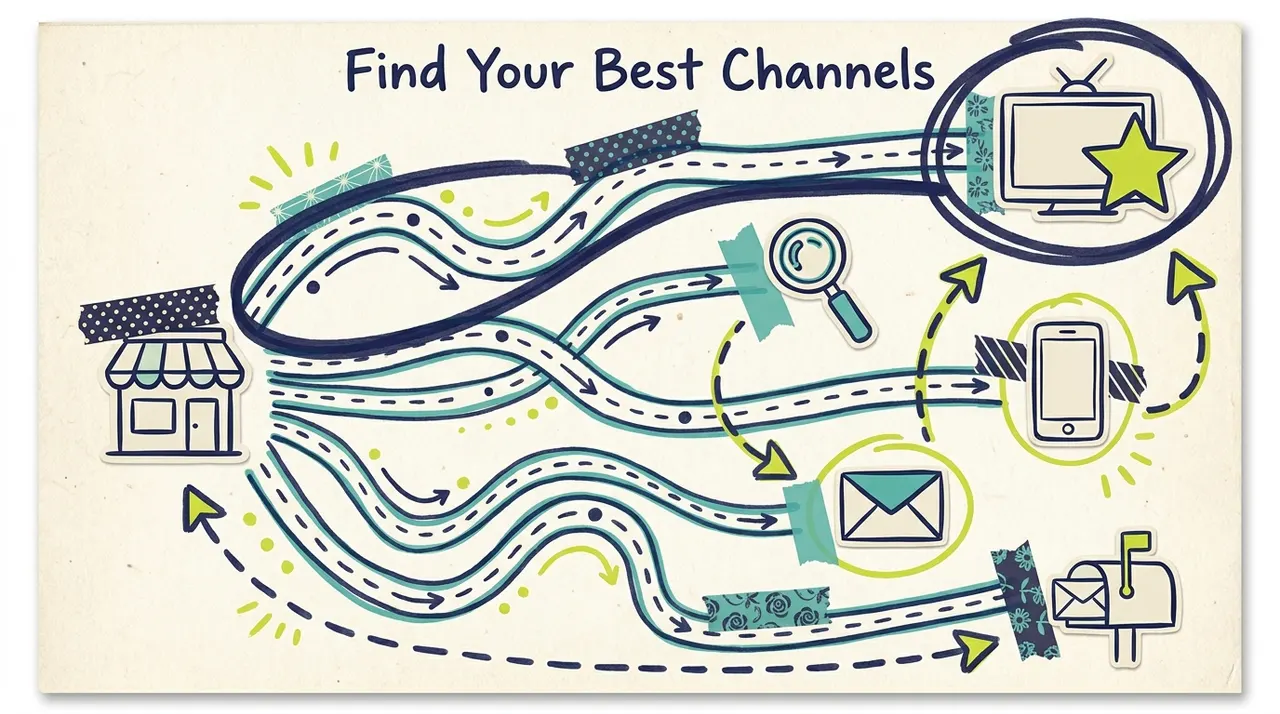
A brand story that only lives on one page doesn't connect for long. Customers move between search, social, email, streaming, and local TV, and each touchpoint has to sound like the same business speaking with the same point of view. That's where a lot of brands lose momentum, the website promises one thing, the ads say another, and the sales team improvises a third version.
Shrink the story without flattening it
A short ad doesn't need the whole origin story. It needs a clean hook, a recognizable tension, and a quick resolution.
A practical 30-second script structure looks like this:
Hook. Name the customer problem fast.
Tension. Show why that problem is costly, annoying, or risky.
Resolution. Show how the brand helps.
Proof or next step. Give the viewer a reason to act.
For dental, the hook might be about avoiding uncertainty before a visit. For real estate, it could be the stress of missing the right listing or the right buyer. For automotive, it might be keeping the vehicle reliable without losing half a day at the shop. The industry changes, but the structure stays stable.
A short ad works when it sounds like the customer talking to themselves, then hearing a credible answer.
The internal guide on repurposing one article into 10 pieces of content is useful here because the same story can become a hero section, an email opener, a social caption, and a TV script without turning into separate campaigns.
Keep the core message fixed across channels
Adwave fits naturally here. Adwave is an AI-powered TV advertising platform that can auto-generate a polished spot from a website URL, then place it across 100+ premium channels like NBC, Hulu, and ESPN, with campaigns starting at $50. For small businesses, that matters because the story can move from the website into TV and streaming without needing a full production team or a separate creative process for each channel.
That kind of distribution only works if the narrative stays consistent. If the email says one thing, the landing page says another, and the streaming ad introduces a different promise, customers don't remember the brand. They just remember the confusion. The safest approach is to keep the same core tension and transformation, then vary only the length and format.
Measuring Whether Your Brand Story Connects
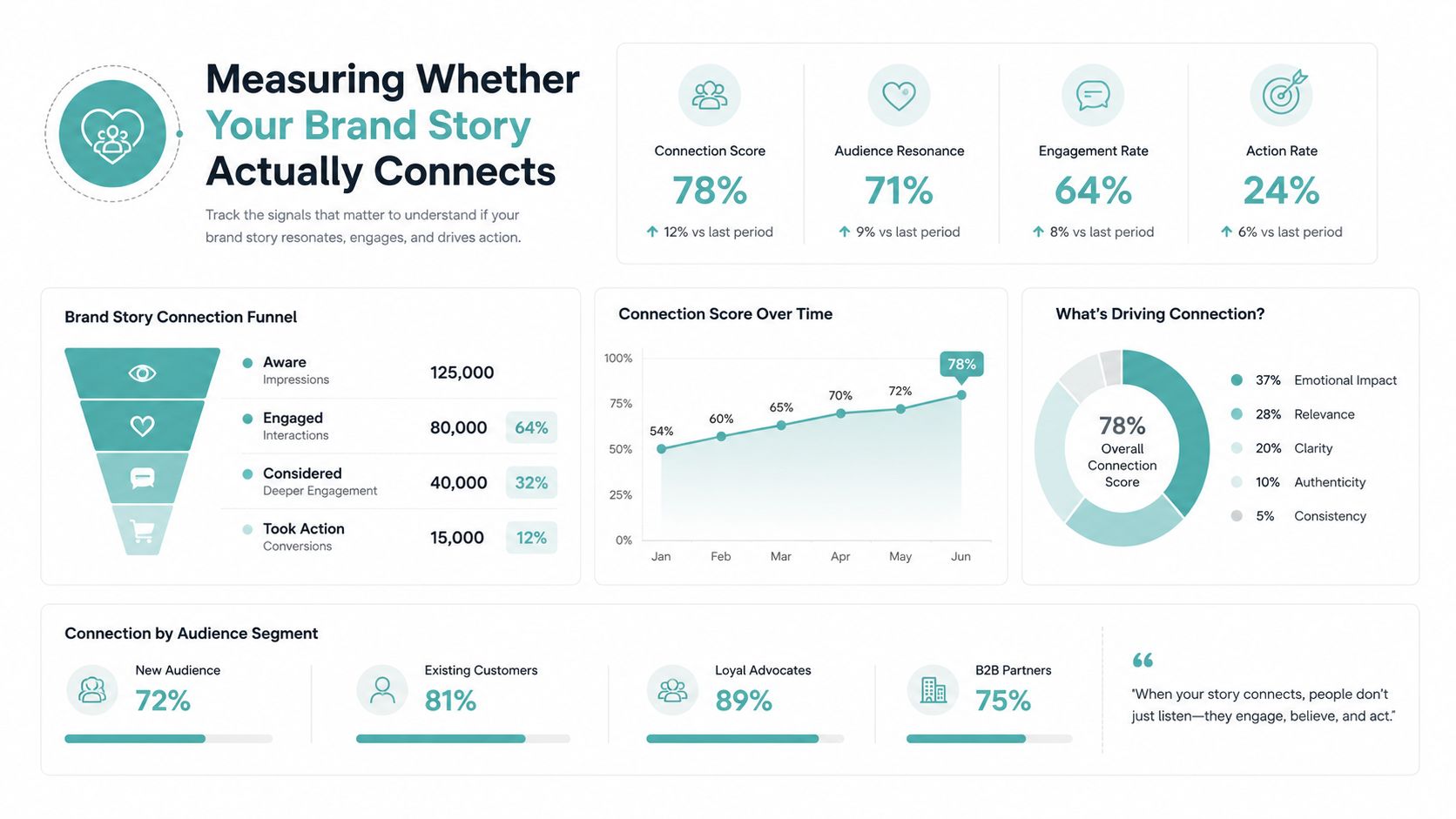
Most storytelling advice stops at “publish it.” That's not enough if you're running a business with real sales targets. A brand story should be measured like any other marketing system, because the question isn't whether it sounds good, it's whether people remember it, trust it, and act on it.
Use three layers of measurement
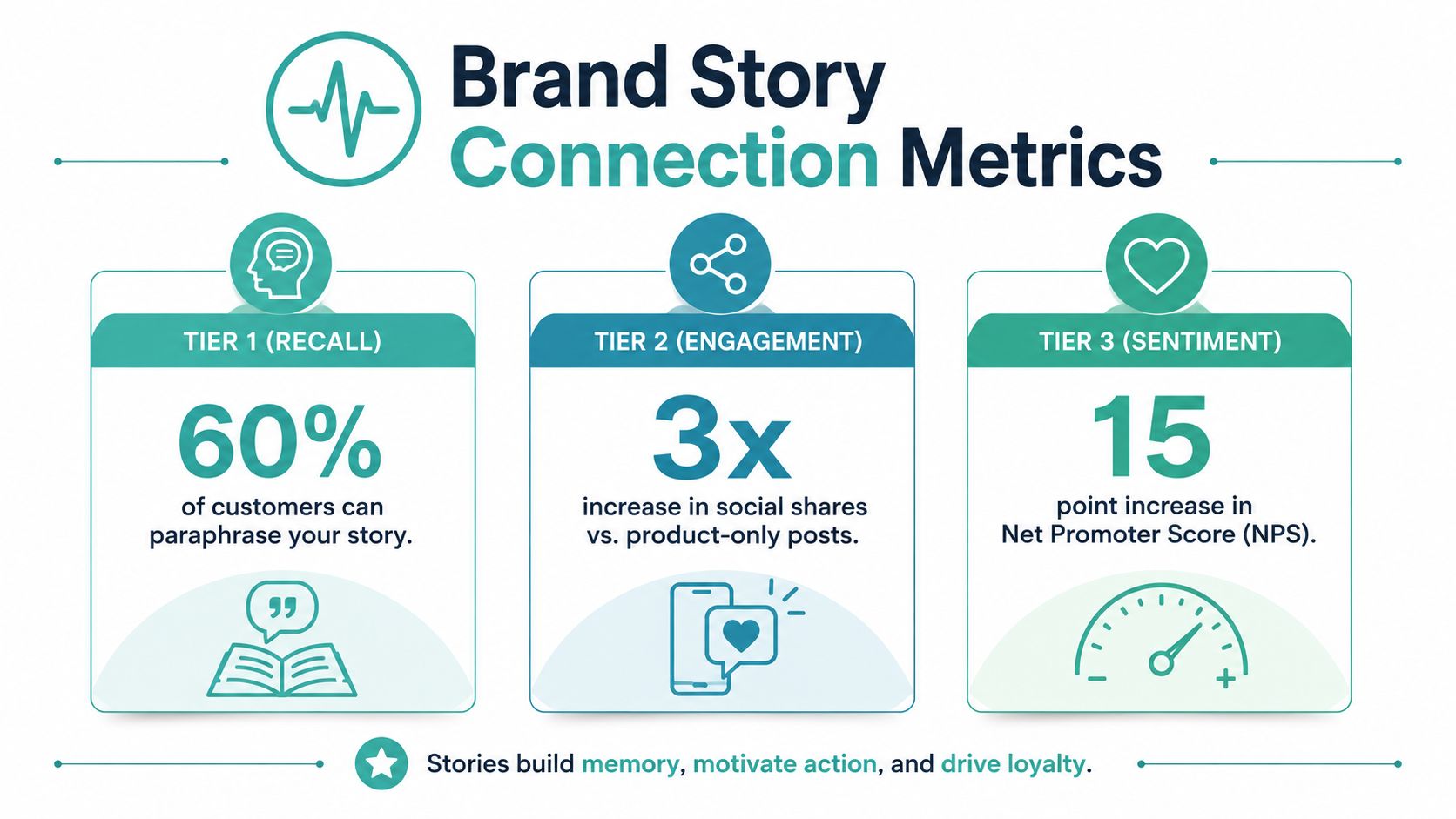
Start with recall. That can include unaided brand mention checks, short customer surveys, and comment themes that show whether people can restate your message in their own words. The earlier data on memory matters here, because if customers can't remember the story, they can't carry it into a buying decision.
Then watch engagement. Time on page, video completion rates, email replies, and ad clicks tell you whether people are leaning in. Finally, tie it to commercial outcomes, conversion rate lift, repeat purchases, referrals, and customer lifetime value where available. Adwave's real-time performance tracking makes that kind of before-and-after review easier to manage when the story is running across channels.
A useful contextual benchmark for awareness campaigns is that Adwave's platform uses audience data and viewing patterns to deliver ads at an estimated $15 to $35 CPM, which is a practical range to keep in mind when you're evaluating whether your story is getting enough reach to matter. For broader guidance on advertising measurement, the internal resource on how to measure advertising effectiveness is a good support piece.
Don't confuse activity with connection
A lot of teams celebrate vanity metrics and miss the true signal. A post can get attention and still fail to change how customers feel about the brand. A campaign can drive clicks and still leave the story fuzzy.
Use a quarterly review checklist:
Review message consistency. Does the story still sound like one brand across channels?
Check customer language. Are people repeating your core phrase or inventing their own?
Compare performance by segment. Which audience responds to which version?
Decide on the next move. Keep, refine, or replace the weakest part.
That's the level of discipline that turns storytelling from a creative exercise into a measurable asset. It also keeps teams from overreacting to a single data point and trashing a story that only needed a tighter hook.
Your 30-Day Brand Story Launch Plan
The first week is research. Pull reviews, listen to sales calls, and write down the phrases customers use. The second week is drafting, test one core story with a few people who fit your audience, then tighten the language where they hesitate. The third week is adaptation, turn that story into short scripts, email copy, and a pilot ad campaign through Adwave. The fourth week is review, compare the story against the metrics that matter and refine the weak spots.
Don't over-edit based on one comment or one bad day of performance. If the customer problem is right but the wording feels stiff, tweak the hook. If the message keeps drifting back to features instead of transformation, rebuild the structure. If the story no longer sounds like the customer's reality, overhaul it.
The businesses that get this right treat brand story as a living system. They keep the hero, conflict, and outcome stable, then adjust the delivery by channel, audience, and proof point. That's the difference between a story people politely read and a story that changes how they buy.
If you're ready to turn one story into a system that works across your website, ads, and TV, Adwave gives you a practical way to do it. Visit Adwave to see how AI-generated TV spots, channel distribution, and performance tracking can help your brand story reach local customers and stay consistent wherever they see you.