Digital coupons typically achieve redemption rates of 5.92% to 7%, compared with 0.47% for paper coupons, so email coupons usually win when you need an immediate response. Loyalty points can be stronger for repeat behavior, but customers must enroll, buy again, and reach enough value before the reward feels real.
That difference changes the decision for a small or midsize business. A coupon can fill an empty appointment slot this week. Points can give a regular customer a reason to return next week, but only if the earning path is clear, the reward feels attainable, and the business can afford the future liability.
The most useful comparison isn’t “which tactic is better?” It’s which customer behavior are you trying to change, and what does that behavior cost you? Coupons can leak margin when they subsidize purchases that would have happened anyway. Points can appear inexpensive when customers never redeem them, yet excessive breakage can damage trust.
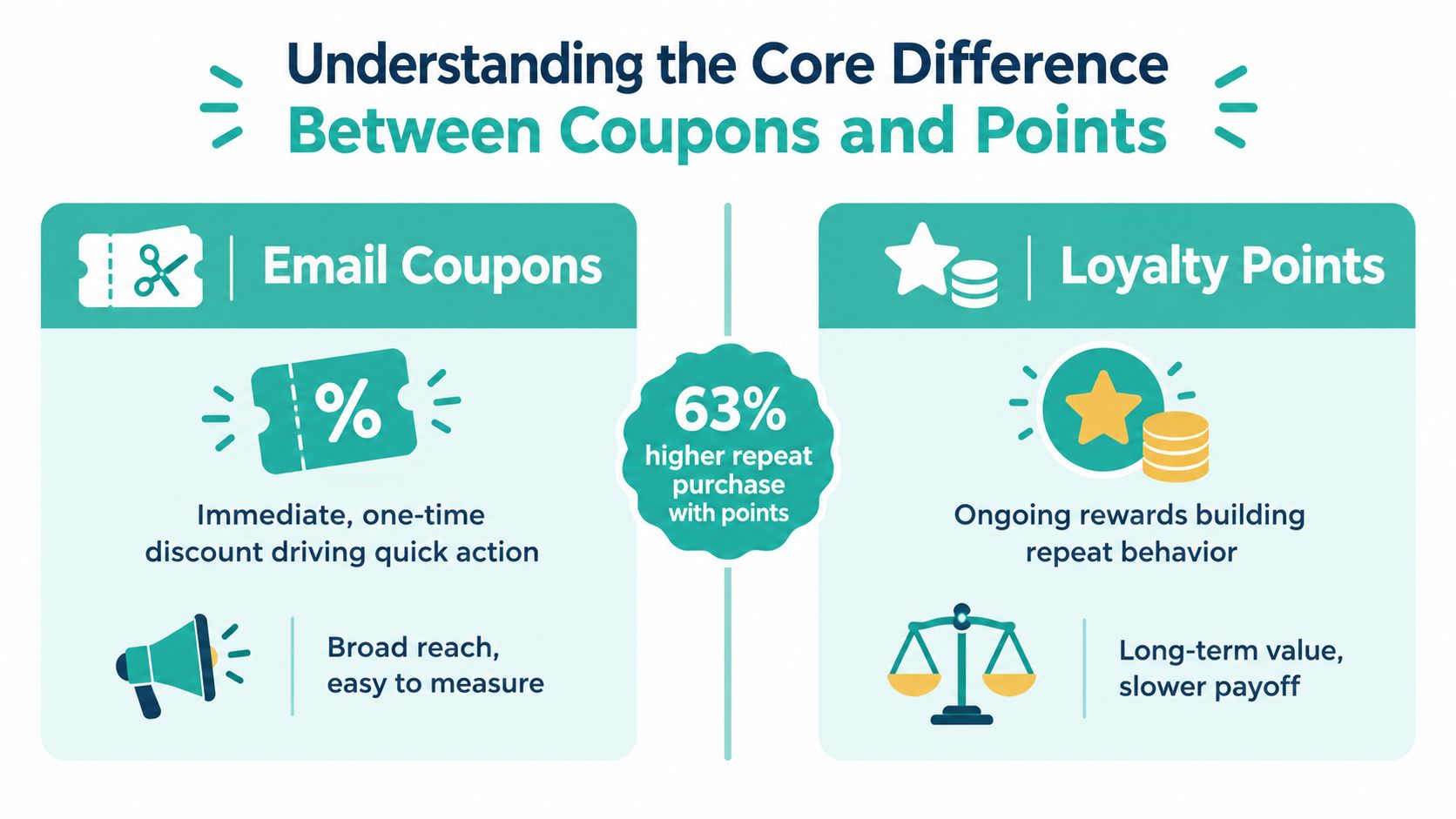
Understanding the Core Difference Between Coupons and Points
The local restaurant owner has a slow Tuesday and a full dining room forecast for Friday. An email coupon offering a time-limited discount can create an immediate reason to book Tuesday. The restaurant can attach a campaign code, count redemptions, and compare the result with a similar group that didn’t receive the offer.
A retail store faces a different problem. Its customers already visit regularly, but many purchases happen at competing stores between visits. A points program can reward each qualifying transaction and create a visible path toward a future benefit. The customer doesn’t receive the full incentive immediately, but the growing balance can encourage another visit.
The performance gap between digital and paper coupons reinforces why delivery matters. The available coupon redemption data reports digital coupon redemption at roughly 5.92% to 7%, compared with approximately 0.47% for distributed paper coupons. It also reports 465.5 million digital coupons redeemed in the U.S. in 2024, a 10.8% year-over-year increase, and 169.2 million Americans using digital coupons in 2025. Email is a major route, with 72% of retailers reportedly using email to distribute coupons and 14% of digital coupons redeemed through email.
Choose the behavior before the technology
Email coupons are immediate-response promotions. They work well for:
- Near-term capacity: Fill open restaurant tables, service appointments, or consultation slots.
- Seasonal demand: Move a product category during a short sales window.
- First conversion: Give a new prospect a concrete reason to visit or purchase.
- Trackable activation: Tie a unique code or landing page to a specific campaign.
Loyalty points support a different job. They make sense when customers naturally purchase often enough to notice progress, such as at restaurants, retailers, automotive service businesses, or recurring wellness practices. A points balance becomes a retention mechanism only when customers understand how to earn, how much each point is worth, and when they can redeem it.
Businesses building a broader retention system can also review these customer retention strategies for eCommerce for ideas beyond discounts. For a points-specific planning framework, Adwave’s guide to building a customer loyalty program on any budget is a practical reference.
The clean distinction is simple: coupons accelerate a decision, while points shape a pattern of decisions. Treating them as interchangeable usually produces a coupon program with weak margins or a loyalty program that customers forget.
How Each Tactic Drives Different Business Goals
Email coupons reduce the distance between message and action. A customer opens an offer, clicks through, and can use it without waiting to earn anything. Loyalty points introduce more steps: enrollment, an eligible purchase, another visit, and enough accumulated value to make redemption worthwhile.
An Experian Marketing Services benchmark covering holiday campaigns from more than 50 brands found that emails containing coupons generated 48% higher revenue per email than other promotional emails, along with higher open, click, and transaction rates, according to the published benchmark study. That result supports coupons for urgent objectives, but it doesn’t prove that a coupon will create profitable incremental demand for every business.
The economics of immediate action
A coupon campaign should answer four questions before launch:
- Who receives it? New subscribers, lapsed customers, high-value customers, or a location-specific segment?
- What action counts? A purchase, booking, phone call, store visit, or minimum-order transaction?
- What protects margin? A product restriction, minimum spend, expiration date, or limited inventory?
- What happens to customers who don’t receive it? Without a comparison group, you can’t tell whether the promotion caused the sale.
Track redemption rate, average order value, gross profit after discount, campaign cost, and unsubscribe rate. A customer who uses a coupon after planning to buy anyway isn’t necessarily an incremental win. Randomly hold out an otherwise similar group, then compare orders and profit between exposed and non-exposed customers.
The economics of delayed value
Points are more suitable when a business earns profit from repeated behavior. The current transaction funds future engagement instead of reducing today’s price immediately, but the business must record points issued, outstanding balances, likely redemptions, and reward cost.
Measure repeat-purchase rate, customer lifetime value, active-member rate, and incremental profit per enrolled customer. The number of points issued is an activity metric, not proof of retention.
Practical rule: If a customer can’t understand the first meaningful reward after reading the offer once, the program has too much friction.
A restaurant might use a coupon to fill a quiet service period, then invite redeemers into a simple points program. A retailer with frequent purchases might lead with enrollment and use email to remind members about progress. More guidance on economical retention planning is available in Adwave’s resource on customer retention strategies that cost less than new acquisition.
Comparing Key Performance Indicators and Economics
The right KPI depends on whether the incentive is meant to create a transaction now or make a future transaction more likely. A coupon’s value appears quickly, but its discount can reduce profit on customers who were already ready to buy. A points program spreads the reward across future behavior, yet it creates accounting and communication work.
Product relevance matters as much as delivery. The coupon dataset cited earlier reports an 18% redemption rate for product-specific offers, compared with 3% for general offers. That difference supports segmenting by product interest, location, purchase history, or customer status rather than sending one generic discount to the entire list.
Performance comparison
| Metric | Email Coupons | Loyalty Points |
|---|---|---|
| Primary job | Create immediate action | Encourage repeat purchasing |
| Customer requirement | Open the email and qualify for the offer | Enroll, purchase, accumulate, and redeem |
| Strongest use case | Near-term visits, bookings, and seasonal sales | Frequent-purchase categories |
| Core measurement | Redemption, incremental orders, revenue per email | Repeat purchase, active members, lifetime value |
| Cost structure | Discount and campaign cost on the current transaction | Future reward cost plus outstanding liability |
| Attribution | Unique codes, UTM parameters, and send cohorts | Customer identity linked across transactions |
| Main risk | Discount leakage and margin erosion | Friction, breakage, and unredeemed value |
| Customer experience | Clear and immediate | Valuable only when progress feels attainable |
The healthy redemption benchmark cited in The AI CMO’s KPI guide places many loyalty programs around 20% to 40%, although results vary by category, reward format, and ease of use. A low rate may mean the threshold is unreachable. An unusually high rate may indicate that the reward is too expensive or margin protection is weak.
Use profit, not headline redemption
For coupons, calculate:
Incremental gross profit minus discount and campaign costs, divided by incremental orders or customers.
For points, add the expected cost of future redemptions and the liability represented by outstanding points. Then test both systems against a control group. A coupon can have a higher redemption rate and still lose money. A points program can have a lower redemption rate and still produce better long-term profit if it changes purchase frequency.
Businesses combining paid reach with incentives should also calculate customer acquisition cost separately from offer economics. That separation tells you whether the problem is weak awareness, an unattractive incentive, or poor follow-through after the first visit.
The Hidden Cost of Point Breakage and Customer Trust
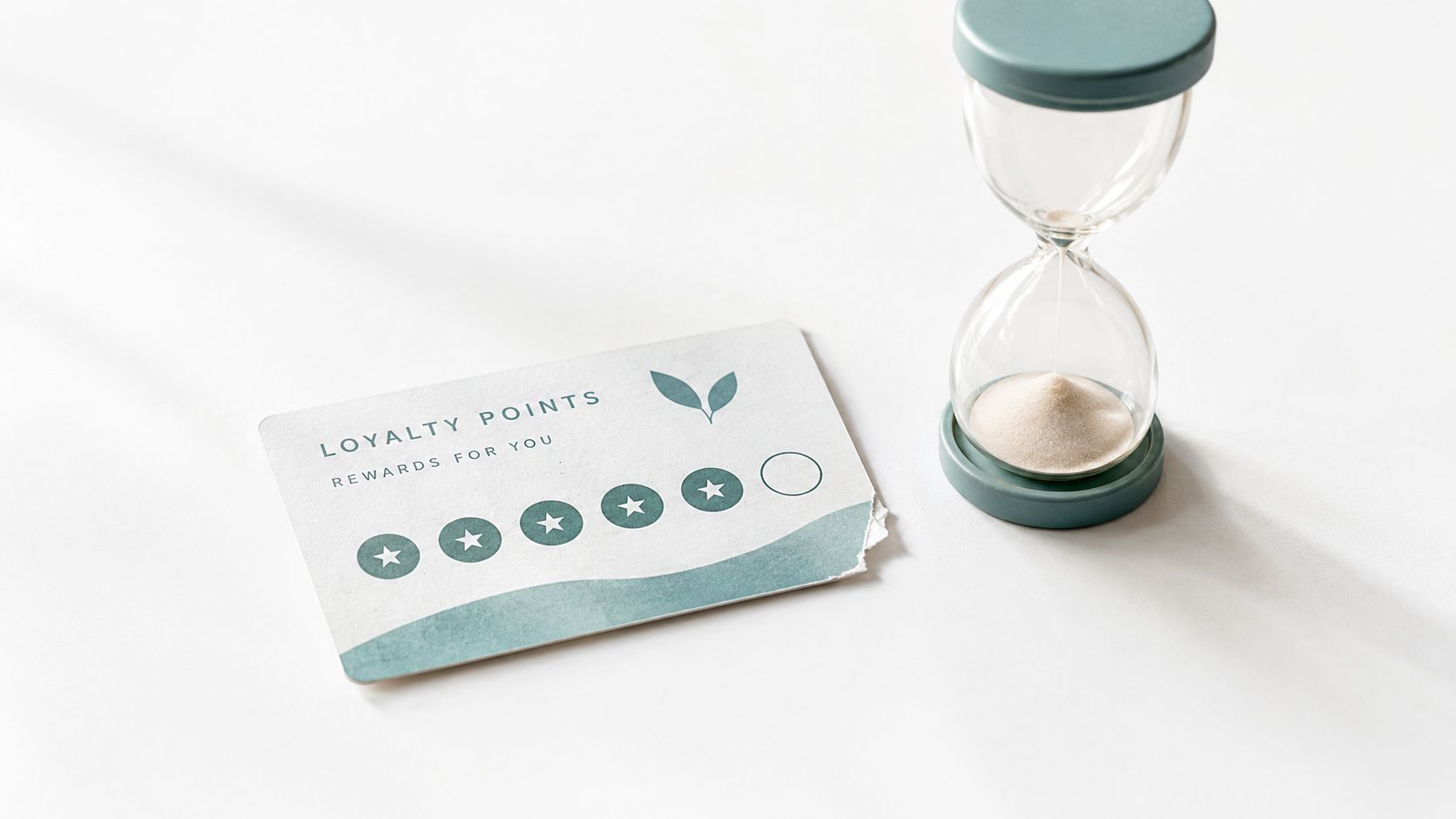
Unused points are often treated as a financial benefit. The business doesn’t pay the reward, so the program appears more profitable. That calculation misses the customer who stopped checking the balance because the reward took too long to earn, or the customer who reached the threshold after the points had expired.
The loyalty research cited by Antavo reports that 49.1% of members are disappointed when rewards take too long to earn, while 41.1% cite rewards expiring before use. It also estimates that 27% of points earned in 2025 remained unspent and 12% expired in programs with expiration rules.
Breakage can become a fairness problem
A February 2025 U.S. consumer study found that 81% of respondents wanted rewards never to expire, while 93% of consumers aged 45 and older valued non-expiring rewards, according to the same research source. Expiration rules, confusing redemption mechanics, and high thresholds can turn a promise of value into a frustrating customer experience.
That matters especially for businesses with infrequent customers. A person who visits an automotive service center occasionally may never earn enough points to redeem. For that customer, a clear email coupon with a reasonable validity period may be more equitable than a balance that slowly disappears.
A point that customers can’t use isn’t a reward. It’s an unresolved promise.
Segment the program by purchase frequency. Frequent customers can receive a points path with simple milestones. Occasional customers may be better served by targeted email offers, birthday incentives, or a direct next-visit coupon. Communicate balances clearly, send reminders before expiration, and keep the minimum redemption level low enough that customers can see progress.
The Adwave resource on the real cost of losing a customer offers useful context for this decision. A program that saves reward expense by making value inaccessible may reduce trust, future visits, and willingness to engage.
Implementing and Testing Your Chosen Strategy
Start with the customer record, not the reward creative. Your email platform needs reliable segments and campaign-level codes. Your point system needs transaction matching, a visible balance, redemption rules, and a way to account for outstanding value.
Build the minimum viable system
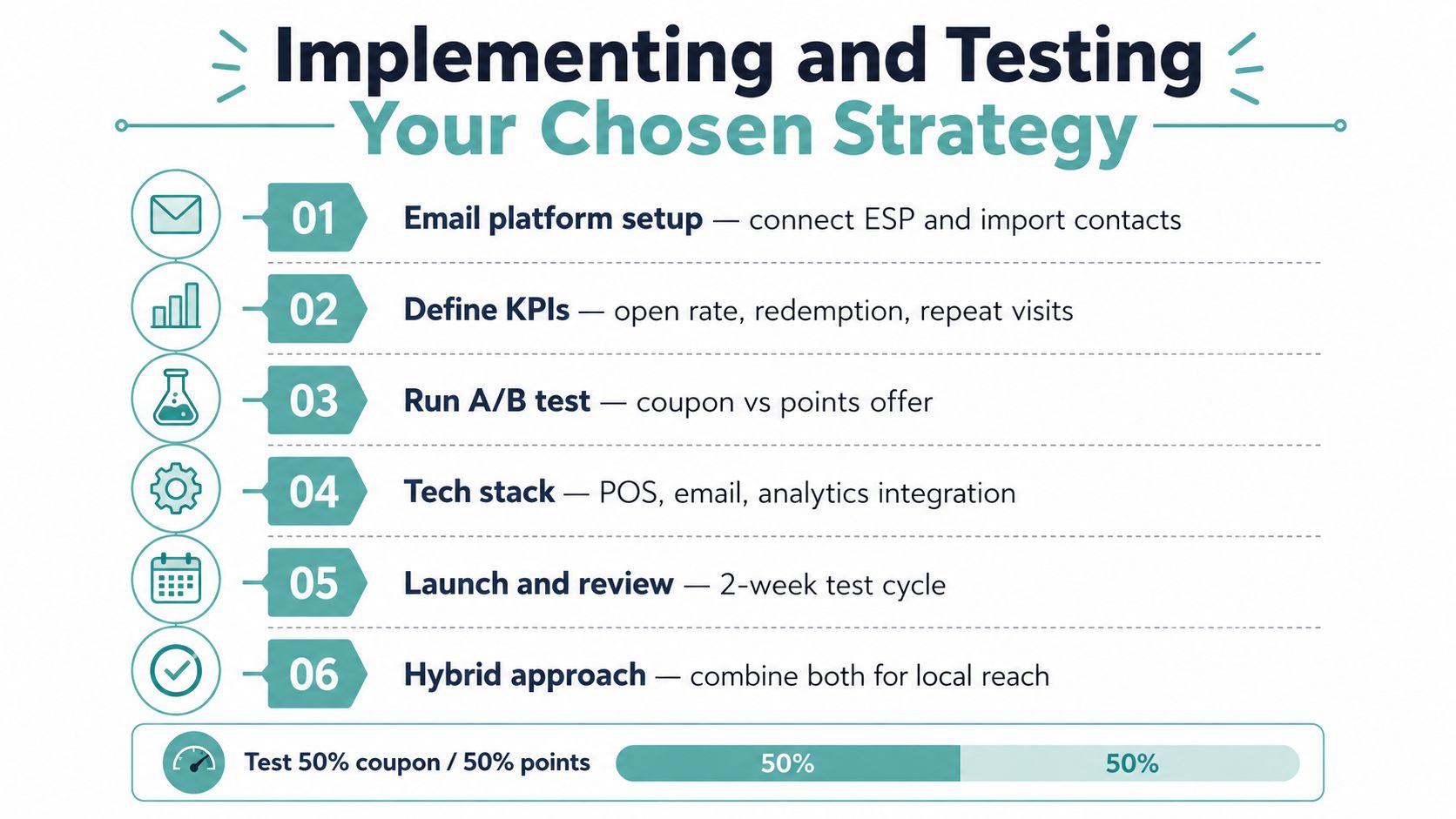
Use this sequence:
- Define the behavior. Choose one target, such as a second visit, a filled appointment slot, or a higher-frequency purchase.
- Set the offer rules. State the qualifying products, minimum spend, validity period, exclusions, and redemption method.
- Connect the data. Link the email platform, point ledger, POS, checkout, and analytics so one customer isn’t counted as several people.
- Create the control. Randomly keep an eligible group out of the offer. Keep geography, timing, and eligibility consistent.
- Measure profit. Compare incremental orders, average order value, gross margin, reward cost, and unsubscribe behavior.
- Review repeat behavior. Follow customers long enough to see whether the first incentive led to another purchase.
Test a one-time coupon against points earned toward a future reward. Don’t declare a winner from redemption alone. Compare incremental profit and repeat purchasing over the same follow-up period, then check whether the result changes for new, active, and lapsed customers.
Treat frequency as part of the offer
More messages don’t automatically create more lifetime value. A field experiment summarized in Columbia research found that personalizing promotional-email frequency increased average customer lifetime value by 8.3% over baseline under an optimized policy, compared with 6.8% for a short-term revenue-focused approach. The research compared daily coupon emails with messages sent every two days, which shows why cadence deserves its own test.
A practical sequence is to send one relevant offer, observe the response, and suppress customers who recently purchased or opted out of promotions. Customers should understand whether an email contains a one-time coupon, a points update, or both. Combining tactics works best when each has a distinct job.
Combining Advertising Reach with Incentive Programs
An incentive only works after a customer sees it. A local business can have a well-designed coupon and a simple loyalty program, yet still lack enough qualified attention to produce useful results. Paid advertising handles reach. Email coupons handle immediate conversion. Points handle repeat behavior.
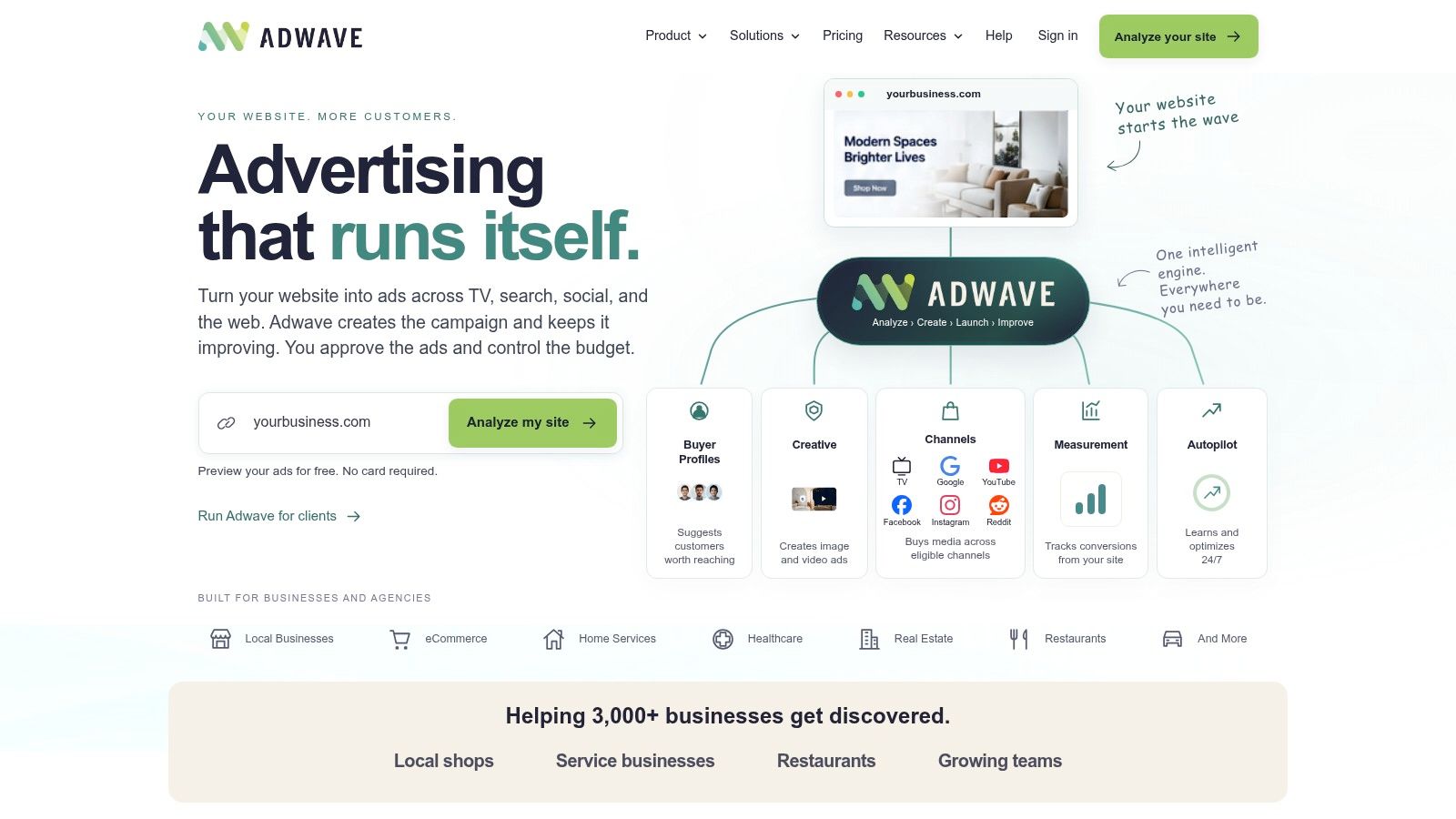
Adwave Digital is an AI-powered TV advertising platform that lets small businesses create, launch, and measure broadcast-ready ads in minutes. A business enters its website URL, and the platform’s AI generates a polished spot for placement across 100+ premium channels, including NBC, Hulu, and ESPN. Campaigns start at $50, and automatic pacing prevents spend from exceeding the selected budget, as described in Adwave’s platform documentation.
Give the advertising a measurable next step
A restaurant can promote a time-limited offer and direct viewers to a reservation page. The business then tracks visits, coupon codes, bookings, average order value, and repeat reservations. An automotive service center can advertise an appointment offer, while a retailer can use the same reach to promote loyalty enrollment instead of a discount.
Real estate agents can use advertising to generate website visits or lead forms, then follow up by email with relevant listings and a clear next action. A wellness business can fill near-term appointment capacity with a coupon, then invite customers who complete a visit into a simple points or milestone program.
The important separation is between reach and incentive performance. Track the cost of acquired customers from the advertising campaign, then separately track coupon redemption or loyalty enrollment. If views and visits are weak, improve the creative or targeting. If visits are strong but redemptions are weak, revise the offer. If enrollment is strong but repeat visits are poor, simplify the points path or improve follow-up.
This approach lets a small business test awareness without committing the incentive to every customer. It also prevents the common mistake of blaming a coupon or loyalty program for a problem that began with insufficient local reach.
Making the Right Choice for Your Business
Purchase frequency should decide the starting point. A business with frequent, predictable transactions can justify points because customers have enough opportunities to earn and redeem. A business with irregular visits often needs an immediate, clearly bounded offer.
| Business situation | Recommended approach | Design priority |
|---|---|---|
| New-customer acquisition | Email coupon | Use a segmented welcome offer with a unique code |
| Near-term appointment capacity | Email coupon | Limit the offer by date, service, or availability |
| Restaurant with regular diners | Points plus email | Show progress and send timely redemption reminders |
| Retail with frequent visits | Loyalty points | Keep earning and redemption rules simple |
| Automotive service | Hybrid | Use a first-visit coupon, then reward future services |
| Wellness appointments | Hybrid | Activate lapsed customers with email, then reward return visits |
| Seasonal retail promotion | Email coupon | Use product-specific offers and a short sales window |
| Infrequent or high-consideration purchase | Email follow-up | Prefer relevant reminders over a difficult points threshold |
Email coupons are the better first move when you need a response now. Use a distinct offer for a distinct audience, and protect margin with restrictions customers can understand.
Points become more compelling when repeat behavior is already present. They aren’t a substitute for a strong product, good service, or a convenient buying experience. They work when the reward arrives soon enough to reinforce the next purchase and when customers can see exactly how close they are.
For many SMBs, the most practical model is hybrid. Use a coupon to create the first action, then offer a simple loyalty path to customers who show real engagement. Don’t force every customer into a points program. Let behavior determine who receives the additional layer.
Frequently Asked Questions
Which should launch first, a coupon or a points program?
Launch the coupon when you have an immediate business objective, such as empty appointments or a seasonal sales window. Build points after confirming that customers purchase often enough to reach a reward without frustration.
How quickly can an SMB measure results?
Coupon performance can be reviewed soon after delivery because codes and transactions are easy to match. Loyalty performance needs a longer observation window, often 60 or 90 days, so you can assess repeat purchasing rather than enrollment alone.
Do loyalty programs require a large technology budget?
Not necessarily, but the system must connect customer identity, transactions, balances, and redemption. A simple program with transparent rules is more useful than an elaborate program that staff can’t explain or customers can’t follow.
How can a business avoid training customers to wait for discounts?
Reserve coupons for specific segments, products, or situations instead of sending a blanket discount on a fixed schedule. Compare exposed customers with a holdout group and watch gross profit, not just revenue.
Can TV advertising and incentives be measured together?
Yes. Assign the advertising campaign a distinct landing page, code, or phone route, then track acquired customers through coupon redemption, loyalty enrollment, and later purchases. Keep advertising cost separate from reward cost so you can see which part of the funnel needs improvement.
Adwave helps small businesses create and measure broadcast-ready TV ads from a website URL, with geographic targeting, budget controls, and distribution across premium streaming channels. Use Adwave to build local awareness, then test whether an email coupon or loyalty offer produces the stronger incremental result.