Why Your Best New Customer Is The One You Already Have
Acquiring a new customer can cost 5 to 25 times more than retaining an existing one. For a small business, that isn't a trivia fact. It's a budgeting rule.
If you keep pouring money into lead generation while current customers drift away, you're paying premium prices to replace revenue you already earned once. That's the leaky bucket problem in plain terms. Existing customers already know your brand, already trust your process, and in many businesses they're easier to serve, easier to upsell, and easier to reactivate than a cold prospect.
That's why smart customer retention strategies that cost less than new acquisition usually beat flashy acquisition campaigns on pure ROI. You're working with warmer audiences, shorter buying cycles, and fewer trust barriers. In practice, that means more efficient marketing, steadier cash flow, and less pressure to constantly chase the next lead.
For local businesses in particular, retention doesn't have to mean bland reminder emails and discounting. You can use segmentation, loyalty, re-engagement, community, partnerships, better service, education, and even affordable TV placements to stay visible with the customers most likely to buy again.
If you run a fitness business, some of these ideas pair well with these actionable retention strategies for gyms. For everyone else, the same principle applies. Keep the customers you worked hard to win, then make it easy for them to come back.
1. Personalized Email Marketing and Segmentation
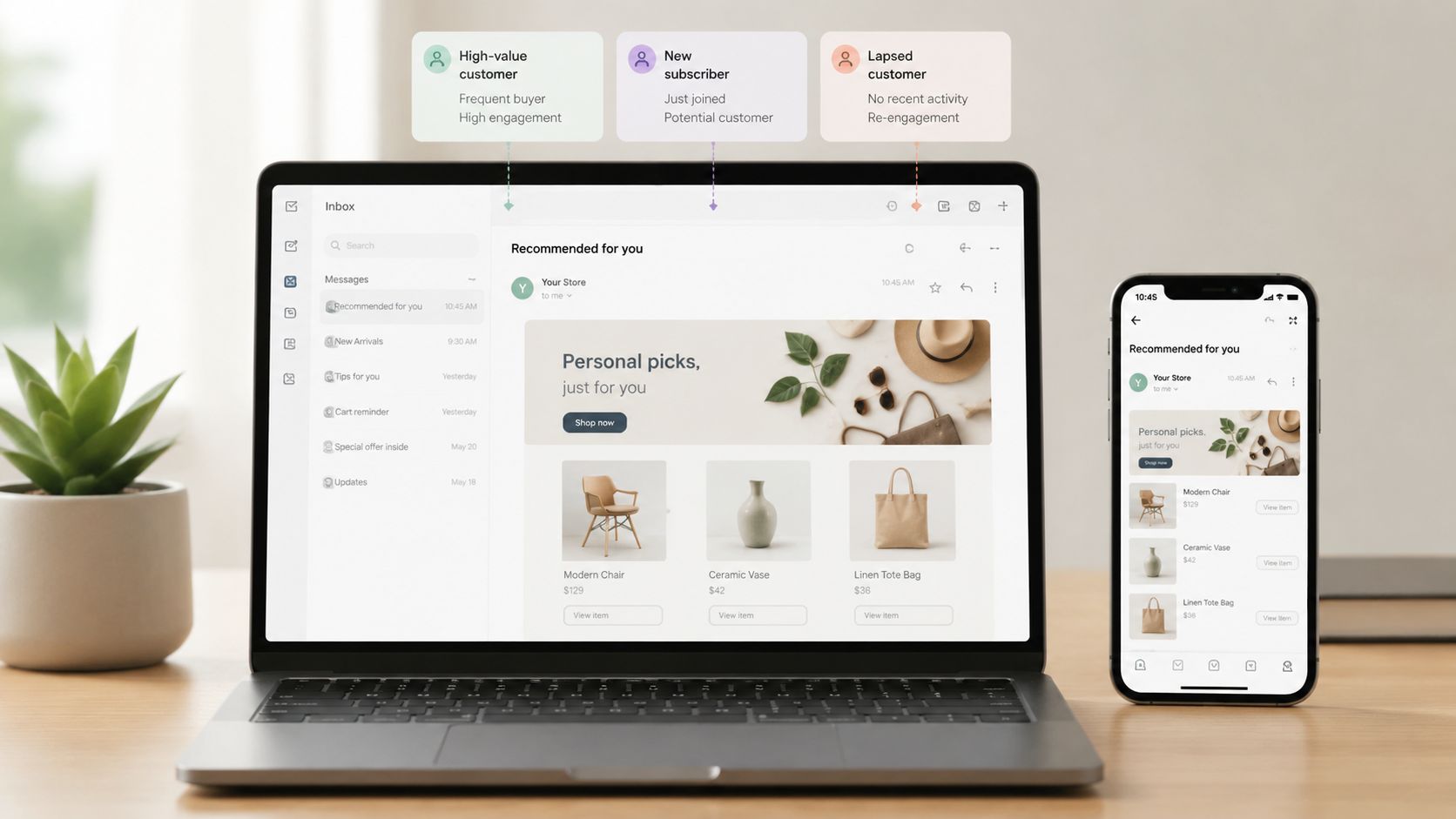
Email remains one of the cheapest retention channels because you already own the audience. The mistake is sending the same message to everyone. A first-time buyer, a loyal repeat customer, and someone who hasn't purchased in months shouldn't get the same offer, the same timing, or the same tone.
Start with simple segments you can maintain. For most SMBs, that means geography, purchase frequency, last purchase date, average order value, and service category. A dental office might separate active patients from overdue hygiene patients. An auto shop might split oil-change customers from higher-ticket repair customers.
A practical setup that works
Build three automated flows first.
Welcome flow: Send a short series after the first purchase or inquiry. Reinforce what they bought, what happens next, and what else will help them succeed.
Repeat-purchase flow: Trigger recommendations or reminders based on prior behavior. E-commerce brands can suggest complementary products. Service businesses can send maintenance intervals or seasonal check-ins.
Lapsed-customer flow: Flag customers who haven't engaged in a while and send a useful reason to return.
Use specific subject lines, such as “Your next service reminder.” Test sending times against subscriber response.
A good starting template is simple. “You bought X, customers like you often need Y next, and here's an easy way to book or reorder.” If you need help structuring those segments, Adwave's guide on email list segmentation and sending the right message to the right people is a useful companion.
Practical rule: Segment by behavior first, demographics second. What customers do is usually more useful than who they are.
What doesn't work is fake personalization. Dropping a first name into a generic blast isn't enough. Real retention email uses customer history to make the next message more relevant than the last one.
2. Loyalty Programs and Rewards Systems
Members of loyalty programs are more likely to stay engaged with a brand over time, according to research from Bond's Loyalty Report. The catch is execution. A loyalty program earns retention only when the customer understands the benefit quickly and sees a realistic path to the next reward.
For a small business, that usually means starting simple and keeping the cost tied to repeat behavior you want more of. I rarely recommend building a custom app first. A basic POS-based points program, a visit tracker, or a paid membership with one or two clear perks is usually enough to test demand without adding much overhead.
Choose the structure based on buying behavior
Use the model that fits how customers already buy from you.
Points-based: Best for businesses with frequent, lower-ticket purchases, such as cafes, boutiques, and pet supply stores.
Tiered: Best for businesses that want to increase annual spend or visit frequency, such as salons, med spas, and service plans.
Membership-style: Best for businesses that can offer convenience or status, such as priority booking, free add-ons, or member pricing.
The wrong structure creates friction. A coffee shop does not need a three-tier status ladder. A med spa probably should not rely on a paper punch card. Match the program to purchase frequency, average order value, and how easy it is for staff to explain at checkout.
If an employee cannot explain the program in one sentence, customers will not remember it later.
A low-cost implementation plan
Start with a 60-day pilot.
Step 1: Set the goal. Pick one target. Increase second purchase rate, lift visit frequency, or raise average customer value. Do not chase all three in the first version.
Step 2: Set the reward threshold. Make the first reward attainable. For many local businesses, that means a benefit customers can reach within 30 to 90 days. If the reward feels too far away, sign-ups will look fine and usage will stay weak.
Step 3: Pick rewards that protect margin. Use benefits that feel valuable but cost little to deliver. Priority scheduling, a free upgrade, bonus loyalty points, early access, or a bundled add-on usually works better than heavy discounts.
Step 4: Train staff and add prompts. The biggest failure point is not software. It is inconsistent promotion. Add a short script at checkout, a note on receipts, and one follow-up message after purchase.
Step 5: Track four numbers weekly. Watch enrollment rate, reward redemption rate, repeat purchase rate, and average spend of members versus non-members.
A practical budget is manageable. Many POS loyalty add-ons cost far less than a single week of paid acquisition, and a simple card-based or receipt-based system can cost almost nothing to launch. That is why this tactic works well for owners who need measurable retention gains without a large upfront spend.
Reward design matters more than generosity
Over-discounting trains customers to wait for the next deal. Better programs mix savings with convenience and recognition.
A restaurant can offer a free appetizer after a set number of visits, plus priority access to event nights. A salon can give members earlier booking windows and one bonus treatment add-on after a spending threshold. An auto shop can reward repeat maintenance visits with expedited scheduling or a seasonal inspection.
That mix does two jobs. It gives customers a reason to come back, and it protects margin better than broad discounts.
If you want the program to bring back inactive buyers too, pair it with a light reactivation sequence. A simple “you're one visit away” or “your reward is still available” message often performs better than a generic promo. Adwave's guide to re-engagement campaigns for winning back inactive email subscribers is a useful model for that follow-up.
Simple templates you can use
Checkout script: “Would you like to join our rewards program? It's free, and after your next few visits you'll get [specific benefit].”
Receipt or SMS follow-up: “You're enrolled. You're now [X] visits or [X] points away from [reward].”
Tier upgrade message: “You've reached [tier name]. You now get [perk 1] and [perk 2] every time you book.”
Loyalty programs pay off when they are easy to join, easy to understand, and cheap to operate. That is the standard. If the program takes too long to explain, costs too much to fulfill, or lacks a clear reporting loop, fix the mechanics before adding more rewards.
3. Strategic Re-engagement and Win-Back Campaigns
Selling to a past customer is usually cheaper than starting from zero. Existing customers convert at 60% to 70%, compared with 5% to 20% for new prospects. For a small business with a limited budget, that math alone justifies a real win-back process.
The mistake I see most often is treating inactive customers as one list and sending one discount. That burns margin and trains people to wait for offers. A better approach is to separate lapsed customers by time since last purchase, prior spend, and what they bought before, then match the message to the reason they may return.
Build a win-back sequence you can run
Start with your buying cycle. A coffee shop might flag inactivity at 21 days. A dentist might use 6 to 9 months. A home services company may need a full season before a customer counts as lapsed. If the timing is wrong, the campaign misses. Too early feels pushy. Too late means the customer has already formed a new habit.
A practical four-step sequence works well for most local businesses:
Message 1: Reminder and relevance. Reference the last purchase or service category. Example: “It's been a few months since your last tune-up. Summer appointments are now open.”
Message 2: Useful prompt. Send a tip, deadline, seasonal reminder, or product update tied to what they previously bought.
Message 3: Low-cost offer. Use a small incentive such as a bonus add-on, free check-in, or limited credit. Protect your margin before offering a large discount.
Message 4: Exit or feedback request. Ask if they still want to hear from you, and if not, why they stopped buying.
This works best in email and SMS together, not email alone. Email carries the explanation. SMS handles the nudge. If you also use direct mail or local TV, reserve those channels for higher-value past customers or for offers tied to seasonality.
What it costs and what to measure
Most SMBs can launch this with tools they already have. If your email platform supports basic automation, setup cost is usually staff time, not new software. Expect 2 to 4 hours to define segments, write the sequence, and build the triggers. If you need a freelancer, this is often a low three-figure project, not a major campaign build.
Track four numbers:
Reactivation rate: percentage of inactive customers who buy again
Offer redemption rate: whether the incentive was strong enough without being too expensive
Time to second purchase: how fast recovered customers return
Recovered revenue per campaign: total sales attributed to the sequence
Those metrics tell you whether the campaign is profitable. Open rates matter less than recovered gross profit.
A simple template
Subject line: We saved your spot for [service/category] Email opener: “You last visited us for [product/service]. Based on that timing, you may be due for [next step].” Offer line: “Come back this week and we'll include [low-cost bonus] with your booking.” Feedback line: “If now isn't the right time, reply and tell us what changed. That helps us send fewer, better reminders.”
For businesses that want a cleaner starting point, Adwave's guide to user-generated content and getting customers to create marketing for you is also useful after reactivation, because recovered customers often become strong review and testimonial candidates once they return.
The goal is not to chase every inactive customer forever. It is to recover the profitable ones with a system that is cheap to run, easy to measure, and disciplined about discounts.
4. Community Building and User-Generated Content Engagement
A referred customer is often easier to keep than a cold lead is to win. Small Business Expo notes that local businesses can reduce churn by 15% to 20% through strategic referral loops and cross-industry loyalty partnerships. That matters because community is not just a branding exercise. It lowers replacement cost by giving customers more reasons to stay visible, engaged, and connected to your business between purchases.
For a small business, community usually works best as a light operating system, not a major content program. Set up one repeatable customer participation channel and run it every week. That could be a customer spotlight, a monthly photo contest, a review-to-social workflow, or a simple partner campaign with another local business. The goal is consistency at low cost.
A practical setup that a small team can maintain
Start with one format you can collect without chasing people.
Feature real customers: A home service company can post before-and-after jobs with a short customer quote and written permission.
Invite specific stories: A real estate team can ask new buyers one simple prompt, such as “What made this home the right fit?”
Celebrate milestones: A fitness studio can post class streaks, member progress, or event photos that members are proud to share.
Reuse proof across channels: A dental office can turn testimonials into social posts, website copy, waiting-room slides, and even local TV creative later if it wants broader reinforcement through Adwave.
Adwave's guide to user-generated content and getting customers to create marketing for you is useful if your team needs a clearer system for collecting photos, reviews, and customer stories without adding much admin work.
Budget matters here. A basic program can run for very little if one staff member owns the process for 30 to 45 minutes per week. Typical costs are modest. A small monthly gift card, a printed in-store sign asking for submissions, and a simple Canva template are usually enough. In many businesses, the actual constraint is follow-through, not cash.
Track the numbers that connect to retention, not vanity metrics.
Repeat purchase rate among participants: Do customers who engage buy again more often?
Referral volume: How many new customers come from featured customers, review prompts, or partner offers?
Content submission rate: Are customers sending photos, stories, or testimonials?
Cost per retained customer: Compare the time and small incentives against the gross profit from repeat buyers.
There is a trade-off. Forced participation rarely works, and generic “tag us” posts usually produce weak results. Customers respond when the ask is specific, the reward is clear, and the recognition makes them look good. A better prompt is, “Send us a photo of your finished patio by Friday and we'll feature one customer project this weekend,” or “Leave a review this month and we'll enter you in a drawing for a local gift card.”
Community gets stronger when it extends beyond your four walls. A salon can feature a neighboring boutique. A dentist can run a family giveaway with a pediatric practice. A gym can trade member perks with a healthy meal service. Those partnerships create more touchpoints without requiring heavy ad spend, and they can later feed into broader retention campaigns, including customer-story creative for local TV.
5. Adwave TV Advertising for Targeted Local Retention and Expansion
Most small business owners still think TV is only for large brands with production crews and oversized budgets. That view is outdated. Used well, TV can support retention by keeping your business familiar, credible, and familiar among the people most likely to return.
Adwave is a practical fit here because it makes broadcast-ready advertising accessible to smaller companies. The platform creates ads in minutes from a website URL, places them across 100+ premium channels including NBC, Hulu, and ESPN, and campaigns start at $50. It also uses audience data and viewing patterns to reach the right local viewers, with an estimated $15 to $35 CPM.
How to use TV for retention, not just awareness
Retention TV works best when you don't treat it like a generic branding exercise. Use it to reinforce trust with existing customers and nearby lookalikes.
A few strong use cases:
Customer story spots: Feature testimonials, transformations, or local success stories.
Neighborhood reinforcement: Run campaigns in areas where you already have dense customer clusters.
Loyalty promotion: Push viewers toward your rewards program, member offers, or seasonal service reminders.
Email support: Pair TV exposure with lifecycle emails so customers see the same message in multiple places.
Field note: TV retention works best when the ad reminds customers why they chose you the first time. Don't cram in every service. Lead with proof and familiarity.
What doesn't work is treating TV as a one-shot vanity buy. The affordable setup is the point. Small businesses can test messaging, learn which creative pulls best, and keep a steady local presence without six-figure commitments.
6. Exceptional Customer Service and Support Excellence
Poor support burns retention fast. Customers who hit long waits, vague updates, or repeated handoffs start looking for alternatives, even if they liked the original purchase.
For a small business, service is often the highest-ROI retention fix because the cost sits mostly in process, training, and response discipline, not new media spend. In practice, that usually means tightening callback times, setting clear ownership, and giving staff enough authority to solve common issues on the first contact.

Build service standards your team can execute
Start small. Three or four service rules followed consistently will outperform a long policy document nobody checks.
Response standards: Set a first-response target for calls, emails, texts, and web forms. Even a quick acknowledgment buys trust if the customer knows when to expect resolution.
Ownership rules: The first person who receives the issue should stay responsible for updates until it is resolved or clearly handed off.
Preference tracking: Record purchase history, prior issues, and communication preferences so customers do not have to repeat the same details every time.
Proactive follow-up: Send a check-in after delivery, installation, treatment, or service completion. This catches problems early and creates a reason to come back.
Here is a simple implementation plan. Week one, audit the last 20 customer issues and look for delays, repeat complaints, and handoff failures. Week two, write response-time targets and a one-page escalation chart. Week three, train staff on the top five issue types and give them approved make-good options such as refunds, credits, or priority scheduling. Most SMBs can do this with existing tools or light software costs, usually from $0 to $150 per month if they add shared inbox, chat, or ticketing support.
Track a few numbers, not a dashboard full of vanity metrics. Start with first-response time, resolution time, repeat-contact rate, refund rate, and 30-day repeat purchase rate after a support interaction. If those improve, retention usually improves with them.
The trade-off is real. Faster service standards can raise labor costs or require tighter staffing during busy hours. But unresolved issues are more expensive because they create churn, bad reviews, and extra follow-up work later.
A dealership might use this approach for maintenance reminders and easier scheduling. A brokerage can apply it after closing with fast answers on referrals, contractor questions, and paperwork. An e-commerce brand usually gets the quickest win from faster returns, clear shipping updates, and fewer back-and-forth emails.
If your website handles a meaningful share of support questions, Adwave's guide to live chat for small business websites and its pros can help you decide if chat is worth adding.
Polite scripts are not enough. Customers stay when problems get fixed quickly, updates are clear, and the next interaction feels easier than the last one.
7. Content Marketing and Educational Engagement
Content that answers real customer questions keeps your business relevant between purchases. It also costs far less than constant discounting, especially for small businesses that already have useful knowledge sitting in sales calls, service tickets, and front-desk conversations.
This strategy works best when customers need guidance after the sale. A real estate agent can send short explainers on tax timelines, neighborhood changes, and refinancing questions. A financial advisor can break down common planning decisions in plain English. A home service company can publish maintenance checklists by season. Retailers can create care guides, product setup instructions, and side-by-side comparisons that reduce buyer hesitation the next time a customer shops.
Start with the questions you already hear every week.
Pull them from your inbox, call notes, support logs, and sales team. Then build content around repeat problems, not broad brand topics. That usually gives better retention results because the customer gets help at the exact point where confusion or inactivity would otherwise set in.
A practical production plan looks like this:
List 10 to 20 recurring questions: Focus on questions tied to repeat purchases, renewals, maintenance, upgrades, or customer success.
Assign one format to each topic: Use blog posts for search and depth, short videos for demonstrations, emails for reminders, and one-page PDFs for handouts.
Match each piece to a customer stage: Create onboarding content for new customers, usage tips for active customers, and upgrade education for mature accounts.
Set a low-cost publishing rhythm: Two helpful pieces per month is enough for many local businesses. Costs can stay near $0 if the owner writes drafts, or roughly $150 to $500 per month if a freelancer edits and repurposes them.
Track retention-focused metrics: Watch repeat purchase rate, time between purchases, email click-through rate, return visits from existing customers, and service-related questions that drop after content goes live.
Personalization matters here, but it does not require fancy software. Segment by purchase date, service history, product type, or customer tenure. A local HVAC company, for example, can send a spring cooling checklist to active service-plan customers, a thermostat optimization guide to recent install customers, and replacement-planning education to owners with older systems. Same core expertise. Better timing. Better odds of another booked job.
The trade-off is time. Educational content is cheap compared with paid acquisition, but it still needs an owner, a schedule, and basic measurement. Businesses that publish random opinion pieces usually see little return. Businesses that answer buyer questions, reduce confusion, and make the next purchase easier usually keep customers longer.
Useful content wins because it lowers friction and builds trust after the initial sale. For local businesses, it can also work alongside channels beyond digital. A short educational video, customer FAQ segment, or seasonal reminder can be repurposed into affordable local TV through Adwave, then reinforced through email or in-store follow-up. That gives customers multiple low-cost reminders to come back, not just one blog post sitting on your website.
8. Strategic Partnerships and Co-marketing Collaborations
A good partnership can lower churn because it makes repeat business easier. Customers stay longer when your business solves a broader problem without forcing them to start over with a new provider.
The best fit is usually a business that serves the same customer before, during, or after your core service. Real estate agents can partner with mortgage brokers, home inspectors, movers, and contractors. Auto shops can work with body shops or detailing providers. Dentists can coordinate with orthodontists or oral surgeons. Fitness studios can team up with meal prep brands or recovery specialists.
The profit case is straightforward. Increasing customer retention by 5% can boost profits by 25% to 95%, and repeat customers spend about 67% more over time. Partnerships can support retention because they keep your brand present across more of the customer journey.
Build a partner offer customers will use
Start with one narrow offer, not a broad alliance. A bundled first-visit discount, priority booking benefit, shared service package, or members-only perk gives customers a clear reason to engage with both businesses.
Use this rollout plan:
Pick a complementary partner: Choose a business with overlapping customers, similar service standards, and no direct competition.
Create one concrete offer: Examples include a free consultation, bundled package, account credit, or VIP scheduling access.
Set the handoff point: Decide exactly when the introduction happens. After purchase, during onboarding, at renewal, or after a service milestone.
Assign ownership: One person at each business should manage referrals, creative assets, and monthly reporting.
Track the right numbers: Measure referral redemption rate, repeat purchase rate, average order value, time between purchases, and retention rate for customers who used the partner offer.
A small local business can launch this for very little cash. In many cases, the direct cost is $0 to $300 to set up basic flyers, landing page copy, front-desk training, and a simple tracking sheet. The bigger cost is coordination time. If neither side owns execution, the partnership fades fast.
A practical example is a web designer partnering with a copywriter. The client gets a better finished site, the project is less fragmented, and both providers stay connected to the account longer. That increases the odds of future edits, add-on work, and referrals.
Local businesses can also extend co-marketing beyond email and in-store promotion. A joint seasonal reminder or customer offer can be packaged into affordable local TV through Adwave, then reinforced through direct outreach from both businesses. That approach works well for retention because existing customers see familiar businesses together, which raises trust without requiring a large media budget.
Weak partnerships usually fail for simple reasons. The offer is vague. The customer benefit is unclear. Nobody tracks results. Fix those three issues first, and partnerships become a practical retention channel instead of a feel-good networking exercise.
8 Cost-Effective Customer Retention Strategies Comparison
From Strategy to Action: Building Your Retention cycle
A small lift in retention can produce an outsized profit gain. Research summarized by Bain & Company shows that a 5% increase in customer retention can raise profits by 25% to 95%. That is why retention needs an operating plan, not a few disconnected campaigns.
The goal is to build a cycle. One tactic should make the next tactic work better. Better service creates stronger reviews and referrals. Segmented email keeps customers active between purchases. Loyalty rewards increase repeat behavior. Adwave TV spots reinforce trust locally, so your emails, offers, and customer stories feel familiar instead of random.
Start with the cheapest fixes first.
For a service business, that often means better follow-up, appointment reminders, and a simple reactivation sequence. For a retail or food business, it usually means a basic rewards offer tied to visit frequency. For a local business with longer sales cycles, add visible brand reinforcement through Adwave once the customer experience is consistent. That combination helps retention and supports careful expansion into nearby lookalike audiences without jumping straight into expensive cold acquisition.
Keep one financial checkpoint in view. A healthy business generally needs lifetime value to stay well above acquisition cost, and retention is one of the fastest ways to improve that gap. I usually advise owners to review this monthly, not quarterly, because churn problems get expensive fast and are easier to fix early.
Order matters. Fix service failures before promoting a loyalty program. Clean up your customer list before automating email. Set up a win-back campaign before increasing ad spend. Add co-marketing partners after your offer, follow-up process, and customer experience are stable. That sequence protects margin because you are not spending money to scale a broken experience.
The cycle gets stronger when each channel has a job. Email handles reminders, offers, and education. Customer service handles trust and recovery. Loyalty programs give customers a reason to come back sooner. Adwave handles local visibility and brand recall at a cost many small businesses can test without committing to a traditional TV buy. Used together, those channels create repetition without waste.
Track a short list of numbers: repeat purchase rate, 90-day churn, average order value, reactivation rate, referral rate, and customer lifetime value. If a tactic does not move one of those metrics within a reasonable test period, adjust the offer, audience, timing, or channel before adding more complexity.
That discipline is what turns retention from a marketing idea into a profit system.
If you want an affordable way to reinforce loyalty, stay visible in your local market, and turn retention marketing into something customers notice, take a look at Adwave. It gives small businesses a practical path to launch broadcast-ready TV ads quickly, test messaging without overspending, and support the rest of your retention system with premium local visibility.