Somewhere in your business right now, there's a stack of receipts, a list of past customers in your POS, or a set of familiar names you recognize every time they walk through the door. You know who your regulars are. You also know how much harder it feels to replace them when they drift away than to serve them one more time.
That's why loyalty programs matter so much for small businesses. Not because they're trendy, and not because big brands have apps full of points and badges. They matter because repeat customers steady your revenue, lower the pressure on every new promotion, and give you breathing room when ad costs rise or foot traffic softens.
Learning how to build a customer loyalty program on any budget doesn't require custom software, a dedicated marketing team, or a complicated rewards engine. It requires a clear offer, a structure your staff can explain in one sentence, and a system you can maintain.
Why Your Business Needs a Loyalty Program Now
Most small business owners don't struggle with coming up with ideas. They struggle with having enough time and budget to keep attracting new people while still taking care of the customers they already won.
You run a sale, post on social media, maybe test an ad, and get a nice burst of attention. Then the rush fades. A few new buyers stick, but too many disappear after one visit. That cycle gets expensive fast, especially when you're trying to grow without wasting cash.
The business case for loyalty is stronger than most owners realize. Acquiring a new customer can cost five times more than retaining an existing one, and increasing customer retention rates by just 5% can increase profits by 25% to 95%, according to Invesp's customer acquisition vs. retention analysis.
Loyalty is cheaper than constant reacquisition
If you're always chasing the next first-time buyer, you're building on sand. A loyalty program shifts part of your effort toward people who already know your product, already trust your service, and need less convincing to come back.
A good program also improves visibility into who your best customers are. If you're trying to get clearer about long-term customer value before designing rewards, this guide to customer lifetime value for small businesses is a smart place to start.
Practical rule: If a customer has already bought from you once and had a good experience, your next job isn't to impress them with complexity. It's to give them a simple reason to return.
Why now matters
Loyalty programs used to feel optional for many local businesses. They don't anymore. Customers have more choices, less patience, and no shortage of alternatives.
The strongest small business programs do three things well:
They reduce friction: Customers know exactly how to earn a reward.
They create habit: The next visit feels natural, not forced.
They reward the right behavior: More repeat visits, better basket mix, stronger word of mouth.
What doesn't work is building a loyalty program that looks clever on paper but confuses customers at checkout. If staff can't explain it quickly, or if the reward feels too far away, people stop caring.
A loyalty program isn't a luxury line item. It's a retention system. For most SMBs, that makes it one of the most practical investments on the table.
Designing Your Program Blueprint from No-Cost to Pro
The best loyalty programs fit the business you have today, not the business you hope to have next year. Start with the simplest version you can run consistently. Then add layers only when the basics are working.
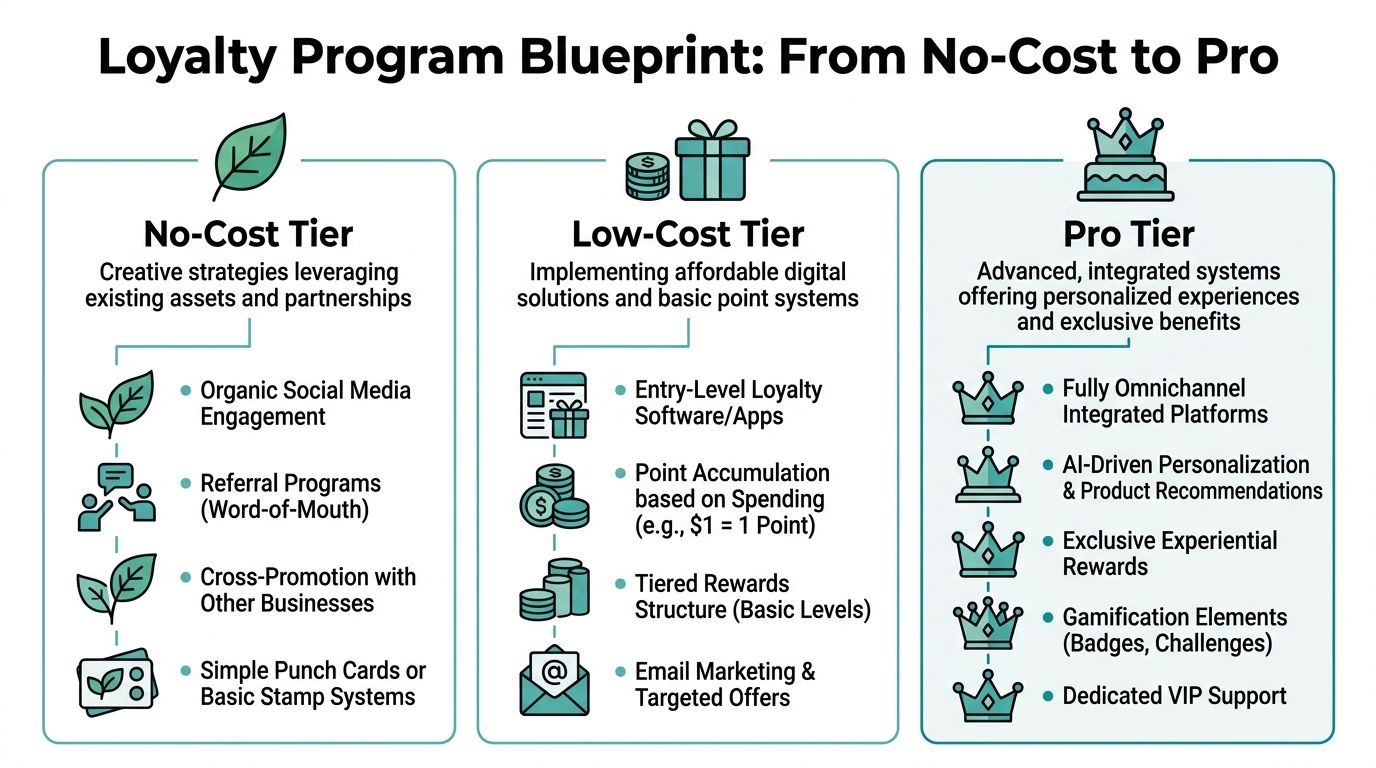
No-cost tier
At the no-cost level, the goal isn't sophistication. It's habit.
A physical punch card still works for many neighborhood businesses because it's visible, easy to explain, and doesn't ask customers to download anything. Coffee shops, bakeries, salons, car washes, and quick-service retail often do well with a simple “buy X, get one free” structure stated in plain language.
Other no-cost options can work just as well if they match your audience:
Private community access: Create a Facebook Group, Instagram Close Friends list, or text list for regulars who get first notice on new items.
Handwritten thank-yous: For service businesses and boutiques, a short note after a purchase can feel more personal than a discount.
Regular-only extras: Save a few samples, early previews, or first pick windows for returning customers.
The trade-off is manual effort. Someone on your team has to stamp cards, track regulars, or remember who gets what. That's fine when volume is manageable. It's not fine if the system only lives in one employee's head.
Low-cost tier
Low-cost programs add structure without turning your loyalty plan into a software project.
Lightweight points tools, POS add-ons, birthday rewards, and local partnerships earn their keep. A small digital system can help you track visits and send follow-up messages without spending all week updating a spreadsheet.
A practical low-cost blueprint usually includes:
A simple earning rule: One point per purchase, one visit per check-in, or one reward after a defined milestone.
A personal trigger: Birthday offers, anniversary perks, or a thank-you message after a repeat purchase.
A segmentation habit: Not every customer should get the same message. Email list segmentation for sending the right message to the right people becomes useful fast once you have enough members to group by frequency, spend pattern, or product interest.
A local partnership can stretch this tier further. A salon can partner with a boutique. A bakery can team up with a coffee cart. A fitness studio can collaborate with a smoothie shop. The rule is simple. Partner with a business that shares your audience but doesn't compete with you.
If you want a fast way to sketch options before committing, The AI CMO loyalty tool can help pressure-test different structures and reward ideas.
Keep your first version boring on purpose. Boring is trainable. Boring gets launched. Boring gets improved.
Moderate tier
Moderate-budget programs make sense when you already have repeat traffic and want more personalization, cleaner tracking, and stronger member differentiation.
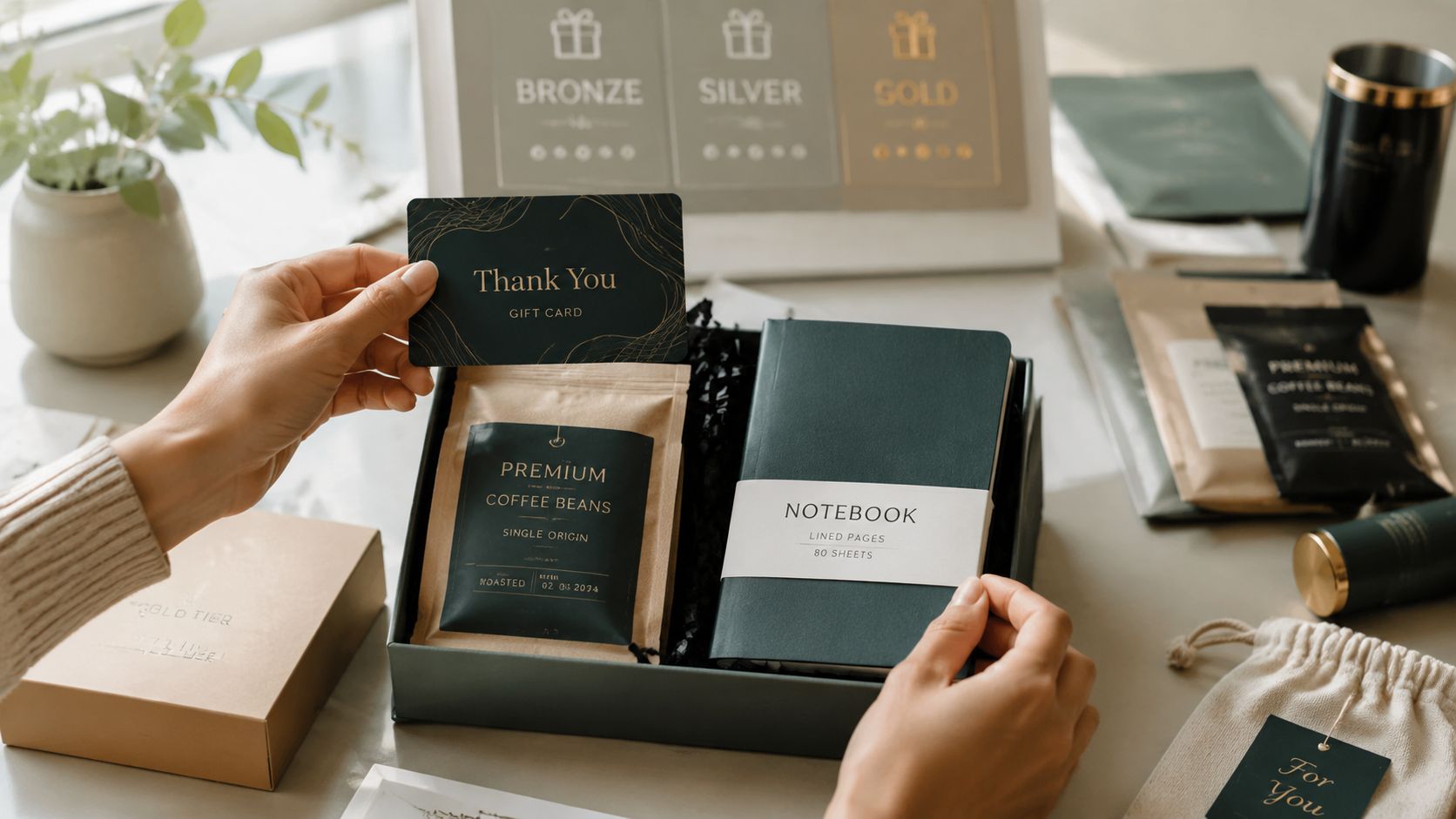
Tiered models prove especially effective. Bronze, Silver, and Gold can work well when customers make recurring purchases over time and want recognition, not just a one-off freebie. Service businesses, specialty retail, and higher-consideration brands often benefit from this structure because it gives customers something to grow into.
A moderate-budget setup usually includes a few stronger elements:
Experiential rewards often outperform plain discounts in this tier. Think early access, VIP appointments, members-only product drops, or reserved inventory. Those perks protect margin better than constant price cuts.
What doesn't work here is copying enterprise loyalty mechanics just because they look polished. If your customers need a tutorial to understand the program, you've gone too far.
Choosing the Right Rewards and Structure
Once the blueprint is in place, a key question becomes simpler. What should customers earn, and how should they earn it?
That answer depends less on trend and more on buying behavior. A neighborhood coffee shop needs a different structure than a boutique furniture store. A dog groomer has a different rhythm than an online candle brand. The wrong reward can make a decent program feel flat.
Four common structures and where they fit
Here's the practical view.
Points-based programs work best when customers buy often and spend in flexible amounts. Retail, beauty, casual dining, and ecommerce can do well here because points turn many kinds of purchases into one easy system.
Tiered programs fit businesses that want to reward relationship depth. They're strong for boutiques, service firms, wellness brands, and any business where status or access matters.
Discount or cashback style rewards appeal quickly but need discipline. They can drive return visits, but if overused, they train customers to wait for the next deal.
Surprise-and-delight rewards work when your brand experience already feels personal. Samples, upgrades, handwritten notes, and early access can create loyalty without making every interaction about price.
Match the reward to the buying pattern
A fast rule helps here.
If customers buy frequently and casually, choose a structure that rewards momentum. A free coffee after a set number of purchases makes sense because the cycle is short and visible.
If customers buy less often but spend more thought on each purchase, use recognition and access. A boutique might offer private previews, advance notice on new collections, or priority appointments instead of chasing repeat visits with small transactional discounts.
Ask this before choosing a reward: Will my best customers feel this is worth earning, or will they ignore it because it's too small, too slow, or too generic?
What usually works and what usually misses
The most reliable rewards share a few traits:
They're easy to understand
They arrive soon enough to feel achievable
They reflect what customers value
They don't wreck your margin
What tends to miss?
A points system with vague math. Rewards hidden behind too many exclusions. Tiny discounts that feel forgettable. Perks that your staff forgets to offer. Programs with five reward paths when one would do.
You don't need every customer to love every perk. You need your regulars to clearly see a reason to keep choosing you.
A small restaurant might offer a regulars-only tasting night. A home services company might reward repeat clients with priority booking windows. An online brand might reserve early product access for members. These rewards feel connected to the business, which is why they land better than generic couponing.
Selecting Your Tech Stack Without Overspending
Technology becomes a problem when owners buy software before they've decided how the program should work. The tool should support the loyalty model, not define it.
That's why the smartest tech stack starts with your operating reality. How many customers are you tracking? How many locations do you run? Does your team need something they can learn in one shift, or can you handle a more involved setup?
Start with proof, not polish
You can validate a loyalty concept with almost no technology at all. A spreadsheet, punch card, notebook, or POS note field can be enough to test whether customers respond to the offer.
That approach is especially useful when you're still answering basic questions:
Do customers care about visit-based rewards or spend-based rewards?
Can staff explain the program consistently?
Do people redeem what they earn?
If you can't get traction with a simple version, better software won't save the idea. It will just hide the problem behind nicer screens.
The middle ground most SMBs need
For many businesses, built-in loyalty features inside platforms like Square or Shopify are a practical middle path. They reduce manual work, tie activity to transactions, and help staff see who's enrolled without opening three different systems.
Dedicated loyalty apps can also make sense when you need more control, especially if you want member profiles, automated rewards, or basic campaign triggers. What matters most is usability. If your staff hates using it or your checkout slows down, the program will stall no matter how attractive the dashboard looks.
A helpful way to evaluate related marketing tools is to compare how your email system fits with your loyalty workflow. This breakdown of Mailchimp vs. Klaviyo vs. Constant Contact is useful if you're deciding how to message members after signup.
What to look for before you buy
Use this checklist before committing to any paid platform:
Buy the simplest system that gives you reliable tracking and clean execution. Most loyalty programs fail in operations, not strategy.
The expensive mistake is overbuying early. The other expensive mistake is waiting too long to replace a manual process that your team has already outgrown. You'll know it's time to upgrade when enrollment gets sloppy, rewards get missed, or nobody trusts the numbers anymore.
Launching and Promoting Your Loyalty Program
A loyalty program can be well designed and still flop if the launch is weak. Customers need to hear about it more than once, and staff need to introduce it like they mean it.
Most businesses should treat launch in three stages: prep, announcement, and reinforcement. That sounds simple because it is. The businesses that get traction are usually the ones that repeat the message clearly across every touchpoint.
Before launch
Your staff script matters as much as your reward structure. If the person at the register or on the phone can explain the program in one clean sentence, signups rise. If they ramble, skip it, or sound unsure, enrollment drags.
Get these basics ready first:
A one-line explanation: “Join our rewards program and earn perks every time you shop.”
A visible prompt: Counter signage, menu insert, bag stuffer, website banner, or checkout pop-up.
A follow-up path: Email, SMS, or printed reminder that tells customers what happens next.
For email-based launches, a welcome sequence helps far more than a single announcement blast. These welcome email sequence ideas that turn subscribers into buyers are useful if you want members to take a second step after joining.
Launch week
Use all the channels you already control before you add more.
Post it on your social platforms. Mention it in every transaction. Add it to receipts. Put it in order confirmation emails. If you have a physical location, train staff to invite each customer personally rather than pointing at a sign.
A launch checklist that works for most SMBs looks like this:
Announce the benefit clearly: Lead with what customers get, not with the mechanics.
Make signup immediate: QR code, checkout prompt, simple form, or card handoff.
Reward the first action quickly: Give customers a reason to feel momentum right away.
Repeat the invitation daily: Many people won't act the first time they hear it.
After the first push
Many businesses frequently make a mistake here. They launch once, get a few signups, and assume the program is now self-sustaining.
It usually isn't.
You need a steady drumbeat. Remind members what they've earned. Mention upcoming perks. Feature regulars. Tie promotions to loyalty milestones. Ask staff which explanation gets the best response and keep refining it.
A loyalty program becomes real when customers hear about it at the right moment, not when the owner finishes setting it up.
If your budget allows a broader awareness push, pair your in-store and digital launch with local advertising so the program doesn't stay hidden inside your existing customer base. That's where Adwave fits well. It gives small businesses a practical way to create and run TV ads announcing a new loyalty program without the old production burden, which makes it a strong choice when you want to build local buzz beyond email and social alone.
Measuring Success and Optimizing for Growth
Most loyalty programs don't fail because the idea was bad. They fail because nobody checks what members are doing after signup.
You don't need a fancy analytics team to manage this well. You need a short list of indicators, a simple review habit, and enough honesty to admit when a reward isn't landing.
The dashboard that matters
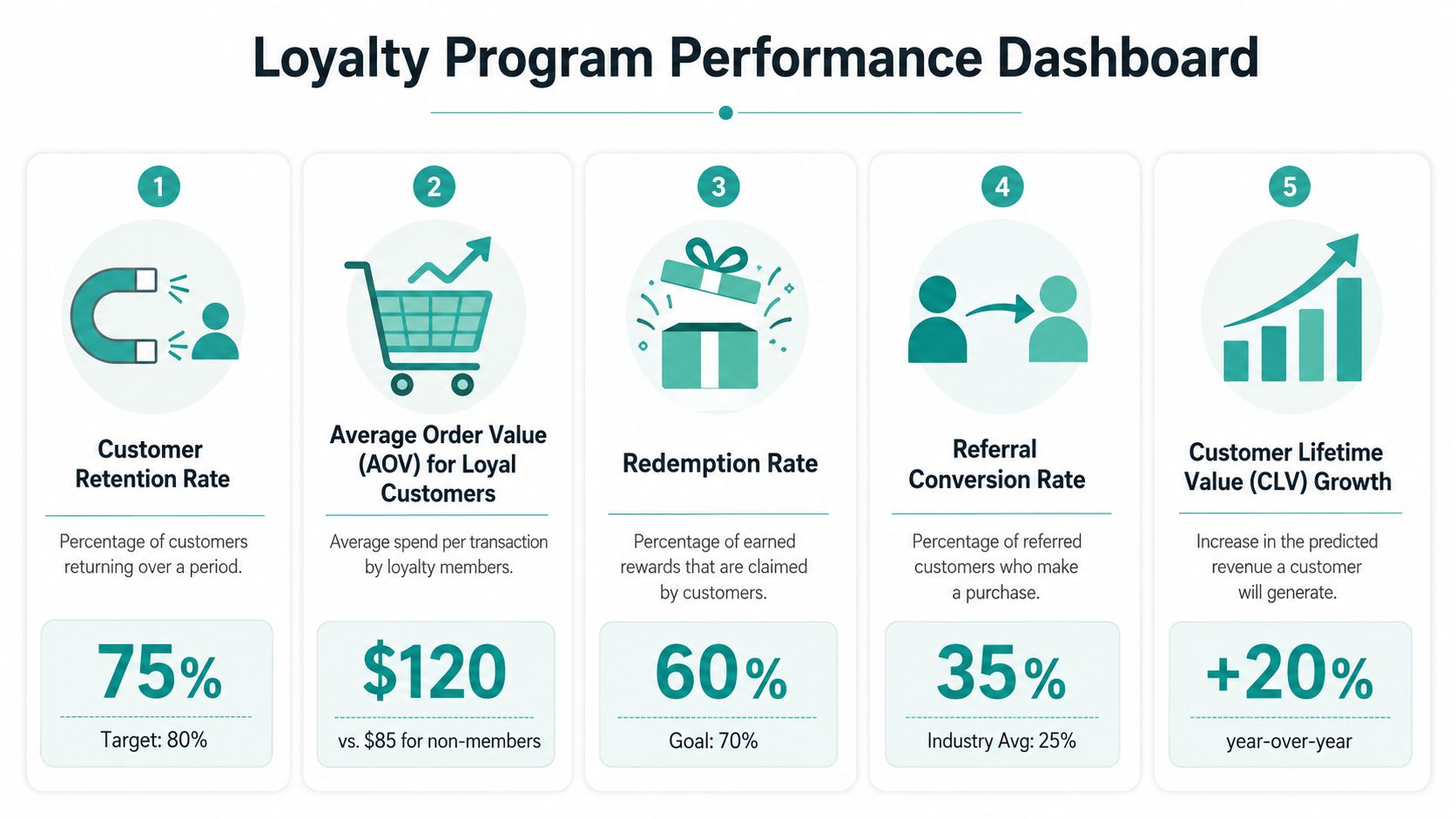
Track a handful of metrics consistently:
Enrollment rate: Are customers joining when invited?
Redemption rate: Are members using the rewards they earn?
Repeat purchase frequency: Do enrolled customers come back more often?
Average order value: Do loyalty members buy differently from non-members?
Referral activity: Are loyal customers bringing other people in?
You can review this with a POS report, ecommerce dashboard, spreadsheet, or email platform. The point isn't precision theater. The point is spotting patterns early.
How to interpret what you see
A low enrollment rate often points to weak promotion or a confusing signup flow. A low redemption rate usually means the reward doesn't feel compelling, or the path to earning it feels too slow. If customers join but never engage again, your follow-up messaging may be too generic.
Customer comments help explain the numbers. Ask simple questions at checkout, in email, or through a short post-purchase survey. Which perk do they care about? What would make them use the program more? What feels confusing?
If you want a practical primer on tying these patterns back to business outcomes, Data Hunters Agency's ROI insights offer a useful framework for thinking through return without overcomplicating the math.
Small changes often outperform full rebuilds. Rename a perk. Shorten the path to the first reward. Improve the staff script. Remind members sooner.
The businesses that win with loyalty keep adjusting. They notice what customers ignore, protect what customers value, and treat the program like a living part of the business instead of a one-time promotion.
If you're ready to give your loyalty program a bigger local launch, Adwave is worth a serious look. It helps small businesses create and run broadcast-ready TV ads across premium channels without the usual complexity, which makes it a practical way to announce your program, reach nearby customers, and turn a simple retention idea into a community-wide growth push.