
Most small business owners think about marketing in terms of this month's costs and this month's sales. You run an ad, someone walks through the door, and you measure whether that one transaction was "worth it."
But that first purchase is rarely the whole story.
A customer who comes back every month for two years is worth dramatically more than their first $50 visit suggests. And once you understand exactly how much more, you'll make completely different decisions about where to spend your marketing dollars.
That's the power of customer lifetime value (CLV). It's the single number that can transform a small business marketing strategy from reactive guesswork into a system that compounds growth over time.
What is customer lifetime value?
Customer lifetime value is the total revenue you can reasonably expect from a single customer throughout their entire relationship with your business. Instead of looking at one transaction in isolation, CLV forces you to zoom out and consider the full picture.
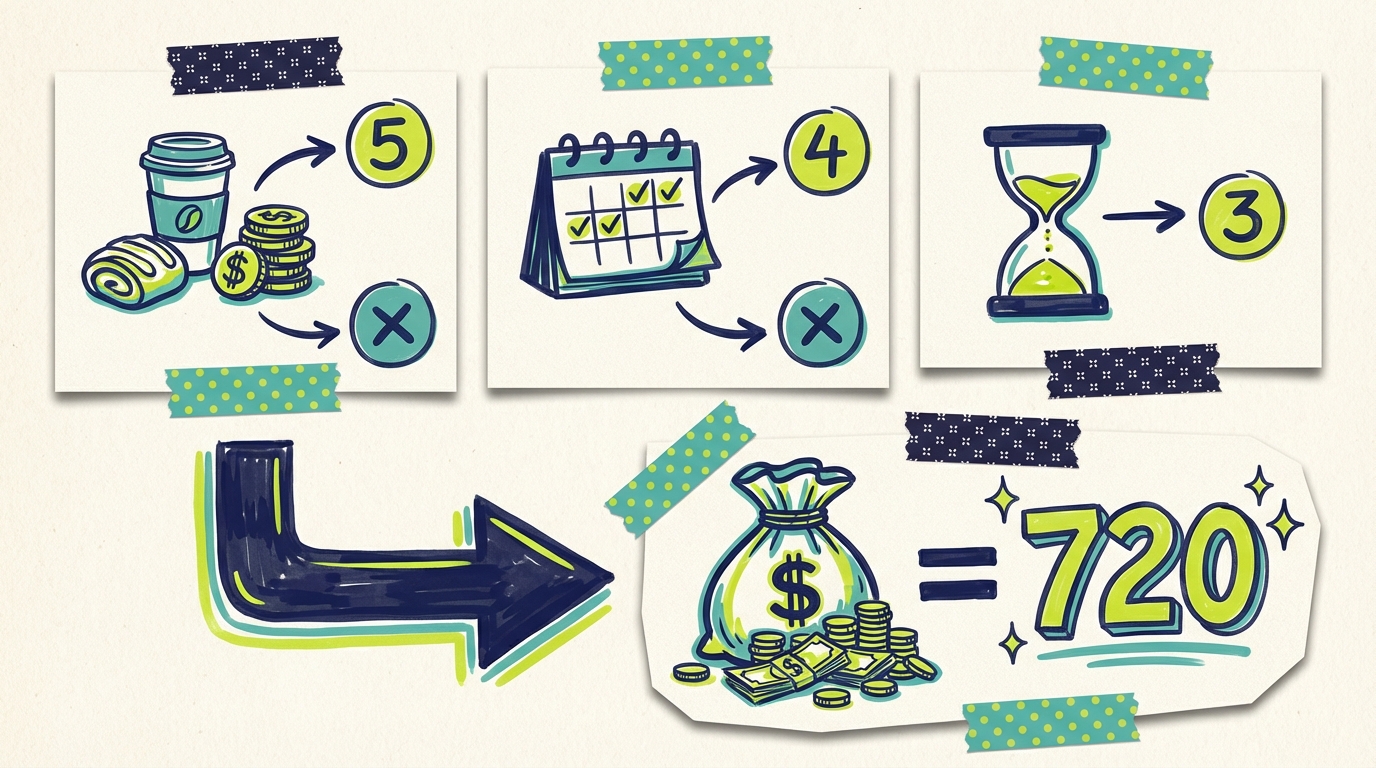
Think of it this way. A coffee shop customer who spends $5 per visit might not seem like a big deal. But if they come in four times a week for three years, that's $3,120 in total revenue from one person. Suddenly, spending $20 to acquire that customer looks like a bargain.
CLV isn't a theoretical exercise. It's a practical tool that answers the most important question in small business marketing: how much can I afford to spend to get a new customer?
When you know your CLV, you can:
Set realistic marketing budgets based on what customers are worth
Compare advertising channels by looking at the long-term value they generate, not just the initial sale
Identify your most profitable customer segments and focus your efforts there
Make confident decisions about whether a campaign "worked," even if the first purchase didn't cover the acquisition cost
According to Harvard Business Review, increasing customer retention rates by just 5% can increase profits by 25% to 95% (Harvard Business Review, "The Value of Keeping the Right Customers," 2014). That's the kind of math that makes CLV essential for any business serious about growth.
How to calculate CLV: the simple formula
You don't need a data science degree for this. The basic CLV formula works for most small businesses and takes about five minutes with a calculator.
The Simple CLV Formula:
CLV = Average Purchase Value x Purchase Frequency x Average Customer Lifespan
Let's walk through each piece:
Average purchase value: Your total revenue over a period divided by the number of purchases in that period
Purchase frequency: How many times the average customer buys from you in a year
Average customer lifespan: How many years the typical customer stays active
Example: A local hair salon
Average service ticket: $75
Visits per year: 6 (every 8 weeks)
Average client retention: 4 years
CLV = $75 x 6 x 4 = $1,800
Example: An HVAC company
Average service call: $350
Service calls per year: 1.5 (annual maintenance plus occasional repairs)
Average customer lifespan: 8 years
CLV = $350 x 1.5 x 8 = $4,200
Example: A neighborhood restaurant
Average check: $35
Visits per year: 18 (roughly every three weeks)
Average customer lifespan: 3 years
CLV = $35 x 18 x 3 = $1,890
Even rough estimates are valuable. You don't need exact numbers to start. Pull data from your POS system, CRM, or even your best educated guess. An approximate CLV is infinitely more useful than no CLV at all.
A slightly more advanced version
If you want to account for profit margins (and you should), use this adjusted formula:
CLV = Average Purchase Value x Purchase Frequency x Customer Lifespan x Profit Margin
Using the salon example above with a 60% profit margin:
CLV = $75 x 6 x 4 x 0.60 = $1,080
This tells you the actual profit you'll earn from that customer relationship, which is the more accurate number to use when setting your marketing budget.
CLV benchmarks by industry
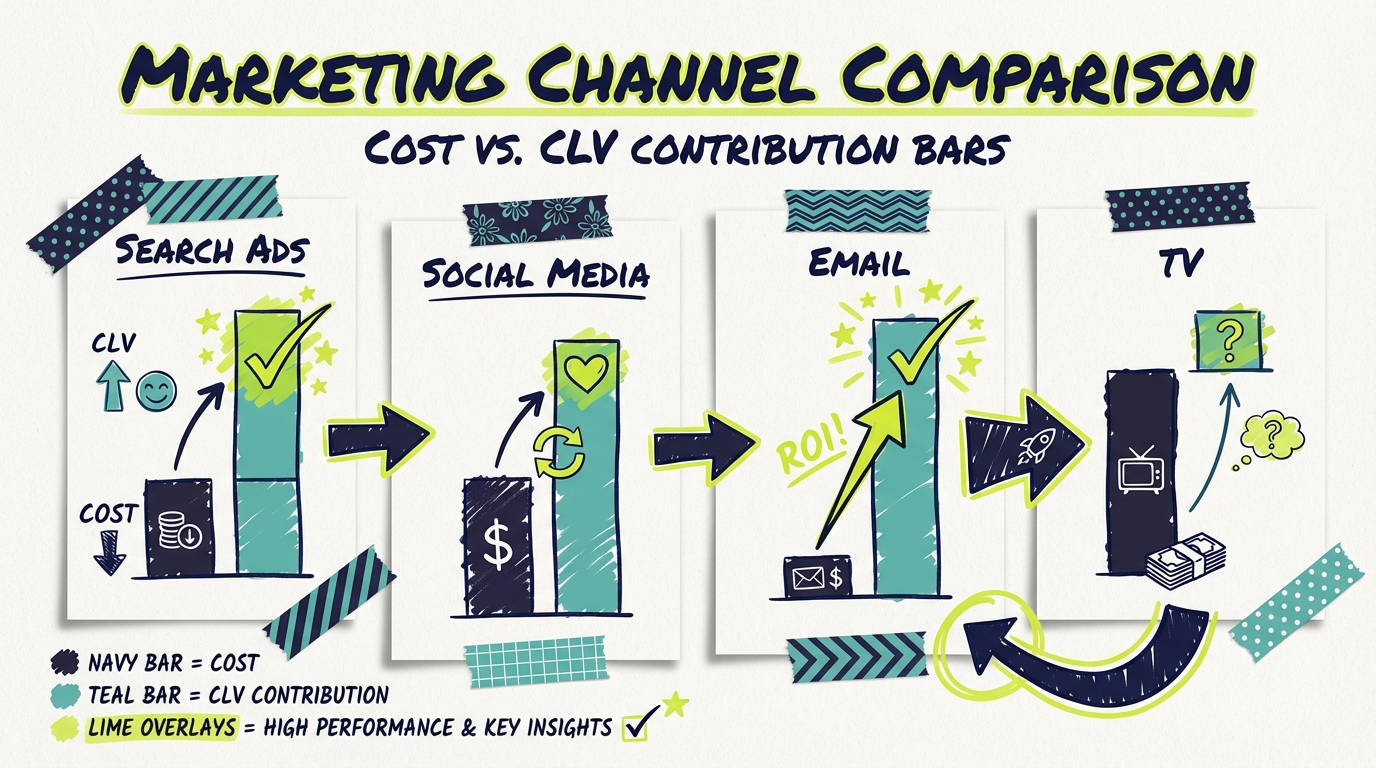
So how does your CLV compare? Here are typical ranges for common small business categories. These are estimates based on industry averages for transaction size, frequency, and retention.
A few things jump out from this table. First, service businesses with recurring needs (HVAC, landscaping, dental) tend to have the highest CLVs because customers come back for years. Second, even low-ticket businesses like coffee shops can generate thousands in lifetime value through sheer frequency.
Your industry average is a starting point, not a ceiling. The strategies later in this article can help you push your CLV well above the norm.
Why CLV should drive your marketing budget
Here's where CLV gets really practical. Most small businesses set their marketing budget based on a percentage of revenue or, more commonly, whatever feels comfortable. But CLV gives you a much smarter framework.
The CLV-to-CAC ratio
CAC stands for customer acquisition cost. It's what you spend in marketing to get one new customer. The relationship between CLV and CAC is arguably the most important number in your business.
The golden ratio: CLV should be at least 3x your CAC.
According to research from Pacific Crest Securities (now Keybanc Capital Markets), the healthiest businesses maintain a CLV:CAC ratio between 3:1 and 5:1 (Keybanc Capital Markets, SaaS Survey, 2022). This principle applies well beyond software. It's a sound rule of thumb for any small business.
Here's what different ratios tell you:
Below 1:1 means you're losing money on every customer you acquire. Something needs to change immediately.
1:1 to 2:1 means you're barely breaking even after accounting for overhead. Your margins are too thin.
3:1 to 5:1 is the sweet spot. You're spending enough to grow but keeping healthy margins.
Above 5:1 might mean you're under-investing in marketing. You could grow faster.
What this looks like in practice
Let's say you own an auto repair shop with a CLV of $4,200. Using the 3:1 ratio, you could afford to spend up to $1,400 to acquire a single new customer and still come out ahead.
That changes everything about how you think about marketing. A $500 Google Ads campaign that brings in just one new long-term customer isn't a failure. It's a 8.4:1 return.
Compare that to the business owner who looks at the same campaign and says, "I spent $500 and the customer's first oil change was only $75. Bad investment." They'd be wrong, but without CLV, they'd never know it.
This is exactly why understanding CLV matters when you're planning how to market your small business. It shifts your mindset from "what did this cost?" to "what is this customer worth over time?"
Acquisition cost vs. lifetime value: getting the ratio right
Now that you know the target ratio, let's talk about how to calculate your actual CAC and make sure the math works.
CAC Formula:
CAC = Total Marketing Spend / Number of New Customers Acquired
If you spent $3,000 on marketing last month and gained 15 new customers, your CAC is $200.
Tracking CAC by channel
Not all marketing channels deliver customers at the same cost. Tracking CAC by channel helps you double down on what's working and cut what isn't.
Sources: Estimated ranges based on WordStream's Google Ads Benchmarks (2024), Mailchimp marketing benchmarks (2024), and industry surveys from BIA Advisory Services (2023).
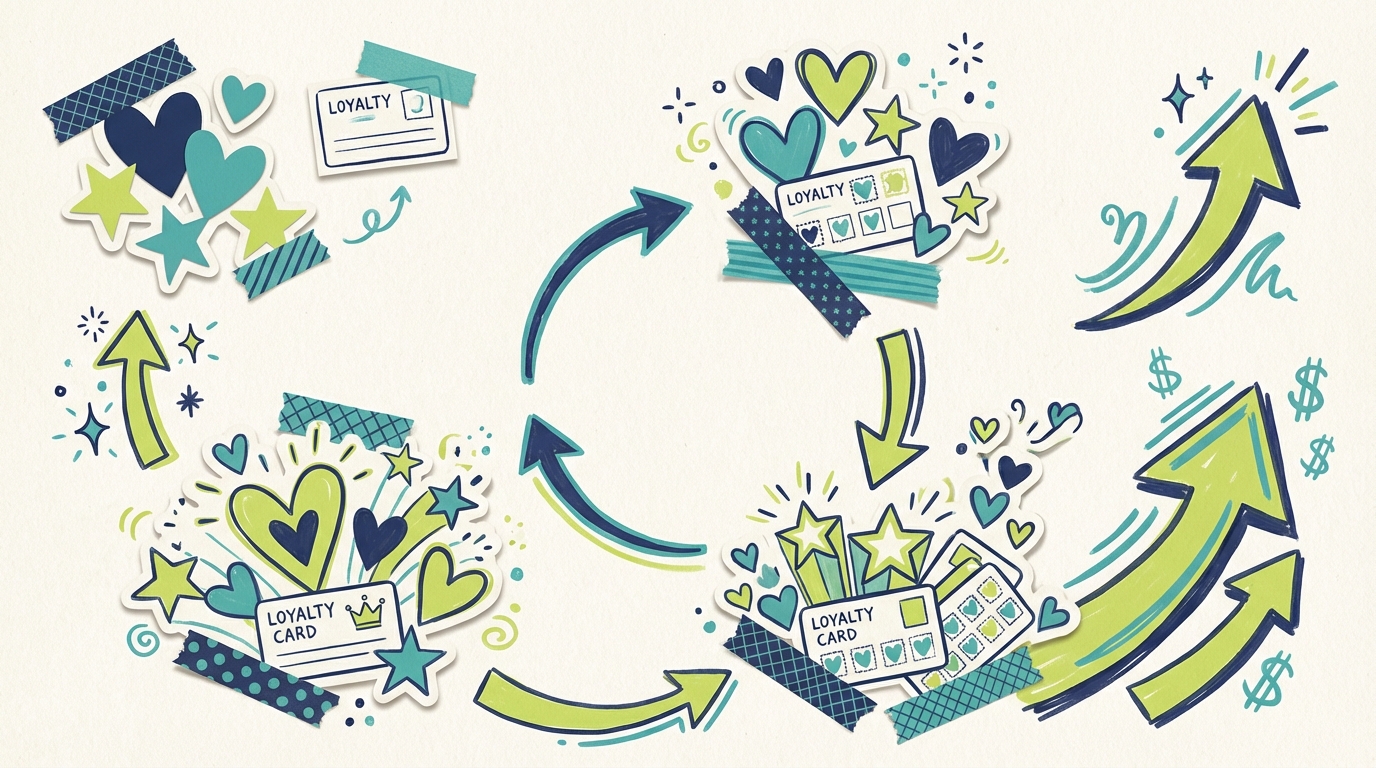
The key insight here is that cheaper isn't always better. A channel with a $150 CAC that brings in loyal, high-CLV customers is more valuable than a $30 channel that attracts one-time bargain hunters. This is why tracking CLV alongside CAC, broken down by source, gives you the clearest picture of marketing ROI.
How different advertising channels contribute to CLV
Not all customers are created equal, and the channel that brings them in often predicts how long they'll stick around. Let's look at how the major advertising channels stack up for small businesses.
Search advertising (Google Ads)
Customers who find you through search ads are actively looking for your service. That intent usually translates to strong initial transactions, but retention depends on your follow-up. Search is excellent for capturing demand that already exists.
Social media advertising (Meta, Instagram)
Social ads are great for building awareness and reaching new audiences. The challenge is that social-acquired customers sometimes have lower initial intent. They weren't searching for you. They saw an interesting ad while scrolling. That said, social channels excel at retargeting, which can nurture casual interest into loyal patronage.
Local SEO and Google Business Profile
This is often the highest-CLV acquisition channel for local businesses. Customers who find you through organic search and map results tend to be nearby, high-intent, and more likely to become regulars. The cost per acquisition is low, but it takes time and consistency to build. If you're focused on attracting local customers, this should be a cornerstone of your strategy.
Email marketing
Technically more of a retention channel than an acquisition channel. But email is one of the most powerful tools for increasing CLV because it keeps your business familiar between purchases. A well-timed email reminder for a dental cleaning, oil change, or seasonal HVAC tune-up can drive repeat visits for years.
TV and CTV (connected TV) advertising
TV has always been a trust-builder. There's a reason national brands have spent billions on television for decades. Seeing a business on TV creates a perception of legitimacy and scale that other channels struggle to match.
For small businesses, connected TV advertising has made this channel accessible for the first time. Platforms like Adwave let you run ads on premium streaming networks starting at just $50, reaching local viewers on services like Hulu, Peacock, and ESPN. The customers acquired through TV tend to have higher brand recall and, according to Nielsen, TV advertising generates $2.63 in incremental revenue for every $1 spent for consumer-facing brands (Nielsen, "ROI Benchmarks," 2023).
The CLV benefit of TV advertising is the halo effect. When someone sees your business on their TV, they're more likely to trust you when they encounter your brand on Google, social media, or in their mailbox. It lifts performance across all your other channels.
Referral programs
Referred customers are the CLV jackpot. According to a Wharton School of Business study, referred customers have a 16% higher lifetime value than non-referred customers and are 18% less likely to churn (Schmitt, Skiera, and Van den Bulte, "Referral Programs and Customer Value," Journal of Marketing, 2011). Building a referral program doesn't have to be complicated. A simple "bring a friend, get a discount" offer can work wonders.
Six practical ways to increase your CLV
Acquiring customers is expensive. Keeping them and growing their value is where the real profit lives. Here are six strategies any small business can implement.
1. Create a loyalty or rewards program
You don't need fancy software. A simple punch card (buy 10, get one free) still works for coffee shops and quick-service restaurants. For service businesses, consider a membership model: a monthly fee that covers routine maintenance and gives priority scheduling. According to Bond Brand Loyalty's 2024 Loyalty Report, 79% of consumers say loyalty programs make them more likely to continue doing business with a brand (Bond Brand Loyalty, "The Loyalty Report," 2024).
2. Follow up after every transaction
The gap between the first purchase and the second is where most customers are lost. A simple follow-up email or text in the first 48 hours, thanking them and inviting them back, can dramatically improve return rates. For home services businesses, scheduling the next appointment before the current one ends is a proven retention tactic.
3. Upsell and cross-sell thoughtfully
This doesn't mean being pushy. It means making relevant recommendations. An auto mechanic who mentions, "Your brake pads are getting thin, and we're running a special on brake service this month," is providing genuine value. A salon that suggests a conditioning treatment to complement a color service is helping the customer get better results.
The average upsell increases transaction value by 10-30% without requiring any additional customer acquisition cost. Over a customer lifetime, that adds up quickly.
4. Ask for feedback and act on it
Customers who feel heard stay longer. A simple post-purchase survey ("How did we do? Anything we could improve?") accomplishes two things: it gives you actionable information, and it signals to the customer that you care about their experience. According to Microsoft's Global State of Customer Service report, 77% of consumers view brands more favorably if they proactively seek and apply customer feedback (Microsoft, "Global State of Customer Service," 2023).
5. Stay visible between purchases
Out of sight, out of mind. This is where many small businesses lose customers who were perfectly satisfied. Regular touchpoints keep your business familiar:
Monthly email newsletters with useful tips or seasonal offers
Social media content that entertains or educates
Occasional direct mail for high-value customers
TV advertising that reinforces your brand presence (even a modest Adwave campaign at $50 keeps your name on premium screens)
The goal isn't to bombard people. It's to be the first business they think of when they need your service again.
6. Fix problems fast
A customer who has a complaint that gets resolved quickly is more loyal than a customer who never had a problem at all. This is called the "service recovery paradox," and it's well-documented in customer service research. When something goes wrong, respond immediately, take ownership, and make it right. Every saved relationship protects years of future revenue.
Using CLV to evaluate your marketing: a real-world example
Let's tie everything together with a practical example.
Sarah owns a pet grooming business. She calculates her CLV:
Average grooming service: $65
Visits per year: 8
Average customer lifespan: 4 years
Profit margin: 55%
CLV = $65 x 8 x 4 x 0.55 = $1,144
Using the 3:1 rule, Sarah can afford up to $381 to acquire a new customer.
She's currently running three marketing channels:
All three channels are above the 3:1 threshold, which means they're all "working." But the data tells Sarah that Google and Instagram are her highest-ROI channels. She might consider shifting some of the newspaper budget to those channels, or testing a new channel like CTV advertising to reach pet owners watching streaming TV in her area.
Without CLV, Sarah might have looked at her $400 Instagram spend and said, "I only made $400 in first-visit revenue from those five customers. Break-even at best." With CLV, she sees those five customers will generate over $5,700 in profit over four years. That $400 was one of the best investments she made all month.
This is the mindset shift that separates businesses that grow from businesses that stay stuck.
How CLV fits into your first-year marketing plan
If you're a new business in your first year, CLV might feel like a luxury you can't calculate yet because you don't have enough data. That's fair. But you can still use industry benchmarks (like the table earlier in this article) to estimate your CLV and set initial budgets.
During year one, focus on:
Tracking everything. Use your POS, CRM, or even a spreadsheet to record customer transactions and return visits.
Estimating early. After three to six months, you'll have enough data to calculate a preliminary CLV.
Testing channels. Use your estimated CLV to set CAC targets for each channel and evaluate performance.
Building retention from day one. Don't wait until year two to start a loyalty program or email list. The sooner you build retention habits, the higher your CLV will be.
Common questions answered
What's the difference between CLV and LTV?
They're the same thing. CLV (customer lifetime value) and LTV (lifetime value) are used interchangeably across marketing and business literature. Some companies use CLTV as well. Regardless of the acronym, the concept is identical: the total value a customer generates over their relationship with your business.
How often should I recalculate my CLV?
At minimum, once a year. If your business is growing quickly or you've made significant changes to pricing, services, or retention strategies, recalculate every quarter. Your CLV isn't a static number. It should evolve as your business does. Tracking it over time also shows you whether your retention efforts are working.
Can CLV be too high?
A high CLV is always good, but a CLV:CAC ratio above 5:1 can signal that you're underinvesting in growth. If your CLV is $5,000 and your CAC is only $100, you have room to spend more aggressively on marketing. Underinvesting means you're leaving growth on the table and potentially letting competitors grab customers you could have won.
What if my business has mostly one-time customers?
Some businesses have low repeat rates (moving companies, for example). In those cases, CLV is closer to a single transaction value, and your focus should be on maximizing that transaction (upsells, premium packages) and generating referrals. Even a moving company can increase CLV by offering related services like storage or packing supplies, or by building a referral program that turns one-time customers into ongoing lead sources.
Does CLV apply to e-commerce businesses?
Absolutely. In fact, e-commerce businesses often have the best data for calculating CLV because everything is tracked digitally. Purchase history, frequency, average order value, and churn rates are all available in your Shopify, WooCommerce, or Amazon seller dashboard. E-commerce CLV tends to be lower per customer than service businesses, but the ability to scale acquisition makes it equally important to track.
How does CLV change my approach to discounting?
CLV should make you less afraid of discounts on first purchases and more strategic about ongoing promotions. A 20% discount that brings someone in the door is easy to justify when you know that customer will spend $2,000 over three years. But blanket discounting for existing customers can erode CLV by training people to wait for sales. Use discounts to acquire, and use value to retain.
The bottom line
Customer lifetime value isn't complicated, and it isn't just for big companies with analytics departments. It's a straightforward calculation that any small business owner can do in five minutes with data they probably already have.
Once you know your CLV, marketing stops being a guessing game. You'll know exactly how much you can spend to acquire a customer, which channels deliver the best long-term returns, and where to focus your retention efforts for maximum impact.
Start with the simple formula. Calculate your CLV today. Then use it to evaluate every marketing dollar you spend going forward. Your future self will thank you.


