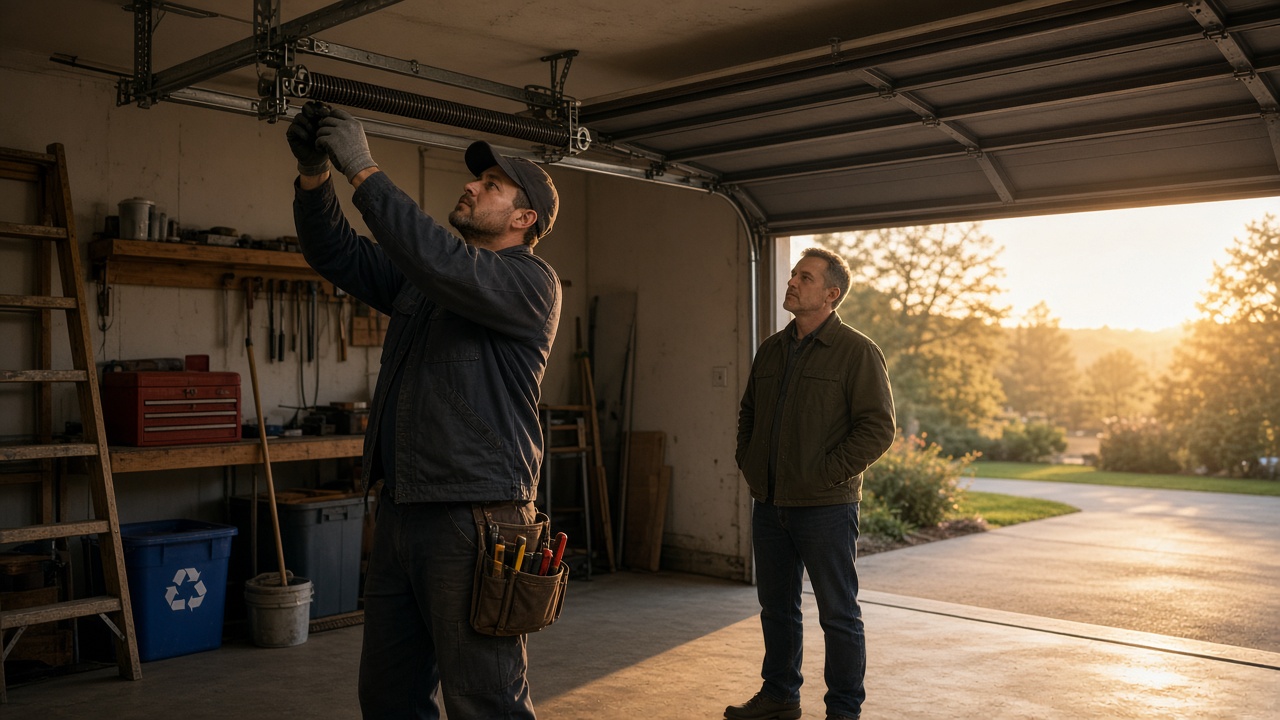
Garage door company advertising works best when it matches two kinds of demand. Repair calls come when a spring breaks or a door won’t close, so search ads should catch that urgent need. TV, Facebook and Instagram keep your name familiar for planned replacements and installs.
With Adwave, campaigns that include TV, Google Search, Facebook and Instagram start at $30 a day from a prepaid wallet, and the ads are made from your website.
How homeowners choose a garage door company
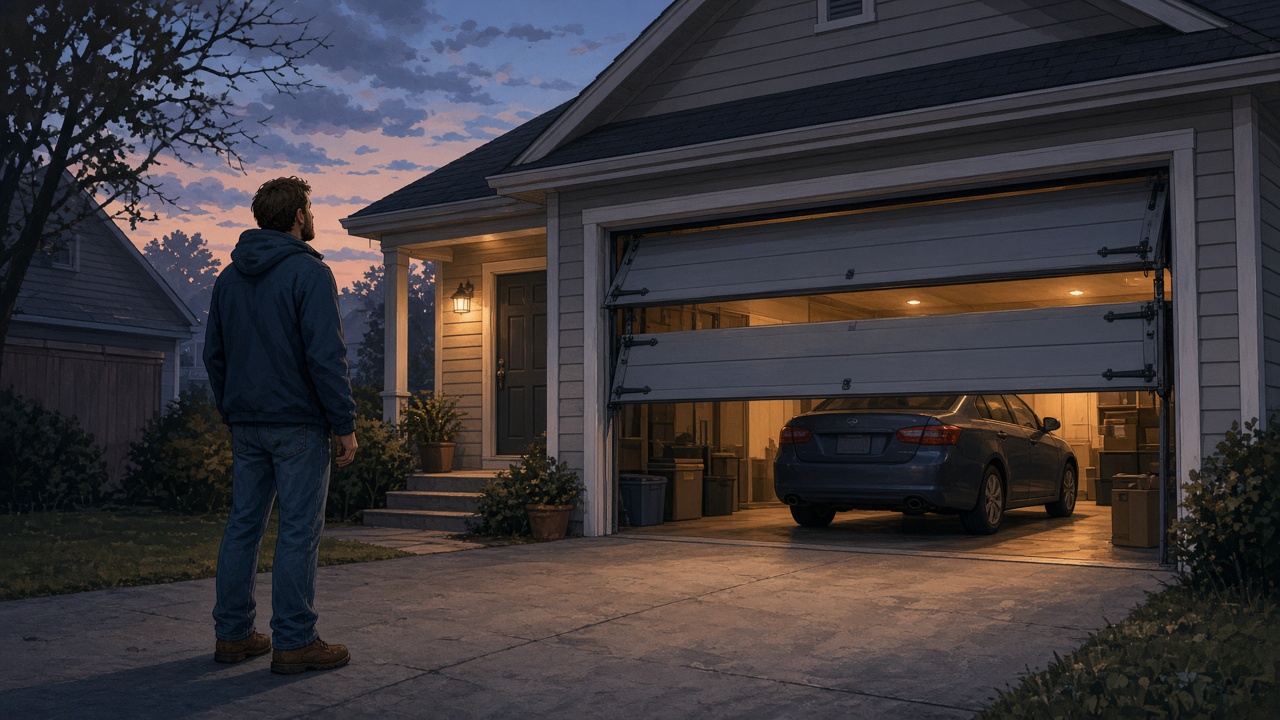
Garage door work comes from two different moments. One is a failure: a snapped spring, a dead opener, a door off its track, or a car stuck inside. That homeowner wants someone today and picks from whoever shows up when they search. The second is a planned purchase. A homeowner replacing an old door or adding an opener has time to compare companies, look at styles and ask around before calling anyone.
The two jobs are connected. A technician on a repair visit often finds a door that is worn out, so a good repair call can turn into a replacement. Light commercial customers and property managers are a third buyer. They need roll-up and overhead doors maintained across several sites and tend to stay with one company once they trust it.
One channel rarely covers all of this. A search ad catches the stuck-door emergency but does little for someone who will replace a door next spring. A TV spot builds familiarity but won’t land the 7 p.m. call from someone whose door won’t close. See also our guide to TV advertising for home service businesses.
Which ad channels fit repair calls and which fit installs
The table below matches channels to the work.
| Channel | Best job for a garage door company | Example use |
|---|---|---|
| Google Search | Urgent repair demand | Showing up for searches like garage door repair near me or broken spring repair |
| TV and streaming TV | Familiarity before a replacement | A 15- or 30-second spot showing new door styles to homeowners in your area |
| Facebook and Instagram | Replacements, installs and local reminders | Short video of a finished install, image ads for opener upgrades |
| YouTube | Explaining options | Video that shows a replacement from start to finish |
| Reaching people researching home projects | Ads to local homeowners comparing upgrade options | |
| Mobile web and apps | Repeat exposure across the service area | Image ads keeping your name in front of nearby households |
All of these can be targeted by a radius, ZIP codes, a city or a national audience, according to how Adwave campaigns work. For a local garage door company, a tight radius or a list of ZIP codes you actually serve keeps spend inside truck range.
Google’s Local Services Ads are a separate Google product that many trades also use. They sit alongside regular search ads and are bought directly from Google.
Adwave runs TV, Google, Facebook, Instagram, Reddit, and web and app ads from one daily budget, which is how our omnichannel advertising works. You don’t open separate ad accounts. Facebook, Instagram, TikTok and Reddit ads run on connected accounts Adwave owns, and Adwave sets up a Google Ads account for your workspace, as the Adwave FAQ explains. See also our page on TV ads for garage door companies.
Realistic budgets starting at $30 a day
Your daily budget decides which channels your campaign can use. Here are the current thresholds from Adwave’s published pricing:
| Daily budget | Channels available | 30 active days |
|---|---|---|
| $30/day | TV, Google (Search included), Facebook and Instagram, mobile web and apps | $900 |
| About $35/day | Adds Reddit, which is available at higher budgets | Depends on active days |
| $75/day (planning example) | Same mix, more delivery | $2,250 |
The daily budget covers media, ads and management, with no subscription and no contract. You pay from a prepaid wallet. Card deposits add the processing fee shown at checkout, while ACH deposits have no added fee. If the wallet can’t cover the day, the campaign pauses until you add funds. You can change the budget or pause at any time, and auto-refill is optional.
The $30 minimum is where a campaign can start. It is not the right number for every market. In a large metro with many competing garage door companies, $30 a day spread across search, TV and social will reach fewer people than the same budget in a small town. Start with an amount you can treat as a test, then raise it where you see booked jobs. See also our local advertising cost guide.
Ad creative and offers for garage door work
Here is an example campaign to show how the pieces fit. The business and offers below are illustrative.
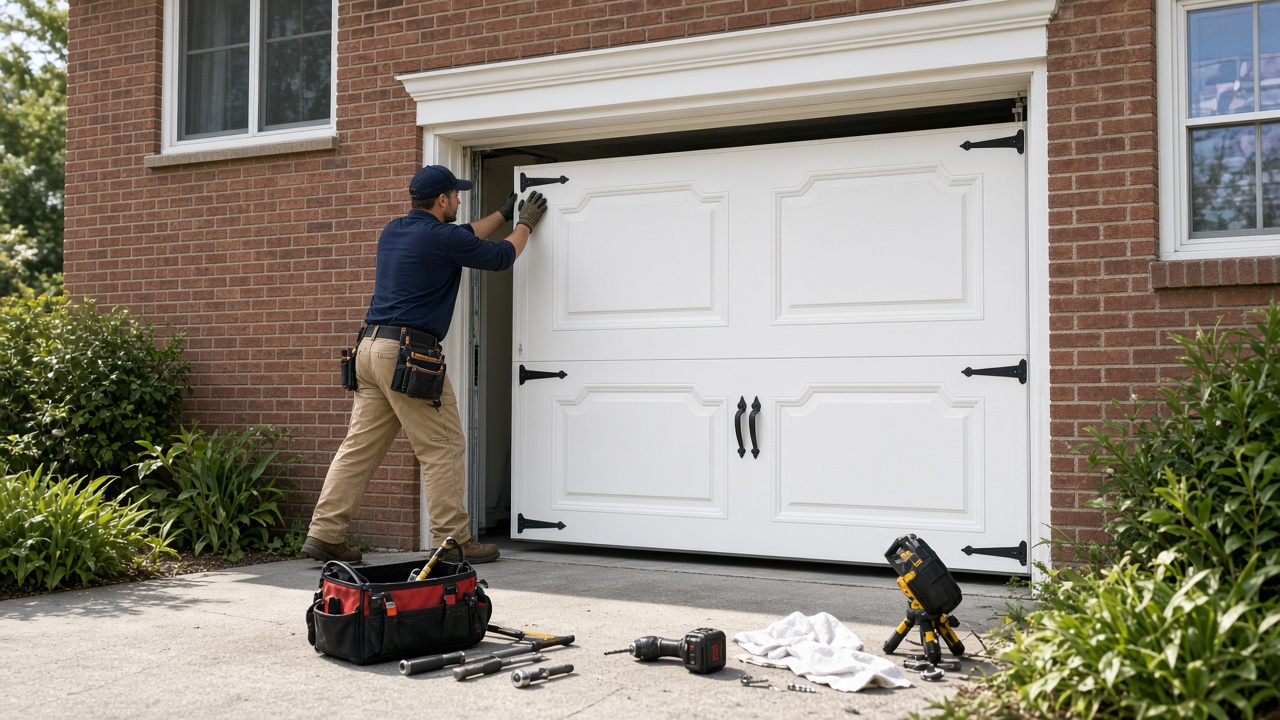
For search, the offer is same-day spring and opener repair across a list of ZIP codes. The ad names the problem (broken spring, opener not working), says a technician can come today, and sends people to a page with a phone number and a short booking form. For TV and social, the offer is door replacement. A 30-second TV spot and a short social video show a worn door replaced with a new carriage-style one, mention financing if you offer it, and ask viewers to book a free estimate online.
Adwave reads your website for offers and photos, then makes image ads, social video and a TV spot from it. You can preview and edit every ad before launch, or upload ads you already have. Campaign creative is included. Extra creation costs $0.38 per image, $6 per social video, $6 per 15-second TV spot and $12 per 30-second TV spot.
Every campaign needs a place to send people, such as a booking page, form or landing page. If you have no website, you can set up your business by hand, but you still need a destination. See also our guide to roofing company advertising.
Planning for busy seasons and your service area
Garage door companies have stretches when the phones don’t stop and the schedule fills fast. Crews, parts and systems need to be ready before the rush. Advertising should follow the same plan. Raise the daily budget as a busy period starts, so the extra calls land when you have crews to answer them, and trim it once things slow down. A budget change on a live campaign applies the same day if your wallet covers it.
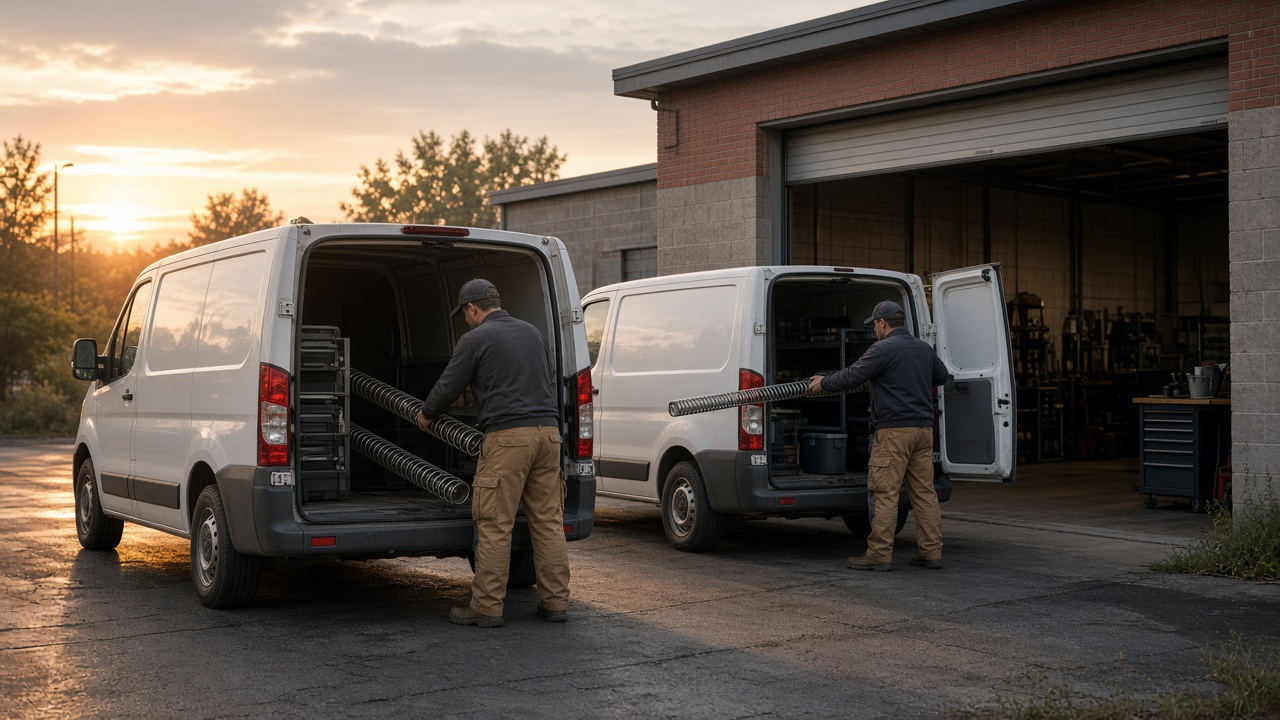
Commercial and light industrial accounts can help fill slower months, so an ad set aimed at property managers or business owners in your area is worth testing when residential demand dips.
Set your service area by where trucks can arrive quickly. A radius around the shop works for a single location. ZIP codes work better when some nearby areas are slow to reach or not worth the drive. A city setting suits companies covering a whole metro. See also our guide to HVAC advertising.
Advertising rules that apply to garage door companies
Garage door ads fall under the same consumer protection rules as other home improvement advertising.
- Ads must be truthful and not misleading under the FTC’s truth-in-advertising standards, whether they run on TV, search or social.
- You can’t advertise a service for less than it really costs, or run a bait-and-switch. A low spring repair price that never applies once the technician arrives is the classic problem, according to the American Bar Association’s summary of federal remodeling law.
- If demand for an advertised deal exceeds supply, the American Bar Association notes you must offer a rain check, unless the ad clearly states the supply is limited.
- Reviews and testimonials in your ads must follow the FTC’s Rule on the Use of Consumer Reviews and Testimonials and its Endorsement Guides, revised in 2023.
- If you offer financing on new doors, the Truth in Lending law requires the lender to state the annual percentage rate (APR) prominently.
- State and local contractor licensing rules vary, so check what your state and city require before advertising services or license details.
The FTC has taken action in home improvement financing before. It and the State of California went after PACE financing provider Ygrene Energy Fund for deceiving consumers, with contractors acting as its salesforce. Keep financing claims plain and accurate.
Measuring calls and booked jobs
To see what your ads produce, install your business’s tracking snippet and set up the actions you want to count, such as form fills, online bookings and calls from your site. Give each conversion a value and Adwave can report revenue and return on spend.
Attribution has limits. Last-touch credit gives the win to the final ad someone clicked, which undercounts TV when a homeowner sees a spot, remembers your name and searches for you days later. Assisted conversions and lift experiments help show the channels that played an earlier role, but none of them give a perfect answer.
The useful test is booked work. Compare the repair and install jobs that came in against what you spent, rather than judging channels by clicks. A replacement job booked after weeks of TV and social exposure may be worth more than several cheap clicks that never called. See also our guide to TV advertising for fencing companies.