
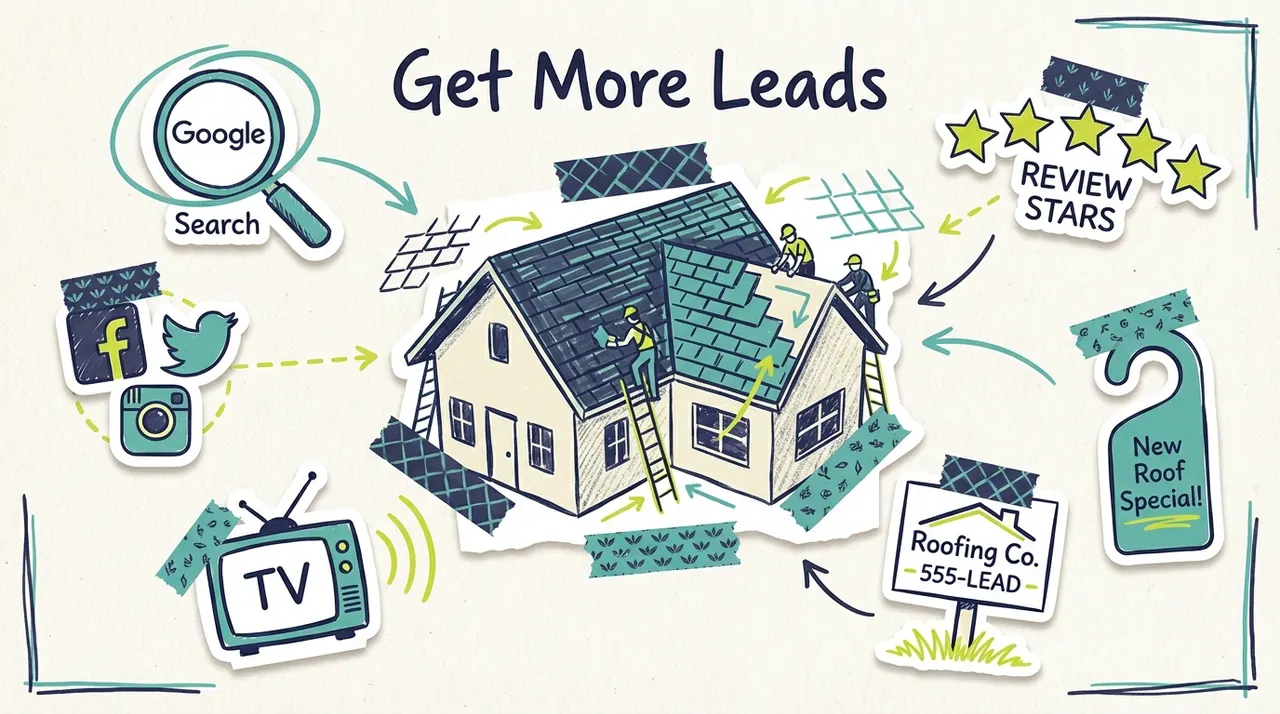
You replaced 14 roofs last month. You've got five-star reviews. Your crew shows up on time and does clean work. But somehow, the phone still isn't ringing enough.
In roofing, clean work still needs local demand. When every roofer in town runs the same Google Ads and chases the same storm leads, a truck wrap alone will not fill the calendar.
Below: seven channels roofers actually buy, with costs and a sample budget split.
Google Ads and Local Services Ads
If a homeowner searches "roof repair near me" or "emergency roofer [city]," Google Ads puts you right in front of them at the exact moment they need help. That kind of buyer intent is hard to beat.
Search Ads let you bid on specific keywords tied to your services and location. You can target "roof replacement in Tampa" or "hail damage roof repair Denver" and only pay when someone clicks. The precision is powerful, but it comes at a price.
According to WordStream / LocaliQ's 2025 Home Services Search Ads Benchmarks (campaigns from April 2024 through March 2025), search ads for Roofing & Gutters averaged $10.70 cost per click, versus $7.85 across home services overall. Roofing & Gutters also showed one of the highest average costs per lead in that set ($228.15). In competitive metros, and on urgent terms like emergency roof repair, you can still pay more than the category average when every local roofer piles into the same auction.
Google Local Services Ads (LSAs) deserve special mention. LSAs appear above traditional search ads and display your business name, reviews, and a "Google Guaranteed" badge. You pay per lead rather than per click, which can be more cost-effective. For roofers, LSA leads typically cost between $25 and $75 each depending on your market.
LSAs still need background checks, insurance verification, and steady review work to stay competitive. And during storm season, every roofer in the area piles into the same auction, which drives costs up at the exact moment you need leads most.
What works best: Pair LSAs with targeted search ads for your highest-value services (full replacements, storm damage repair). Set geographic limits tight to your actual service area, and use negative keywords aggressively to filter out low-quality searches like "DIY roof repair" or "roofing jobs hiring."
Meta Advertising: Facebook and Instagram
Facebook and Instagram give roofing companies something search ads can't: the chance to show your work visually before anyone needs a roofer.
Show a tear-off time-lapse, a drone finish shot, or a storm before-and-after. Visual proof stops the scroll better than another stock handshake photo.
Targeting capabilities are strong. You can reach homeowners within specific zip codes, filter by income level, target people who recently moved (new homeowners often discover roof issues within the first year), and retarget visitors who checked out your website but didn't call.
Lead generation ads work especially well for roofing. Instead of sending people to your website, these ads let homeowners request a free inspection or estimate directly within Facebook. Fewer clicks means less drop-off, and you get their contact information immediately.
Nobody opens Facebook looking for a roofer. Your ad is an interruption, which means conversion rates tend to be lower than search-based channels. Meta's algorithm also changes constantly, so what performs well one month might underperform the next.
Cost-wise, expect to spend between $500 and $2,000 per month for a solid local campaign. Cost per lead typically falls between $20 and $60 for roofing companies, though storm-related campaigns can perform even better when urgency drives engagement.
What works best: Use Facebook for top-of-funnel awareness with visual content (project showcases, customer testimonials) and retargeting campaigns that follow up with people who visited your site. Instagram Stories and Reels work well for quick before-and-after content.
Local SEO and Google Business Profile
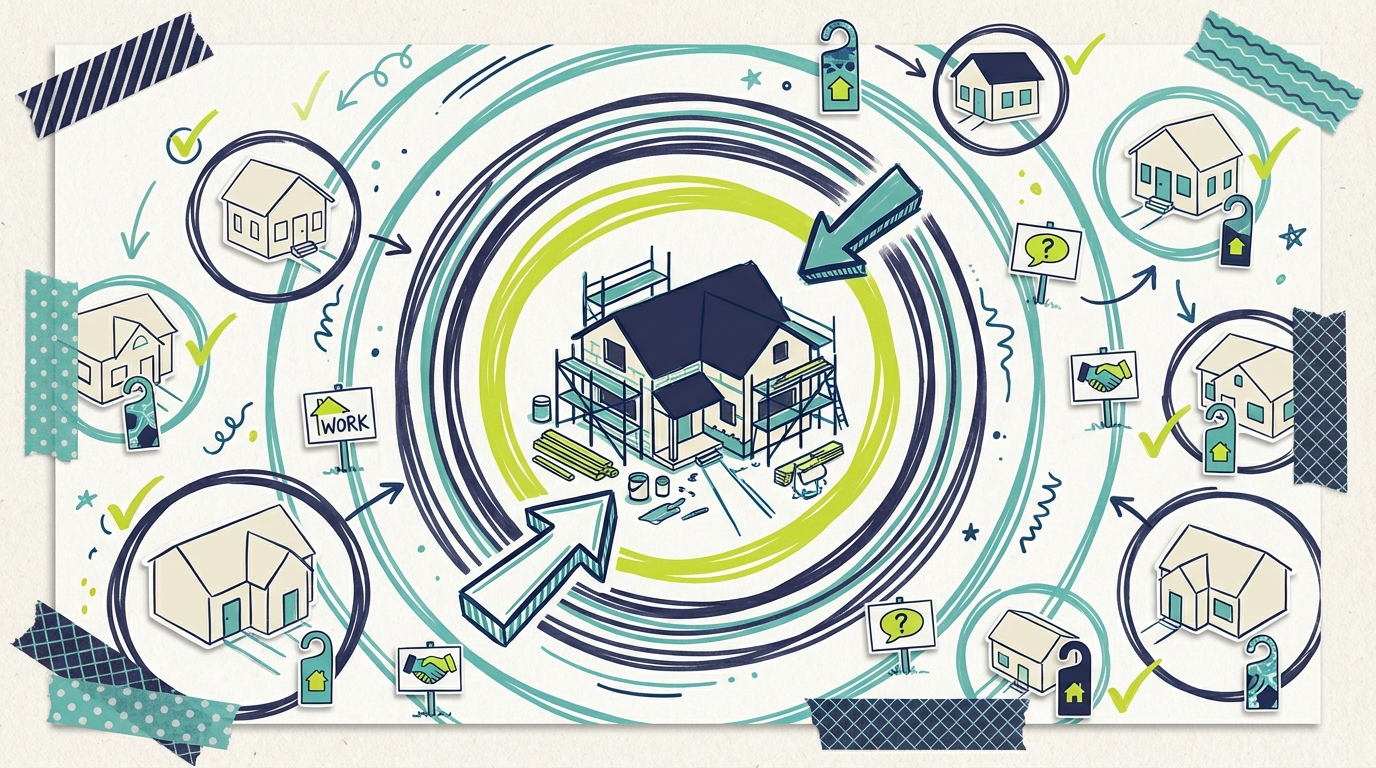
For roofing companies, local search is where many high-intent jobs start. When someone searches "roofer near me," the Google Map Pack (those three business listings with the map) captures a huge share of clicks before anyone scrolls down to organic results.
Your Google Business Profile is the foundation. It's free, and it directly controls whether you appear in the Map Pack for roofing searches in your area. But setting it up is just the start. Winning in local SEO takes ongoing work.
Reviews are still a ranking and trust signal. Google uses review count, recency, and average rating in local rankings. Roofing companies with a steady stream of recent reviews consistently outperform competitors that stopped collecting them years ago. BrightLocal's Local Consumer Review Survey 2025 finds that only 4% of consumers say they never read online business reviews, and consumers are paying closer attention to detailed write-ups, photos, and video than to star count alone. Recency still matters for rankings, but the 2025 survey also shows more leniency on how "recent" a useful review has to be compared with prior years.
Service area configuration matters for roofers. Since you go to the customer, set up service area pages for each city and suburb you cover. This helps you rank in neighboring towns, not just your home base.
Photos and posts keep your profile active. Upload completed project photos regularly. Post updates about seasonal specials or storm response availability. Google rewards active profiles with better visibility.
The investment: Local SEO is mostly time. If you handle it yourself, it's free. Hiring a local SEO agency typically costs $500 to $1,500 per month. The ROI is strong because the traffic is free once you're ranking.
Home Service Directories: Angi, HomeAdvisor, and Thumbtack
Platforms like Angi (formerly Angie's List), HomeAdvisor, and Thumbtack promise to connect you directly with homeowners who have a roofing project in mind. The leads are warm. The homeowner has already described their problem and is actively looking for quotes.
What works: Speed to lead. When a homeowner submits a request on Angi or HomeAdvisor, they're usually ready to make a decision within days. If you respond quickly and professionally, you can close jobs fast. These platforms also handle some of the trust-building for you through verified reviews and platform endorsements.
What doesn't: Shared leads are the biggest pain point. On most platforms, your quote goes out alongside three to five other roofers. That turns every opportunity into a price war before you've had a chance to explain why your company is worth more. According to a 2023 Contractor Magazine survey, nearly 40% of contractors using lead-gen platforms rated lead quality as "poor" or "very poor."
The cost structure adds up. HomeAdvisor charges per lead regardless of whether that lead answers the phone, and roofing leads typically cost $15 to $80 each depending on project type. A full replacement lead costs significantly more than a basic repair inquiry. When you factor in that you're competing with multiple contractors for each lead, your effective cost per acquired customer is much higher than the per-lead price suggests.
There's also the brand problem: homeowners remember the platform, not you. You're building Angi's brand, not yours. That keeps you dependent on the platform long-term.
For a deeper look at moving beyond platform dependence, see Contractor Lead Generation: Getting More Home Improvement Jobs in 2026.
Direct Mail and Door-to-Door Marketing
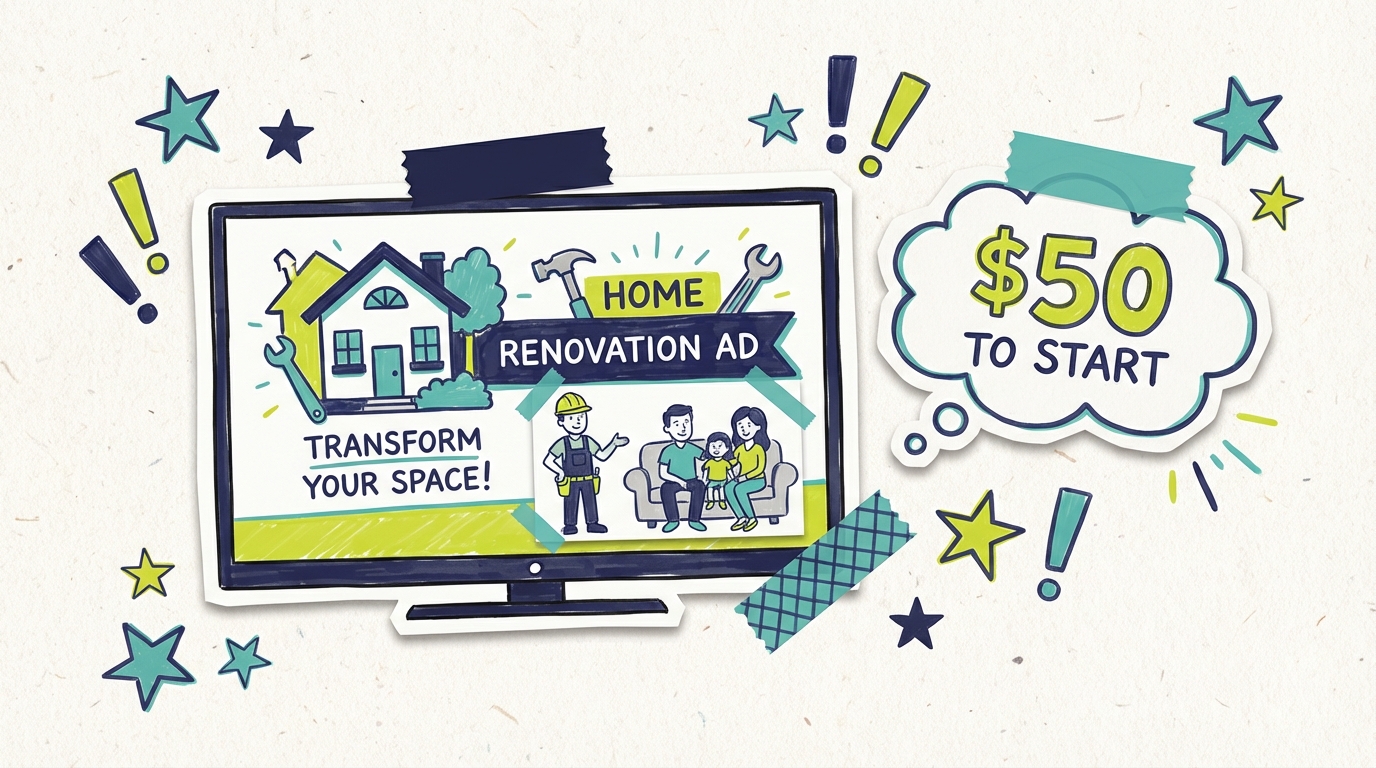
Physical outreach still works for roofers when you time it to geography and recent jobs.
Neighborhood saturation after a completed job. You just replaced a roof on Oak Street. Every neighbor on that block saw your trucks and heard the work being done. A well-designed door hanger or postcard that says "We just completed a roof on your street. Here's what we found about roofs in this neighborhood" is timely and hard to ignore. Include a photo of the finished project and a limited-time inspection offer.
Storm response mailers. After a major hail or wind event, homeowners are flooded with door knockers and scam artists. A professional mailer that arrives a few days after the storm, with your license number, insurance details, and a clear inspection offer, stands out from the chaos. It feels more trustworthy than a stranger at the door.
Seasonal maintenance campaigns. Fall is ideal for reminding homeowners about winter-readiness inspections. Spring works for post-winter damage assessments. These campaigns work because you're reaching people at a moment when roofing is already on their mind.
Costs and expectations: A campaign of 2,500 to 5,000 postcards typically runs $1,000 to $3,000 including design, printing, and postage. Response rates for prospect mailings average around 2.9% according to the Data & Marketing Association, but targeted campaigns (post-storm, post-job neighborhoods) can perform significantly better.
Door-to-door canvassing gets a bad reputation in roofing, largely because of storm chasers who give the tactic a negative image. If you do door-knock, keep it professional: branded shirts, company ID, a clear leave-behind piece, and no pressure. The goal is to introduce yourself and offer a free inspection, not to close a deal on the doorstep.
TV and CTV Advertising
TV used to be impossible for most roofing companies. A 30-second spot on local cable could cost thousands just for the airtime, not counting the $5,000 to $20,000 you'd spend producing the commercial. Only the biggest roofing operations could afford it.
That barrier is gone. Connected TV (CTV) advertising, which means ads that run on streaming platforms like Hulu, Peacock, Tubi, and other services people watch through Roku, Amazon Fire TV, and smart TVs, has made television accessible for roofing companies of any size.
Why TV matters for roofers: Homeowners who see a roofing company on their TV screen perceive it differently than one they find through a Google search. TV presence signals stability and legitimacy. In an industry plagued by storm chasers and fly-by-night operators, that trust factor is a real competitive advantage.
CTV adds digital-level targeting to that trust. You can reach homeowners in specific zip codes, target by household income, and focus your spend on the areas you serve. Unlike traditional cable, you only pay for verified impressions, meaning real people watching your ad on their screen.
With Adwave, you can create a broadcast-quality 30-second commercial and run it with other channels from one prepaid daily budget. Business campaigns start at $30/day. Ad creation to preview is free. You approve ads before you spend. Typical CTV CPM often falls between $15 and $35 depending on inventory and targeting. Channel mix depends on budget and campaign settings.
The ROI shows up indirectly: more branded searches for your company name, higher conversion rates on your other channels, and stronger recognition during storm season when homeowners are choosing between roofers they've heard of and ones they haven't.
For TV-only tactics, see our TV advertising for roofing companies guide.
Referral Programs
Word of mouth has always been the most powerful advertising channel for roofers. A recommendation from a neighbor, family member, or friend carries more weight than any ad. The question is whether you're leaving referrals to chance or building a system around them.
Structured referral programs work. Offer a cash incentive ($100 to $500 depending on project size) or a gift card to customers who refer new business. Make the terms clear and the process easy. Some roofing companies use referral cards that the referring customer hands to their neighbor, with a code that tracks who sent them.
Real estate agent partnerships are underused in roofing. Agents frequently encounter roof issues during inspections, and they need a reliable roofer to recommend. Build relationships with local real estate offices by offering fast turnaround on inspection repairs and fair pricing. A single active real estate agent can send you multiple referrals per month.
Insurance adjuster relationships work similarly. While you can't offer kickbacks (that's illegal in most states), you can build a reputation for clean work, accurate estimates, and smooth claims processes. Adjusters remember contractors who make their job easier.
Online review generation is a form of referral marketing. Every five-star Google review is a public referral. After completing a job, ask for a review while the customer is still happy, ideally within 24 hours. Send a direct link via text message to make it easy. Companies that actively ask for reviews accumulate them five to ten times faster than those that wait passively.
Cost and ROI: A referral program costs almost nothing to run. Your main expenses are the incentive payouts, which only happen when new business closes. That makes it one of the highest-ROI channels available. The limit is volume: you cannot buy referral volume the way you buy search clicks.
How the Channels Compare
Recommended Budget Allocation for Roofing Companies
Your ideal budget split depends on where your business stands. Sample splits by monthly ad budget:
New or growing roofing company ($2,000 to $5,000/month):
Google Ads / LSAs: 35% (capture active demand first)
Local SEO: 20% (build the foundation for free traffic)
Meta Ads: 15% (visual portfolio and retargeting)
Referral Program: 10% (incentive payouts)
CTV Advertising: 10% (start building brand recognition)
Direct Mail: 10% (targeted post-job neighborhoods)
Established roofing company ($5,000 to $15,000/month):
Google Ads / LSAs: 25% (maintain search presence)
CTV Advertising: 20% (scale brand awareness and trust)
Local SEO: 15% (ongoing optimization and content)
Meta Ads: 15% (expand retargeting and visual campaigns)
Referral Program: 10% (formalize and grow the system)
Direct Mail: 10% (seasonal and storm-response campaigns)
Home Service Directories: 5% (supplement only)
Why CTV share increases as you grow: Early on, you need leads now, which means search ads and directories. As your business matures, brand recognition becomes more valuable. The roofing companies that dominate their markets are the ones homeowners already know and trust. CTV is an efficient way to build that recognition at a local level.
Storm market adjustment: If you're in a hail-prone or hurricane-prone region, increase your CTV allocation by 5-10% in the months before storm season. Pre-storm brand awareness pays off when demand surges. Homeowners call the roofer they've seen on TV, not the one they've never heard of.
Common Questions Answered
How much should a roofing company spend on advertising? Most successful roofing companies allocate 5% to 10% of their gross revenue to advertising. For a company doing $1 million in annual revenue, that's $50,000 to $100,000 per year, or roughly $4,000 to $8,000 per month. Newer companies may need to invest a higher percentage (up to 12-15%) to establish their presence, while well-known local brands can often maintain momentum at the lower end of the range.
What's the fastest way to get roofing leads? Google Local Services Ads and search ads deliver the fastest results because they reach homeowners who are actively searching for a roofer right now. You can start getting calls within days of launching a campaign. Home service directories like Angi and HomeAdvisor also produce quick leads, though quality and exclusivity vary. For sustainable long-term growth, pair these fast channels with brand-building efforts like CTV advertising and local SEO.
Does TV advertising work for small roofing companies? Yes, and it's more accessible than most roofers realize. With Adwave, you can start from $30/day and preview ads before you spend. The impact often shows up as increased branded searches, more website traffic, and higher close rates on estimates, because homeowners who've seen you on TV already trust your company. It's especially useful in storm markets where trust and recognition determine who gets the call. Adwave does not guarantee customers or sales.
Should I use Angi or HomeAdvisor for roofing leads? They can be useful for filling schedule gaps, but don't make them your primary lead source. The shared-lead model means you're competing with multiple roofers for every opportunity, which drives down margins. Use directories as a supplement while building your own lead sources through Google Ads, local SEO, and brand advertising. The goal is to generate leads you own, not rent.
How important are online reviews for roofing companies? Reviews affect your Google local rankings, and they're one of the first things homeowners check before calling a roofer. BrightLocal's 2025 survey shows almost everyone still engages with review content in some form (only 4% never read online business reviews). Actively request reviews after every completed job, respond to all reviews (positive and negative), and aim to maintain a 4.5+ star average. A steady stream of recent reviews outperforms a high count of old ones.
What's the best way to advertise during storm season? A multi-channel approach works best. Increase your Google Ads budget to capture surge search volume. Run CTV ads in the weeks before typical storm periods to build pre-storm awareness. Prepare direct mail pieces you can deploy quickly after a major weather event. And have a storm-response page ready on your website so you rank for terms like "storm damage roof repair [city]." The companies that prepare before the storm hits outperform those scrambling after.


