
When a potential customer discovers your business for the first time, their brain asks one question before anything else: "Are they legit?"
That split-second credibility assessment happens whether they find you through Google, social media, or word of mouth. And for small businesses, passing that test is harder than it should be. You might have better products, better service, and better prices than the established competition, but customers don't know that yet.
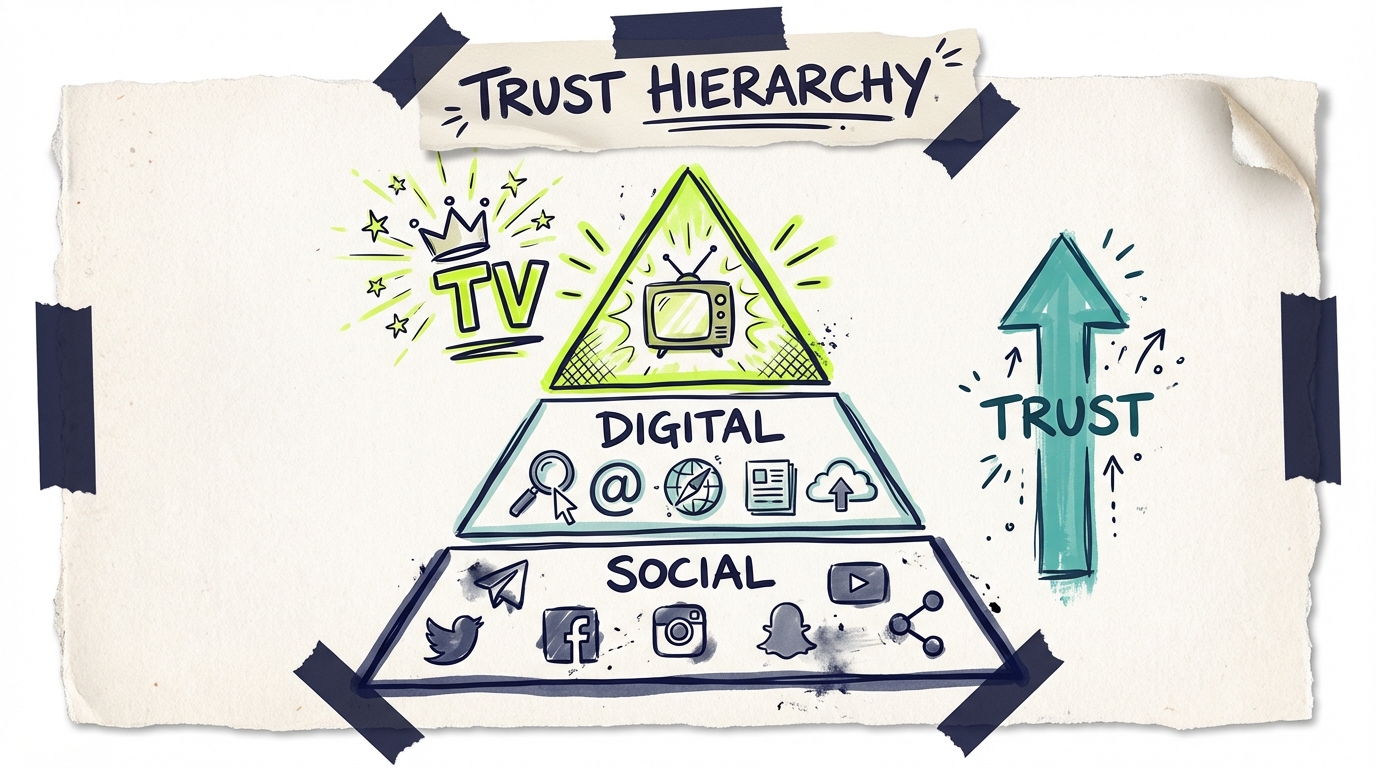
Here's what psychology tells us about building customer trust for small businesses: certain media channels carry more credibility weight than others. And TV advertising sits at the top of that hierarchy. You can now access that trust advantage for under $100.
The Psychology of Trust and Media
Our brains are wired to trust what feels familiar. Psychologists call this the "mere exposure effect": the more we encounter something, the more we tend to like and trust it.
But not all exposure is equal. Where you see a brand matters as much as how often you see it.
The media multiplier effect. Research consistently shows that consumers perceive brands differently based on where they advertise. A brand seen on television is automatically perceived as more established, more successful, and more trustworthy than the same brand seen only on social media.
Why? Because our brains make assumptions:
"If they can afford TV advertising, they must be doing well"
"If they're on TV, they must be a real company"
"Brands on TV are held to higher standards"
These assumptions aren't always logical, but they're powerful. The "if they're on TV, they must be legit" perception creates an instant credibility boost that would take years to build through other channels.
What Research Says About TV and Trust
The data backs up what our intuition suggests. Multiple studies show TV advertising outperforms other channels on trust metrics.
According to research from Marketing Week and Nielsen, consumers rate TV advertising as the most trustworthy advertising channel, ahead of online video, social media, and search ads. The gap isn't small: TV consistently scores 20-40% higher on trust metrics than digital alternatives.
The halo effect of premium placement. When your ad appears alongside content from NBC, Hulu, or ESPN, you inherit credibility from those brands. Your local business is suddenly in the same context as national brands with massive budgets.
This association matters. CTV advertising puts small businesses on the same screens, in the same ad breaks, as Fortune 500 companies. The viewer's brain doesn't distinguish between the two.
Why TV beats social for trust:
TV ads are vetted and approved by networks
TV requires investment (perceived as proof of success)
TV is passive (viewers aren't seeking you out, so there's no "sales" feeling)
TV content is professionally produced (even AI-generated ads look polished)
Why TV Used to Be Impossible for Small Businesses
For decades, the trust advantage of TV was reserved for big brands with big budgets.
The old barriers:
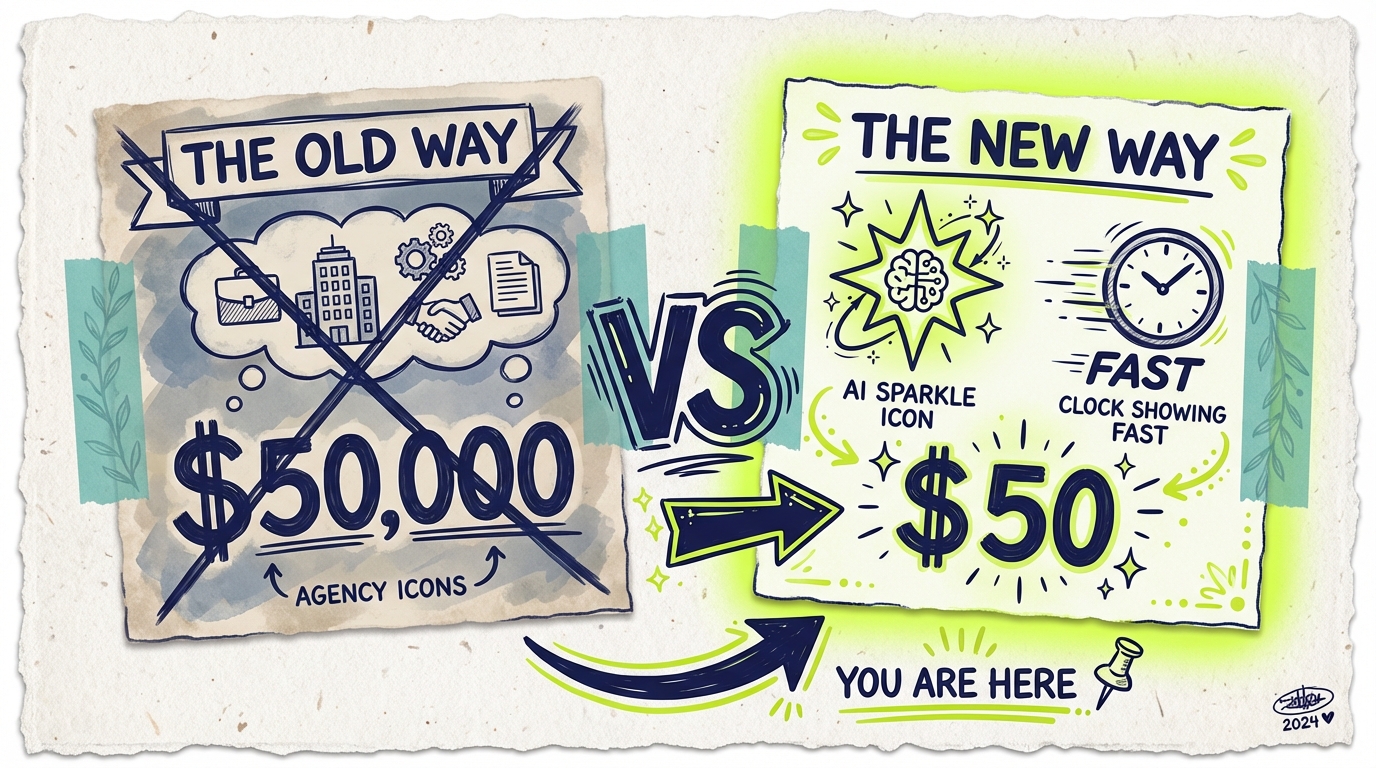
Production costs: A basic TV commercial cost $50,000-$500,000 to produce
Media buying complexity: Negotiating with networks required agencies and expertise
Minimum spends: Most TV buys required $10,000+ minimums
Geographic limitations: You couldn't easily target just your local market
Small businesses were locked out. The trust-building power of television was simply inaccessible unless you had significant capital and connections.
What Changed (And Why You Can Now Afford It)
Three shifts have democratized TV advertising:
1. Streaming TV opened the doors. Connected TV (Roku, Hulu, Amazon Fire, smart TVs) uses digital ad delivery. No network negotiations. No massive minimums. Programmatic buying means anyone can access premium inventory.
2. AI creates broadcast-quality ads. Platforms like Adwave generate professional 30-second commercials from your website in minutes. No production budget. No video skills. No agency required.
3. Self-serve platforms eliminated gatekeepers. You can now launch a TV campaign yourself, targeting your specific geography, with a budget you control. The minimum? Just $50.
The result: the credibility advantage that built countless national brands is now accessible to every local business.
What Happens When a Small Business Gets on TV
The credibility shift is real and measurable.
Customer feedback changes. Business owners consistently report customers saying "I saw you on TV!" with genuine surprise and increased respect. That single comment signals a perception shift from "random small business" to "established, legitimate brand."
Other marketing improves. The trust boost from TV creates a halo effect across all channels. Your social media ads convert better when viewers have seen your TV commercial. Your website feels more credible. Cold outreach gets warmer responses.
Competitive positioning shifts. When you're on TV and your competitors aren't, you occupy a different tier in customer perception. You're not competing on the same level anymore.
For more on how TV advertising works to build credibility, see our complete guide.
Other Ways to Build Trust (That Work With TV)
TV advertising isn't the only trust-building strategy, but it amplifies everything else.
Social proof and reviews. Google Business Profile optimization and review management build credibility. TV advertising drives more people to look you up, which means more opportunities for reviews.
Professional branding. A polished website and consistent visual identity matter. TV advertising reinforces that professionalism on the biggest screen in the house.
Community involvement. Local sponsorships and community presence build grassroots trust. TV advertising makes that local presence feel bigger.
Content and expertise. Helpful content positions you as an authority. TV advertising makes people more likely to seek out and trust that content.
The key insight: these strategies compound. TV provides the initial credibility boost that makes every other trust signal more effective.
The $100 Trust-Building Experiment
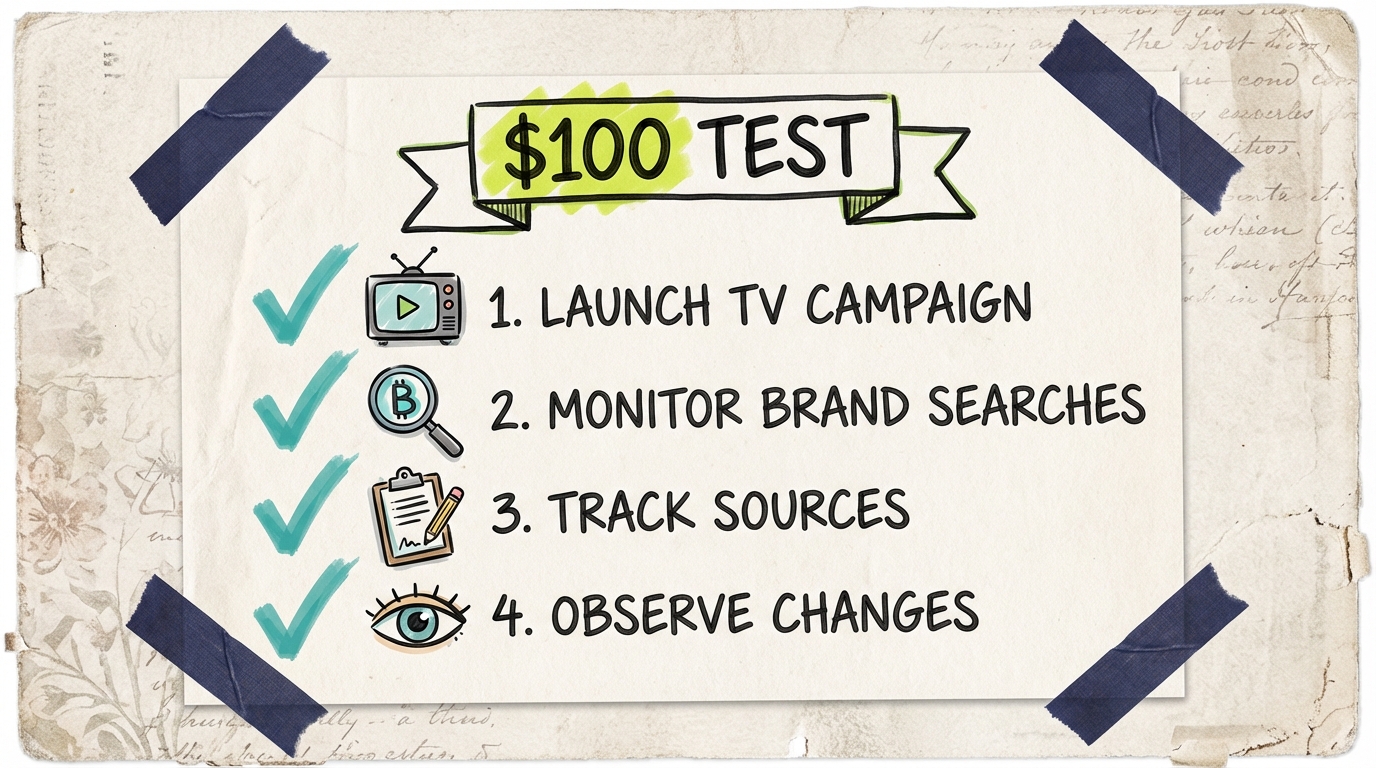
Ready to test the TV trust advantage for yourself? Here's a simple experiment:
Step 1: Launch a $50-100 TV campaign. Use Adwave to create and run a professional commercial targeting your local area. Let it run for 2 weeks.
Step 2: Monitor brand searches. Check Google Search Console for increases in branded searches (people searching your business name directly). TV exposure drives curiosity.
Step 3: Track "how did you hear about us?" Ask every new customer. Note any mentions of TV, and notice the tone when they say it.
Step 4: Observe perception changes. Pay attention to how customers interact with you. Are they more trusting? Less price-sensitive? More likely to refer friends?
The experiment costs less than dinner for two. What you learn could reshape how you think about marketing.
Common questions answered
Why do customers trust brands they see on TV?
TV advertising signals legitimacy and success. Appearing alongside major brands on premium networks creates an association of quality. The shared experience of TV viewing makes ads feel like recommendations rather than interruptions. These psychological factors build trust that digital ads struggle to match.
Does TV advertising really build more trust than digital ads?
Research consistently shows higher trust and recall for TV advertising compared to digital. TV viewers are in lean-back mode during relaxed viewing, more receptive to messaging. Digital ads often face ad blindness and association with scams. TV's premium context transfers to advertised brands.
How much does trust-building TV advertising cost?
You can start building TV presence for under $100 with streaming TV platforms. The key is consistent, targeted presence rather than massive reach. Even modest TV presence signals legitimacy and builds the familiarity that creates trust over time.
How long does it take for TV advertising to build brand trust?
Trust builds with repeated exposure over weeks and months. Most advertisers see measurable awareness lift after 4-6 weeks of consistent advertising. Long-term trust and preference build over sustained campaigns. The effects compound over time as familiarity deepens.


