
You know the moment. You've rehearsed the opener in the truck, at the counter, or while answering DMs between jobs, and it sounds fine until a real person says hello. Then the line gets stiff, the pace changes, and the whole thing starts sounding like a script instead of a conversation.
That's the trap most small-business owners hit. The problem isn't that they need more polish, it's that they need Sales Scripts for Small Business: Frameworks That Feel Natural, built for one person who has to sell, serve, and sound human all at once. A good script should help you handle phone calls, walk-ins, and messages without making you sound trained, rehearsed, or desperate.
Why Most Sales Scripts Sound Fake on Day One
The fake-sounding script usually starts with good intentions. An owner writes down a polished pitch, memorizes it, and then tries to force it into every call, every walk-in, and every DM. The result is predictable. Real prospects don't talk like a brochure, so they immediately hear the mismatch.
Why memorized monologues break in small shops
A monologue assumes the conversation will stay on rails. Small-business selling doesn't work that way because the same person may need to answer a pricing question, handle an objection, and schedule the next step before lunch. That's why sales guidance from major platforms frames the script as a framework, not a speech. Pipedrive describes strong scripts as strategic roadmaps with discovery questions, objection responses, and calls to action, while Zendesk and Aircall emphasize a clear opener, agenda, pitch, and CTA, and consultative models like SPIN keep the buyer involved in the reasoning process rather than pushing them through a canned pitch. Pipedrive's sales script guidance
Practical rule: if your script can't survive a real question, it's too rigid to use.
The owner-as-seller feels that problem fast. A rigid script works against trust because it sounds like the seller is performing a routine instead of responding to a person. A flexible framework works better because it leaves room for the seller's real voice, the prospect's language, and the detours that happen in real conversations.
What natural means
Natural doesn't mean casual to the point of being sloppy. It means the script is structured enough to keep the call moving and loose enough to sound like you'd say it without reading. Best-practice guidance points toward a flow like opening, agenda framing, discovery, pitch, and closing, with the first part written in spoken language and the rest held together by short branches for objections and next steps. A practical sales talk script guide
That's the shift that changes everything. You stop treating the script like a cage and start using it like a guide rail. For a small business, that means fewer dead-end calls, fewer awkward walk-ins, and fewer messages that never get a reply because the first line sounded copied.
The Anatomy of a Natural Sales Script
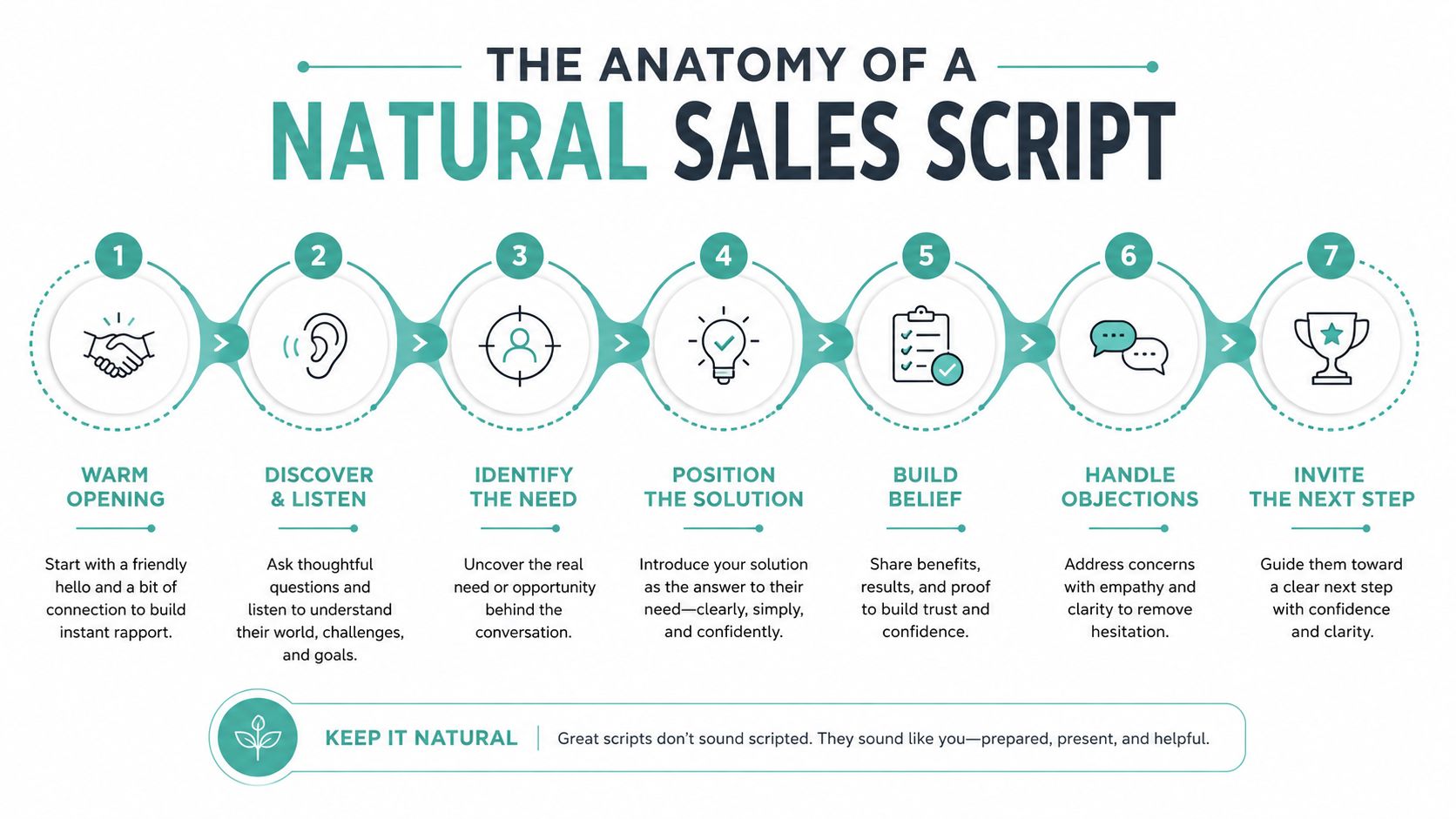
A natural script works best when it follows the shape of the conversation, not the shape of a template. For an owner handling phone calls, walk-ins, and DMs at the same time, that usually means a script built from a few small parts that each handle one job, while still leaving room for the buyer to sound like a real person.
Start with permission and the reason for the call
The opener should feel like someone entering a conversation, not announcing a pitch. A simple version sounds like, “Hi, this is Sam with Valley Home Care. I'm calling because you asked about HVAC service and I wanted to ask a couple of quick questions before I point you in the right direction.” That kind of reason-based opener matters because Gong reports that opening with the reason for the call can produce a 2.1x higher success rate in booking the first meeting, and it also recommends matching the pain point and value proposition with the prospect's industry. Zendesk's cold calling guidance
For a small shop, scripting only the first 20 seconds often gives you enough structure without trapping you in a read-aloud pitch. Practical guidance for small-business outreach recommends researching the prospect quickly, anchoring to one core problem, and skipping feature dumps that sound copied. Small-business sales script guidance
Use one sentence to frame the agenda
After the opener, say what happens next. “I'd like to learn what brought you in, see whether this is a fit, and then we can decide on the next step.” That line lowers pressure and keeps you from drifting into a ramble.
Leave room for discovery
The discovery part should be short, open-ended, and spoken the way a real owner would talk. “What made this a priority today?” works better than a long checklist of closed questions because it invites a story, not a yes or no. A script built this way keeps the buyer talking, which is the point.
Keep the buyer doing more of the talking, as long as the thread stays clear.
Bridge the pain to the offer
Once the buyer has explained the situation, summarize it in one sentence before you pitch. “So the main issue is getting more local calls without spending all day chasing unqualified leads.” That summary earns the right to propose a next step because the buyer hears that you were listening.
Close with one clear next step
A natural closing line does not ask for ten decisions. It asks for one. “If that sounds useful, let's set a time to talk through the options.” The strongest small-business scripts stay tight enough to guide the call, and flexible enough to keep sounding like the owner speaking, not the owner reading.
For wording that stays clear and specific, Adwave's advertising-copy guidance follows the same discipline. Lead with relevance, keep one goal in view, and make the next move obvious.
Qualifying Questions That Sound Like Real Curiosity
A buyer can tell in the first minute whether a script is there to learn or just to steer. Owners lose trust when they rush straight into the offer, especially while juggling phone calls, walk-ins, and DMs at the same time. A consultative sequence gives the conversation a shape, but it still leaves room for a real exchange.
Research fast, then ask fewer, better questions
Good personalization does not require a long prep block. Practical guidance for prospecting recommends spending only 60 seconds researching the prospect before dialing, then using a short script built around 5 to 6 discovery questions and responses to common objections. Prospeo's sales pitch guidance
That approach matters in a small shop because time is tight and every extra question has to earn its place. The goal is to sound informed without sounding scripted. A line like “I saw you've been serving the north side for a while, and I wanted to ask what you're trying to improve right now” does that cleanly. It shows context, opens the door, and gives skeptical local buyers a reason to keep listening.
Use SPIN to help the buyer reach the conclusion
SPIN works because it lets the prospect explain the situation in stages, Situation, Problem, Implication, Need-Payoff. Cleverly notes that this is especially useful for consultative selling because it helps prospects arrive at their own conclusion. That matters in small-business selling, where buyers often push back on pressure but respond well when they can follow the logic themselves.
A practical flow looks like this.
Situation: “What are you using right now to handle this?”
Problem: “What's getting in the way?”
Implication: “What happens if that stays the same?”
Need-Payoff: “What would a better result let you do?”
Those questions work across service businesses, product businesses, and appointment-based offers because they focus on motivation, friction, and outcome, not on forcing the same pitch every time. Cleverly's discussion of SPIN selling
Summarize before you sell
A natural script needs a recap before it moves into the offer. Try this line, “It sounds like speed matters, but you also need a setup that doesn't create more work for you.” That one sentence shows the buyer you heard the pressure points and helps the next line land with less resistance.
If you want a consultative structure designed for service businesses, Adwave's consultative selling guide fits well with this approach because it keeps the conversation centered on the buyer's need before any offer gets introduced.
Sample stems you can adapt
For service businesses, ask “What started this conversation?” and “What has this cost you in time or frustration so far?” For product businesses, ask “What are you trying to solve with this purchase?” and “What have you already tried?” For appointment-based offers, ask “What would make this appointment worth your time?” and “What's the main result you want from it?”
The best discovery questions sound like curiosity because they are curiosity, just organized.
Objection Responses for the Skeptical Local Buyer
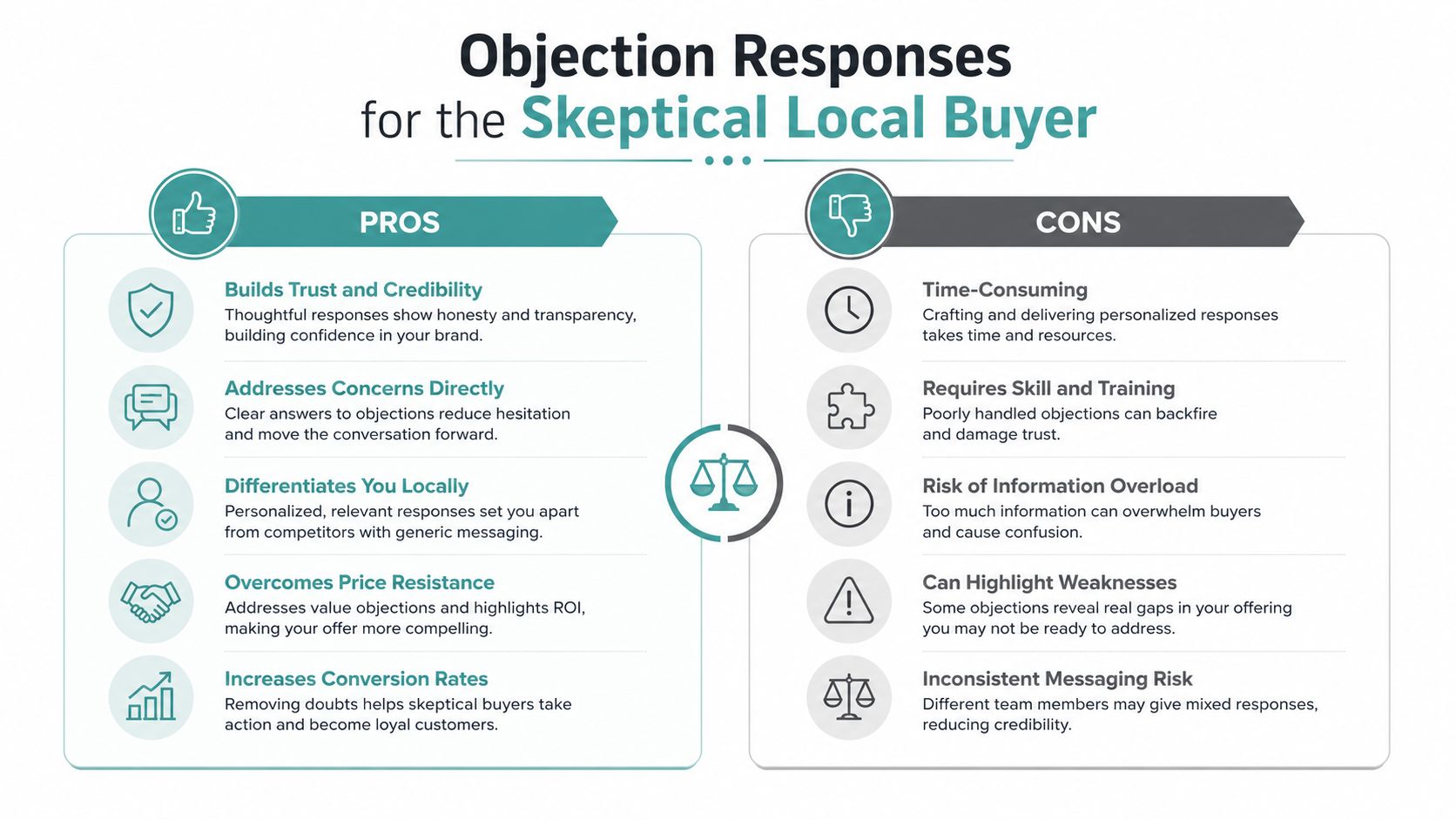
Skeptical local buyers don't usually object because they're difficult. They object because they've heard the pitch before, tried something that didn't work, or don't want to waste another afternoon on a claim that sounds generic. A good script treats that as a trust problem, not a resistance problem.
Acknowledge the history without defending yourself
When someone says, “I tried ads and they didn't work,” the worst response is a quick rebuttal. That turns the conversation into a debate, and the buyer starts protecting their time instead of considering the offer. A better response sounds like this, “That makes sense. A lot depends on what was running, who it was reaching, and what the next step looked like.”
The point is to lower the temperature first. Then you can ask a narrow follow-up, “What were you hoping those ads would do for you?” That keeps the conversation moving while showing respect for the buyer's prior experience.
Build short if then branches
For a small business, the most usable objection library is short enough to memorize once and flexible enough to reuse for months. Prospeo recommends preparing responses to 6 to 8 common objections, and that matches what works in the field. Prospeo's sales pitch guidance
Here's the structure.
If they say “I've heard this before,” then respond with, “Fair point. What I'm describing is specific to your situation, and I'd rather show you the fit than throw another general pitch at you.”
If they say “We're too busy,” then say, “That's exactly why I wanted to keep this short. Would it help if I just asked two questions and then you decided whether it's worth another step?”
If they say “Send me something,” then answer, “I can do that. Before I send it, what would matter most to you so I don't bury you in irrelevant details?”
Acknowledge, narrow, then move to the next step. That pattern keeps you from sounding defensive.
Name the trigger that makes the offer relevant
A skeptical buyer relaxes when the offer feels tied to something concrete. A season change, a new baby, a competitor move, a service issue, or a recent slowdown can all function as a trigger. Instead of saying “We help businesses grow”, say “If the recent drop in calls started after your busy season ended, this may help you keep attention from going quiet.”
That kind of language turns the pitch from generic to situational. It also reduces perceived risk because the buyer hears that you're responding to a real event, not reciting a script from memory.
Low-risk close: ask for the smallest next step that still moves the sale forward.
That might be a callback, a short estimate review, or a quick follow-up conversation. The script should make it easy for the buyer to say yes without feeling trapped.
Industry Variants You Can Adapt Today
The quickest way to make a script usable is to start with the version closest to your business and rewrite it in your own voice. A real estate agent, a plumber, a retail owner, and a dealership rep all need different words, but the sequence stays familiar. Open, ask, summarize, propose one next step.
These versions work because they sound spoken, not written. They also fit the way an owner sells across phone calls, walk-ins, and DMs at the same time, with short conversations that need to move from attention to action quickly. In a one-person shop, you do not have room for a script that sounds polished but slows the buyer down. You need wording that gives skeptical local buyers a reason to keep talking without feeling pushed.
The details change by industry. Real estate needs calm language and clear direction, because the buyer is usually sorting through timing, fit, and uncertainty at once. Home services need to lower tension fast, because the person asking for help often wants relief more than a long explanation. Retail and auto need to respect the buyer's time and make the next step obvious, or the conversation drifts.
That trust layer matters most with local buyers who have heard the same pitch before. If you can show that you understand the context behind the request, the script feels less like a template and more like a conversation built around the customer's situation. For a simple way to judge whether those conversations are paying off, use Adwave's guidance on measuring marketing ROI as a reference point for tying the message to a result.
A/B Testing and Tracking What Closes
Track which sales scripts lead to meetings and further conversations. Use those results alongside staff feedback when revising the wording.
Track the outcomes that matter
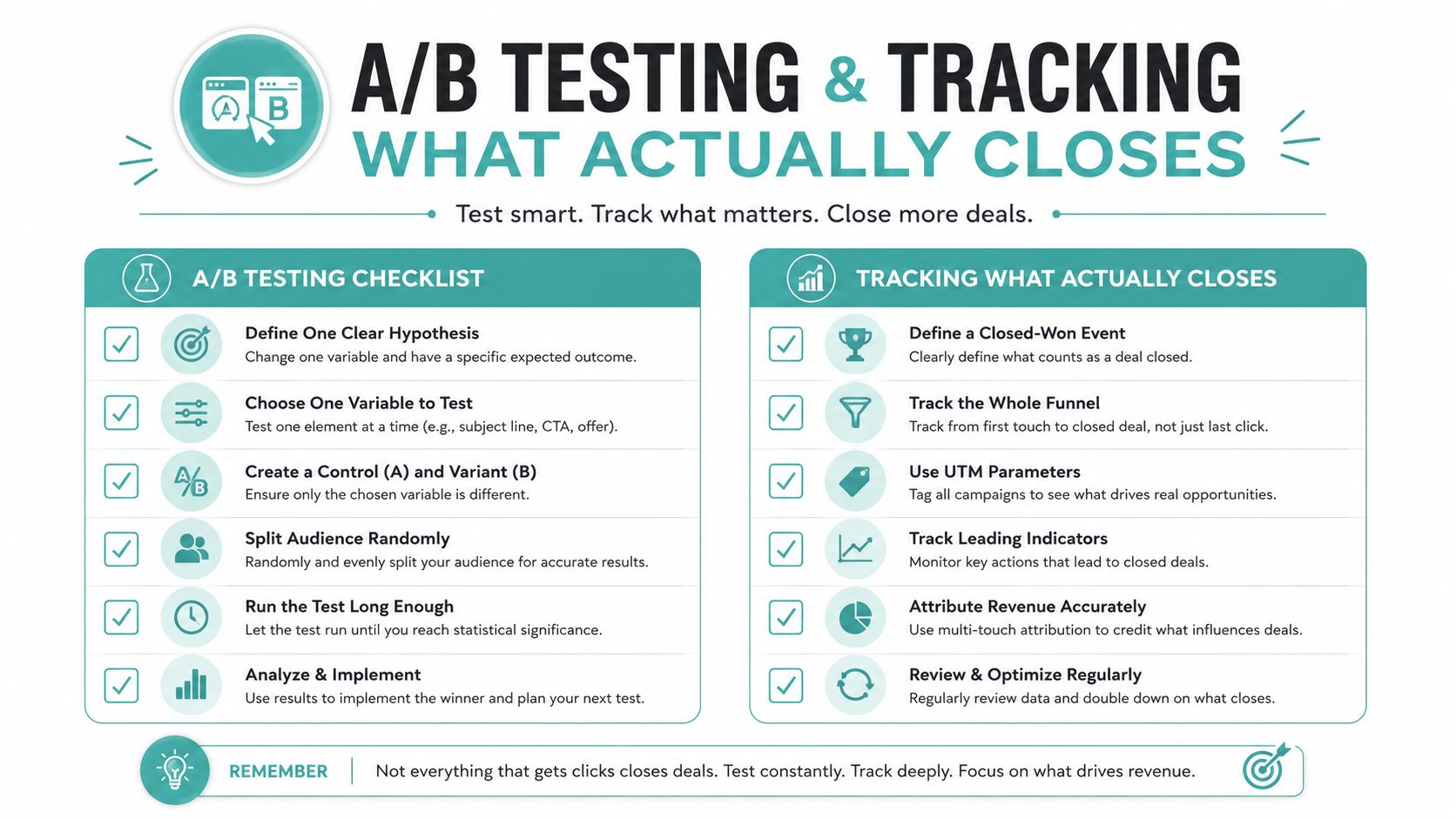
After every call or walk-in, log three things, booked meeting, second conversation, and lost reason. Those notes show whether the script is opening the door, moving the buyer forward, or stalling at the same point each time. If one opener keeps leading to more follow-up conversations, keep testing that version against the others.
Change one variable at a time
The cleanest split test keeps the offer the same and changes only the opener, or keeps the opener the same and changes the first question. That way, you can see which part of the script affected the result instead of guessing.
A small business does not need a complicated testing stack to do this well. It needs discipline, a notebook, a spreadsheet, or a basic CRM, plus enough repetition to spot a pattern. Keep one version in use long enough to see how it behaves across real conversations before you call it a winner.
Use the script loop to amplify reach
A booked call matters, but the local business still has to create awareness around it. One way to do that is TV advertising through Adwave, an AI-powered platform that turns a website URL into a broadcast-ready spot and places it across 100+ premium channels with campaigns starting at $50. It fits this workflow because the owner can connect a natural sales script to broader local awareness without adding a production crew or a long creative process.
Operational rule: measure the conversation, then measure the channel that feeds the conversation.
That is the same reason broadcast and direct response work better when they are tied together. The script handles the one-to-one moment, and the media layer helps more local buyers recognize the name before they answer the phone.
If you want the broader planning side, Adwave's marketing ROI resource keeps the focus on what gets tracked, not just what gets launched.
Your First Week With a Natural Script
The first week should feel usable, not polished. A solo owner answering calls, replying to DMs, and greeting walk-ins does not need a perfect playbook before starting. A short script, a few likely objections, and a clear way to get the first real conversations on the calendar are enough to begin.
A simple seven-day rollout
Day 1: write your 20-second opener in spoken language.
Day 2: list your 5 to 6 discovery questions.
Day 3: draft three objection branches for the most common pushbacks.
Day 4: rehearse out loud, because reading in your head won't expose the awkward spots.
Day 5: log five real calls or messages and note what worked.
Day 6: tighten the lines that felt clunky.
Day 7: start a small A/B test and decide whether to pair the script with broader local awareness.
A one-page home-service version might sound like this. “Hi, this is Jordan with Peak Plumbing. You reached out about an estimate, and I wanted to ask a couple of quick questions so I can point you in the right direction. What problem are you trying to solve first, and what have you already tried? If the main issue is getting this handled without extra back-and-forth, I can explain the next step and then you can decide what makes sense.”
That script works because it opens with context, asks before pitching, and ends with one clear move. The same structure fits most small businesses once you adjust the words to match the offer, whether the first contact comes by phone, in person, or through a direct message.
For a repeatable workflow that keeps the script from drifting over time, Adwave's guide to building a repeatable sales process is useful because it places the script inside a larger process, not above it. That matters for owners who need the same tone to hold up across busy days, changing staff coverage, and skeptical local buyers who want to know the business is organized before they trust it.
Start with the opener today, test it tomorrow, and keep the version that sounds like you. The best script is the one that helps real buyers feel understood fast enough to keep talking.


