
You're on the fourth revision of a proposal, the prospect still hasn't answered, and the deal that looked promising now feels like a price-shopping exercise. That's the trap many service-based small businesses fall into, spending too much time quoting work before they've earned the right to diagnose the problem. Consultative Selling for Service-Based Small Businesses changes that dynamic by making the first conversation about business impact, not just scope.
Prepare for sales conversations by reviewing what the customer may already have researched. Ask about their problem and the outcome they need before presenting a solution.
Moving Beyond Quotes to True Consultation
A lot of service owners know the feeling of sending a detailed quote, following up twice, and hearing nothing back. The problem usually isn't the proposal itself. It's that the proposal arrived before the buyer felt understood.
Consultation changes the order of the sale. Instead of leading with what you do, you lead with what's broken, what it's costing, and what success would look like. That shift matters because informed buyers don't need another vendor talking faster, they need someone who can help them make a safer decision.
Practical rule: if the buyer can't clearly name the problem in business terms, you're probably not ready to price the solution yet.
The consultative model becomes practical for service firms, not theoretical. When buyers do their own research first, the salesperson's job isn't to “educate from scratch,” it's to help the buyer connect scattered information to a decision they can justify internally ( self-directed B2B buying behavior). The first conversation becomes the moment where you show judgment.
The shift also depends on fit. Consultative selling is most effective in higher-value, more complex service deals, and one guide places that range around $25K to $100K with cycles of 3 to 6 months ( consultative selling market fit). For smaller, lower-risk offers, a lighter motion usually works better. That's not a flaw in the consultative model, it's a sign that the seller has to match the process to the economics.
What changes in practice
A consultative seller doesn't ask, “Do you want a quote?” right away. They ask what's happening, what's been tried, and what the business consequence is if nothing changes. That's the difference between being treated like a bidder and being treated like an adviser.
A useful lens for service businesses is to ask whether the buyer needs a quote, a diagnosis, or a decision partner. Most ghosted proposals come from confusing those three.
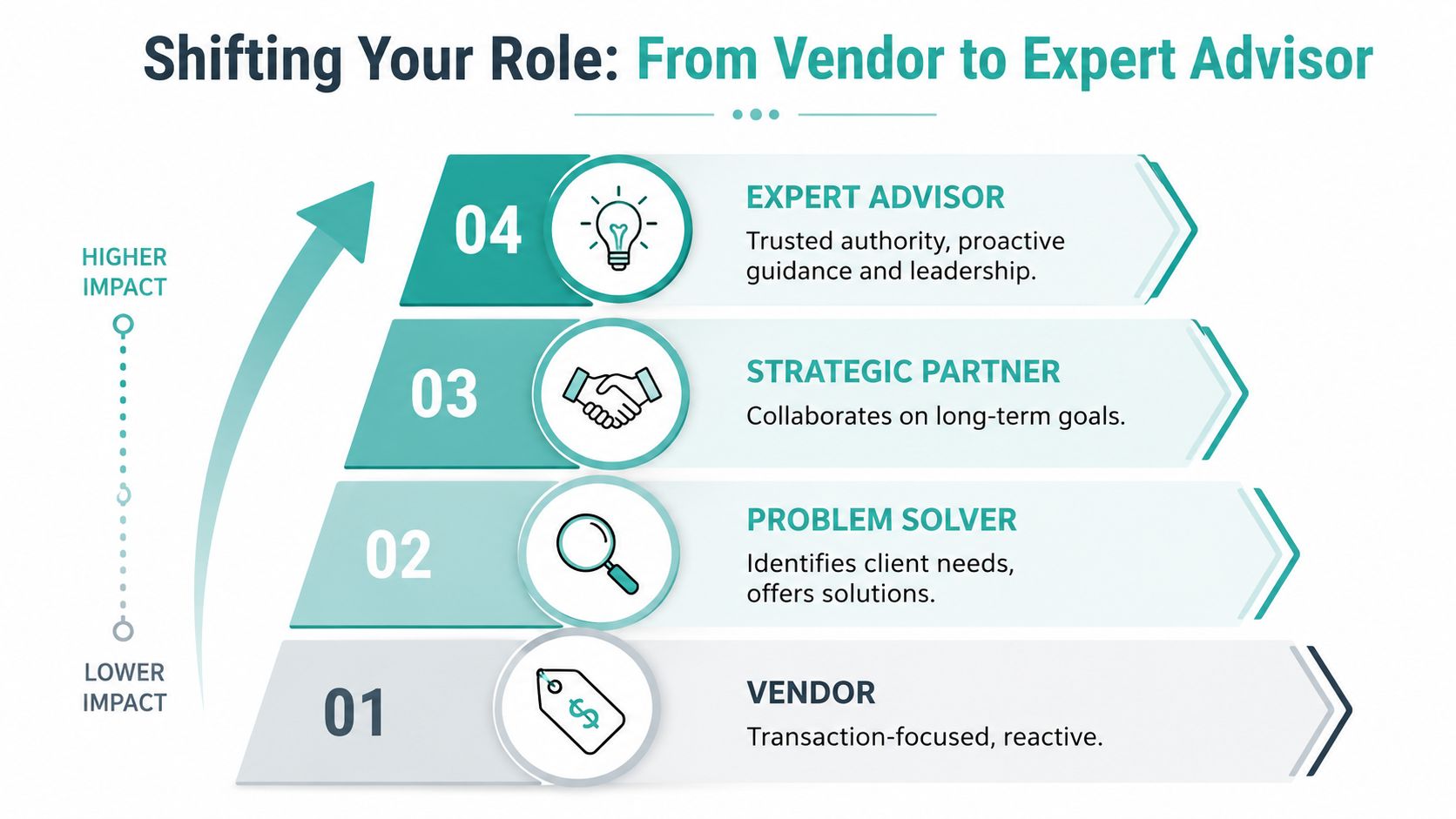
Redefining Your Role from Vendor to Expert Advisor
Your website, intake form, and first email set the frame before you get on a call. If your headline is just a list of services, you're training prospects to compare you on output and price. If your language centers on outcomes and the problems you solve, you're training them to see you as a specialist.
That positioning has to be obvious in the first touchpoint. A service business that wants consultative sales should make its entry points sound like a diagnostic process, not a free estimate machine. That means replacing “What we do” language with “Here's the business problem we solve” language.
How to pre-frame the first call
Start by labeling the conversation correctly. If you call it a discovery session, say that in your confirmation message and describe it that way on your site. Buyers who want a quick price can self-select out, and buyers who want guidance will lean in.
Then tighten your positioning around the client type you're best equipped to help. If your work is customized, strategic, and tied to a business outcome, you're better suited to a consultative model than a transactional one. If the project is small and highly repeatable, a lighter process is usually more efficient.
Internal consistency matters here too. Your public messaging, your intake questions, and your proposal template should all point to the same promise. The clearer the promise, the less time you waste with unqualified leads. A helpful companion resource is this guide on building a personal brand that signals expertise, because buyers often decide whether you're credible before they book.
When consultative selling makes sense
The economics have to work. A small business with longer diagnosis, custom proposals, and several follow-ups needs deal sizes that justify the effort. The same source that supports consultative selling for larger service deals also notes that transactions under $3K to $5K are often better served through self-service or a simplified motion ( deal size and sales motion fit).
If the sale can't support the time it takes to diagnose it well, the process has to change, not the seller's standards.
That's where small businesses often overcorrect. They either become too transactional and lose trust, or too consultative and lose margin. The right answer is to reserve deep diagnosis for the deals where it pays back.
Mastering Diagnosis Through Consultative Questioning
The best discovery calls don't feel like interviews, they feel like a smart conversation with someone who already understands the buyer's pressure. Open-ended questions matter because they let the buyer explain the issue in their own words, and that usually reveals more than a scripted pitch ever will ( consultative questioning and trust).
Use questions in a sequence
Start with the current state. Ask what's happening, what changed, and what the buyer has already tried. Then move into impact, asking how the issue affects revenue, time, margin, customer experience, or capacity.
A clean sequence looks like this:
Surface the symptom. “What's prompting you to look at this now?”
Clarify the pattern. “How often does this show up?”
Expose the cost. “What does that cost you when it happens?”
Define the decision. “What needs to be true for you to feel good moving forward?”
That progression keeps you from jumping to solutions too early. It also helps the buyer articulate the need themselves, which builds trust and makes the recommendation easier to accept ( open-ended diagnosis in consultative selling).
Traditional vs. consultative questioning
The difference isn't just style, it's logic. Vendor questions push the buyer toward a transaction. Advisor questions help the buyer understand the business case for change.
A strong follow-up is to capture the buyer's language and send it back to them. If they said the issue is slowing launches, blocking follow-up, or causing missed revenue, use those words in your recap. That turns the conversation into evidence, not opinion. A useful support tool for this stage is customer feedback survey question design, because the same discipline that gets honest survey answers also improves discovery calls.
Designing and Pricing Value-Based Solutions
A consultative diagnosis should lead to the smallest solution that solves the problem. Too many service businesses make the mistake of turning a precise problem into an oversized package, then wondering why the buyer hesitates. The right move is to scope the fix tightly and price it against the business value it creates.
The strongest consultative recommendation answers one question clearly, “What is the next best step?” That might be a focused sprint, a paid diagnostic, a limited rollout, or a productized service. It shouldn't be a kitchen-sink bundle that includes every nice-to-have idea you thought of after the call.
Keep the prescription narrow
If the problem is unclear positioning, don't pitch a complete rebrand, a new site, and a full content program at once. If the problem is lead quality, don't sell every marketing channel you know. Match the solution to the root cause you identified.
That restraint helps the buyer feel safer. It also helps you protect margin, because you're not packing in work that doesn't change the outcome. One useful pattern is to separate diagnosis from delivery, so the buyer can commit to the analysis first and the larger build only after the problem is proven.
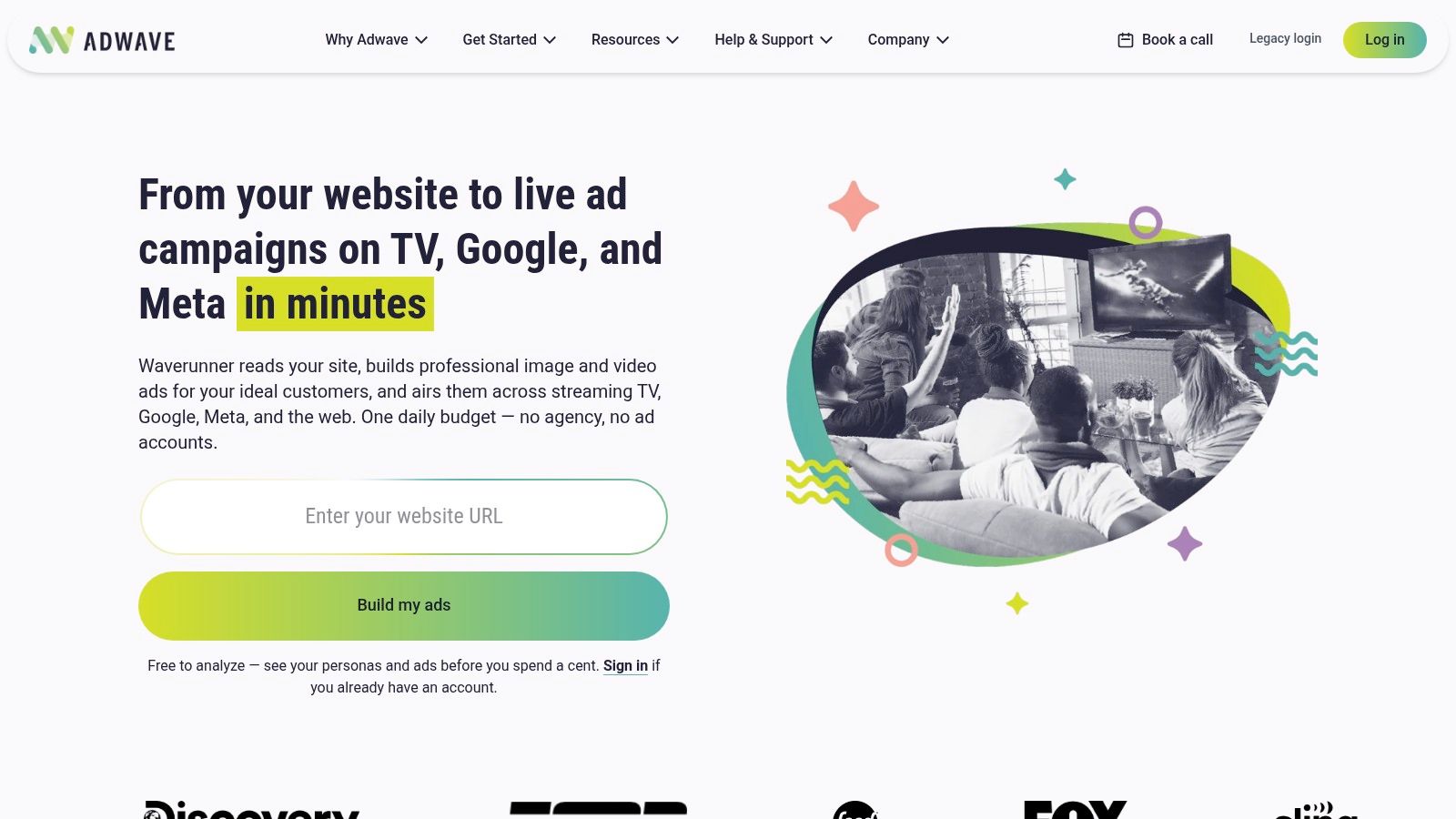
Adwave is a good example of this kind of scoped thinking. It packages TV advertising for small businesses into a tighter offer, with campaigns starting at $50 and automatic budget pacing so spend doesn't exceed the set amount. That makes a traditionally complex channel feel manageable and low risk, which is exactly what consultative selling aims to do. You can see how that approach connects with broader pricing strategies for small business services.
Price the outcome and define the scope so buyers understand what they will receive.</p>
Make the value visible
Value-based pricing works when you can explain the business effect. If your service saves time, reduces waste, or helps the buyer capture more revenue, say that in plain language. The point isn't to promise magic. It's to connect the service to a decision the buyer can defend.
For service businesses, this often means showing trade-offs. A lower-cost option might solve only the immediate pain. A more complete option might remove the bottleneck longer term. Present both clearly, then explain which one fits the buyer's situation.
That's where consultative selling earns its keep. The sale becomes a guided choice, not a price contest. And when the offer is scoped properly, the buyer can act without feeling like they've bought more than they need.
Presenting Proposals That Close Themselves
A proposal should read like the final page of a conversation the buyer already agrees with. If you've diagnosed the problem well, the proposal doesn't need persuasion tricks. It needs structure, clarity, and a clean link between the issue and the recommendation.
Use a three-part proposal
First, restate the problem in the buyer's own language. Keep it specific. “Your team is spending too much time on manual follow-up” is stronger than “You need better efficiency.”
Second, present the recommended solution as the direct answer to that problem. Don't list every possible deliverable. List the smallest set of actions that addresses the agreed issue.
Third, tie the investment to the expected business outcome. That doesn't require inflated claims. It requires honest language about what changes, what stays the same, and what the buyer is paying for.
The best proposals also make the trade-offs visible. If one option is faster and lighter while another is more durable and complete, say so plainly. Buyers trust documents that acknowledge reality.
Write for internal alignment
Most proposals aren't rejected by the person on the call. They get delayed in a team meeting, forwarded to finance, or questioned by a partner who wasn't part of the conversation. Your proposal should help the buyer explain the logic to those other stakeholders.
That's why the wording matters. Use the same phrases from discovery, show the path from problem to solution, and avoid fluffy section titles. A buyer should be able to open the proposal and recognize their own situation immediately.
The underlying method is consistent among strong consultative selling frameworks, confirm the core issue before presenting the fix, then make the fix look like the obvious next step ( diagnosis before prescription). That's what keeps the document from sounding like a bid sheet.
A simple review checklist
Problem clarity: Does the proposal restate the buyer's issue in plain language?
Solution fit: Does every line item tie directly to the diagnosis?
Business value: Does the proposal explain why this investment makes sense now?
Decision ease: Can the buyer explain the recommendation to another stakeholder without rewriting it?
When a proposal does those four things, it stops feeling like a sales document and starts functioning like a decision tool. That's what closes deals without pressure.
checking Success with Consultative Onboarding and KPIs
The sale isn't complete when the contract is signed. A consultative business has to prove value after the buyer commits, or the relationship resets back to commodity mode. Onboarding is where you reinforce that the buyer made a smart, measured decision.
Start by translating the diagnosis into milestones. The client should know what happens first, what success looks like early, and what evidence you'll use to show progress. If you promised a cleaner process, a better message, or more qualified demand, define how you'll observe that change before the work begins.

Choose KPIs that match the diagnosis
The right KPIs come from the problem you solved, not from a generic dashboard. If the issue was revenue leakage, track the metric that reflects that. If the issue was operational drag, measure cycle time, handoff quality, or response speed.
For the seller, the numbers matter too. Consultative businesses should watch close rates, average project value, and client lifetime value because those numbers tell you whether your diagnosis process is sustainable. If close rates improve but projects are too small to support the time involved, the process needs to be adjusted. If project value is healthy but onboarding is weak, the client relationship will stall later.
Build proof into delivery
The best onboarding plans create visible checkpoints. That might mean a kickoff summary, a first-week review, a mid-project recap, and a closeout meeting that ties results back to the original diagnosis. Each checkpoint should answer one question, “Are we moving toward the outcome we said mattered?”
For service firms serving regulated or advice-heavy markets, process discipline matters even more. A resource like essential practice management for RIAs is useful because it reinforces the same idea, a consultative business has to organize its delivery around trust, expectations, and follow-through, not just sales activity.
Keep the relationship teachable
The strongest consultative sellers don't disappear after the contract. They explain what they're seeing, what it means, and what the next decision should be. That habit turns a one-time buyer into a long-term client and often into a referral source.
If you run a small service business, that's a significant economic payoff. You don't need a big sales team if your process keeps the right clients moving, proves value early, and makes each next step easier than the last. A thoughtful consultative system does exactly that.
If you want a practical way to turn more discovery calls into signed work, start with Adwave's small-business resources, review your current first-call script, and tighten your proposal structure so every step points to a clear business outcome.


