
Towing company advertising works best when drivers already know your name before a breakdown and find you at the top of search during one. Pair Google Search for urgent tow truck near me searches with local TV, Facebook and Instagram so your company is familiar. With Adwave, that mix starts at $30 a day, with ads made from your website.
How towing companies get customers
Most towing work starts with a phone call from someone who did not plan to need you. A dead battery in a parking lot, a fender bender on the highway, or a car that won’t start in the driveway. That driver grabs a phone, searches, and calls one of the first numbers that looks local and credible. Speed of answer and a familiar name decide a lot of these calls.
A second stream is scheduled work: moving a non-running car to a repair shop, transporting a vehicle someone bought out of town, or flatbed jobs for classic cars and motorcycles. These customers compare options and read a little more before they call, so a clear website with your services and service area helps.
The third stream is repeat and referral work from body shops, dealerships and property managers, plus past customers who remember you. Advertising doesn’t replace those relationships, but it keeps your name in front of the people who make referrals.
Being findable during the emergency matters, and so does being recognized before it. A driver who has seen your truck on a local TV spot or in an Instagram ad is more likely to call you when your name shows up in a list of search results. That is why towing advertising usually combines a channel that catches urgent searches with channels that build local familiarity.
Which advertising channels fit a towing business
Search catches people who need help right now. TV and social build the name recognition that makes them pick you. Web and mobile placements repeat the message across the apps and sites people use every day. Running them together from one budget is what multichannel advertising with Adwave is built for.

| Channel | Job for a towing company | Adwave daily budget threshold |
|---|---|---|
| Google Search | Reach drivers searching for a tow, roadside help or a flatbed nearby | From the $30/day minimum |
| Google (YouTube and Demand Gen) | Video and visual reminders to local drivers | Included in the $30/day mix |
| TV / CTV | Local awareness so your name is familiar before a breakdown | From the $30/day minimum |
| Facebook and Instagram | Local awareness, crew and truck photos, community presence | From the $30/day minimum |
| Reach local and car-focused communities | Included; availability depends on budget | |
| Mobile web and mobile apps | Frequent reminders across sites and apps in your area | Included in the mix |
| TikTok | Short video for younger local drivers | Opt-in, from about $91/day |
The thresholds above follow Adwave’s published pricing, where TikTok has to be turned on and connected to a TikTok account. Your budget, audience, creative, settings and content eligibility decide which channels actually run. If one optional channel can’t run at launch, the rest of the campaign still goes live and Adwave tells you why, according to the Adwave help FAQ. You don’t open separate ad accounts: Facebook, Instagram, TikTok and Reddit ads run on connected accounts Adwave owns, and Adwave sets up a Google Ads account for your workspace.
If you also run a repair shop or dealership alongside the towing side, the guide to TV advertising for automotive businesses covers that audience in more detail.
Realistic towing ad budgets from $30 a day
Adwave daily budgets run from $30 to $10,000, with no subscription and no contract. One all-in daily budget covers media, ads and management. Here is what different levels open up:
| Daily budget | Channels in reach | 30 active days |
|---|---|---|
| $30 | TV, Google (Search included), Facebook and Instagram, web and mobile | $900 |
| $35 | Adds Reddit | $1,050 |
| $75 (pricing page planning example) | Same mix with more room per channel | $2,250 |
| $91 | TikTok becomes available as an opt-in | $2,730 |
The 30-day totals are planning figures. You can pause before 30 days and you’re charged only for what runs. You review your ads before adding a card, then fund a prepaid wallet when you’re ready to launch, and campaigns pause if the wallet runs dry (auto-refill is optional). Card deposits add the processing fee shown at checkout; ACH deposits have no added fee. New accounts start with an empty wallet, and agency licenses and paid extra creative are priced separately from the daily budget.
Be realistic about what a small budget does in a busy metro. At $30 a day spread across TV, search and social, each channel gets a modest share, and urgent towing searches are competitive. A small operator covering one town can get useful visibility at the minimum. A company competing across a large metro will usually need more per day, or a tighter service area, to show up often enough. For broader context on what local advertising costs across channels, see our cost guide.
What a towing ad should say and show
Someone who needs a tow is stressed and scanning fast, so a towing ad has to answer the obvious questions in seconds:
- A phone number that is large, readable and tappable on mobile
- The towns, ZIP codes or highways you cover
- The services you actually offer, such as light-duty towing, flatbed transport, jump starts, lockouts or tire changes
- Real photos of your trucks and crew, not stock images
- Hours of service, with 24/7 claims only if someone really answers at 3 a.m.
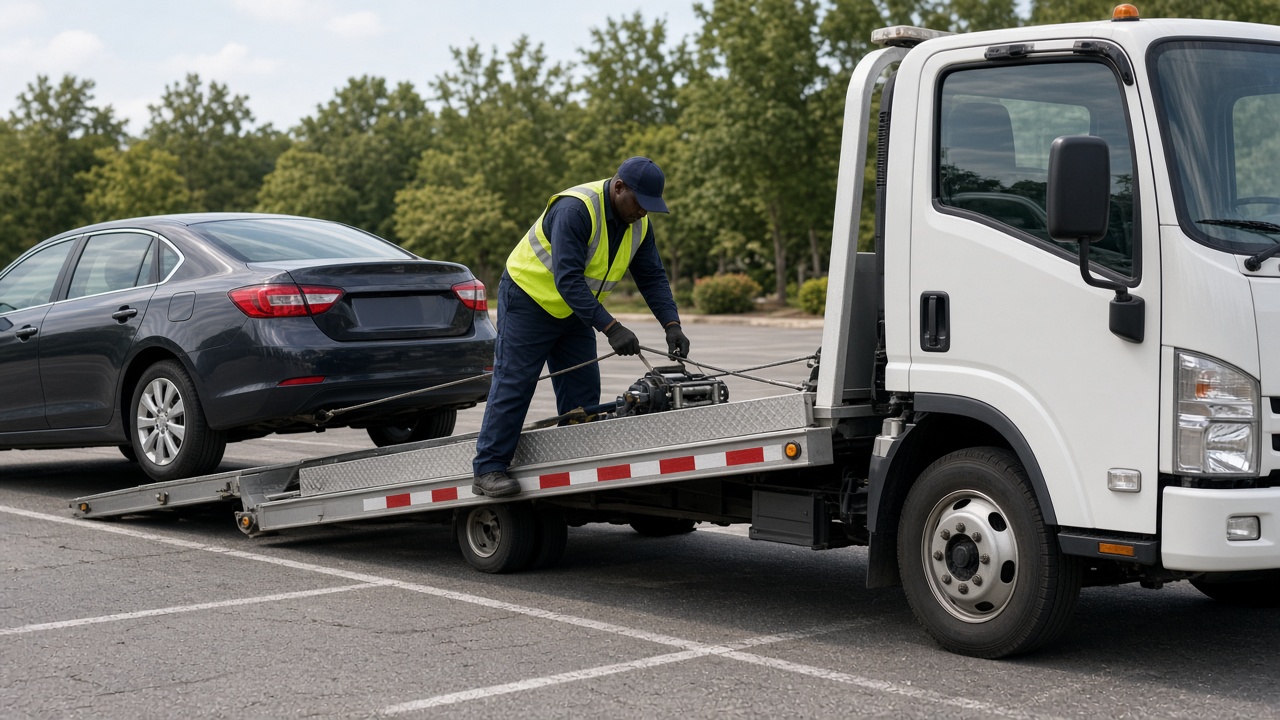
As a campaign example, a single-truck operator might run a TV spot showing the flatbed loading a sedan with the line, for example, Stuck in Springfield? Call now for flatbed towing and roadside help, followed by the phone number and service area on screen. The same photos become Instagram posts, and the search ad lists the same services and towns. That is an illustration of offer, creative and next step, not a measured result.
Adwave reads your website for offers and photos, then builds image ads, social video and a TV spot you can preview and refine before launch. You can edit the creative or upload finished ads. Campaign creative is included, and extra creation costs $0.38 per image, $6 per social video, $6 per 15-second TV spot and $12 per 30-second TV spot. For more creative angles, our collection of TV ad ideas for local service businesses applies well to towing.
Planning around weather and seasonal demand
Towing demand rises when conditions get worse, from the first snow and ice storms to heat waves that kill batteries, heavy rain and busy holiday travel weekends. Search demand follows those events almost immediately, so your search presence needs budget available on those days.

Awareness channels work on a slower clock. A TV or social campaign that starts the morning of a storm has little time to make your name familiar. Running awareness steadily, then raising the daily budget a week or two before your known busy season, gives drivers time to see you before they need you. When the season eases, lower the budget rather than going dark entirely.
Budget changes in Adwave are simple to time. On a live campaign, a new daily budget applies the same day if your wallet covers it, with no proration. Pausing stops future daily charges; the day’s set-aside stays until the next morning, when only what ran is charged. Low delivery never pauses a live campaign on its own. A short pause won’t erase your setup, but a long one gives up the familiarity you built.
Target your actual service area with a radius, ZIP codes or a city, so a storm push doesn’t spend money in towns your trucks can’t reach. Tree service companies face the same pattern, and their approach to booking storm-driven work ahead of time translates directly.
Advertising rules that apply to towing companies
Federal law says an ad must be truthful and not misleading, and the FTC’s truth-in-advertising guidance says the same standards apply wherever the ad appears, from television to online. The FTC looks especially closely at claims that affect consumers’ pocketbooks, which covers what you say about prices and fees.
For a tow operator, that means every claim in the ad has to hold up when a stranded driver calls. Don’t promise a 20-minute arrival you can’t meet on a storm night, and don’t advertise flat rates that change once the truck shows up. Avoid guarantees about response time or outcomes unless you can back them up every time.
Reviews and testimonials have their own rules. The FTC’s advertising and marketing guidance points businesses to the Rule on the Use of Consumer Reviews and Testimonials and the Endorsement Guides, revised in 2023. Use real reviews from real customers, don’t write or buy fake ones, and don’t edit a review so it says something the customer didn’t.
Towing is also regulated locally. Many states and cities license tow operators and set rules for non-consent towing, storage fees and posted rates. Check your state and city rules before you quote prices or describe services in an ad.
Measuring calls and jobs from your ads
Start by installing your business’s tracking snippet and setting up the actions you want to count, such as calls from your site and form submissions. Give each conversion a value, such as your average ticket for a local tow, and Adwave can report revenue and return on spend. The Adwave FAQ describes last-touch credit, assisted conversions and Lift experiments as answering different questions: what got the final click, what helped along the way, and whether the campaign changed behavior at all.
Be honest about the limits. A driver who saw your TV spot last month and searched your name during a breakdown may show up as a search conversion, with no credit going to TV. Phone calls dialed straight from memory or a truck wrap won’t appear in click-based reports. Watch branded searches, total call volume and the question how did you hear about us on dispatch calls alongside the dashboard. HVAC companies deal with a similar call-driven setup, and our guide on turning ad spend into booked service calls covers that tracking in more depth.