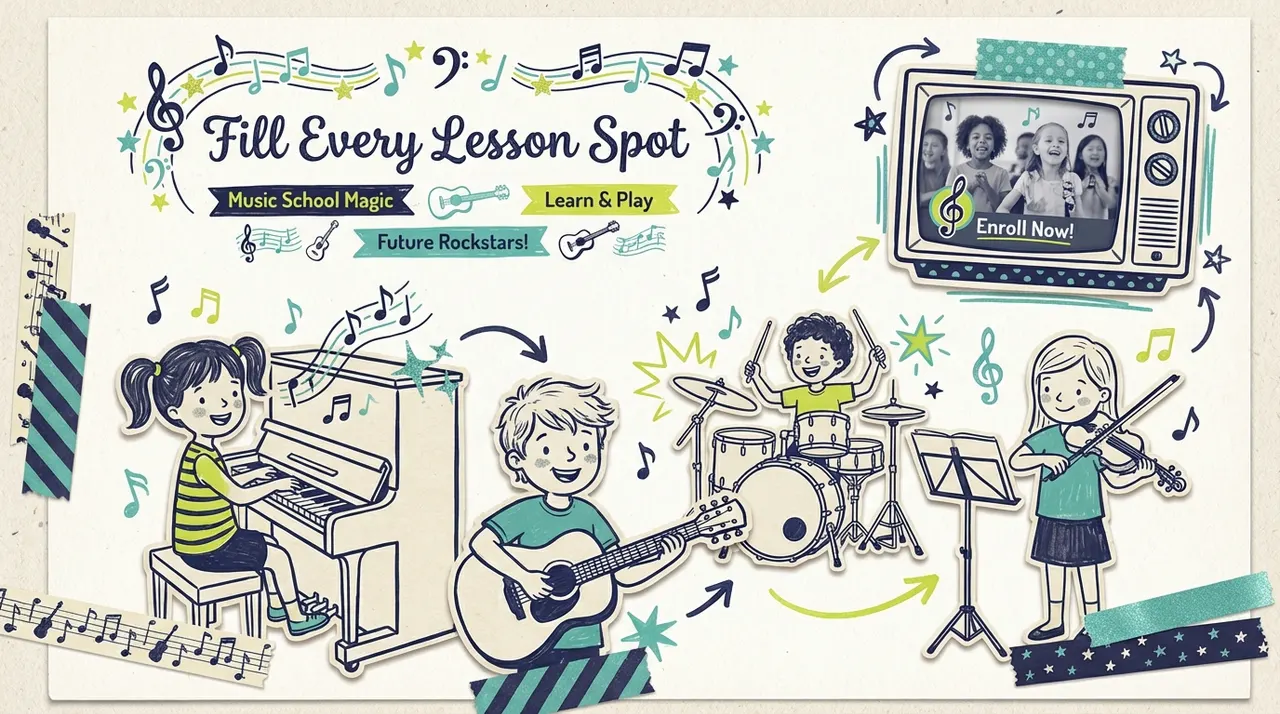
Every musician remembers their first lesson. The nervousness of sitting down at the piano, picking up a guitar, or singing into a microphone for the first time. For parents, choosing a music school is a big decision. They're investing in their child's growth, creativity, and confidence. So how do you make sure your studio is the one they pick?
TV advertising lets you do something no other marketing channel can. It lets families see and hear what your music school is all about. A 30-second spot with students performing, instructors teaching, and real music filling the room creates an emotional connection that a Google ad or flyer just can't match. And with streaming TV, you don't need a massive budget to make it happen.
Why TV Advertising Works for Music Schools
The Audio-Visual Advantage
Music is meant to be experienced, not described. A print ad can tell parents you offer piano lessons. A TV ad can show a student's fingers moving across the keys while a beautiful melody plays. That difference matters. According to the Video Advertising Bureau, video ads generate 2.3x more emotional response than static formats, and that emotional response is exactly what drives parents to pick up the phone and book a trial lesson.
When parents hear a child performing a recital piece or see a group of kids laughing through a drum circle, they immediately picture their own child in that setting. That's the power of showing rather than telling.
Reaching Families During Viewing Time
Streaming TV ads run on platforms like Hulu, Peacock, Tubi, and 100+ other premium networks. Many of these platforms are where families watch together in the evenings and on weekends. That timing is perfect for music schools because the parent (the decision-maker) and the child (the future student) are both in the room.
The National Association of Music Merchants (NAMM) reports that 85% of parents believe music education benefits their children's development. The desire is already there. Your ad just needs to reach them at the right moment, and family viewing time is exactly that moment.
Competing for After-School Attention
Your real competition isn't other music schools. It's every activity fighting for a spot on a family's schedule: soccer leagues, tutoring centers, dance classes, coding camps. TV advertising gives you a distinct edge because you can showcase the joy and creativity of music in a way those other activities can't replicate on screen.
If you're competing against youth sports programs or tutoring centers for after-school time, a well-placed TV ad reminds parents that music offers something unique: self-expression, discipline, and a lifelong skill.
Enrollment Season Timing
Music schools typically see two big enrollment windows: back-to-school season (August through September) and the new year (January). TV advertising lets you time your campaigns precisely around these windows. Run ads in the weeks leading up to enrollment deadlines, then scale back during peak lesson periods.
The flexibility of streaming TV means you can launch a campaign quickly and adjust your budget as needed. No long-term contracts or months of lead time.
Building Studio Prestige
There's a perception that only established, premium brands advertise on TV. When your music school shows up on the same screen as national brands, it instantly elevates your reputation. Parents associate TV presence with credibility and stability. For a local music school, that kind of prestige can be the difference between being seen as a hobby operation and being recognized as a serious institution.
Who You're Reaching with Music School TV Ads
Understanding your audience helps you get the most from every advertising dollar. Music schools typically attract three key groups.
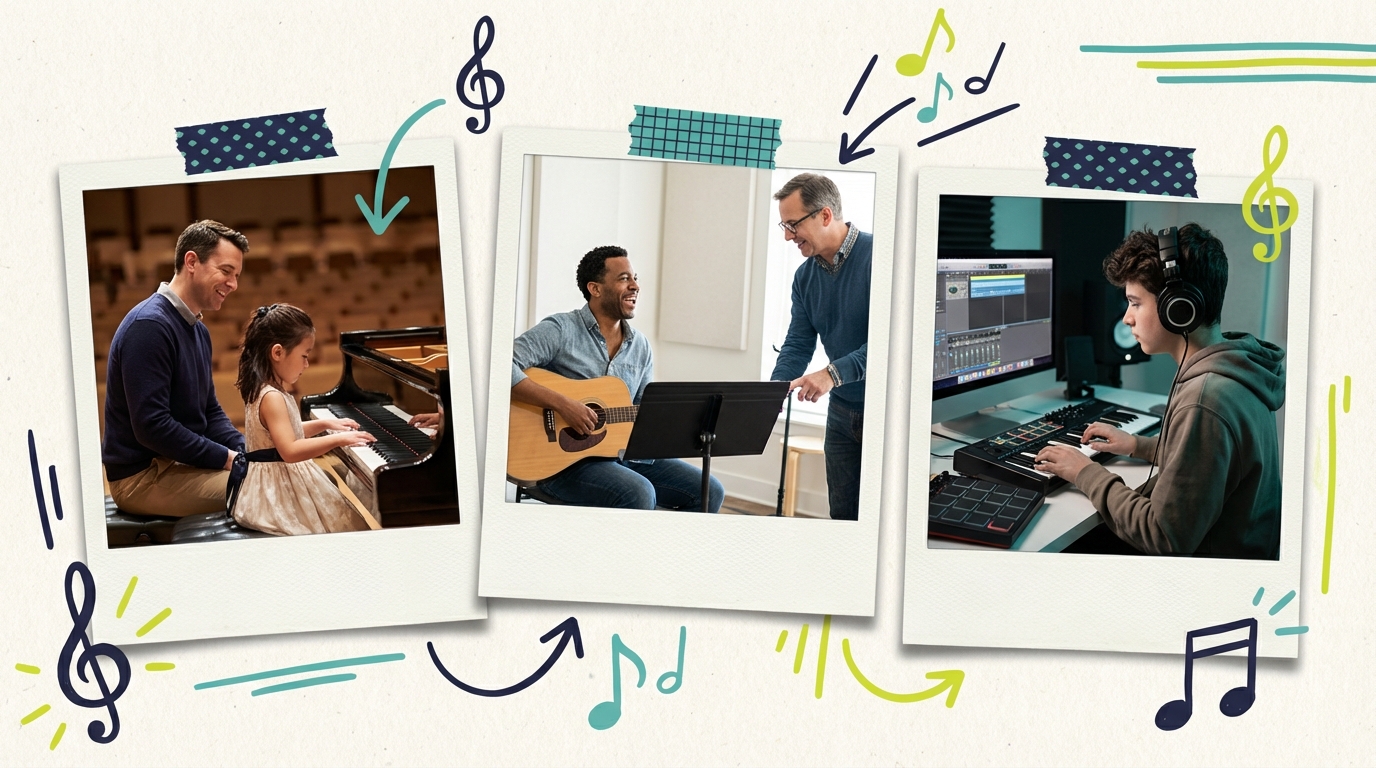
Parents of school-age children (ages 5-14): This is your primary audience. These parents are actively looking for enrichment activities. They're weighing options, reading reviews, and asking other parents for recommendations. A TV ad that shows happy, engaged students can tip the scale in your favor.
Adult hobbyists: The "I always wanted to learn guitar" crowd is bigger than you might think. Adults picking up an instrument for the first time, or returning after years away, represent a growing segment. According to NAMM's 2023 Global Report, 72% of Americans who play a musical instrument are adults. TV ads that feature adult learners can open up an entirely new revenue stream.
Teens choosing their own activities: Older students often have more say in how they spend their time. A TV ad that feels cool, creative, and aspirational can speak directly to teens who want to start a band, produce music, or learn songwriting.
Real Results from Music School TV Ads
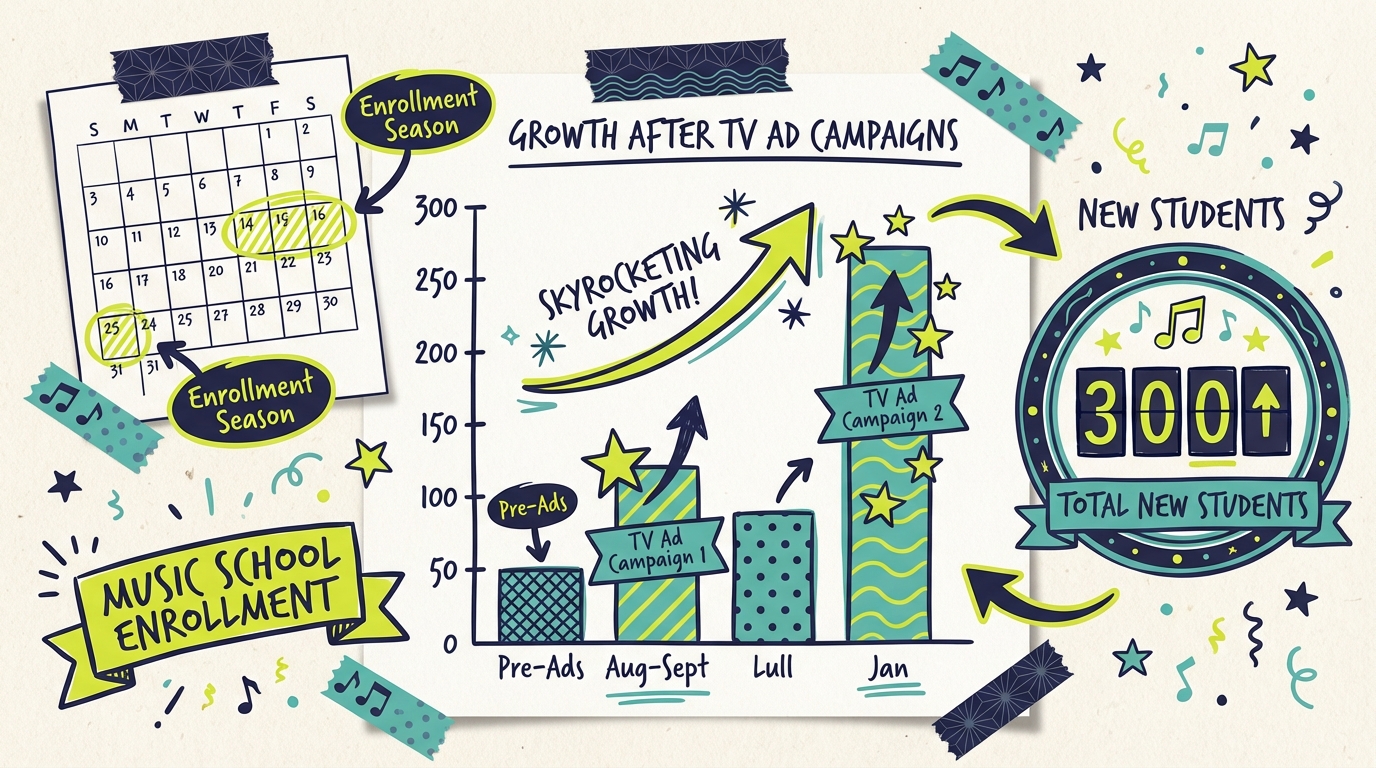
What does TV advertising do for a music school's bottom line? Here's what studio owners can expect.
Trial lesson inquiries spike during campaigns. When your ad runs consistently for two to three weeks, you'll notice an uptick in calls, website visits, and trial lesson bookings. Many studio owners report that parents specifically mention seeing the ad when they call to inquire.
Enrollment bumps during key seasons. Running targeted campaigns before back-to-school and new year windows can increase enrollment by filling spots that might otherwise go empty. Even a handful of new students per campaign can significantly impact annual revenue, since music students tend to stay enrolled for years.
Brand recognition builds over time. TV advertising creates a compounding effect. The first campaign introduces your school. The second campaign reinforces it. By the third, parents in your area associate your name with music education. That long-term recognition pays off every time a family starts looking for lessons.
Stronger referral conversations. When a parent recommends your school to a friend, it helps when that friend has already seen your ad on TV. The recommendation feels like confirmation rather than a cold suggestion.
How to Get Started with TV Advertising
Getting your music school on TV used to require hiring an agency, producing a commercial, and spending thousands of dollars. That's not the case anymore.
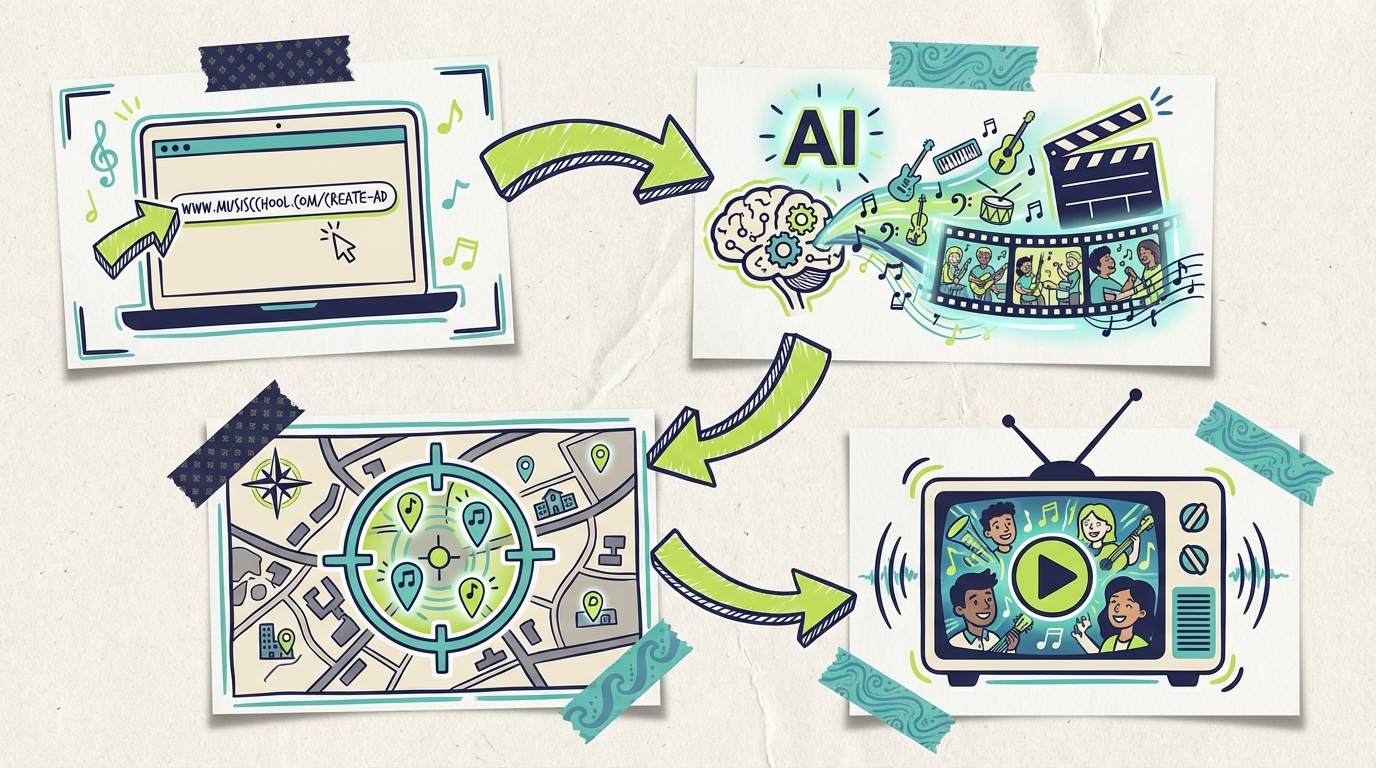
With Adwave, the process takes under 10 minutes:
Share your website URL. Adwave's AI pulls information from your music school's website (or your Yelp page, social media, or any URL you provide) to build your ad.
Review your 30-second commercial. The AI generates a broadcast-quality TV ad featuring your studio's branding, photos, and key selling points. The whole process takes about two minutes.
Target local families. Choose your geographic area so your ad reaches parents and students in your community.
Launch your campaign. Your ad goes live on 100+ premium streaming networks, including NBC, ESPN, Hulu, and more.
You don't need to be a marketing expert or a video production pro. Adwave handles the creative and distribution so you can focus on teaching.
What It Costs to Advertise Your Music School on TV
TV advertising for music schools is far more affordable than most studio owners expect.
Adwave campaigns start from $30/day, and creating your ad is completely free. The average CPM (cost per thousand impressions) runs between $15 and $35, which means your ad can reach thousands of local families without breaking your marketing budget.
Here's why the math works especially well for music schools: the lifetime value of a music student is substantial. A student who signs up for weekly piano lessons at $40 per session generates over $2,000 in revenue per year. Many students stay for three to five years or longer. So even if a single TV campaign brings in just two or three new students, it can generate $10,000 or more in lifetime revenue.
Compare that to the cost of a $50 to $500 streaming TV campaign, and the return on investment becomes clear.
Common questions answered
How long should I run my music school TV ad campaign? Most music schools see the best results with campaigns running two to four weeks, especially when timed around enrollment seasons. Consistency matters more than a single big push. Running shorter campaigns multiple times throughout the year keeps your school familiar with local families and builds recognition over time.
Can I target specific neighborhoods or zip codes? Yes. Adwave lets you set geographic targeting so your ad reaches families in your service area. This is especially useful for music schools since most students come from within a 10- to 15-mile radius. You're not wasting budget on viewers who would never drive to your location.
What should my music school TV ad focus on? The best music school ads show real moments: students performing, instructors engaging with learners, and the energy of a recital or group class. Let the music speak for itself. Parents respond to seeing happy, confident kids making music. Include a clear call to action like "Book a free trial lesson" to drive immediate response.
Do I need professional video footage to create a TV ad? No. Adwave's AI can create a broadcast-quality commercial using content from your website, social media pages, or any URL you provide. If you do have video of student performances or lessons, that can make your ad even more compelling, but it's not required to get started.
Is TV advertising worth it for a small, single-location music school? Absolutely. In fact, local music schools often see the strongest results because they can target a tight geographic area, keeping costs low while reaching the families most likely to enroll. With campaigns from $30/day, you can test TV advertising without committing a large budget.
When is the best time of year to advertise my music school? The two highest-impact windows are back-to-school season (late July through September) and the new year (January through early February). These are when parents are most actively seeking new activities for their children. That said, summer camps and holiday gift certificates can also be promoted effectively with short TV campaigns.