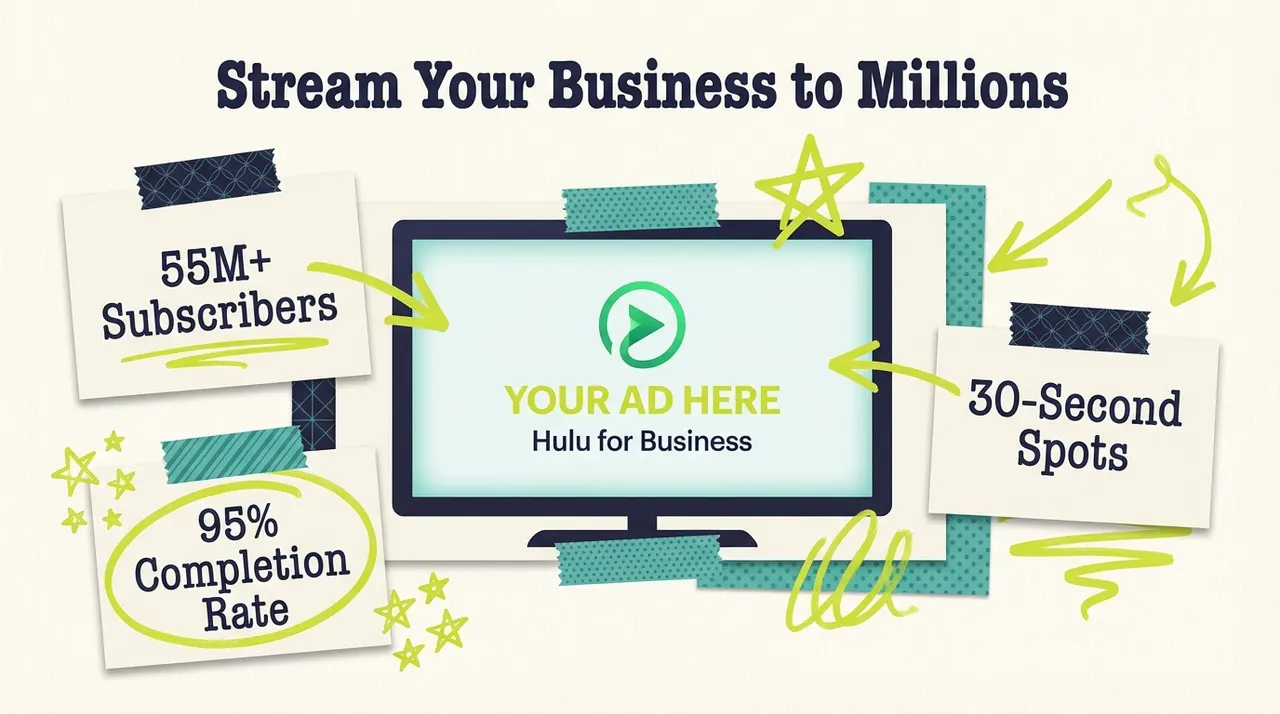
To advertise on Hulu, you buy through Disney's ad sales team, through Disney Campaign Manager, its self-serve tool, which starts at $500 per campaign, or through a programmatic platform that buys streaming TV. Most small businesses use self-serve or a platform that buys for them, and either way you need a finished 15 or 30-second video ad.
Direct buys with Disney's sales team are built for large budgets. Self-serve is open to small businesses, but you bring your own creative and manage the campaign yourself.
Adwave is a third route. It makes the ad from your website and runs streaming TV alongside search and social from one daily budget starting at $30. Streaming placements run across many apps, so Adwave doesn't promise your ad will appear on Hulu itself.
This guide breaks down everything you need to know about advertising on Hulu: what it costs, who you'll reach, what ad formats are available, and how to get started.
What Makes Hulu Different from Other Streaming Platforms
Hulu occupies a unique spot in the streaming world. Unlike Netflix (which only recently added ads) or free platforms like Tubi and Pluto TV, Hulu has been running ads since its launch. That means its ad infrastructure is mature, its targeting is sophisticated, and advertisers have years of performance data to draw from.
A few things that set Hulu apart:
Next-day network TV. Hulu is the only major streamer that offers next-day access to shows from ABC, NBC, Fox, and other broadcast networks. Viewers come back daily, not just for binge sessions.
Premium originals. Shows like The Bear, Only Murders in the Building, and The Handmaid's Tale draw dedicated audiences who watch with intention (not just background noise).
High ad-supported adoption. About 37 million of Hulu's subscribers (roughly 65%) are on the ad-supported plan at $11.99/month. That's a massive audience seeing ads every session.
Disney ecosystem. Hulu is owned by Disney and is merging into the Disney+ platform in 2026. For advertisers, this means unified buying across Hulu, Disney+, and ESPN content through a single platform.
For small businesses, the key takeaway is that Hulu delivers a premium, engaged audience. These aren't passive viewers scrolling on their phones. They're watching full-screen, sound-on content on their living room TVs, and they're paying attention.
Hulu Ad Formats: What's Available
Hulu offers several ad formats, though not all are accessible at every budget level. Here's what you should know:
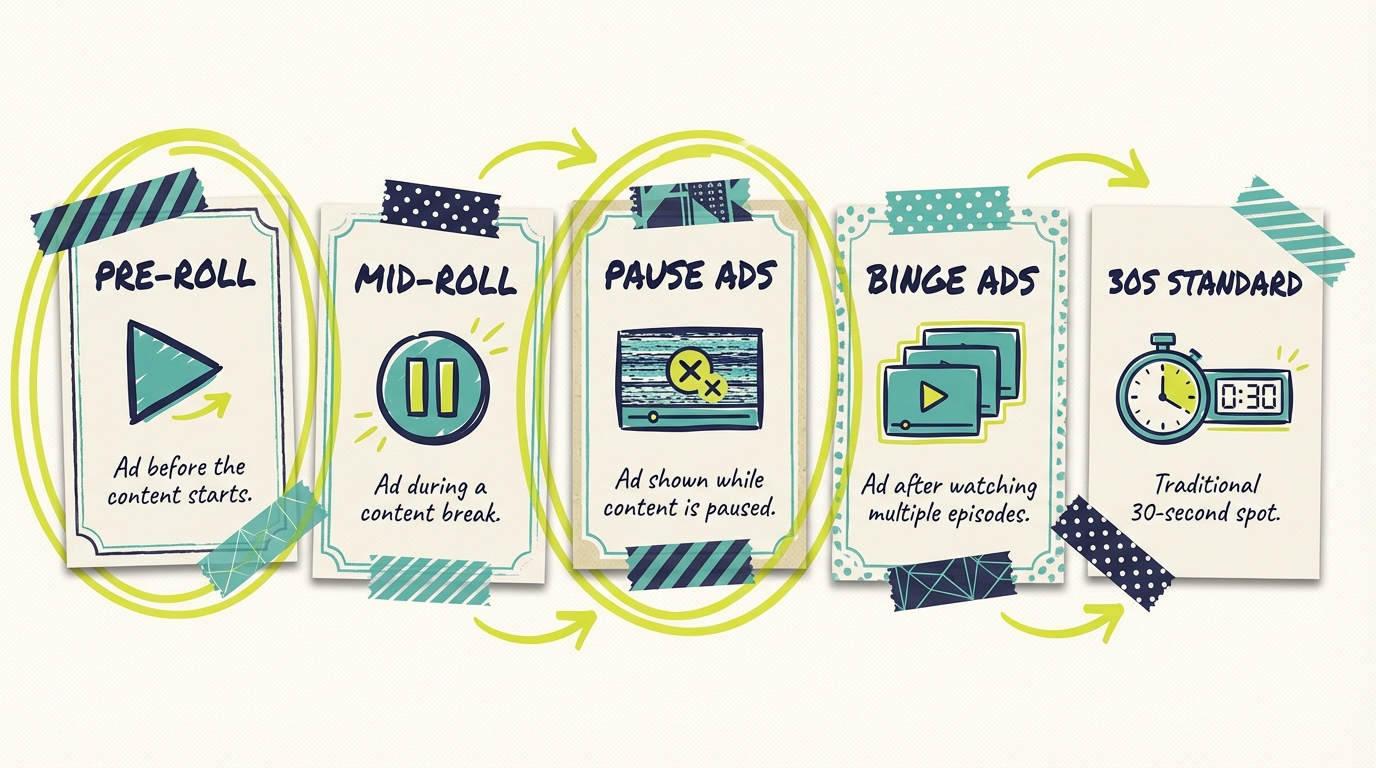
Standard Video Ads (15s and 30s) These are the bread and butter of Hulu advertising. Non-skippable pre-roll, mid-roll, or post-roll spots that play before, during, or after content. The 30-second format gives you enough time to tell your story, show your product, and include a call to action. Because they're non-skippable, completion rates regularly exceed 95%.
Pause Ads When a viewer hits pause, your brand appears as a static or lightly animated display. These are low-intrusion and work well for awareness campaigns. They often include a QR code so viewers can take action on their phone. Pause ads require a direct buy with Disney's sales team and aren't available at lower budget levels.
Binge Ads These are sponsorship placements triggered during multi-episode viewing sessions. When someone watches three or more episodes in a row, your brand gets featured as a "brought to you by" moment. It's a premium format that creates positive brand association. Also requires a direct buy.
Ad Selector Viewers choose from two or three ad options. If they don't pick in 15 seconds, one auto-plays. This format drives higher engagement because viewers feel like they're in control. Like pause and binge ads, it's available through Disney's managed sales team.
Gateway Ads Full-screen takeover before content begins. Maximum visibility, but premium pricing and direct buy only.
For small businesses, standard 30-second video ads are the most accessible and effective format. They deliver your message in full, the audience can't skip them, and they're available through both self-serve and programmatic channels. The specialty formats (pause, binge, selector, gateway) are great if you have a six-figure budget, but they're not necessary to get strong results on Hulu.
How Much Does Hulu Advertising Cost?
Let's talk numbers. Hulu advertising costs depend on how you buy and how specific your targeting is.
A few things to understand about these numbers:
CPM means cost per thousand impressions. If your CPM is $30 and you spend $500, you'll get roughly 16,600 impressions. That's 16,600 times your ad plays in front of a real viewer on a real TV screen.
Targeting affects price. Broad national campaigns tend to have lower CPMs than hyper-local campaigns targeting a specific ZIP code plus age group plus interest category. The more specific you get, the more you pay per impression, but the more relevant each impression becomes.
Seasonality matters. Q4 (October through December) is the most expensive time to advertise on any streaming platform. Holiday spending, Black Friday, and year-end budgets drive CPMs up across the board. If you're budget-conscious, Q1 and Q2 tend to offer better rates.
You need video creative. If you're buying through Disney Campaign Manager or a DSP, you need to supply your own broadcast-quality 30-second ad. Professional video production can cost $5,000 to $50,000 or more. That's often a bigger barrier than the media spend itself.
Adwave removes the production step. It makes a commercial from your website and runs it on streaming TV, search and social from $30 a day. It buys streaming inventory across many apps rather than Hulu specifically.
Who Watches Hulu? Audience Demographics
Understanding Hulu's audience helps you decide if it's the right fit for your business.
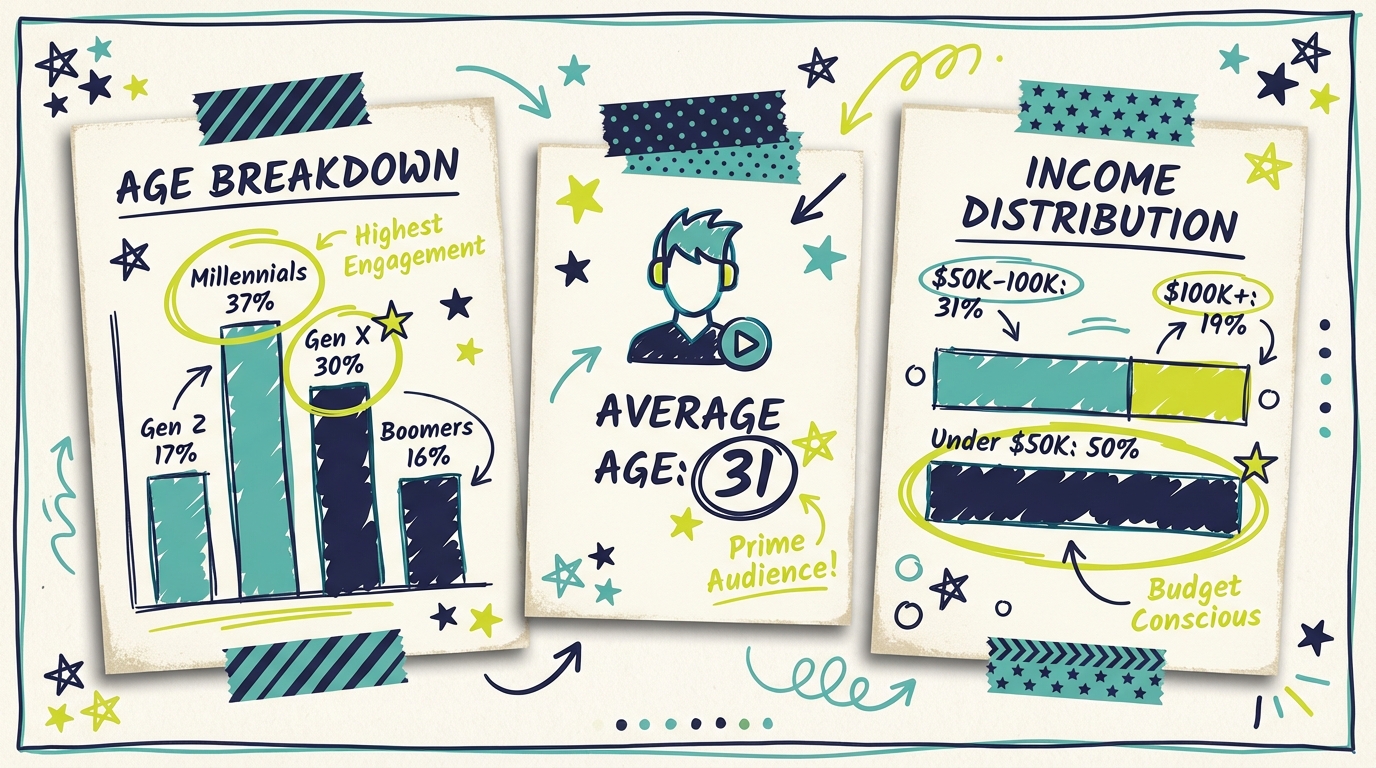
Age distribution:
17% Gen Z (18-24)
37% Millennials (25-39)
Combined: over half of Hulu's audience is under 40
The largest single web traffic segment is 25-34 year-olds at about 34%
Average viewer age: 31
Gender: Roughly balanced at 53.5% female, 46.5% male.
Income:
31% earn $50,000 to $100,000 per year
19% earn over $100,000
About 50% earn under $50,000
Broad middle-class audience, not exclusively affluent
Education: Disproportionately college-educated compared to the general population.
Viewing behavior:
65% watch on the ad-supported plan
Average viewing session runs 2+ hours
Peak viewing happens evenings and weekends
On-demand viewers pay 33% more attention to ads than live TV viewers (according to Hulu's own research)
What this means for your business: If you're targeting adults aged 25 to 45 with moderate to high household income, Hulu's audience is almost tailor-made for you. These are the same consumers who are increasingly unreachable through traditional cable TV because they've cut the cord or never had it in the first place.
Restaurants, home services, auto repair, real estate, fitness studios, professional services: if your customers fall in that 25-45 age range, they're very likely watching Hulu.
Targeting Options on Hulu
One of Hulu's biggest advantages over traditional TV is targeting. Instead of buying a time slot and hoping the right people are watching, you can target specific audience segments.
Geographic targeting:
National, regional, DMA (designated market area), and ZIP code level
Local targeting is especially valuable for small businesses. You can target just your city, your neighborhood, or a radius around your location.
Demographic targeting:
Age segments (18-24, 25-34, 35-49, 50+)
Gender
Household income
Education level
Behavioral targeting:
Purchase history and purchase intent
Product ownership (car owners, homeowners, pet owners)
Viewing preferences and content consumption patterns
Interest-based targeting:
Categories like entertainment, food, home improvement, travel, sports, health, and more
Mapped to viewer behavior across the Disney ecosystem
Contextual targeting:
Target by content genre (comedy, drama, reality, news, sports)
Align your brand with relevant content themes
Device targeting:
Smart TV, mobile, tablet, desktop, gaming console
Most Hulu viewing happens on smart TVs (living room, big screen, sound on)
The level of targeting available through Hulu is similar to what you'd find on Facebook or Google, but the ad experience is dramatically different. Instead of a tiny banner or a skippable pre-roll on YouTube, your ad plays full-screen, non-skippable, with sound, in a premium content environment. That combination of digital targeting plus TV-quality delivery is what makes CTV advertising so effective.
How to Advertise on Hulu: Your Options
There are four main paths to getting your ad on Hulu:
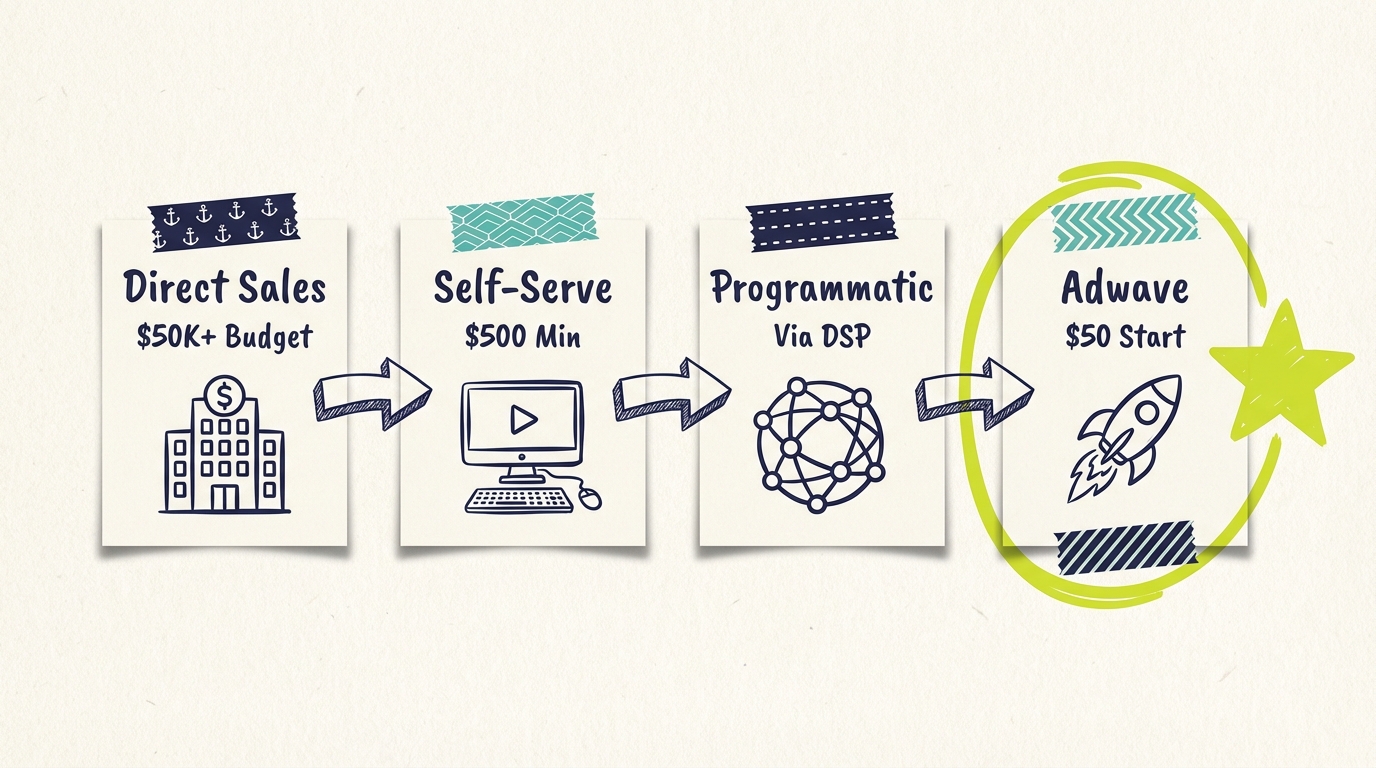
Option 1: Disney Direct Sales For budgets of $50,000 and up. You work with a Disney sales rep who builds a custom campaign. You get access to premium formats (pause ads, binge ads, gateway ads) and dedicated support. This is the path for national brands and large agencies. Not realistic for most small businesses.
Option 2: Disney Campaign Manager (Self-Serve) Disney's self-serve platform (formerly Hulu Ad Manager) lets you set up campaigns starting at $500. You upload your own 15 or 30-second video ad, choose your targeting, set your budget, and launch. The interface is straightforward, but you need to bring your own creative. If you don't have a broadcast-quality video ad ready to go, this path hits a wall before you start.
Option 3: Programmatic (via DSP) Hulu inventory is available through demand-side platforms like The Trade Desk, Amazon DSP, and DV360. This is how agencies typically buy Hulu ads as part of larger cross-channel campaigns. CPMs can be competitive, but DSPs require expertise and often have their own minimum spends. Not a practical option for most small business owners.
Option 4: Adwave Adwave makes a commercial from your website and runs it on streaming TV, search and social from one daily budget starting at $30. It buys streaming TV across many apps, so it can't promise a spot on Hulu itself.
For most small businesses, the choice is between Option 2 and Option 4. If you have a finished video ad and want Hulu specifically, Disney Campaign Manager is the direct route. If you don't have an ad, or want streaming TV to run alongside search and social, a platform like Adwave fits better.
Measuring Your Hulu Campaign
Once your ad is running, you'll want to track performance. Here's what's available:
Through Disney Campaign Manager:
Impressions delivered
Video completion rates (typically 95%+ on Hulu because ads are non-skippable)
Reach and frequency
Audience demographic breakdowns
Industry benchmarks for Hulu ads:
Ad completion rate: 95%+ (non-skippable format)
Ad attention: 88% vs. 56% for user-generated content and 51% for social platform ads
Ad recall: 150% more effective than traditional TV at driving recall
Purchase intent: 24% higher than traditional TV commercials
Viewability: near 100% (full-screen, sound-on CTV environment)
Through Adwave: When you run through Adwave, you get a real-time analytics dashboard that shows performance across all channels, not just Hulu. You can see impressions, reach, and how your campaign is performing without needing to log into multiple platforms or interpret DSP reports.
A note on attribution: TV advertising (streaming included) works differently from search or social ads. You won't get a direct "click to purchase" path. Instead, you're building brand awareness and familiarity. The viewer sees your ad Tuesday night, and when they need your service Thursday morning, your business is the one they remember. That's how TV advertising works for local businesses, and it's why TV consistently ranks as the most trusted advertising medium.
The Disney+ Merger: What It Means for Advertisers
In 2026, Hulu is being fully absorbed into Disney+ as a dedicated hub inside the app. The standalone Hulu app will be phased out over the course of the year.
For advertisers, this is mostly good news:
Expanded inventory. Your ads can reach viewers across Hulu content, Disney+ content, and ESPN content through a single buy.
Larger audience. Disney+ has over 150 million global subscribers. Combining with Hulu's 55 million creates one of the largest ad-supported streaming audiences anywhere.
Unified targeting. Disney's data across all its properties means even more precise audience targeting.
If you're advertising through Adwave, this transition happens behind the scenes. Adwave buys streaming TV programmatically across many apps, so the merger doesn't change how you set up a campaign.
Ad-Supported Plans and What Viewers See
Hulu sells two kinds of plans: one with ads at a lower price, and an ad-free plan at a higher price. Your commercial only reaches people on the ad-supported plan. Those viewers chose the cheaper plan knowing it comes with ads, so the ads are part of the deal they signed up for.
Ad breaks on Hulu are shorter than a typical cable break, and the standard 15 and 30-second spots cannot be skipped. That does not prove anyone watched closely, but it does mean your full message plays on the screen. Hulu also sells pause ads and interactive formats, though those usually need a direct buy. For the bigger picture on ad-supported streaming, see our explainer on AVOD vs SVOD.
Common Questions About Hulu Advertising
Can a small business really advertise on Hulu? Yes. Disney's self-serve Campaign Manager starts at $500 per campaign, so a small business with a finished video ad can buy Hulu directly. Platforms like Adwave are another route: they run streaming TV across many apps from a daily budget, without promising a spot on Hulu itself.
Do I need to produce my own commercial? If you're buying directly through Disney Campaign Manager, yes, you need a finished 15 or 30-second video. If you're using Adwave, no. Adwave makes the commercial from your website.
How is Hulu advertising different from YouTube ads? Hulu ads are non-skippable, play in a premium content environment, and appear on TV screens (not phones). YouTube ads can often be skipped after 5 seconds, play alongside user-generated content, and are primarily viewed on mobile. Hulu's ad completion rate (95%+) is significantly higher than YouTube's because viewers can't hit skip. For a deeper comparison, see our guide to CTV vs social video.
What's a good budget to start with? Adwave's daily budget starts at $30, about $900 a month, and covers the ad, the media and management. Buying Hulu directly through Disney Campaign Manager starts at $500 per campaign, plus the cost of making a video ad.
Can I target just my local area? Yes. Hulu supports geographic targeting down to the ZIP code level. Through Adwave, you can target your local market so your budget isn't wasted on viewers outside your service area.
How do Hulu ads compare to Facebook or Google ads? Different tools for different jobs. Google Ads capture people who are actively searching for something right now. Facebook/Instagram reach people based on interests and behavior. Hulu (and CTV generally) builds brand awareness and trust with a premium, full-screen experience. The most effective strategies use a mix. TV builds the brand, and search/social capture the demand that TV creates. See our guide to multichannel advertising for small business for how TV, Meta, and Google work together from $30/day.
Run it with Adwave
Adwave is another way to reach streaming TV viewers, without buying Hulu directly or producing a commercial first.
- Ads made from your website. Add your website and Adwave makes the ads, including a TV spot. Campaign creative is included.
- TV, search, social and the web on one budget. One prepaid daily budget, from $30 a day, with no subscription and no contract.
- Preview before you pay. See your audience and preview your ads before you add a card.
- Where your TV ads run. Adwave doesn't promise a spot on Hulu. Ads run across streaming services such as Tubi, Pluto TV, A&E and AMC. Where each ad runs depends on the auction.
Start with your website