GoFundMe campaigns face a critical challenge: reaching beyond your immediate network to find donors who care about your cause. With over 94,000 business fundraisers launched on GoFundMe in 2023, competition for donor attention is fierce. While social media sharing drives initial donations, campaigns that rely solely on friends and family often stall before reaching their goals.
TV advertising solves this by connecting your story with your local community: people who live nearby, care about local causes, and want to help but haven't seen your campaign in their social feeds. Unlike reward-based crowdfunding, GoFundMe relies on emotional connection and trust. TV's visual storytelling format lets you share your story with the depth and emotion that drives donations. In this guide, you'll learn how GoFundMe campaigns use TV advertising to accelerate fundraising timelines, reach donors outside their social networks, and build the community trust that turns one-time donors into ongoing supporters.
Why TV Advertising Works for GoFundMe Campaigns
TV advertising offers unique advantages for donation-based fundraising campaigns. Here's what makes it especially effective for GoFundMe:
Reach donors who aren't on social media. GoFundMe's success heavily depends on social sharing, but many potential donors, especially older demographics and local community members, aren't active on the platforms where campaigns are shared. TV advertising reaches these donors where they're already watching: local news, streaming content, and community programming. For medical expense campaigns, this means reaching neighbors who want to help but don't use Facebook or Instagram. For community projects, it means connecting with local residents who care about their area but aren't scrolling social feeds.
Build trust through local visibility. GoFundMe campaigns face skepticism. Donors worry about scams or misuse of funds. When your campaign appears on local TV channels, it signals legitimacy that social media posts can't match. Local TV news viewers trust what they see on their community channels more than social media posts. This trust is especially critical for medical expense campaigns, emergency relief, and community projects where donors need confidence their money will be used appropriately.
Tell emotional stories that drive action. GoFundMe operates on donation-based giving with no rewards. Donors give because they're moved by your story, not because they get something in return. TV's video format lets you share personal stories with the depth and emotion that text posts can't convey. Show faces, share struggles, demonstrate impact. For medical campaigns, show the person who needs help. For community projects, show the people who will benefit. This visual storytelling drives higher donation amounts because viewers feel connected to your cause.
Create urgency for time-sensitive campaigns. Many GoFundMe campaigns are urgent: medical emergencies, disaster relief, time-sensitive community needs. TV advertising creates immediate awareness that social media's slow viral spread can't match. When viewers see your urgent campaign on TV, they can donate immediately via QR code, accelerating your fundraising timeline.
Reach beyond your social network. GoFundMe campaigns typically start with friends and family, then stall when that network is exhausted. TV advertising expands your reach to your entire local community: people who don't know you personally but care about local causes.
Real Results from GoFundMe Campaign TV Ads
GoFundMe campaigns using TV advertising report measurable improvements in donor reach and fundraising speed:
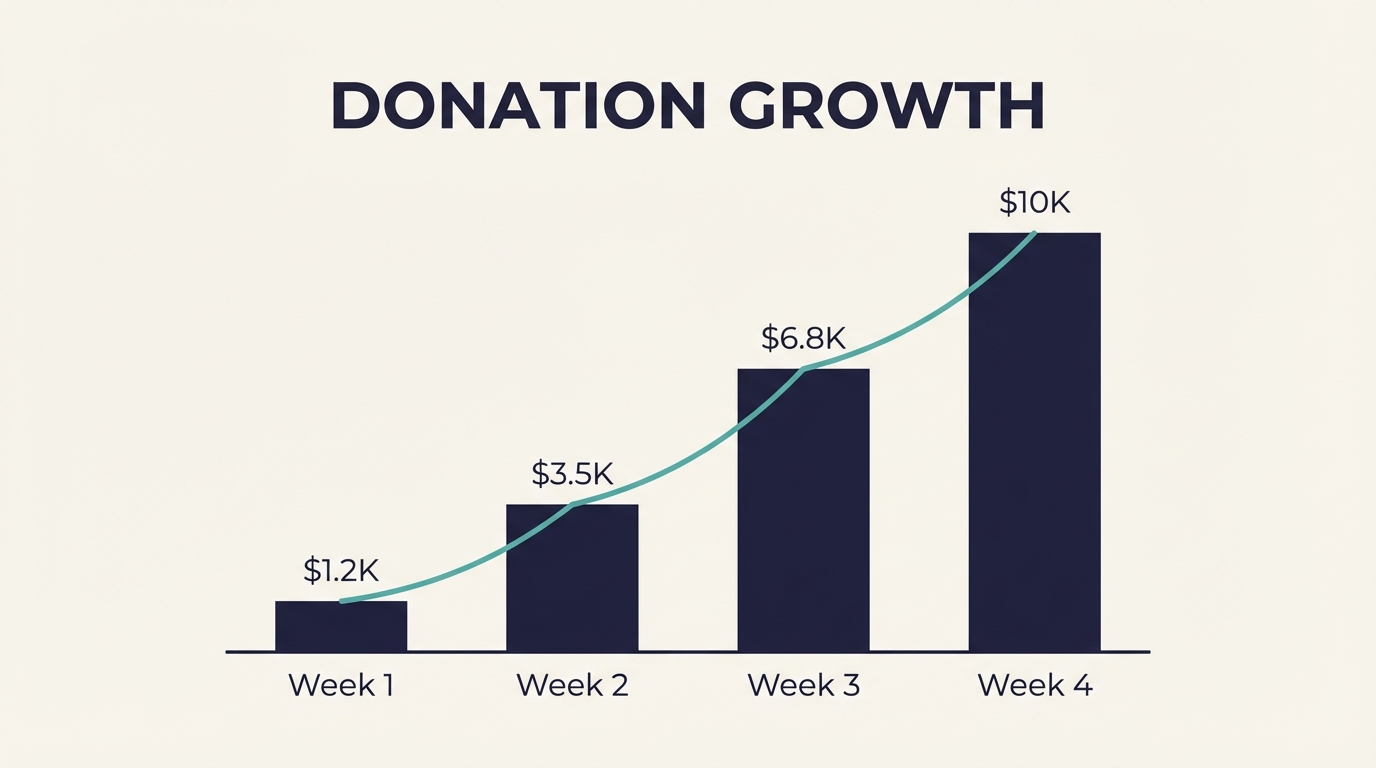
Increased donation amounts from TV viewers. TV advertising drives donors who weren't finding your campaign through social media alone. These new donors often contribute higher amounts because they've seen your story in a more intentional, focused context.
Reached donors outside your immediate social network. TV advertising helps you connect with community members who aren't active on your primary social platforms. This diversification strengthens your donor base and reduces dependency on personal networks.
Boosted campaign visibility and credibility in your local community. When your campaign appears on TV, it signals legitimacy and community support. This visibility often leads to additional media coverage, word-of-mouth sharing, and increased trust from potential donors.
Accelerated fundraising timeline. By reaching more potential donors faster, TV advertising helps campaigns meet their goals sooner. This acceleration can be critical for time-sensitive campaigns like medical emergencies or disaster relief.
Targeting Strategies for GoFundMe Campaigns
Geographic Targeting for Community Connection
GoFundMe campaigns are inherently local. Medical expenses affect local families, community projects serve specific areas, emergency relief helps local residents. Target your specific geographic area: your neighborhood for hyper-local causes, your city for broader community projects, or your region for larger-scale needs. Medical expense campaigns should target the patient's local area where neighbors know them or care about community health. Community projects should target the specific area that will benefit. Emergency relief campaigns should target the affected region. National targeting rarely works for GoFundMe because donors give to causes they can see and verify locally.
Demographic Targeting for Charitable Giving
GoFundMe donors span all demographics, but TV advertising should target demographics most likely to donate to your cause type. Medical expense campaigns appeal to middle-aged and older demographics (35-65) who understand healthcare costs and have disposable income. Community projects appeal to local residents of all ages who care about their area. Emergency relief appeals broadly but especially to demographics with higher giving capacity. Don't ignore younger demographics. Gen Z and Millennials are increasingly active on GoFundMe, but they may discover campaigns through social media rather than TV. Focus TV advertising on demographics with higher donation capacity and local community connection.
Timing and Urgency for Donation Campaigns
GoFundMe campaigns are often time-sensitive: medical treatments have deadlines, emergencies need immediate help, community projects have timelines. Launch TV advertising early in your campaign when momentum matters most, or when social media sharing has plateaued. For urgent campaigns (medical emergencies, disaster relief), launch TV ads immediately to accelerate donations. For ongoing campaigns (community projects, long-term medical needs), use TV advertising to maintain momentum when social sharing slows.
Budget Considerations for GoFundMe Campaigns
GoFundMe campaigns operate on donation-based giving with no platform fee for personal campaigns (US), making every dollar raised valuable. From $30/day, you can test TV advertising's impact on donor acquisition. Most successful GoFundMe campaigns allocate 5-15% of their fundraising goal to marketing, with TV advertising becoming valuable when social media reach plateaus.
For campaigns with $5,000-10,000 goals, a $200-500 TV campaign can drive significant donor acquisition if it reaches the right local audience. The key is measuring donor acquisition cost: if you spend $300 and gain 30 donors averaging $50 each ($1,500 raised), your acquisition cost is $10 per donor, which is reasonable for campaigns that need to reach beyond personal networks.
Scale up when you see consistent donor acquisition and positive ROI. Campaigns with $20,000+ goals often invest $1,000-2,000 in TV advertising to accelerate fundraising and ensure they meet their goals. TV advertising makes the most sense when your campaign has stalled on social media or when you need to reach demographics not active on social platforms.
Creating Effective GoFundMe Campaign TV Commercials
Effective GoFundMe campaign commercials prioritize emotional storytelling over product features. You're asking for donations, not selling a product. Start with the human story: who needs help, why they need it, and how donations will make a difference. For medical expense campaigns, show the person who needs treatment and explain the medical situation clearly. For community projects, show the people who will benefit and explain the community impact. For emergency relief, show the situation and explain the urgent need.
Build trust through transparency: explain exactly how funds will be used. "Your donation will cover [specific medical treatment]" or "Funds will go directly to [specific community project]" builds donor confidence. Include social proof: "Over 200 community members have already donated" or "We're 60% to our goal" creates momentum and urgency.
Use real faces and real stories. Don't use stock footage. Show the actual person who needs help or the actual community that will benefit. Authenticity drives donations more than polished production.
End with a clear call-to-action: "Donate now at [campaign URL]" or a QR code that links directly to your campaign page. Make donating easy. The fewer steps between seeing your ad and donating, the higher your conversion rate.
Learn more about what makes a good TV commercial and how to tell your story effectively.
How It Works for GoFundMe Campaigns
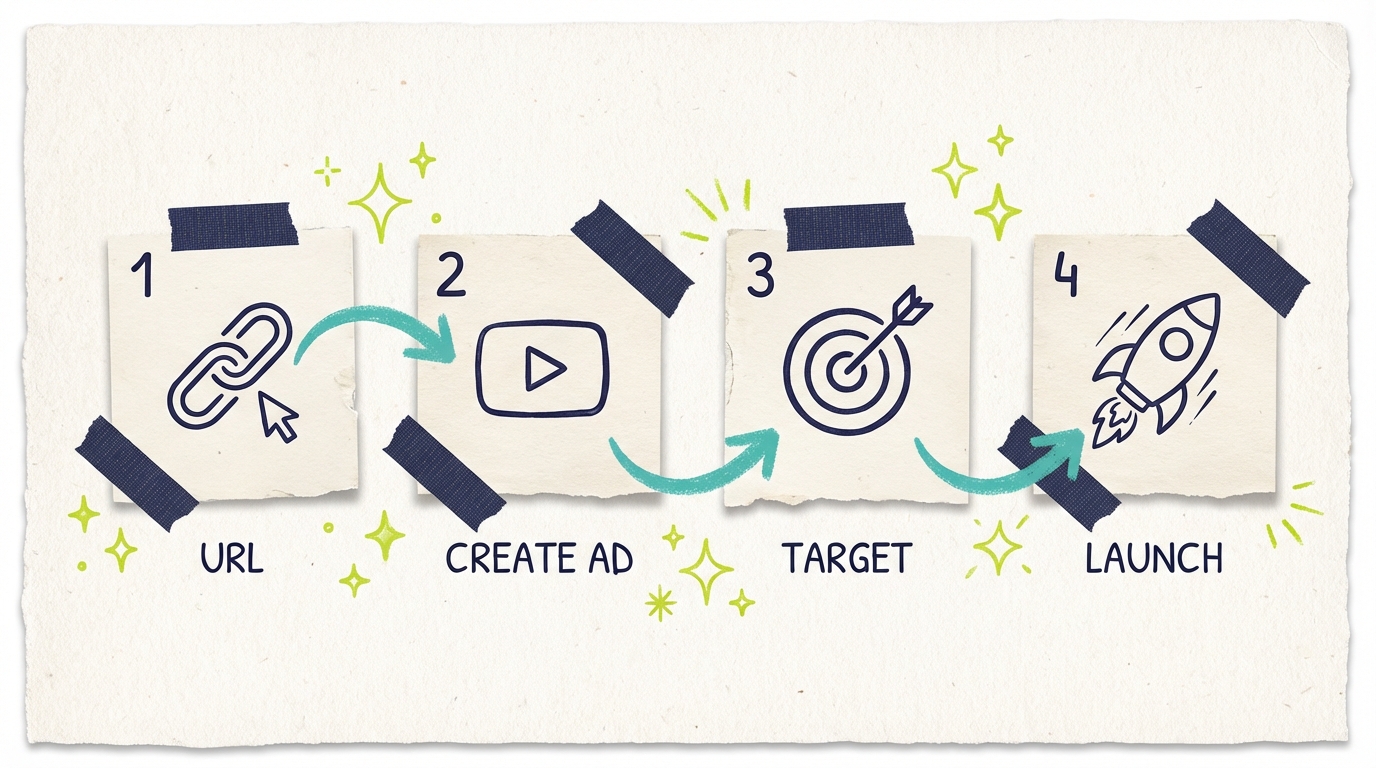
Share your GoFundMe page. Adwave's AI gathers your campaign story, images, and messaging automatically. Simply provide your GoFundMe URL, and the AI pulls your campaign details, photos, and story to understand your cause.
AI creates your TV commercial. Your ad tells your story compellingly and includes a clear call-to-action to donate. The AI generates a professional 30-second commercial that highlights your cause and makes donating the obvious next step.
Target your community. Reach viewers in specific locations where your campaign matters most. You can target locally if your cause is community-specific, or regionally if your story resonates across a broader area.
Launch and track results. Monitor how many viewers visit your GoFundMe page and make donations. Adwave's dashboard shows you impressions and website visits, and you can track donations through your GoFundMe campaign page.
Measuring Success for GoFundMe Campaigns
GoFundMe campaigns should track donor acquisition and average donation amount, not just total raised. Monitor donor acquisition cost: divide your TV ad spend by new donors acquired. If you spend $300 and gain 20 donors, your acquisition cost is $15. Compare this to average donation amount. If donors average $50, TV advertising is profitable.
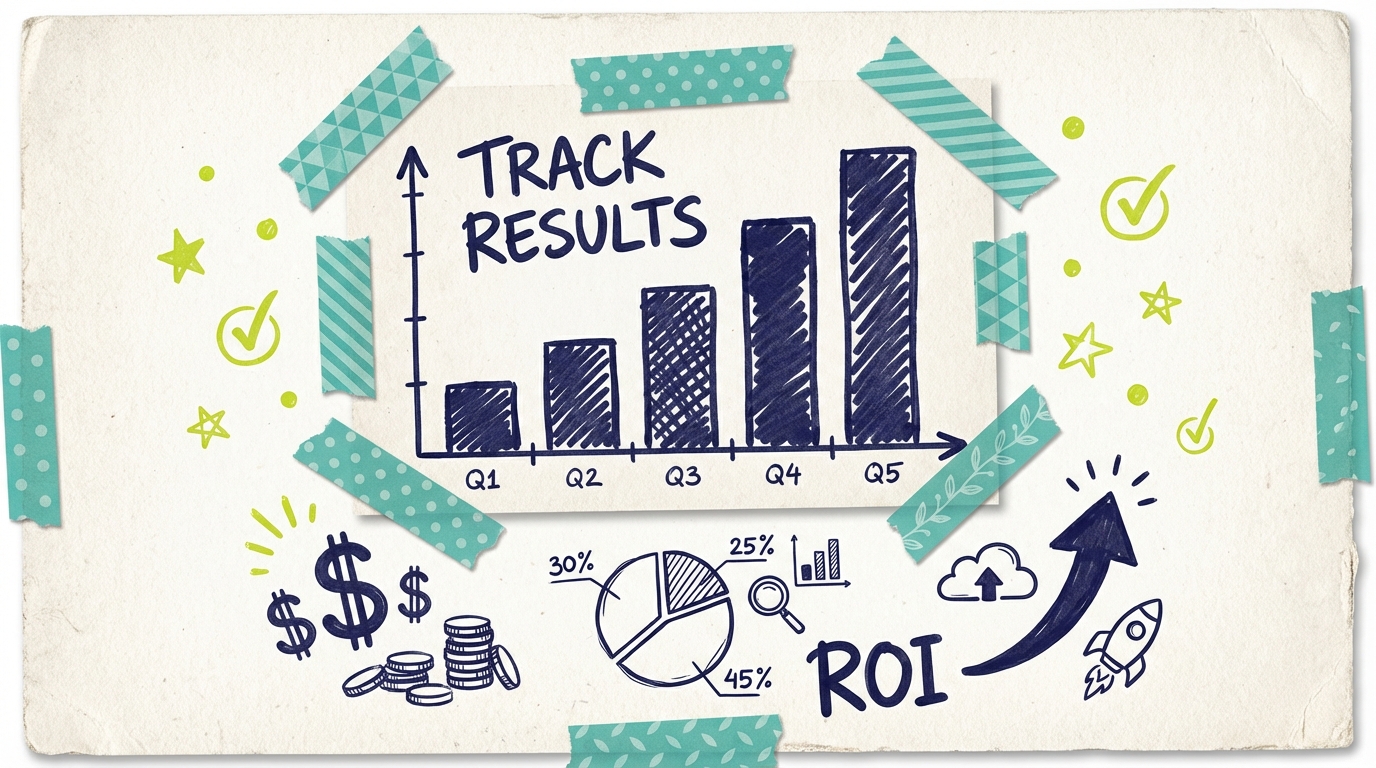
Track campaign progress acceleration: measure how quickly you reach fundraising milestones after launching TV ads. If your campaign was raising $500/week before TV and $1,500/week after, TV advertising is accelerating your timeline significantly. This acceleration is especially valuable for time-sensitive campaigns with deadlines.
Monitor donor source quality: GoFundMe's analytics show where donors come from. Track whether TV-acquired donors have higher average donation amounts than social media-acquired donors. TV donors often give more because they've seen your story in a more intentional, focused context. Use UTM parameters on your GoFundMe page link in TV ads to track traffic and conversions.
Common Mistakes to Avoid
Not telling a clear, emotional story. GoFundMe campaigns succeed on emotional connection, not product features. Many campaigns make commercials that feel like product ads: showing features instead of faces, explaining benefits instead of needs. Effective GoFundMe commercials show who needs help, why they need it, and how donations will make a difference. Don't be afraid to be emotional. Donors give because they're moved, not because they're sold.
Targeting too broadly. GoFundMe campaigns are local by nature. Donors give to causes they can see and verify. Many campaigns target nationally when they should target locally. Medical expense campaigns should target the patient's local area. Community projects should target the specific community that will benefit. National targeting rarely works because donors can't verify legitimacy or see local impact.
Not building trust through transparency. GoFundMe campaigns face skepticism. Donors worry about scams. Many campaigns don't explain how funds will be used, leaving donors uncertain. Effective commercials explain exactly what donations will cover: "Your donation will cover [specific medical treatment]" or "Funds will go directly to [specific project]."
Missing urgency for time-sensitive campaigns. Many GoFundMe campaigns are urgent but don't communicate urgency effectively. Medical treatments have deadlines, emergencies need immediate help. Effective commercials create urgency: "We need to raise $10,000 by [date] for [specific reason]."
Common questions answered
Can TV advertising help crowdfunding campaigns succeed?
TV advertising can amplify crowdfunding campaigns by reaching audiences beyond your existing network. Successful crowdfunding often requires reaching people who don't already know you, and TV provides that broader reach. However, it works best for campaigns with compelling stories and visual appeal that translate well to video.
When should crowdfunding campaigns use TV advertising?
Launch TV advertising during your campaign's live funding period, ideally after initial momentum from your network. Many campaigns see a mid-campaign slump that TV can help overcome. Plan TV pushes around key milestones or deadline urgency to maximize impact. Ensure your campaign page is polished before driving TV traffic to it.
What should a crowdfunding TV ad focus on?
Tell your story compellingly in 30 seconds. Show the product, project, or cause and why it matters. Create urgency around the funding deadline or goal. Include a clear call to action with your campaign URL or a memorable way to find you. Make viewers feel they can be part of something meaningful by backing your project.
How do crowdfunding campaigns measure TV advertising success?
Track pledge activity during advertising versus non-advertising periods. Monitor traffic to your campaign page from new sources. Watch for increases in social sharing and referrals. Calculate cost per backer from TV-driven traffic. Compare average pledge amounts from TV-attributed backers to understand audience quality.