
So, what makes a good TV commercial? The simple answer is that it's a blend of art and science. It’s a powerful mix of a great story, a clear brand message, an emotional hook that grabs you, and a memorable call to action. It’s about creating a real human connection in 30 seconds or less, a mini-movie built to capture attention and inspire action.
The Anatomy of an Unforgettable TV Commercial
Behind every commercial that sticks in your mind is a well-thought-out strategy. These ads aren't just happy accidents; they're carefully engineered to connect with viewers on both an emotional and psychological level. Understanding these core pillars is your first step toward creating an ad that doesn’t just get seen, but gets remembered.
The real goal is to stop just showing your product and start telling a story where your brand is the hero. That's the difference between an ad that interrupts the show and an ad that becomes part of the entertainment. Let's break down how these foundational pieces work together to turn someone watching from their couch into an active customer.
The Power of TV in Today's Market
The numbers back it up. TV advertising spend is on track to grow past $150 billion by 2032, proving its lasting value. This isn't just old-school TV, either. Modern tech like Connected TV (CTV) is a huge part of this growth, with 80% of advertisers now using it to target specific households, mixing TV's massive reach with digital's precision.
This infographic lays out just how strong the TV advertising market really is.
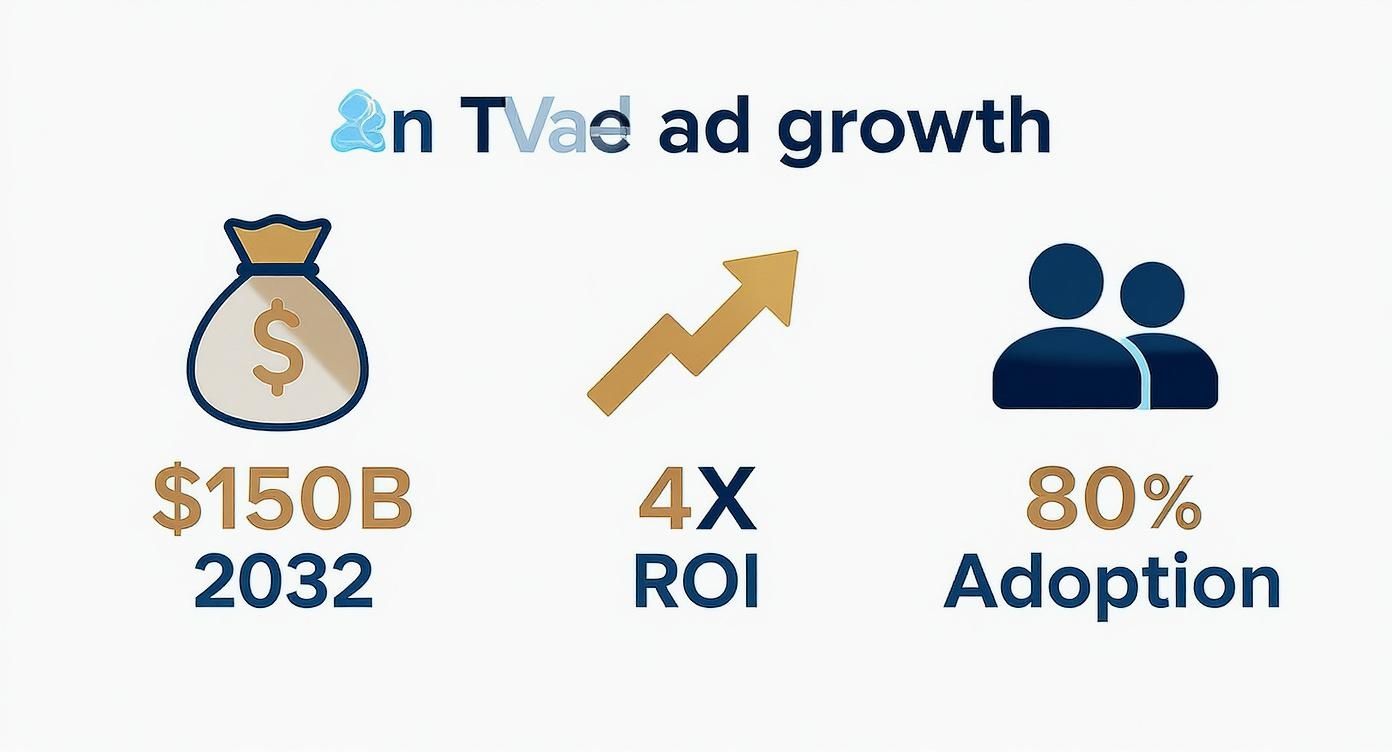
As the data shows, TV often delivers a return on investment that's four times higher than many digital ads, making it an important channel for any business looking to grow. Before we get into the nitty-gritty of each creative element, take a look at our collection of example ads to see these principles in action.
Here's a quick look at the foundational pillars every great TV commercial is built on. Think of these as the non-negotiables for making an impact.
Core Components of a Successful TV Commercial
Getting these four elements right is the key to turning your advertising budget into real, measurable results.
Crafting a Story That Captivates Your Audience
Build the commercial around a story viewers can follow in 30 seconds.
In less time than it takes to make popcorn, a great ad builds a world, introduces a character, presents a problem, and delivers a solution. Your brand isn't just a product being sold; it's the hero that saves the day.
This narrative approach elevates your ad from a simple sales pitch to a memorable experience. You’re not just listing features; you're taking viewers on a short emotional journey where your product is the natural, satisfying conclusion.
The Irresistible Hook
You have maybe five seconds, tops. That’s your window to stop someone from changing the channel or glancing down at their phone. This opening moment, the hook, is everything. It has to be powerful enough to make them pause.
A solid hook can hit the senses, a sudden, unexpected sound, a visually stunning opening shot, or a question that makes you instantly curious. The goal is to create an "information gap," that little itch in the viewer's brain they can only scratch by watching the rest of your ad.
It could be as simple as a baby's infectious giggle or as strange as a scene that seems to have nothing to do with the product. Whatever you choose, it needs to be bold and immediate.
Structuring Your 30-Second Movie
Every great story, from Hollywood blockbusters to 30-second ads, follows the classic three-act structure. It’s a formula that just works because it taps into how we naturally process events and emotions.
Here’s how to apply it to your TV spot:
Act 1 - The Setup: Introduce a relatable character with a familiar problem. This creates an instant connection with your audience.
Act 2 - The Conflict: Show the character struggling. This is where you build tension and drive home the pain point your product solves.
Act 3 - The Resolution: Your brand swoops in as the solution. The character uses your product, the conflict disappears, and they're left with a positive result.
Use the framework to give the story a clear beginning, development, and conclusion.
A powerful emotional response within 30 seconds is an art that involves precise storytelling, a clear message, and relatable characters. The key is understanding the viewer’s context to produce impactful spots that cut through the noise.
The Power of Emotional Connection
Facts tell, but emotions sell. What makes a commercial stick in your mind is its ability to make you feel something. Laughter, nostalgia, surprise, inspiration, emotion is the superglue that makes your message stick.
Commercials that trigger feelings like happiness or surprise can boost brand recall by up to 30% compared to ads that are emotionally neutral. And with 60% of viewers saying TV ads influence their buying decisions, an emotional connection is clearly a powerful persuader.
This is where meticulous planning with scripts and storyboards pays off. If you’re looking for tools to help craft concise and resonant narratives, resources like the ShortGenius platform can offer some innovative approaches. The right emotion, delivered well, can turn a passive viewer into a loyal customer who feels good about your brand long after your ad has finished.
Executing Flawless Production for Maximum Impact
A captivating story is the blueprint, but flawless execution is what builds the house. This is where your creative vision leaps off the page and onto the screen. It’s easy to assume high impact requires a Hollywood-sized budget, but the real secret is much simpler: smart, strategic execution at every stage.
Think of it this way: you wouldn't start hammering nails without architectural plans and a solid foundation. In the same way, a great commercial depends on meticulous planning long before the cameras ever start rolling.
This process is broken down into three distinct phases. Each one is essential for turning a good idea into a great TV commercial that works.
Phase One: Pre-Production and Planning
This is, without a doubt, the most important part of the entire process. It's also the one people are most tempted to rush. Solid pre-production is the bedrock of an efficient, cost-effective shoot. It’s where you map out every single detail to prevent costly surprises down the road.
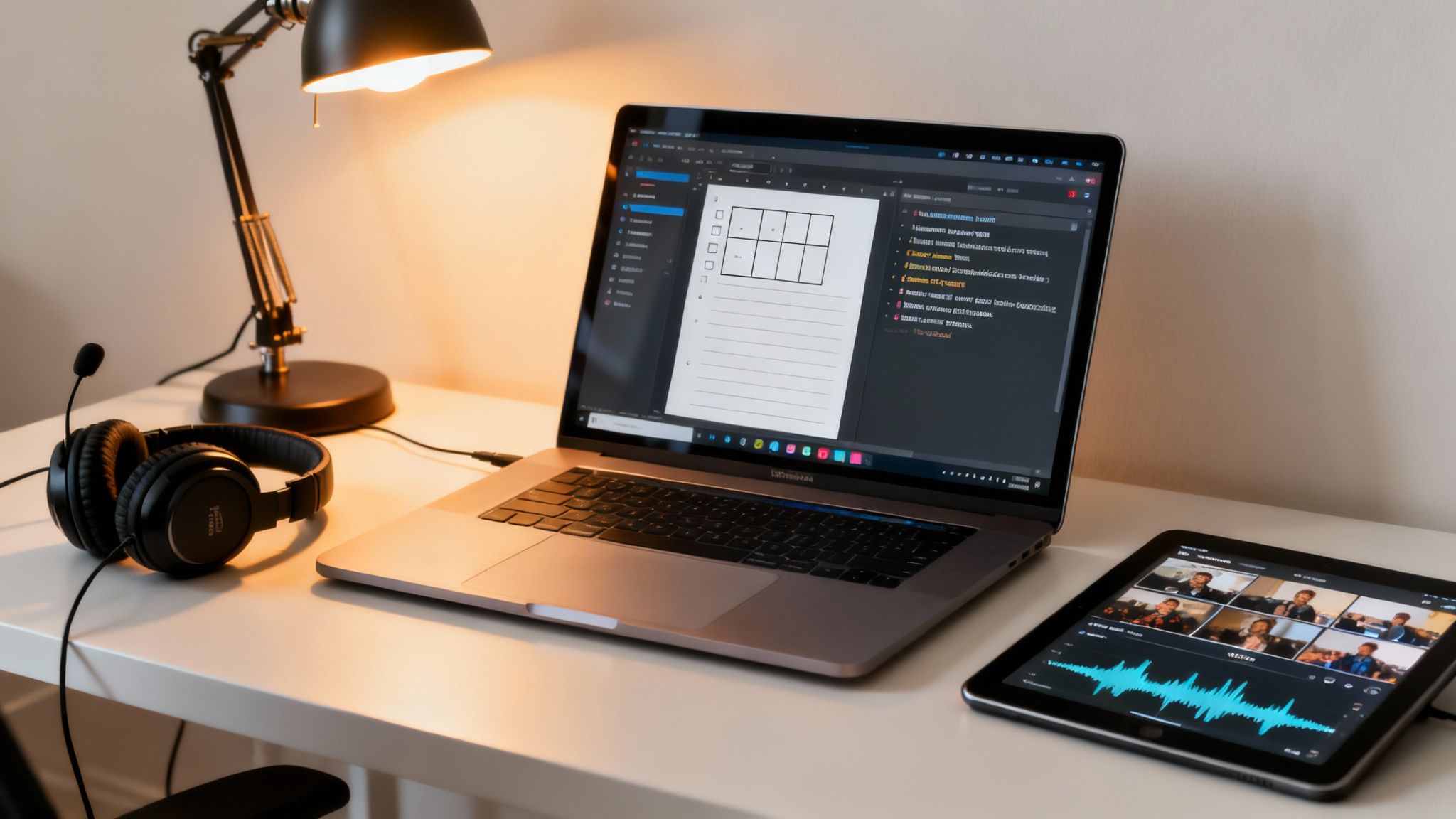
Before filming, finalize the script, storyboard, locations, and cast. Share the production plan with everyone involved.
The hallmark of a good TV commercial is strategic planning. The production structure typically uses a breakdown sheet with three core rows: Script (narrative actions), Video (shot compositions), and Audio (music and sound effects).
This kind of detailed prep work has become an industry standard for a reason. While the early days of advertising might have been more freewheeling, today's most successful campaigns are built on this rigorous foundation. By breaking the script down into precise audio and visual cues, creative teams can sync every element for maximum impact. You can explore the full history of this structured approach to learn more about how production planning drives advertising success.
Phase Two: Production and Filming
With a detailed plan in hand, you're ready for the fun part. The production phase is where the magic happens, the actual filming of your commercial. Because you did your homework in pre-production, this stage should run like a well-oiled machine.
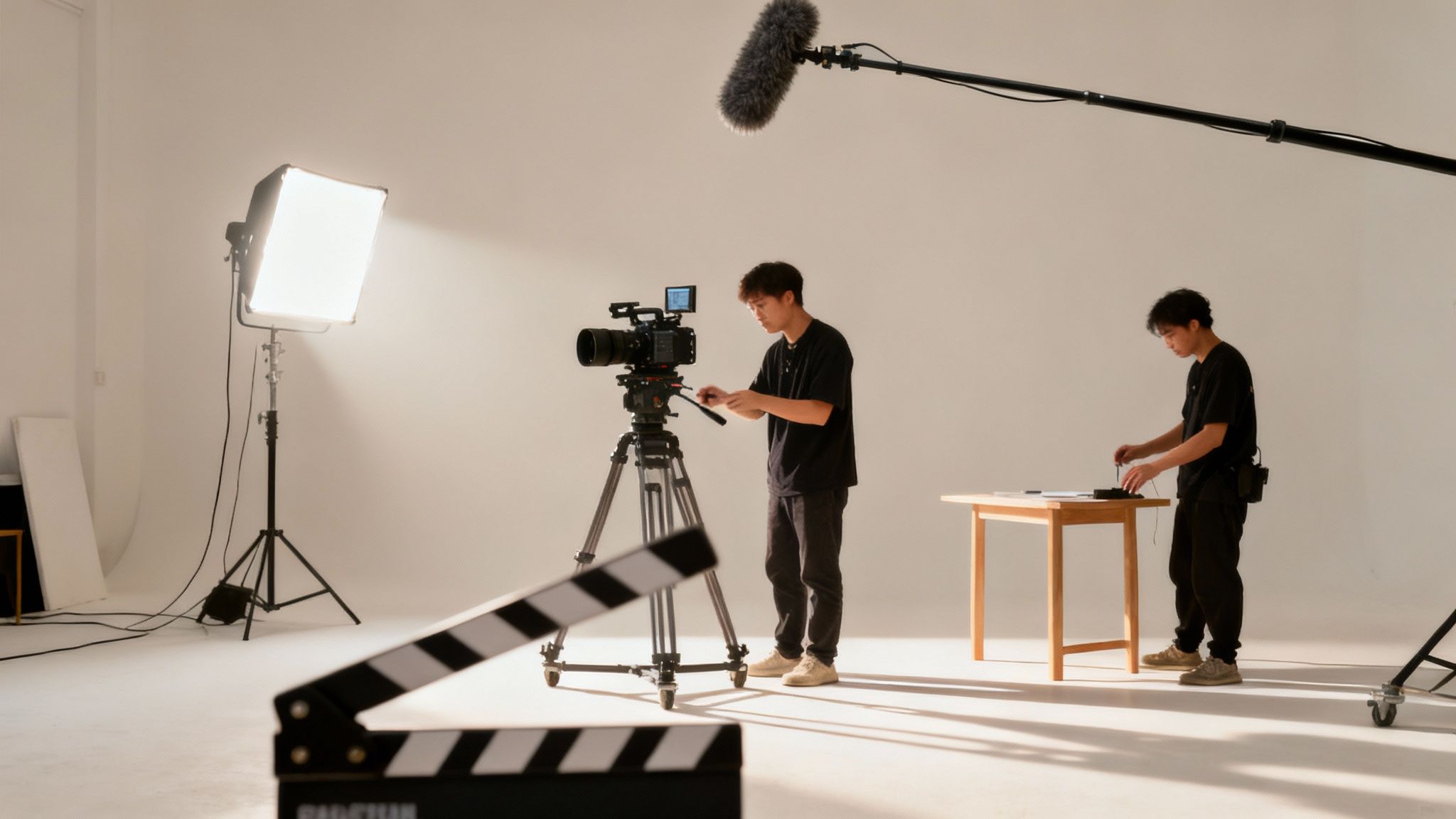
The focus here is all about capturing high-quality visuals and audio. Every light, sound, and camera movement should serve the story and set the mood.
Strategic Lighting: This does so much more than light up the scene; it creates the emotional tone. Bright, airy lighting can feel optimistic and clean, while darker, high-contrast lighting builds drama or suspense.
Crystal-Clear Audio: Nothing kills a commercial faster than muffled dialogue or distracting background noise. Professional audio ensures your message is heard.
Purposeful Camerawork: Every shot, from a wide angle establishing the scene to a tight close-up on an actor's face, must have a purpose. It should guide the viewer's eye and advance the story.
Modern, leaner production techniques have made professional-grade results more accessible than ever. You don’t need a massive crew or outrageously expensive gear to create a polished ad. The emphasis has shifted from what’s ideal to what’s achievable with smart planning.
Phase Three: Post-Production and Polish
Once you've wrapped filming, the work moves to the edit bay. Post-production is where all that raw footage is shaped into a cohesive, compelling final product. This is where your commercial comes to life.
This final stage involves several important steps:
Editing: The editor pieces together the best takes, meticulously shaping the story's pace and rhythm. Quick cuts can build excitement and energy, while longer, smoother dissolves can create a more thoughtful mood.
Sound Design: This is where music, sound effects, and a professional voice-over are layered in. The right soundtrack can amplify the emotional impact of your visuals tenfold.
Color Grading: This process fine-tunes the colors to create a consistent and visually appealing look. It’s what can make a scene feel warm and inviting or cool and sophisticated.
Graphics and Titles: Finally, any on-screen text, logos, or other graphics are added to reinforce the brand message and drive home the call to action.
Each of these phases builds directly on the one before it, transforming a simple concept into a powerful piece of advertising that connects with your audience.
Choosing the Right Channels to Reach Your Audience
Let's be blunt: a creative masterpiece of a commercial is completely worthless if the right people never see it. This is the moment your strategy pivots from creation to distribution. A huge part of what makes a TV commercial work is getting that powerful message in front of the exact viewers most likely to become your next customers.
Think of your ad as a perfectly cut key. Now you have to find the right lock. Just blasting your commercial on every channel you can afford is like trying that key on every door in a skyscraper. It’s a massive waste of money, totally inefficient, and almost guaranteed to fail.
The smart money is on precision. It all starts with really getting to know your target audience, who they are, what they watch, and when they’re watching it. This lets you place your ad in a space where it feels natural and welcome, not like an interruption.
Defining Your Target Viewer
Before you even think about channels, you need to know exactly who you're talking to. And I mean really know them, far beyond basic demographics like age and gender. What are their hobbies? What does their daily routine look like? What’s the big problem in their life that your product or service can solve?
Putting together a detailed “viewer persona” is the best way to do this. Are you trying to reach busy parents who finally get to stream their favorite shows after the kids are asleep? Or are you aiming for die-hard sports fans glued to live TV every weekend? Each of those groups requires a totally different game plan.
Nailing this down is the single most important step to avoid torching your ad budget. If you want to go deeper on this, our guide on how to buy TV advertising breaks down the whole process.
Understanding Modern TV Advertising Channels
The days of just buying a spot on one of the big three networks are long gone. Today's TV landscape is a powerful mix of options that gives you the massive reach of traditional television with the kind of targeting you see in digital marketing.
Broadcast and Cable TV: This is your classic television. It’s still the king for building massive brand awareness and reaching a broad, mainstream audience during big live events or primetime shows.
Connected TV (CTV): This is any content streamed through a smart TV, a gaming console, or a device like a Roku or Apple TV. CTV is where things get really interesting, allowing for precise targeting based on viewing habits, interests, and even geographic data, right down to the neighborhood.
Addressable TV: This is some seriously cool tech. It allows different ads to be shown to different households even if they're watching the exact same program on cable or satellite. A family with young kids could see an ad for a minivan, while their empty-nester neighbors see one for a luxury sedan.
The rise of Connected TV is a true useful option. It gives small businesses access to the kind of powerful targeting tools that used to be reserved for the giant digital advertisers, making TV more effective and accessible than ever before.
Key Metrics for Media Buying
As you start placing your ads, you'll hear a few key terms thrown around. Getting a handle on them is important for making smart decisions and knowing if your campaign is working.
Frequency: This one tracks the average number of times a person or household sees your ad over a set period. People rarely remember an ad after seeing it just once, so you need enough frequency for the message to sink in.
Ratings (or GRPs): Gross Rating Points are the industry standard for measuring the total size of the audience you're hitting. It’s basically Reach x Frequency, and it's how media buyers plan and compare their ad placements.
Ultimately, your job is to find that perfect balance. You need enough reach to introduce your brand to new people and enough frequency to make your message stick, all without breaking the bank. This strategic thinking is what ensures your fantastic commercial finds the audience it was made for.
Measuring Your TV Ad Campaign's True ROI
A gorgeous commercial with a killer story is a great start, but how do you know it worked? The final, and arguably most important, piece of the puzzle is understanding its real-world impact. Without a solid plan for measurement, you're essentially just hoping for the best, spending money without knowing if it's coming back to you.
It's time to move past fuzzy ideas like "brand awareness" or "buzz." The real goal is to draw a straight line from someone seeing your commercial to them taking an action that benefits your business. That means focusing on hard numbers and Key Performance Indicators (KPIs) that tell the true story of your Return on Investment (ROI).
Measuring a TV spot's performance isn't the mysterious art it once was. We can now track results with a precision that used to be reserved only for digital ads.
Tracking Direct Viewer Responses
The cleanest way to see if your ad is working is to give viewers a unique, trackable way to respond. This creates an undeniable link between your commercial and a customer action, eliminating the guesswork. Think of it as building a special entrance to your store that only people who saw your ad know about.
Here are a few of the most reliable methods:
Unique URLs or Landing Pages: Create a simple, easy-to-remember web address (like YourBrand.com/TVdeal) that you only feature in your commercial. Every single visit to that page can be chalked up to your TV campaign.
Dedicated Promo Codes: Offer a special discount code, maybe something like "TV25", exclusively for viewers. When a customer uses that code, you know exactly where they came from.
Specific Phone Numbers: Services that provide call-tracking can generate a unique phone number just for your ad. This lets you count every call that came directly from that specific commercial.
These tactics give you clean, hard data on how many people were motivated enough by your ad to act right now.
Measuring Brand Lift and Online Activity
Of course, not everyone is going to drop what they're doing and buy something immediately. That's perfectly fine. A huge part of TV's power is building brand recognition and influencing what people do days or even weeks later. Measuring this "brand lift" means looking for the digital ripples your TV ad creates.
A successful TV campaign doesn't just happen on the screen; it echoes all over the internet. A sudden jump in website visitors or people searching for your brand name right after your ad airs is a massive clue that you've struck a chord.
Keep an eye out for these patterns in your analytics:
Spikes in Website Traffic: Watch your website analytics closely in the minutes right after your commercial is scheduled to air. A clear, immediate jump in visitors is what we call "response attribution," and it's a powerful sign of a direct correlation.
Social Media Sentiment: What are people saying about you online? Track mentions of your brand on social media. More chatter is good, but positive chatter is even better. This gives you qualitative insight into how your message is landing.
To help you get organized, here’s a simple checklist to keep track of what matters.
TV Commercial Performance Measurement Checklist
This checklist breaks down the key metrics you should be monitoring to get a complete picture of your campaign's performance and ROI.
Putting all these pieces together gives you a much richer understanding of your ad's performance.
For a deeper dive into this, our guide on advertising effectiveness measurement explores even more advanced techniques. A great TV commercial doesn't just get seen, it delivers results you can count.
How AI Is Making Great Commercials More Accessible
For a long time, creating a great TV commercial was a game reserved for big brands with even bigger budgets. If you were a small business owner, the idea of getting a professional-looking ad on the air was pretty much a pipe dream. The costs, the time, and the technical skills required were simply out of reach.
But that's all changing, and the catalyst is artificial intelligence.
AI isn’t about replacing creativity; it’s about amplifying it. Think of it as your own production assistant, one that handles all the technical heavy lifting so you can focus on the heart of your ad: the message. For anyone who knows what makes a good commercial but doesn't have the resources to pull it off the old-fashioned way, AI is a genuine useful option.
This shift is opening up the world of advertising, letting local shops and startups finally compete on a more level playing field. AI automates the complex, expensive tasks that used to require a whole agency.
From Idea to Airwaves in Minutes
The biggest advantage AI brings to the table is speed. We're talking about a massive reduction in turnaround time. Platforms like Adwave are built to remove all the friction from the creative process, taking you from a simple idea to a finished ad in minutes.
Forget about the weeks or months of planning, shooting, and editing. AI can help you with every single step:
Scriptwriting: Just give it your website or a quick business description, and it can generate multiple scripts that nail your key selling points and wrap them in a compelling story.
Visual Storyboarding: The AI can take that script and map it out visually, suggesting shots and scenes that perfectly match your brand and message.
Finding Footage & Assets: Instead of arranging an expensive shoot, AI can instantly find and license high-quality stock video, images, and music that fit the vibe you’re going for.
Creating Voiceovers: Need a professional voiceover? You can generate one in different styles and accents without ever stepping foot in a recording studio.
AI acts as a powerful enabler, empowering businesses to execute a strong creative vision faster and more affordably than ever before. It handles the technical complexities, allowing founders and marketers to focus on strategy and storytelling.
Lowering Costs and Raising Quality
The cost savings are just as dramatic as the time savings. With an AI-powered platform, you don't need to hire a production crew, rent expensive cameras, or book locations. All the overhead that made traditional commercials so pricey is effectively gone.
This makes TV advertising a real possibility for businesses that could previously only afford a small local print or digital campaign.
But here’s the best part: lower cost doesn't mean lower quality. AI models are trained on thousands of successful commercials, so they understand the visual language that grabs and holds a viewer's attention. To see just how far the technology has come, you can check out some of the best AI video generators on the market right now.
With these tools, even a brand-new startup can create an ad that looks and sounds polished enough for major broadcast networks, making sure their message connects.
Your Top TV Ad Questions, Answered
Even when you've got the basics down, a few practical questions always pop up. Let's tackle some of the most common ones I hear from business owners so you can move forward with confidence.
How Much Does It Really Cost to Make a TV Commercial?
This is the big one, and the honest answer is: it depends. The cost to produce a TV commercial can swing wildly from a few thousand dollars for a simple, local spot to hundreds of thousands for a glossy national ad with celebrity talent and special effects.
So, what drives that number up or down? It usually boils down to a few key things:
Talent and Crew: Are you hiring professional actors and a seasoned director?
Location and Sets: Shooting on-site at a cool location costs more than filming in a studio.
Special Effects: Any slick computer-generated graphics (CGI) will add to the bill.
Post-Production: This covers all the editing, sound mixing, and color correction needed to make it look polished.
Modern production tools have made it much more affordable to create professional-looking ads, opening the door for businesses of all sizes to get in the game.
What's the "Right" Length for a TV Ad?
You’ll typically see ads in 15, 30, and 60-second formats, and each has its own job. The best one for you comes down to what you’re trying to achieve and how much you have to spend.
The 30-second spot is the workhorse of TV advertising. It hits the sweet spot, enough time to tell a decent story and land your brand message, but without the premium media cost of a full minute.
Shorter 15-second ads are fantastic for quick reminders, building brand name recognition, or pushing a single, simple offer. They're most effective when people already have some idea of who you are. On the other end, 60-second ads give you the space for deeper, more emotional storytelling, but you'll pay a lot more to get them on the air.
Can a Small Business Succeed with TV Advertising?
Absolutely. The old myth that TV is just for giant corporations is completely outdated. Thanks to local cable and, more importantly, Connected TV (CTV), the game has changed entirely.
These platforms offer precise targeting, which is a massive advantage for small businesses. You can serve your ad to specific zip codes, demographics, or even households based on their viewing habits. Instead of blasting your message to a huge, uninterested audience, you can put your budget exactly where it counts, in front of the people most likely to walk through your door. It makes TV a powerful, accessible engine for local growth.
Common questions answered
What makes a TV commercial effective?
Effective TV commercials capture attention in the first few seconds, deliver a clear and memorable message, create emotional connection, and end with a compelling call to action. They show rather than tell, focus on one main idea, and make the viewer want to learn more.
How long should a TV commercial be?
30 seconds is the standard and most effective length. It's long enough to tell a complete story but short enough to maintain attention. 15-second spots work for simple awareness messages or reinforcing longer campaigns. 60-second spots are rare and reserved for complex stories.
Do I need actors for a TV commercial?
Not necessarily. Many effective small business commercials feature the business owner, real employees, or real customers. Authenticity often outperforms polish. You can also create effective ads using product footage, location shots, and voiceover without appearing on camera.
What should my TV commercial focus on?
Focus on one main message: what makes you different or why viewers should choose you. Address a customer problem and show how you solve it. Include your name, what you do, and how to find you. Avoid trying to say everything in 30 seconds.


