
You have a product people need, a team ready to scale, and a runway that demands results. What you don't have is the years it takes to build brand awareness organically. TV advertising compresses that timeline, putting your startup in front of thousands of potential customers in weeks instead of years.
Most founders dismiss TV advertising immediately. They assume it requires Super Bowl budgets and Madison Avenue agencies. That was true a decade ago. Today, streaming TV advertising starts from $30/day, requires no production crew, and lets you target specific demographics with the same precision as digital ads.
This guide covers why TV advertising works for startups, how to approach it strategically, and what results you can realistically expect at startup-appropriate budgets.
Why Startups Should Consider TV Advertising
TV advertising offers advantages that digital channels struggle to match, and several of these advantages matter especially for early-stage companies trying to establish credibility.
Instant legitimacy. When potential customers see your brand on NBC, Hulu, or ESPN, they make unconscious assumptions about your company's stability and trustworthiness. This trust transfer effect gives startups something that normally takes years to build: the perception of being an established player.
Imagine pitching investors and mentioning that your ad runs on premium streaming networks. Or telling enterprise prospects that they may have seen you on TV during last week's game. TV advertising signals that you're serious, well-funded, and here to stay.
Differentiation from competitors. Most startups compete entirely on digital channels where everyone looks the same. Your competitor's Facebook ad looks like your Facebook ad. But TV advertising immediately sets you apart. When you're the only company in your space running TV ads, you occupy a category of one in customers' minds.
Reaching audiences who ignore digital ads. Some of your best potential customers have developed complete blindness to digital advertising. They've installed ad blockers, they scroll past sponsored posts, and they don't click banner ads. But they watch streaming TV. TV advertising reaches people who are otherwise unreachable through typical startup marketing channels.
awareness and conversion impact. Unlike performance marketing that captures existing demand, TV advertising creates new demand. It plants seeds that grow into future customers. Someone who sees your TV ad today might search for your company next month when they need your solution. This brand-building effect compounds over time.
When TV Advertising Makes Sense for Startups
TV advertising isn't right for every startup at every stage. Here's how to know if you're ready.
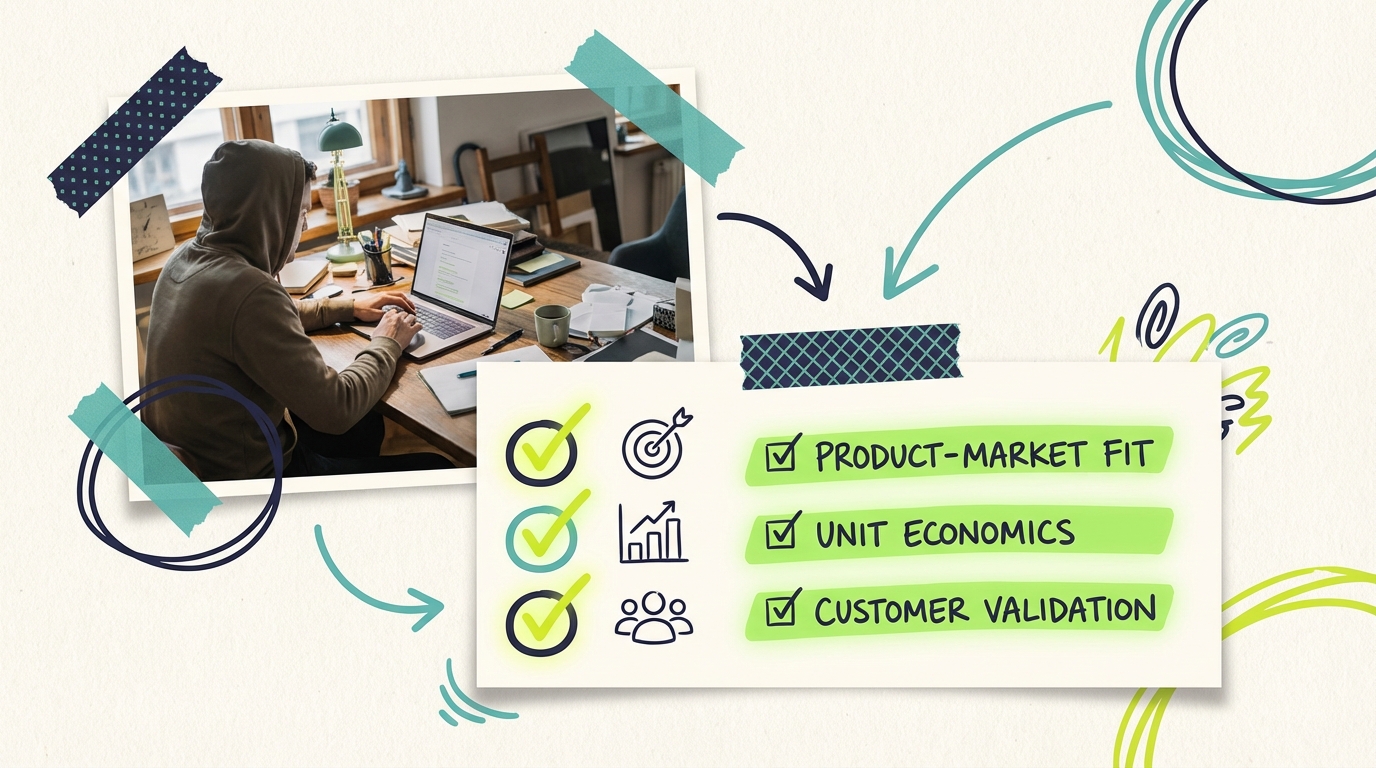
You have product-market fit. Don't advertise a product that doesn't work yet. TV advertising amplifies whatever you already have. If customers love your product, advertising brings more of them. If your product has problems, advertising just accelerates negative word-of-mouth.
Signs you're ready: customers are referring others, retention metrics are strong, and you understand who buys and why.
Your unit economics work. Know your customer acquisition cost ceiling before you spend on advertising. If a customer is worth $500 over their lifetime, you can't spend $600 to acquire them. TV advertising, like all advertising, only makes sense when the math works.
You're targeting consumers or prosumers. TV advertising reaches people at home during their personal time. B2B products that sell to enterprise procurement committees don't typically convert from TV exposure. But B2B tools that individuals can adopt (like productivity apps or developer tools) can benefit from consumer-style awareness.
You have budget for sustained presence. A single TV flight won't transform your business. Budget for at least 2-3 months of consistent advertising to build recognition. At streaming TV's accessible price points, this might mean $200-500 monthly, which is achievable for many startups.
What Results to Expect
Set realistic expectations. TV advertising is a brand-building channel that works over time, not a direct response mechanism that produces immediate clicks.
Short-term (first month): Increased branded search volume as people who see your ad look you up. Website traffic spikes during and after ad flights. Anecdotal reports from customers mentioning they saw you on TV.
Medium-term (months 2-3): Improved conversion rates on other channels as familiarity increases. Easier sales conversations because prospects already know who you are. Growing organic traffic as brand awareness spreads.
Long-term (6+ months): Established brand presence that reduces customer acquisition costs across all channels. Competitive moat from brand recognition. Premium positioning that supports higher pricing.
The startup graveyard is filled with companies that expected instant results from brand advertising and pulled the plug too early. Commit to a timeframe that allows TV advertising to work.
Strategic Approaches for Startup Budgets
You don't need massive budgets, but you do need strategic thinking. Here's how to make limited resources work harder.
Start with geographic focus. Instead of spreading thin nationally, concentrate your budget in one or two markets. If you're based in Austin, own Austin first. Saturate that market with enough impressions that everyone there knows your brand. Then expand.
Geographic concentration also helps with measurement. If sales spike in Austin but not elsewhere, you can attribute that growth to your advertising.
Target your ideal customer profile. Streaming TV lets you target by demographics, interests, and behaviors. Don't waste impressions on audiences unlikely to convert. If your product serves parents with young children, target that specific audience. If you sell to homeowners, exclude renters.
Precise targeting means your limited budget reaches more potential customers and fewer irrelevant viewers.
Time your advertising strategically. Consider when your customers are most likely to buy. If you sell tax software, advertise heavily in Q1. If you sell outdoor gear, ramp up before summer. Seasonal concentration makes limited budgets go further.
Also consider day-parting. Evening hours when people unwind with streaming content may deliver better engagement than daytime advertising.
Create advertising that works hard. Your 30-second ad needs to accomplish a lot: communicate what you do, differentiate from alternatives, and make your brand memorable. Adwave's AI creates ads from your existing web presence, but you should still ensure your website clearly communicates your value proposition.
Lead with the problem you solve, not your company name. "Tired of spreadsheet chaos?" grabs attention better than "Introducing StartupCo."
Budget Frameworks for Different Stages

Here's how to think about TV advertising investment at different startup stages.
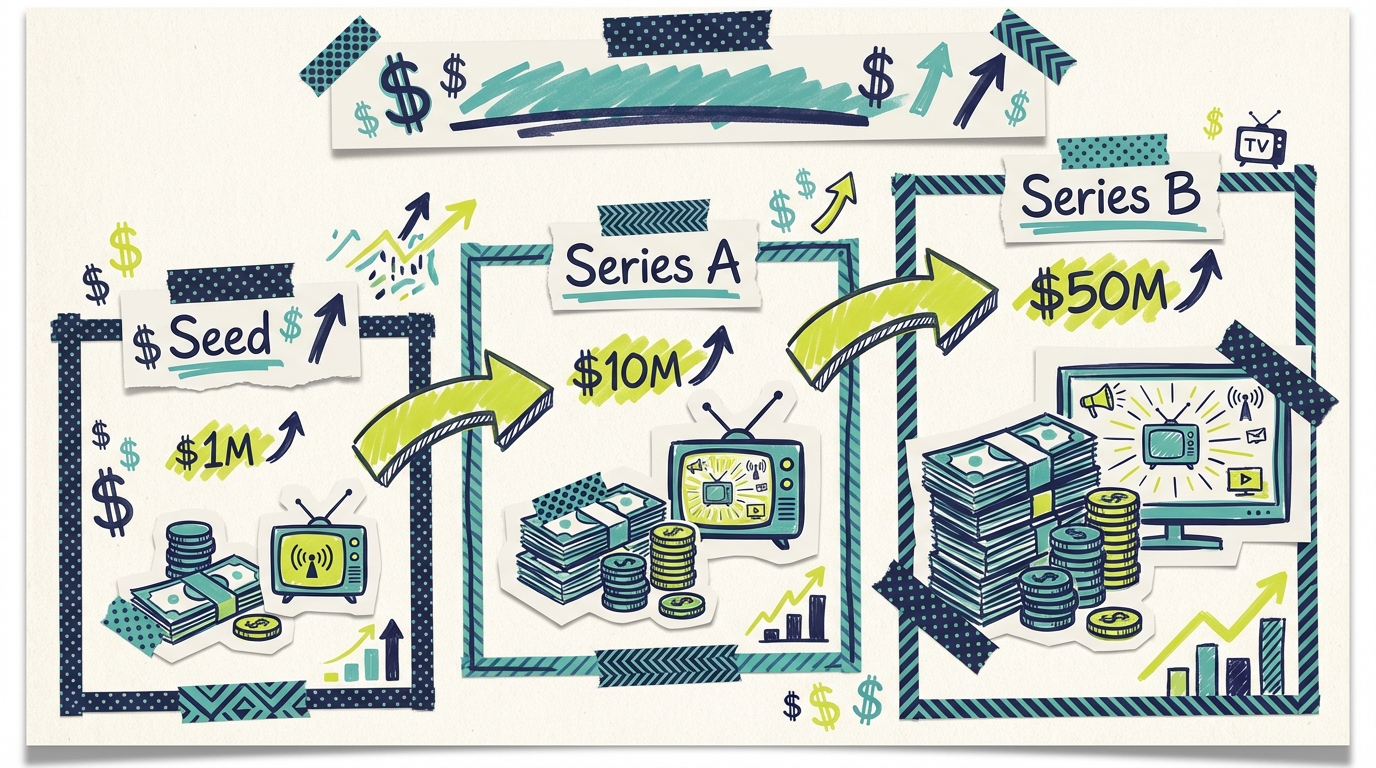
Pre-seed to Seed (from $30/day): Test the channel. See if TV advertising generates any measurable response. Use this stage to refine targeting and messaging. Consider this R&D, not a growth channel yet.
At this level, focus on a single market and track branded search volume, website traffic, and any customer mentions of TV exposure.
Series A ($500-2,000/month): Scale what worked in testing. Expand to additional markets if the first market showed promise. Begin measuring TV advertising's impact on overall customer acquisition cost.
This budget allows sustained presence in multiple markets or deep saturation in one priority market.
Series B and beyond ($3,000-10,000+/month): TV advertising becomes a meaningful part of your marketing mix. Invest in creative testing to optimize performance. Consider multiple creatives for different audience segments.
At this level, TV advertising should measurably impact your growth metrics and competitive position.
Measuring TV Advertising Effectiveness
Startups obsess over metrics, and rightly so. Here's how to measure TV advertising without enterprise-level attribution tools.
Branded search lift. The simplest measurement: do more people search for your brand name after TV advertising starts? Compare branded search volume before and during campaigns. If "YourStartup" searches increase 50% during ad flights, TV is driving awareness.
Website traffic patterns. Look for traffic spikes that correlate with ad timing. If you're advertising during evening hours, do you see traffic increases in the 15-30 minutes after your ads run? Geographic traffic patterns also help: does your target market show more traffic growth than other regions?
Customer surveys. Ask new customers how they first heard about you. Add "TV" as an option and track what percentage mention it. Even rough survey data provides directional insight.
Conversion rate improvements. If your conversion rates improve across all channels during TV campaigns, advertising may be warming the audience. Prospects who've seen your TV ad convert more easily because you're already familiar.
Sales feedback. Ask your sales team if conversations are easier during advertising periods. Are prospects already aware of your company? Do they mention seeing your ads? Qualitative signals matter alongside quantitative metrics.
Common Mistakes Startups Make with TV Advertising
Learn from others' failures to avoid wasting your limited resources.
Expecting direct response results. TV advertising builds awareness, not clicks. If you measure TV against Facebook's cost-per-click, you'll always be disappointed. Measure what TV delivers: awareness, familiarity, and improved performance across other channels.
Stopping too soon. Brand building takes time. A startup that runs TV ads for one month and sees no sales spike will conclude TV doesn't work. But that same startup might have seen significant results by month three. Commit to a timeframe and stick with it.
Targeting too broadly. National campaigns spread thin achieve nothing. Concentrating budget achieves impact. A startup with $500/month should saturate one small market rather than barely reaching fifty markets.
Neglecting the rest of the funnel. TV advertising drives awareness, but you still need landing pages that convert, retargeting that captures interest, and a sales process that closes. TV is the top of the funnel, not the entire funnel.
Copying big company strategies. What works for Coca-Cola won't work for your startup. Big companies can afford pure awareness campaigns with no call to action. Startups need ads that communicate value proposition clearly and give interested viewers a reason to look you up.
Common Questions Answered
Is TV advertising affordable for startups? Yes, streaming TV advertising starts from $30/day with platforms like Adwave. There's no production cost because AI generates your ad from your website. A startup spending $300-500 monthly on TV advertising is entirely realistic and can deliver measurable results in the right circumstances.
What kind of startups benefit most from TV advertising? Consumer-facing startups with products that appeal to broad audiences benefit most. B2C apps, D2C products, and prosumer tools work well. Pure B2B enterprise sales typically don't convert from TV exposure, though brand awareness can still help with recruiting and investor relations.
How long before TV advertising shows results? Expect to see early signals (branded search lift, website traffic patterns) within the first month. Meaningful business impact typically takes 2-3 months of consistent advertising. Major brand recognition takes 6+ months of sustained investment.
Should startups do TV before digital advertising? Most startups should establish digital channels first because they're easier to measure and optimize. TV advertising works best as an accelerant for startups that already have working digital acquisition channels and want to scale faster or break through plateaus.
What makes a good startup TV ad? Lead with the problem you solve, not your company name. Show your product in action if possible. Include a clear call to action (visit our website, search for us, try free). Keep messaging simple because you only have 30 seconds. Make your brand name visible and memorable.
The Bottom Line
TV advertising gives startups something that money can't normally buy quickly: the perception of being an established, credible company. While your competitors fight for attention in crowded digital channels, TV advertising puts you on premium networks where audiences pay attention.
The economics have changed. Streaming TV advertising doesn't require six-figure budgets or agency relationships. A startup can test TV advertising for the cost of a nice dinner and scale up only if results warrant.
For startups with product-market fit, working unit economics, and a consumer-facing product, TV advertising deserves consideration. The question isn't whether you can afford TV advertising. The question is whether you can afford to let competitors build brand awareness while you stay invisible.
Ready to see your startup on streaming TV? Create your first ad free and reach your target audience on NBC, Hulu, ESPN, and 100+ premium channels.