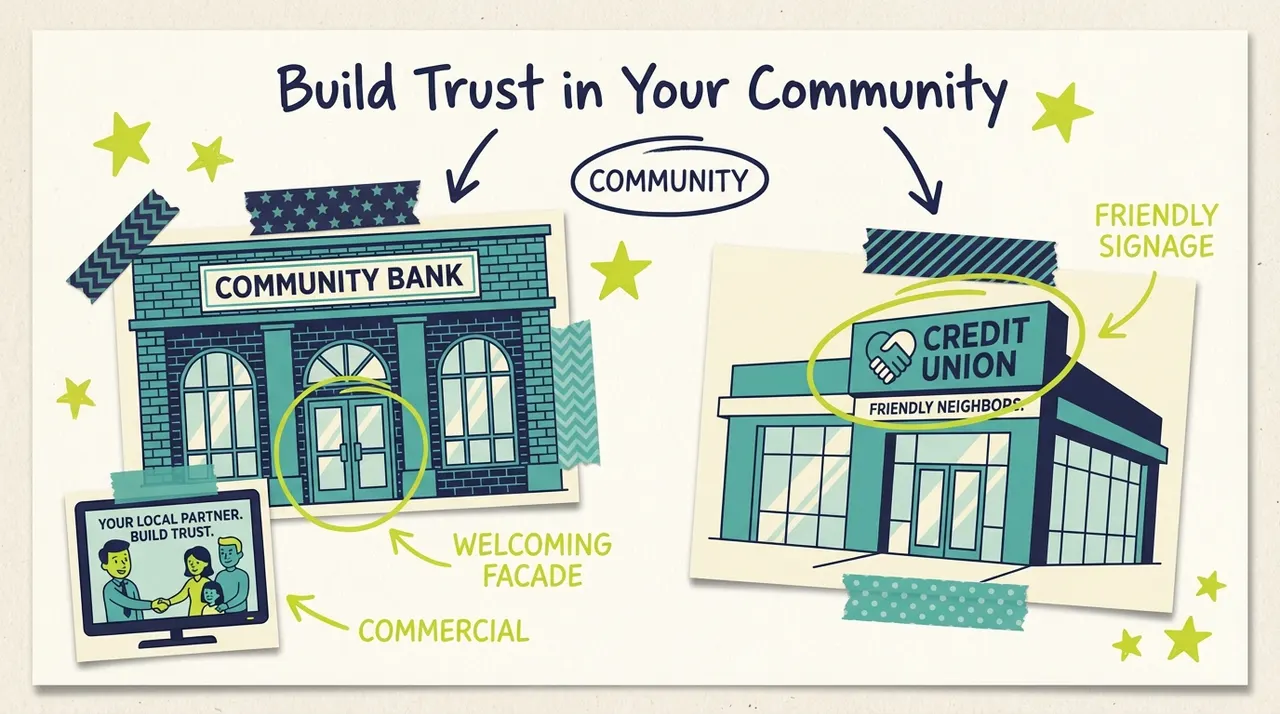
Community banks and credit unions have something the big national chains will never replicate: genuine local relationships. You know your customers by name. You sponsor the Little League team. You've been lending to local businesses for decades.
But here's the problem. When someone new moves to town or a young professional opens their first real checking account, they default to the name they've seen the most. And right now, that's Chase, Bank of America, or Wells Fargo, because those brands are everywhere.
Television advertising changes that equation. It puts your community bank or credit union on the same premium networks where national brands advertise, building the kind of trust and recognition that turns local prospects into lifelong members.
Why TV Advertising Works for Community Banks and Credit Unions
Banking is built on trust. People don't hand their money to institutions they've never heard of. Television advertising builds exactly that kind of trust, positioning your bank or credit union as a credible, established institution worth considering.
Trust Through Premium Placement
When your credit union appears on NBC, ESPN, or Hulu, viewers associate your brand with the same quality and legitimacy as national advertisers. This premium placement signals stability, something every banking customer cares about deeply.
Research consistently shows that consumers trust TV advertising more than any other channel. For financial institutions where trust is literally the product, this matters enormously.
Competing With National Chains
The big banks spend billions on advertising annually. JPMorgan Chase alone allocates over $3 billion to marketing each year, according to its SEC filings. You can't match that spend, but you don't need to.
Streaming TV advertising lets you target your actual service area rather than blanketing an entire region. A community bank serving three counties can reach exactly those households, spending nothing on viewers who will never walk through your doors.
This geographic precision means your advertising dollars work harder than national chains' broadcast buys, where most impressions reach people outside any individual branch's service area.
Reaching the Right Demographics
Banking products appeal to specific life stages. Young professionals opening their first accounts, families shopping for mortgages, retirees looking for better CD rates, and small business owners needing commercial lending all have different needs.
Streaming platforms offer demographic and interest-based targeting that lets you reach the right audience for whatever product you're promoting. Mortgage ads reach homebuyers. Business banking ads reach entrepreneurs. Student account promotions reach parents of college-age kids.
Seasonal Advertising Strategies for Banks
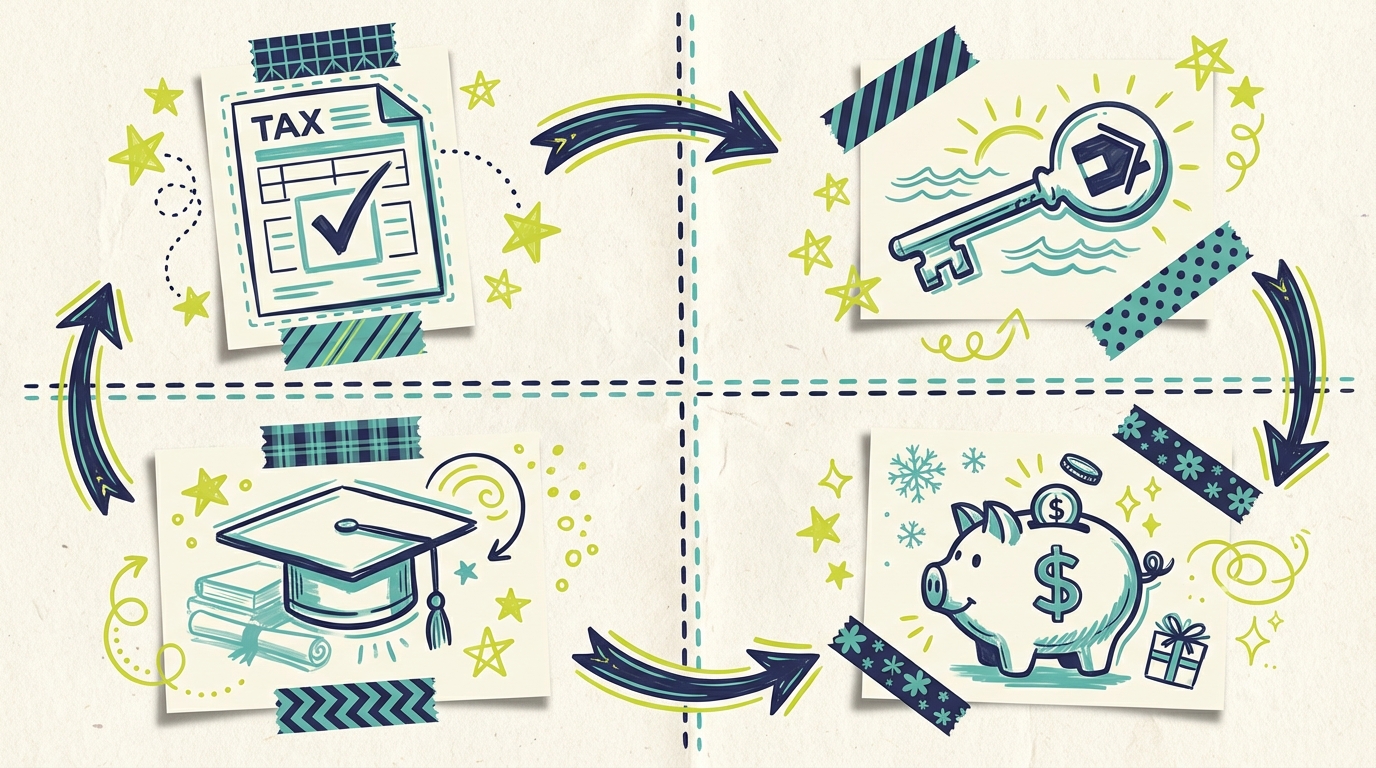
Banking demand follows predictable seasonal patterns. Matching your advertising with these cycles maximizes impact.
Tax Season (January Through April)
Tax season creates natural financial awareness. People are thinking about money, reviewing their financial situation, and considering changes. This is prime time for promoting tax-advantaged accounts, IRAs, and refinancing options.
Credit unions can highlight their tax preparation services or financial planning resources during this window. Community banks can promote business banking to owners dealing with quarterly taxes.
Home Buying Season (Spring and Summer)
Mortgage lending peaks between March and August. Prospective buyers are actively shopping for both homes and lenders. TV advertising during this period positions your institution as the local mortgage expert.
Highlight your mortgage rates, local underwriting advantage, and personalized service. National lenders can't match the speed and flexibility of a local lending decision. Make sure potential borrowers know that.
Back to School (August and September)
Late summer brings demand for student checking accounts, education savings plans, and auto loans for college-bound kids. This is an excellent window for credit unions to capture younger members who could become customers for life.
First banking relationships tend to stick. A student who opens a checking account at your credit union during freshman year often keeps that account through their career. The lifetime value of acquiring young members makes this season worth investing in.
Year-End Financial Planning
The fourth quarter brings financial review season. Savers evaluate CD rates, business owners plan for the coming year, and families set financial goals. Position your institution as a planning partner, not just a place to park money.
Targeting Strategies That Work for Financial Institutions
Effective bank advertising reaches people at decision points.
Geographic Precision
Most banking relationships happen within a reasonable drive of a branch. Target your advertising to zip codes and neighborhoods within your service area. This focus eliminates waste and concentrates impressions where they generate results.
If you're opening a new branch, increase advertising density in that neighborhood months before the doors open. Building brand awareness before launch creates day-one foot traffic.
Life Event Targeting
Major life events trigger banking needs. Marriage, home purchases, new businesses, retirement, and having children all create demand for financial products. Streaming platforms can target viewers experiencing these transitions, putting your institution in front of people actively looking for banking solutions.
Income and Household Targeting
Match your targeting to your product mix. Premium wealth management services should target higher-income households. Affordable checking accounts and starter credit cards reach broader demographics. Auto loan promotions target households likely to be shopping for vehicles.
Creating Effective Bank and Credit Union Commercials
Financial advertising has earned a reputation for being bland. Yours doesn't have to be.
Lead With People, Not Products
Interest rates change. Fee structures blur together. What doesn't change is the feeling of walking into a bank where people know your name and care about your financial goals.
Show real community connections. Your loan officer helping a first-time homebuyer. Your branch staff greeting regulars. Your team volunteering at local events. These human moments differentiate you from faceless national chains far better than rate comparisons.
Highlight Your Community Investment
Community banks and credit unions reinvest locally. Your deposits fund local mortgages, small business loans, and community development. National banks send that money to Wall Street trading desks.
This story resonates powerfully with viewers who care about supporting local businesses. Tell it clearly: "Your deposits stay right here, funding your neighbors' dreams."
Address the Elephant in the Room
Many people assume community banks and credit unions lack modern technology. They picture paper statements and no mobile app. If you've invested in digital banking, mobile deposits, and online account management, show it. Prove you offer big-bank convenience with small-bank service.
Keep Compliance in Mind
Financial advertising has regulatory requirements. Ensure all rate claims include required disclosures, membership eligibility statements appear for credit unions, and FDIC or NCUA insurance is mentioned. Your compliance team should review every commercial before it airs.
Budget Considerations for Financial Institutions

Banking's customer lifetime value makes TV advertising economics compelling.
Understanding Customer Lifetime Value
The average banking relationship lasts over a decade, according to industry data from the American Bankers Association. A checking account customer who adds a mortgage, auto loan, and credit card represents tens of thousands in lifetime revenue.
This means you can afford meaningful acquisition costs. If a $500 TV campaign drives even two or three new banking relationships, the long-term revenue justifies the investment many times over.
Starting Smart
Adwave's platform lets you launch TV campaigns from $30/day. Test during a key season, measure new account openings, and scale based on results.
Community banks and credit unions that already invest in local radio, print, or digital advertising often find that reallocating a portion of that budget to streaming TV delivers stronger results, especially for brand awareness and trust building.
Scaling With Product Campaigns
Once you've established a baseline campaign, layer in product-specific advertising around seasonal demand. Mortgage campaigns in spring, student accounts in late summer, CD promotions during rate-favorable periods. Each campaign builds on the brand awareness your baseline advertising creates.
Getting Started With TV Advertising
Modern streaming platforms have made TV advertising practical for financial institutions of any size.
Creating Your Commercial
Adwave generates professional TV commercials from your existing website and marketing materials. Your branch photos, brand colors, and messaging become the foundation for broadcast-quality advertising, created in minutes rather than weeks.
This eliminates the traditional barrier of expensive video production. No film crews, no studio rentals, no weeks of post-production.
Launching Your Campaign
Define your service area, set a budget, and choose your targeting. Your commercial runs across 100+ premium channels including NBC, Hulu, ESPN, and more, reaching viewers in your community on the content they watch every day.
Tracking Results
Monitor new account openings, loan applications, and website traffic during campaigns. Ask new customers how they heard about you. Track whether advertising periods correlate with increased branch visits and digital engagement.
For credit unions, track new membership applications specifically. The membership growth rate during advertising periods versus non-advertising periods provides a clear signal of campaign effectiveness.
Common Questions Answered
Does TV advertising work for small community banks? Yes. Community banks compete on trust and local relationships, both of which television advertising builds effectively. Streaming TV's geographic targeting ensures you reach your actual service area, making even modest budgets productive. Appearing on premium networks positions your bank alongside national brands without requiring a national budget.
How much should a bank or credit union spend on TV advertising? Start with $500-1,000 monthly to test effectiveness during a peak season like mortgage season or back-to-school. Given banking's high customer lifetime value, even a few new relationships per campaign typically justify the investment. Scale spending based on measurable results like new account openings and loan applications.
What makes a good bank TV commercial? Lead with people and community connections rather than rates and products. Show the human side of your institution: staff who know customers by name, community involvement, and local investment. Address modern banking capabilities (mobile app, online services) to overcome assumptions that smaller institutions lack technology.
Can credit unions advertise on TV? Absolutely. Credit unions benefit enormously from TV advertising because many consumers don't fully understand the credit union model or know that credit unions exist in their area. TV advertising builds awareness and explains membership benefits in a format that feels credible and trustworthy.
When is the best time for banks to advertise on TV? Align campaigns with seasonal banking demand: tax season (January through April) for financial planning products, spring and summer for mortgage lending, late summer for student accounts, and Q4 for year-end financial reviews. Consistent year-round presence builds the strongest results over time.
Build the Trust Your Community Deserves
Your community bank or credit union already earns trust the old-fashioned way, through years of reliable service and genuine relationships. Television advertising simply makes sure more people in your community know about it.
The big banks will always outspend you. But they'll never out-care you. TV advertising lets you tell that story to the people who need to hear it most: your neighbors who don't yet know what they're missing.
Ready to put your bank or credit union on TV? Create your first commercial free and start reaching local customers on premium streaming channels, from $30/day.