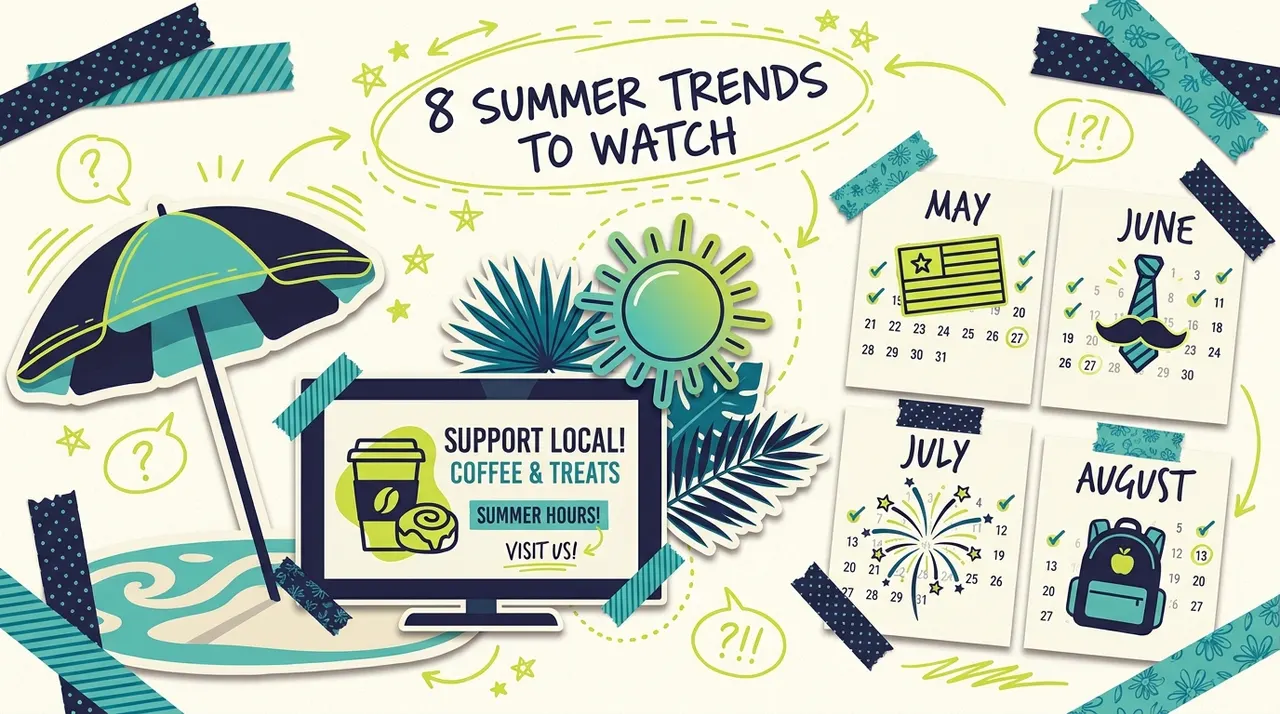
Summer 2026 is shaping up to be one of the more interesting advertising seasons in recent memory for small businesses. A combination of post-election ad inventory unlock, a hot summer travel rebound, an election year cooling pattern in some categories, and the continued democratization of streaming TV is reshaping where small business dollars work hardest. This article walks through the trends shaping the May-August window and what they mean for your business.
The macro picture: ad inventory is friendlier this summer
After two cycles of intense political ad spend (the 2024 cycle ran hot through Q4, the 2026 midterm cycle is now ramping for fall), summer 2026 is a relative breather. Political spend in May and June stays modest in most districts. Brand and retail advertisers haven't yet fully pushed back-to-school spend. That mid-year window translates into:
Slightly lower CPMs across most CTV inventory. Average CTV CPM across small-business platforms is running 4-8% below late-2025 levels in most metros for May and June.
Better creative flexibility windows. Platforms can swap creative faster because the inventory pressure is lower.
Stronger conversion rates on holiday-pegged campaigns. Memorial Day, Father's Day, July 4th, and back-to-school have all consolidated as small-business advertising windows. Campaigns timed to these moments are seeing stronger engagement than the same campaigns timed mid-summer.
The friendly inventory window starts to close in mid-July as fall political and retail advertisers begin pre-buying. Small businesses planning summer spend should weight the May-June portion of their summer plans more heavily than they did in 2024.
Trend 1: Connected TV reaches its inflection point for SMBs
The 2024 inflection point for CTV was awareness: most small business owners had heard of streaming TV ads but hadn't tested them. The 2026 inflection point is adoption. By the start of summer 2026, more than 35% of small businesses with monthly ad budgets above $1,500 had run at least one CTV campaign, up from roughly 18% at the same point in 2024.
Three drivers behind the acceleration:
Cost democratization. Subscription platforms have brought entry-level CTV access to the $50-$500/month range, which puts the channel in reach for small businesses that would have considered TV unaffordable two years ago.
AI creative tools. What used to require a $5,000 production budget for a single 30-second spot can now be generated in 2-5 minutes from a website URL. The creative bottleneck that kept many small businesses out of TV has effectively dissolved.
Cross-channel performance evidence. Small businesses running CTV alongside Google and Meta consistently report lift to their digital conversion rates during CTV flights. That lift is now well-documented enough that CTV is moving from "experimental" to "default" in the planning conversations.
The summer 2026 implication: if you've been considering CTV, this is a strong test window. Inventory is friendlier than fall, creative tools are mature, and the post-election cooling means you're not bidding against political dollars.
Trend 2: Multi-channel single-budget thinking replaces "best channel" thinking
The "which channel is best?" question still gets asked, but it's increasingly the wrong question. The small businesses growing fastest in 2026 are running multi-channel plans on a single budget envelope, with the channels coordinating rather than competing.
A typical 2026 summer plan for a local home services business with a $4,000 monthly budget might look like:
Google Ads (search + local services): $1,200
Meta (Facebook + Instagram): $900
CTV: $1,200
Local sponsorships and community events: $400
Remainder for testing and creative refresh: $300
What's different from 2024 is the explicit coordination. Creative is unified across channels (same offer, same look, same hooks). Geographic targeting matches across CTV, Google, and Meta. Pre-campaign baselines are tracked so the lift contribution of each channel is measurable rather than guessed.
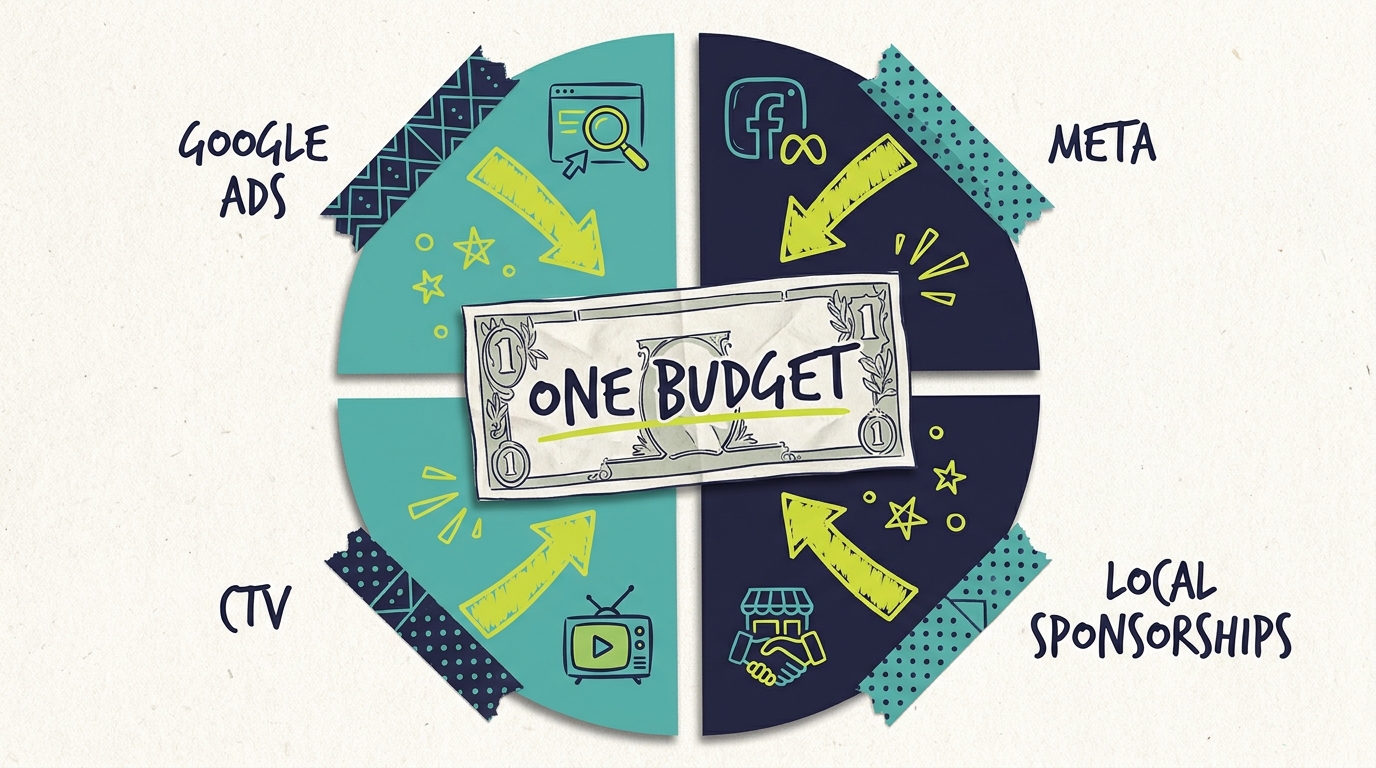
The mental shift is treating advertising as a single coordinated effort rather than a portfolio of separate "campaigns" on different platforms. Small businesses making this shift report 15-30% efficiency gains over the prior year on the same total budget.
Trend 3: Local-first creative outperforms aspirational creative
Two creative patterns are pulling apart in 2026 data:
Local-anchored creative is winning. Spots that reference the actual neighborhood, mention a specific landmark, or feature an actual staff member from the business consistently outperform generic "professional-stock" creative. The local signal builds trust faster than aspirational framing in most categories.
Aspirational generic creative is losing ground. The same stock-y "happy people in suits walking through an office" creative that filled small business advertising in 2022-2023 is now showing meaningful conversion rate decline. Viewers have pattern-matched on the format and are tuning it out.
The implication: every small business making summer creative should ground it in something specific to your business. The exact street view of your shop. The actual employee who answers the phone. The specific service area you cover. AI creative tools now generate locally-grounded spots as easily as they generate generic ones; the choice is what to ask for.
Trend 4: Holiday-pegged campaigns are getting bigger and earlier
Memorial Day, Father's Day, July 4th, and back-to-school have all expanded their advertising windows in 2026. Retail and service businesses are starting promotion 7-14 days earlier than they did in 2024, which means the most efficient inventory is being bought earlier in each holiday cycle.
A few patterns from the most successful holiday campaigns of late 2025 and early 2026:
Pre-holiday windows outperform same-day. The 10 days before a holiday consistently produce better conversion rates than the holiday week itself. Consumers are deciding what to do or buy before the date arrives, not on the date. Campaigns timed 10-14 days ahead of the holiday hit decision-makers in the planning window.
Specific offers beat brand reminders. "20% off through Father's Day" outperforms "Happy Father's Day from your local hardware store" by 2-4x on conversion. Holidays are decision-acceleration moments; campaigns that give consumers a concrete reason to act now win.
Cross-channel synchronization matters more than ever. A Memorial Day campaign running Meta + Google + CTV with consistent creative and offer produces dramatically more conversions than the same channels each running their own version of "celebrate Memorial Day." The synchronization signal multiplies trust.
Trend 5: TV-attribution literacy is closing the gap
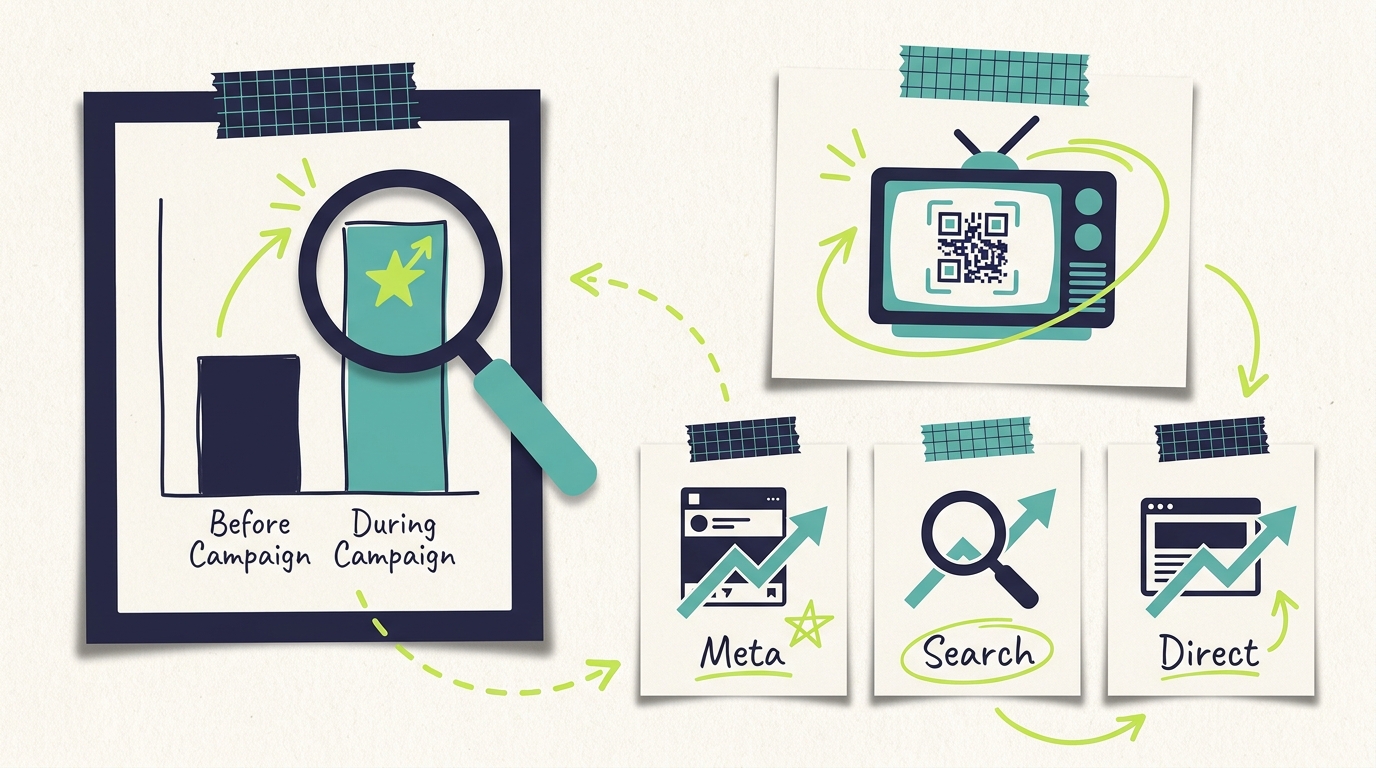
For years, the main reason small businesses under-invested in TV was the attribution gap: TV ads aren't clickable, so the impact didn't show up in the same dashboards as Meta or Google. That gap is closing in 2026 through three mechanisms:
Pre/post baseline measurement. More small businesses are routinely capturing a 4-week pre-campaign baseline (inquiries, calls, foot traffic, online conversions) and comparing it against campaign weeks. The lift over baseline captures more of TV's true contribution than direct attribution alone.
QR codes and vanity URLs in TV creative. A meaningful percentage of small business CTV creative now includes a QR code or a vanity URL specific to the TV campaign. Even if only 20-40% of TV-influenced viewers use the QR or vanity URL, the directly-attributed conversions become a real number rather than a guess.
Cross-channel lift dashboards. Several small business advertising platforms now report cross-channel lift directly: when CTV is running, your Meta CTR is up by X%, your branded search is up by Y%, your direct traffic is up by Z%. That lift is increasingly accepted as part of TV's contribution.
The literacy gap closing means more small business owners are comfortable allocating real budget to TV without feeling like they're flying blind. Expect the trend to compound through summer.
Trend 6: Local event advertising is back
After several years of pandemic-era retreat from in-person events, summer 2026 is seeing a strong rebound in local event sponsorship, festival presence, and community programming. The advertising patterns around these events are also shifting:
Sponsorship without media activation is losing favor. Small businesses are increasingly insisting that local sponsorships come with media activation: signage, ad placements in the event's printed and digital materials, social mentions, and ideally a CTV component that runs in the geographic area surrounding the event.
Event-pegged CTV is producing strong returns. A small business that sponsors a local July 4th festival and pairs it with two weeks of CTV in the surrounding ZIPs sees the event recognition compound. The CTV pre-warms the audience; the on-site signage seals the recognition.
Local-business clusters are pooling spend. Several mid-sized markets are seeing co-op patterns where 4-8 small businesses pool budget to run local-pride CTV campaigns under a "shop local this summer" umbrella. The co-ops produce more reach per dollar than any single business could afford alone.
Trend 7: Political ad pressure begins building in July
For small businesses planning summer spend, the calendar matters. Political ad spending in competitive districts begins ramping in July and accelerates dramatically through August and September. For small businesses operating in those districts (especially Senate and competitive House races), the implications include:
CTV CPMs rise 15-25% in competitive markets from mid-July through the election
Inventory pressure tightens, with premium content slots harder to access
Creative refresh cycles slow as platforms manage the political ad surge
The small businesses minimizing the political-ad-season impact are doing two things: locking in CTV campaign placements by early July (before the surge), and rotating to less politically-saturated channels (Meta, local sponsorships, search) during the heaviest weeks of the political cycle. By early November, CPMs typically settle quickly and the holiday push begins.
Trend 8: Vertical-specific creative is replacing horizontal stock
A subtle but meaningful shift: the small businesses producing the strongest 2026 creative are using vertical-specific framing rather than horizontal-stock framing.
A restaurant's summer creative now features actual menu items, actual servers, actual interior shots. A home services business's creative shows their actual trucks, their actual technicians, their actual logo on a uniform. A fitness studio's creative shows their actual class energy, their actual coaches, their actual member moments.
The opposite of this trend (using generic stock footage that could belong to any business in the category) is showing measurable conversion-rate decline across CTV and Meta. AI creative tools now generate vertical-specific spots as easily as generic ones, and the data is rewarding the specificity.
What to do with these trends in your summer plan
Five recommendations for any small business mapping out a May-August advertising plan:
1. Test CTV early in the summer, not late. May-June CTV CPMs are 4-8% below late-summer rates, and inventory is friendlier. If CTV is on your roadmap, the early summer test window is the right time.
2. Anchor every campaign on a specific holiday or local moment. Memorial Day, Father's Day, July 4th, back-to-school, and any local festival or event you can credibly attach to. Holiday-pegged campaigns outperform "general summer" campaigns by a substantial margin.
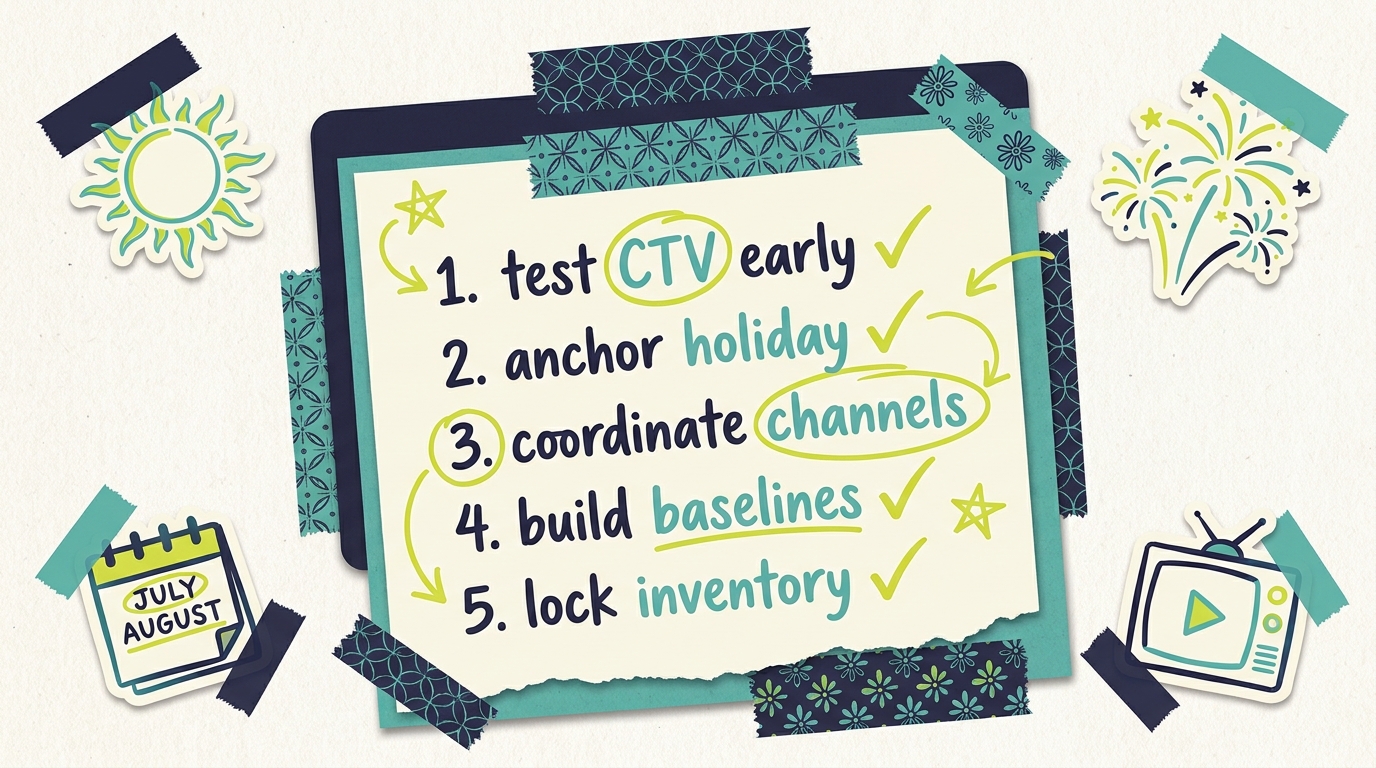
3. Coordinate channels under one budget envelope. Stop treating Meta, Google, and CTV as separate campaigns. Unify the creative, synchronize the timing, and measure the cross-channel lift.
4. Build pre/post baselines for every flight. Capture your 4 weeks pre-campaign performance on the metrics you care about (calls, inquiries, foot traffic, online conversions). Compare against campaign weeks. The lift over baseline is more important than direct-attribution numbers.
5. Lock in inventory before July. If your business is in a competitive political district, book CTV campaigns running in August and September by early July, before the political surge tightens inventory and pushes CPMs higher.
Common questions answered
Are CTV ads more affordable in summer 2026 than they were in 2024?
For most small business advertisers, yes. The combination of subscription-tier platforms ($50-$500/month entry points), AI creative tools, and the post-election inventory unlock means a small business can run a meaningful CTV campaign for less total cost than was practical in 2024. Average CPM is also slightly below 2024 levels in most metros, though that gap may close in fall.
What's the single biggest opportunity for small businesses this summer?
Cross-channel coordination on holiday-pegged campaigns. Most small businesses are still running their channels in silos. The businesses that synchronize Meta, Google, CTV, and local event presence around a specific summer moment (Memorial Day, Father's Day, July 4th, or a local festival) are producing dramatically better conversion rates than the businesses running each channel as an independent effort.
Should I cut my Meta spend if I'm adding CTV?
Not by default. Most small businesses report that adding CTV lifts their Meta performance rather than competing with it. Hold Meta steady for the first CTV test cycle (60-90 days), measure both channels' performance, and rebalance after you have data. Cutting Meta prematurely often removes the conversion layer that CTV's familiarity work is feeding into.
How early should I start advertising for back-to-school?
Back-to-school spend is now starting earlier each year. For most small businesses with a back-to-school relevance (retail, education, home services for families, fitness for kids), early August is too late. Start awareness and consideration creative in mid-July, with offers ramping in late July and peak conversion creative in the first two weeks of August.
Will political ads make my summer campaigns less effective?
In competitive political districts, yes, partially. Political ads compete for the same CTV inventory and push CPMs up. The small businesses minimizing the impact are buying their fall inventory earlier (by early July), shifting some budget toward Meta and Google during the heaviest political weeks, and timing their CTV-heavy moments around the political ad concentration rather than directly into it.
Is local creative really worth the production investment?
Yes, especially in 2026. Generic stock-style creative is producing measurably worse conversion rates than locally-anchored creative in nearly every category. AI creative tools now make local-specific creative nearly as easy to produce as generic creative; the production investment has dropped substantially.
Make the most of the summer window
Summer 2026 is a window where CTV inventory is friendlier, AI creative tools are mature, attribution literacy is closing the gap, and holiday moments are concentrating demand. The small businesses making the most of the next four months are running coordinated multi-channel plans, anchoring on specific holidays and local moments, and building pre/post baseline measurement into every flight.
If you've been waiting for the right moment to test CTV alongside your existing digital channels, summer 2026 is one of the best windows in recent memory. Create your first ad with Adwave in about two minutes, target your service area, and start your own summer baseline this week.