When you boil it down, the AVOD vs. SVOD discussion comes down to one simple question: who pays? With AVOD (Advertising-based Video on Demand), the viewer watches for free, and advertisers foot the bill. With SVOD (Subscription-based Video on Demand), the viewer pays a regular fee for an ad-free experience.
It’s a fundamental split in business models. The path a streaming service takes determines whether its main goal is to attract the biggest possible audience for advertisers or to build a loyal, paying community around its content.
Decoding the Dominant Streaming Models
The shift from scheduled broadcasts to on-demand libraries has completely changed how we watch TV. This new era is built on two primary business models (AVOD and SVOD) and each one creates a totally different dynamic for viewers, content creators, and the advertisers trying to reach them.
Getting a handle on these models is important for any business planning to advertise on streaming platforms. Your strategy, budget, and expectations will all be shaped by the model you’re working with.
The Two Sides of the Streaming Coin
AVOD (Advertising-based Video on Demand): This is the "free-to-watch" model. Platforms like Tubi, Pluto TV, and YouTube offer vast libraries of content at no charge to the viewer. The entire operation is funded by selling ad inventory that runs before, during, or after a show. It's essentially the modern version of broadcast TV, just with the massive advantage of on-demand viewing.
SVOD (Subscription-based Video on Demand): Here, viewers pay a recurring fee (usually monthly or yearly) for access to a curated library of content. The big draw for subscribers is a premium, uninterrupted experience with no ads. For platforms like Netflix and Disney+, this creates a predictable revenue stream that allows for huge investments in high-production, exclusive original content.
Let's break down the key differences between these two approaches.
At a Glance Comparing AVOD and SVOD Fundamentals
As you can see, the choice between AVOD and SVOD is a strategic one, trading broad reach for predictable revenue.
This handy infographic provides a great visual breakdown of the core differences.
The chart really highlights how AVOD casts a wide net by removing the price barrier, while SVOD is all about creating a premium, exclusive environment that people are willing to pay for.
Of course, the lines are starting to blur, with many SVOD services now offering cheaper, ad-supported tiers. But the lessons learned from traditional television are more relevant than ever, especially when it comes to making ads that people will watch. To understand the roots of this, it's helpful to learn about what is linear TV advertising and see how it set the stage. Today, services like Adwave give local businesses the power to tap into AVOD’s massive audience, bringing sophisticated targeting to a market that was once out of reach.
Key Takeaway: The AVOD vs. SVOD choice isn't just about money. It's a strategic decision between grabbing the largest possible audience with free, ad-supported content or cultivating a smaller, highly engaged group of paying subscribers.
How AVOD and SVOD Make Money
When you look under the hood, the financial engines running AVOD and SVOD platforms couldn't be more different. Their entire approach to growth, content, and the user experience stems from how they generate cash. One model is a game of massive scale, while the other is all about cultivating deep, paying relationships.
Understanding these mechanics is the key to seeing why certain platforms behave the way they do, from the size of their content libraries to the design of their user interfaces.
AVOD: The Economics of Scale
The AVOD business model is a numbers game, plain and simple. Revenue comes almost entirely from advertising impressions and sponsorships. Success isn't measured by individual subscribers, but by the sheer volume of viewers a platform can attract and the number of ads it can serve them.
To make this work, AVOD services have to achieve immense scale. By offering content for free, they tear down the biggest barrier to entry: cost. This strategy pulls in a broad, diverse audience, which in turn creates the huge inventory of ad slots needed to make real money. Each ad shown might only contribute a tiny fraction of a cent, so profitability hinges on serving billions and billions of impressions.
A huge chunk of this ad delivery is automated through sophisticated systems. Concepts like programmatic advertising are central to how these platforms efficiently turn eyeballs into revenue.
SVOD: The Power of Predictable Income
In sharp contrast, the SVOD model is built on predictable, recurring revenue from subscriptions. This steady cash flow is what allows platforms to pour massive amounts of money into high-budget, exclusive content designed to attract and (more importantly) keep subscribers. For an SVOD service, it's not about total viewers; it's about paying customers.
Metrics like Average Revenue Per User (ARPU) and churn rate (the percentage of subscribers who cancel) are the lifeblood of this model. A low churn rate means the service is consistently delivering value. This creates intense pressure to constantly release compelling new shows and movies, as the platform has to justify its monthly fee to every single user, every single month.
Key Insight: The core strategic tradeoff is clear. AVOD chases broad audience reach to maximize ad impressions, while SVOD focuses on deep subscriber relationships to lock in recurring, high-value revenue.
Comparing Core Financial Metrics
To really get the AVOD vs. SVOD financial debate, it helps to put their primary metrics side-by-side.
These different financial goals show up clearly in market trends. In the global streaming services market, SVOD still commands a dominant 49% share of viewers with over 620 million active users. At the same time, AVOD trails at 29% but is growing at a blistering 34% year-on-year, especially in more price-sensitive markets. This data shows SVOD's strength in using exclusive content and family plans to keep churn low. You can find more details on these streaming market trends here.
This explosion in AVOD viewership points to a massive opportunity for advertisers. The model's real power comes from its reliance on technology to place ads effectively. This often involves sophisticated techniques to insert commercials directly into content streams. To learn more, check out our guide on what is dynamic ad insertion. This is exactly where a platform like Adwave comes in, giving local businesses access to this growing AVOD audience and using precision targeting to make sure ads hit the right viewers without needing a Hollywood-sized budget.
The Advertiser's Guide to AVOD Opportunities
For any advertiser weighing their options, the AVOD vs. SVOD discussion isn't just academic, it's about budget, reach, and the very real success of a campaign. While SVOD platforms operate like exclusive clubs behind a paywall, AVOD services swing the doors wide open. This creates a massive, diverse playground for brands to play in.
This accessibility is really AVOD’s ace in the hole. It gives advertisers a golden opportunity to connect with millions of viewers who are flocking to free, on-demand streaming.
The main attraction is the sheer scale. By ditching subscription fees, these platforms pull in a huge cross-section of viewers, from dedicated cord-cutters to families just looking to add more entertainment without another monthly bill. All that reach means a massive inventory of ad slots, which gives you more shots on goal to get your message in front of the right people.
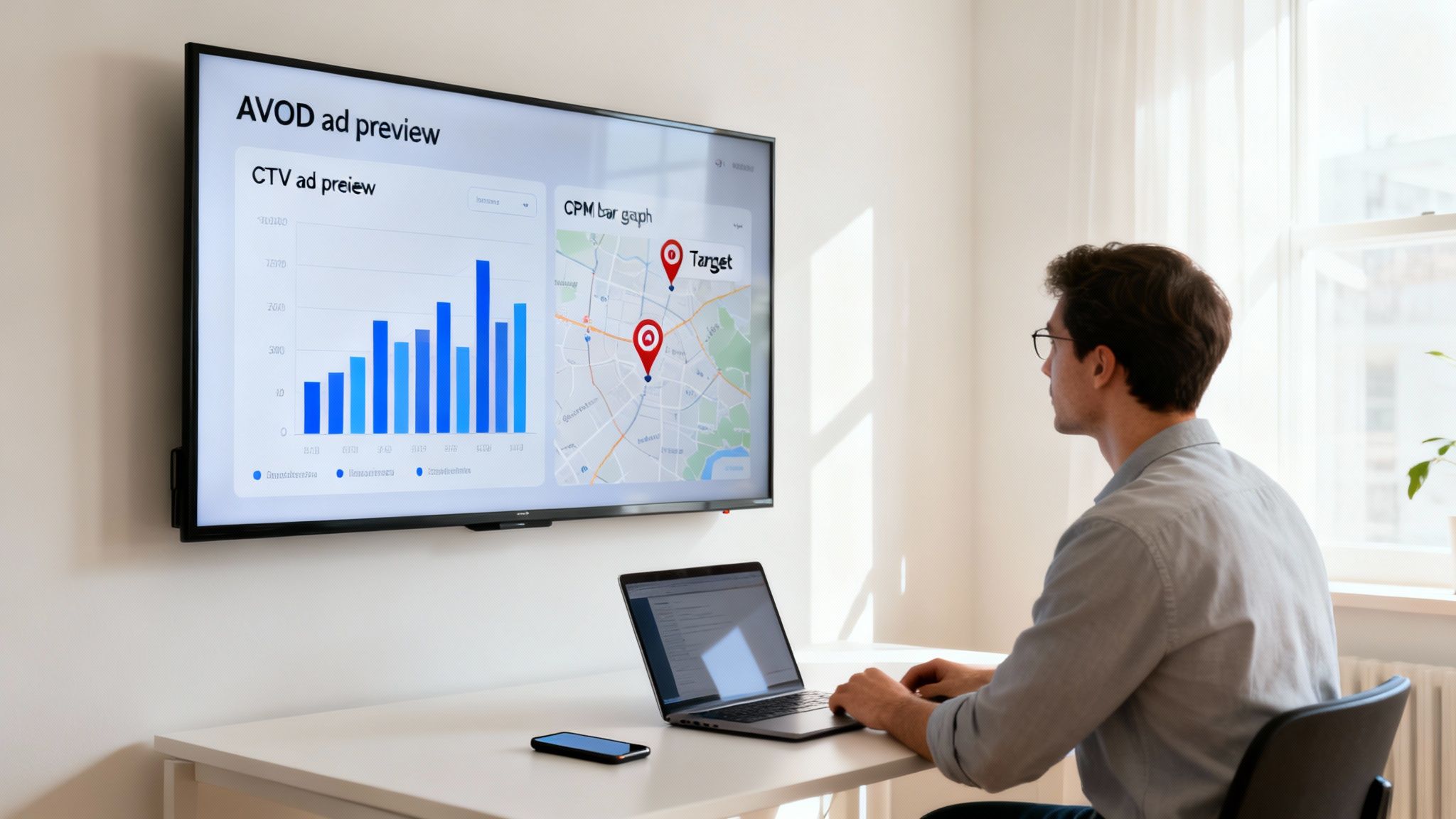
What's more, this is a whole different ballgame than old-school broadcast TV. The targeting is far more sophisticated. Instead of just buying a spot during a popular show and hoping for the best, you can pinpoint audiences based on their demographics, viewing habits, and even their specific geographic location with incredible accuracy.
Capitalizing on Connected TV Growth
The explosive growth of Connected TV (CTV) has poured fuel on the AVOD fire. People are now streaming on-demand content on their biggest, best screens, their living room TVs. This creates a premium viewing experience that used to be reserved for major networks and pricey cable packages, turning AVOD into a powerful channel for brand storytelling.
But this opportunity isn't without its hurdles. With more advertisers jumping into the pool, it’s getting tougher to make a splash. Viewers get hit with ad fatigue when they see the same commercial over and over, which causes them to tune out or just get annoyed. For a small or medium-sized business (SMB), trying to cut through that noise against giant national brands can feel like mission impossible.
An important part of an effective AVOD advertising strategy is crafting advertisements that resonate with viewers. Read deeper into the art of writing compelling ad scripts that sell to ensure your message captures attention and drives action.
Adwave: Making AVOD Accessible for Local Businesses
This is exactly where having the right partner becomes a useful option. For local SMBs, just figuring out the AVOD landscape (from buying ad space to targeting the right households) can be a huge headache. Adwave was built specifically to solve this problem, making high-impact CTV advertising something any business can use effectively.
Our platform demystifies the whole process. We give you access to premium AVOD inventory on over 100 top-tier channels, the very same ones the big national advertisers are on. It completely makes advertising more accessible, so a local real estate agent or a neighborhood restaurant can run their ads right alongside household names.
Precision Targeting and Overcoming Challenges
The secret to beating challenges like ad fatigue and market saturation is precision. Forget the old scattergun approach. Adwave lets SMBs run hyper-local geo-targeting campaigns, so every ad dollar is spent reaching viewers who are most likely to become actual customers. A local plumbing company won't waste a dime showing ads to people three states away; their message lands directly in the living rooms within their service area.
Adwave creates ads from your website and runs them on TV, search, and social. You can review the creative before buying media. Read our guide to what is connected TV advertising for more on streaming placements.
With a platform like Adwave, SMBs can turn the massive scale of AVOD into a real, measurable engine for local growth. It’s proof you don't need a national budget to make a major impact on the biggest screen in the home.
How Monetization Models Shape the Viewer Experience
The choice between AVOD and SVOD isn't just a back-end business decision; it completely changes how people watch and feel about content. Each model creates a unique viewing environment, influencing everything from binge-watching habits to whether a viewer sticks around. It all boils down to a trade-off between what a viewer is willing to pay and what they're willing to put up with.
For AVOD viewers, that trade-off is front and center. You get free access, but the "price" is your time and attention during ad breaks. The quality of that experience hinges entirely on the placement, frequency, and relevance of the ads. A heavy ad load (too many ads crammed into one break) is a surefire way to make viewers frustrated enough to just click away.
On the other hand, when managed well, a few ads can feel like a perfectly reasonable exchange for a massive library of free shows and movies. It's a tightrope walk for AVOD platforms: keep viewers happy without alienating them with constant interruptions.
The Binge-Watching Culture of SVOD
The SVOD model flips the script entirely. By getting rid of ads, it creates a connected, immersive world perfect for binge-watching. Viewers can dive deep into a story, flowing from one episode to the next without a commercial break yanking them out of the narrative.
This uninterrupted flow is designed to build serious loyalty. Subscribers start to feel a real connection to the platform's exclusive shows, making them much more likely to renew their subscription month after month. The whole SVOD game is about constantly proving its value and justifying that recurring fee with premium, uninterrupted entertainment.
Navigating Subscription Fatigue and Economic Pressures
While SVOD used to be the undisputed king, the ground is shifting. "Subscription fatigue" is a real thing, and as household budgets tighten, AVOD has become the fastest-growing corner of the streaming world. A recent Deloitte survey found that 54% of SVOD subscribers now also pay for at least one ad-supported plan, that's an 8 percentage point jump in just one year. It shows that people are getting tired of juggling multiple expensive subscriptions. In fact, 60% said they'd probably cancel a favorite service if the price went up by just $5 a month.
This has pushed many of the big SVOD players to launch cheaper, ad-supported tiers of their own. These hybrid models are a direct answer to what consumers are asking for: more choice. It's a clear signal that the one-size-fits-all, premium-only approach is on its way out.
Key Insight: Today's viewer is a savvy consumer. They're actively weighing the cost of a subscription against their tolerance for ads, forcing platforms to get more flexible with their pricing and plans.
This shift is a massive opportunity for advertisers. The growing audiences on these ad-supported tiers open up new ways to reach engaged viewers on platforms that were once off-limits. For local businesses, this evolving market has never been more within reach.
Tools like Adwave make advertising more accessible, making it straightforward for small and medium-sized businesses to run ads on major streaming channels. By offering precise local targeting, Adwave helps ensure every dollar of an ad budget is spent reaching actual potential customers right in their own neighborhoods. This gives local brands a real chance to compete in a space once dominated by national giants. To see where this is all headed, check out the U.S. TV ad-supported share forecast for Q2 2025. This move toward hybrid models is a win-win: viewers get more options, and local advertisers find powerful new paths to growth.
How the Big Players Shaped the Game
To really get a handle on the AVOD vs. SVOD debate, you have to look at the giants who built the streaming world. Their strategies aren't just business school case studies; they're real-world examples of how a monetization model dictates everything from content and audience to long-term growth.
By breaking down their playbooks, we can see the practical trade-offs of each approach and how they’ve led to the streaming landscape we see today.
SVOD: The Netflix "Content is King" Model
Netflix is the poster child for SVOD success. Their game plan was simple but ambitious: build a library of exclusive, high-quality shows and movies so good that people would happily pay a monthly fee to watch without ads. That subscription money was then poured right back into producing more award-winning original content.
This strategy created a culture of binge-watching and fostered intense brand loyalty. Netflix didn't have to worry about advertisers; their one and only focus was keeping subscribers hooked by consistently dropping the next "must-see" show.
AVOD: The Tubi and Pluto TV "Volume is Everything" Model
On the complete opposite end of the spectrum, you have players like Netflix and Pluto TV. They took a totally different route. Instead of chasing a few prestige originals, they went for sheer volume, licensing massive libraries of thousands of familiar movies and TV shows and giving it all away for free.
Their objective wasn't to win Emmys; it was to attract the biggest audience possible by eliminating the price tag. This approach generated a massive inventory of ad slots, turning raw viewership numbers into a highly profitable business and proving that free can absolutely compete for eyeballs against premium services.
Key Takeaway: The core difference is clear. SVOD pioneers like Netflix bet on premium, exclusive content to earn a subscription fee. AVOD leaders like Tubi bet on a massive, free library to maximize ad revenue.
The New Middle Ground: The Hybrid Model
The biggest shake-up in the streaming wars right now is the collapse of those old boundaries. As the market got more crowded and viewers started feeling subscription fatigue, even the biggest SVOD purists began to adopt a hybrid approach. It’s a clear admission that a one-size-fits-all model just doesn't cut it anymore.
Adwave is leading the pack here, directly integrating an ad-supported tier into its subscription. This single move is expected to make it the dominant hybrid player, with forecasts showing it will have over 100 million ad-supported subscribers by the end of this year. It's a massive signal that premium services are now using ads to pull in price-sensitive viewers and open up new revenue streams. You can dig deeper into this global platform trend on Statista.com.
This evolution is a huge opportunity for advertisers. Platforms that were once locked behind a paywall are now open for business, which is a useful option for local companies. A service like Adwave is built for this moment, giving small and medium-sized businesses direct access to advertise on these major streaming channels. With precise local targeting, Adwave helps you put your ads in front of engaged viewers on the platforms they already love and trust, turning a global trend into a powerful local advantage.
Your Game Plan for Local AVOD Advertising
When you're running a small or medium-sized business, the whole AVOD vs. SVOD debate isn't some abstract industry discussion. It really just comes down to one question: Where can I realistically reach local customers without draining my bank account? The answer, more and more, is AVOD. It's quickly become a potent, accessible way for local businesses to see real results.
This explosion in free, ad-supported streaming is more than a passing trend. It’s a genuine shift in how we all watch TV, and it carves out a direct path for local businesses to get their message onto the living room screen, a space that used to be fenced off for huge corporations with seven-figure budgets.
But this new territory calls for a new strategy. Success here is built on precision, efficiency, and having the right tech partner in your corner.
Turning Local TV Ads From Theory to Reality
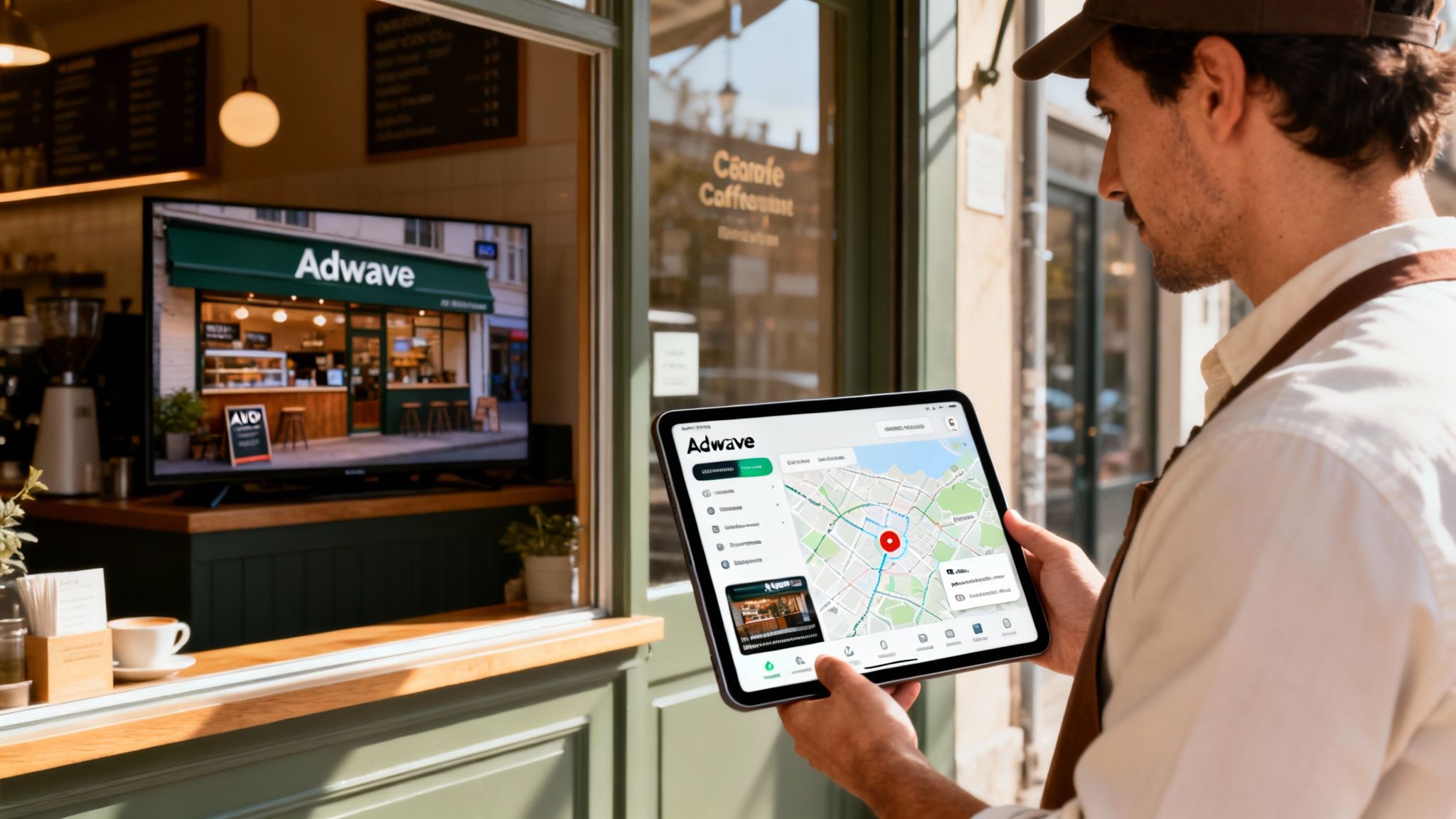
For a local business, the magic of AVOD lies in its one-two punch of massive reach and precise targeting. Think about traditional broadcast TV, it's like casting a huge, expensive net and hoping for the best. AVOD lets you target your ideal audience with surgical accuracy, making sure your ad for a local coffee shop is seen by people who can walk in and buy a latte.
Of course, figuring out how to navigate this world can feel overwhelming. Buying ad space, producing a commercial that looks professional, and tracking the results, these are major hurdles when you're already juggling a million other things. This is exactly where specialized platforms come in to bridge the gap.
The Big Picture: AVOD becomes a useful option for small businesses when technology makes it simple. The goal is to make advertising on streaming TV feel as easy and targeted as running a social media campaign, but with the unmatched impact of a television commercial.
Adwave: Your Partner in Local Growth
For local businesses ready to jump into AVOD, Adwave provides a straight line to success. We built our platform from the ground up to tear down the old barriers to TV advertising, turning it into an affordable and effective tool for any local business.
We believe that every business, no matter its size, deserves a fighting chance in the streaming ad world. Here’s how Adwave makes that possible:
Instant Access to Top-Tier Channels: Adwave connects you directly to over 100 premium streaming channels. Your ad can appear on the same platforms as the big national brands, giving your local business an immediate boost in credibility.
Hyper-Local Geo-Targeting: Our tools get seriously specific, letting you target viewers right down to their zip code. This means every single ad dollar is spent reaching potential customers in your service area, which is key to maximizing your return.
Broadcast-Ready Ads in Minutes: Forget about hiring expensive production crews or waiting weeks for a finished ad. Adwave’s AI-powered system can generate a professional, high-quality TV commercial for your business in just a few minutes, using nothing more than your website URL.
No-Nonsense Analytics: Knowing what works is everything. Adwave gives you clear, real-time data so you can see exactly how your campaign is performing and measure its direct impact on your bottom line.
With a partner like Adwave, AVOD stops being a confusing acronym and becomes a powerful, practical engine for your local business's growth. You can finally connect with engaged audiences right in your own community and see tangible results, proving you don't need a national budget to make a major local impact.
Your Top Questions About AVOD and SVOD, Answered
If you're trying to figure out where AVOD and SVOD fit into your business strategy, you're not alone. It can get confusing fast. Let's clear up some of the most common questions and get you pointed in the right direction.
These aren't just academic definitions, these are the practical answers you need to make smart decisions for your content or your advertising budget.
As a New Creator, Should I Choose AVOD or SVOD?
For anyone just starting out, AVOD is almost always the smarter play. It’s the path of least resistance for building an audience because you're not asking viewers to pull out their wallets right away. Your main job is to create compelling content that people want to watch; the ad revenue will follow as your viewership grows.
Jumping straight into an SVOD model is a massive uphill battle. You’d need a deep library of premium, can't-get-it-anywhere-else content from day one. That's a huge barrier to entry and a tough sell for a creator who is still building a name for themselves.
Can a Small Business Really Afford to Advertise on Streaming TV?
Absolutely. This is one of the biggest shifts in advertising in the last decade. The explosion of AVOD has completely democratized TV advertising, and it’s no longer a playground reserved for national brands with million-dollar budgets.
Services like Adwave have been instrumental in this change, making Connected TV (CTV) advertising both affordable and effective for local businesses. You can now run campaigns on top-tier streaming services with precise targeting, reaching just the right households in your specific service area for a fraction of what old-school TV ads cost.
Is AVOD’s Growth Making SVOD Obsolete?
Subscription costs are prompting viewers to reconsider how many services they pay for. Streaming services are adapting with ad-supported plans.
The proof is in the pudding: giants like Netflix and Disney+ have already rolled out cheaper, ad-supported plans. This move toward a hybrid model is the clearest signal of where streaming is going. It combines the stability of subscription revenue with the massive reach of advertising.
This evolution is fantastic news for advertisers. As these walled gardens open up, they create brand-new opportunities to reach highly engaged audiences. A platform like Adwave cuts through the complexity, giving you direct access to this premium inventory so your message can land on the biggest screen in the house, regardless of how the streaming wars evolve.
Common questions answered
What is the difference between AVOD and SVOD?
AVOD (Advertising Video on Demand) shows ads in exchange for free or lower-cost content. Examples include Tubi, Pluto TV, and Peacock's free tier. SVOD (Subscription Video on Demand) charges monthly fees for ad-free content. Examples include Netflix premium and Disney+ without ads.
Why does AVOD vs SVOD matter for advertisers?
AVOD platforms let you reach viewers through advertising, while traditional SVOD does not. However, many SVOD services now offer ad-supported tiers (Netflix with ads, Disney+ with ads) creating new advertising inventory. Understanding this distinction helps you plan where your ads can run.
Which streaming model has more viewers?
Ad-supported viewing is growing rapidly as consumers become more price-sensitive. Many viewers now prefer free or lower-cost ad-supported options over paying full subscription prices. This shift means more advertising inventory and better reach for marketers.
Can you advertise on subscription streaming services?
Yes, increasingly you can. Netflix, Disney+, and other traditionally ad-free services have launched ad-supported tiers. This gives advertisers access to premium content and audiences that were previously unreachable through advertising.