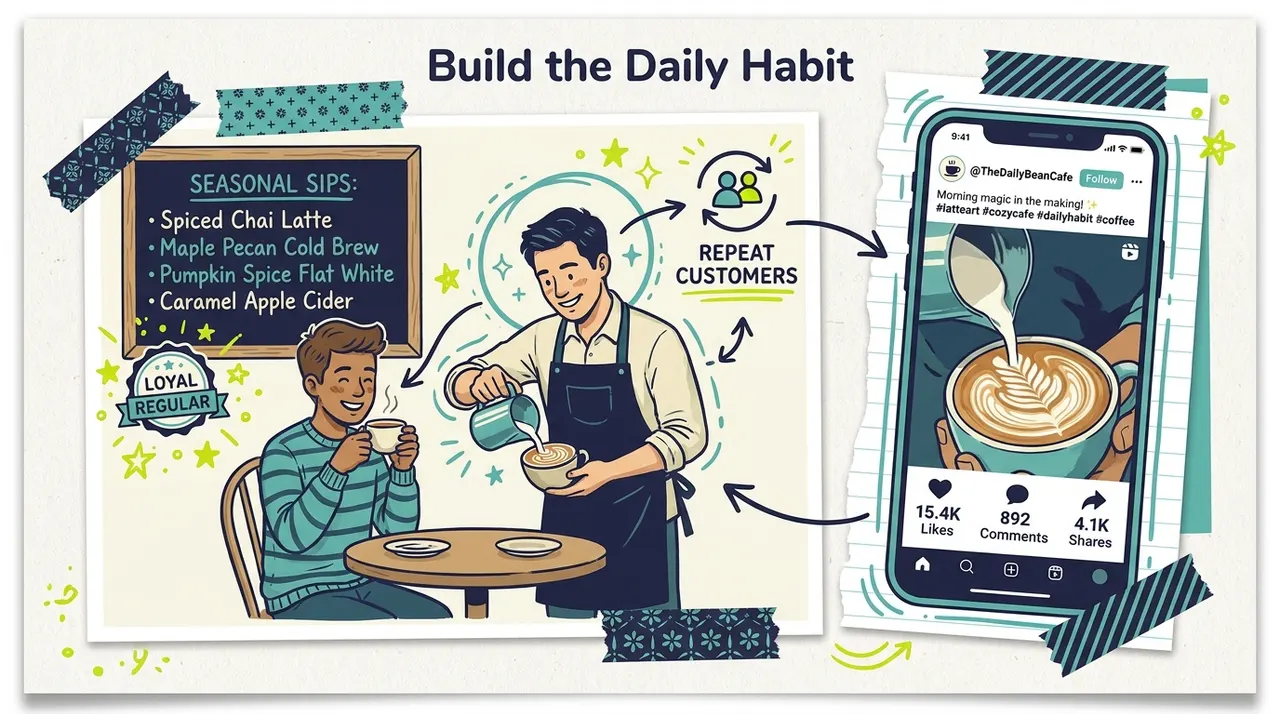
Most coffee shop owners think advertising is a way to bring new customers through the door. The owners building sustainable businesses know advertising is mostly about something different: building the kind of daily habit and emotional connection that turns a one-time visitor into a five-times-a-week regular.
The math is brutal in coffee. A new customer who orders a $5 latte once and never comes back generates $5 in revenue. The same customer who builds a habit and drops in 250 days a year generates $1,250. The advertising channels that work for coffee shops aren't the ones that maximize first-time foot traffic. They're the ones that build the visual identity, the local affinity, and the social momentum that creates loyal regulars.
This guide ranks seven advertising channels for coffee shops and cafes by ROI: Instagram and Meta Ads, Google Business Profile and local search, in-shop loyalty programs, partnership marketing with local businesses, CTV streaming TV advertising, hyper-local social and Nextdoor, and content and creator partnerships. You'll get realistic budgets, a recommended starting mix by stage, and the channels we'd skip outright.
For a deeper look at TV strategy specifically for cafes, see our companion guide to TV advertising for coffee shops and cafes.
How We Ranked the Channels
Three criteria drove our rankings:
Cost per loyal customer. Not cost per first visit. How much do you spend, on average, to acquire a customer who returns at least 10 times in their first 90 days?
Daily-habit reinforcement. Does the channel show up in the moments your customer is choosing where to grab coffee, or only when they're searching for "new cafes near me?"
Defensibility. Does the channel produce compounding returns (organic visibility, word-of-mouth, brand identity) or are you starting from zero every month?
Coffee shops face a constant tension between attracting new visitors and reinforcing existing habits. The right mix shifts dramatically based on whether you're a new opening trying to fill seats or an established cafe trying to maintain loyalty in the face of new competition.
Why Coffee Shop Advertising Is Different
Several dynamics shape what works in this category.
Customers visit on autopilot. Most coffee buyers settle into a default cafe within 30 days of a habit forming. After that, breaking through requires either a major life change (move, new job, new relationship) or a strong external trigger (a friend mentioning your shop, a striking visual on Instagram, a big offer).
Visual identity drives discovery. Coffee is one of the most photographed retail categories on social media. Customers don't just buy lattes; they share latte art, cafe interiors, and "morning ritual" content. Channels that produce shareable visual content compound disproportionately.
Geographic constraint is extreme. Most cafe customers live or work within a 5-minute walking or driving radius. Even broad-radius advertising mostly reaches non-customers. Hyper-local targeting outperforms broader campaigns by a wide margin.
Daypart matters. Morning rush is the highest-revenue daypart. Afternoon coffee, study sessions, and weekend brunch produce different customer mixes. Advertising that lands at the wrong daypart produces a fraction of the impact.
Differentiation is everything. "Specialty coffee" alone isn't a differentiator anymore. The cafes that compound are the ones with sharp identities: the scientific pour-over shop, the latte-art showcase, the back-patio dog-friendly hangout, the late-night student haven, the women-owned wellness cafe, the third-wave roasting hub.
Customer lifetime value justifies higher acquisition cost than most owners think. A daily-habit customer at $5 average ticket and 250 visits per year is worth $1,250 annually. Spending $25-$80 to acquire one of those customers produces strong ROI, but most owners cap their spend assuming a $5-$15 acquisition cost based on first-visit revenue alone.
Channel 1: Instagram and Meta Ads (Best Overall)
If a coffee shop is going to run one paid channel in 2026, it's Instagram. Coffee is among the most aesthetically-driven retail categories on the platform, and Instagram's combination of visual storytelling, local geo-targeting, and creator amplification was practically built for cafes.
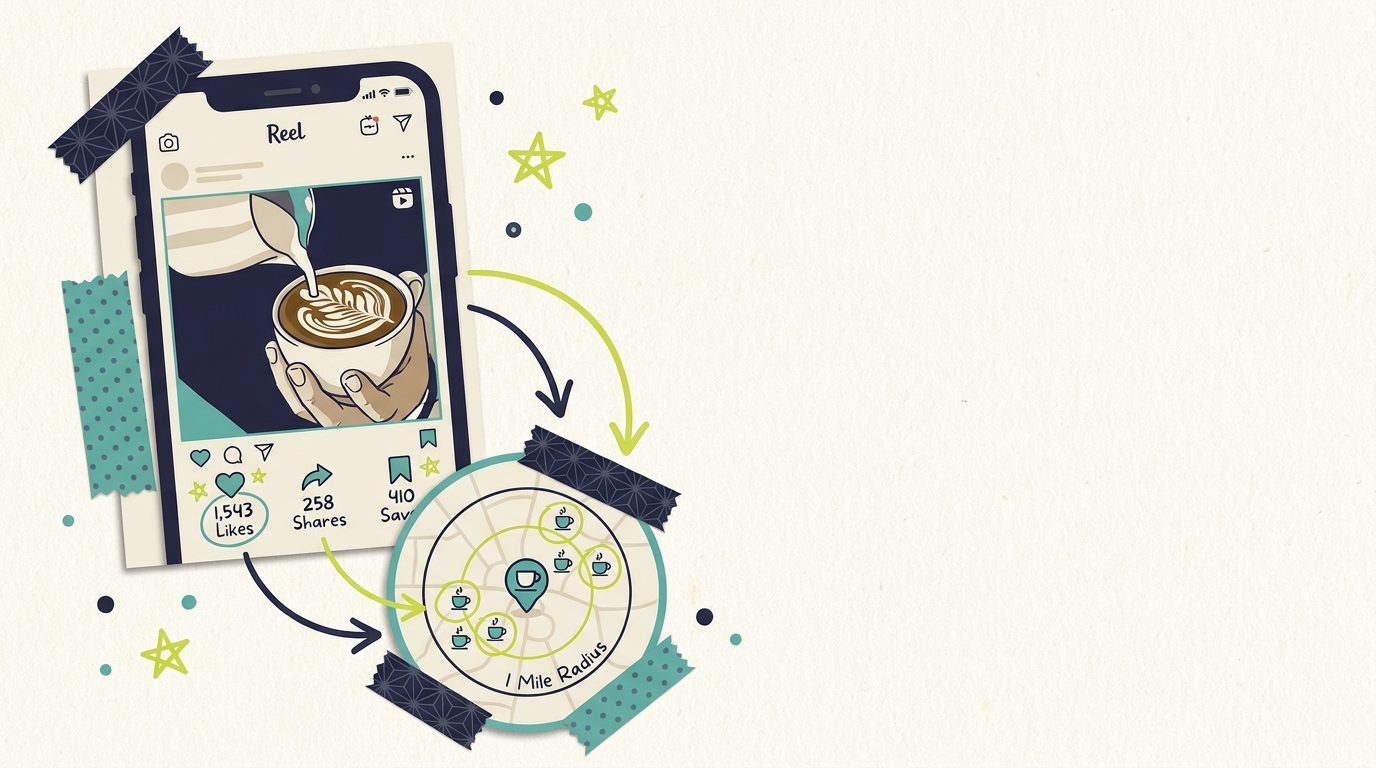
For coffee shops, Instagram and Meta Ads consistently produce the lowest cost-per-first-visit and highest visual brand-building of any paid channel.
What Wins on Meta for Coffee Shops
Reels of latte art, brewing process, and morning rituals. A single 8-15 second Reel of perfectly-pulled espresso or a barista layering a flat white routinely drives 50-200 first-time visitors when paired with a small "first drink free" offer.
Lookalike audiences from your loyalty program. Upload a CSV of your top 200 customers; Meta finds people who match their demographics and habits in your area. The single highest-ROI Meta tactic most cafes ignore.
Geo-targeted Reels promotions. Set a 1-3 mile radius around your shop. The same content seen by neighbors converts dramatically better than the same content seen by people 20 minutes away who'll never make the trip.
User-generated content amplification. Run paid promotions of customer photos (with permission) tagged at your cafe. Authentic customer content typically outperforms branded creative on cost-per-first-visit.
Stories with time-of-day relevance. Morning Stories show today's pastry case, today's drip selection, today's seating availability. Cafes that build the habit of daily Story content develop direct relationships with customers that compound over months.
Budget and Expected ROI
Plan $300-$1,500 per month on Meta for an active cafe campaign. Cost per first visit typically $5-$15 in dense urban markets, $10-$25 in suburban areas. First-visit-to-loyal-customer rate runs 20-40% with strong product and atmosphere, putting cost per loyal customer at $25-$80.
Our pick for ranking: #1. Meta is the highest-ROI paid channel for nearly every cafe, especially boutique cafes, third-wave roasters, and any shop with strong visual identity.
Channel 2: Google Business Profile and Local Search (Best Long-Term ROI)
Your Google Business Profile is the highest-impact long-term asset a coffee shop can build. Most cafe shoppers searching "coffee near me," "best espresso [neighborhood]," or "cafe with wifi [city]" find you through the local map pack first.
For cafes, GBP optimization is the difference between paying for every customer and capturing meaningful daily walk-ins at zero variable cost.
What Wins on GBP for Coffee Shops
Complete profile optimization. Primary category "Coffee Shop" or "Cafe" with secondary categories like "Espresso Bar," "Bakery," "Breakfast Restaurant," "Wifi Spot" as relevant. Hours, parking, and amenities filled out completely.
Photo strategy. 100+ photos showing drinks, food, interior, exterior, baristas, and customer atmosphere. Cafes with photo libraries above 100 photos generate dramatically more profile actions than sparse profiles.
Weekly posts. Specials, new menu items, events, hours updates, seasonal drinks. Active profiles rank meaningfully higher in the local map pack.
Q&An optimization. Seed questions: "Do you have wifi?" "Are you dog-friendly?" "Do you serve oat milk?" "Do you have outdoor seating?" Answer them yourself with helpful info before customers do.
Reviews engine. Coffee shops with 100+ reviews and 4.6+ ratings outrank weaker review profiles. Train your team to ask satisfied regulars to leave reviews; respond to every review (especially critical ones, professionally).
Budget and Expected ROI
Mostly time investment. Budget $0-$500 per month if you hire help managing posts, photos, and reviews. Results compound over 3-9 months. A well-optimized cafe GBP in a competitive metro can produce 500-2,500+ profile views per month at zero variable cost, with 10-30% converting to walk-ins or directions requests.
Our pick for ranking: #2 by direct ROI but the highest-ROI long-term asset. Every cafe should have a fully optimized GBP regardless of paid spend.
Channel 3: In-Shop Loyalty Programs
Existing customers are your single highest-ROI marketing channel. The cafes with the strongest economics aren't the ones with the most paid media spend; they're the ones with the deepest customer-relationship infrastructure.
What Wins in Loyalty for Coffee Shops
Digital punch cards or app-based programs. Square, Toast, and Stamps Loyalty all offer easy-to-implement digital loyalty. "Buy 9, get 10th free" is the standard, but the data layer underneath matters more than the offer itself: knowing customer visit frequency, average ticket, and last-visit dates lets you target retention campaigns precisely.
SMS marketing to loyalty members. Text "happy hour" or "new seasonal drink" alerts to your existing customers. Open rates and conversion rates dramatically beat email for cafes.
Birthday and milestone rewards. Free drink on a customer's birthday. "Hello regular!" message after their 25th visit. Small personal touches reinforce habit dramatically.
Members-only specials and early access. New menu drops, limited single-origin pours, special events. Loyalty members hear about everything first.
Refer-a-friend programs. "$5 credit for you, $5 off for your friend" produces high-ROI customer acquisition because referred customers tend to share habits with the referrer.
Budget and Expected ROI
Plan $50-$300 per month for the loyalty platform plus $200-$1,000 in incentive payouts (free drinks, credit). Cost per repeat visit drops to $0.50-$2.00, an order of magnitude lower than paid acquisition for first visits.
Our pick for ranking: #3 by direct ROI but a top-2 channel for established cafes with 200+ customers. Build the system from day one even if direct returns take 3-6 months to mature.
Channel 4: Partnership Marketing with Local Businesses
The fastest growing acquisition channel for cafes in 2026 isn't an ad platform. It's strategic partnerships with the businesses your potential customers already frequent.
What Wins in Partnership Marketing for Coffee Shops
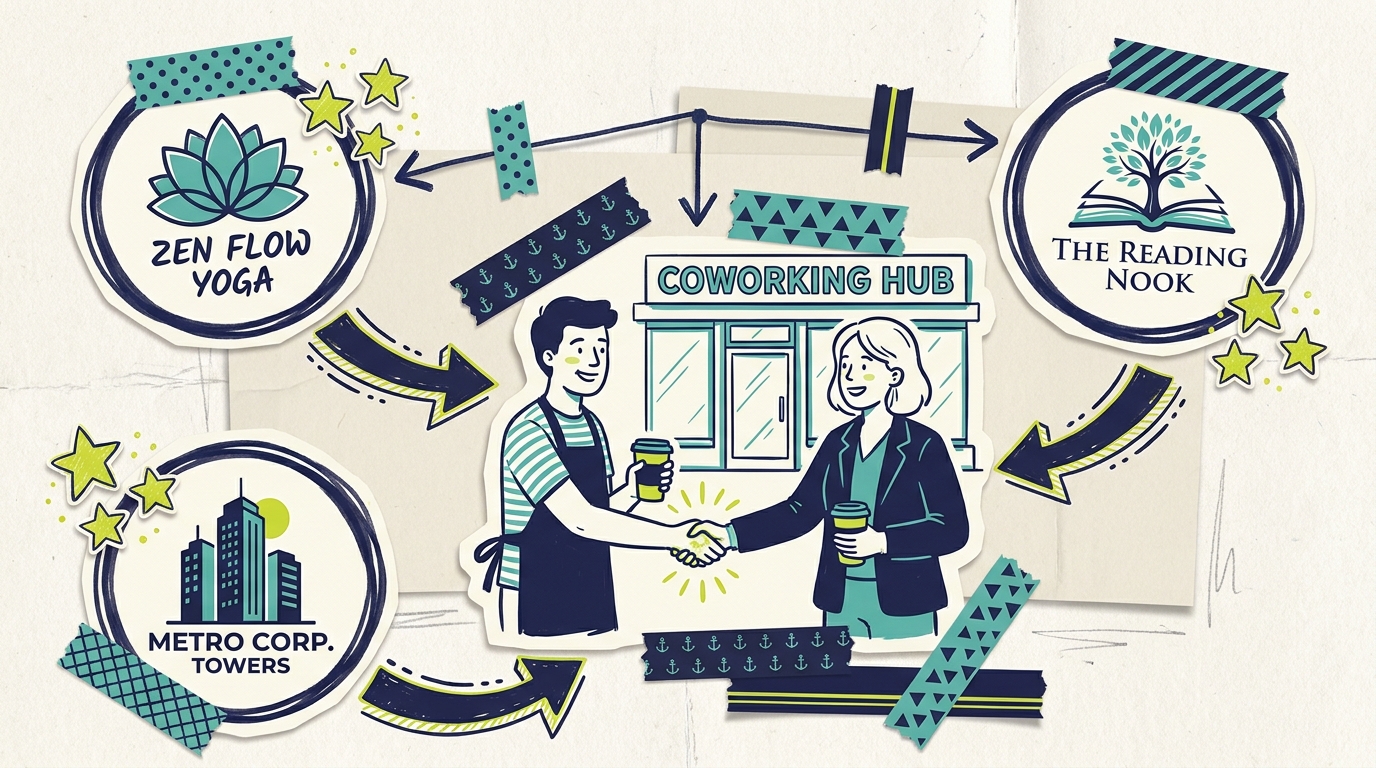
Local employer partnerships. Reach out to office managers at companies within walking distance. Offer a 10% corporate discount in exchange for being listed on their internal coffee resource page. Single corporate partnership can drive 30-150 new daily customers.
Coworking space deals. Trade discounted memberships, sponsor coffee in their kitchens, or run "coffee hours" at coworking events. Coworking communities convert at exceptional rates because they're already coffee-habituated.
Yoga studio, gym, and barre partnerships. "Show your studio receipt for 20% off." Fitness customers are typically open to forming new daily routines and respond strongly to wellness-aligned cafes.
Independent bookstore and library partnerships. Cross-promotional flyers, book club hosting, "buy a book, get a coffee" coupons.
Wedding planner and event venue partnerships. Corporate catering and event coffee bars produce high-margin per-event revenue and consistent referral flow.
Real estate agent partnerships. Top family-focused agents recommend cafes to new movers. Build relationships with the top 10-15 agents in your service area.
Local university outreach. Discounts for students with ID, partnerships with student organizations, sponsor coffee at lecture series, and host studying-friendly hours.
Budget and Expected ROI
Plan $200-$1,000 per month in partnership marketing and outreach. Cost per loyal customer typically $15-$50, often the lowest direct-acquisition cost of any channel.
Our pick for ranking: #4 by speed but a top-3 channel for cafes that take outreach seriously. Compounding effects on community standing are significant.
Channel 5: CTV Streaming TV Advertising (Best for Brand-Building)
For decades, TV advertising required $50K+ minimum spend through cable buyers. That changed with connected TV.
Connected TV (CTV) means streaming services like Hulu, Peacock, Tubi, ESPN, and Roku. Local advertisers can now buy targeted streaming campaigns starting at $50, with tight geographic and audience targeting (eMarketer, 2024).
For multi-location cafes, premium-positioning shops in competitive metros, and seasonal pushes (holiday drinks, summer iced beverages, fall pumpkin season), CTV builds the brand recognition that makes your cafe the one customers think of when "coffee" enters their minds.
Platforms like Adwave make CTV realistic for cafes of any size. Generate a broadcast-quality 30-second spot from your website in about two minutes, target your service area down to specific ZIP codes, and launch on 100+ premium streaming channels for as little as $50.
Budget and Expected ROI
Plan $400-$2,500 per month on CTV. Best for cafes with established brand assets, strong visual identity, and 1+ years of operating history. Pre-launch and very new cafes typically get faster ROI from Meta and GBP first.
Our pick for ranking: #5, but climbs to #2-3 for multi-location cafes and premium-positioned shops in competitive metros. Most effective during seasonal pushes and holiday windows.
Channel 6: Hyper-Local Social and Nextdoor
Beyond Meta, several smaller social platforms produce surprisingly strong cafe results when used well.
What Wins in Hyper-Local Social for Coffee Shops
Nextdoor business profile. Post weekly menu specials, events, and local promotions. Neighbors recommend cafes to neighbors at a higher conversion rate than almost any paid channel.
Local Facebook groups. "[City] Restaurants and Bars," "[Neighborhood] Living," "[College] Students" groups all drive meaningful walk-in traffic when you post helpful or interesting content (not pushy promotions).
TikTok presence. Even cafes that don't do paid TikTok ads benefit from organic content. A barista's signature drink or a unique espresso pull can go viral and drive a week of meaningful walk-ins.
Reddit local subreddits. Mentions in "[City] Coffee" or "[City] Food" threads drive coffee-enthusiast traffic that converts to high-loyalty customers.
Budget and Expected ROI
Mostly time investment. Plan $0-$500 per month if you hire community management help. Cost per walk-in typically $0-$10, with strong loyalty conversion because the customers tend to be neighbors.
Our pick for ranking: #6 by speed but a critical channel for community-rooted cafes. Less impactful for cafes targeting tourists or transient customers.
Channel 7: Content and Creator Partnerships
The cafes that build cult followings in 2026 do it partly through media that doesn't look like advertising at all: a barista's TikTok account, a founder's Substack newsletter, partnerships with local food creators.
What Wins in Content for Coffee Shops
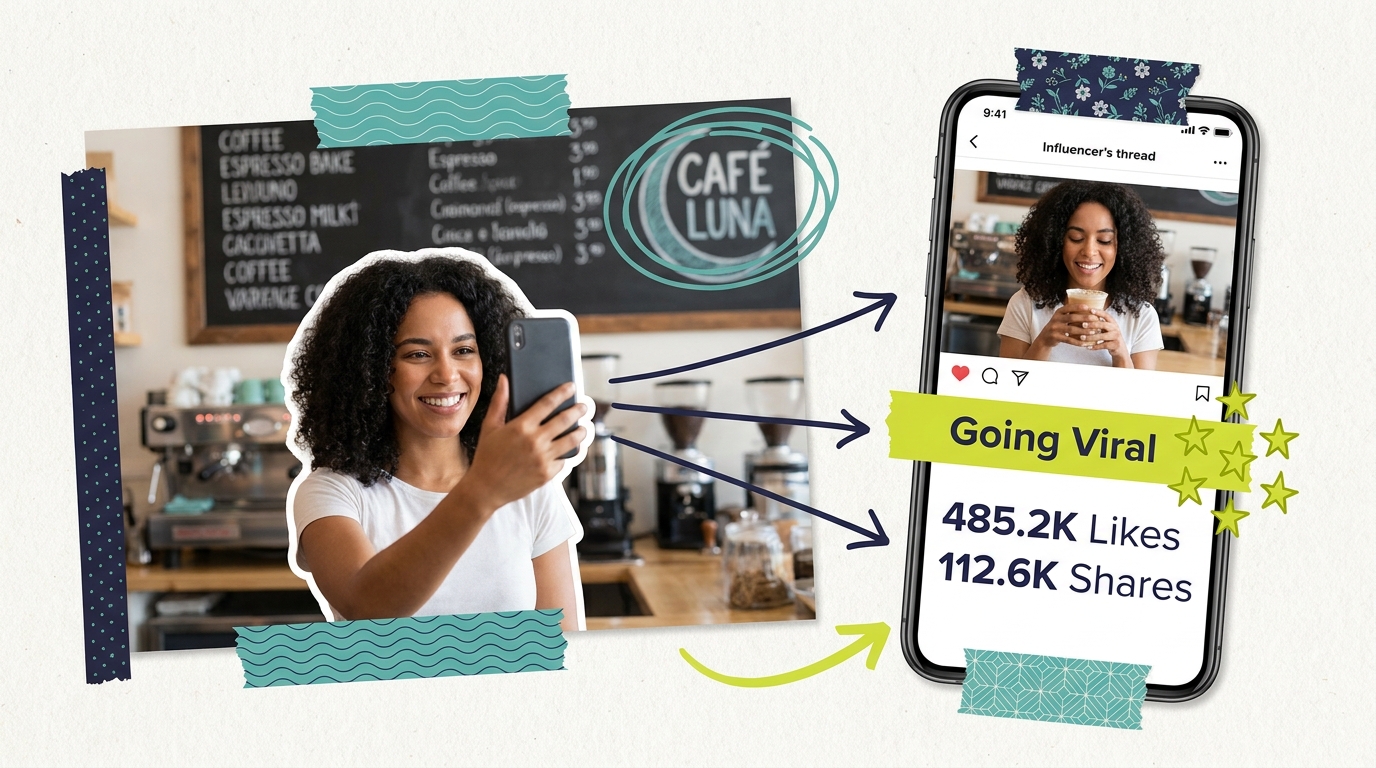
Local food-and-drink creator partnerships. Pay or trade with local micro-influencers (5K-50K followers) who post food/drink content. A single review from the right local creator can generate 100-500+ first-time visits.
Founder/owner content. Personal content from cafe owners (origin story, sourcing trips, favorite drinks, why-I-opened-this-shop) builds the kind of emotional connection that justifies premium pricing.
Behind-the-scenes content. Roasting day, supplier visits, drink development. Specialty cafes that build a documentary-style content presence develop fans, not just customers.
Seasonal content series. Pumpkin spice prep, holiday menu development, summer iced drink launches. Predictable seasonal content gives cafes a marketing rhythm.
Email newsletters. Monthly or bi-weekly founder-voice newsletters about what's happening in your shop and the broader specialty coffee world build a relationship that paid ads can't match.
Budget and Expected ROI
Plan $100-$1,000 per month in creator partnerships and content tooling. Direct ROI is harder to track but compounding. The cafes with the strongest cult followings invest here consistently.
Our pick for ranking: #7 by direct trackability but a critical compounding asset for premium cafes.
Channel Comparison
Here's how the channels stack up for a typical 1-2 location cafe.
Recommended Starting Mix by Stage
Pre-Launch and Year 1 ($800-$2,500/month)
Instagram / Meta Ads: 45% ($360-$1,125)
GBP / Local SEO: 10% ($80-$250)
Loyalty program: 15% ($120-$375)
Partnership marketing: 15% ($120-$375)
Hyper-local social: 10% ($80-$250)
Content / creators: 5% ($40-$125)
Goal: Hit 200+ loyal regulars and build the data foundation for unit economics.
Established Year 2-4 ($2,500-$6,000/month)
Instagram / Meta Ads: 30% ($750-$1,800)
GBP / Local SEO: 10% ($250-$600)
Loyalty program: 20% ($500-$1,200)
Partnership marketing: 15% ($375-$900)
CTV (test peak seasons): 10% ($250-$600)
Hyper-local social: 10% ($250-$600)
Content / creators: 5% ($125-$300)
Goal: Sustainable customer growth, predictable referral flow, brand-asset compounding.
Multi-Location or Premium Brand ($6,000+/month)
Instagram / Meta Ads: 25%
GBP / Local SEO: 8%
Loyalty program: 20%
CTV: 15%
Partnership marketing: 12%
Content / creators: 10%
Hyper-local social: 10%
Goal: Build regional brand authority. Compound recall across channels. Defend against new entrants.
Quick-Pick Channel Recommendations by Scenario
Need foot traffic this week. Instagram and Meta Ads with a "first drink on us" offer at 1-3 mile radius. No other channel delivers walk-ins faster.
$300/month total budget. Instagram Reels at $200, optimize your GBP for free, build a paper punch-card loyalty program that costs nothing to start.
New shop opening. Heavy on Instagram + partnership marketing in the 60 days before opening. Build a "first 100 customers" launch list.
Established premium cafe. Lean on content, creator partnerships, and CTV during seasonal pushes. The discovery phase is over; brand-building is everything.
Multi-location operator. All seven channels with regional coordination. CTV becomes more important as the locations multiply.
College-town cafe. Heavy on student-focused partnerships, Reddit, hyper-local Facebook groups, and study-time daypart promotions.
Drive-thru only model. Heavy on Google Ads + GBP + loyalty. Visual brand identity matters less; speed-of-decision and local search dominance matter more.
Common Questions Answered
What's the single best advertising channel for coffee shops in 2026?
Instagram and Meta Ads. The combination of visual storytelling, geo-targeting, and lookalike audiences from your loyalty list produces the lowest cost-per-first-visit of any paid channel. Most cafes should make Meta their first paid investment.
How much should a coffee shop spend on advertising?
Most successful cafes spend 4-8% of monthly revenue on advertising. A $40K/month cafe should plan $1,600-$3,200 monthly. Pre-launch and year-1 cafes should push to 8-12% to accelerate customer base building. Established cafes with strong loyalty pipelines often drop to 3-5%.
Are TV ads worth it for an independent cafe?
For pre-launch and year 1 cafes, no. Meta and GBP produce better measurable results faster. For established multi-location cafes or premium-positioned shops in competitive metros where brand differentiation matters, CTV builds the recall that drives premium pricing and word-of-mouth. CTV starts at $50 and is realistic via platforms like Adwave for cafes that want to test the channel without major commitment.
What's the fastest way to build customer loyalty?
Stand up a digital loyalty program in week 1, train your team to enroll every customer in their first three visits, and offer a meaningful first-time reward (free pastry on the 3rd visit, double-points first month). Loyalty habits compound dramatically faster than most owners expect.
Should cafes use influencer marketing?
Yes, especially local micro-influencers (5K-50K followers) who already cover food and drink in your market. Single creator partnerships at $200-$500 often outperform paid Meta ads on cost-per-first-visit, especially for visually distinctive cafes.
How important are reviews for coffee shops?
Critically important. Coffee shoppers read Google reviews carefully before trying a new spot. Cafes with under 4.4 stars or fewer than 30 reviews see meaningfully lower walk-in conversion. Build a systematic review-request process: train your team to ask satisfied regulars to leave reviews, and respond to every review (especially critical ones, professionally).
Where to Start This Week
If you're a cafe owner without a clear advertising system, here's a 30-day plan:
Week 1. Optimize your Google Business Profile (primary category, 50+ photos, current hours, full amenity list). Set up Instagram Business account and Meta Business Manager. Build a custom audience from your existing customer email list if you have one.
Week 2. Launch Instagram Reels Ads with a "first drink on us" offer at $30-$50/day. Use authentic content (latte art video, morning vibe, customer photos). Set 1-3 mile radius targeting. Stand up a digital loyalty program (Square, Toast, or Stamps).
Week 3. Identify 5-10 local partner businesses (offices, coworking, gyms, bookstores, universities) and reach out about cross-promotion partnerships. Identify 3-5 local food creators and reach out with a clear collaboration offer.
Week 4. Launch a referral program in your loyalty system. Email or text past customers about it. Plan one community event for the next quarter (cupping, latte art class, charity coffee morning, partnership with neighborhood business).
After 60-90 days, evaluate channel performance, double down on winners, and consider layering in CTV during your peak seasonal windows (fall pumpkin season, winter holiday drinks, summer iced beverage push).
Coffee shop economics are won by daily-habit reinforcement and visual brand identity, not by maximizing first-time foot traffic. Cafes that combine Instagram + GBP + loyalty + 1-2 community-driven channels build the kind of customer base that produces predictable revenue for years. Single-channel cafes stay vulnerable to algorithm changes and the next pop-up competitor across the street.