You're running a restaurant, which means you're already juggling food costs, staffing, and a hundred daily fires. The last thing you need is to waste money on advertising that doesn't bring in customers.
The problem? There are more advertising options than ever, and everyone claims to be the best. Google wants you to buy search ads. Meta says you need Instagram Reels. Yelp's calling about their ad program. And you've probably never even considered TV because you assumed it was only for chains with massive budgets.
Here's what works for restaurants in 2026, and where your marketing dollars will go the furthest.
Quick Comparison: Restaurant Advertising Channels
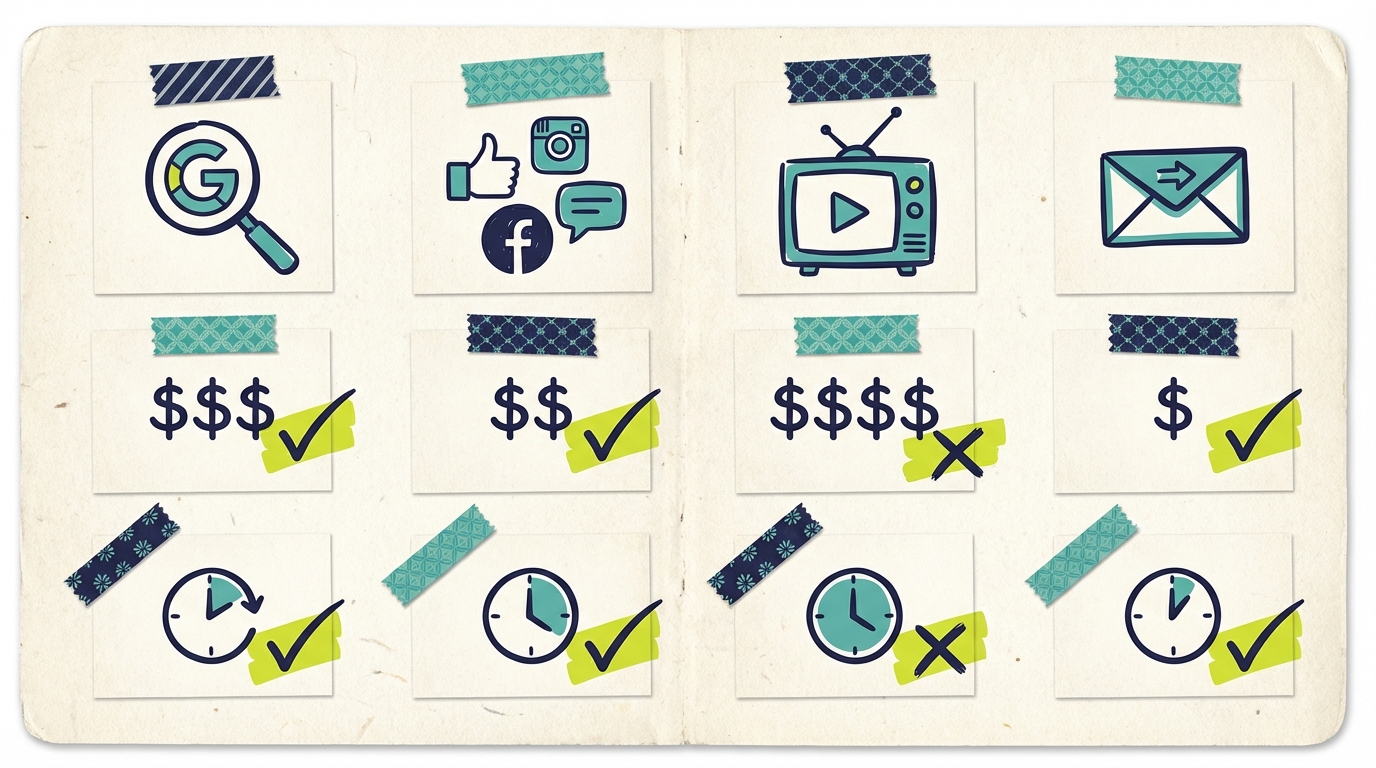
Before diving into each channel, here's how they stack up:
Now let's break down each option so you can make the right choice for your restaurant.
Google Ads: Best for Capturing Ready-to-Book Customers
When someone searches "Italian restaurant near me" or "best brunch downtown," they're ready to eat, often in a matter of hours. Google Ads puts you at the top of those searches.
How it works: You bid on keywords related to your restaurant. When someone searches those terms, your ad appears above organic results. You pay when they click.
Pros:
Captures high-intent customers actively looking for restaurants
Precise geographic targeting down to zip codes
Measurable ROI through reservation and call tracking
Fast results with campaigns going live same day
Cons:
Competitive keywords get expensive ($2-8+ per click in metro areas)
Requires ongoing management and optimization
Doesn't build brand awareness, only captures existing demand
Clicks don't guarantee customers
Best for: Restaurants in competitive markets who want immediate bookings, delivery orders, or reservations. Works especially well with online ordering or reservation systems that track conversions.
Typical budget: $500-2,000/month for meaningful results in most markets.
Meta Ads (Instagram and Facebook): Best for Visual Storytelling
Instagram and Facebook remain powerful for restaurants because food is inherently visual. A well-shot dish can stop someone mid-scroll and plant a craving.
How it works: You create image or video ads that appear in feeds, Stories, and Reels. You can target by location, demographics, interests, and behaviors.
Pros:
Visual format perfect for showing food and atmosphere
Detailed targeting by interests (foodies, date night seekers, families)
Builds brand awareness and community over time
Reels and Stories feel native, less like traditional ads
Cons:
Algorithm changes can tank performance overnight
Requires constant creative refresh
Attribution getting harder with privacy changes
Best for: Restaurants with photogenic food, strong visual brand, or event-driven business (happy hours, live music, seasonal menus). Great for building a following, less reliable for immediate bookings.
Typical budget: $300-1,500/month, though you can test with less.
Yelp Ads: Best for Converting Researchers
Love it or hate it, Yelp is still where many people go to decide where to eat. Yelp ads put you at the top of search results and on competitor pages.
How it works: You pay to appear in prominent positions on Yelp search results and can even show on competitor restaurant pages. You're charged per click or impression.
Pros:
Reaches people actively researching where to eat
Strong local intent with high conversion rates
Your reviews do the selling if they're good
Enhanced profile features included
Cons:
Can feel like "pay to play" for some businesses
Doesn't build brand outside Yelp ecosystem
Can be expensive for the reach you get
Dependent on your review quality
Best for: Restaurants with strong Yelp ratings (4+ stars) who want to capture more of the "researching where to eat" crowd. Less effective if your reviews need work.
Typical budget: $300-1,000/month depending on market competition.
Local SEO: Best Long-Term Investment
Local SEO means optimizing your Google Business Profile and website so you appear in the "map pack" when people search for restaurants in your area. Unlike ads, you don't pay per click.
How it works: You optimize your Google Business Profile with accurate info, photos, and keywords. You encourage reviews, build local citations, and create location-specific website content.
Pros:
Free traffic once you're ranking
Builds credibility through organic visibility
Reviews compound over time
Works 24/7 without ongoing ad spend
Cons:
Takes months to see significant results
Requires consistent effort (review responses, photo updates)
Algorithm changes can affect rankings
Competitive in restaurant-dense areas
Best for: Every restaurant should have a solid local SEO foundation. It's table stakes. But don't rely on it alone if you need customers this month.
Typical budget: Free to do yourself, or $300-500/month for professional help.
Direct Mail: Best for Neighborhood Domination
Old school? Yes. Dead? Not even close. Direct mail (postcards, menus, coupons) still works for restaurants, especially for reaching nearby residents who haven't discovered you yet.
How it works: You design and print mailers, then use USPS Every Door Direct Mail (EDDM) or targeted mailing lists to reach specific neighborhoods or demographics.
Pros:
Tangible and sits on counters and fridges
Less competition than digital channels
Highly geographic for neighborhood restaurants
Great for grand openings and new menu launches
Cons:
No real-time tracking (use unique promo codes)
Design and printing costs add up
Response rates are low (1-3% typical)
Environmental concerns for some customers
Best for: Neighborhood restaurants, new openings, or when launching a major promotion. Works well combined with digital campaigns.
Typical budget: $500-2,000+ for design, printing, and postage for meaningful reach.
Email Marketing: Best for Repeat Business
Your existing customers are your most valuable audience. Email marketing keeps your restaurant familiar and brings people back.
How it works: You collect email addresses from reservations, online orders, and wifi logins, then send regular updates about specials, events, and promotions.
Pros:
Nearly free to send (just platform costs)
Direct line to people who already like you
Highly measurable (opens, clicks, redemptions)
Builds loyalty and repeat visits
Cons:
Only reaches your existing list
Requires consistent content creation
Deliverability issues if done poorly
Won't bring in new customers
Best for: Every restaurant should be doing this. It's one of the highest-ROI marketing activities, but it grows your existing customer base, not your new customer pipeline.
Typical budget: $50-300/month for email platform (Mailchimp, Constant Contact, etc.).
Streaming TV (CTV): The Option You Might Not Have Considered
Here's where most restaurant owners tune out because they assume TV advertising is only for chains like Olive Garden or Applebee's. That used to be true. It's not anymore.
Streaming TV advertising (also called CTV or connected TV) lets you run commercials on services like Hulu, Peacock, and Tubi, but only to viewers in your specific area. You can target by zip code, demographics, and household characteristics.
How it works: Your ad runs during streaming content on smart TVs and devices. You choose your geographic area (often down to zip codes), target audience, and budget. With platforms like Adwave, you can create and launch campaigns starting at $50.
Pros:
Premium brand placement alongside major network content
TV-level credibility and memorability
Precise geographic and demographic targeting
No minimum spend requirements with self-serve platforms
Viewers can't skip your ad (high completion rates)
Great for building awareness before busy seasons or events
Cons:
Awareness channel, not direct response like Google Ads
Requires video creative (though AI tools make this easier)
Harder to track direct conversions
Best results require consistent presence over time
Best for: Restaurants that want to build brand awareness in their community, announce grand openings, promote special events, or compete with chains that are already on TV. Especially effective for filling slow nights and building name recognition.
Typical budget: $50-500/month to start testing. Scale up as you see results.
Radio: Declining but Not Dead
Local radio still has listeners, especially during commute times. For some restaurants, especially those near highways or in markets with strong local stations, it can still work.
How it works: You buy airtime during specific shows or dayparts. Rates vary wildly by market and station popularity.
Pros:
Reaches commuters during drive time
Audio format can be memorable (jingles stick)
Local stations often have loyal audiences
Package deals can include event sponsorships
Cons:
Audience is declining and skewing older
No targeting beyond station demographics
Difficult to track effectiveness
Production quality matters more than ever
Best for: Restaurants targeting older demographics or those in markets where local radio is still strong. Often works better as part of a sponsorship package than standalone ads.
Typical budget: $500-2,000/month for meaningful frequency.
Which Channels Should You Choose?
The best advertising mix depends on your specific goals:
If you need customers this week:
Google Ads (captures active searchers)
Yelp Ads (if you have strong reviews)
If you're building for the long term:
Local SEO (foundation for everything)
Email marketing (retain and grow existing customers)
Streaming TV (build brand awareness)
If you're opening a new location:
Direct mail (announce to the neighborhood)
Streaming TV (build name recognition fast)
Meta ads (visual storytelling about your concept)
If you want to fill slow nights:
Email marketing (targeted offers to your list)
Meta ads (event promotion)
Streaming TV (build familiar awareness)
If you're competing with chains:
Streaming TV (same premium placement they use)
Google Ads (capture branded searches)
Strong local SEO (differentiate in local results)
The Bottom Line
There's no single "best" advertising channel for restaurants. The right answer depends on your goals, budget, timeline, and what you're already doing.
That said, here's a solid starting framework:
Get your local SEO right first. It's free and foundational.
Build your email list from day one. Repeat customers are your most profitable customers.
Use Google Ads for immediate needs. When you need butts in seats this weekend, search ads deliver.
Add brand-building channels over time. This is where streaming TV comes in, building the awareness that makes all your other advertising work better.
The restaurants that win aren't necessarily spending the most. They're spending strategically across channels that work together.
Common Questions Answered
What's the most cost-effective advertising for a new restaurant? Start with local SEO (free), email collection from day one, and a modest Google Ads budget to capture searchers. Add streaming TV if you need to build awareness quickly in your area. Direct mail works well for announcing your opening to nearby residents.
How much should a restaurant spend on advertising? Industry benchmarks suggest 3-6% of revenue for marketing, but this varies widely. A new restaurant might spend more to build awareness. An established spot with strong word-of-mouth might spend less. Start with what you can afford to test, measure results, and scale what works.
Is social media advertising still worth it for restaurants? Yes, but with realistic expectations. Meta ads are best for brand building and event promotion rather than immediate reservations. The visual nature of food makes Instagram especially effective, but rising costs mean you need strong creative to see ROI.
How do I know if my restaurant advertising is working? Track everything you can. Use unique promo codes for different channels. Monitor reservation and order sources. Ask customers how they heard about you. Compare sales during campaign periods to baseline. The channels that drive measurable results deserve more budget.
Should I hire an agency or do restaurant advertising myself? Start by learning the basics yourself, even if you eventually hire help. Understanding how each channel works helps you evaluate agency performance and avoid overpaying for services you don't need. Platforms like Adwave make TV advertising simple enough to manage directly.
Ready to add TV to your restaurant's marketing mix? Create your first commercial and see how streaming advertising can help you compete with the big chains.