-
44.8%
Streaming TV viewing share
-
24.1%
Cable TV viewing share
-
83%
US adults who use streaming
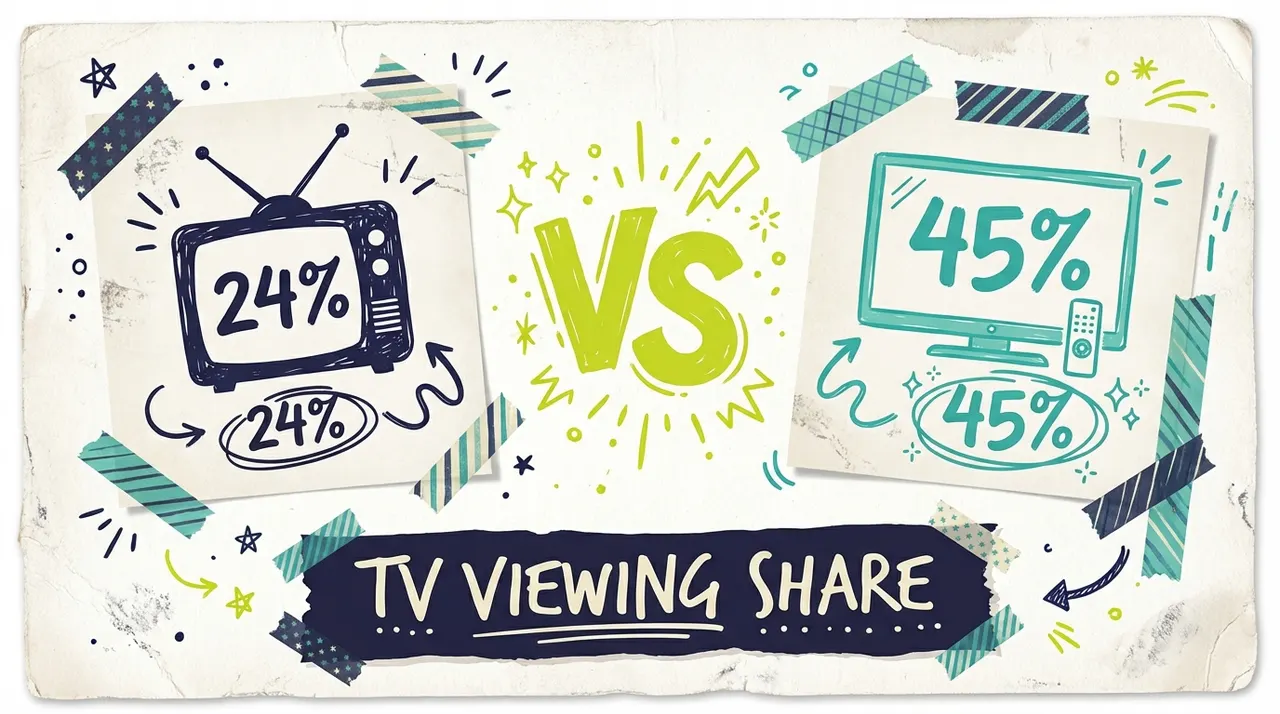
Streaming has definitively overtaken traditional television. In May 2025, streaming captured 44.8% of all TV viewing, surpassing the combined viewership of broadcast (20.1%) and cable (24.1%) for the first time in history according to Nielsen's The Gauge. This historic milestone marks a fundamental shift in how Americans consume video content, with streaming usage increasing 71% since 2021 while cable viewing has declined 39% over the same period.
The generational divide in viewing preferences tells an even more dramatic story. While 83% of American adults now watch streaming services, only 36% subscribe to cable or satellite TV. Among adults under 30, just 16% have cable subscriptions compared to 64% of those 65 and older. This demographic pattern suggests the transition from cable to streaming will only accelerate as younger viewers maintain their streaming-first habits throughout their lives.
For advertisers navigating this shifting landscape, understanding where audiences spend their viewing time has become essential. The advertising opportunities increasingly follow the eyeballs, with streaming platforms building sophisticated ad-supported tiers while cable's declining viewership reduces its reach efficiency. Brands targeting modern consumers must adapt their media strategies to reflect this new reality.
Breaking down the numbers
The viewership data reveals streaming's commanding position and cable's continued decline:
Streaming TV share: 44.8% of all US TV viewing in May 2025, up from 26.2% in May 2021 (Nielsen)
Cable TV share: 24.1% of TV viewing, down 39% since May 2021 (Nielsen)
Broadcast TV share: 20.1% of TV viewing, down 21% since May 2021 (Nielsen)
Streaming user base: 83% of US adults watch streaming services (Pew Research)
Cable subscriber base: 36% of US adults subscribe to cable or satellite TV (Pew Research)
Streaming-only households: 55% of Americans watch streaming but do not subscribe to cable (Pew Research)
Combined cable+broadcast: 44.2% of TV viewing, now less than streaming alone (Nielsen)
Peak streaming share: 47.3% of TV viewing reached in July 2025 (Statista)
The rate of change continues favoring streaming. In the four years since Nielsen began tracking with The Gauge, streaming has grown from 26.2% to nearly 45% of TV viewing. Meanwhile, cable's share has dropped from approximately 40% to 24%, representing a dramatic realignment of viewing habits.
Free streaming services have contributed significantly to streaming's growth. PlutoTV, Roku Channel, and Tubi combined capture 5.7% of all TV viewing, exceeding any individual broadcast network. These FAST (Free Ad-Supported Streaming TV) platforms have become gateway services for cord-cutters who want traditional TV experiences without subscription costs.
The platform-specific viewing data reveals which services drive streaming's dominance. Netflix remains the leading subscription service, with viewership up 27% since 2021. YouTube has shown the most dramatic growth, increasing over 120% since 2021 to capture 12.5% of all television viewing. These two platforms alone account for more than 21% of total TV time, roughly matching cable's entire 24.1% share.
Consumer survey data from Pew Research confirms behavioral patterns underlying the viewership statistics. Among streaming users, 72% watch Netflix, 67% use Amazon Prime Video, 52% use Hulu, and 48% use Disney+. The proliferation of platform usage indicates that most streaming viewers subscribe to multiple services, creating cumulative viewing time that contributes to streaming's dominant share.
Why streaming has overtaken cable
Several structural factors explain streaming's victory over cable in the competition for viewer attention and time.
Cost flexibility gives streaming a fundamental advantage. Cable packages often require $100+ monthly commitments with limited customization. Streaming services offer individual subscriptions from $5-15 monthly, allowing viewers to subscribe and cancel freely based on content preferences. This flexibility especially appeals to younger viewers accustomed to on-demand economic models.
Content availability and convenience match modern expectations. Streaming platforms offer entire series libraries available immediately, eliminating scheduled programming constraints. Viewers can watch what they want, when they want, across multiple devices. This on-demand model aligns with how younger generations consume all media.
Original content investment has shifted toward streaming. Netflix alone spent approximately $17 billion on content in 2024, with other streamers investing billions more. These investments fund productions that capture cultural attention and drive subscription growth. Meanwhile, cable networks have reduced original programming budgets as viewership declines.
Device ubiquity makes streaming accessible everywhere. Smart TVs, Roku devices, Fire TV sticks, gaming consoles, and mobile devices all provide streaming TV access. Cable requires specific infrastructure and geographic availability that streaming bypasses entirely.
The generational divide in viewing preferences reinforces streaming's structural advantage. Only 16% of adults under 30 subscribe to cable, compared to 64% of those 65 and older. As older cable subscribers age out of the market, they are not being replaced by younger generations who have never developed cable viewing habits.
Password sharing patterns reveal how streaming reaches even beyond subscription numbers. Among streaming users under 30, 47% report using passwords from someone outside their household. This sharing extends effective reach beyond subscriber counts, though platforms have begun cracking down on the practice to convert shared access into paid subscriptions.
The user experience advantages compound over time as streaming platforms refine their interfaces and recommendation systems. Algorithm-driven content discovery keeps viewers engaged by surfacing relevant programming they might not have found through linear channel browsing. These personalization capabilities create engagement patterns that linear television cannot replicate.
Where cable still holds advantages
Despite streaming's overall dominance, cable retains meaningful advantages in specific contexts that sustain its continued relevance.
Live sports remain cable's strongest content category. Many major sporting events still require cable subscriptions or cable-adjacent streaming services for access. While streaming platforms have secured some sports rights (NFL on Amazon, Thursday Night Football), cable networks still control substantial live sports inventory that drives subscriber retention.
News programming attracts viewers who prefer linear formats. Cable news networks generate reliable ratings from audiences who want continuous news coverage rather than on-demand clips. This audience tends to skew older, matching with cable's demographic strengths.
Bundled value still appeals to some households. Cable packages that include internet, phone, and television services can offer total cost savings compared to separate streaming subscriptions. For households that want detailed connectivity, bundles provide simplified billing and potentially lower total cost.
Reliability and consistent quality give cable technical advantages in some scenarios. Cable signals don't depend on internet bandwidth variations that can affect streaming quality. For viewers in areas with inconsistent internet service, cable may provide more reliable picture quality.
The 28% of Americans who both subscribe to cable and watch streaming services suggest that viewing platforms aren't purely substitutional for all households. Some viewers value having both options available, using each for different content types and viewing occasions.
Infrastructure considerations affect availability differently for cable and streaming. Cable requires physical network buildout that varies by geography, with rural areas often having limited options. Streaming requires only internet connectivity, which has become increasingly universal through wireless and satellite options. This infrastructure difference contributes to streaming's broader accessibility.
The perceived value equation favors streaming for most consumers. When asked whether streaming services are worth the cost, 44% of users say yes while 31% say no and 25% are unsure. Despite rising subscription prices and increasing service fragmentation, streaming's flexibility and content libraries maintain reasonable value perceptions among most users.
The advertising landscape shift
The migration from cable to streaming fundamentally changes advertising opportunities and economics for brands reaching television audiences.
Streaming advertising now reaches majority viewership. With streaming capturing nearly 45% of TV time, streaming ad inventory increasingly represents where audiences spend viewing time. Brands focused on cable-only advertising miss growing portions of their target audiences.
Ad-supported streaming has achieved mainstream adoption. Netflix's ad tier serves 45% of US households on the platform. Disney+, Max, Paramount+, and other services have all introduced advertising options. This shift creates premium streaming inventory at scale that didn't exist five years ago.
Targeting capabilities on streaming exceed cable's demographic-based buying. CTV advertising enables household-level targeting based on viewing behavior, demographics, and intent signals. Cable advertising still relies primarily on program-level demographic assumptions.
Measurement and attribution on streaming provide accountability cable cannot match. Streaming platforms track ad delivery at the household level and increasingly support outcome measurement through data partnerships. Cable advertising measurement remains probabilistic and sample-based.
Cost structures differ between platforms. Cable advertising often requires larger minimum commitments and broader geographic footprints. Streaming advertising through platforms like Adwave enables campaigns starting at $50 with precise geographic targeting, making TV advertising accessible to local businesses that cable pricing excluded.
The creative requirements for streaming versus cable advertising have begun converging. Traditional cable advertising required broadcast-quality production that often cost thousands to produce. AI-powered creative tools now enable professional TV commercial creation without traditional production budgets, removing another barrier that previously favored larger advertisers on cable.
Cross-platform frequency management represents an ongoing challenge as viewing fragments across streaming services. Advertisers running campaigns across multiple streaming platforms need coordination to avoid overexposure to the same households. This complexity is driving demand for unified buying platforms that manage frequency across the streaming ecosystem.
Why it matters for your business
The cable-to-streaming transition affects marketing strategy regardless of which platforms you currently use for advertising.
Reach efficiency has shifted toward streaming. As more viewing time moves to streaming platforms, cable advertising reaches smaller portions of target audiences. Maintaining reach levels requires increasing cable budgets or reallocating toward streaming where viewership is growing.
Younger demographics require streaming strategies. With only 16% of adults under 30 subscribing to cable, brands targeting younger consumers cannot rely on cable for reach. Streaming has become essential for reaching these audiences at scale.
Local business advertising has new options. Cable advertising historically required commitments that excluded smaller advertisers. Streaming TV advertising platforms have democratized TV access with lower minimums and precise geographic targeting that make television practical for local business budgets.
Awareness and conversion measurement capabilities matter more on streaming. The attribution and outcome measurement available on streaming platforms enable performance marketing approaches that cable's measurement limitations cannot support. Brands focused on accountability increasingly favor platforms that prove results.
The viewing habit changes are permanent. The 71% increase in streaming since 2021 reflects structural preferences that won't reverse. Planning strategies around streaming growth rather than hoping for cable stability positions brands for the media landscape's actual direction.
Seasonal variations affect the cable-streaming balance temporarily. Football season and broadcast premieres historically boost linear viewing, while summer months favor streaming. However, even seasonal peaks no longer return cable to majority position. The structural shift continues regardless of cyclical patterns.
Brand safety considerations differ between platforms. Cable advertising appears within professionally produced content that meets broadcast standards. Streaming encompasses both premium content and user-generated material with varying quality and brand safety profiles. Advertisers can select premium streaming inventory that matches cable's brand safety while accessing streaming's reach and targeting advantages.
How to take advantage of this trend
Advertisers looking to capitalize on the streaming transition should consider several strategic approaches:
Audit current reach distribution: Determine what percentage of target audience viewing time occurs on streaming versus cable. Adjust allocations to match actual audience distribution.
Test streaming advertising: Platforms like Adwave enable streaming TV campaigns starting at $50, allowing low-risk experimentation with streaming inventory.
Consider FAST services: Free streaming platforms (Tubi, Pluto TV, Roku Channel) combine reach with ad-supported models at efficient CPMs.
Plan for demographic differences: Skew streaming allocations for younger targets, cable for older demographics where appropriate.
Evaluate hybrid approaches: For broad campaigns, combining streaming for growth audiences with cable for older demographics may maximize total reach.
Focus on measurement: Streaming's attribution advantages enable optimization approaches that improve campaign efficiency over time.
The accessibility of streaming advertising has improved dramatically. What once required agency relationships and large budgets now works for businesses of all sizes through self-serve platforms with reasonable minimums.
Geographic targeting on streaming enables local business advertising that cable's broad market purchases couldn't support economically. A restaurant can target households within a 10-mile radius rather than paying for an entire metropolitan area. This targeting precision makes TV advertising practical for businesses whose customer bases are inherently local.
Attribution and optimization capabilities continue improving across streaming platforms. The ability to track from ad exposure through to website visits, conversions, and sales enables performance marketing approaches on television. These measurement capabilities attract advertisers who previously couldn't justify TV spending without accountability metrics.
The bigger picture
Streaming's majority share of TV viewing represents more than market share numbers. It reflects fundamental changes in how Americans consume video content that reshape advertising strategies and media business models.
The generational patterns suggest this transition will continue. Today's streaming-native viewers under 30 will carry these preferences throughout their lives. As cable's core demographic ages, replacement subscribers simply aren't materializing at rates that could stabilize the platform's viewership position.
Traditional media companies have recognized this reality by becoming streaming-first organizations. NBC, Disney, Warner, and Paramount have all invested heavily in streaming platforms while reducing linear programming investments. Their strategic choices confirm the industry's consensus on where viewing growth will occur.
For advertisers, the strategic implication is clear: streaming has become essential for detailed television reach. Cable remains relevant for specific audiences and content types, but treating it as the primary TV advertising vehicle increasingly misses where audiences spend their viewing time.
The advertising infrastructure supporting streaming continues maturing. Targeting, measurement, and buying capabilities that streamlined digital advertising are now available for connected TV campaigns. This infrastructure development makes streaming advertising increasingly accessible and effective for advertisers at all budget levels.
International patterns mirror the US transition with some variation. Markets with less developed cable infrastructure have often leapfrogged directly to streaming-dominant models. The US experience, transitioning from mature cable infrastructure, provides a template for other developed markets where cable remains significant but declining.
The content production economics increasingly favor streaming over linear networks. Streaming platforms can greenlight productions for global audiences, spreading costs across international subscriber bases. Cable networks serve primarily domestic audiences, limiting content investment returns. This economic dynamic continues shifting production investment toward streaming originals.
Consumer expectations about advertising have evolved alongside viewing habits. Streaming viewers have grown accustomed to limited ad loads (4-6 minutes per hour) compared to cable's 16+ minutes per hour. This expectation shift creates both challenge and opportunity for advertisers: less inventory available, but potentially higher attention when ads do appear.
The premium pricing of streaming inventory reflects these attention advantages. While CPMs on streaming often exceed cable rates, the combination of better targeting, higher attention, and improved measurement can deliver superior return on advertising investment despite higher nominal costs. Evaluating efficiency requires considering outcomes rather than just input costs.
The technology infrastructure underlying streaming advertising continues advancing rapidly. Real-time bidding, dynamic creative optimization, and household-level frequency management have become standard capabilities. These technical foundations enable sophisticated campaign management that was impossible in cable's static buying model.
Frequently asked questions
Does streaming have more viewers than cable?
Yes, streaming now captures significantly more viewing time than cable. In May 2025, streaming represented 44.8% of all TV viewing compared to cable's 24.1%. Streaming has increased 71% since 2021 while cable has declined 39% over the same period. This gap continues widening as viewing habits evolve.
How many Americans still subscribe to cable?
Only 36% of US adults currently subscribe to cable or satellite TV, according to Pew Research. This compares to 83% who watch streaming services. The gap is even wider among younger adults, with just 16% of those under 30 having cable subscriptions versus 64% of those 65 and older.
Can you reach TV audiences without cable advertising?
Yes, streaming advertising now reaches the majority of TV viewership. With streaming at 44.8% of viewing (and reaching 47.3% at peak), streaming campaigns can reach more viewers than cable-only approaches. Platforms like Adwave provide access to streaming TV advertising starting at just $50.
Is cable TV dying?
Cable viewership is declining but not disappearing. Cable still captures 24.1% of TV viewing and retains advantages in live sports and news programming. However, the 39% decline since 2021 and low adoption among younger viewers suggest continued long-term decline as viewing habits evolve generationally.
What's driving the shift from cable to streaming?
Multiple factors drive the transition: streaming's lower costs and flexibility, on-demand content availability, massive original content investment, device ubiquity, and generational preferences. Younger viewers who never developed cable habits increasingly dominate viewing demographics, accelerating the structural shift.
Supporting data
The cable versus streaming comparison draws from authoritative measurement sources:
Nielsen's The Gauge: Monthly tracking showing streaming at 44.8% versus cable at 24.1% (Nielsen)
Pew Research Center: Survey showing 83% streaming usage vs 36% cable subscription (Pew Research)
Statista: Peak streaming share of 47.3% in July 2025 (Statista)
Historical Nielsen data: Four-year tracking showing 71% streaming growth, 39% cable decline
These sources provide consistent evidence of streaming's dominant position and cable's continued decline in the television landscape.
The longitudinal tracking from Nielsen enables trend analysis beyond point-in-time snapshots. The consistent month-over-month measurement reveals not just current positions but the trajectory of change. Streaming's 71% growth over four years represents sustained momentum rather than temporary fluctuation.
Consumer survey data from Pew Research complements viewing measurement by capturing subscription patterns and attitudes. The 83% streaming usage versus 36% cable subscription reveals behavioral preferences that underlie the viewing time statistics. Survey methodology provides confidence in the demographic breakdowns that show generational patterns.
Industry data from Statista captures peak viewership moments that highlight streaming's ceiling. The 47.3% share reached in July 2025 demonstrates streaming's potential when content alignment and seasonal factors combine favorably. These peaks suggest streaming's ultimate share may exceed current levels as the transition continues.