Running for Congress means connecting with voters in a specific geographic district. Unlike statewide Senate races that span multiple media markets, congressional campaigns typically focus on smaller, more defined areas. This concentration creates both advantages and challenges for television advertising.
The advantage is focus. Your message reaches a contained audience sharing common concerns. The challenge is efficiency. Media markets rarely align with congressional district boundaries, meaning campaigns often pay to reach voters who cannot vote for their candidate.
This guide covers television advertising strategies for congressional campaigns. Whether challenging an incumbent or defending a seat, these principles will help you reach district voters more effectively and stretch limited campaign budgets further.
Understanding Congressional District Geography

Congressional districts present unique geographic realities that shape advertising strategy.
District and Media Market Alignment
Districts rarely match media markets. Congressional districts are drawn based on population, not media reach. A district might include portions of multiple media markets or represent just a fraction of a large market. Understanding this mismatch is essential for efficient advertising.
Urban districts face market inefficiency. A congressional district in Los Angeles or New York represents a small fraction of the metropolitan media market. Advertising on broadcast television in these markets means paying to reach millions of voters who live outside your district.
Rural districts may span markets. Some congressional districts stretch across multiple smaller media markets. Reaching all voters requires buying time in several markets, each with different costs and audiences.
Suburban districts vary widely. Some suburban districts align reasonably well with portions of media markets. Others straddle multiple markets or fall between major metropolitan areas in ways that complicate media buying.
Mapping Your District's Media Landscape
Before developing an advertising strategy, understand how your district relates to media markets.
Identify all relevant markets. Determine which designated market areas contain portions of your district. Some districts fall entirely within one DMA. Others touch two, three, or more markets.
Calculate voter concentration by market. For each market that reaches your district, determine what percentage of district voters it covers. A market might reach 80% of your voters or only 15%. This concentration affects how you prioritize spending.
Assess market efficiency. In each market, determine what percentage of the audience are your actual voters. If your district represents 10% of a market's population, 90% of your advertising spend reaches non-voters. Factor this into cost calculations.
Consider cable zones. Cable television and streaming platforms sometimes allow targeting below the DMA level. Investigate whether these options can improve efficiency in markets where your district represents a small fraction.
Streaming TV Advantages for Congressional Races
Streaming television has transformed advertising options for congressional campaigns, often providing better efficiency than broadcast.
Geographic Precision
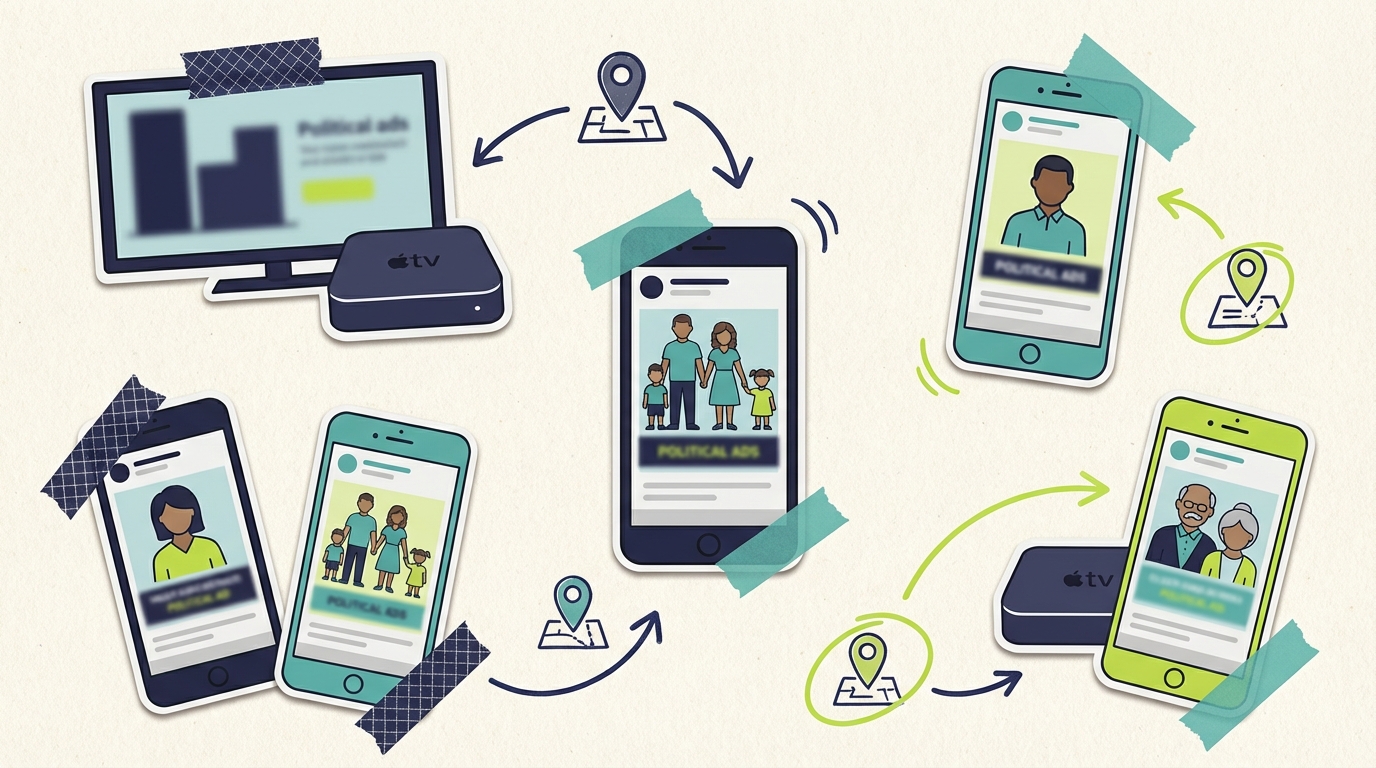
ZIP code targeting matches districts. Streaming TV advertising can target specific ZIP codes rather than entire media markets. This precision lets campaigns reach district voters without paying for impressions outside district boundaries.
Custom geographic targeting. Many streaming platforms accept custom geographic definitions. Upload your district boundaries and reach only households within them, eliminating waste from non-voter impressions.
Cross-market efficiency. For districts spanning multiple media markets, streaming provides a unified buying approach. Instead of purchasing broadcast time in three markets, target the entire district through a single streaming campaign.
Voter File Matching
Reach registered voters specifically. Streaming platforms can match campaign voter files to household devices. Your ads reach verified registered voters rather than the general population, dramatically improving efficiency.
Target by voter characteristics. Beyond geography, streaming allows targeting by party registration, vote history, and other voter file attributes. Reach persuadable voters or mobilize base supporters with tailored approaches.
Review frequency on each platform to limit repeated exposure.
Cost Efficiency for District Campaigns
Eliminate geographic waste. By targeting only district voters, streaming campaigns often achieve dramatically lower costs per voter contact than broadcast alternatives, especially in districts representing small market fractions.
Accessible budgets for challengers. The efficiency of streaming makes television advertising viable for campaigns that cannot afford broadcast rates in expensive markets. Challengers can compete on TV where traditional approaches were financially impossible.
Rapid deployment. Streaming campaigns launch quickly, allowing campaigns to respond to developments, capitalize on momentum, or adjust strategy without lengthy lead times.
Broadcast Television Strategy
Despite streaming advantages, broadcast television remains valuable for congressional campaigns in certain circumstances.
When Broadcast Makes Sense
High district-to-market alignment. When your district represents 30% or more of a media market's population, broadcast efficiency approaches acceptable levels. The reach and credibility of broadcast may justify the cost.
News programming value. Local news broadcasts attract politically engaged viewers. Appearing during news programming signals credibility and reaches voters paying attention to current events.
Competitive races with outside spending. In heavily contested races, outside groups often flood broadcast airwaves. Maintaining broadcast presence ensures your campaign's voice isn't drowned out by super PAC advertising.
Debate and event adjacency. Advertising around debates, candidate forums, and major news events places your message when political attention peaks. These moments may justify broadcast investment regardless of efficiency.
Broadcast Buying Strategies
Focus on news. If buying broadcast, concentrate on local news programming. These viewers are more likely to vote and more likely to consider advertising content.
Negotiate lowest unit rates. During the 45 days before a primary and 60 days before a general election, federal candidates receive stations' lowest unit rates. Understand and enforce these rights.
Consider secondary stations. Major network affiliates charge premium prices. Secondary stations and cable news channels may offer better efficiency for cost-conscious campaigns.
Coordinate with outside groups. While campaigns cannot directly coordinate, monitoring outside group advertising helps avoid redundancy. If supportive groups dominate broadcast, campaign resources might work harder on streaming.
Budget Planning for Congressional Races
Congressional campaign budgets vary enormously, from challenger campaigns operating on minimal resources to competitive races attracting millions.
Assessing Your Advertising Budget
Review comparable races. Research spending in similar congressional districts in recent cycles. Open seat races, competitive challenges, and safe seat defenses have different typical spending levels.
Calculate available resources. Advertising budgets exist within total campaign budgets that also fund staff, events, mail, digital, and operations. Determine what percentage of resources can go to television.
Factor in outside support. If party committees or aligned groups plan significant advertising, your campaign budget can focus on supplementing rather than carrying the full load.
Plan for contingencies. Campaign dynamics change. Reserve some resources for responding to opponent attacks, capitalizing on opportunities, or adjusting strategy as the race evolves.
Budget Allocation Approaches
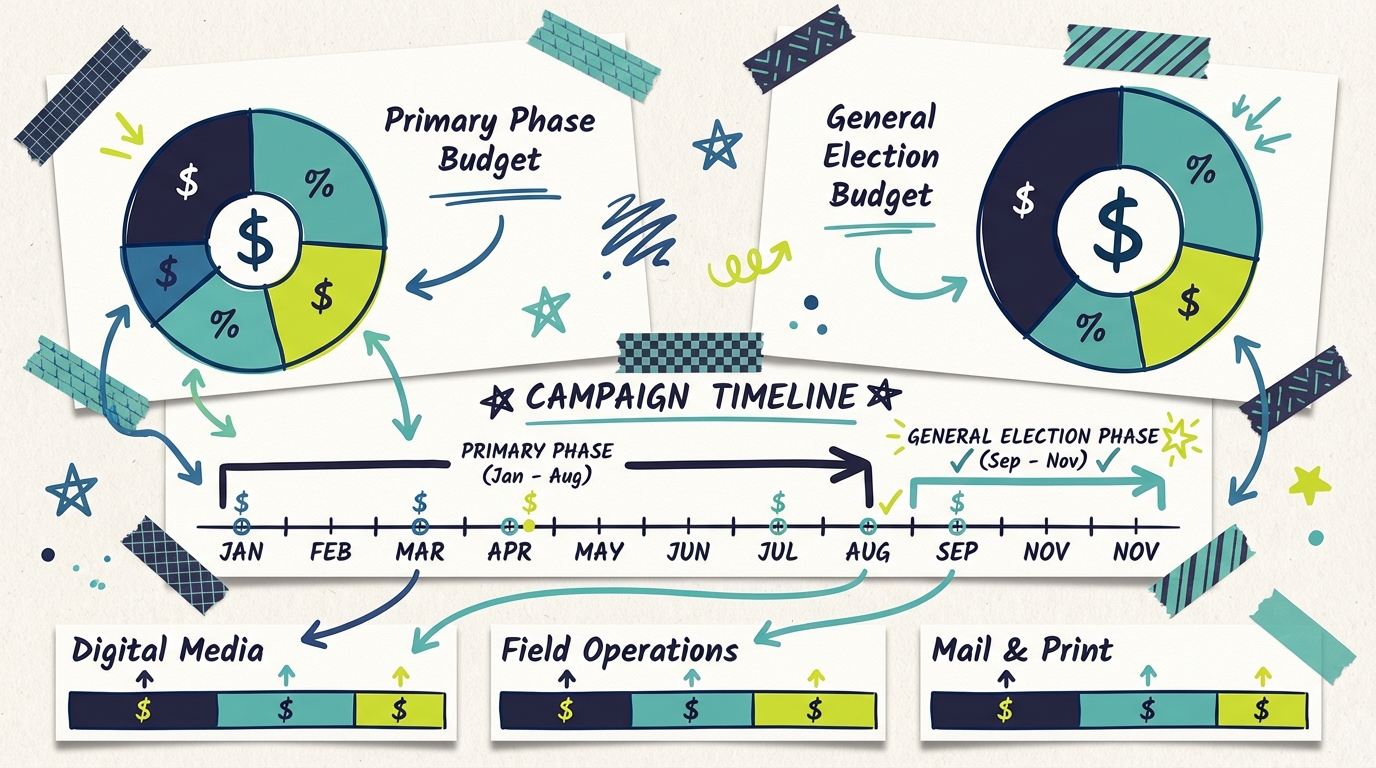
Streaming-first for efficiency. Many congressional campaigns now allocate 50-70% of television budgets to streaming, reserving broadcast for specific high-value placements.
Phased spending. Plan spending across the campaign calendar. Early phases focus on introduction and awareness. Later phases emphasize contrast and mobilization. Budget accordingly.
Test and adjust. Start advertising early enough to measure results and adjust strategy. Campaigns that wait until the final weeks have no opportunity to optimize based on performance.
Sample Budget Scenarios
Limited budget ($50,000-100,000): Focus exclusively on streaming TV targeting district voters. Achieve meaningful reach within your district without wasting resources on broadcast inefficiency. This budget can support consistent presence in the final two months.
Moderate budget ($150,000-300,000): Combine streaming as the primary channel with selective broadcast during key moments: post-primary introduction, debate weeks, and the final push. Streaming provides ongoing presence while broadcast adds credibility at critical times.
Competitive budget ($500,000+): Full multi-channel approach with sustained broadcast presence in efficient markets supplemented by streaming for precision targeting. Significant spending in final weeks to match or exceed opponent communication.
Timing Your Campaign Advertising
Congressional races follow predictable rhythms that should shape advertising timing.
The Primary Phase
Establish viability early. Primary voters often know little about candidates beyond the incumbent. Early advertising introduces your campaign and demonstrates capacity to compete.
Build toward primary day. Advertising intensity should increase as the primary approaches. Budget for significant spending in the final two to three weeks before primary election day.
Define yourself before opponents do. The narrative established in the primary often carries into the general election. Use advertising to shape how voters first encounter your candidacy.
The General Election Calendar
Post-primary reset (June-July). After securing the nomination, reintroduce yourself to the broader general election electorate. Many voters weren't paying attention during the primary.
Summer building (July-August). Build awareness and favorable impressions during summer months. Positive biographical advertising establishes your story before the campaign intensifies.
Labor Day acceleration (September). Traditional campaign intensification after Labor Day. Increase advertising presence as voter attention turns toward November.
Final push (October-November). Reserve your largest advertising investment for the final four to six weeks. This is when most voters make their decisions and when advertising impact peaks.
Early voting adjustment. If your state conducts significant early voting, shift peak spending earlier. Voters who cast ballots in October miss advertising that runs the week before election day.
Message Strategy for Congressional Campaigns
Congressional races allow focused messaging that addresses specific district concerns.
Developing Your Message Framework
Identify district priorities. Congressional districts often have distinct economic, demographic, and cultural characteristics. Understand what issues matter most to your specific voters.
Connect national and local. Voters elect representatives to Congress but care about local impact. Connect your positions on national issues to tangible effects in the district.
Establish clear contrast. In two-person general elections, voters choose between alternatives. Make clear why choosing you over your opponent matters for the district.
Simplify for advertising. Complex policy positions don't fit 30-second ads. Distill your message to core themes that communicate your values and priorities quickly.
Tailoring Messages for District Audiences
Geographic variation. Within your district, different communities may have different concerns. Urban and rural areas, different ethnic communities, and various economic sectors all have distinct priorities.
Partisan targeting. Streaming allows showing different creative to different voter segments. Base mobilization messages differ from persuasion messages for swing voters.
Issue-specific content. Develop advertising focused on specific issues: healthcare, economy, immigration, or local concerns. Target these ads to voters who prioritize each issue.
Creative Development
Show local connections. Feature recognizable district locations, local endorsers, and community connections. Voters want representatives who know and understand their area.
Keep production appropriate. Congressional campaigns don't need Hollywood production values. Authentic, straightforward creative often performs better than slick advertising that feels disconnected from district voters.
Prepare response creative. Develop advertising that responds to predictable attacks. Having response creative ready allows rapid deployment when opponents go negative.
Measuring Advertising Effectiveness
Track performance to optimize your advertising investment.
Key Metrics to Monitor
Reach and frequency by geography. Verify that advertising reaches voters throughout your district. Monitor for geographic gaps or over-concentration in certain areas.
Voter contact efficiency. Calculate cost per voter reached, adjusting for targeting precision. Compare efficiency across channels and adjust spending accordingly.
Message recall. If conducting polling, include questions about advertising awareness and message retention. Verify that voters are receiving and remembering your communication.
Movement in horse race numbers. Track your standing against opponents throughout the campaign. Correlate polling movement with advertising timing and intensity.
Adjusting Based on Performance
Shift spending to performing channels. If streaming delivers better efficiency than expected, reallocate from broadcast. If certain programming performs well, increase investment there.
Adjust creative based on response. If certain messages resonate more strongly, emphasize them. If testing reveals underperforming creative, replace it.
Respond to campaign dynamics. If you're gaining ground, consider accelerating spending. If facing unexpected challenges, adjust strategy to address new realities.
Coordinating With Other Campaign Activities
Television advertising works best as part of integrated campaign communication.
Reinforcing Field Operations
Advertising primes voters for contact. Voters who have seen your advertising respond more positively to door knocks and phone calls. Coordinate advertising timing with major field pushes.
Use advertising to support events. Promote town halls, rallies, and other events through advertising. Drive attendance and generate momentum.
Consistent messaging across channels. Ensure that television advertising, mail, digital, and field scripts communicate consistent themes. Voters should receive the same core message everywhere.
Digital Integration
Retarget TV viewers online. Some platforms allow retargeting voters who saw television advertising with follow-up digital ads. This extends TV investment and reinforces messages.
Sequential messaging. Plan advertising sequences where TV provides initial awareness and digital follows with deeper content, calls to action, or fundraising appeals.
Social amplification. Share television creative on social media. Earned impressions extend paid reach and signal campaign momentum.
Common Questions Answered
How much should a congressional campaign spend on TV advertising? Spending depends heavily on district characteristics and race competitiveness. Challenger campaigns in favorable districts might spend $50,000-150,000 on television. Competitive open seat races often see $300,000-500,000 or more from the campaign alone, plus significant outside spending. Campaigns in expensive media markets or districts spanning multiple markets face higher costs for equivalent reach.
Should congressional campaigns use broadcast or streaming TV? Most congressional campaigns benefit from focusing on streaming due to its geographic targeting precision. Districts often represent small fractions of media markets, making broadcast inefficient. However, broadcast remains valuable in markets where district alignment is strong, for reaching news audiences, and in competitive races where broadcast presence matters for credibility.
When should congressional campaigns start TV advertising? Begin advertising early enough to establish awareness before the race intensifies. For competitive races, this often means starting shortly after winning the primary. Increase spending gradually through summer and fall, with peak investment in the final month. Early voting states may need to shift peak spending earlier.
How do congressional campaigns target specific voter groups? Streaming TV platforms allow targeting by geography (ZIP codes or custom boundaries), voter file characteristics (party, vote history, demographics), and behavioral signals. This precision lets campaigns reach persuadable voters in swing areas, mobilize base supporters, or focus on specific demographic groups with tailored messaging.
What makes congressional campaign ads different from other political advertising? Congressional advertising can be more locally focused than statewide races, addressing specific district concerns and featuring local connections. Budgets are typically smaller, requiring efficiency-focused strategies. District geography often doesn't align with media markets, making streaming targeting more valuable than in statewide races where broadcast efficiency is higher.
The Bottom Line
Congressional campaigns face a fundamental geographic challenge: reaching district voters efficiently when media markets and district boundaries don't align. The campaigns that solve this challenge most effectively give their candidates the best opportunity to communicate with voters.
Streaming television has transformed congressional advertising by offering geographic precision that broadcast cannot match. Campaigns can now reach district voters specifically, eliminating the waste that made television prohibitively expensive for many congressional races.
The most effective congressional campaigns combine streaming efficiency with strategic broadcast placements, coordinate television with ground operations and digital outreach, and measure results to continuously optimize their approach.
Your advertising should tell voters who you are, why you're running, and what you'll do for the district. When that message reaches the right voters at the right time with sufficient frequency, advertising creates the awareness and consideration that wins elections.