-
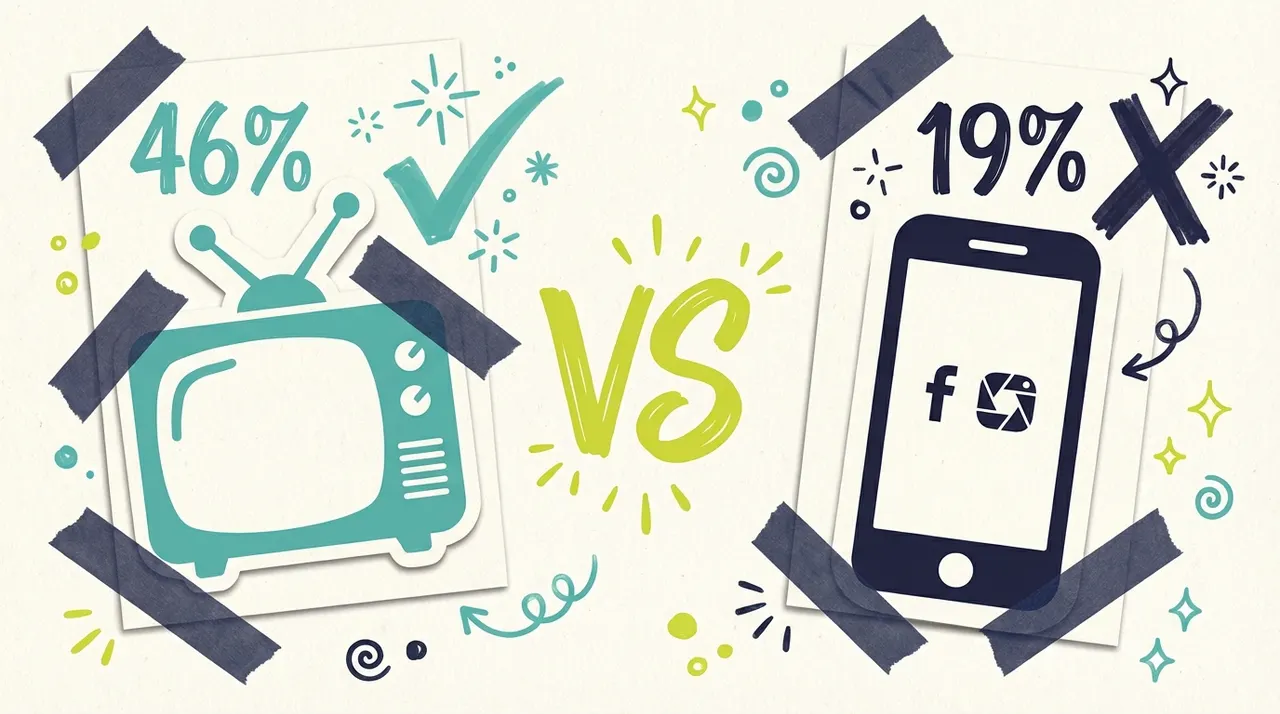
46%
Adults trust TV ads most
-
19%
Trust social media ads
-
88%
Buying decisions influenced by trust
Nearly half of American adults (46%) rank television as the most trustworthy advertising channel, while only 19% say the same about social media according to eMarketer research. This trust gap represents one of the most significant findings in modern advertising, challenging assumptions that digital platforms have replaced TV's credibility advantage. The numbers reveal a fundamental truth about consumer psychology: the medium still shapes the message's perceived credibility.
What makes this finding especially relevant is the consistency across demographics. Even Generation Z, the cohort most associated with digital-native behavior and social media consumption, trusts TV advertising at rates matching the general population. The assumption that younger viewers would naturally trust digital channels over traditional media hasn't materialized in the research. Instead, the production quality, regulatory oversight, and premium content associations that define TV advertising create trust advantages that transcend generational boundaries.
The implications for advertisers extend beyond simple channel selection. In an era where 88% of buying decisions are influenced by trust and 81% of consumers require brand trust before considering a purchase, understanding which channels build versus erode credibility becomes a strategic imperative. For small businesses competing against established brands, accessing high-trust channels that were previously cost-prohibitive represents a significant competitive opportunity.
Breaking down the numbers
Consumer trust in advertising varies dramatically by channel, creating clear hierarchies for brand-building effectiveness:
TV trust leadership: 46% of adults rank television as the most trustworthy advertising channel (eMarketer)
Social media skepticism: Only 19% of consumers trust social media ads, the lowest among major channels (eMarketer)
Purchase decision influence: 80% of consumers trust TV ads to inform purchase decisions vs. 61% for search engine ads and 25% for online pop-ups (Marketing Sherpa)
Gen Z trust patterns: 46% of Generation Z trusts TV ads, while 61% don't find social media ads trustworthy (Statista)
Trust-driven decisions: 88% of consumer buying decisions are influenced by trust (Medium)
Brand trust requirement: 81% of consumers need to trust a brand before considering buying from it (Blacksmith Agency)
Pop-up ad rejection: 73% of consumers dislike pop-up ads, indicating intrusive digital formats actively erode trust (WordStream)
Linear TV effectiveness: 55% of US adults report finding advertising on linear TV to be effective (Statista)
The gap between TV's 46% trust rating and social media's 19% represents a 2.4x advantage in perceived credibility. This differential directly impacts advertising effectiveness, as messages delivered through trusted channels encounter less skepticism and more receptive audiences.
The print advertising tie at 46% alongside TV reflects the broader pattern of traditional media outperforming digital for trust. Newspapers, magazines, and other print formats share regulatory oversight and production requirements similar to television. The declining consumption of print media makes this trust advantage less actionable than TV's, which combines high trust with substantial and growing audience reach through streaming platforms.
Search engine advertising's 61% trust rating positions it between TV's leadership and social media's skepticism. The intent-driven nature of search advertising likely contributes to higher trust; consumers seeking information encounter relevant ads in that context. However, the trust still falls meaningfully below TV's level, and recent concerns about ad quality in search results may be eroding this position over time.
Why TV builds trust that digital struggles to match
The trust advantage TV maintains over digital channels stems from structural factors that digital platforms fundamentally lack. Understanding these differences helps explain why the trust gap persists despite digital advertising's technological sophistication and targeting capabilities.
Television advertising operates within a regulated environment that digital platforms don't replicate. The Federal Communications Commission (FCC) maintains rules about advertising claims, substantiation requirements, and content standards. Networks maintain their own standards and practices departments that review advertising before acceptance. This regulatory framework creates accountability that consumers implicitly recognize, even if they couldn't articulate the specific mechanisms.
The production investment required for TV advertising signals commitment and legitimacy. Creating broadcast-quality video content demands resources, planning, and creative expertise. Consumers understand intuitively that a brand investing in professional TV production has skin in the game. The cost of entry creates a natural filter that excludes fly-by-night operations, lending credibility to brands that clear the bar.
Premium content association transfers trust from programming to advertising. When commercials appear alongside content from major networks, they benefit from the credibility those networks have built. A small business's ad running during premium streaming content inherits some of the legitimacy that viewers associate with the platform and programming. This halo effect doesn't exist when the same message appears in a social media feed between cat videos and political arguments.
The viewing context itself influences trust formation. Television advertising appears in lean-back viewing environments where audiences have chosen to engage with content. This voluntary attention creates more receptive conditions than interruptive digital formats. When consumers actively resist advertising intrusion, as 73% do with pop-up ads, any message delivered faces an uphill credibility battle regardless of content quality.
Brand safety concerns that plague digital advertising rarely affect television. Digital advertisers regularly confront issues of their ads appearing alongside objectionable content, misinformation, or low-quality inventory. Television's curated content environment and network standards eliminate most brand safety concerns. This protection of brand reputation contributes to the trust differential, as consumers don't associate TV-advertised brands with the problematic content adjacencies common in digital environments.
The Gen Z paradox in advertising trust
One of the most surprising findings in consumer trust research involves Generation Z's relationship with advertising channels. Despite being digital natives who spend more time on social media than any other demographic, Gen Z trusts TV advertising at rates matching older generations while actively distrusting social media ads at even higher rates.
The 46% of Gen Z who trust TV ads matches the general adult population exactly. Meanwhile, 61% of Gen Z specifically reported not finding social media ads trustworthy. This represents a significant paradox: the generation most immersed in digital platforms is also the most skeptical of advertising on those platforms. Understanding this dynamic requires looking beyond surface assumptions about generational media preferences.
Gen Z has grown up experiencing the manipulative side of digital advertising. They've encountered influencer partnerships that felt inauthentic, products that didn't match expectations set by social ads, and the general sense that everyone on social media is selling something. This lived experience creates skepticism that older generations who encountered social advertising later in life might not share as strongly.
The formality and production quality of TV advertising may appeal to Gen Z's desire for authenticity paradoxically. A well-produced TV commercial makes no pretense about being advertising. The format is honest about its commercial intent in ways that native social advertising, designed to blend with organic content, is not. This transparency about commercial purpose may register as more trustworthy than formats designed to camouflage their advertising nature.
The influencer marketing prevalent on social platforms contributes to Gen Z's platform skepticism. When followers discover that trusted creators promoted products without genuine endorsement, or when sponsored content masquerades as organic recommendations, trust erodes not just in the creator but in the platform as an advertising vehicle. Gen Z has experienced enough of these disappointments to develop healthy skepticism about social media advertising generally.
Interestingly, Gen Z's streaming consumption patterns position them to receive TV advertising at high rates despite cord-cutting behaviors. Rather than abandoning television advertising exposure, Gen Z has simply shifted where they encounter it. The trust they place in TV advertising transfers to streaming platforms that deliver the same production quality and content environment, making CTV an effective channel for reaching younger audiences in trusted contexts.
How trust impacts advertising effectiveness
Trust isn't merely a brand metric; it directly influences advertising performance and business outcomes. The connection between consumer trust and purchasing behavior creates measurable advantages for advertising delivered through trusted channels.
When 88% of buying decisions are influenced by trust, channel selection becomes a strategic choice about where to build that trust most efficiently. Advertising through trusted channels encounters less resistance, requires fewer impressions to generate response, and creates more durable brand associations. The efficiency gains from advertising in trusted environments compound over time as brand credibility accumulates.
The 80% of consumers who trust TV ads to inform purchase decisions represent an audience predisposed to receive and act on advertising messages. Compare this to the 25% trust rate for online pop-ups, and the disparity in effective reach becomes clear. Raw impressions tell only part of the story; the quality of attention and the credibility context matter enormously for actual advertising effectiveness.
For small businesses building brand awareness, trust advantages become even more critical. Unknown brands face skepticism that established competitors don't encounter. Advertising through trusted channels helps overcome this credibility gap, lending legitimacy that smaller advertisers can't build through digital channels where trust runs lower.
The compounding nature of trust-based advertising creates long-term strategic implications. Each trusted impression contributes to brand credibility that carries forward into future interactions. Over time, brands advertising primarily through high-trust channels build credibility reserves that make all their marketing more effective. Conversely, brands relying heavily on low-trust channels may find their digital performance declining as accumulated skepticism weighs on response rates.
Consumer memory encodes both the message and the context in which it was received. Brands remembered from premium TV environments carry different associations than those remembered from social media interruptions. These contextual memories influence brand perception in ways that persist long after the specific advertisement is forgotten, making channel selection a brand-building decision with lasting consequences.
Why it matters for your business
The trust differential between TV and digital advertising creates strategic implications that vary by business type, growth stage, and competitive position. Understanding when and how to apply these insights helps translate research findings into actionable strategy.
Businesses relying heavily on digital advertising may be undermining their credibility even while building awareness. The same message delivered through low-trust channels encounters skepticism that wouldn't exist in higher-trust environments. This skepticism creates friction in the customer journey, requiring more touchpoints and more convincing to convert prospects into customers.
The economics of trust-based advertising efficiency matter especially for constrained budgets. If TV advertising generates response at lower effective CPMs because messages encounter less resistance, the nominal cost comparison between channels understates TV's value. A $25 CPM on TV delivering trusted impressions may outperform a $15 CPM on digital delivering skepticism-filtered exposure.
Brand building requires credibility accumulation over time. Advertising through trusted channels deposits credibility that compounds, while advertising through distrusted channels may withdraw from the credibility account. This dynamic makes channel selection a long-term strategic decision rather than simply a short-term efficiency calculation.
Local businesses face particular trust challenges that TV advertising helps address. Consumers naturally question unknown local providers in ways they don't question recognized brands. A local TV advertising presence signals establishment and legitimacy that builds confidence. Seeing a local business advertise on the same channels as national brands creates implicit credibility through association.
The competitive implications of trust-based channel selection extend to category dynamics. In markets where competitors primarily use low-trust digital advertising, brands that invest in TV create differentiation and credibility advantages. Being the only or primary TV advertiser in a local category establishes a prestige positioning that digital-only competitors can't match regardless of their spending levels.
How to take advantage of this trend
Advertisers looking to build trust through channel selection should consider several strategic approaches:
Audit current channel mix: Evaluate what percentage of advertising appears in high-trust versus low-trust environments. If budget disproportionately flows to social media, consider rebalancing toward TV and streaming.
Test TV incrementally: Start with manageable streaming TV budgets to test trust-based advertising effectiveness before major reallocation. Platforms like Adwave enable testing with budgets starting at $50.
Measure beyond clicks: Trust-building advertising may not generate immediate clicks but can improve conversion rates across all channels. Track awareness and conversion metrics rather than just direct response.
Use premium content adjacency: Choose streaming platforms and content environments that enhance rather than diminish brand credibility. Premium inventory costs more but delivers trust benefits.
Maintain message consistency: Trust builds through consistent messaging across channels. Ensure TV creative aligns with and elevates other marketing communications.
Consider competitive context: If competitors rely primarily on digital advertising, TV presence creates differentiation and credibility advantage in the category.
The accessibility of streaming TV advertising has eliminated the budget barriers that previously prevented smaller advertisers from accessing high-trust channels. This democratization creates opportunity for businesses willing to diversify beyond digital-only strategies.
Creative quality influences how trust advantages translate to results. Poorly produced TV advertising may squander the trust premium the channel provides, while sophisticated creative maximizes the credibility context. AI-powered ad creation enables small businesses to produce professional-quality video that meets the production standards viewers expect from television, so that creative execution supports rather than undermines channel trust benefits.
The timing of trust-building advertising matters for business lifecycle. Early-stage companies benefit most from establishing credibility quickly, making high-trust channels especially valuable during launch phases. Established businesses maintain trust through consistent presence while using the credibility platform for new product introductions or market expansions where trust must be built for unfamiliar offerings.
The bigger picture
The trust gap between TV and digital advertising reflects deeper patterns in consumer media relationships. As digital platforms have become saturated with commercial messages, many designed to obscure their advertising nature, consumer skepticism has grown. Traditional media's more transparent commercial relationship, where advertising is clearly delineated from content, may increasingly appeal to consumers weary of being sold to covertly.
The trend toward streaming TV maintains the trust advantages of traditional television while adding digital targeting and measurement capabilities. CTV advertising combines the credibility context of premium video content with the precision and accessibility that digital advertisers expect. This convergence makes TV's trust advantages available to advertisers who previously couldn't access the channel.
Ad receptivity shows signs of increasing overall, with consumers becoming more accepting of advertising when it appears in appropriate contexts and provides value. Kantar research indicates that consumer receptivity to advertising rose to 58% in 2025, up from 47% in 2024. This improvement suggests that well-executed advertising in trusted environments can build positive brand associations.
For advertisers navigating a fragmented media landscape, trust provides a framework for channel evaluation beyond simple reach and cost metrics. The channels where consumers trust advertising messages create more fertile ground for brand building and ultimately more efficient paths to business outcomes.
The measurement challenges around trust-based advertising effects shouldn't obscure their importance. While direct response metrics favor digital channels' trackability, trust-building effects influence performance across all channels in ways that attribution models often miss. Brands investing in TV frequently discover that their digital performance improves as trust built through television lowers barriers to conversion everywhere.
Industry-specific trust dynamics add nuance to channel selection. Categories where trust matters most, including financial services, healthcare, legal, and high-consideration purchases, benefit disproportionately from high-trust advertising channels. A dentist advertising on streaming TV builds practice credibility more effectively than one relying solely on social media, where healthcare advertising faces additional skepticism from audiences wary of misleading health claims.
The global advertising spend shift toward Asia-Pacific, now representing 35% of worldwide investment compared to North America's 33%, which reflects growing market complexity. As brands expand internationally, understanding trust dynamics across cultures becomes essential. The fundamental pattern of traditional media outperforming digital for trust appears consistent across markets, though specific channel trust levels may vary by region and media landscape.
Frequently asked questions
Why do consumers trust TV ads more than social media ads?
Several structural factors drive the trust differential. TV advertising operates under regulatory oversight that creates accountability for claims. The production investment signals brand legitimacy and commitment. Premium content adjacency transfers credibility from programming to advertising. Social media's mixing of organic and commercial content, plus widespread influencer authenticity concerns, generates skepticism that TV advertising doesn't face.
Does streaming TV advertising have the same trust benefits as traditional TV?
Research indicates that streaming TV maintains the trust advantages associated with television advertising. The premium content environment, production quality expectations, and non-intrusive ad formats create similar credibility contexts. streaming platforms like Hulu, Peacock, and others maintain content standards that support advertiser credibility. The primary trust driver is the medium and content environment, which streaming TV preserves.
How should I balance TV and digital advertising based on trust considerations?
Rather than eliminating digital advertising, consider it serving different functions than trust-building TV. Digital channels excel at capturing existing demand through search, retargeting engaged audiences, and enabling direct response. TV and streaming build the awareness and credibility that make digital tactics more effective. The optimal balance depends on your business stage, with earlier-stage companies typically needing more trust-building through high-credibility channels.
Can small businesses access TV advertising to build trust?
Yes, streaming TV has eliminated the budget barriers that previously limited TV advertising to large brands. Platforms enable campaigns starting at minimal budgets with precise geographic and demographic targeting. This accessibility means small businesses can now build trust through TV advertising without the massive budgets traditional broadcast required. Getting started with CTV is now possible for businesses of virtually any size.
How do I measure the trust impact of TV advertising?
Trust effects typically appear in brand lift metrics rather than direct response. Track aided and unaided brand awareness, brand favorability, and consideration metrics over time. Monitor whether TV advertising correlates with improved conversion rates on other channels, as trust built through TV can lower barriers to conversion everywhere. Attribution studies that account for cross-channel effects reveal TV's contribution to awareness and conversion performance.
Supporting data
The research on consumer trust in advertising draws from multiple authoritative sources:
Channel trust rankings: eMarketer survey data showing 46% TV trust vs. 19% social media (eMarketer)
Purchase influence: Marketing Sherpa research showing 80% trust TV for purchase decisions (Marketing Sherpa)
Gen Z trust patterns: Statista data on generational advertising trust (Statista)
Trust-buying relationship: Research indicating 88% of decisions influenced by trust (Medium)
Brand trust requirement: 81% require brand trust before purchase (Blacksmith Agency)
Advertising receptivity trends: Kantar research showing 58% receptivity in 2025 vs. 47% in 2024 (Kantar)
These metrics consistently demonstrate TV's trust advantage across methodologies and research sources. The convergence of findings from multiple independent studies strengthens confidence in the underlying pattern: traditional media, especially television, maintains credibility advantages that digital channels have not replicated despite their technological sophistication and targeting capabilities.