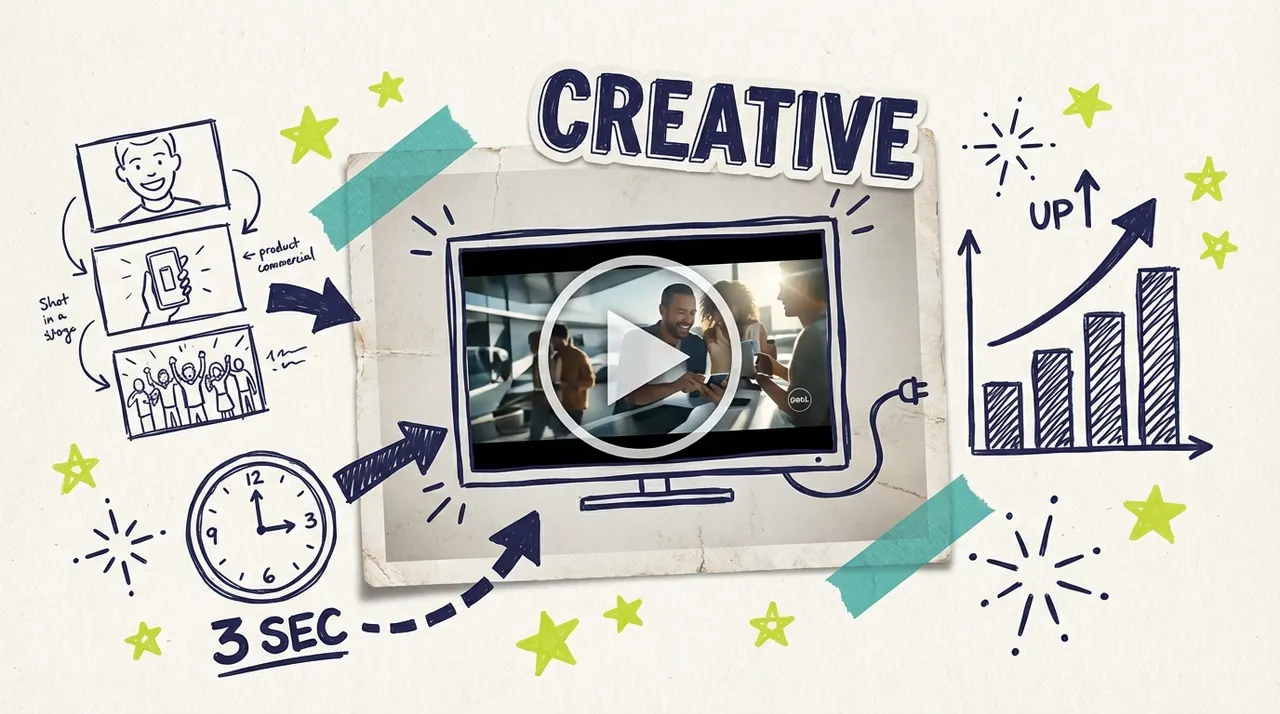
Your CTV ad creative is the difference between viewers who forget you existed and customers who pick up their phone to learn more. With CTV ad completion rates exceeding 95% and viewability rates over 97%, you're basically guaranteed that people will see your entire ad. The question is: will it make them do anything?
Streaming TV ads need a clear opening and a message viewers can follow. This guide covers creative choices you can make without a large production budget.
In this guide, we'll break down exactly how to create CTV commercials that convert viewers into customers, from attention-grabbing hooks to calls-to-action that drive response.
How CTV Creative Differs from Digital Ads
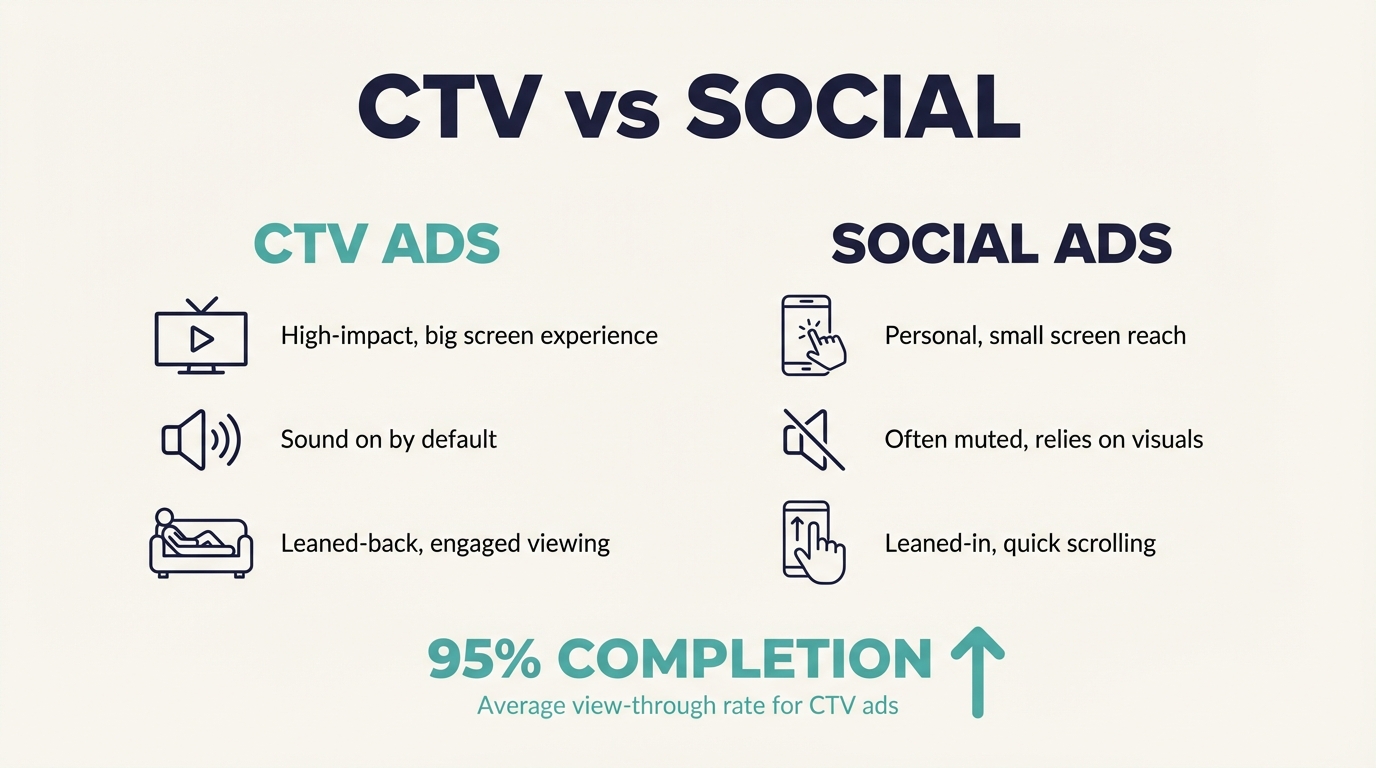
If you're coming from Facebook or Google ads, CTV requires a mindset shift. You're not interrupting someone's doom-scroll. You're appearing during their relaxation time, on the biggest screen in their house, often with full audio and their attention.
The viewing environment is different:
Viewers are typically 6-10 feet from the screen (not inches)
Sound is usually on (76% of CTV viewers watch with audio)
Content appears between premium shows, not alongside user-generated content
Attention spans are longer since viewers chose to watch
Expectations are higher: Your ad runs alongside content from NBC, Hulu, and ESPN. Viewers subconsciously expect similar production quality. That doesn't mean you need a Hollywood budget, but your creative should look intentional and professional.
The format is fixed: Unlike social media where you can create multiple aspect ratios and lengths, CTV ads are typically 15 or 30 seconds in 16:9 format. You need to tell your complete story in that time.
The Anatomy of a High-Converting CTV Ad
Every effective CTV commercial, whether it's from a Fortune 500 company or a local business, follows the same basic structure. Think of it as a three-act story compressed into 30 seconds:
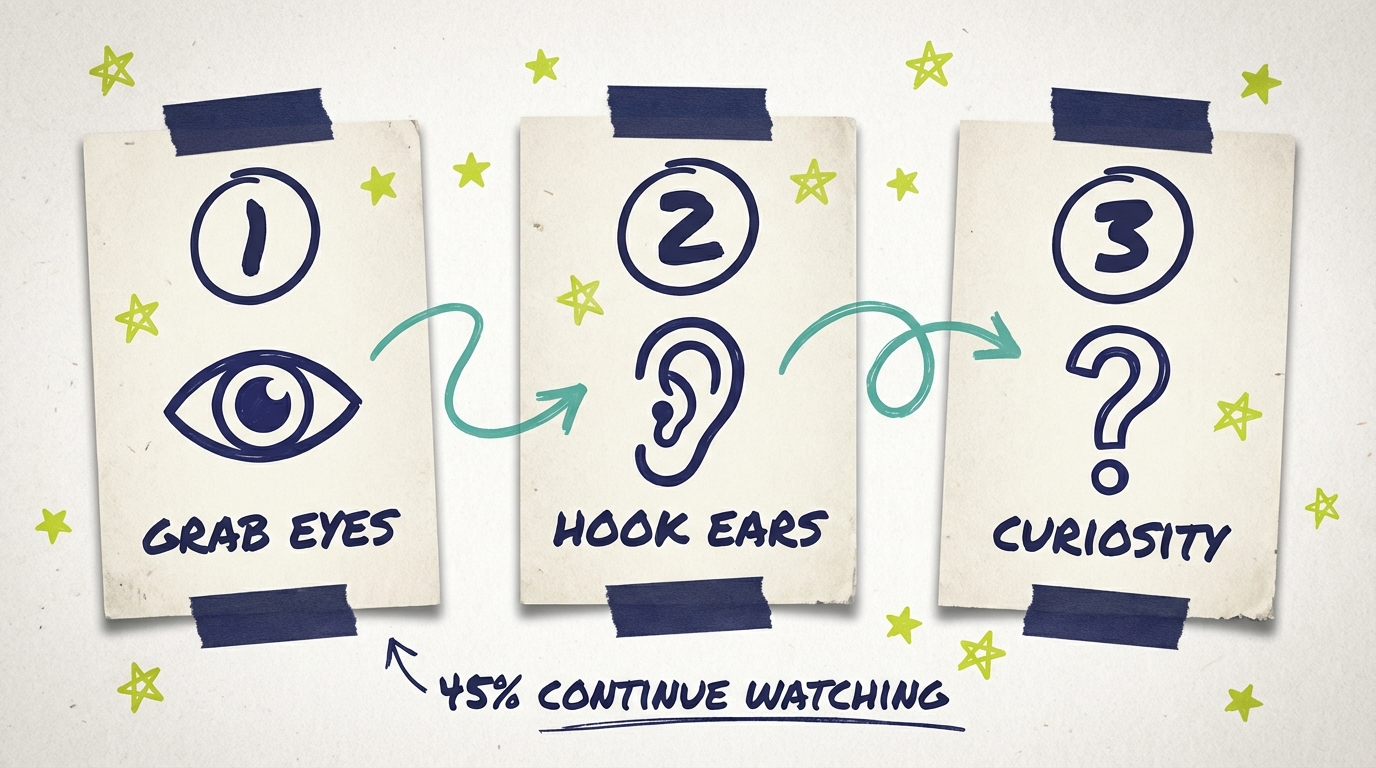
Act 1: The Hook (First 3 seconds) Grab attention immediately. Research shows that 45% of viewers who watch the first three seconds will continue watching for at least 30 more. If you lose them here, nothing else matters.
Act 2: The Story (Next 20-24 seconds) Deliver your message. This is where you explain who you are, what you offer, and why it matters to the viewer.
Act 3: The CTA (Final 3-5 seconds) Tell viewers exactly what to do next. Don't assume they'll figure it out.
Let's break down each of these in detail.
Opening Hooks That Grab Attention
The first three seconds of your CTV ad are your most valuable real estate. Here's what works:
Start with movement or visual interest: Static images don't command attention on TV. Open with action, whether that's a person turning toward camera, a product being used, or dynamic motion graphics.
Lead with the problem: "Tired of waiting weeks for [solution]?" immediately resonates with viewers who have that pain point. Problem-first hooks qualify your audience in seconds.
Use unexpected contrast: A dentist ad that opens on a nervous patient creates curiosity. A plumber ad showing a pristine bathroom (instead of a disaster) catches attention because it's not what viewers expect.
Use sound: Unlike social media, CTV viewers typically have audio on. An attention-grabbing sound effect, distinctive voice, or music cue can hook viewers before they even focus on the visuals.
What doesn't work:
Logo-first openings (nobody cares about your logo yet)
Slow fades from black
Generic stock footage
Text-only screens
Storytelling in 15-30 Seconds
After the opening, you have roughly 20 seconds to explain your offer.
The "Before and After" structure: Show the problem (briefly), then show your solution in action. A roofing company might show a worried homeowner looking at a damaged roof, then cut to that same homeowner smiling with a pristine new roof. Simple and effective.
The "Day in the Life" approach: Follow a character through a scenario that features your product or service naturally. A coffee shop ad might show someone starting their morning groggy, then transformed after visiting your location.
The "Social Proof" structure: Feature a real customer telling their story. Testimonials are powerful on TV because they feel authentic among a sea of polished commercial content.
The "Direct Demonstration" approach: Simply show your product or service working. This works especially well for products with clear visual benefits or services with satisfying results.
Keep these principles in mind:
One message, one takeaway. Don't try to cover everything.
Show, don't tell. Visuals are more memorable than voiceover claims.
Feature real people when possible. Stock footage feels generic.
Match the tone to your brand. A law firm doesn't need to be funny; authenticity matters more.
For more guidance on crafting effective commercials, check out what makes a good TV commercial.
Calls to Action That Drive Response
Your CTA is where creative meets conversion. CTV viewers can't click your ad, so you need to give them clear next steps that bridge from TV to action.
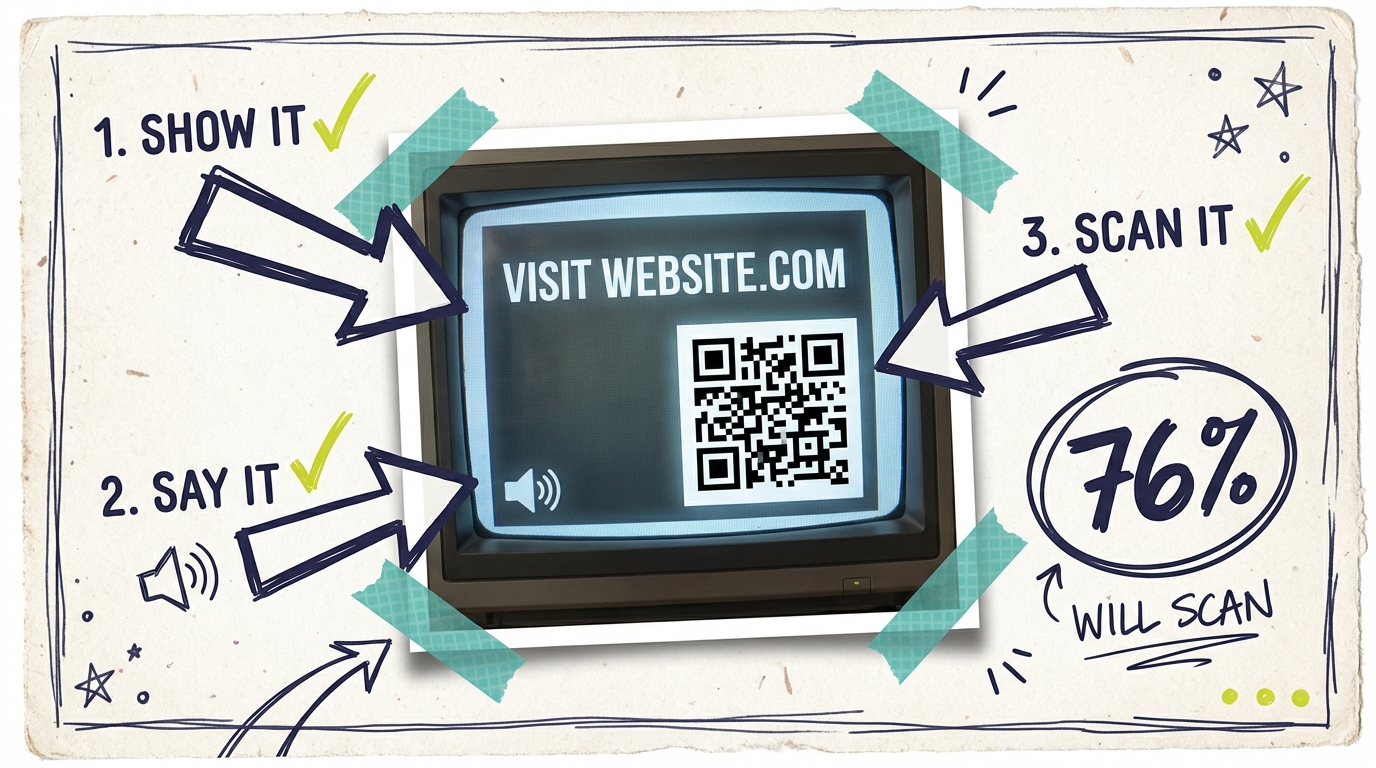
Best practice: Triple reinforcement The most effective CTAs use three channels simultaneously:
Display your URL or action on screen in large, readable text
Say the action out loud in your voiceover
Include a QR code for immediate mobile scanning
Research from Sharethrough found that 76% of consumers would scan a QR code in a relevant TV ad, and adding one boosts attention by 12%.
QR code best practices:
Make it large enough to scan from across the room
Keep it visible for at least 5 seconds (preferably the full CTA section)
Place it in a consistent corner so viewers know where to look
Ensure the landing page is mobile-optimized
Effective CTA language:
"Visit [YourBusiness].com" (simple and direct)
"Scan to get 15% off" (incentive-driven)
"Call now for a free estimate" (service businesses)
"Search [Your Brand] on Google" (if URL is long)
What to avoid:
Multiple CTAs competing for attention
URLs that are too long to remember
CTAs that require viewers to remember information for later
QR codes that link to your homepage instead of a relevant landing page
Technical Specs Across Platforms
Your beautiful creative won't matter if it doesn't meet technical requirements. While specific platforms may have variations, here are the standard specs for CTV:
Video specifications:
Resolution: 1920x1080 (HD) minimum, 3840x2160 (4K) preferred
Aspect ratio: 16:9
Frame rate: 29.97 fps or 30 fps
File formats: MP4 or MOV
Video codec: H.264 or H.265
Audio specifications:
Format: AAC or MP3
Sample rate: 48 kHz
Channels: Stereo
Volume: -24 LUFS integrated loudness (don't exceed -14 LUFS peak)
Duration:
15-second and 30-second spots are standard
30-second ads typically perform better for brand awareness
15-second ads work well for retargeting or simple messages
Safe zones: Keep important text and logos inside the center 90% of the frame. Some TVs and platforms crop edges slightly.
File size: Maximum varies by platform, but aim for under 1GB for HD and 2GB for 4K. Higher bitrate means better quality but larger files.
If you're concerned about TV ad production costs, the good news is that modern tools have dramatically reduced what it takes to create broadcast-quality video.
Testing Creative Variations
Even the best marketers can't predict exactly which creative will resonate most. Testing is how you find out.
What to test:
Hook variations: Try different opening frames or messages
CTA formats: Compare QR code vs. URL-only vs. phone number
Tone: Professional vs. casual; serious vs. lighthearted
Spokesperson: Owner on camera vs. voiceover only vs. customer testimonial
Message focus: Lead with price vs. quality vs. convenience
How to structure tests: Run variations simultaneously with similar targeting to get clean comparisons. Give each variation enough budget to gather meaningful data (typically at least 10,000 impressions per variation).
Metrics that matter:
Completion rate: Are people watching to the end?
QR code scans: Direct measurement of engagement
Website visits: Track post-view attribution
Brand search lift: Are more people Googling your brand?
Dynamic CTV ads, which swap creative elements based on audience or context, can improve conversion rates by 40% compared to static creatives. As you gather data, use it to refine your approach.
AI-Powered Creative: The New Frontier
The biggest barrier to local TV advertising has always been creative production. Traditional TV commercials can cost $5,000 to $50,000 or more to produce, which put them out of reach for most small businesses.
AI is changing that equation dramatically.
What AI creative tools can do:
Generate broadcast-quality video from existing photos and assets
Create professional voiceovers from text
Assemble scenes into coherent narratives
Adapt creative to different formats automatically
What you need to provide:
Your business information (website, photos, key messages)
Basic direction on tone and focus
Feedback for refinements
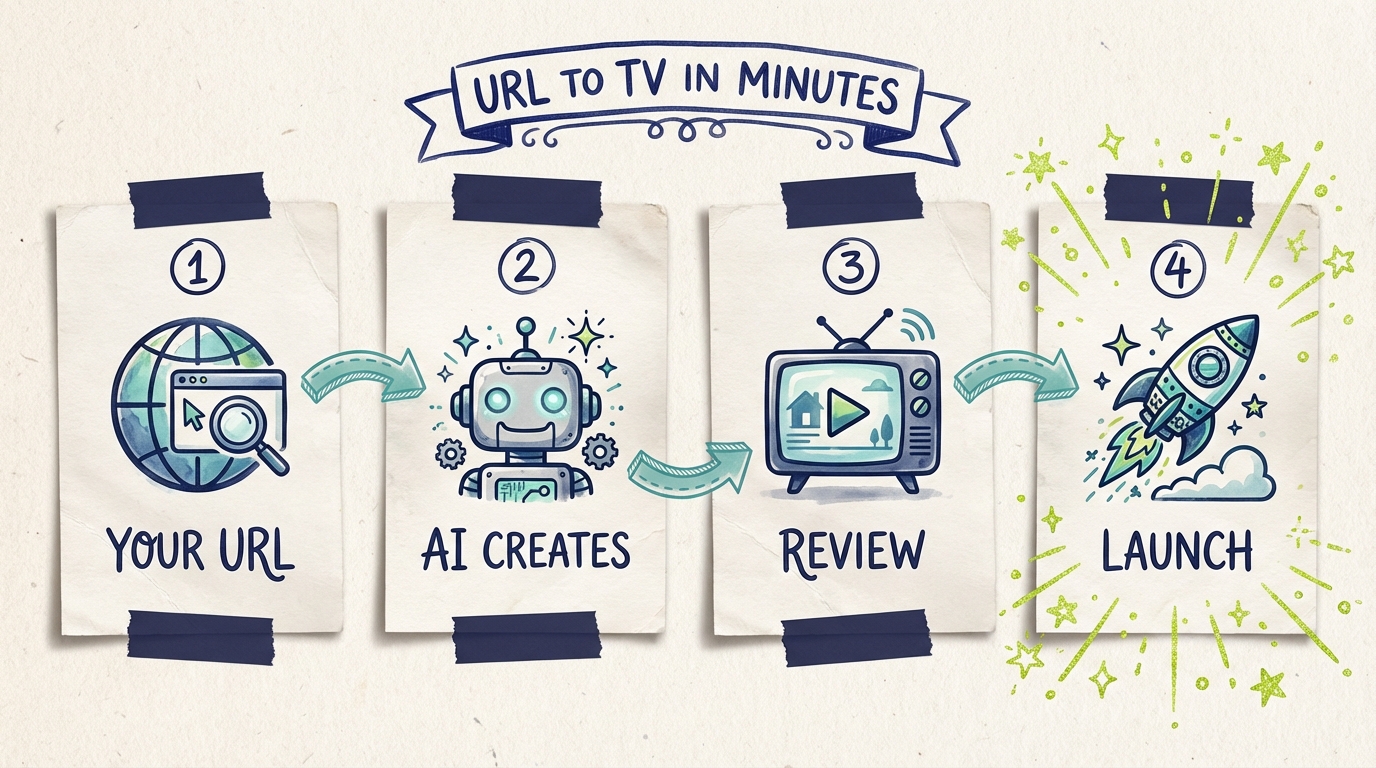
With platforms like Adwave, you can create professional TV ads in minutes using AI, starting from just your website URL. The AI gathers your images, messaging, and brand elements to generate a production-ready commercial.
When to use AI creative:
Testing TV advertising for the first time
Running campaigns on limited budgets
Needing to produce multiple variations quickly
Seasonal or promotional campaigns that need fast turnaround
When you might want traditional production:
Brand campaigns requiring specific artistic vision
Complex narratives or celebrity talent
Highly regulated industries requiring precise legal review
For most small businesses getting started with CTV, AI-generated creative delivers results that match or exceed traditional production at a fraction of the cost and time.
Putting It All Together
Creating CTV ad creative that converts comes down to a few core principles:
Hook fast: You have three seconds to earn the next 27. Start with something that demands attention.
Tell a focused story: One message, delivered clearly. Show your value, don't just claim it.
Make action easy: Triple-reinforce your CTA with visual, audio, and scannable elements.
Test and iterate: Your first creative won't be your best. Use data to improve.
Start accessible: AI tools have eliminated the production barrier. Don't let budget concerns stop you from testing.
CTV ads drive 20% higher brand recall than mobile video, boost website visits by 32% on average, and deliver viewability rates that digital channels can only dream of. The opportunity is there. Now you have the creative framework to capture it.
Common questions answered
What makes a CTV ad different from a social media video ad?
CTV ads play on TV screens where viewers expect TV-quality content. This means higher production value, audio designed for speakers (not muted mobile viewing), and full-screen visuals without text overlays competing for attention. The viewing context is also different: lean-back, attentive viewing versus scrolling. Adapt your creative for the premium TV environment.
How long should my CTV ad be?
The standard length is 30 seconds, which provides enough time to tell a story, communicate your message, and include a call to action. 15-second spots work for simpler messages or when you have an established brand. Some platforms offer 6-second bumper ads for reinforcement, but these are typically supplements to longer creative rather than standalone ads.
Should I include a call to action in my CTV ad?
Yes, but make it simple since viewers can't click on TV screens. Effective CTAs include memorable URLs, phone numbers, or actions like "search for [brand name]" or "visit us this weekend." QR codes can work if displayed long enough (3 to 4 seconds minimum). The goal is giving viewers a clear next step they can remember after the ad ends.
How often should I update my CTV creative?
Plan to refresh your creative every 2 to 3 months to prevent viewer fatigue, especially if you're running sustained campaigns. With AI-powered platforms like Adwave, creating variations is quick and inexpensive. Consider seasonal updates, promotion-specific versions, and A/B testing different messages to keep your advertising fresh and learn what resonates.