


January 02, 2026
Everything You Need to Know About Growing Your Small Business in 2026
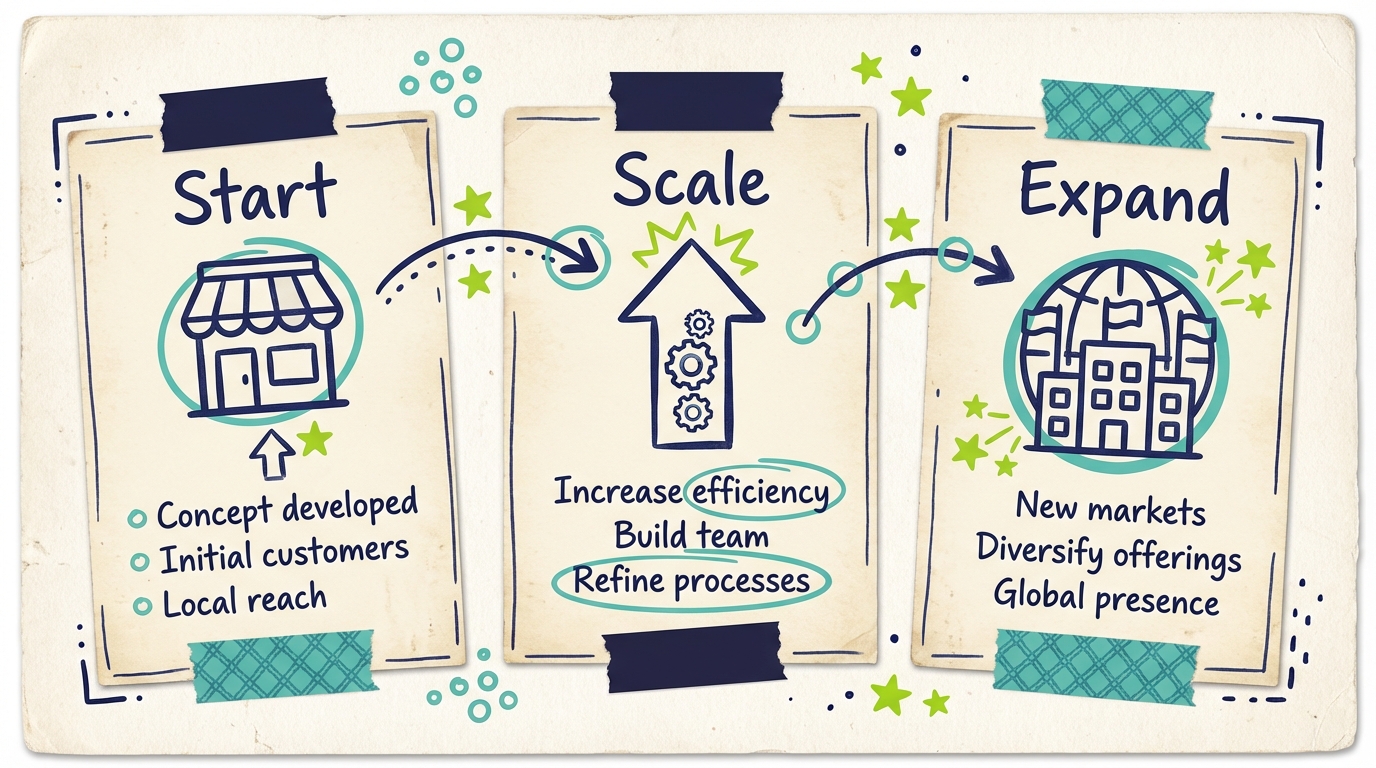
Table of Contents
Your business is running. Customers come in, revenue is stable, and you're no longer scrambling to survive. But you're stuck. The growth that came naturally in year one has flatlined, and you're wondering how to break through to the next level.
Growing a small business in 2026 isn't about doing more of everything. It's about identifying the specific constraints holding you back and attacking them systematically. The businesses that scale successfully don't just work harder; they work on the right things.
This guide breaks down exactly how to grow your small business, from diagnosing what's actually limiting you to implementing proven growth strategies that work across industries. Whether you're trying to add your second location, double your revenue, or finally break past that stubborn plateau, you'll find actionable frameworks that turn stagnation into momentum.
Diagnose Your Growth Potential First
Before throwing money at marketing or hiring more staff, you need to understand what's actually limiting your growth. Most business owners skip this step and waste resources fixing the wrong problems.
The Four Growth Constraints
Every stuck business faces one (or more) of these constraints:
Customer acquisition: You can handle more business, but you're not getting enough new customers. Your capacity exceeds your demand. Signs include idle staff, available appointment slots, and inventory that moves slowly.
Customer retention: You're acquiring customers, but they're not coming back. You're filling a bucket with a hole in the bottom. Signs include low repeat purchase rates, high customer churn, and constantly needing new customers just to maintain revenue.
Capacity and operations: You have more demand than you can fulfill. Taking on new customers would mean declining quality or burning out your team. Signs include waitlists, declining review scores, and exhausted employees.
Average transaction value: You're getting customers and keeping them, but each transaction is too small to generate meaningful profit. Signs include healthy customer counts but thin margins and cash flow problems.
Identify which constraint is your primary bottleneck. That's where you focus first.
Run a Quick Growth Audit
Spend 30 minutes answering these questions honestly:
How many new customer inquiries did you get last month? How many of those converted to paying customers? What percentage of last year's customers bought from you again this year? What's your average transaction size, and has it grown or shrunk?
If you can't answer these questions, your first growth project is setting up basic tracking. You can't improve what you don't measure.
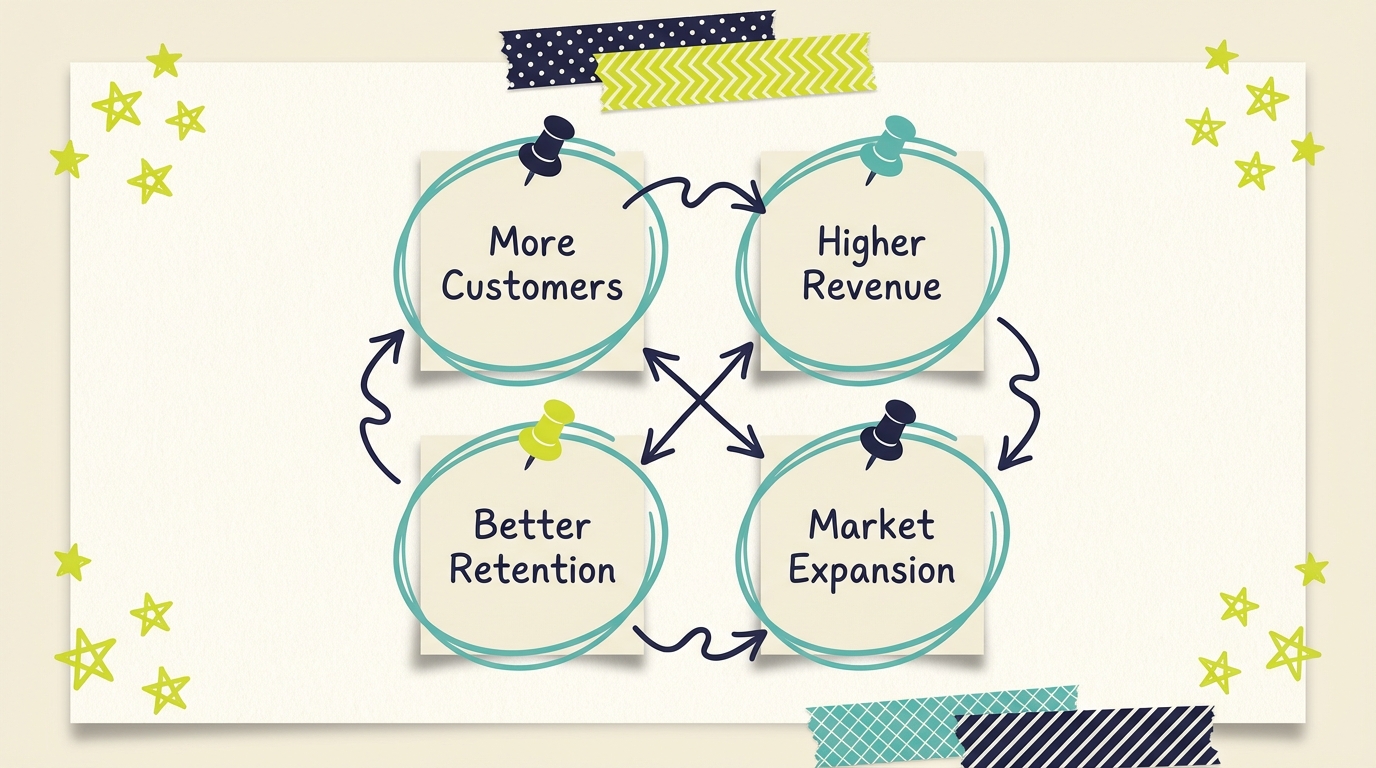
Growth Strategy #1: Get More Customers
If your constraint is customer acquisition, here's how to fix it. This is the most common growth barrier for established small businesses: you've proven your service but haven't cracked consistent lead generation.
Expand Your Marketing Reach
Most small businesses rely on one or two channels: maybe word of mouth and a Facebook page. That's fine for survival, but it caps your growth at whatever those channels naturally deliver.
The businesses that break through diversify their marketing presence. They're not everywhere at once, but they systematically add channels that reach new audiences.
Consider where your ideal customers spend time that you're not currently reaching. If you're a home services company relying on Google, you're missing the homeowners who don't search when they need service. They call the company they remember seeing somewhere. If you're a restaurant counting on Instagram, you're missing the families who don't use social media but watch streaming TV every night.
TV advertising through streaming platforms like Adwave has become one of the most effective ways for small businesses to expand reach. You can target specific ZIP codes around your business and appear on NBC, Hulu, ESPN, and 100+ premium channels starting at $50. The credibility boost of being "on TV" accelerates trust in ways that social ads can't match.
Build a Referral Engine
Your existing customers are your best salespeople, but most businesses leave referrals to chance. Building a systematic referral program turns word of mouth from occasional to predictable.
The mechanics don't need to be complicated. Identify your happiest customers (look at reviews, repeat purchases, and engagement). Make asking for referrals part of your process: after a successful project, a great meal, or a 5-star service experience. Give customers something to share, whether that's a referral card, a discount code, or simply language they can use.
The key is consistency. A referral program that runs once isn't a program; it's a promotion. Build referral requests into your operations so every satisfied customer becomes a potential source of new business.
Invest in Brand Awareness
Customer acquisition doesn't always mean direct response. Sometimes the fastest path to more customers is making sure more people know you exist.
Brand awareness marketing plants seeds that grow over time. Someone sees your business name on streaming TV tonight, then drives past your location tomorrow, then gets a recommendation from a friend next week, and finally walks through your door. They'll credit the friend's recommendation, but your brand presence made them open to trying you.
For local businesses, brand awareness is particularly powerful because the addressable market is finite. There are only so many homeowners within 20 miles of your HVAC company. The more of them who know your name before their AC breaks, the more service calls you'll win.
Growth Strategy #2: Increase Revenue Per Customer
If you're getting enough customers but margins are thin, focus on increasing what each customer spends. This is often the highest-impact growth strategy because you're not paying to acquire those customers again.
Upselling and Cross-Selling
Most customers don't know everything you offer. They came for one thing and never learned about the rest. Smart upselling isn't pushy; it's helpful.
A dentist mentions teeth whitening during a routine cleaning. A contractor suggests gutter guards while cleaning gutters. A restaurant server recommends a wine pairing. These aren't sales tactics; they're service enhancements that customers appreciate when done right.
Audit your customer journey. At what points could you naturally introduce additional products or services that would genuinely benefit the customer? Train your team to make these recommendations consistently.
Premium Offerings
Some customers want the best version of what you offer and will pay for it. If you only offer one tier, you're leaving money on the table.
Consider what a "premium" version of your service might include. Faster delivery. Higher-quality materials. Extended warranties. Dedicated support. Personal attention. Package these into a distinct offering that commands higher prices without requiring proportionally higher costs.
Not every customer will buy premium. But the ones who do dramatically improve your economics.
Subscription and Membership Models
Recurring revenue transforms business growth. Instead of starting each month at zero, you begin with predictable income.
Subscription models work in surprising industries. Lawn care companies offer seasonal maintenance contracts. Coffee shops sell monthly membership cards. Consultants package ongoing advisory relationships. Even product businesses can create replenishment subscriptions or exclusive member access.
Ask yourself: what service do your customers need regularly? How could you package that into a recurring relationship that provides them convenience and you predictability?

Growth Strategy #3: Improve Customer Retention
Acquiring a new customer costs 5-7x more than retaining an existing one. If customers aren't coming back, you're running on a treadmill, working hard to stay in place.
Build Genuine Relationships
Retention starts with experience. Customers come back to businesses that make them feel valued, not just served.
Remember names. Follow up after purchases. Acknowledge milestones. Thank loyal customers personally. These actions don't scale infinitely, but they don't need to. Your best customers represent a manageable group worth personal attention.
Technology helps. CRM systems track customer history so any team member can provide personalized service. Email marketing keeps you top of mind between purchases. But technology enables relationships; it doesn't replace them.
Create Reasons to Return
Some businesses benefit from natural purchase frequency: restaurants, coffee shops, gyms. Others need to create reasons for customers to come back.
Loyalty programs work when they provide genuine value. Points systems, punch cards, or tier-based benefits give customers incentive to consolidate their spending with you rather than trying competitors. The best programs make customers feel smart for participating, not manipulated.
Regular communication also drives return visits. Monthly newsletters with useful content, not just promotions. Event invitations. Early access to new products. Seasonal reminders when your service becomes relevant again.
Win Back Lapsed Customers
Customers who haven't purchased in a while represent warm leads. They already know you, liked you at some point, and have no acquisition cost.
Identify customers who should have purchased again by now based on typical buying cycles. Reach out with a specific offer or simply a check-in. "We noticed it's been a while. Is there anything we could do better?" opens conversations that often lead to recovered relationships.
Don't assume departed customers left angry. Life gets busy, competitors get attention, and people forget. A simple reminder that you exist often brings them back.
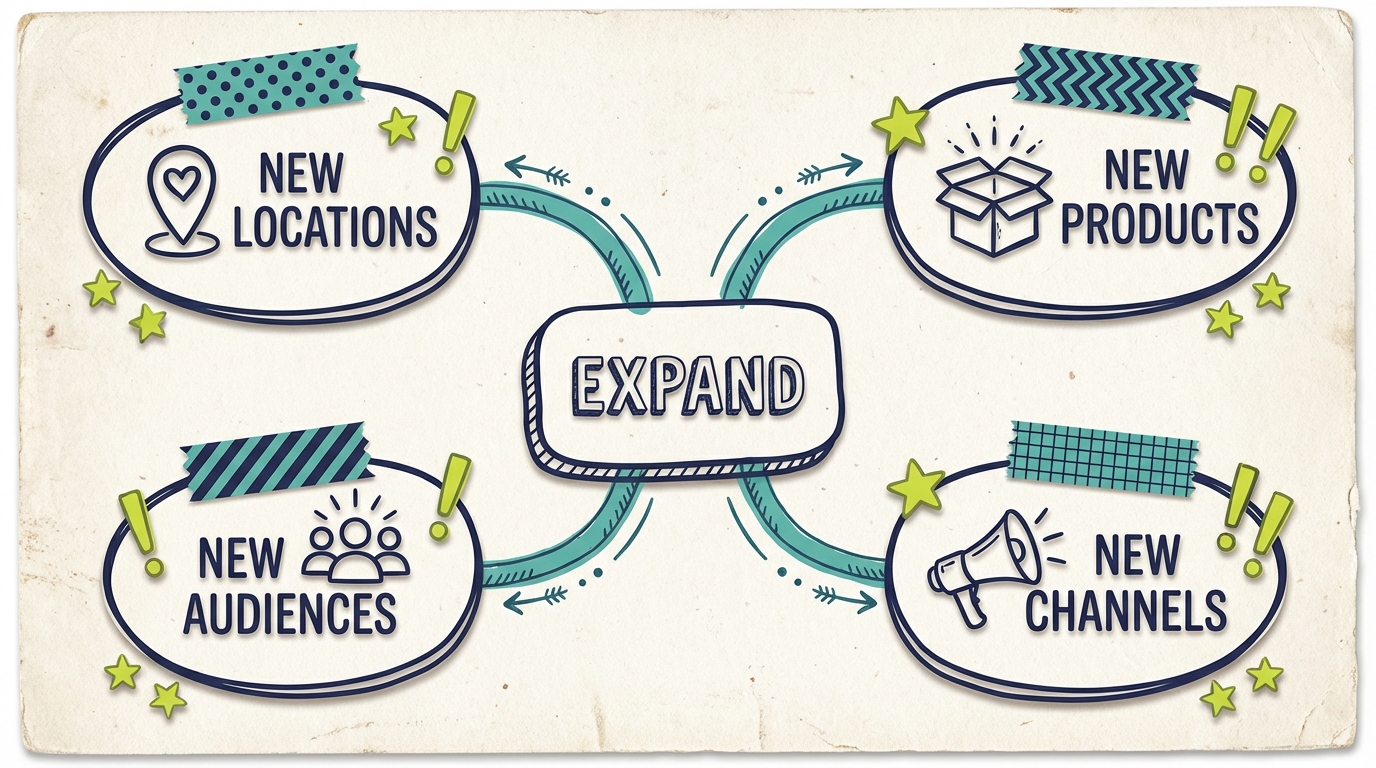
Growth Strategy #4: Expand Your Market
If you've optimized your current market (strong acquisition, healthy retention, solid transaction values), growth requires reaching new customers beyond your current scope.
Geographic Expansion
For local businesses, expanding geography is the most straightforward growth path. If your restaurant succeeds in one neighborhood, open in another. If your home services company dominates one ZIP code, expand to adjacent areas.
Marketing technology makes geographic testing easier than ever. You can run TV advertising campaigns targeting specific ZIP codes to gauge demand before committing to physical expansion. Test awareness and lead generation in a new area for a few hundred dollars before signing a lease.
New Customer Segments
Your current customers share certain characteristics. But other groups might benefit from your service too.
A tutoring company focused on struggling students might expand to serve advanced students seeking enrichment. A landscaping company serving residential customers might add commercial clients. A B2C software tool might find B2B applications.
Identify adjacent segments that your capabilities could serve. The product might need modification, the messaging definitely will, but the core expertise transfers.
New Products and Services
Adding offerings expands your addressable market while taking advantage of existing customer relationships.
Listen to what customers ask for that you don't currently provide. Track requests, complaints, and suggestions. The best new product ideas often come from customers telling you exactly what they need.
Partnerships can accelerate new offerings. Rather than building everything yourself, partner with complementary businesses. A financial advisor partners with an estate planning attorney. A gym partners with a nutritionist. A contractor partners with an interior designer. Customers get expanded service; you get expanded revenue.
Building Your 2026 Growth Plan
Strategy without execution is daydreaming. Here's how to turn these concepts into a real plan.
Set Measurable Goals
"Grow the business" isn't a goal. "Increase revenue 25% by December 31" is a goal. Specific, time-bound targets create accountability and focus.
Break annual goals into quarterly milestones. What needs to be true by March to stay on track for December? What monthly metrics indicate progress?
For most small businesses, focus on 1-2 primary metrics: revenue, customer count, or profit margin. Too many metrics diffuse focus.
Choose Your Focus
Based on your growth audit, identify your primary constraint and the strategy that addresses it. Don't try to implement all four strategies simultaneously. Pick one, execute it well, then add another.
If customer acquisition is your constraint, build your plan around expanded marketing reach. If retention is the problem, focus there first. Spreading effort across multiple initiatives usually means none succeed.
Allocate Resources Realistically
Growth requires investment, whether that's money, time, or both. Be honest about what you can commit.
If budget is limited, start with high-impact, low-cost tactics: referral programs, retention improvements, upselling training. As cash flow improves, add higher-cost investments like expanded marketing or new hires.
If time is the constraint (you're already working maximum hours), growth requires delegation or automation before it requires new customers. Taking on more business without capacity to serve it damages reputation and burns out teams.
Track and Adjust Monthly
Review progress monthly. What's working? What isn't? What have you learned?
The plan you create in January won't be perfect. Markets shift, competitors respond, and assumptions prove wrong. The businesses that grow successfully treat planning as continuous, not annual.
Common Growth Mistakes to Avoid
Having advised thousands of small businesses, these mistakes appear repeatedly.
Growing Too Fast
Ironic but true: growing too fast can kill a business. Taking on customers you can't serve well destroys reputation. Hiring ahead of revenue creates cash crunches. Expanding locations before proving the model guarantees expensive lessons.
Growth should be intentional, not frantic. Make sure your operations can handle increased volume before pushing for more volume.
Ignoring Existing Customers
The excitement of new customers often overshadows the value of existing ones. Businesses pour resources into acquisition while neglecting the customers already buying.
Your existing customers are your most valuable asset. They've already proven willingness to pay. They're easiest to reach. They cost nothing to acquire. Prioritize retention alongside acquisition.
Underfunding Marketing During Growth
When business is good, marketing budgets often get cut. "We're busy enough." This short-term thinking creates long-term problems.
Marketing investments made today generate customers months from now. The time to build brand awareness is when you can afford it, not when you desperately need it. Consistent marketing presence, including TV advertising that builds credibility, creates sustainable growth instead of feast-and-famine cycles.
Waiting Too Long to Hire
Business owners often delay hiring until they're drowning. The result: rushed hiring decisions, inadequate training, and team members set up to fail.
If you're consistently working unsustainable hours, you've waited too long. Hire before you're desperate so you can train properly, maintain quality, and preserve your own capacity for strategic work.
Common questions answered
How much should I spend on marketing to grow my business?
Most growing small businesses allocate 5-10% of revenue to marketing, though the right number depends on your growth goals and customer acquisition costs. If you're actively trying to scale, you might invest 10-15% during your growth phase. Start with what you can sustain consistently rather than a one-time splurge, then increase spending as you see returns.
What's the fastest way to grow a small business?
The fastest growth typically comes from fixing your primary bottleneck rather than trying everything at once. If customer acquisition is your constraint, investing in expanded marketing reach (including channels like streaming TV advertising) delivers the most impact. If retention is the issue, that's where your attention belongs first. Focused execution on one strategy beats scattered effort across many.
How do I know when I'm ready to expand to a second location?
Readiness for expansion requires three things: a proven model that's consistently profitable, documented systems that can replicate without your constant presence, and cash reserves or financing to survive the startup phase at the new location. Most failed second locations happen when owners expand before achieving all three.
Should I hire employees or contractors as I grow?
The decision depends on the work type and your long-term needs. Hire employees when you need consistent, ongoing work that's core to your business and when you want to build institutional knowledge. Use contractors for specialized skills you don't need full-time or for capacity fluctuations you can't predict. Many growing businesses use both strategically.
How long does it take to see results from growth investments?
Timeline varies by tactic. Paid advertising typically shows results within weeks, though optimal performance takes 2-3 months of optimization. Brand awareness investments take 3-6 months to show measurable impact on customer behavior. Referral programs and retention improvements often show faster returns because they're working with customers who already know you.
Your Next Step
Growing your small business in 2026 starts with honest diagnosis and focused execution. Identify your primary constraint. Choose the strategy that addresses it. Build a plan with measurable goals and realistic resources. Execute consistently while tracking and adjusting.
The businesses that break through their plateaus share one trait: they're intentional. They don't just hope for growth; they engineer it.
Ready to expand your reach and build brand awareness that drives growth? Adwave puts your business on streaming TV, with AI-created commercials and campaigns starting at just $50. It's the brand-building channel you didn't know you could afford, and it might be exactly what your 2026 growth plan needs.