Legal advertising is unlike any other industry. You're selling services that people hope they'll never need. Your potential clients are often stressed, skeptical, and doing more research than they would for almost any other purchase. And thanks to state bar ethics rules, you can't make the kind of bold claims that businesses in other industries take for granted.
Those constraints don't make advertising harder. They just make it different. The firms that grow consistently are the ones that show up across multiple channels, build trust before it's needed, and stay visible during the long (sometimes unpredictable) window between "I might need a lawyer" and "I need one right now."
This guide breaks down seven advertising channels that work for law firms, from digital staples like Google Ads and social media to underused options like streaming TV and referral networks. You'll see what each channel does well, where it falls short, and how to allocate your budget based on your firm's size and practice areas.
Google Ads and Local Services Ads: The Highest-Stakes PPC in Any Industry
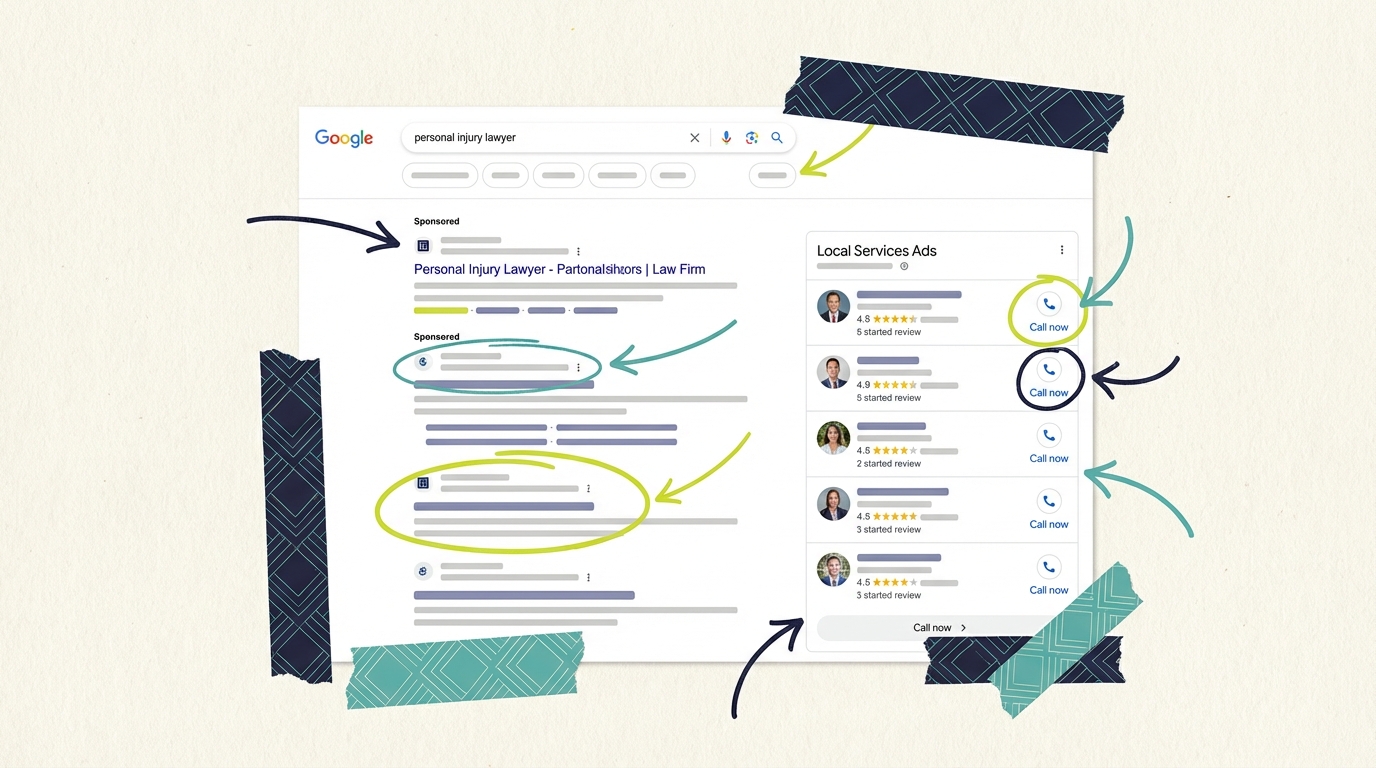
If you've run Google Ads for a law firm, you already know the numbers are eye-watering. Legal keywords consistently rank among the most expensive in all of paid search. According to WordStream's 2025 industry benchmarks, the average cost per click for legal services is $9.21, with personal injury and criminal defense keywords regularly exceeding $50 per click (WordStream, 2025 Google Ads Benchmarks). Some competitive markets push those numbers even higher.
That said, the math can still work. A single personal injury case might be worth tens of thousands of dollars. A retained corporate client could generate revenue for years. The key is treating Google Ads as a precision tool, not a volume play.
Search Ads: Capturing Active Intent
Google Search Ads put your firm in front of people who are actively looking for legal help. Someone typing "divorce lawyer near me" or "DUI attorney [city]" has immediate intent, and that intent translates to phone calls and consultations.
What works for law firms:
Practice-area campaigns. Run separate campaigns for each practice area with dedicated landing pages. A personal injury campaign should send clicks to a page about personal injury, not your homepage.
Geographic targeting. Tighten your targeting to areas you serve. Paying for clicks from the wrong county wastes budget fast.
Ad extensions. Call extensions, location extensions, and sitelinks give your ad more real estate on the page and more ways for prospects to reach you.
Negative keywords. Add terms like "free," "pro bono," "jobs," and "salary" to keep irrelevant clicks from eating your budget.
What to watch out for:
Click fraud. Legal is one of the most click-fraud-prone industries. Use fraud detection tools and monitor your campaigns for suspicious patterns.
Landing page quality. Google rewards relevant, fast-loading landing pages with better ad positions and lower costs. A generic homepage won't cut it.
Competitor bidding. Other firms will bid on your name. Decide whether to bid on theirs (check your state bar's rules on this first).
Local Services Ads: The Google Guaranteed Badge
Google Local Services Ads (LSAs) are a useful option for law firms. They appear above traditional search ads, include a "Google Screened" badge, and charge per lead rather than per click. According to Google's own data, LSAs for legal services generate leads at 30-50% lower cost than traditional search ads in most markets (Google Ads Help Center, 2025).
To qualify, your firm needs to pass Google's screening process, which includes license verification and background checks. That barrier to entry works in your favor because it filters out less serious competitors.
LSA best practices:
Respond to leads within five minutes. Google tracks response times and rewards faster firms with better placement.
Collect reviews aggressively. LSA rankings are heavily influenced by review count and quality.
Set your budget based on your capacity to handle new consultations, not just your marketing budget.
Meta and Social Media Advertising: Building Brand and Practice Awareness
Social media won't generate the same direct-response results as Google Ads. People scrolling Instagram aren't looking for a lawyer. But that's exactly the point. Social advertising builds the awareness and familiarity that makes everything else work better.
According to the American Bar Association's 2024 Legal Technology Survey Report, 89% of law firms maintain a presence on social media, but only 36% actively invest in paid social advertising (ABA, 2024 Legal Technology Survey). That gap represents an opportunity for firms willing to put budget behind their social presence.
Facebook and Instagram Ads
Meta's advertising platform gives law firms access to detailed targeting that's especially useful for practice areas tied to life events.
Effective targeting strategies:
Life-event targeting. Facebook knows when users are going through major changes like moving, getting engaged, starting a business, or changing jobs. These events often create legal needs. Family law firms can target newly engaged or recently separated users. Business attorneys can reach new business owners.
Lookalike audiences. Upload your client list (anonymized and compliant with your state's ethics rules) and let Meta find users who match the profile. This works especially well for firms with a clear client demographic.
Retargeting. Show ads to people who've visited your website but didn't call. Retargeting keeps your firm familiar during the research phase.
Content that performs well:
Educational content. Short videos explaining common legal questions ("What to do after a car accident," "3 things to know before filing for divorce") build trust and demonstrate expertise without being salesy.
Client stories. With permission, share outcomes and testimonials. Real stories resonate more than generic claims.
Attorney introductions. People hire lawyers, not firms. Videos introducing your attorneys help potential clients feel a connection before the first consultation.
LinkedIn for B2B Legal Services
If your firm handles business law, employment law, intellectual property, or any practice area serving other businesses, LinkedIn advertising is worth your attention.
LinkedIn ad formats that work for law firms:
Sponsored articles. Share thought leadership pieces on topics your target clients care about (employment law changes, contract best practices, industry regulations).
InMail campaigns. Direct outreach to decision-makers at target companies. Keep it helpful, not pitchy.
Company targeting. Target ads to employees of specific companies or industries that match your client profile.
Ethics Considerations for Social Advertising
Every state bar has rules about lawyer advertising, and social media has created gray areas. Before launching any social campaign, confirm:
Your ads don't create an attorney-client relationship or offer specific legal advice
Testimonials comply with your jurisdiction's rules (some states prohibit them entirely)
Any claims about results include appropriate disclaimers
Your targeting doesn't raise issues under anti-solicitation rules
Streaming TV and CTV: The Credibility Channel

Television has always been a trust builder for law firms. There's a reason the most recognized practices in any market tend to be the ones with TV commercials. The issue was always cost. Traditional broadcast TV required minimum spends of $5,000 to $25,000 per month, putting it out of reach for most small and mid-size firms.
Streaming TV, also known as connected TV (CTV), changes that equation. CTV advertising delivers your commercial on premium networks like NBC, ESPN, Hulu, and Fox, but with the targeting precision and budget flexibility of digital advertising.
Why CTV works for law firms:
Trust signal. Appearing on a TV screen alongside major brands signals credibility. Potential clients perceive TV advertisers as more established and trustworthy.
Geographic targeting. Target specific ZIP codes and counties where your firm operates. No wasted impressions in areas you don't serve.
Practice-area relevance. Reach audiences based on demographics that align with your practice areas.
Budget-friendly entry. With Adwave, you can launch a TV campaign starting at just $50, with ads running across 100+ premium channels. The platform creates a broadcast-quality 30-second commercial from your website in about two minutes, so you don't need a production crew or agency.
With average CTV CPMs ranging from $15-35, streaming TV often costs less per thousand impressions than competitive Google Ads clicks in the legal space. For a deep dive into TV advertising strategies for law firms, see our best advertising for law firms guide.
Local SEO and Reviews: Where Most Legal Clients Start
Before spending a dollar on advertising, make sure your free organic presence is working for you. According to BrightLocal's 2024 Local Consumer Survey, 87% of consumers read online reviews for local businesses, and legal services rank among the most review-dependent categories (BrightLocal, 2024).
Google Business Profile Optimization
Your Google Business Profile (GBP) is your most visible free asset. When someone searches "estate planning attorney near me," the map pack that appears above organic results pulls from GBP data.
Essential GBP optimizations for law firms:
Complete every field. Business category (use specific options like "Personal Injury Attorney" rather than just "Lawyer"), service area, hours, appointment links, and practice area descriptions.
Post regularly. Google Business posts keep your profile active and give you a place to share case results, firm news, and legal insights. Aim for at least two posts per week.
Q&A section. Seed your Q&A with common questions and helpful answers. If you don't, random users will post questions and potentially answer them incorrectly.
Photos and videos. Upload professional photos of your office, team, and community involvement. Profiles with photos receive 42% more requests for directions and 35% more website clicks (Google, 2024).
Review Generation Strategy
Reviews are the single most influential factor in whether a searcher clicks on your listing or a competitor's. But for law firms, collecting reviews requires extra care due to confidentiality concerns.
How to build your review profile ethically:
Ask every satisfied client for a review at the conclusion of their case. Make it easy with a direct link sent via email or text.
Never offer incentives for reviews (this violates both Google's policies and most bar rules).
Respond to every review, positive and negative. For negative reviews, be professional and avoid revealing any case details.
Focus on Google reviews first, then Avvo, Yelp, and Martindale-Hubbell.
Local Organic SEO
Beyond your GBP, your website needs to rank for the searches potential clients are running.
Foundational SEO for law firms:
Practice area pages. Create dedicated pages for every practice area you offer, optimized for "[practice area] lawyer [city]" keywords.
Location pages. If you serve multiple cities or counties, create pages for each service area.
Schema markup. Add attorney and legal service schema to help search engines understand your content.
Citations. Ensure your firm's name, address, and phone number are consistent across all legal directories, local directories, and social profiles.
Content Marketing: Demonstrating Expertise Before the First Meeting

Content marketing and thought leadership serve a specific purpose for law firms: they prove you know what you're talking about before a client ever picks up the phone.
According to the Content Marketing Institute, 73% of B2B buyers say thought leadership content directly influences their vendor evaluations (Edelman-LinkedIn, 2024 B2B Thought Leadership Impact Report). That applies to legal services too. Potential clients who read your blog posts, watch your videos, or see your commentary in the news arrive at consultations already trusting your expertise.
Blog Content That Drives Cases
Not all legal blog content is created equal. The posts that generate leads are the ones that answer specific questions potential clients are asking.
High-performing blog topics by practice area:
Personal injury: "What to do immediately after a car accident in [state]," "How long do I have to file a personal injury claim?"
Family law: "How is child custody decided in [state]?," "What's the difference between legal separation and divorce?"
Estate planning: "Do I need a trust or just a will?," "What happens if you die without a will in [state]?"
Business law: "How to choose the right business entity," "What should be in an operating agreement?"
Each piece should target a specific keyword, answer the question thoroughly, and include a clear call to action inviting readers to schedule a consultation.
Video Content
Video content performs well for law firms because it lets potential clients evaluate you as a person before committing to a meeting.
Video formats that generate consultations:
FAQ videos. Short (2-3 minute) answers to common legal questions. Post on YouTube, embed on your website, and share on social media.
Case result walkthroughs. Without revealing confidential details, explain the type of case, the challenge, and the outcome.
"What to expect" videos. Walk viewers through the process of working with your firm. This reduces anxiety and makes calling easier.
Legal news commentary. When laws change or high-profile cases make the news, providing timely commentary positions you as a go-to authority.
Podcasting and Guest Appearances
Launching a legal podcast or appearing as a guest on business and community podcasts builds authority with a dedicated audience. Topics like "Understanding Your Rights After a Workplace Injury" or "Small Business Legal Mistakes to Avoid" attract listeners who may become clients.
Direct Mail and Community Marketing
Digital channels dominate the conversation, but physical marketing still works for law firms, especially in markets where digital competition is fierce.
Direct Mail Strategies
According to the Data & Marketing Association, direct mail achieves a 4.4% response rate for prospect lists, compared to 0.12% for email (ANA/DMA Response Rate Report, 2023). For law firms, direct mail works best in these scenarios:
Geographic saturation. Send mailers to every household in your primary service area. This is especially effective for practices like estate planning, family law, and real estate closings where nearly every household is a potential client.
Triggered mailings. Partner with data providers to reach people going through events that create legal needs: new homeowners (real estate closings), new business registrations (business law), and similar triggers.
Referral thank-you cards. A handwritten thank-you card to someone who referred a client costs almost nothing and dramatically increases the chances they'll refer again.
Community Involvement
Community marketing builds relationships that advertising alone cannot.
Effective community strategies for law firms:
CLE and community seminars. Host free workshops on topics like estate planning basics, small business legal requirements, or tenant rights. These position your firm as helpful and accessible.
Local sponsorships. Sponsor youth sports teams, charity events, and community organizations. Your firm name on a Little League jersey is low-cost brand building that generates goodwill.
Bar association involvement. Active participation in local and state bar associations builds your reputation among peers, who are often your best referral sources.
Pro bono work. Strategic pro bono representation generates goodwill, media coverage, and often referrals from legal aid organizations.
Referral Network Development: Your Most Valuable Channel
Ask any successful managing partner where their best cases come from, and most will say referrals. According to a Clio 2024 Legal Trends Report, referrals remain the number-one source of new clients for law firms, with 59% of legal consumers saying they sought personal referrals when looking for an attorney (Clio, 2024 Legal Trends Report).
The problem is that most firms treat referrals as passive. They hope clients and contacts will remember to send people their way. A structured referral strategy turns hope into a system.
Attorney-to-Attorney Referrals
Lawyers who don't practice in your area are among your best referral partners.
Build relationships with complementary practices. If you handle personal injury, get to know family law attorneys, criminal defense lawyers, and employment attorneys. Their clients often need services outside their specialty.
Co-counsel arrangements. For complex cases that cross practice areas, co-counsel relationships create value for both firms and clients.
Referral fee compliance. Most states allow referral fees between attorneys with client consent and proper disclosure. Know your state's rules and formalize agreements in writing.
Professional Referral Partners
Beyond other attorneys, build relationships with professionals whose clients frequently need legal help.
Key referral partners by practice area:
Personal injury: Chiropractors, physical therapists, body shops, medical offices
Estate planning: Financial advisors, CPAs, insurance agents, funeral directors
Business law: CPAs, bankers, commercial real estate agents, HR consultants
Family law: Therapists, family counselors, financial planners, real estate agents
Real estate: Title companies, mortgage brokers, home inspectors, real estate agents
Building a Referral System
Track every referral source. Ask every new client how they found you and record the answer. This tells you which relationships are producing cases.
Stay in touch. Send quarterly newsletters, holiday cards, and occasional lunch invitations to your referral network. Out of sight means out of mind.
Make it easy to refer. Give referral partners business cards, a direct phone number, and clear guidance on what types of cases you want.
Reciprocate. Send referrals back when you can. Referral relationships work best when they flow both ways.
Channel Comparison: How Each Advertising Option Stacks Up
Budget Recommendations by Firm Size
How much should your firm spend on advertising? The answer depends on your size, growth goals, and practice areas. Here's a practical framework.
Solo Practitioners ($2,000-$5,000/month)
Start with the channels that produce the fastest, most measurable results.
Google Ads / LSAs: 40% ($800-$2,000). Focus on one or two practice areas with the highest case values.
Local SEO: 20% ($400-$1,000). Invest in GBP optimization, review generation, and a few practice area pages.
Social media: 15% ($300-$750). Run retargeting campaigns and occasional brand awareness posts.
CTV / Streaming TV: 10% ($200-$500). Even a small TV presence builds credibility that amplifies other channels.
Content / community: 15% ($300-$750). Write blog posts, attend networking events, and cultivate referral relationships.
Small Firms (2-10 Attorneys, $5,000-$15,000/month)
With a larger budget, you can diversify across more channels and practice areas.
Google Ads / LSAs: 35% ($1,750-$5,250). Run separate campaigns for each practice area.
Local SEO and content: 20% ($1,000-$3,000). Build a content engine that targets long-tail legal keywords.
Social media: 15% ($750-$2,250). Add LinkedIn advertising for B2B practice areas.
CTV / Streaming TV: 15% ($750-$2,250). Run consistent campaigns targeting your service area.
Direct mail and community: 10% ($500-$1,500). Targeted mailers for specific practice areas.
Referral program: 5% ($250-$750). Formalize referral tracking and partner cultivation.
Mid-Size Firms (10+ Attorneys, $15,000-$50,000+/month)
Larger firms should invest across all channels with dedicated budgets for each practice group.
Google Ads / LSAs: 30% ($4,500-$15,000). Aggressive bidding across all practice areas with dedicated landing pages.
CTV / Streaming TV: 15% ($2,250-$7,500). Consistent brand-building campaigns with practice-area-specific creative.
Content marketing: 15% ($2,250-$7,500). Dedicated content team or agency producing weekly blog posts, videos, and podcasts.
Social media: 15% ($2,250-$7,500). awareness and conversion social strategy across Meta, LinkedIn, and YouTube.
Local SEO: 10% ($1,500-$5,000). Ongoing optimization across multiple office locations.
Direct mail and community: 10% ($1,500-$5,000). Consistent direct mail campaigns and event sponsorships.
Referral program: 5% ($750-$2,500). Dedicated business development efforts.
Common questions answered
What's the best advertising channel for a new law firm with a limited budget? Start with Google Local Services Ads and Google Business Profile optimization. LSAs charge per lead rather than per click, which means you only pay when someone contacts you. Pair that with an active review collection strategy, since your LSA ranking depends heavily on your review profile. Once you have consistent leads coming in, expand to social retargeting and content marketing.
How much should a law firm spend on advertising? Most legal marketing consultants recommend spending 2-10% of gross revenue on marketing, depending on your growth goals and practice areas. According to the 2024 Clio Legal Trends Report, firms that invest more than 5% of revenue in marketing grow significantly faster than those that spend less. Solo practitioners often start around $2,000-$5,000 per month, while mid-size firms typically invest $15,000-$50,000 or more monthly.
Are there ethical restrictions on law firm advertising? Yes, and they vary by state. The ABA Model Rules of Professional Conduct (Rules 7.1-7.3) provide a baseline, but each state has its own advertising rules. Common restrictions include prohibitions on misleading claims, limits on testimonial usage, rules about solicitation, and requirements for specific disclaimers. Before launching any campaign, review your state bar's advertising guidelines and consider having your marketing materials reviewed by an ethics attorney.
Does TV advertising really work for small law firms? TV advertising works well for firms of all sizes because it builds trust and credibility. With streaming TV platforms, you don't need a massive budget to get started. Firms can launch campaigns for as little as $50 and target only their local service area. The key benefit for smaller firms is that appearing on TV alongside major brands creates a perception of size and stability that punch well above your weight.
How long does it take for law firm advertising to generate results? It depends on the channel. Google Ads and LSAs can generate consultations within the first week, though optimization takes 2-3 months. Social media advertising typically needs 1-3 months to build enough data for effective targeting. Content marketing and SEO are slower, often taking 3-6 months to show meaningful traffic gains. Referral networks take the longest to build but produce the highest-quality clients over time. The best approach is to combine fast channels (Google Ads) with long-term investments (SEO, referrals, CTV) for consistent growth.