


November 25, 2025
Marketing Resolutions for 2026: Planning Your Year Ahead
Start planning now for your best marketing year yet

Table of Contents
Every year, most small businesses do the same thing: run the same ads, post to the same social channels, hope for slightly better results than last year.
And every year, they get roughly the same results.
2026 doesn't have to be like that. The businesses that break through are the ones that make intentional changes, not wholesale reinventions, but strategic shifts that compound over time.
Here are six marketing resolutions worth making for 2026, and actually keeping.
Resolution #1: Stop Putting All Your Eggs in One Basket
If your entire marketing strategy depends on one platform, you're vulnerable. Facebook's algorithm changes, Google's costs rise, Instagram's reach declines. When one channel shifts, your whole business feels it.
The Platform Dependency Problem
Sound familiar?
80%+ of your marketing budget goes to Meta or Google
Algorithm changes swing your results wildly month to month
Rising ad costs eat into your margins
You're competing with everyone else doing the same thing
The Multi-Channel Solution
Smart businesses in 2026 will diversify:
Mix paid and organic: Don't rely entirely on either
Mix digital and traditional: Yes, traditional media still works
Mix platforms: Spread risk across multiple channels
Mix timelines: Balance immediate-response and brand-building
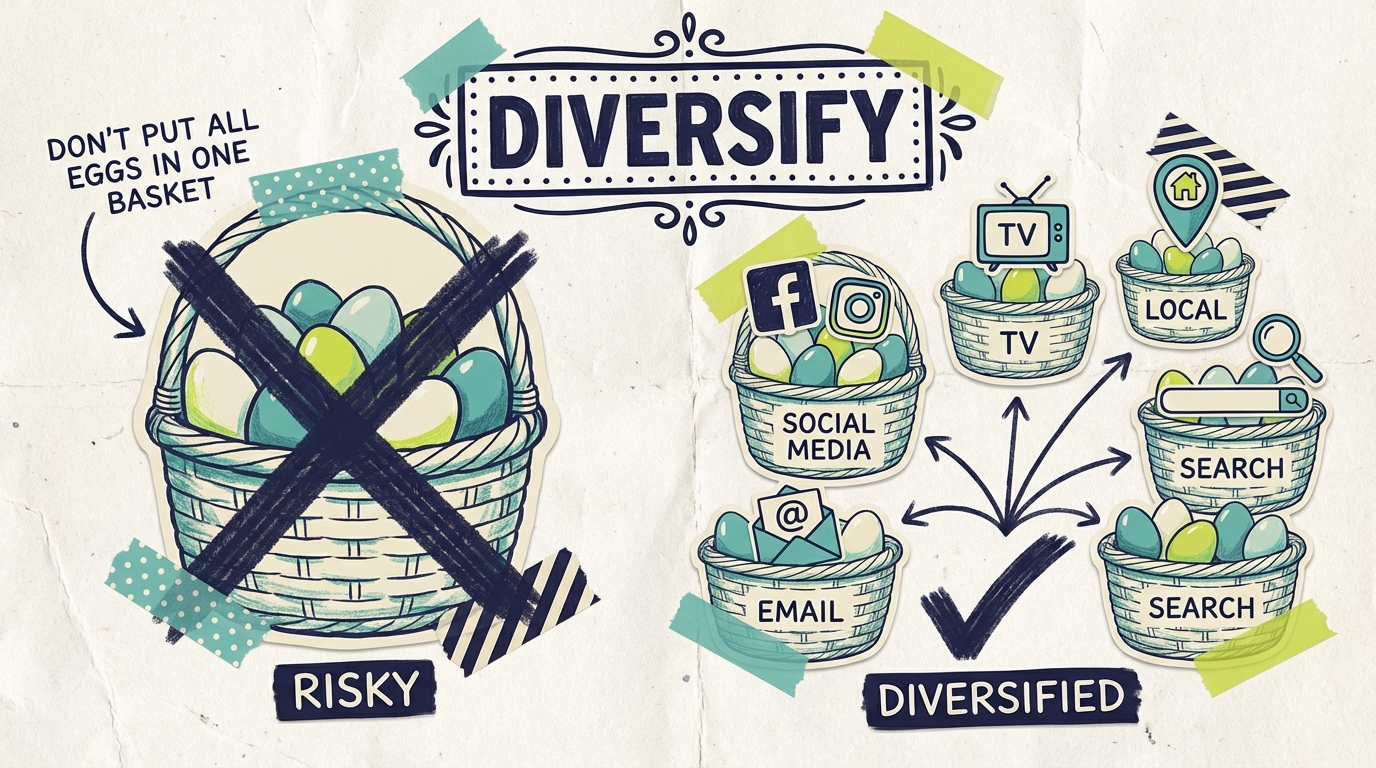
Adding TV advertising is one way to diversify. It reaches people who don't use social media heavily, builds brand credibility, and operates independently of digital platform algorithms.
Resolution #2: Actually Track What's Working
Most small businesses have a vague sense of what's working. "Facebook seems to bring people in." "Word of mouth is important." But vague isn't actionable.
Simple Tracking That Actually Works
You don't need complex attribution software. Start with basics:
Ask every customer: "How did you hear about us?" Train your team to ask, track responses consistently, and review monthly.
Monitor brand searches: Use Google Trends to watch searches for your business name. Awareness campaigns should move this needle.
Track website sources: Basic Google Analytics shows where traffic comes from. Look for trends, not just totals.
Watch timing patterns: Do sales spike after certain marketing activities? Look for correlations even if you can't prove causation.
Make Decisions With Data
Once you're tracking:
Double down on what's working
Cut what isn't (be ruthless)
Test new things with clear success criteria
Review quarterly, adjust accordingly
Resolution: In 2026, you'll know which marketing drives results, not guess.
Resolution #3: Invest in Brand, Not Just Leads
Lead generation feels immediately productive. You run ads, leads come in, you measure cost-per-lead. It's comfortable.
But businesses that only focus on leads are building on sand.
Why Brand Matters
When someone needs what you sell, you want them to think of you first. That only happens with brand awareness.
Without brand:
You compete on price and convenience
Every sale requires full persuasion
New competitors easily steal market share
Customer acquisition costs keep rising
With brand:
Customers seek you out
Trust is pre-established
Referrals come naturally
Price sensitivity decreases
How to Build Brand in 2026
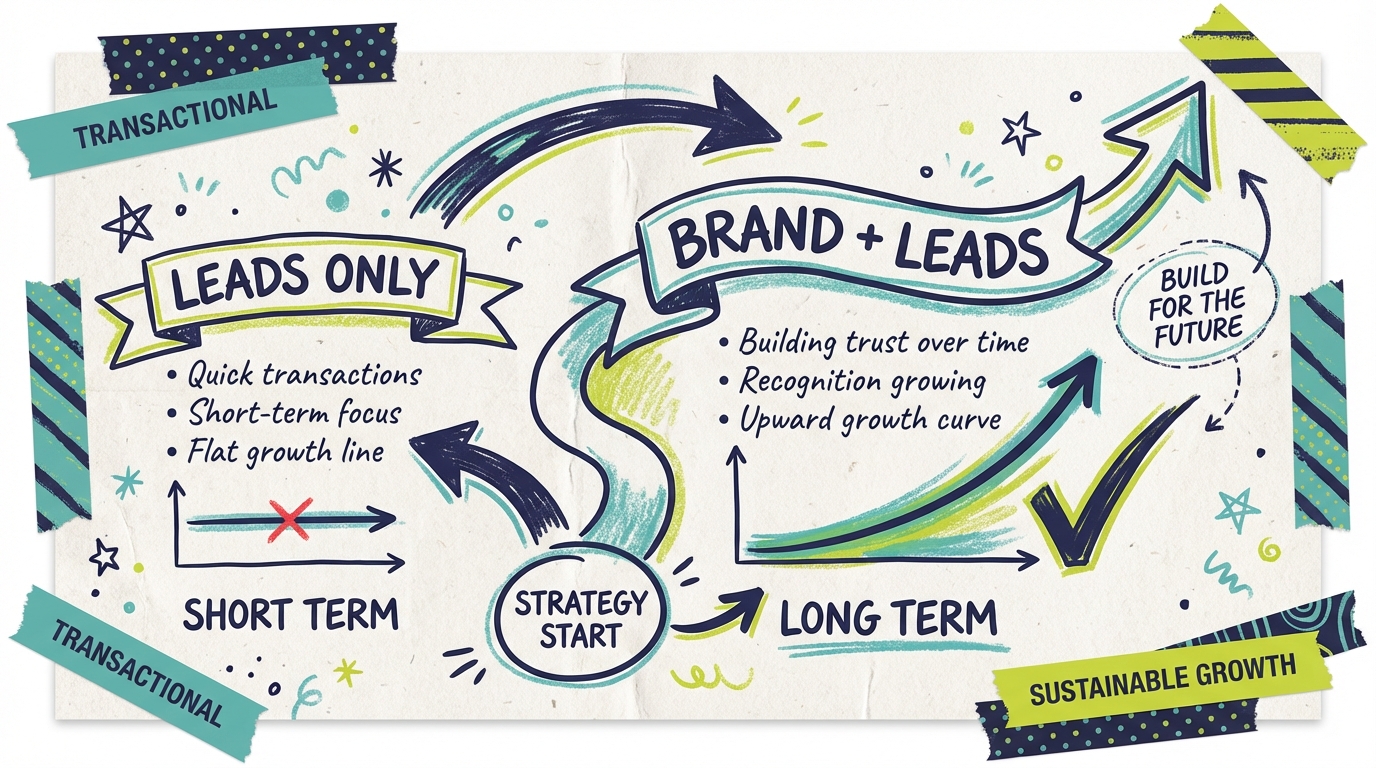
Allocate 20-30% of budget to awareness (not just conversion)
Tell your story consistently across channels
Invest in channels that build credibility (like TV)
Think in years, not just months
TV advertising is uniquely powerful for brand building. Appearing on the same screen as national brands signals legitimacy. Repeated exposure builds familiarity. And the emotional impact of video creates lasting impressions.
Resolution #4: Try One New Channel
Doing the same thing and expecting different results doesn't work. If you want 2026 to be better than 2025, you need to try something new.
Why One Channel (Not Five)
Don't overhaul everything. Adding one new channel:
Is manageable to learn and execute
Provides clear data on whether it works
Doesn't disrupt what's already working
Builds capability for future expansion
TV: The "New" Channel for Most SMBs
For most small businesses, TV advertising is unexplored territory. They assume it's too expensive, too complicated, or too mass-market.
Those assumptions are outdated.
Starts at $50 (not $50,000)
Runs on streaming platforms people actually watch
Targets your specific local area
Requires no production expertise
If you've never tried TV, 2026 is the year. While competitors keep fighting over the same digital channels, you'll be reaching people on the biggest screen in their homes.
Resolution #5: Plan Ahead (Don't Always React)
Reactive marketing is exhausting and expensive. You scramble for Black Friday, rush a Valentine's Day promotion, throw together something for summer. Every campaign feels last-minute.
The Planning Advantage
Proactive businesses:
Create content in batches (more efficient)
Book campaigns in advance (often cheaper)
Tell consistent stories across seasons
Build momentum instead of starting fresh each time
Building Your 2026 Calendar
Map your year now:
Q1 (Jan-Mar): New Year momentum, resolution-related promotions, post-holiday clearance
Q2 (Apr-Jun): Spring/summer prep, seasonal offerings, graduation season
Q3 (Jul-Sep): Back-to-school, summer wind-down, Labor Day
Q4 (Oct-Dec): Holiday season, year-end pushes, 2027 planning
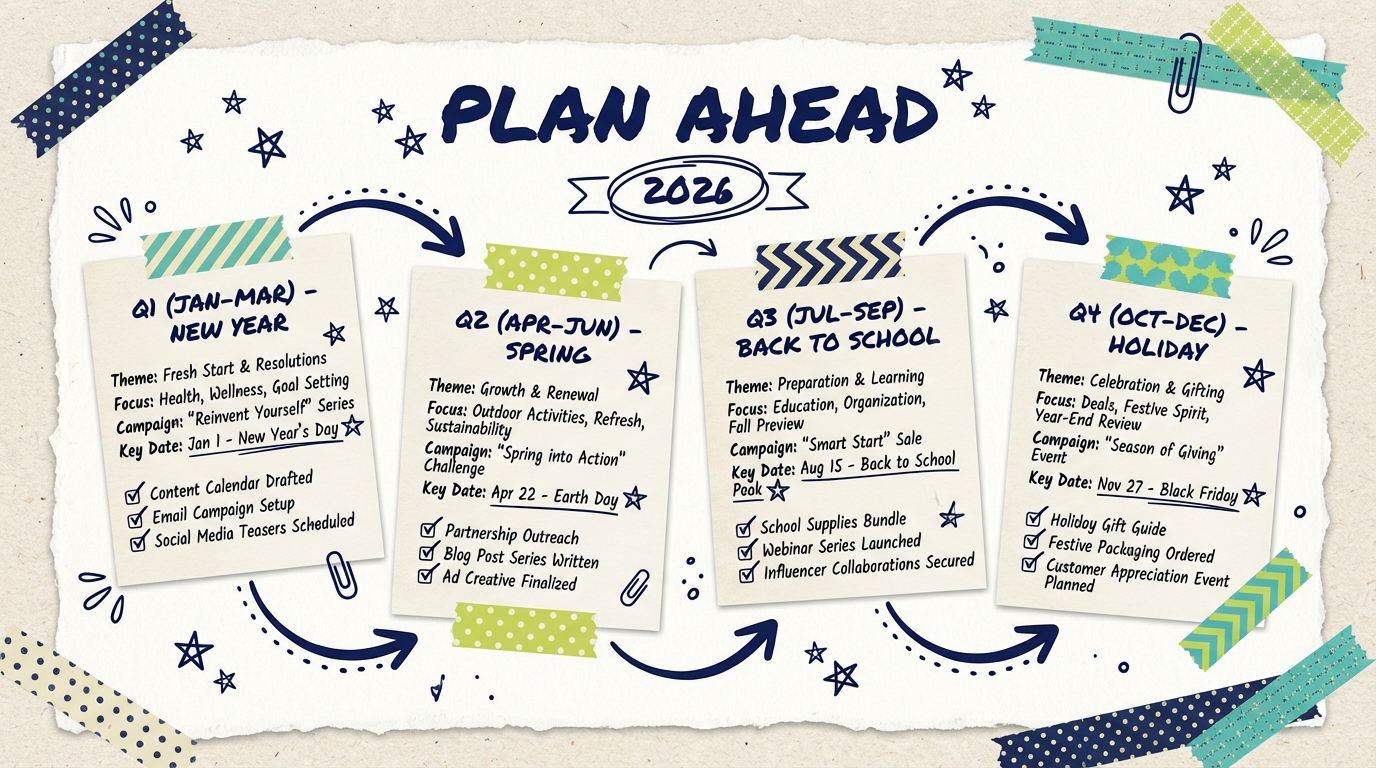
For each quarter, identify:
Key dates and opportunities
Campaign themes
Budget allocation
Channel mix
Planning now means executing confidently later.
Resolution #6: Tell Your Story More
People buy from businesses they connect with. Connection comes from story.
What Makes You Different?
Every business has a story worth telling:
Why you started
What you believe in
How you're different
Who you serve and why you care
These aren't just "About Us" page content. They're the foundation of all your marketing.
Storytelling in 2026
Make your story visible:
Video content: The most compelling storytelling medium
Consistent messaging: Same story, every touchpoint
Customer stories: Let satisfied customers tell your story
Behind-the-scenes: Show the humans behind the business
TV advertising is naturally story-driven. In 30 seconds, you can show what makes you special, who you are, and why you matter. It's not just advertising, it's introduction.
Building Your 2026 Marketing Plan
Ready to make these resolutions stick? Here's a practical framework:
Monthly Themes
Assign each month a marketing theme based on your business seasonality:
Budget Allocation Framework
A balanced 2026 marketing budget:
50-60%: Proven channels (what's working now)
20-30%: Brand building (TV, awareness campaigns)
10-20%: Testing new channels/approaches
Set Measurable Goals
For each quarter, define:
Revenue target
New customer acquisition target
Brand awareness metric (brand searches, survey results)
Channel-specific KPIs
Start Now, Not January 1
Here's the secret: businesses that win in January started in December.
Why start now?
December TV viewing is high (holiday break, family time)
Competition is focused on holiday sales, not awareness
January recognition comes from December exposure
You'll enter 2026 with momentum, not a cold start
Don't wait for January 1 to make changes. Create your first TV ad now, run it through December, and enter 2026 with awareness already building.
Make 2026 Your Breakout Year
Most businesses will enter 2026 doing the same things they did in 2025. Same channels, same messages, same results.
You don't have to be most businesses.
Pick your resolutions. Start with one or two. Execute consistently. And consider trying something genuinely new, like putting your business on the biggest screen in people's homes.
Adwave makes TV advertising accessible for businesses of any size. Starting at $50, with AI-generated creative, you can be on TV before the year ends. While others wait for January to make changes, you'll already be ahead.
Make 2026 the year you stopped hoping for better results and started creating them.
Related Resources:
Common questions answered
What marketing resolutions should small businesses make?
Focus on consistency over intensity: committing to regular marketing activity matters more than occasional big campaigns. Other valuable resolutions include diversifying beyond one channel, improving measurement, and testing new channels like TV that you've avoided.
How do I stick to marketing resolutions?
Build marketing into your regular routine rather than treating it as an extra task. Set specific, measurable goals rather than vague intentions. Automate what you can and schedule dedicated time for what requires attention.
What marketing channels should I try in the new year?
Consider channels you've assumed were "not for you." TV advertising is now accessible to small businesses. Podcast advertising reaches engaged audiences. Direct mail has higher open rates than email. Testing one new channel each quarter prevents overwhelm.
How much should I budget for marketing in the new year?
Plan for 5-10% of revenue depending on your growth goals. More important than the total is having a plan for how you'll allocate and measure it. Start the year with a budget and calendar rather than making reactive decisions.


