
You've done the hard part. You built a successful business. Now you're ready to expand.
But here's the paradox: your new location starts at zero. No one in the new market knows you. No word of mouth. No reputation. No loyal customers walking through the door.
You need to fast-track awareness, and that's exactly where TV advertising becomes your expansion accelerator. With geographic targeting, you can reach your new service area specifically, building recognition in weeks instead of months.
This guide walks you through marketing your second location successfully, from pre-opening buzz to sustained growth.
The New Location Marketing Timeline
Successful expansion marketing follows a clear timeline. Start too late, and you're playing catch-up. Plan ahead, and you open with momentum.
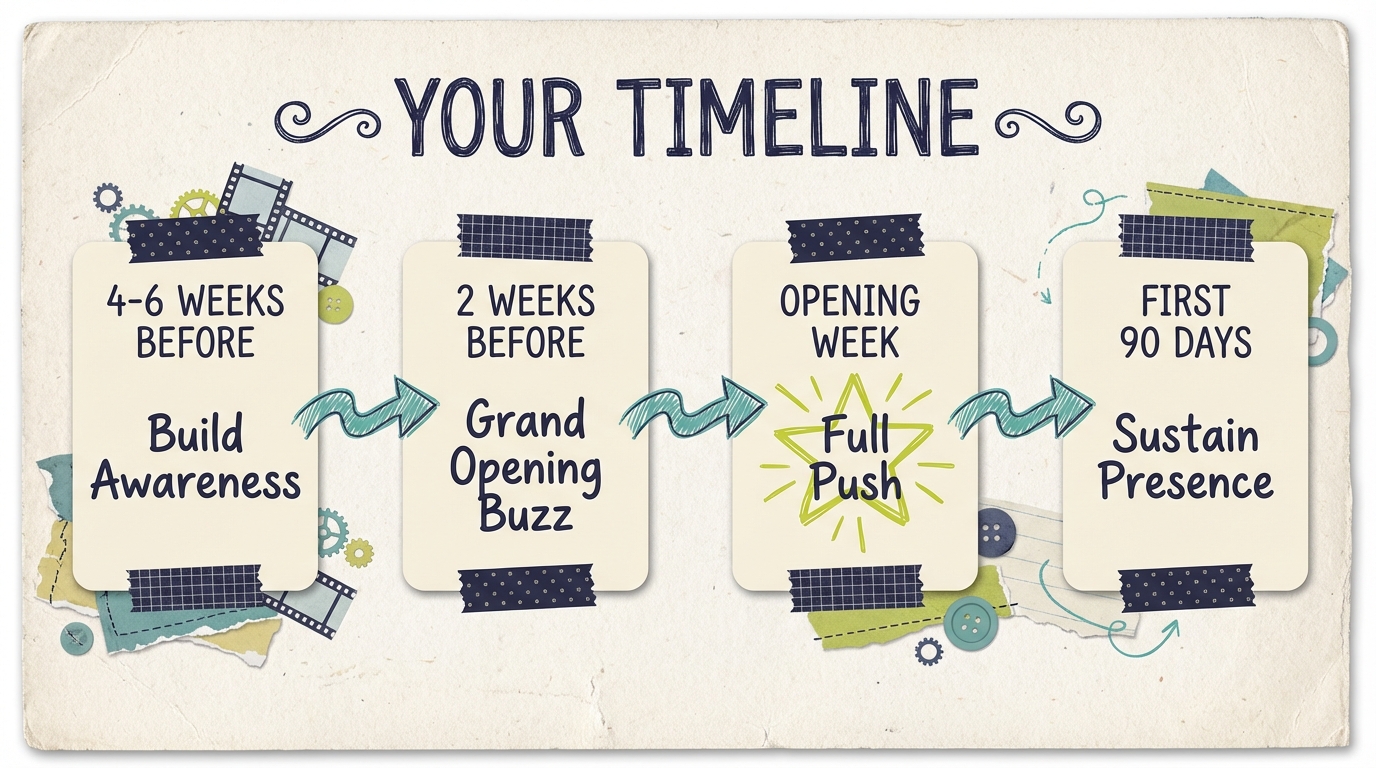
4-6 weeks before opening: Build awareness
Start introducing yourself to the new market. People need to see your brand multiple times before they recognize it.
Launch TV campaigns targeting your new service area
"Coming soon to [Location]" messaging
Begin local social media presence
Set up Google My Business for the new location
2 weeks before: Grand opening buzz
Shift to anticipation mode. Make the opening an event people want to attend.
"Opening [Date]" specific messaging
Special opening promotions announced
Local media outreach
Community partnerships and local influencers
Opening week: Full push
Your biggest marketing moment. Go all-in.
Heaviest TV schedule of the campaign
Grand opening event
Opening day promotions
All channels promoting simultaneously
First 90 days: Sustained presence
Keep the momentum going. New location awareness takes time to compound.
Consistent TV presence (don't go dark after opening)
Customer acquisition focused messaging
Build reviews and social proof
Nurture new customer relationships
Leveraging Your Existing Brand
You're not starting completely from scratch. Your existing business has assets you can transfer to the new market.
What transfers:
Your brand identity and messaging
Professional creative assets (photos, videos, logos)
Proven offers and promotions that work
Customer testimonials (with permission)
Your operational excellence and service standards
What needs to be built fresh:
Local awareness and recognition
Community relationships
Local reviews and social proof
Word-of-mouth referral networks
Search presence for the new area
Using social proof from location one:
"Voted Best [Category] in [City 1]" carries weight even in a new market. It signals quality and success. Feature awards, review ratings, and testimonials from your established location prominently in new market advertising.
TV Advertising for New Locations
TV is particularly powerful for new location launches because of geographic targeting.
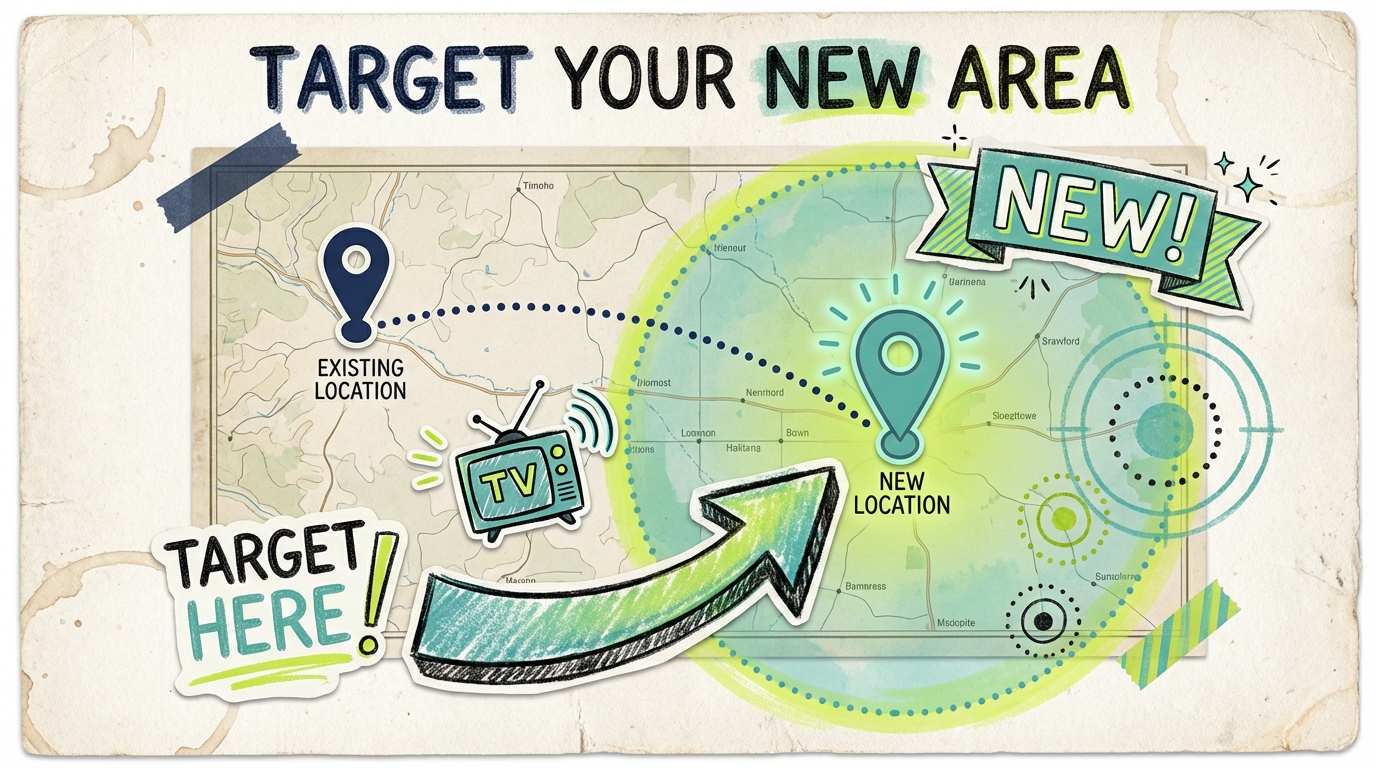
Geographic targeting precision: Unlike other advertising, CTV advertising lets you set a radius around your new location. You're not paying to reach people who live too far away. Every impression goes to a potential customer.
"Now open" messaging: Clear, simple, effective. "Now open in [Neighborhood/City]" tells viewers exactly what they need to know.
Building recognition fast: TV accelerates the timeline from "never heard of you" to "I recognize that name." What takes years through word of mouth can happen in weeks with consistent TV presence.
Premium credibility: Appearing on TV signals legitimacy. For a new location, this is crucial. People are more likely to try a new business they've seen on TV because it suggests stability and success.
The Grand Opening Campaign
Your grand opening is a once-in-a-location-lifetime opportunity. Plan it carefully.
Pre-opening teasers (2-4 weeks out):
"Coming soon" TV spots
Behind-the-scenes on social media
"Get ready" email to existing customers in the new area
Countdown on website and social
Opening week promotions:
Grand opening special (discount, free item, bonus service)
First customers get special treatment
Giveaways or drawings
Family-friendly activities (if appropriate to your business)
Local community engagement:
Partner with nearby businesses for cross-promotion
Chamber of commerce involvement
Local charity tie-in
Neighborhood-specific messaging
Media and influencer outreach:
Press release to local media
Invite local food/business bloggers
Social media influencer partnerships
Local newspaper and event calendars
Multi-Channel Launch Strategy
TV builds awareness, but the strongest launches use multiple channels together.
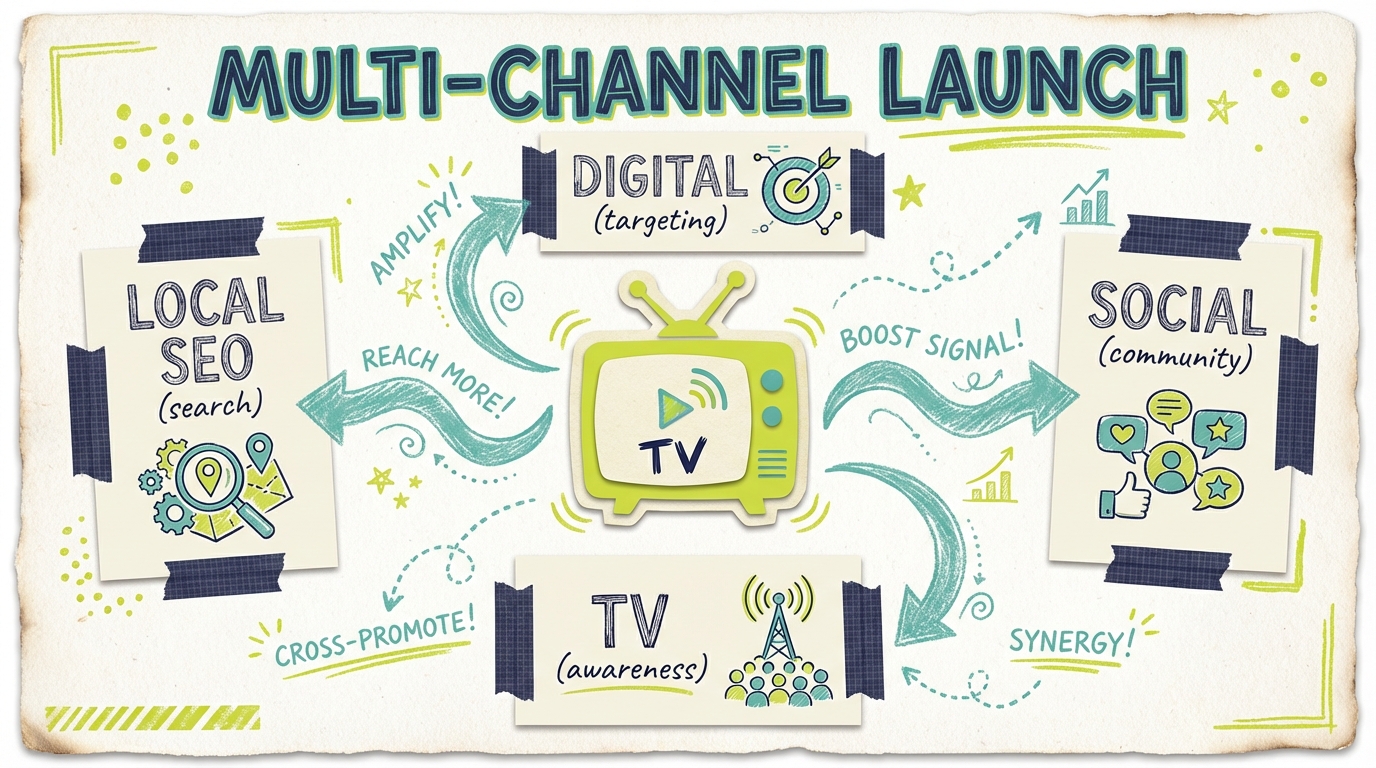
TV for awareness: This is your foundation. TV puts your brand in front of thousands of potential customers in your new service area, on the most trusted screen in the home.
Digital for targeting: Retarget website visitors. Run geo-targeted social ads. Capture people who searched for your category. Digital complements TV by reaching people ready to act.
Local SEO from day one: Set up Google My Business before you open. Start building citations. Have your website's location page live and optimized. When people search after seeing your TV ad, be there.
Social media community building: Start a local social presence for the new location. Join local Facebook groups. Engage with the community. Make it personal.
The amplification effect: When TV, digital, SEO, and social all work together, each channel amplifies the others. Someone sees your TV ad, searches for you on Google, finds your social media, and converts. That's the multi-channel magic.
Budget Planning for Expansion
How much should you spend marketing a new location?
Industry rule of thumb: Plan for marketing to be 10-15% of projected first-year revenue for a new location. This is higher than an established location because you're building awareness from scratch.
Front-load vs. sustain: Front-loading (spending more early) makes sense for launches. Plan 40-50% of your first-year marketing budget for the first 90 days. Then sustain presence with the remainder.
Budget example for a new location:
First year projected revenue: $500,000
Marketing budget (12%): $60,000
First 90 days (45%): $27,000 (~$9,000/month)
Remaining 9 months (55%): $33,000 (~$3,700/month)
TV budget allocation:
With Adwave's $50 minimum, you can test TV without committing your entire budget. A typical new location TV strategy might be:
Pre-opening: $500-1,000 (awareness building)
Opening week: $1,000-2,000 (full push)
First 90 days: $500-1,000/month (sustained presence)
That's $3,500-6,000 for TV in the critical first 90 days, a fraction of your total marketing budget for significant awareness-building impact.
Measuring New Location Success
How do you know your expansion marketing is working?
Customer acquisition metrics:
New customers per week/month
Customer acquisition cost (marketing spend ÷ new customers)
First-time vs. repeat visitor ratio
Source of customers ("How did you hear about us?")
Brand awareness indicators:
Direct traffic to location-specific website pages
Branded search volume in the new market
Social media following growth
"I saw your ad" customer mentions
Business performance:
Revenue trajectory vs. projection
Break-even timeline
Comparison to location one's early performance
Review volume and rating
Adjust based on data: If customer acquisition is slower than expected, increase marketing. If a specific channel is outperforming, shift budget there. Launch marketing is iterative.
Launch Your New Location with TV
Expansion is exciting, but building awareness in a new market takes intentional effort. TV advertising gives you the fastest path to recognition, reaching your new service area specifically with the credibility that comes from appearing on the biggest screen in the home.
Don't let your new location struggle for months to build awareness. Start your new location TV campaign today and give your expansion the visibility it needs to succeed.
With geographic targeting, you reach exactly the customers who can visit your new location. With campaigns starting at $50, you can test what works before scaling up.
Your new market is waiting. Make sure they know you've arrived.
Common questions answered
How do I market a second business location?
Start by announcing to your existing customer base, who may know people in the new area. Build local awareness through targeted advertising to the new location's geography. Leverage your established brand while adapting messaging to the new community's specific needs.
Should I use the same marketing for multiple locations?
Use consistent branding but localize your marketing. Each location serves a different community with different competitors and needs. TV advertising is effective because you can run the same brand message but target each location's specific geography.
How long does it take for a new location to become established?
Most second locations take 12-18 months to reach the original location's performance. Faster results come from aggressive initial marketing to build awareness quickly, then maintaining consistent presence as the location matures.
What marketing mistakes do businesses make when opening a second location?
The biggest mistakes are under-investing in awareness marketing for the new location, assuming the existing brand will carry over automatically, and not adapting to the new location's competitive landscape. Each location needs dedicated marketing attention.


