
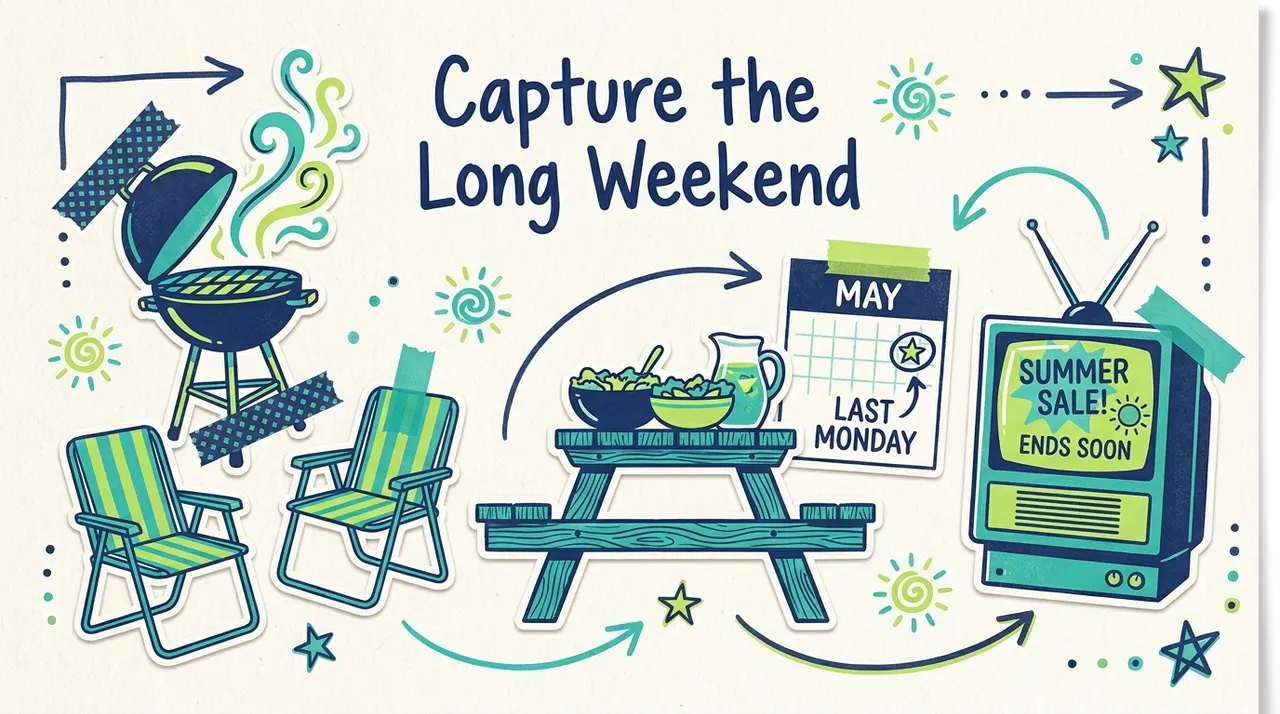
Memorial Day weekend is one of the most concentrated buying windows of the year for local businesses. Travel ramps up. Cookouts get planned. Retail does heavy seasonal promotion. Home services see their first major spring rush. And TV viewership stays strong through the long weekend because households are home, hosting, or unwinding in the evenings. For small businesses with anything to offer in late May, the Memorial Day window deserves a real plan rather than a passing thought.
This guide walks through how to build a Memorial Day TV campaign that respects the meaning of the holiday, captures the buying window, and produces measurable results. Whether you're a retailer running a promotion, a home services business catching summer-prep demand, or a hospitality operator gearing up for the season, the framework here applies.
What Memorial Day means for small business marketing
Memorial Day, observed on the last Monday of May, honors American military personnel who died in service. Veterans Day honors all veterans, and Independence Day marks the Fourth of July. Use respectful wording appropriate to each holiday.
That distinction matters for marketing. Memorial Day weekend advertising can lean into the unofficial "start of summer" energy that the long weekend has come to represent in American culture, but the creative needs to be careful not to commodify the underlying meaning of the day. Saying "Happy Memorial Day, save 30%!" reads as tone-deaf to a meaningful share of consumers. Saying "Memorial Day weekend savings, summer starts now" lands more cleanly.
Three creative approaches that respect the holiday while capturing the buying window:
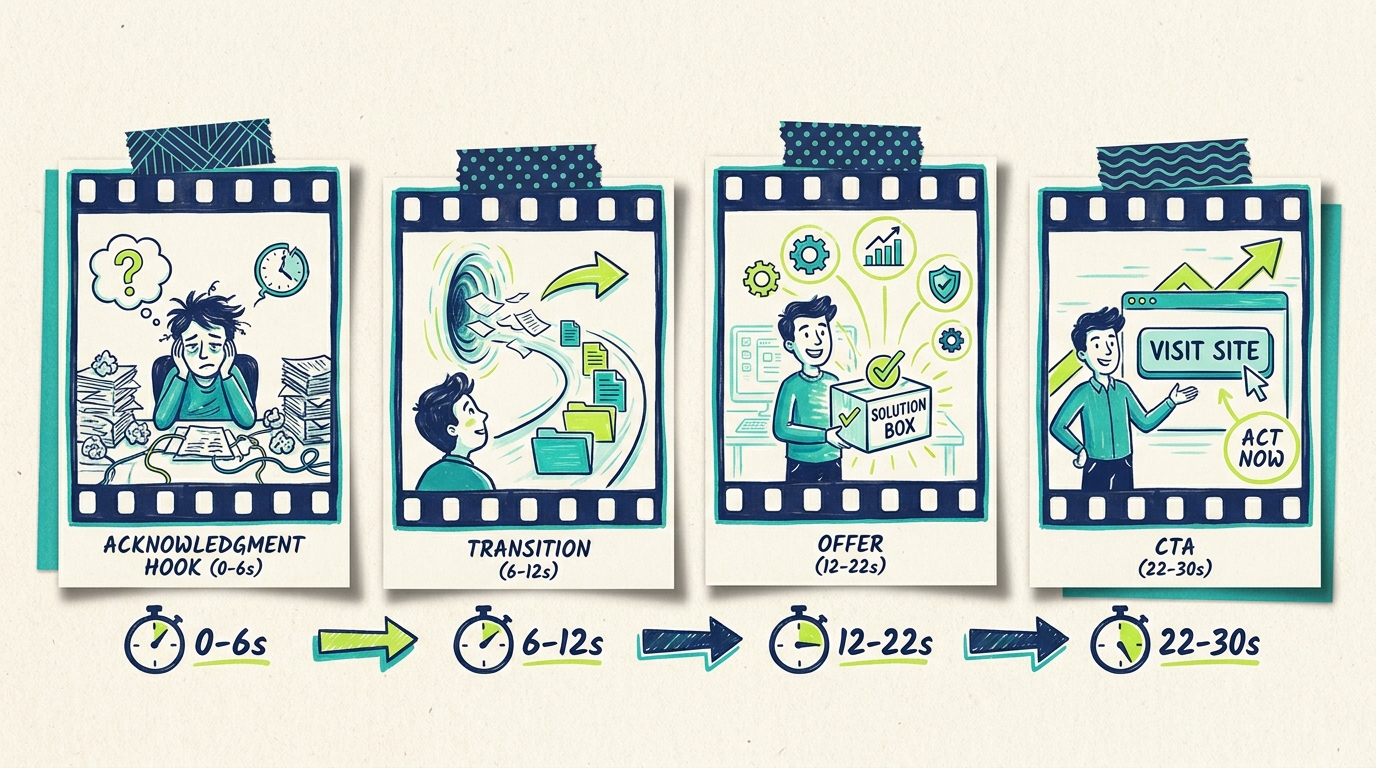
1. Acknowledge the day's meaning briefly, then transition to the offer. A 3-5 second opening that recognizes service members, followed by the campaign's actual message. The acknowledgment doesn't have to be heavy. A simple "this Memorial Day, we honor those who served" before transitioning to "and we're helping you make the most of the summer ahead with…" works for most categories.
2. Lean into the "start of summer" framing rather than Memorial Day specifically. Many successful campaigns position around the long weekend as the start of summer rather than around Memorial Day specifically. Reduces the risk of mismatched tone while still capturing the buying window.
3. Skip Memorial Day-specific creative entirely and run general spring or summer campaigns. For some categories (financial services, healthcare, certain professional services), the Memorial Day framing can feel forced. Running a general spring-into-summer campaign during the same window captures the audience without trying to attach to the holiday.
The wrong move is generic "happy Memorial Day, here's a sale" creative without any acknowledgment of what the day represents. Consumers notice the disconnect.
Why TV matters in the Memorial Day window
Three factors make TV especially effective in the days leading into Memorial Day weekend:
1. Heavy streaming viewership. The long weekend keeps households home in the evenings, and even pre-holiday week (Wednesday and Thursday before the weekend) sees elevated streaming hours. CTV inventory delivers strong frequency during this window because the audience is watching more.
2. Decision-making concentration. A household deciding "where should we go for dinner Friday night?" or "should we tackle the yard before Monday?" or "do we need new patio furniture before the cookout?" is making a fast-cycle decision in the days leading up to the weekend. TV creative reaches that decision moment with high attention quality.
3. Coordinated digital lift. Memorial Day weekend is one of the highest-volume search and Meta windows of the year for local categories. Running CTV in coordination with paid digital lifts the conversion rate on both channels meaningfully during this window.
Building the Memorial Day TV plan
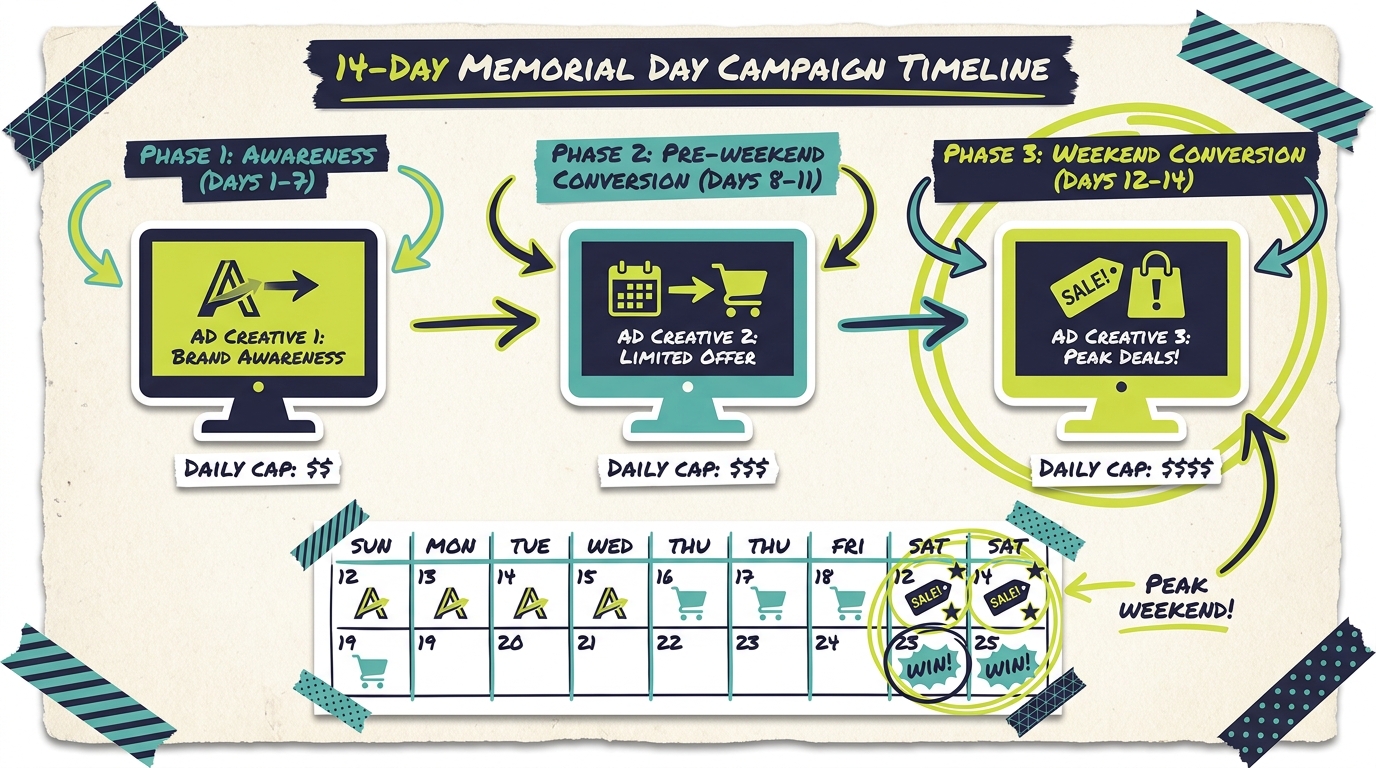
A typical Memorial Day TV campaign for a local business runs across three phases tied to the holiday calendar.
Phase 1: Pre-weekend awareness (10-14 days before the holiday)
The first phase of the campaign runs in mid-May and builds the awareness layer that converts during the weekend itself.
Creative emphasis: General summer-readiness framing. "Get ready for the summer that's almost here." Soft introduction of any Memorial Day-specific offer or messaging. Brand awareness work that doesn't yet push hard for action.
Targeting: Standard service area, no daypart specialization yet.
Daily cap: Modest. The goal is steady presence rather than concentrated weight.
Phase 2: Pre-weekend conversion (3-5 days before the holiday)
The second phase ramps in the final week before the long weekend. Creative shifts to specific offer-focused framing, daily caps push higher, and the campaign moves into peak persuasion mode.
Creative emphasis: Specific Memorial Day weekend offer or seasonal promotion. The hook acknowledges the meaning of the day briefly, then transitions to the campaign's specific message and call to action.
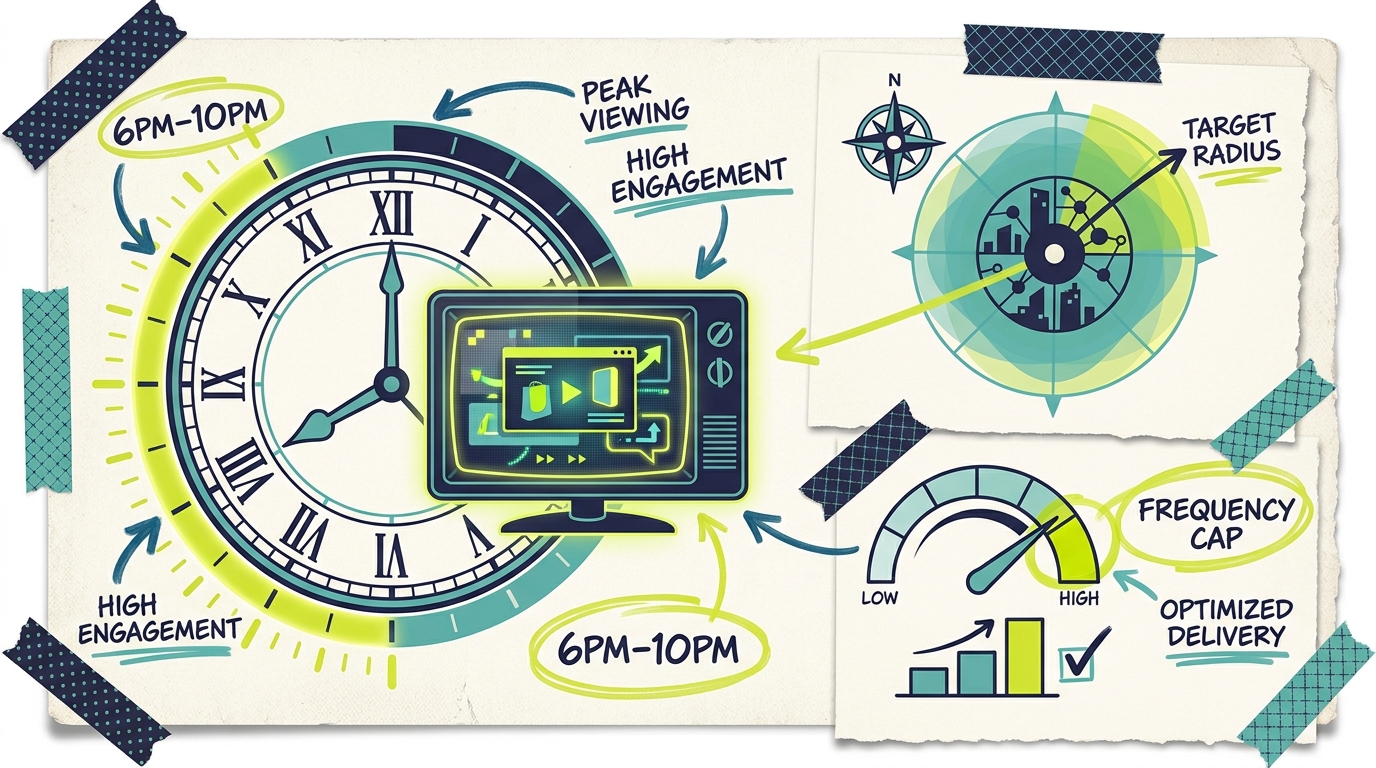
Targeting: Standard service area, with potential daypart push toward evening windows (6-10 p.m.) when household decision-making happens.
Daily cap: Elevated. This is the campaign's heaviest spend window.
Phase 3: Weekend conversion and recency (Friday through Memorial Monday)
The third phase runs through the weekend itself. Creative emphasizes immediacy and the limited window of the offer.
Creative emphasis: Time-limited urgency. "Today only" or "All weekend" framing. CTAs are direct: "Visit us this weekend" or "Order today for delivery by Monday." Recency cues for the audience that's been seeing the brand for two weeks.
Targeting: Maintain standard service area. Some campaigns add a "consider one final push on Monday morning" segment for businesses that benefit from holiday-day visits.
Daily cap: Sustained at elevated phase 2 levels through the weekend, with a wind-down on Monday afternoon.
Phase 4 (optional): Post-weekend wind-down (1-3 days after the holiday)
A small fourth phase can extend the campaign 1-3 days into the week after the holiday for some categories. Travel, hospitality, and home services often see continued momentum mid-week as consumers act on Memorial Day-weekend decisions.
What to put in your 30-second Memorial Day spot
A practical structure for a 30-second spot in the Memorial Day window:
Seconds 1-5: Acknowledgment hook. A brief, respectful acknowledgment of the day if you're framing around Memorial Day specifically, or a "summer is here" hook if you're framing around the long weekend more generally. Calm, warm tone. Avoid heavy-handed flag imagery unless your brand has a legitimate military or veteran connection.
Seconds 6-15: The transition. Move from acknowledgment to your business's role in the summer ahead. "As you fire up the grill" or "before the family gets together this weekend" or "as you plan the season's first big project." The transition contextualizes your business in the customer's moment.
Seconds 16-25: The offer or message. Your specific promotion, your specific message, your specific value proposition. Be specific. "20% off all patio furniture through Monday" or "Schedule your AC tune-up before the first heatwave" or "Free dessert for tables of 4 or more this weekend." Vague offers underperform specific ones in this window.
Seconds 26-30: The CTA and brand lock-in. Direct, time-bound call to action. "Visit us this weekend at [address]" or "Order online by Sunday for Monday delivery." Brand name and URL on screen. The brand lock-in is what carries forward into the post-weekend memory.
Targeting decisions that matter
A few specific moves separate strong Memorial Day TV campaigns from average ones:
Tighter daypart focus in the final week. The pre-holiday week (Tuesday through Friday before Memorial Day) rewards evening daypart concentration. Households make weekend decisions during 6-10 p.m. streaming hours.
Geographic targeting matching your actual draw. Memorial Day is not the time to expand your service radius. Tight targeting to your real customer geography produces better frequency and conversion.
Frequency targeting in the 4-6 range. A frequency cap of 4-6 over the 2-week campaign window builds enough recall to drive weekend action without burning impressions on already-converted households.
Day-specific creative for Saturday vs Sunday vs Monday. Some campaigns run different creative for each day of the weekend (Saturday: "today's the day"; Sunday: "still time this weekend"; Monday: "last day of the long weekend"). The day-specificity adds urgency.
Common questions answered
Should every small business run a Memorial Day TV campaign?
Not every business benefits from Memorial Day-specific framing. Categories with strong fit: retail (especially home, garden, outdoor goods, apparel), home services (HVAC, landscaping, pool, exterior), hospitality (restaurants, hotels, attractions), automotive (service and sales). Categories with weaker fit: most professional services, healthcare, financial services. Those categories often do better with general spring-into-summer campaigns that happen to run during the same window.
How long should a Memorial Day TV campaign run?
For most small businesses, 10-14 days of total campaign duration produces the best return. Shorter than that and you don't build enough recall before the weekend; longer and you're competing against the rest of the summer ad market with diluted Memorial Day specificity.
What's the right TV budget for a Memorial Day campaign?
Most local small businesses running Memorial Day-specific TV land in the $1,200-$3,500 range for the 10-14 day campaign window. The exact budget depends on geographic size and competitive pressure in the local market.
Is Memorial Day creative considered "ad coverage" of the holiday by the platforms?
CTV platforms generally treat Memorial Day creative as commercial advertising rather than political or news-related coverage, though specific platform policies vary. Creative that respects the meaning of the day (rather than commodifying it heavily) typically passes review without issues.
Should I coordinate Memorial Day TV with my Meta and Google campaigns?
Yes. The cross-channel lift is one of the strongest patterns in holiday-pegged campaigns. When your CTV, Meta, and Google all run synchronized creative and offer during the same window, conversion rates on each channel tend to lift meaningfully. Plan the campaign as a coordinated effort across all channels rather than separate platform-specific pushes.
How do I measure ROI on a Memorial Day TV campaign?
Pre/post baseline measurement. Track total revenue, foot traffic, or inquiries for the 4 weeks before the campaign launch. Compare against the campaign weeks. The total lift over baseline is the campaign's contribution. Direct attribution (QR codes, vanity URLs, "how did you hear about us?" survey) will undercount; baseline lift is the better measure.
What if Memorial Day weekend weather is bad in my area?
Weather is the wildcard for outdoor-tied categories (retail patio goods, hospitality, certain home services). Build a small adaptive contingency: if weather looks unfavorable 72 hours before the weekend, have an alternate creative ready that shifts the messaging slightly (more indoor/grilling-shelter focus, more delivery focus, etc.). AI creative tools make these adaptive swaps fast enough to be practical.
Sample 14-day Memorial Day plan
A worked example for a local home services business (HVAC, plumbing, exterior services):
Day -14 to -10: Campaign launch with general "summer is almost here" awareness creative. Daily cap $80. Geographic targeting to standard 10-mile service area.
Day -9 to -6: Maintain. Watch dashboard for geographic distribution. Tighten if needed.
Day -5 to -3 (Tuesday-Thursday before holiday): Phase 2 launch. Switch to Memorial Day weekend-specific creative with a concrete offer (free AC tune-up scheduling, discounted pre-summer service package). Daily cap raised to $130.
Day -2 to Day 0 (Friday, Saturday, Sunday): Phase 3. Day-specific creative ("schedule today for next week" Friday; "limited weekend appointment availability" Saturday). Daily cap maintained at $130.
Day 1 (Memorial Day Monday): Holiday-day wind-down creative. Daily cap reduced to $80. "Final day of Memorial Day pricing."
Day 2-3 (Tuesday-Wednesday after holiday): Optional wind-down extending the offer for consumers who acted on weekend decisions after Monday. Daily cap $60.
Total campaign spend across the 14-day window: roughly $1,400-$1,800.
Make the most of the window
Memorial Day weekend is one of the few buying windows of the year concentrated enough that small businesses can build a real campaign around it. The TV layer delivers the household-level reach and trust that converts during the weekend itself; coordinated digital channels capture the active search and social demand the TV layer creates.
For local retailers, home services businesses, restaurants, hospitality operators, and anyone with summer relevance, the Memorial Day window deserves real planning rather than a passing thought.


