-
90M
Roku streaming households (Jan 2025)
-
#1
Selling TV OS in US, Canada, Mexico
-
50%+
Of US internet households use Roku
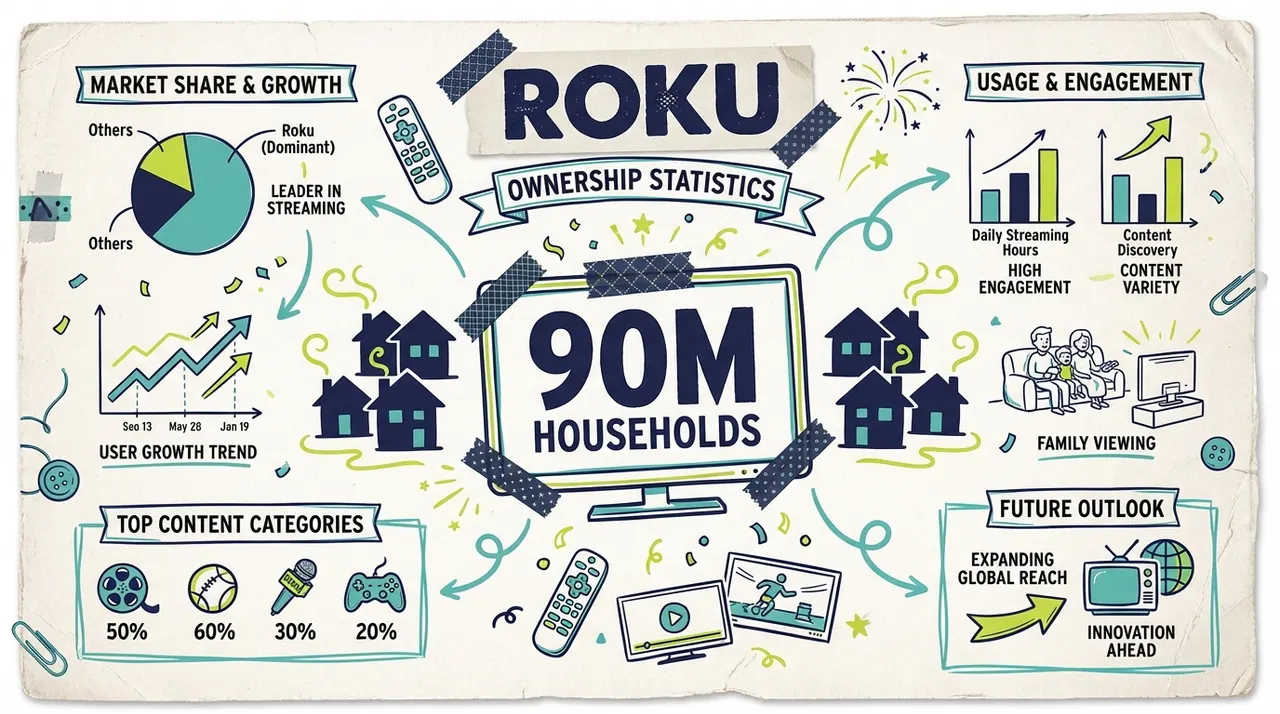
Roku surpassed 90 million streaming households in January 2025, according to Roku's official announcement. This makes Roku the number one selling TV operating system in the United States, Canada, and Mexico. The Roku OS now powers streaming in over half of all internet-enabled households in the United States, establishing Roku as the dominant gateway for streaming television access. For advertisers, Roku's extensive device penetration creates significant reach opportunities through both platform advertising and The Roku Channel's growing viewership.
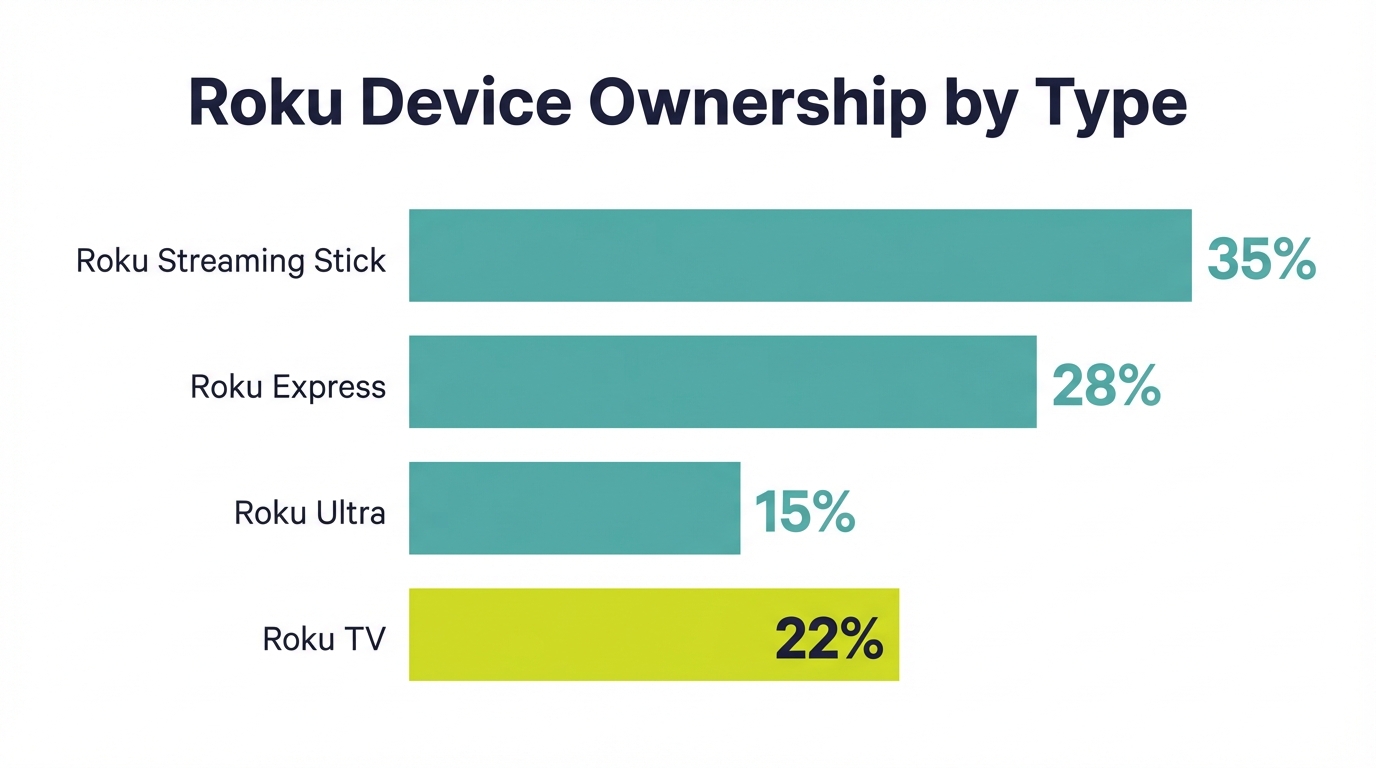
Understanding Roku's device ownership requires distinguishing between different device types and usage patterns. Roku devices include dedicated streaming players (Roku Express, Roku Streaming Stick, Roku Ultra), Roku-powered smart TVs from manufacturers like TCL and Hisense, and Roku soundbars with built-in streaming. The 90 million household figure represents active streaming households using any Roku device, making it the broadest measure of Roku's advertising reach.
What the data shows
Roku's device ownership and usage metrics demonstrate its platform dominance.
Household penetration metrics
Roku's official data shows extensive household reach:
90 million: Streaming households using Roku devices (January 2025)
50%+: Share of U.S. internet households using Roku
#1: TV operating system market share in US, Canada, and Mexico
1 in 3: Smart TVs sold in North America run Roku OS
These metrics establish Roku as the primary gateway for streaming television in North America, with reach exceeding any individual streaming service.
Device type distribution
Roku's household penetration comes through multiple device types:
Roku TVs: Smart televisions with Roku OS built in (TCL, Hisense, others)
Streaming players: Dedicated devices (Express, Streaming Stick, Ultra)
Soundbars: Roku Streambar and Streambar Pro with streaming built in
Multiple devices: Many households have Roku devices in multiple rooms
The prevalence of Roku TVs has been especially significant for growth, as consumers buying affordable smart TVs often get Roku OS by default.
Growth trajectory
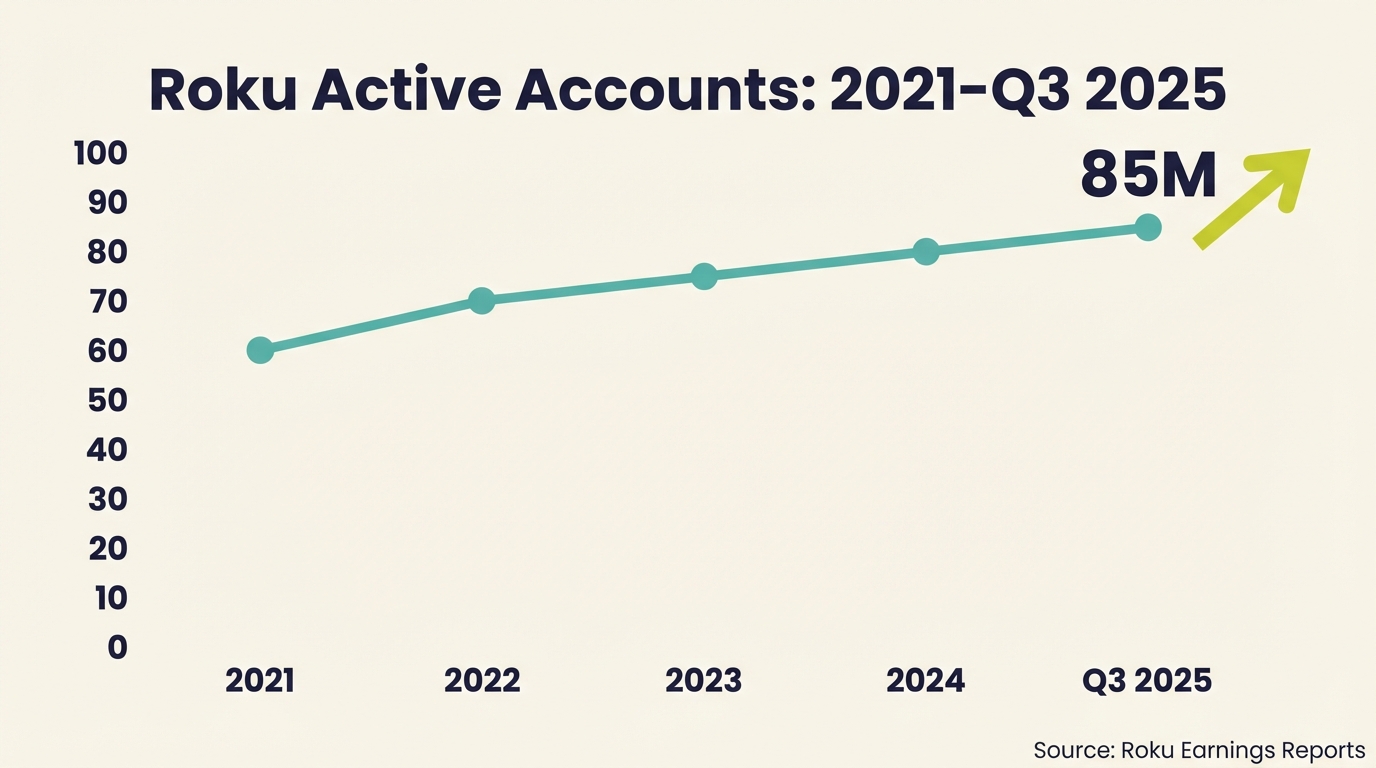
Roku's household count has grown consistently:
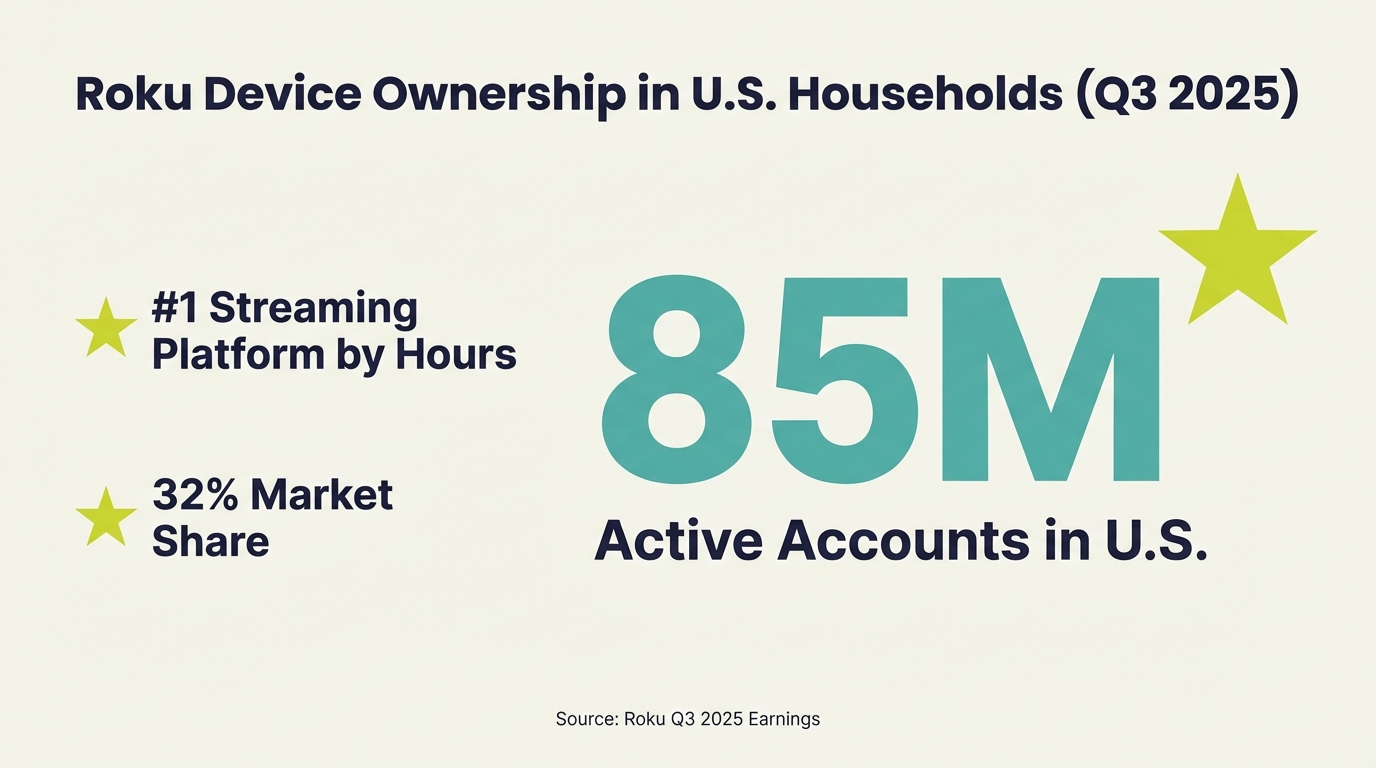
80 million: Active accounts approximately one year earlier
+10 million: Annual household growth
Sustained growth: Continued expansion despite market maturation
Multi-year trend: Growth from under 50 million just a few years ago
This growth trajectory suggests Roku will continue expanding its household reach, though growth rates may moderate as the market approaches saturation.
Competitive positioning
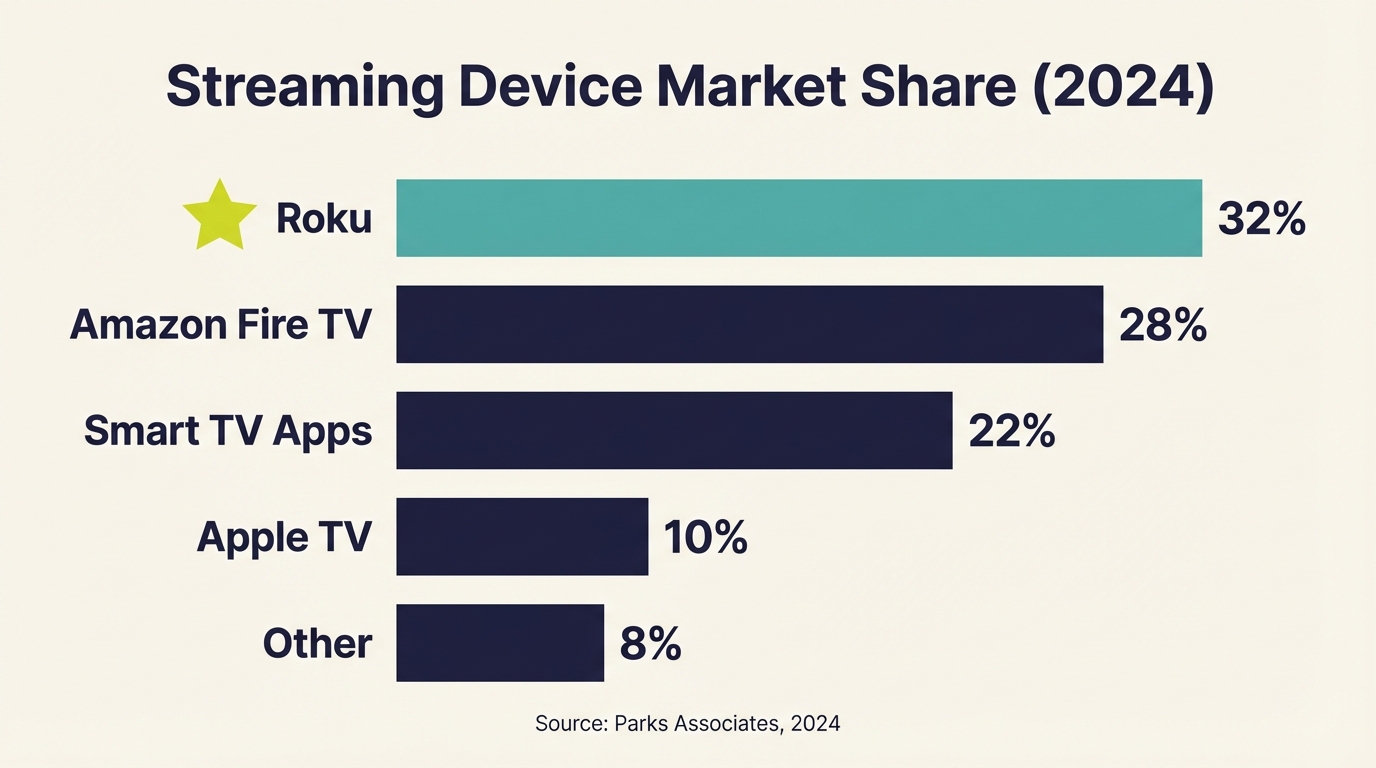
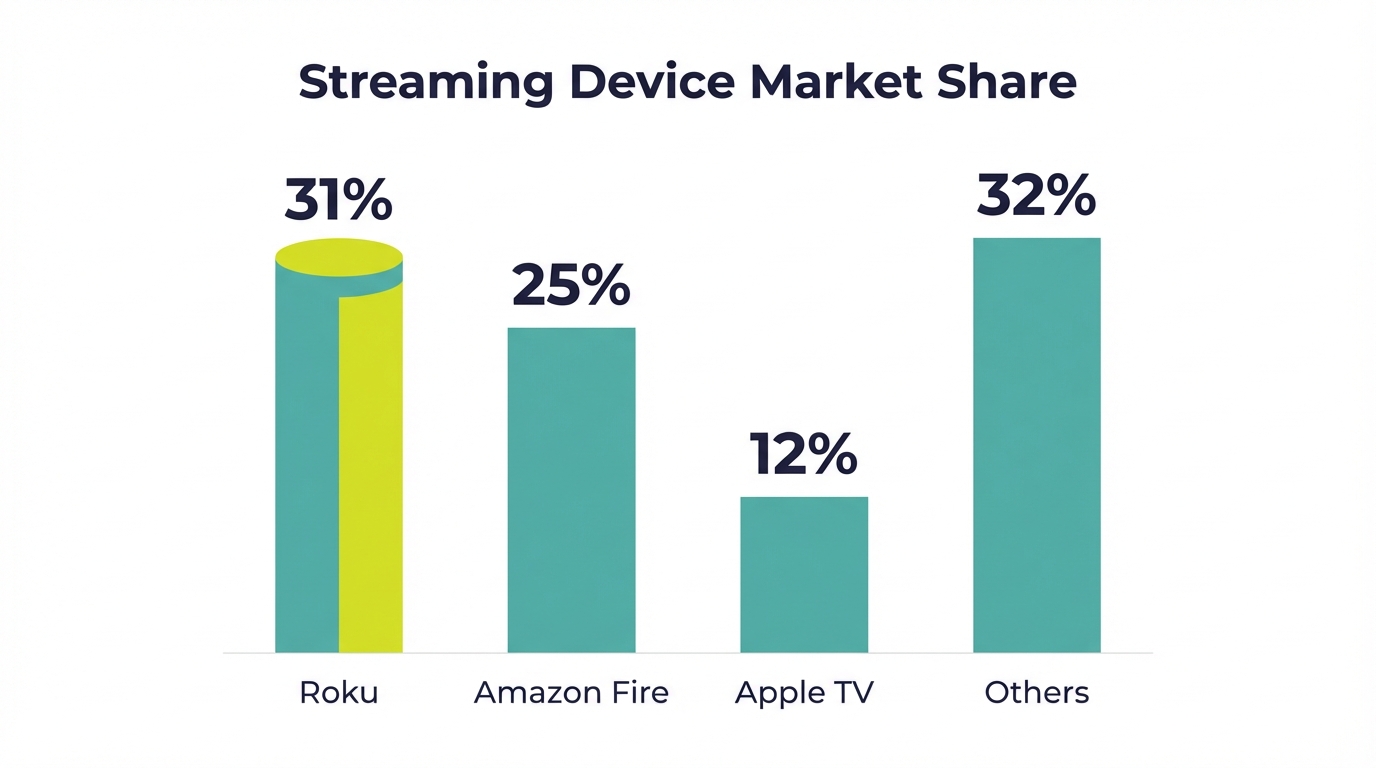
Roku leads competing streaming platforms in device penetration:
Roku: 90 million households, #1 position
Amazon Fire TV: Approximately 70 million active users globally
Apple TV: Smaller user base, premium positioning
Google TV/Android TV: Growing but fragmented across manufacturers
Samsung/LG native: Limited to their own TV brands
Roku's lead over Amazon Fire TV in the U.S. market provides advertisers with the largest single platform for reaching streaming households.
Breaking down the numbers
Understanding how Roku achieved and maintains device dominance reveals opportunities for advertisers.
The Roku TV strategy
Roku's partnership with TV manufacturers has been important for growth:
Licensing model: Roku licenses its operating system to TV manufacturers, who then sell Roku-powered televisions. This creates distribution without Roku bearing manufacturing costs.
Budget TV dominance: Roku TVs from TCL and Hisense are among the best-selling budget smart TVs. Consumers seeking affordable smart TVs often end up with Roku OS.
Retailer relationships: Strong relationships with Walmart, Best Buy, and Amazon ensure prominent placement for Roku TVs and devices.
Default experience: When consumers buy a Roku TV, Roku becomes their default streaming interface, creating ongoing platform engagement.
Why consumers choose Roku
Several factors drive Roku's popularity among consumers:
Price: Roku devices start under $30, and Roku TVs offer competitive pricing
Simplicity: The Roku interface is considered user-friendly and straightforward
Content neutrality: Roku positions itself as neutral, featuring all major streaming apps
Reliability: Roku devices have reputation for consistent performance
Free content: The Roku Channel provides free streaming content
These factors create consumer loyalty that sustains Roku's market position.
Multi-device households
Many Roku households have multiple devices:
Primary living room: Main TV with Roku (often Roku TV)
Bedrooms: Secondary Roku devices or TVs
Guest rooms: Additional streaming access points
Upgrades: Older Roku devices moved to secondary locations
Multi-device usage increases household engagement with the Roku platform, creating more advertising touchpoints.
The advertising ecosystem
Roku's device penetration supports a substantial advertising business:
Platform advertising: Home screen banners, screensaver ads, sponsored content rows
The Roku Channel: Free ad-supported content generating video advertising revenue
Programmatic access: Roku inventory available through advertising platforms
Data capabilities: Household viewing data enables targeting and measurement
This advertising ecosystem makes Roku a significant CTV advertising platform, not just a device manufacturer.
Why it matters for your business
Roku's dominant device penetration creates practical opportunities for advertisers of all sizes.
Reach half of streaming households
With 90 million households and 50%+ share of internet homes, advertising on Roku provides:
Massive scale: Half of U.S. streaming households in one platform
Broad demographics: Roku users span all age, income, and geographic segments
Multiple touchpoints: Platform ads, video ads, and content advertising
Growing reach: Continued household growth expands advertiser access
For small business TV advertising, Roku's scale means significant reach is achievable through a single platform.
Access through aggregated platforms
Small businesses can reach Roku households without direct Roku relationships:
Aggregated inventory: Platforms like Adwave include Roku in their channel mix
Low minimums: Start with $50 versus larger direct Roku minimums
Combined targeting: Geographic and demographic targeting across Roku and other platforms
Simple buying: One interface for diverse streaming inventory
This accessibility makes Roku reach practical for businesses that couldn't manage direct platform relationships.
Geographic targeting for local businesses
Roku's advertising platform supports geographic targeting essential for local businesses:
DMA targeting: Reach specific designated market areas
State and regional: Target by state or multi-state regions
Zip code precision: Target specific zip codes for hyper-local campaigns
Radius targeting: Target viewers within radius of business location
For local TV advertising, this means Roku's 90 million household reach can be focused on relevant service areas.
Platform and content advertising options
Roku offers multiple advertising touchpoints:
Platform advertising (through direct Roku relationships):
Home screen display banners
Screensaver advertisements
Sponsored content rows and tiles
First-screen visibility
Video advertising (through Roku and aggregated platforms):
The Roku Channel video ads
Ads within apps accessed through Roku
Programmatic video inventory
Different objectives may call for different advertising approaches on the Roku platform.

How to take advantage of this trend
Reaching Roku's 90 million households requires strategic platform selection and campaign execution.
Start with aggregated platforms
For most businesses, aggregated CTV platforms provide the best entry point:
Adwave and similar: Include Roku inventory alongside 100+ other channels
$50 minimums: Low barrier to entry for testing
AI creative: Generate Roku-ready commercials without production budget
Combined optimization: Platform optimizes across Roku and other sources
This approach provides Roku reach without complexity of direct buying.
Consider direct Roku for larger campaigns
Larger advertisers may benefit from direct Roku relationships:
Full platform access: Home screen, screensaver, and content advertising
Custom integrations: Sponsored content and branded experiences
Roku data: Access to Roku's household viewing data
Higher minimums: Typically requires significant budget commitment
Direct relationships make sense when budget and objectives warrant platform-specific activation.
Optimize creative for Roku viewing
Roku viewing happens primarily on connected TVs in living room environments:
Design for big screens: Bold visuals that work at 50+ inches
Clear branding: Logo and brand elements visible from across the room
Use audio: Sound-on environment for message delivery
Memorable CTAs: Since TV isn't clickable, provide clear next steps
AI creative tools can generate Roku-optimized commercials from existing business assets.
Use Roku's measurement capabilities
Roku provides measurement for advertising campaigns:
Reach and frequency: Household-level reach tracking
Ad completion: Monitor complete viewing of ads
Attribution: Connect ad exposure to outcomes
Cross-device: Understand multi-device household behavior
Through aggregated platforms, measurement may be consolidated across all CTV sources.
The bigger picture
Roku's device dominance reflects and influences broader streaming industry dynamics.
Platform power in streaming
Roku's 90 million household position creates platform use:
Negotiating power: Roku negotiates with streaming services for app placement and revenue sharing
Advertising scale: Platform reach enables significant advertising business
Data advantages: Household viewing data across all apps provides targeting and measurement capabilities
Ecosystem control: Roku controls the home screen and discovery experience
Understanding Roku's platform power helps advertisers recognize why it matters beyond just device sales.
Competition and market dynamics
Roku faces competition but maintains advantages:
Amazon Fire TV: Strong competitor with Amazon ecosystem integration
Smart TV native OS: Samsung Tizen and LG webOS on premium TVs
Google TV: Growing presence through manufacturer partnerships
Apple TV: Premium positioning with smaller market share
Roku's focus on the streaming experience (versus broader smart home or retail ecosystems) may sustain its position among streaming-focused consumers.
The advertising-supported model
Roku's business model depends significantly on advertising:
Advertising revenue growing faster than device revenue
Platform and The Roku Channel advertising drive profitability
Device pricing kept low to drive household penetration
Advertising capabilities continue expanding
This advertising focus means Roku is motivated to grow and improve its advertising platform, benefiting advertisers.
Future growth potential
Roku's growth trajectory suggests continued opportunity:
Domestic: Some growth remaining as market approaches saturation
International: Significant expansion opportunity outside North America
The Roku Channel: Original content investment driving viewership
FAST expansion: Free ad-supported streaming growing industry-wide
Advertisers building Roku expertise now position themselves for continued platform relevance.
Common questions answered
How many households have Roku devices?
Roku has over 90 million streaming households as of January 2025, according to Roku's official announcement. This represents more than half of all internet-enabled households in the United States and makes Roku the number one TV operating system in the US, Canada, and Mexico by market share.
What percentage of U.S. households use Roku?
Over 50% of U.S. internet households use Roku devices, including both dedicated streaming players and Roku-powered smart TVs. This gives Roku the largest household reach of any streaming device platform, exceeding competitors like Amazon Fire TV and Apple TV.
What types of Roku devices do consumers use?
Roku devices include dedicated streaming players (Roku Express, Streaming Stick, Ultra), smart TVs with built-in Roku OS from manufacturers like TCL and Hisense, and Roku soundbars with streaming built in. Roku TVs have been especially significant for growth, as budget smart TV buyers often get Roku OS by default.
Can small businesses advertise to Roku households?
Yes, small businesses can reach Roku households through aggregated CTV platforms like Adwave, which include Roku inventory alongside 100+ other streaming channels. These platforms offer low minimums (starting at $50) and simple campaign setup. Direct advertising through Roku typically requires larger budgets but provides access to additional inventory types.
How does Roku advertising work?
Roku offers multiple advertising options: platform advertising (home screen banners, screensavers, sponsored content) through direct Roku relationships, and video advertising within The Roku Channel and apps accessed through Roku. Small businesses typically access Roku video advertising through aggregated platforms that combine Roku inventory with other streaming sources.
Supporting data
Additional statistics contextualizing Roku device ownership:
90 million: Roku streaming households (January 2025)
50%+: U.S. internet households using Roku
#1: TV OS market share in US, Canada, Mexico
1 in 3: Smart TVs sold in North America run Roku OS
80 million: Household count approximately one year earlier
+10 million: Annual household growth
2.8%: The Roku Channel share of total TV viewing
21.4%: All streaming on Roku devices (platform share)
$50: Minimum budget to start CTV advertising through Adwave
Data sources:
Nielsen Gauge streaming data
Industry market share reports
Start advertising on Roku
Ready to reach Roku's 90 million streaming households? Connected TV advertising makes it possible to access Roku and other premium streaming inventory without massive budgets or complex platform negotiations.
Adwave provides access to Roku and 100+ other streaming channels with campaigns starting at just $50. Create professional TV commercials in minutes using AI, then launch targeted campaigns to streaming audiences.
No production budget needed. No agency fees. No minimum commitments.