
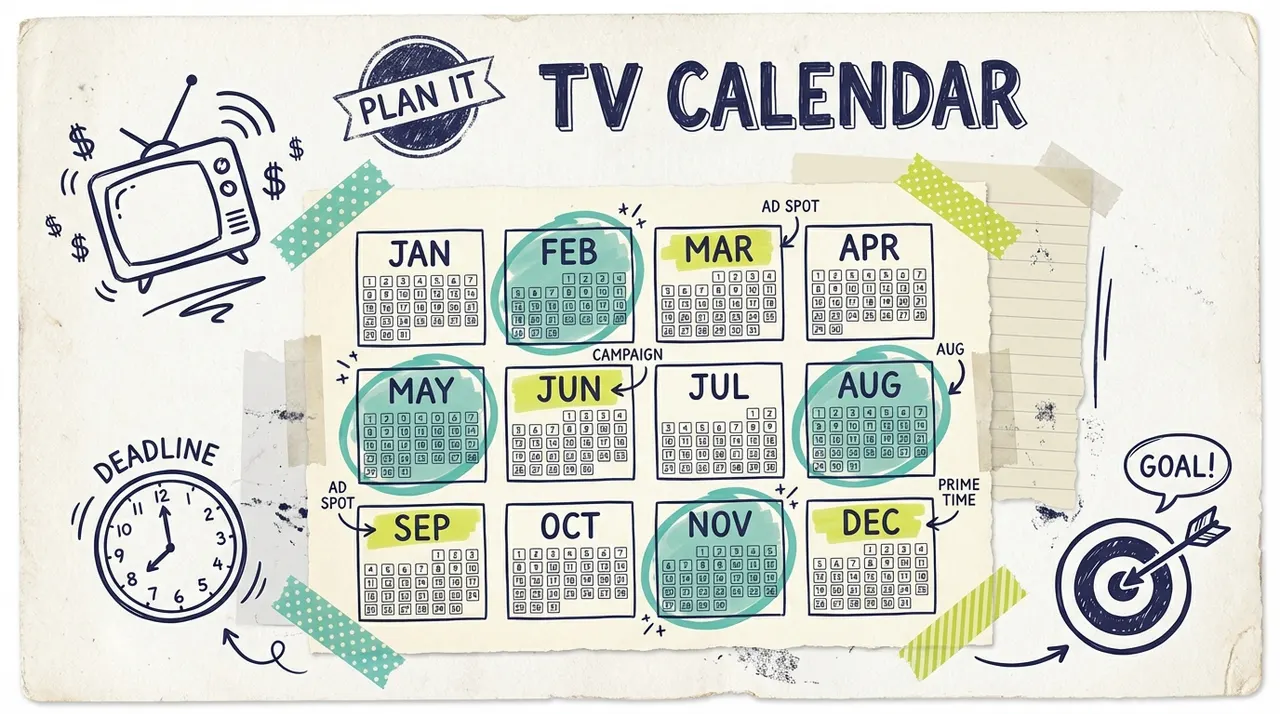
Timing matters as much as creative in TV advertising. Run your campaign at the right moment and your message lands with audiences ready to act. Run it at the wrong time and you're competing against noise or talking to people who aren't in buying mode.
This guide breaks down the TV advertising timing strategy by quarter, season, and industry. Use it to plan your annual campaigns and maximize every advertising dollar.
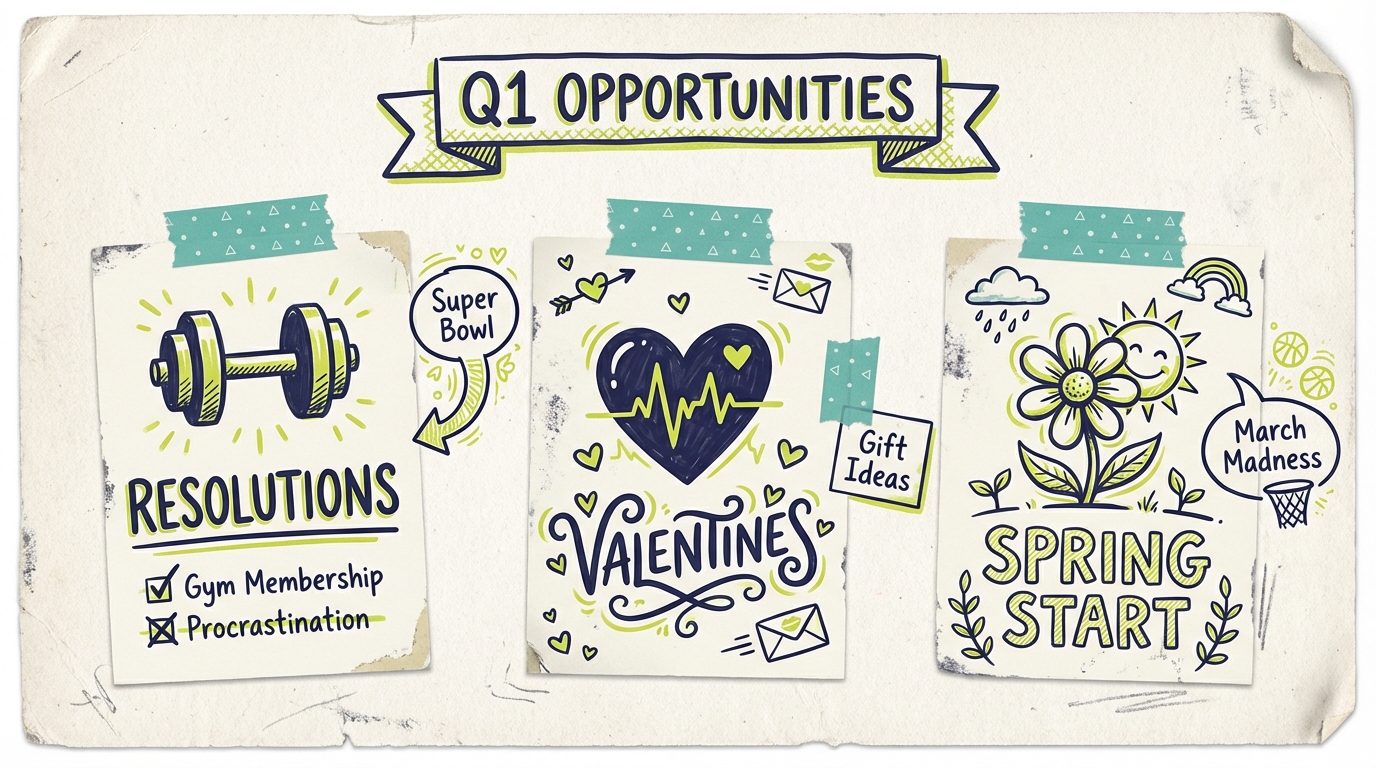
Q1: New Year, Fresh Starts (January-March)
January: The Resolution Window
New Year means new goals. Consumers are motivated to make changes.
Hot categories: Fitness, health, education, home organization, financial services
Timing tip: Launch January 2-15 to catch resolution momentum
CPM note: Advertising costs drop significantly after the holidays. Great value.
Caution: Avoid if you're retail. Post-holiday shoppers are fatigued.
February: Valentine's and Beyond
Hot categories: Restaurants, flowers, gifts, jewelry, experiences
Timing tip: Start Valentine's campaigns by February 1 (earlier for considered purchases)
Sleeper opportunity: Tax prep services should be advertising heavily now
March: Spring Awakening
Hot categories: Home services, landscaping, spring cleaning, real estate
Timing tip: Start spring campaigns mid-February in warmer climates, early March elsewhere
Event opportunity: March Madness brings massive TV viewership
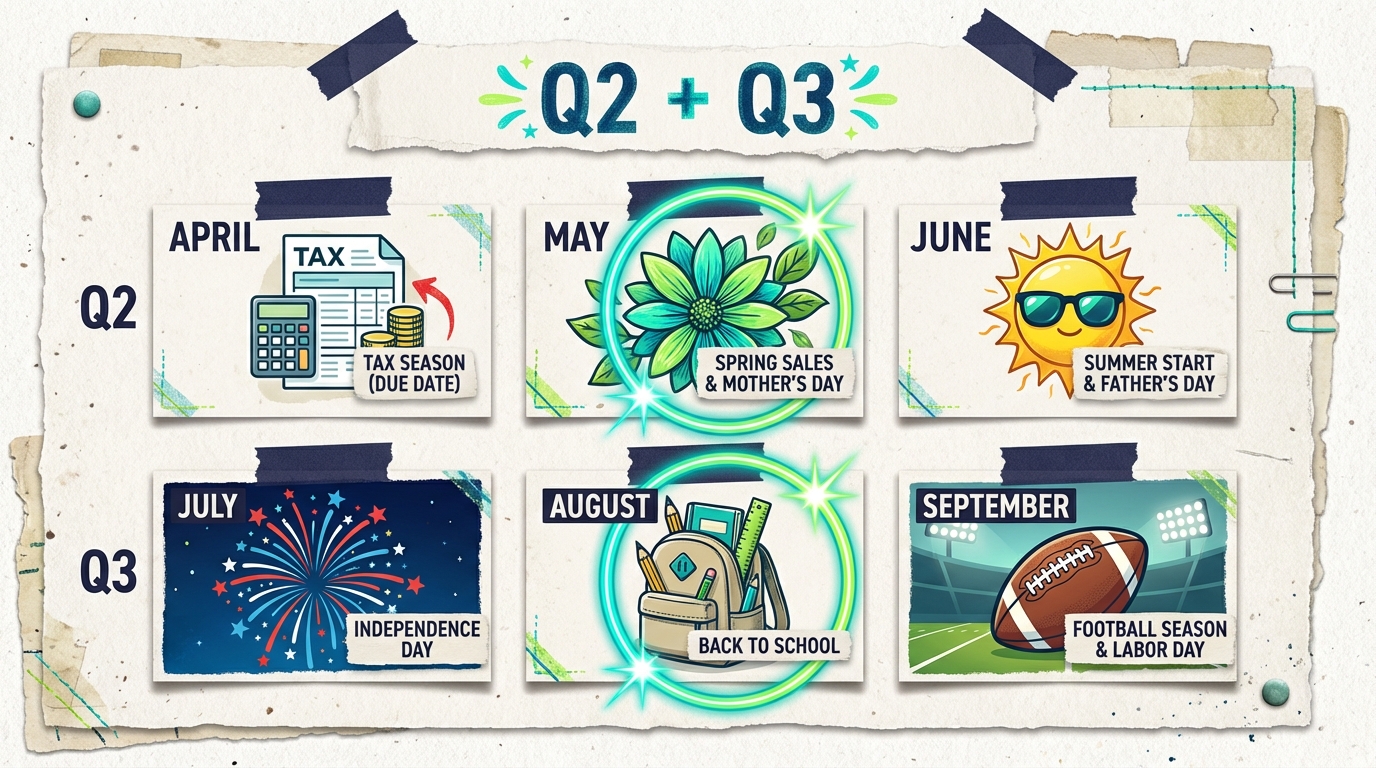
Q2: Spring into Summer (April-June)
April: Tax Season and Spring Events
Hot categories: Financial services (through April 15), outdoor living, home improvement
Event opportunity: Easter/spring break travel
Timing tip: Post-tax refund spending creates retail opportunity
May: Mother's Day and Memorial Day
Hot categories: Restaurants, gifts, flowers, outdoor recreation, travel
Timing tip: Mother's Day campaigns should start May 1
CPM note: Costs rise around major gift-giving holidays
Opportunity: Memorial Day weekend kicks off summer spending
June: Summer Launch
Hot categories: Travel, outdoor activities, summer camps, home services
Event opportunity: Father's Day (don't forget it), graduation season
Timing tip: Summer campaign planning should start in May
Q3: Summer and Back-to-School (July-September)
July: Peak Summer
Hot categories: Travel, outdoor recreation, summer events, local entertainment
CPM note: Summer can offer value as some advertisers pull back
Event opportunity: July 4th, summer blockbuster movie releases
Timing tip: Independence Day campaigns end by July 3
August: Back-to-School Begins
Hot categories: Education, school supplies, family restaurants, youth activities
Timing tip: Back-to-school advertising should start mid-July
Opportunity: Parents are in spending mode. Capture related purchases.
September: Fall Transition
Hot categories: Fall activities, sports (NFL, college football), home services
Timing tip: Labor Day weekend is the last summer push
CPM note: Costs begin rising as Q4 approaches
Q4: The Big Push (October-December)
October: Halloween and Holiday Prep
Hot categories: Seasonal retail, costumes, fall activities, early holiday shopping
Timing tip: Halloween campaigns peak October 15-30
Strategy note: Smart businesses start holiday awareness now
November: The Shopping Sprint
Hot categories: Retail, e-commerce, gifts, travel (Thanksgiving)
Key dates: Black Friday, Cyber Monday, Small Business Saturday
CPM note: Highest costs of the year. Plan budgets accordingly.
Timing tip: Start holiday campaigns by November 1 for awareness, intensify for shopping days
December: Holiday Climax and Year-End
Hot categories: Gifts, restaurants, experiences, New Year's planning
Timing tip: Gift campaigns should run through December 20 (shipping deadlines matter)
Opportunity: December 26-31 is great for New Year's resolution businesses
CPM note: Costs drop after Christmas. Late December offers value.
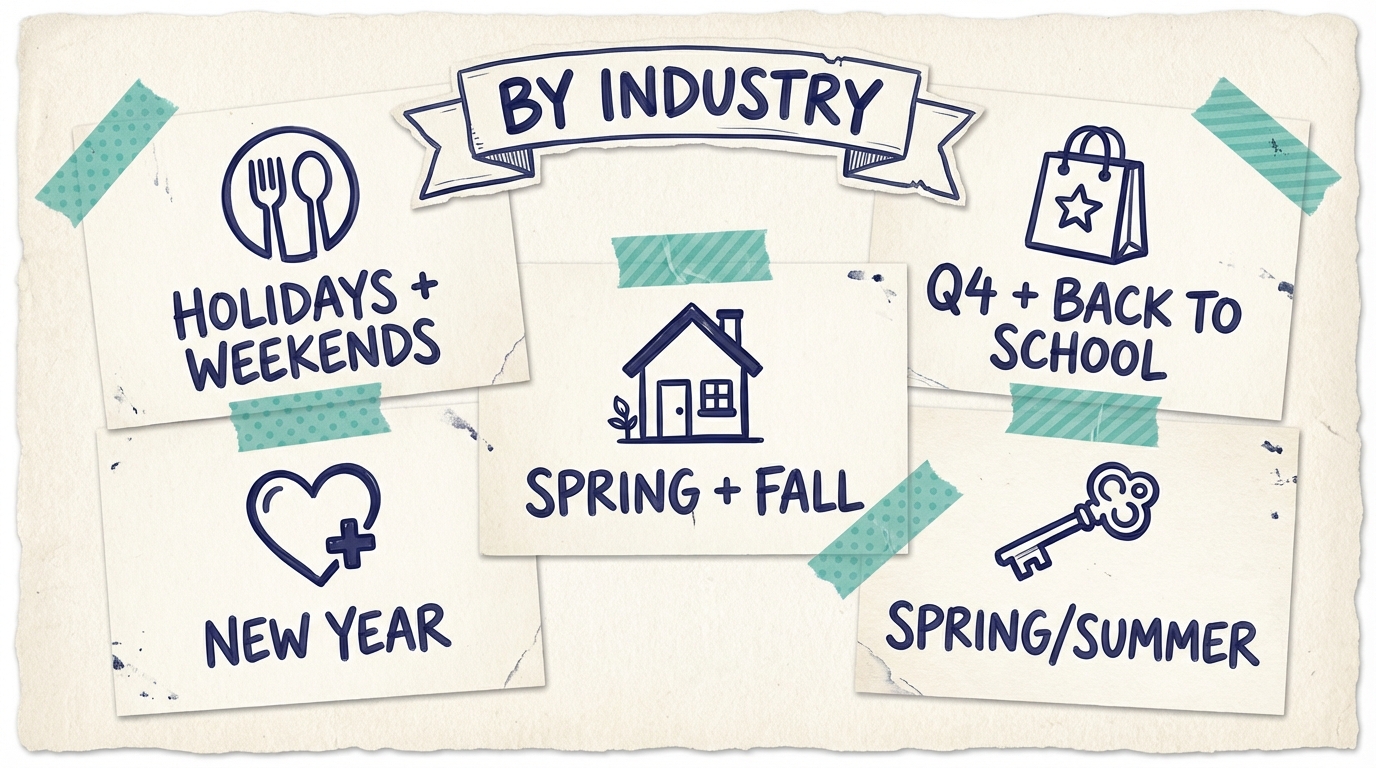
Industry-Specific TV Advertising Timing
Different industries have different optimal windows:
Restaurants:
Peak: Valentine's Day, Mother's Day, prom season, graduation season
Opportunity: Slow months (January, post-holiday) for loyalty building
Always: Friday-Sunday viewing for weekend dining decisions
Retail:
Peak: Holiday season (November-December), back-to-school
Opportunity: Clearance seasons, new inventory launches
Note: Budget heavily for Q4, but don't go dark other quarters
Home Services:
Peak: Spring (March-May), fall maintenance season
Opportunity: Winter for HVAC, indoor projects
Timing: Start campaigns 4-6 weeks before peak season
Healthcare/Wellness:
Peak: New Year (resolutions), open enrollment season, summer (cosmetic services)
Opportunity: Year-round for routine services
Note: Compliance considerations may affect timing
Real Estate:
Peak: Spring/summer (moving season)
Opportunity: Fall for motivated buyers, winter for investors
Note: Local market conditions affect timing
Professional Services (Law, Finance, etc.):
Tax prep: January-April
Legal: Consistent year-round, but estate planning peaks around life events
Financial: January (planning), tax season, Q4 (year-end)
Event-Based TV Advertising Opportunities
Major events create advertising moments:
Sports:
Super Bowl (February): Massive viewership, premium costs
March Madness (March): Extended high viewership, more affordable than Super Bowl
NFL Season (September-February): Consistent weekly audience
Olympics (varies): Broad demographics, high attention
Cultural Moments:
Awards shows (Oscars, Grammys): Entertainment-focused audiences
Election seasons: Higher news viewership, but cluttered ad environment
Major streaming releases: Increased platform engagement
Local Events:
Community festivals
Local sports teams
Regional celebrations
Adwave makes it easy to launch campaigns around specific events since you can start and pause campaigns flexibly.
Building Your Annual TV Calendar
Here's how to plan your year:
Step 1: Identify your peak and slow seasons. Look at last year's sales data. When do customers buy?
Step 2: Map campaigns to buying cycles. Start awareness campaigns 4-6 weeks before peak demand.
Step 3: Plan budget allocation. Weight spending toward high-opportunity periods, but maintain presence year-round.
Step 4: Create calendar blocks:
Heavy periods: 2-3x normal budget
Moderate periods: Normal budget
Maintenance periods: 0.5x budget (but don't go dark)
Step 5: Build creative in advance. Create seasonal ad variations during quiet periods so you're ready when campaigns launch.
Budget Pacing Throughout the Year
A simple annual budget framework:
Q1: 20% of annual budget (capitalize on low CPMs, resolution buyers)
Q2: 25% of annual budget (spring activity, multiple holidays)
Q3: 20% of annual budget (summer, back-to-school)
Q4: 35% of annual budget (highest opportunity, highest costs)
Adjust based on your industry seasonality. A tax prep business might flip Q1 and Q4 allocations.
Common questions answered
How far in advance should I plan seasonal TV advertising?
Plan your seasonal campaigns 4 to 6 weeks before you want them to run. This gives you time to create or refresh creative, set up targeting, and allow for any platform approval processes. For major holidays like Black Friday or Christmas, consider booking even earlier since inventory can get competitive.
Should I advertise during my slow season?
Yes, strategic slow-season advertising can help level out your business cycle. Use slower periods to build brand awareness at lower costs (less competition for ad inventory) so you're familiar when peak season arrives. Many businesses find that consistent year-round presence outperforms seasonal bursts.
What's the best timing for different industries?
Timing varies significantly by industry. Restaurants should advertise before weekends and holidays. Retail peaks before Black Friday and Christmas. Home services see spring and early summer demand. Tax professionals ramp up in January through April. Understanding your customer's decision timeline helps you advertise before they're actively shopping.
How do I adjust my TV ad creative for different seasons?
Seasonal creative adjustments can be as simple as updating text overlays to reference current promotions or holidays. More significant updates might include new imagery or messaging themes. With AI-powered platforms, creating seasonal variations is fast and inexpensive, so you can refresh your creative more frequently than with traditional production.


