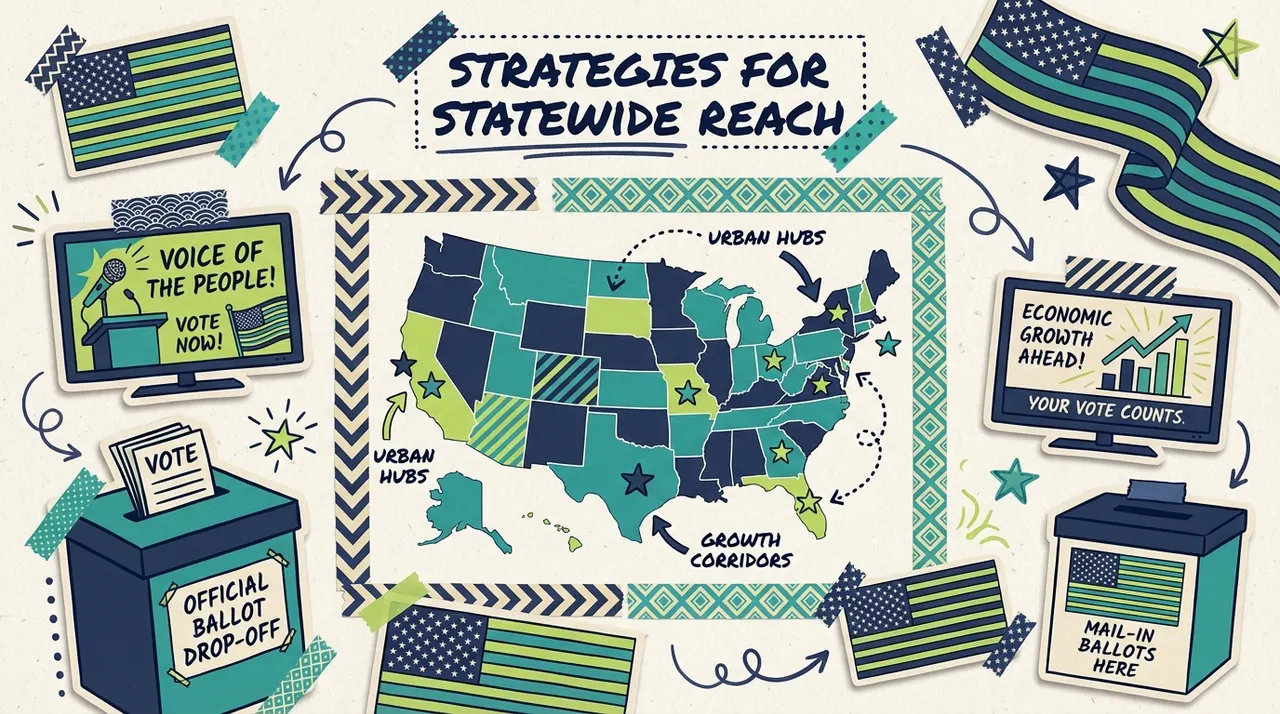
Running for United States Senate means reaching voters across an entire state. Unlike congressional races limited to specific districts, Senate campaigns must communicate with millions of voters spread across diverse communities, media markets, and demographic groups.
This geographic reality makes media strategy critical. The difference between winning and losing often comes down to how effectively campaigns allocate advertising resources across multiple markets, time their message delivery, and reach the voters who will decide the race.
This guide covers the television advertising strategies that successful Senate campaigns use to win statewide elections. Whether you're managing a challenger campaign operating on limited resources or an incumbent race with substantial funding, these principles will help you reach voters more effectively.
The Statewide Advertising Challenge

Senate races present unique advertising challenges that don't exist in smaller campaigns.
Multiple media markets require attention. Most states contain several distinct television markets, each with different costs, audiences, and competitive dynamics. California has more than 20 designated market areas. Even smaller states like New Hampshire receive significant advertising spillover from Boston. Managing this complexity requires strategic thinking beyond simply buying airtime.
Budgets must stretch across large geographies. A message that reaches voters in Philadelphia may never reach voters in Pittsburgh. Campaigns must make difficult decisions about where to concentrate spending versus where to maintain minimal presence.
Diverse voter populations need different approaches. Urban, suburban, and rural voters within the same state often have different priorities. Metropolitan areas may care about transit and housing costs while rural communities focus on agriculture and energy policy. Effective campaigns tailor messaging to these differences while maintaining a coherent statewide narrative.
The stakes attract competition. Senate seats are valuable. National parties, super PACs, and outside groups flood competitive races with advertising. Your campaign's message must break through significant noise.
Understanding Media Market Dynamics
Before spending a dollar on television advertising, understand the media landscape you're working within.
Mapping Your State's Media Markets
Every state divides into designated market areas, or DMAs, defined by Nielsen. These boundaries determine which households receive which television stations. Understanding your state's DMA structure is foundational to advertising strategy.
Anchor markets dominate population. Most states have one or two major markets containing a large share of the state's population and registered voters. In Illinois, the Chicago DMA represents roughly 70% of the state's voters. In Texas, the Dallas-Fort Worth, Houston, San Antonio, and Austin markets together contain most of the population.
Smaller markets still matter. While anchor markets contain more voters, smaller markets often deliver better cost efficiency. A campaign ad in a smaller market faces less competition, costs less per thousand viewers, and may reach voters who are more persuadable because they receive less political advertising overall.
Cross-border markets create complications. Many media markets cross state lines. The Philadelphia market reaches voters in both Pennsylvania and New Jersey. The Kansas City market serves both Kansas and Missouri. When advertising in these markets, campaigns pay to reach voters who cannot vote in their race.
Analyzing Market Costs
Television advertising costs vary dramatically across markets. Understanding these variations helps allocate budgets effectively.
Cost per point measures market expense. Political advertising professionals typically price broadcast television by the gross rating point, which represents reaching 1% of households in a market. A "point" in Los Angeles might cost $3,000 while a point in a smaller market costs $50.
Prime inventory carries premium pricing. The most desirable time slots during evening news, primetime programming, and local sports command higher prices. These slots also deliver larger and more engaged audiences.
Political windows affect pricing. The 45 days before a primary and 60 days before a general election constitute the "lowest unit rate" window, during which federal candidates receive the lowest rate a station has charged any advertiser in the past year for comparable time. Understanding these windows helps with timing decisions.
Streaming offers different economics. Connected TV advertising operates on impression-based pricing rather than rating points. Campaigns pay per thousand impressions delivered, typically ranging from $25 to $45 CPM for political content. This model offers more precise targeting and often better cost efficiency for reaching specific voter segments.
Building Your Media Market Strategy

With market dynamics understood, develop a strategy that matches your campaign's resources and goals.
The Tiered Market Approach
Most successful Senate campaigns organize markets into tiers based on strategic importance and resource allocation.
Tier 1: Priority markets. These are the markets where your campaign will maintain consistent presence throughout the race. Usually this includes the largest population centers and markets where persuadable voters concentrate. Budget for sustained advertising in these markets, understanding that your opponents will also focus here.
Tier 2: Strategic markets. These markets receive attention during key moments: campaign launch, post-primary, the final weeks before election day. They may contain important voter segments or geographic areas where your candidate has particular strength or vulnerability.
Tier 3: Efficiency markets. Smaller markets where advertising costs less and may deliver strong return on investment. These markets often receive less attention from opponents and outside groups, making your message more prominent.
Tier 4: Minimal or no presence. Some markets may be so expensive relative to voter population, or so dominated by voters unlikely to support your candidate, that resources are better deployed elsewhere.
Allocating Resources Across Markets
How much to spend in each market depends on several factors that campaigns must weigh.
Voter population matters, but not exclusively. A market with more voters deserves more attention, all else equal. But all else is rarely equal. Consider the concentration of persuadable voters, not just total population.
Efficiency calculations favor smaller markets. Spending $100,000 in a small market might deliver the same number of persuadable voter impressions as spending $500,000 in a major market, simply because smaller markets cost less per impression and have less advertising clutter.
Base mobilization versus persuasion affects allocation. If your campaign focuses on turning out existing supporters, concentrate spending where your supporters live. If persuading undecided voters is the priority, focus on swing areas regardless of partisan composition.
Opponent activity influences decisions. If an opponent dominates a particular market, you may need to respond there to avoid ceding the territory. Alternatively, you might concede that market and outspend in markets where you can win the battle.
Timing Your Advertising Campaign
When you advertise matters as much as where you advertise. Senate races follow predictable rhythms that should shape timing strategy.
The Pre-Primary Phase
If facing a competitive primary, early advertising establishes name recognition and campaign viability.
Define yourself before opponents do. Primary voters often know little about candidates. Being first to introduce yourself shapes initial impressions that prove difficult to change later.
Demonstrate campaign capacity. Visible advertising signals to donors, endorsers, and media that your campaign has resources and professional operation. This creates positive feedback loops as success breeds more support.
Build toward the primary crescendo. Advertising typically intensifies in the final weeks before primary day. Budget accordingly, recognizing that you'll need significant reserves for this period.
The General Election Calendar
After securing the nomination, the general election unfolds across several distinct phases.
Post-primary introduction (June-July). Many general election voters weren't paying attention during the primary. Use this period to introduce or reintroduce your candidate to the broader electorate. Positive biographical advertising works well here.
Summer consolidation (July-August). Party conventions, both national and state, create natural messaging opportunities. Advertising during this period reinforces partisan alignments and begins drawing contrasts with opponents.
Labor Day launch (September). The traditional "start" of the general election campaign. Many campaigns significantly increase advertising presence after Labor Day, recognizing that voter attention increases as election day approaches.
The final push (October-November). Advertising intensity peaks in October. Campaigns typically plan their largest spending for the final four to six weeks, when voter decision-making crystallizes.
Early voting considerations. Many states now conduct substantial early voting. If 30% or more of your state's voters will cast ballots before election day, adjust timing accordingly. Peak spending may need to begin earlier to reach these voters.
Weekly and Daily Timing
Within any given week, advertising placement affects reach and efficiency.
Heavy-up before weekends. Friday and Saturday news programming delivers strong political audiences. Advertising placed Thursday through Saturday reaches voters before weekend conversations with family and friends.
Avoid holiday weeks carefully. Thanksgiving and major holidays reduce television viewership and increase ad clutter as retailers compete for attention. Consider reducing spending during these periods unless competitive pressure requires maintaining presence.
News events create opportunities. Debates, major endorsements, and breaking news relevant to your race create moments when voters pay attention. Having advertising ready to deploy during and after these events reinforces your message when interest peaks.
Message Strategy for Statewide Campaigns

Senate campaigns must communicate to diverse audiences while maintaining message coherence.
Developing Your Core Message Framework
Every successful campaign operates from a clear message framework that guides all advertising content.
The central narrative explains your candidacy. Why is your candidate running? What will they do differently? How will voters' lives improve? This narrative should be expressible in a sentence or two and understandable to voters who pay minimal attention to politics.
Proof points support the narrative. Specific accomplishments, policy positions, or biographical elements that demonstrate your candidate can deliver on the central promise. These become the content of individual advertisements.
Contrast elements differentiate from opponents. What makes your candidate better than the alternative? This might involve policy differences, character distinctions, or qualifications. Contrast messaging becomes increasingly important as election day approaches.
Adapting Messages for Different Markets
While core narrative remains consistent, execution can vary across markets.
Localize the message. The same policy position can be framed differently for different communities. Economic development means something different in a former industrial city than in a growing suburban area. Reference local concerns and geography where possible.
Feature relevant validators. Endorsements and testimonials resonate more when featuring voices from the specific community. A statewide ad might run everywhere, but market-specific versions can include local trusted figures.
Address regional issues. Some issues affect specific regions of a state. Agricultural concerns matter more in rural markets. Environmental issues might resonate differently near coastlines versus inland areas. Develop creative that addresses these regional priorities.
The Progression of Message Types
Effective campaigns sequence their advertising to build toward a conclusion.
Early: Name identification and positive biography. Voters can't support someone they've never heard of. Initial advertising focuses on building awareness and favorable impressions.
Middle: Policy and issue positioning. With name recognition established, shift toward substantive content that demonstrates your candidate's positions on issues voters care about.
Late: Contrast and choice. As election day approaches, advertising increasingly draws comparisons with opponents. The goal is framing the election as a choice where your candidate is clearly preferable.
Final days: Turnout motivation. The last advertisements remind supporters why they should vote and convey urgency about participation.
Streaming TV as a Strategic Tool
Connected television has transformed Senate campaign advertising, offering capabilities that broadcast cannot match.
The Strategic Advantages of Streaming
Streaming television offers several benefits especially relevant to statewide campaigns.
Precision targeting by voter file. Streaming platforms can match campaign voter files to household devices. This efficiency matters when every dollar must work hard.
Geographic flexibility. Unlike broadcast advertising that reaches everyone in a market, streaming can target specific geographies within markets. Reach voters in Pennsylvania without paying for New Jersey households that happen to receive Philadelphia stations.
Demographic and behavioral targeting. Beyond geography, streaming allows targeting by age, household composition, interests, and media consumption patterns. Reach persuadable voters in your target demographics with precision broadcast cannot match.
Frequency management. Streaming platforms can cap how many times individual households see your ad, preventing wasted impressions on already-reached voters while keeping minimum exposure thresholds.
Integrating Streaming With Broadcast
The most effective campaigns combine streaming and broadcast strategically.
Streaming for precise voter targeting. Use streaming to reach specific voter segments with tailored messaging. High-propensity voters who need mobilization. Persuadable independents in key geographies. Demographic groups requiring specific outreach.
Broadcast for broad reach and credibility. Television advertising on broadcast networks still signals campaign seriousness and reaches voters who use streaming less. News programming and major events often require broadcast presence.
Coordinate messaging across platforms. Voters increasingly encounter advertising on multiple platforms. Ensure creative works together, with streaming reinforcing broadcast messages or providing complementary content that deepens the narrative.
Cost Considerations
Streaming often delivers better cost efficiency for voter contact, though media plans should reflect realistic expectations.
Lower costs per persuadable voter. Because streaming eliminates waste from non-voters and out-of-state households, the effective cost per voter contact is often lower than broadcast despite similar CPM rates.
Budget reallocation opportunities. Many campaigns find they can reduce broadcast spending in expensive markets while maintaining voter reach through streaming, freeing resources for additional markets or increased frequency.
Production flexibility. Digital platforms make it easier to run multiple creative versions, test different messages, and update content quickly in response to campaign developments.
Responding to Outside Group Advertising
Senate races attract substantial outside spending from national parties, super PACs, and issue groups. This activity affects your advertising strategy.
Monitoring the Airwaves
Know what voters are seeing from all sources.
Track spending reports. The FCC requires broadcasters to maintain public files documenting political advertising purchases. Services exist that aggregate this information, providing competitive intelligence about spending levels and placements.
Watch the creative. Knowing that an opponent's super PAC is spending $2 million matters less than knowing what message that spending promotes. Monitor advertising content to understand the narrative voters are receiving.
Assess cumulative voter exposure. Consider total advertising volume in each market from all sources. If friendly outside groups are dominating a market, you might reallocate resources elsewhere. If hostile advertising is overwhelming your presence, responses may be necessary.
Strategic Responses to Outside Advertising
How you respond to outside group advertising depends on content and context.
Don't feel obligated to answer everything. Some attacks don't stick. Some come from groups with low credibility. Responding can sometimes amplify an attack that would otherwise fade. Assess whether response is strategically necessary.
When responding, pivot to your strengths. Effective response advertising acknowledges attacks briefly before pivoting to your candidate's positive attributes and message. Spending too long on the attack keeps negative information in front of voters.
Coordinate with friendly groups where legally possible. Campaigns cannot coordinate with super PACs on advertising content or strategy. But campaigns can publicly communicate priorities and messages that independent groups may find useful. Press conferences, campaign websites, and public statements help align efforts.
Let super PACs carry negative messages. If friendly super PACs are active in your race, consider letting them handle attack advertising while the campaign focuses on positive messaging. This protects the candidate's image while keeping opponents face accountability.
Measuring Advertising Effectiveness
Campaigns that measure performance can adjust strategy mid-campaign to improve results.
Tracking Metrics That Matter
Not all metrics provide equal strategic value.
Reach and frequency by target audience. How many of your target voters have seen your advertising? How many times on average? These fundamental metrics indicate whether your media buy is accomplishing basic exposure goals.
Message recall and attribution. Polling can assess whether voters remember seeing advertising and correctly attribute messages to your campaign. Advertising that viewers forget or misattribute has limited value.
Favorability movement. Track your candidate's favorable and unfavorable ratings over time. Effective advertising should improve favorable impressions among target voters.
Vote choice trends. Ultimately, advertising should move vote intention. Track horse race numbers throughout the campaign, correlating movements with advertising timing and intensity.
Adjusting Based on Performance
Use measurement insights to refine strategy as the campaign progresses.
Shift spending between markets. If certain markets show stronger response to advertising, consider reallocating resources from underperforming markets.
Adjust creative based on testing. If message testing reveals certain themes resonate more strongly, prioritize that content in your rotation. Digital platforms allow rapid creative swaps that broadcast does not.
Modify targeting parameters. Streaming platforms provide performance data by audience segment. Use this information to refine targeting, increasing exposure to responsive segments while reducing spend on unresponsive groups.
Increase or decrease overall spending. If advertising is moving numbers efficiently, the case for increased investment strengthens. If movement is not occurring despite significant spending, investigate whether the problem lies with message, targeting, or broader campaign dynamics.
Budget Planning for Senate Races
Realistic budgeting determines what your advertising strategy can accomplish.
Establishing Your Advertising Budget
Campaigns must balance advertising needs against other campaign expenses.
Historical benchmarks provide guidance. Research spending levels in comparable recent Senate races. Competitive general elections in medium-sized states typically involve $10 million to $30 million in combined candidate and outside group advertising. Larger states and more competitive races see higher numbers.
Assessment of competitive environment. How much will opponents spend? What outside group activity is expected? Your advertising budget must be sufficient to maintain voice in the conversation, even if you can't match opponents dollar for dollar.
Other campaign needs compete for resources. Advertising budgets exist within overall campaign budgets that must also fund staff, travel, events, research, and operations. Determine what percentage of total resources can go to advertising.
Phasing Spending Over the Campaign
Plan how spending will flow across the campaign calendar.
Reserve for the close. The final weeks before election day typically require the largest advertising investment. Campaigns commonly spend 50-60% of their total advertising budget in October alone. Plan backward from this requirement.
Maintain presence throughout. Going dark for extended periods allows opponents to define the narrative unchallenged. Even when conserving resources, maintain some advertising presence to stay in voters' minds.
Build flexibility for contingencies. Campaigns rarely unfold exactly as planned. Reserve some resources for responding to unexpected developments, opponent attacks, or opportunities that arise.
Working With Limited Resources
Not every Senate campaign has unlimited funds. Challenger campaigns and races in safe seats often operate on tight budgets.
Prioritize ruthlessly. With limited resources, concentrate spending in markets and time periods where impact will be greatest. A significant presence in two important markets may accomplish more than spreading resources across six markets.
Use streaming efficiency. Streaming advertising often delivers better cost efficiency than broadcast. Budget-constrained campaigns can reach voters effectively through streaming while maintaining limited broadcast presence for credibility.
Maximize earned media. Creative advertising can generate news coverage and social media sharing, extending reach beyond paid impressions. Bold messaging and timely content can earn attention that money cannot buy.
Coordinate strategically with allies. While campaigns cannot coordinate with super PACs, they can coordinate with party committees and aligned organizations. Ensure these coordinated efforts complement rather than duplicate your advertising.
Common Questions Answered
How much should a Senate campaign spend on television advertising? Competitive Senate campaigns in general elections typically spend $5 million to $20 million on advertising, with the highest-profile races exceeding these amounts. Primary campaigns often spend less, ranging from $500,000 to several million depending on state size and competitiveness. Budget should reflect realistic assessment of competitive needs and available resources.
When should Senate campaigns start advertising? Most campaigns begin advertising during the primary phase to build name recognition, then expand significantly for the general election. The traditional general election advertising push begins after Labor Day, but campaigns increasingly start earlier to define narratives before opponents. Early voting states require earlier heavy spending to reach voters before they cast ballots.
How should Senate campaigns divide spending between broadcast and streaming? Allocation depends on campaign goals and target audience. Many campaigns now allocate 20-40% of television budgets to streaming, with percentages increasing each cycle. Campaigns focused on precise voter targeting may allocate more to streaming, while those prioritizing broad reach and traditional voters may favor broadcast.
What makes political advertising different from commercial advertising? Political advertising operates under different regulatory frameworks, including disclosure requirements and lowest unit rate provisions for broadcast. Audiences evaluate political advertising with more skepticism than commercial messages. Political advertising must accomplish its goals within compressed timeframes since campaigns have fixed end dates, unlike ongoing commercial efforts.
How do Senate campaigns handle advertising in cross-border media markets? Campaigns must accept some waste when advertising in markets that cross state lines. Calculate the percentage of market audience within your state and factor this into efficiency calculations. If 40% of a market's audience is out-of-state, adjust your cost-per-contact estimates accordingly. Streaming advertising can often target only in-state voters, reducing this waste.
The Bottom Line
Winning a Senate race requires reaching millions of voters with a compelling message delivered at the right moments. Television advertising remains the primary vehicle for this communication, whether delivered through broadcast or streaming platforms.
Success comes from understanding your state's media landscape, allocating resources strategically across markets and time periods, and measuring results to enable mid-campaign adjustments. Campaigns that master these elements give their candidates the best opportunity to break through the noise and win voter support.
The most sophisticated media strategy cannot save a flawed candidate or overcome fundamental political headwinds. But when the race is competitive and the candidate is viable, smart advertising strategy often determines the outcome.