
Shopify powers more than 4.7 million active online stores worldwide, and merchants on the platform generated over $235 billion in gross merchandise volume in 2023 (Shopify, 2024). The store creation barrier has never been lower. Anyone can launch a beautiful Shopify store in a weekend. The hard part isn't building. It's getting people to actually buy.
Here's the thing: most Shopify merchants underspend on advertising and over-rely on a single channel (usually Meta) until that channel slows down. The merchants growing fastest in 2026 share a pattern: they layer 4-7 channels, treat ads as a portfolio rather than a single bet, and invest in compounding assets like brand equity and customer LTV alongside direct-response campaigns.
The good news? Shopify's reporting and integrations make multichannel measurement easier than ever. The better news? Advertising tools that used to be reserved for enterprise brands are now within reach for small merchants. CTV starts at $50. TikTok Spark Ads make creator content shoppable. Google Performance Max automates Shopping campaigns. Pinterest's product pins drive intent traffic at low CPCs.
This guide covers seven advertising channels for Shopify stores: Google Ads (Search and Shopping), Meta and Instagram, TikTok Ads, Pinterest Ads, influencer and affiliate partnerships, CTV advertising, and Amazon Ads and marketplace expansion. You'll get realistic budgets, what works for early-stage versus scaling stores, and where to focus first.
Why Shopify Store Marketing Is Different
E-commerce on Shopify has its own dynamics that shape what advertising actually works.
Direct-to-consumer economics. Unlike retail, your margin structure depends on customer acquisition cost (CAC) and lifetime value (LTV). A great-converting ad at high CAC is still a losing proposition if customers don't repeat purchase.
Creative is the lever. Targeting matters but creative drives outsized differences in performance. The difference between a $20 cost-per-purchase and an $80 cost-per-purchase is almost always the ad creative, not the audience.
Iteration speed matters. Top Shopify merchants test 5-30 new creative variants per week. Static, never-changing creative is the fastest way to flat performance.
Attribution is murky. Apple's iOS privacy changes broke Meta attribution. Multi-touch journeys are common. Most stores under-measure top-of-funnel channels because conversion attribution defaults to last-click.
Margin tells you what you can afford. A 30% gross margin store can spend less per purchase than an 80% margin store. Channel selection should match your margin profile.
Seasonal patterns. November-December is peak for most stores (holiday shopping). Other peaks vary: fashion runs spring/fall seasons, fitness peaks January, gifting categories peak Mother's/Father's Day, beauty peaks ahead of summer.
Channel 1: Google Ads (Search and Shopping)
When someone searches for a specific product or category, they're past discovery and into evaluation or purchase. Google Ads, including Search and Shopping campaigns, captures that high-intent traffic.
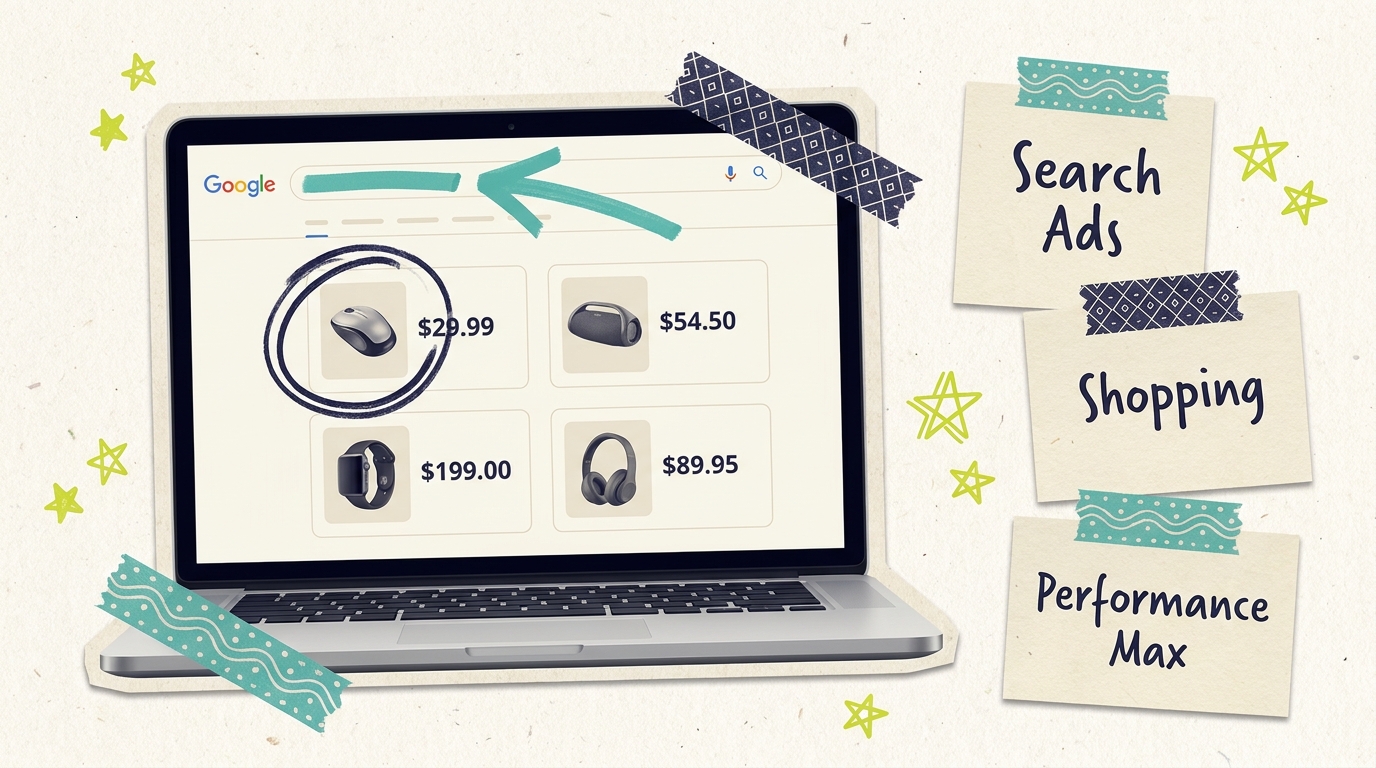
Google Shopping campaigns put your products directly into search results with images, prices, and store names. For most Shopify stores, Shopping (and the newer Performance Max) consistently produces the highest ROAS of any paid channel.
Campaign Types for Shopify
Search campaigns on branded and category keywords. "[Your brand name]," "[product type] online," "[product type] for sale" all drive purchase-intent traffic.
Shopping campaigns / Performance Max automatically match your product feed to relevant searches, display, and YouTube placements. Most Shopify stores should run at least one Performance Max campaign with a comprehensive product feed.
Dynamic Search Ads for stores with hundreds of products too varied to manage individual keyword campaigns.
YouTube ads as awareness/upper-funnel content for video-friendly products. Skippable in-stream and bumper ads at $0.01-$0.05 per view.
Remarketing campaigns target site visitors who didn't purchase. Shopify's Google integration makes this nearly turnkey.
Optimization Priorities
Optimize your product feed before optimizing campaigns. Title quality, description completeness, accurate categorization, and high-quality product imagery drive Shopping performance more than bid strategy.
Use product groups to separate high-margin SKUs from low-margin ones, then bid accordingly.
Set up enhanced conversions and import Shopify checkout events for accurate attribution.
Budget and Expectations
Early-stage Shopify stores should budget $500-$2,500 per month on Google Ads. Scaling stores typically run $5,000-$50,000+ per month. ROAS varies dramatically by category: 2x ROAS is breakeven for many stores, 3-5x is healthy, 6x+ is exceptional. Cost per acquisition (CPA) ranges $15-$120 depending on AOV and category.
Tips for Better Results
Audit your product feed weekly; 80% of Shopping problems are feed problems
Build separate campaigns by margin tier, not just by category
Test branded vs unbranded search ROI separately; many stores overspend on branded
Use first-party data audiences (purchasers, email subscribers) for retargeting
Layer YouTube into prospecting only after you have 4-figure monthly conversion volume
Google Ads is the highest-ROI channel for most Shopify stores. Strong starting point if you're not currently advertising.
Channel 2: Meta and Instagram
Meta (Facebook + Instagram) remains the second-largest paid channel for most Shopify stores after Google. Despite iOS-driven attribution challenges, Meta still drives meaningful incremental sales for visually-driven products.
The good news: Meta's Advantage+ Shopping campaigns automate audience and placement decisions. The better news: Instagram Shopping makes products discoverable in feed, Stories, and Reels.
Campaign Types for Shopify
Advantage+ Shopping campaigns are Meta's recommended approach for most e-commerce. Set a daily budget, upload creative, and Meta optimizes targeting automatically.
Catalog ads / Dynamic Product Ads automatically create personalized product ads based on website behavior. Critical for retargeting visitors with the products they viewed.
Cold acquisition campaigns target lookalike audiences, interest audiences, or broad audiences. Good for prospecting at scale.
Reels ads are increasingly cost-effective. Native vertical video creative outperforms reformatted square assets.
Boosted Instagram posts of organic creator content or your best-performing organic posts. Often the lowest cost-per-purchase route for emerging brands.
Retargeting campaigns segmented by funnel stage: viewers, add-to-carts, abandoned carts. Each segment needs different creative and offer strength.
Creative That Works
User-generated content (UGC): Customers using your products with their phones. Often outperforms studio-shot content 2-5x.
Founder-led video: Authentic founder talking about why they built the product. Lower production, higher trust.
Before/after / transformation: Especially for skincare, fitness, home goods, organization products.
Product demonstrations: Show the product working. Skincare swatches, fitness apparel in motion, food prep, etc.
Reviews-as-creative: Animate or display customer reviews as ad creative.
Comparison content: Your product vs alternatives, with specific differentiators called out.
Budget and Expectations
Early-stage stores should budget $500-$3,000 per month on Meta. Scaling stores often run $5,000-$100,000+ monthly. CPMs run $8-$25 depending on category and audience. Cost per purchase typically lands at $20-$150. ROAS averages 1.5-3x for prospecting; 4-8x for retargeting.
Tips for Better Results
Test 3-5 new creative variants per week minimum
Build custom audiences from your Shopify customer email list, then create lookalikes
Use Meta's Conversions API alongside the pixel for better signal post-iOS14
Don't kill creative too early; test 50-100 conversions before deciding
Meta is essential for most consumer brands. Plan for ongoing creative iteration as the lifeblood of performance.
Channel 3: TikTok Ads
TikTok has become the discovery engine for younger consumers and increasingly a primary channel for trend-driven product categories: beauty, fashion, food, home decor, novelty, and supplements.
The good news: TikTok creative tends to be lower-production and higher-authenticity than Instagram. The better news: organic TikTok success often translates to paid amplification at very low cost.
Campaign Types for Shopify
Spark Ads boost your existing organic TikTok content (or creator content with permission). Often produces the best ROAS because the content already feels native to the platform.
Standard video ads with branded creative. Vertical video, sound-on, hook in the first 1-3 seconds.
Shopping ads for stores integrated with TikTok Shop. Direct in-app checkout reduces friction.
Lead generation for higher-AOV stores or stores running waitlists for product drops.
Creative That Works
POV videos: First-person product reveal or use case
Founder/creator personalities: Real humans on camera; even small founder followings build trust
Trend hijacking: Adapt trending audio formats to your product
Demonstrations and tutorials: Show the product solving a specific problem
Behind-the-scenes: Manufacturing, packaging, fulfillment
Customer reaction content: Real customers opening or using your product
Budget and Expectations
Plan $300-$3,000 per month on TikTok for stores in TikTok-friendly categories (beauty, fashion, novelty, food, home, fitness). CPMs run $4-$15, lower than Meta in many cases. Cost per purchase typically $25-$100, with significant variance by category. ROAS averages 1.2-3x for prospecting; higher for product-market-fit categories.
Tips for Better Results
Run organic TikTok alongside paid; the algorithm rewards consistent posting
Partner with creators ($100-$1,000 per video) for authentic Spark Ad inventory
Don't reformat Instagram Reels for TikTok; native creative wildly outperforms
Heavy budget the 3-4 weeks before known seasonal peaks for your category
TikTok is high-upside but volatile. Best for visual, demo-able products with clear emotional or functional payoffs.
Channel 4: Pinterest Ads
Pinterest is one of the most underused channels for Shopify stores in product categories where users actively plan and discover: home decor, fashion, beauty, weddings, gifts, kids, food, DIY, and wellness.
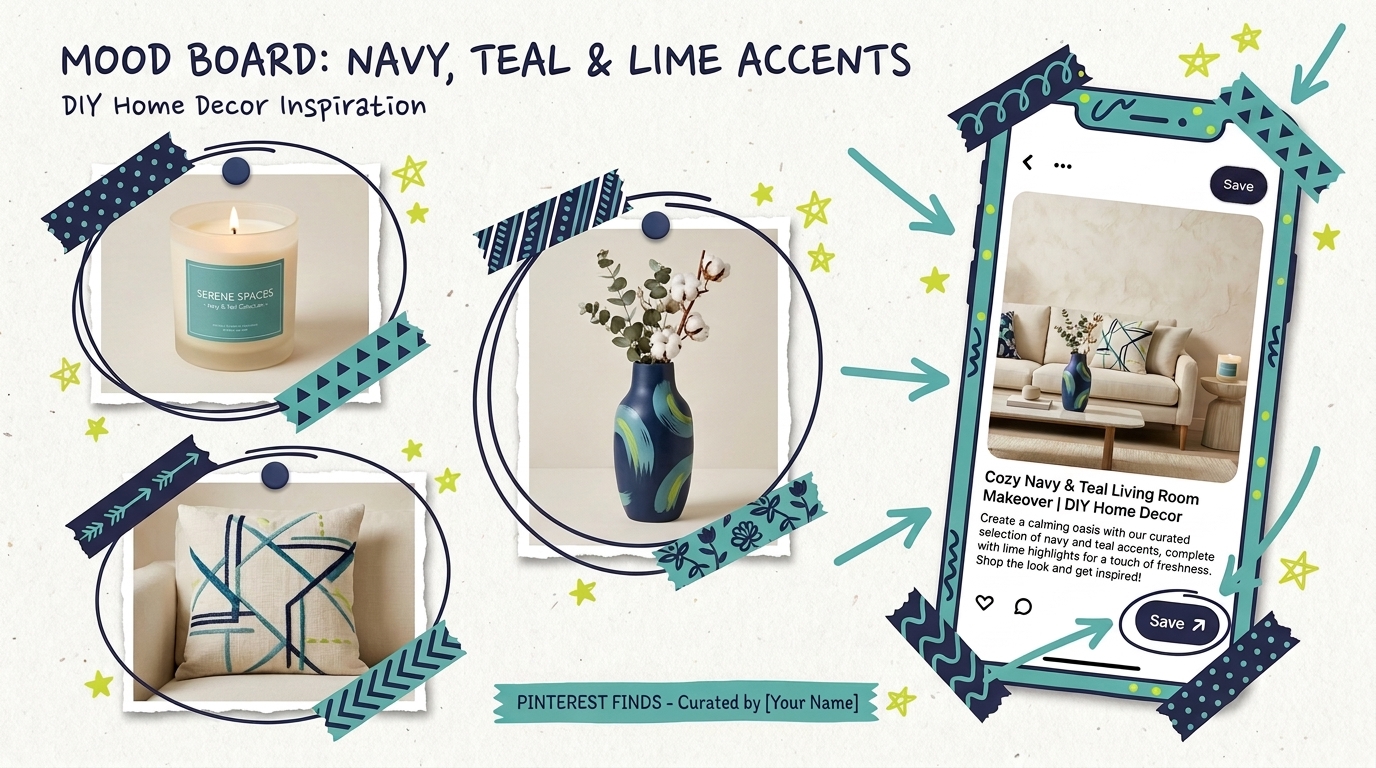
Pinterest users behave differently than other social users. They search for inspiration with intent to buy. Pinterest's research shows users are 3x more likely to take action on Pinterest content than on other platforms (Pinterest, 2024).
Campaign Types for Shopify
Shopping campaigns with product feed integration. Similar to Google Shopping but with the visual discovery context Pinterest is known for.
Promoted Pins boost individual pins with strong CTRs from your organic content.
Idea Pins (Pinterest's video format) for storytelling, tutorials, and seasonal content.
Catalog ads with dynamic retargeting from website visitor behavior.
Creative That Works
Lifestyle product imagery: Your products in real-life rooms, outfits, or settings (not white-background catalog shots)
Tutorials and how-to: Especially for DIY, beauty, food, decor, and craft categories
Seasonal collections: Pinterest users plan ahead by months for holidays, weddings, parties
Inspiration boards: Curated content showing how products fit a broader aesthetic
Budget and Expectations
Plan $250-$2,000 per month on Pinterest for stores in compatible categories. CPCs run $0.40-$2.50, dramatically lower than Meta or Google. Cost per purchase typically $15-$80. ROAS averages 1.5-4x. Importantly, Pinterest content compounds: pins continue driving traffic for 12+ months after publishing.
Tips for Better Results
Use Pinterest as both an organic channel and a paid one; the two compound
Create dedicated landing pages for inspirational pins, not generic product pages
Heavy budget 2-4 months before seasonal peaks (Pinterest users plan early)
Track view-through conversions; Pinterest's last-click attribution under-represents impact
Pinterest is high-ROI for the right product categories and surprisingly low-effort to maintain after initial setup.
Channel 5: Influencer and Affiliate Partnerships
For DTC Shopify brands, creator partnerships often produce the strongest blended ROI of any channel after Google. Influencer content drives both direct sales and ad creative inventory you can repurpose across paid channels.
Micro-influencer partnerships ($500-$5,000 per partnership). Creators with 10K-100K engaged followers in your niche typically deliver better ROI than mega-influencers. Partner with 5-15 micro-influencers per quarter for compounding effect.
Creator gifting programs. Send free products to 50-200 creators per quarter. 10-30% will post organically; some will accept paid partnerships afterward.
Affiliate programs through platforms like Refersion, ShareASale, or Shopify Collabs. Pay 10-25% commission on attributed sales. Pure performance, no upfront cost.
Whitelisting / dark posts. Run ads from creator accounts (with permission) targeting your audiences. Native-feeling content that feels less like an ad.
Founder-creator hybrid content. Co-created content with creators where the creator brings their voice and the founder brings product/brand context.
Long-term creator partnerships. 6-12 month deals with 2-4 creators who genuinely use your product. Higher cost per partnership but produces deeper, more authentic content.
Tactics That Work
Track creator-specific discount codes for clean attribution
Negotiate usage rights upfront; you'll want creator content as paid ads
Reuse creator content across Meta, TikTok, Pinterest, and email; don't build standalone
Focus on creators whose audience demographics match your customer profile, not raw follower count
Budget and Expectations
Plan $1,500-$15,000 per quarter on influencer programs. Cost per purchase varies wildly: $25-$200 directly attributed, but the brand-building value typically exceeds direct attribution by 2-3x.
Channel 6: CTV Advertising
For most of Shopify history, TV was reserved for enterprise brands. That changed with connected TV.
Connected TV (CTV) means streaming services like Hulu, Peacock, Tubi, and Roku. DTC brands can now buy targeted streaming campaigns starting at $50, with audience targeting by demographics and interests (eMarketer, 2024).
For Shopify stores generating $1M+ in annual revenue, CTV builds the brand recognition that compounds across all other channels. A polished 30-second spot during prime-time streaming reaches customers and prospects on the same screens where they watch entertainment, increasing trust and brand recall.
Platforms like Adwave make CTV realistic for DTC brands. Generate a broadcast-quality 30-second spot from your Shopify store URL in about two minutes, target your ideal customer audience, and launch on 100+ premium streaming channels for as little as $50.
For a deeper look at TV strategy specifically for e-commerce, see our guide to TV advertising for e-commerce stores.
Budget: $1,000-$10,000 per month. Best for established Shopify stores with proven product-market fit and meaningful customer LTV. Pre-product-market-fit stores typically get faster ROI from Meta and Google.
Channel 7: Amazon Ads and Marketplace Expansion
Most Shopify merchants treat Shopify and Amazon as separate businesses. The growing strategy is to treat them as complementary channels.
Amazon as a discovery channel. 60%+ of U.S. consumers start product searches on Amazon, even when they ultimately purchase elsewhere. Visibility on Amazon drives brand awareness even if conversion happens on your Shopify store.
Amazon Sponsored Products for product visibility within Amazon search results. Critical if you sell on Amazon.
Amazon Sponsored Brands for branded keyword visibility.
Amazon DSP (display ads across Amazon properties and partner sites) for upper-funnel and retargeting.
Walmart Connect, Target Plus, and emerging marketplaces. Diversification beyond Amazon for stores ready to expand.
TikTok Shop, Instagram Shop, Facebook Shop. Native checkout within social platforms. Lower friction for impulse purchases.
Shopify Collective. Sell other brand's products through your store and vice versa for revenue diversification.
Wholesale and B2B. Many Shopify stores miss meaningful revenue by not building wholesale or B2B channels alongside DTC.
Tactics That Work
Run a controlled Amazon test for 90 days before full marketplace expansion
Track which Amazon SKUs cannibalize Shopify sales vs. expand total addressable market
Use Amazon as a brand-building budget when DTC ad costs spike
Budget and Expectations
Amazon Ads typically run 8-15% of Amazon revenue (similar ratios to Shopify ads-to-revenue ratios). Marketplace expansion isn't just an ad budget; it's an operational investment in new fulfillment, customer service, and product listings.
Channel Comparison
Here's how the channels stack up for a typical Shopify store doing $500K-$5M in annual revenue.
Most early-stage Shopify stores should run 2-3 channels at any time. Established stores ($1M+) should run 5-7. Channel selection depends on category, margin profile, and customer LTV.
Recommended Budget Allocation by Stage
Stage 1: Pre-Product-Market-Fit (Year 0-1, $1,500-$5,000/month)
Meta / Instagram: 50% ($750-$2,500)
Google Ads (Search + Shopping): 35% ($525-$1,750)
Pinterest or TikTok (whichever fits category): 10% ($150-$500)
Influencer gifting: 5% ($75-$250)
Goal: Find product-market fit, validate creative, identify which channels and audiences convert.
Stage 2: Scaling (Year 1-3, $5,000-$50,000/month)
Google Ads: 30% ($1,500-$15,000)
Meta / Instagram: 30% ($1,500-$15,000)
TikTok or Pinterest: 15% ($750-$7,500)
Influencer / Affiliate: 10% ($500-$5,000)
Amazon Ads (if applicable): 10% ($500-$5,000)
Email / SMS retention: 5% (treated separately, not in this framework)
Goal: Profitable scaling. Diversify channels to reduce platform risk.
Stage 3: Established Brand ($50,000+/month)
Google Ads: 25%
Meta / Instagram: 25%
CTV: 15%
TikTok / Pinterest: 10%
Influencer / Affiliate: 10%
Amazon Ads: 10%
Brand and content: 5%
Goal: Build brand authority that supports premium pricing and reduces dependence on direct response.
Common Questions Answered
How much should a Shopify store spend on advertising?
Most successful Shopify stores spend 15-30% of gross revenue on advertising and acquisition during growth phases. Bootstrapped early-stage stores often run higher (30-50%) to accelerate product-market-fit. Profitable established stores often drop to 10-20% as brand search and email/SMS take a larger share of revenue.
Which channel produces the best ROAS for Shopify stores?
For most stores, Google Shopping/Performance Max produces the highest blended ROAS because of its high-intent inventory. Meta retargeting comes second for incremental conversion lift. TikTok and Pinterest can outperform on cost per purchase for category-fit products but often have lower attributed ROAS. The right answer depends heavily on category and creative quality.
Is Meta still worth advertising on after iOS14?
Yes, but with adjusted expectations. iOS attribution changes broke last-click measurement, but Meta still drives real incremental sales. Use Conversions API, model your true ROAS through media-mix-modeling or geo-testing, and don't rely solely on Meta's reported ROAS. Most healthy stores spend 25-40% of paid budget on Meta despite attribution challenges.
Should a Shopify store advertise on TV?
For pre-product-market-fit stores, no. Meta and Google produce faster, more measurable results. For Shopify stores generating $1M+ in annual revenue with strong creative assets and established product-market fit, CTV builds the brand recognition that compounds across other channels. CTV starts at $50 and can fit a small budget through platforms like Adwave.
What's the best way to test a new ad channel?
Run a 60-90 day test with a clear budget ($1,500-$5,000 minimum), 3-5 creative variants, and a single hypothesis (e.g., "Pinterest will produce sub-$50 cost per purchase for our fall collection"). Measure incrementality, not just attributed performance. Geo-holdout tests are the cleanest way to measure true channel impact for established stores.
How important is creative versus targeting?
Creative is dramatically more important than targeting in 2026. Meta's algorithms find audiences efficiently if creative resonates. The difference between losing money on Meta and 4x ROAS is almost always creative quality. Plan for 5-15 new creative variants per week as a baseline.
Where to Start This Week
If you're a Shopify merchant without a clear advertising system, here's a 30-day plan:
Week 1: Audit and optimize your Google Shopping product feed. Update titles, descriptions, categories, and imagery. Set up Google Merchant Center properly. Launch your first Performance Max campaign at $30-$50/day.
Week 2: Set up Meta Ads with Advantage+ Shopping. Upload your product catalog. Run one prospecting campaign and one retargeting campaign. Allocate $25-$50/day initially.
Week 3: Identify your category-fit secondary channel (TikTok for trend-driven products; Pinterest for home/fashion/gifts). Set up tracking and launch a small test budget ($25/day).
Week 4: Launch a creator gifting program. Identify 20-30 micro-influencers in your niche, send products with no posting requirement, and measure organic posts and resulting traffic.
After 60-90 days, layer in influencer partnerships, marketplace expansion (Amazon if relevant), and consider CTV advertising once you have $1M+ in run-rate revenue.
Shopify success is a creative and data game. Stores that test consistently, layer 3-5 channels, and treat advertising as a portfolio rather than a single bet build defensible growth. Single-channel stores stay vulnerable to algorithm changes, attribution shifts, and rising competitor pressure.
Ready to add TV advertising to your DTC marketing mix? Adwave lets Shopify stores create broadcast-quality 30-second spots from their store URL in minutes and launch them on 100+ premium streaming channels for as little as $50.


